 Aave
Aave
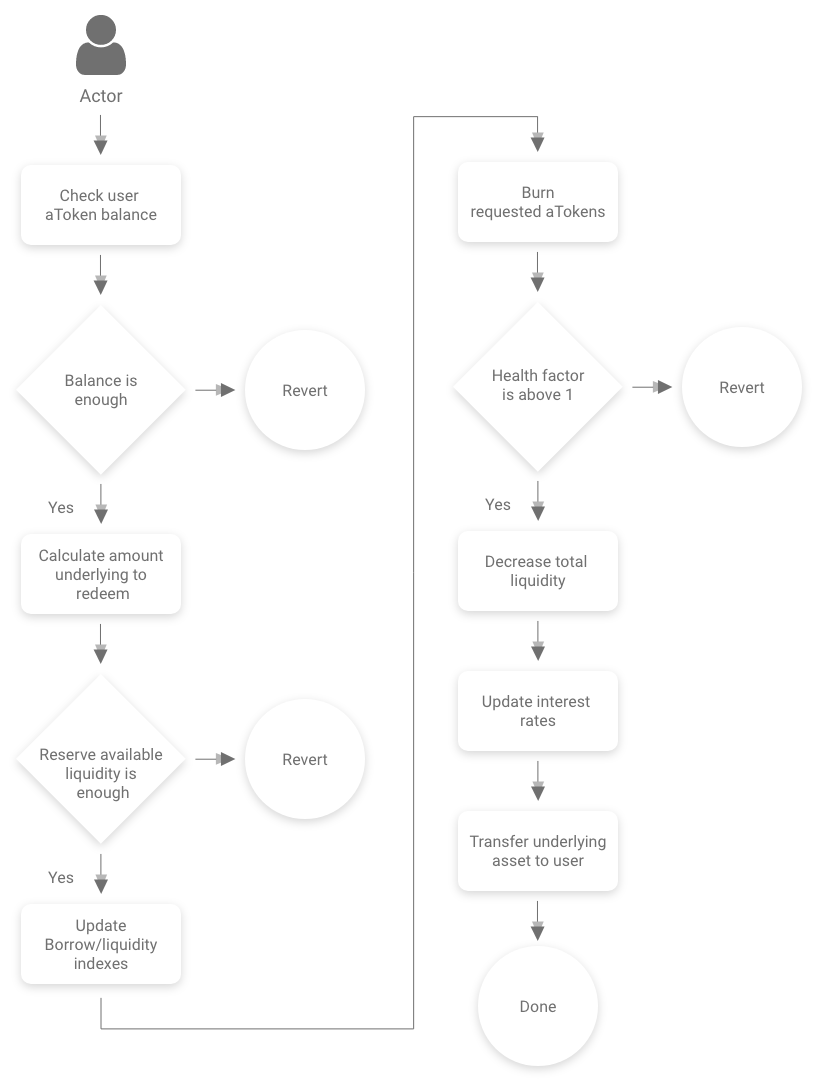
سير عمل استرداد الأموال
Context
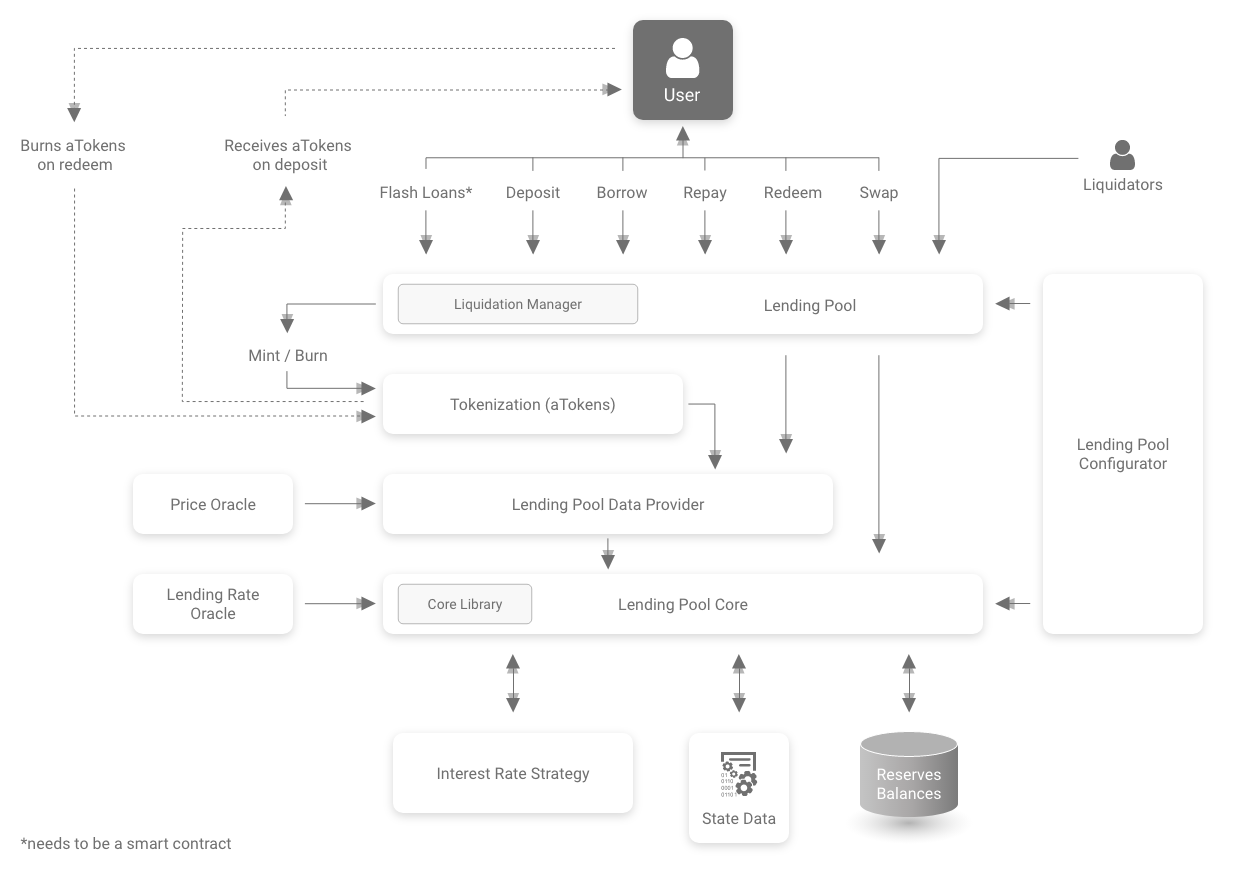
This figure appears in Section 3.2 'Redeem' and shows the workflow by which a depositor exchanges aTokens back for the underlying asset. Redeeming is the reverse of depositing, and the figure captures the burn-and-transfer sequence. The whitepaper notes that the actual amount to redeem is calculated using the aToken/underlying exchange rate derived from the cumulated liquidity index.
What This Figure Shows
The Redeem Funds workflow starts when a user calls redeem() on the LendingPool contract, specifying the amount of aTokens to burn. The contract first verifies that the reserve has sufficient available liquidity to fulfill the withdrawal — the reserve always keeps a liquidity reserve to ensure withdrawals are possible. It then calculates the underlying asset amount using the current normalized income (In), burns the corresponding aTokens from the user's balance, and transfers the underlying asset from LendingPoolCore to the user's address. Redeeming decreases the total liquidity (Lt) and increases the utilization rate (U), which may push borrow rates higher to compensate for reduced available capital. If a user's aTokens are locked as collateral for an active borrow, redemption is restricted to prevent the health factor from falling below 1.
Significance
The redemption mechanism is what makes depositing in Aave liquid — users are not locked into their positions and can exit at any time as long as pool liquidity exists. The use of aToken burning rather than a simple withdrawal record ensures that interest is settled precisely at the moment of exit, eliminating the need for periodic claims. This design is critical to the protocol's usability and its ability to compete with traditional savings products.