TRON
TRON
TVM-Smart-Contract-Workflow
Context
This figure appears in the TRON Virtual Machine (TVM) section, introducing TVM as TRON's smart contract execution environment. The section positions TVM as a lightweight, Turing-complete machine compatible with Ethereum's EVM while adding optimizations for TRON's resource model of bandwidth and energy rather than gas.
What This Figure Shows
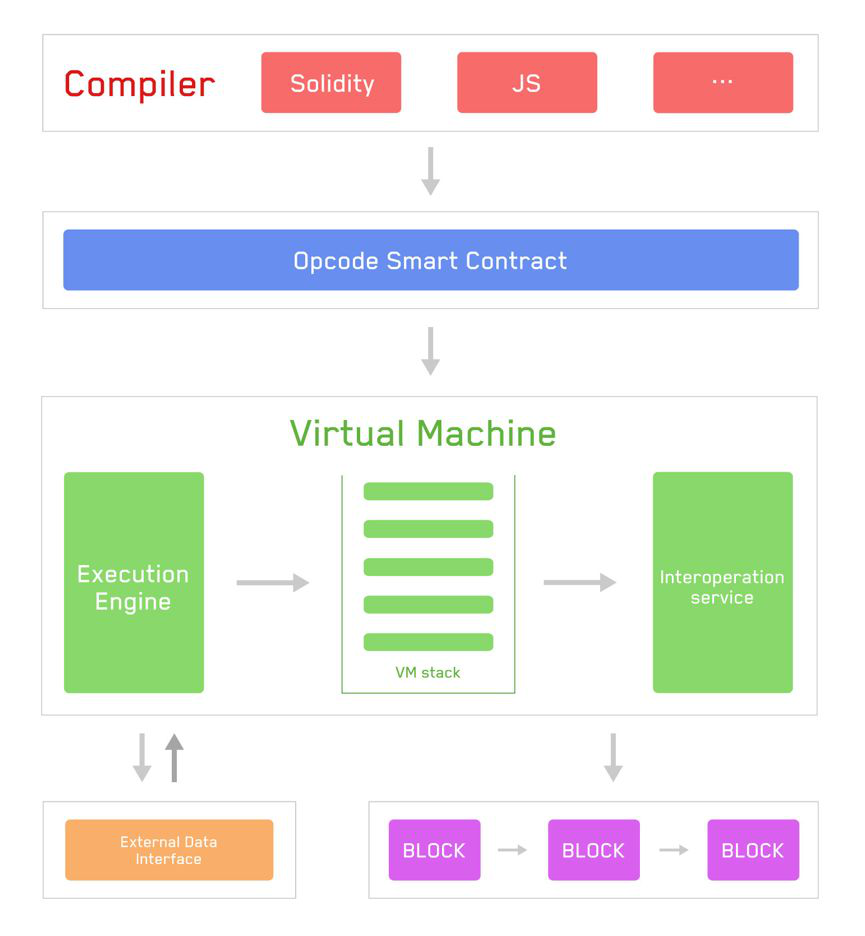
The diagram illustrates the lifecycle of a TRON smart contract from source code to execution. A developer writes a contract in Solidity, compiles it to TVM bytecode, and submits a deployment transaction. Once confirmed, the bytecode is stored at a contract address. When a user invokes the contract, TVM executes the relevant bytecode in a sandboxed environment, reading and writing account storage and consuming energy (TRON's analog to gas) proportional to computational work. The execution result — state changes, events, and return values — is committed to the block and reflected in global state.
Significance
The TVM workflow demonstrates that TRON achieves EVM compatibility at the compilation and bytecode level, allowing Ethereum developers to deploy existing Solidity contracts with minimal modification. This compatibility lets TRON leverage the Ethereum developer ecosystem. The energy/bandwidth model replacing gas is a key architectural difference the whitepaper uses to argue for lower costs and higher throughput.