Chainlink
Objetivos de Minimización de Confianza
Context
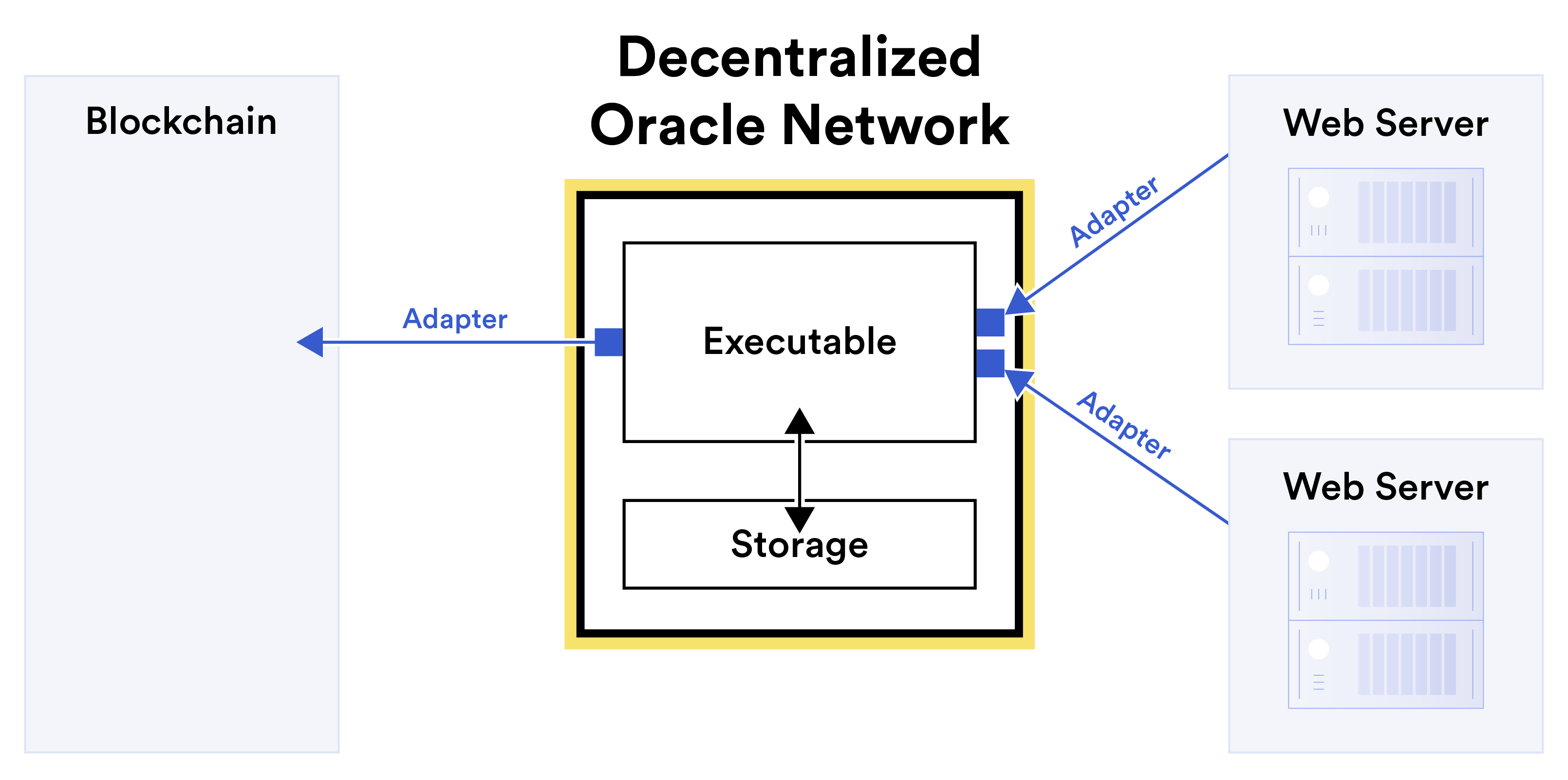
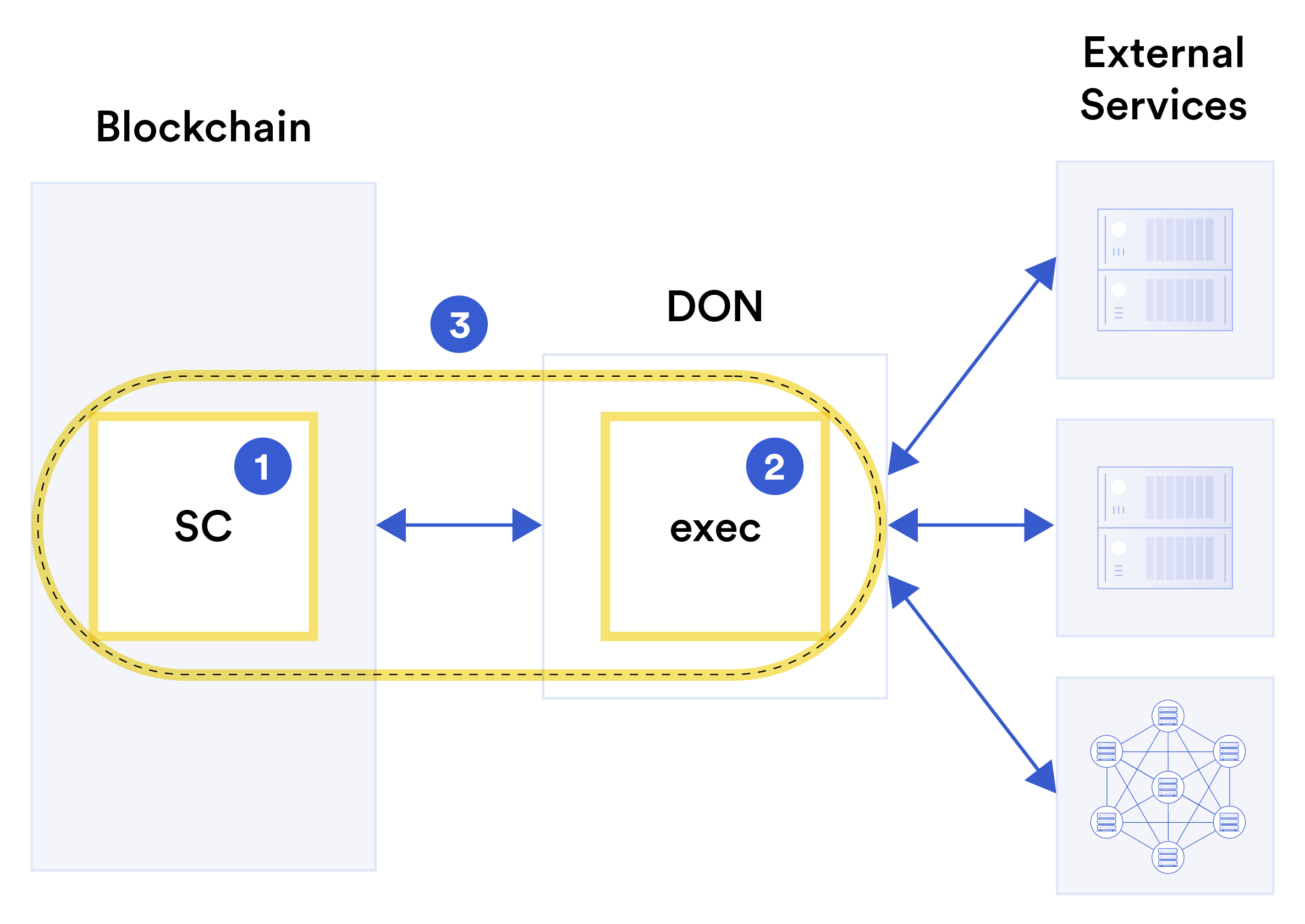
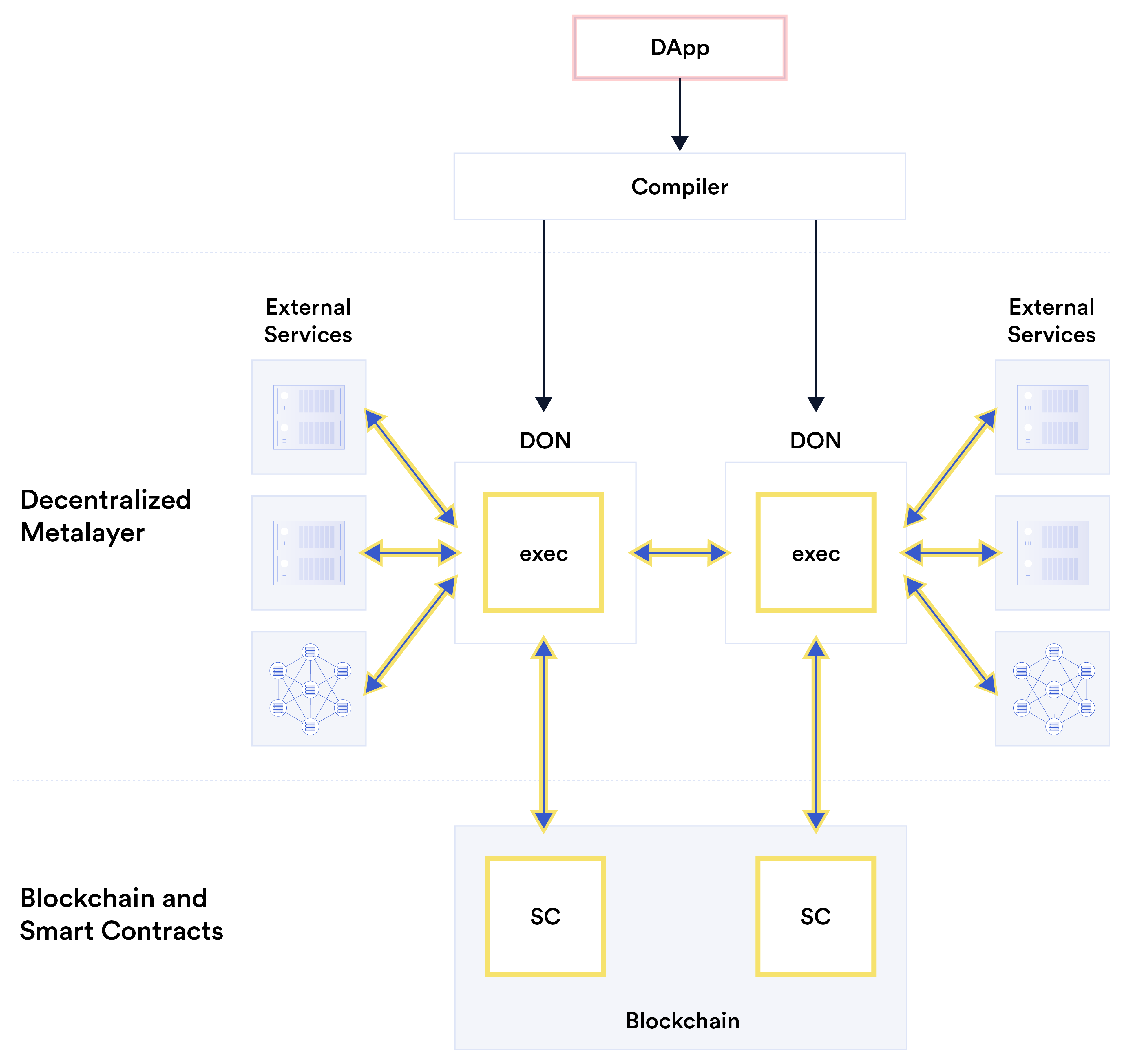
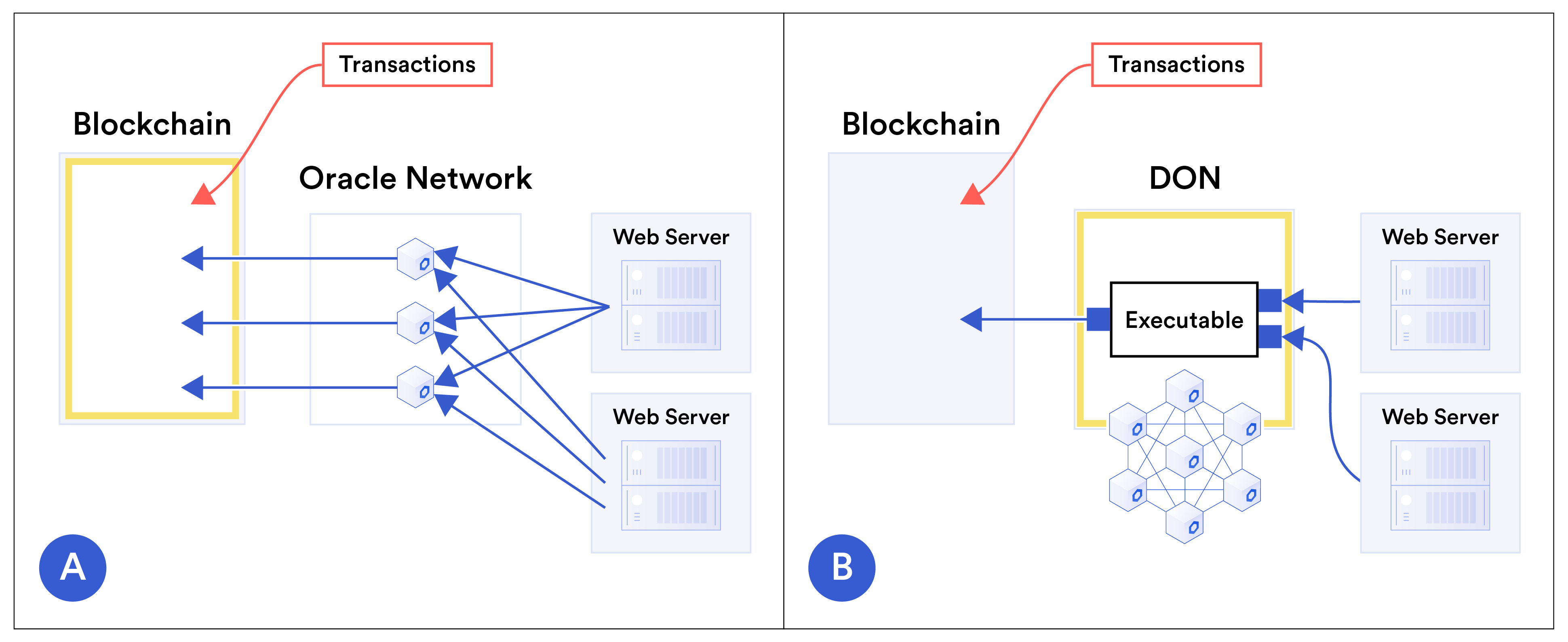
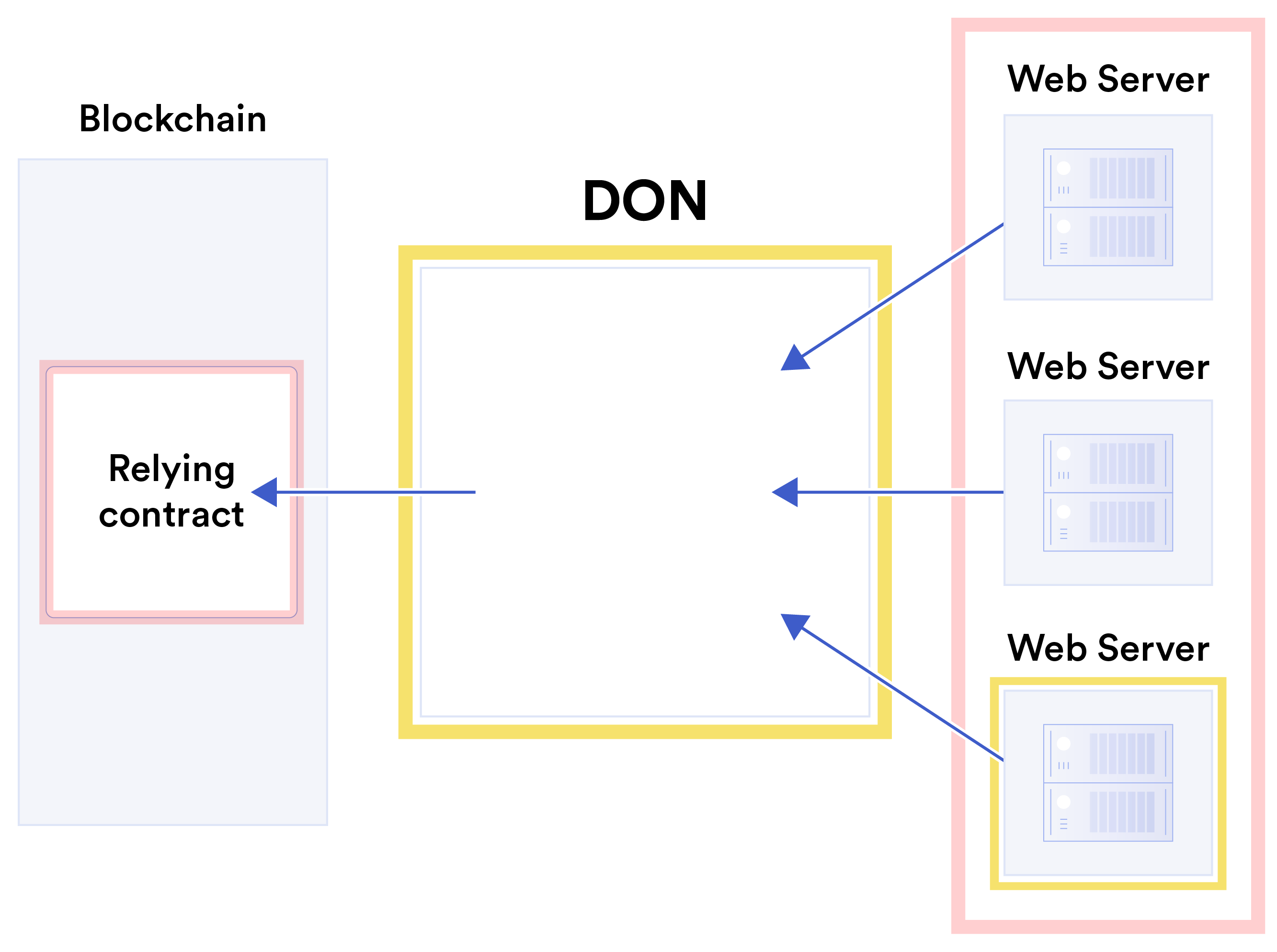
This figure appears in the Introduction during the overview of trust minimization as one of the seven key design goals. It provides a schematic of the overall trust architecture that Chainlink 2.0 aims to achieve, distinguishing components that are treated as highly trustworthy from those identified as trust-minimization loci. The figure accompanies the description of five trust-minimization mechanisms: data-source authentication, DON minority reports, guard rails, trust-minimized governance, and decentralized entity authentication.
What This Figure Shows
The figure uses color coding to indicate trust levels in the system. Yellow highlights mark the trust-minimization loci: the DON itself and individual or minority sets of web servers, which are the components where Chainlink's trust-minimization mechanisms are most actively applied. Pink highlights indicate components treated as highly trustworthy by assumption: smart contracts on the blockchain and the aggregate majority of web servers. This visualization captures the guiding principle that users should be able to rely on the system even assuming potential malfeasance from the DON, without needing to trust any individual web server.
Significance
This figure articulates the security philosophy underlying Chainlink's design: the blockchain and the collective behavior of many web servers are treated as the high-trust anchors, while the DON is engineered as a controlled-trust intermediary subject to multiple layers of verification. It frames all of Section 7's trust-minimization mechanisms as practical implementations of this goal.