Polygon
Arquitectura del Protocolo Polygon 2.0
Context
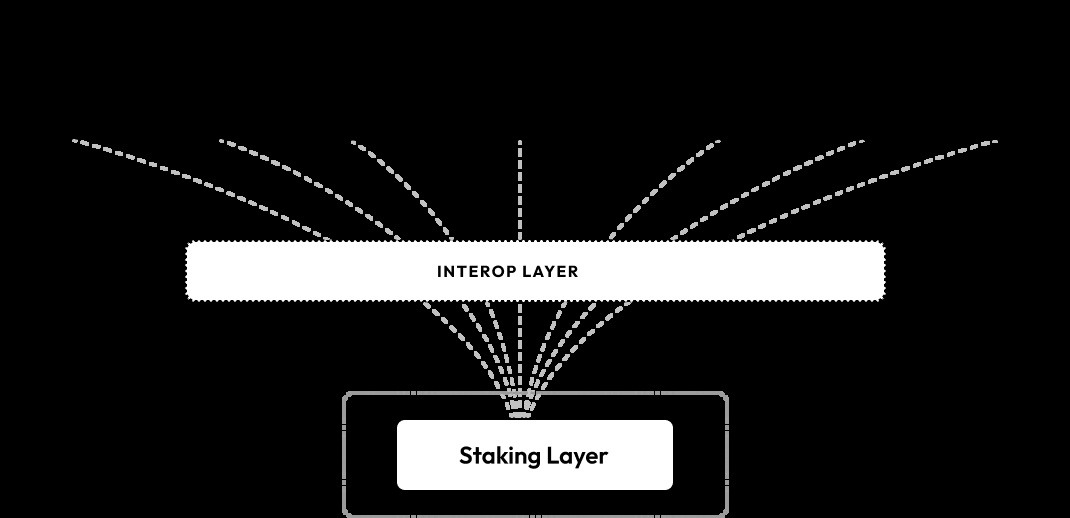
This figure appears in the Vision section of the Polygon 2.0 whitepaper, introducing the overarching redesign from a collection of loosely connected scaling products into a unified protocol for the Value Layer of the Internet. The architecture diagram is the top-level blueprint from which all subsequent technical sections elaborate specific components.
What This Figure Shows
The diagram presents Polygon 2.0 as a four-layer protocol stack. The Staking Layer sits at the foundation, secured by POL, providing a shared validator registry that any Polygon chain can draw upon for Byzantine-fault-tolerant validator sets. The Interop Layer implements cross-chain communication anchored by shared bridge infrastructure and a unified sequencing mechanism. The Execution Layer encompasses all chain types (zkEVM, Supernets, and future variants), each producing ZK proofs of correct execution. The Proving Layer is a shared ZK proof aggregation service that batches proofs from multiple chains into a single Ethereum transaction, dramatically reducing per-chain settlement cost.
Significance
This architecture diagram is the definitive conceptual map of Polygon 2.0, demonstrating how POL, the interop layer, and ZK proof aggregation together address the three core limitations of earlier Polygon: fragmented security, expensive cross-chain bridging, and siloed liquidity. The unified protocol vision competes with alternative multi-chain architectures like Cosmos and Polkadot, but with the distinguishing feature that all chains settle to Ethereum.