 Aave
Aave
लिक्विडेशन प्रक्रिया
Context
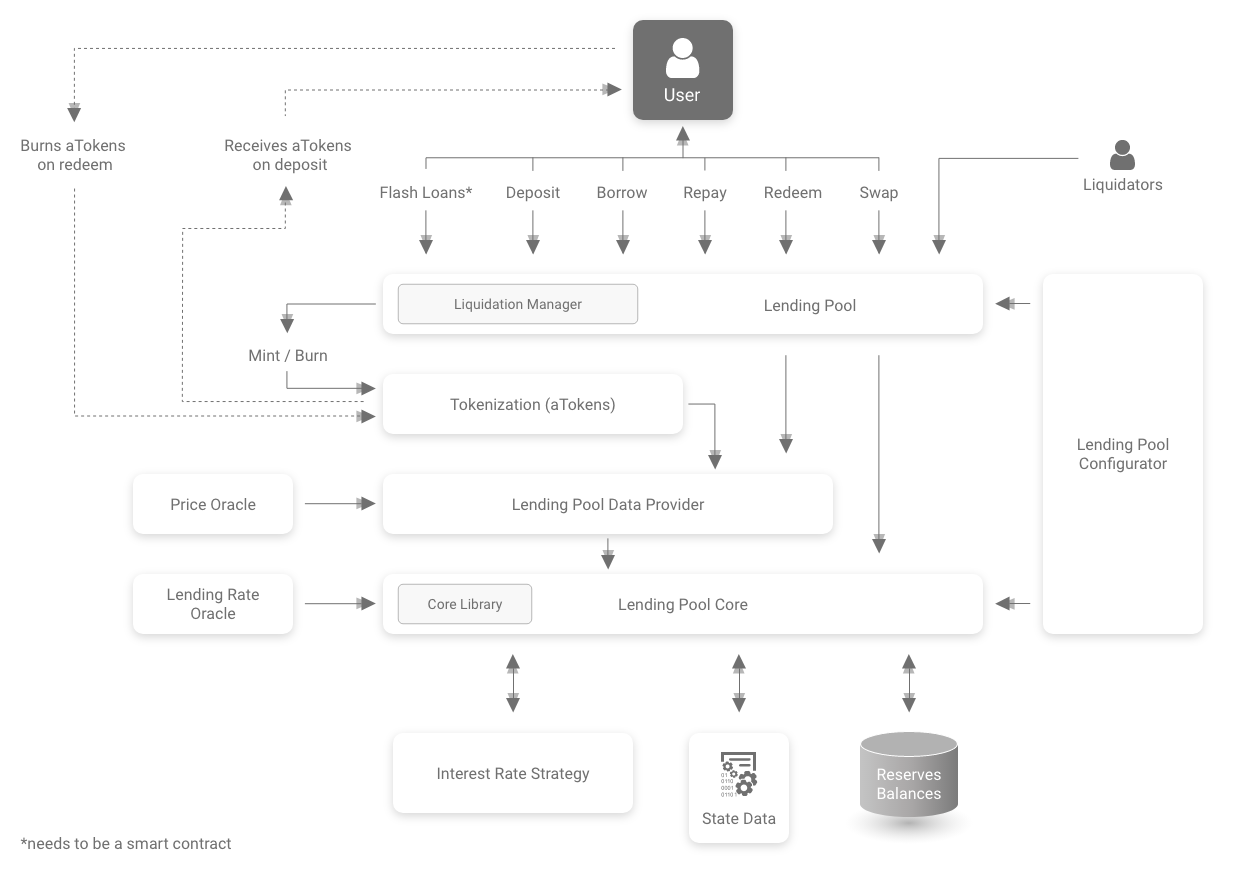
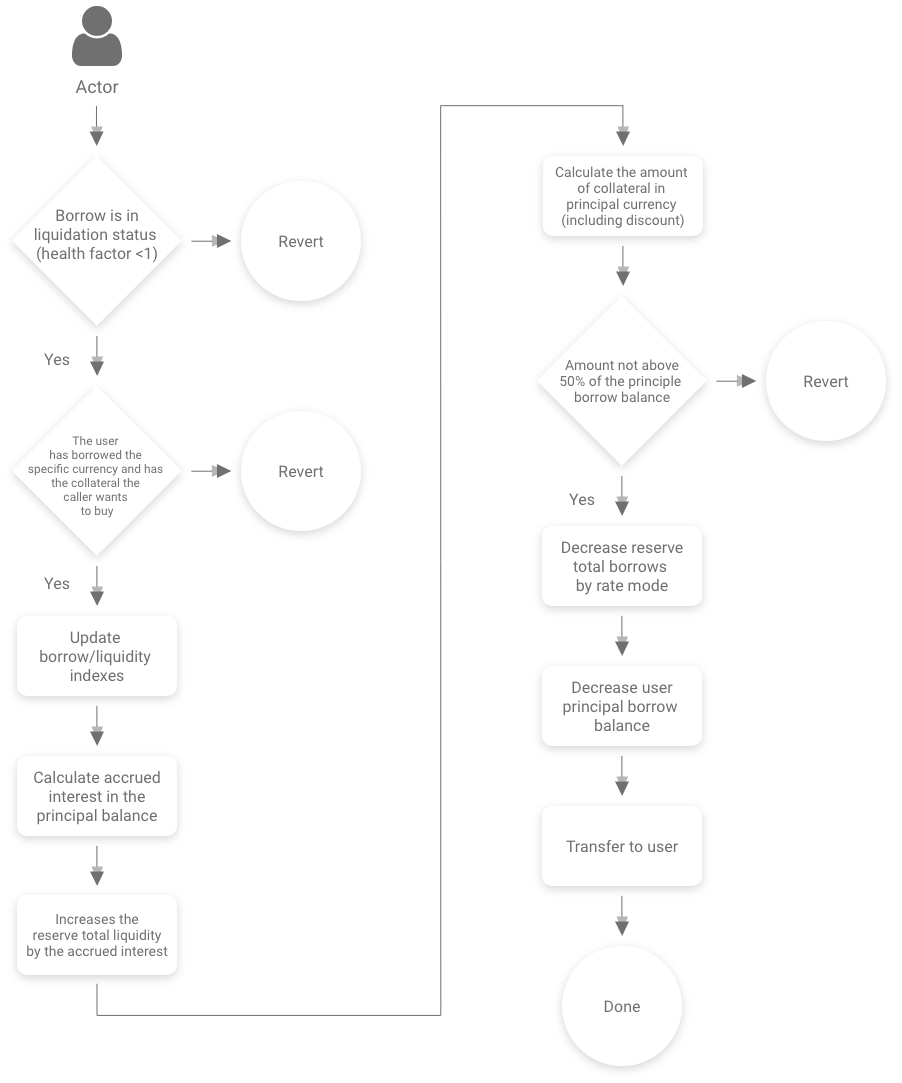
This figure appears in Section 3.6 'Liquidation Call' and diagrams the sequence of events when an external actor (liquidator) purchases discounted collateral from an undercollateralized borrower. It is one of the most critical safety mechanisms in the protocol. The diagram shows how the health factor threshold triggers eligibility and how the liquidation bonus is applied.
What This Figure Shows
The Liquidation Process begins when any external caller invokes liquidationCall() on a borrower whose health factor (Hf) has fallen below 1 due to a drop in collateral value or rise in borrowed asset value as reported by the price oracle. The caller specifies the collateral asset they wish to receive and the debt asset they will repay on behalf of the borrower. A maximum of 50% of the borrower's outstanding debt can be liquidated in a single call, which is designed to bring the health factor back above 1 without over-penalizing the borrower. The liquidator receives the equivalent collateral amount plus a liquidation bonus (a percentage discount defined per reserve). LendingPoolCore then burns the borrower's locked collateral aTokens, transfers the underlying collateral to the liquidator, and reduces the borrower's debt balance. The health factor is recomputed and the reserve state is updated.
Significance
Liquidation is the protocol's primary mechanism for maintaining solvency and protecting depositors from losses due to borrower default. The 50% cap on single-liquidation size balances efficiency (allowing prompt correction) with fairness (preventing complete position wipeout). The liquidation bonus creates a market incentive for external actors to monitor all positions and act quickly, eliminating the need for the protocol itself to manage bad debt. This decentralized liquidation design is a foundational element of trust in any collateralized DeFi lending system.