Chainlink
Framework de Execução de Transações
Context
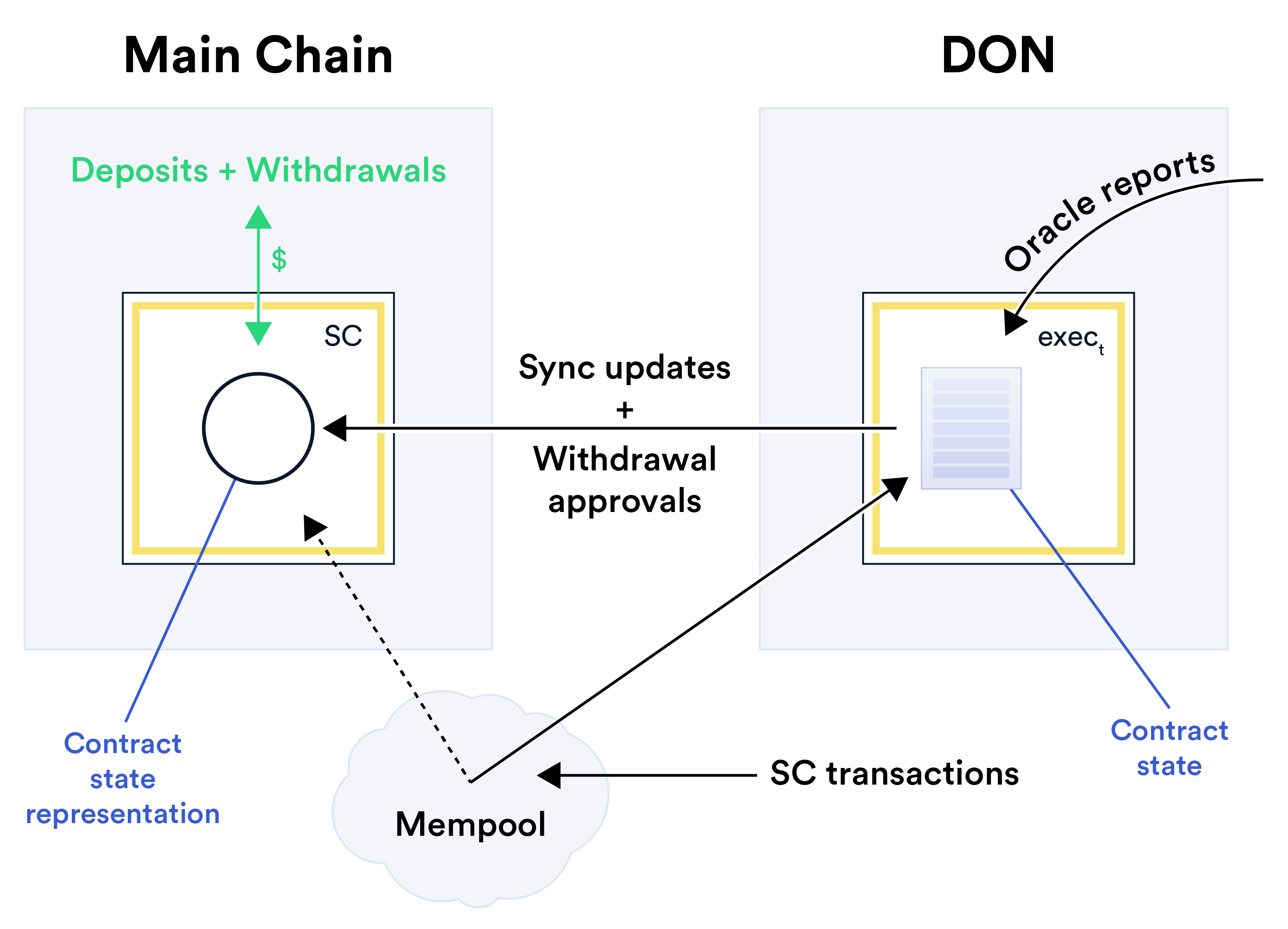
This figure appears in Section 6 (The DON Transaction Execution Framework) at the beginning of the TEF overview, providing the architectural schematic for how the TEF decomposes a smart contract into an anchor contract on the main chain and a TEF executable on the DON. It accompanies the analogy of the executable as the clearing component and the anchor contract as the settlement component, drawn from payment systems terminology.
What This Figure Shows
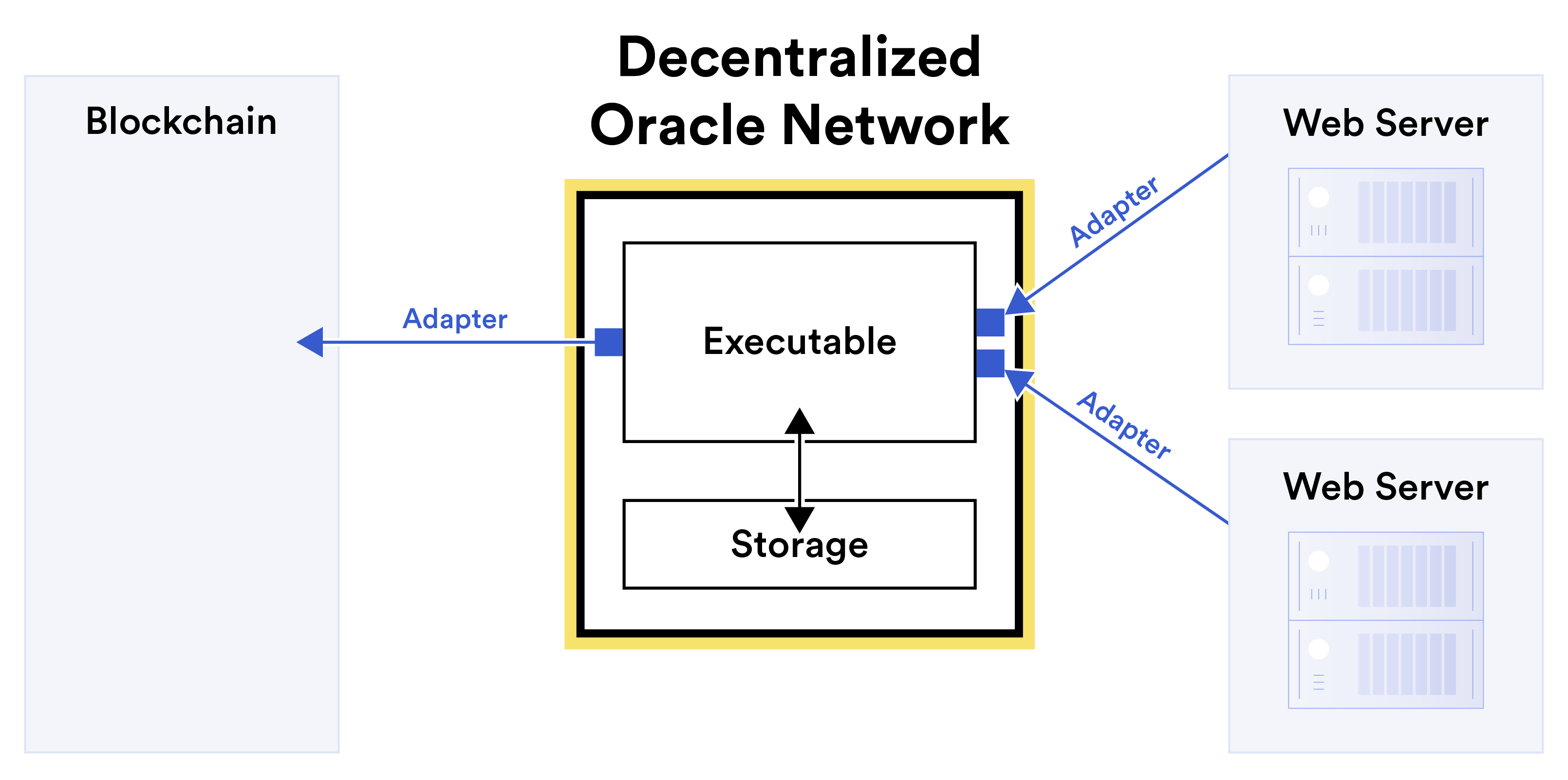
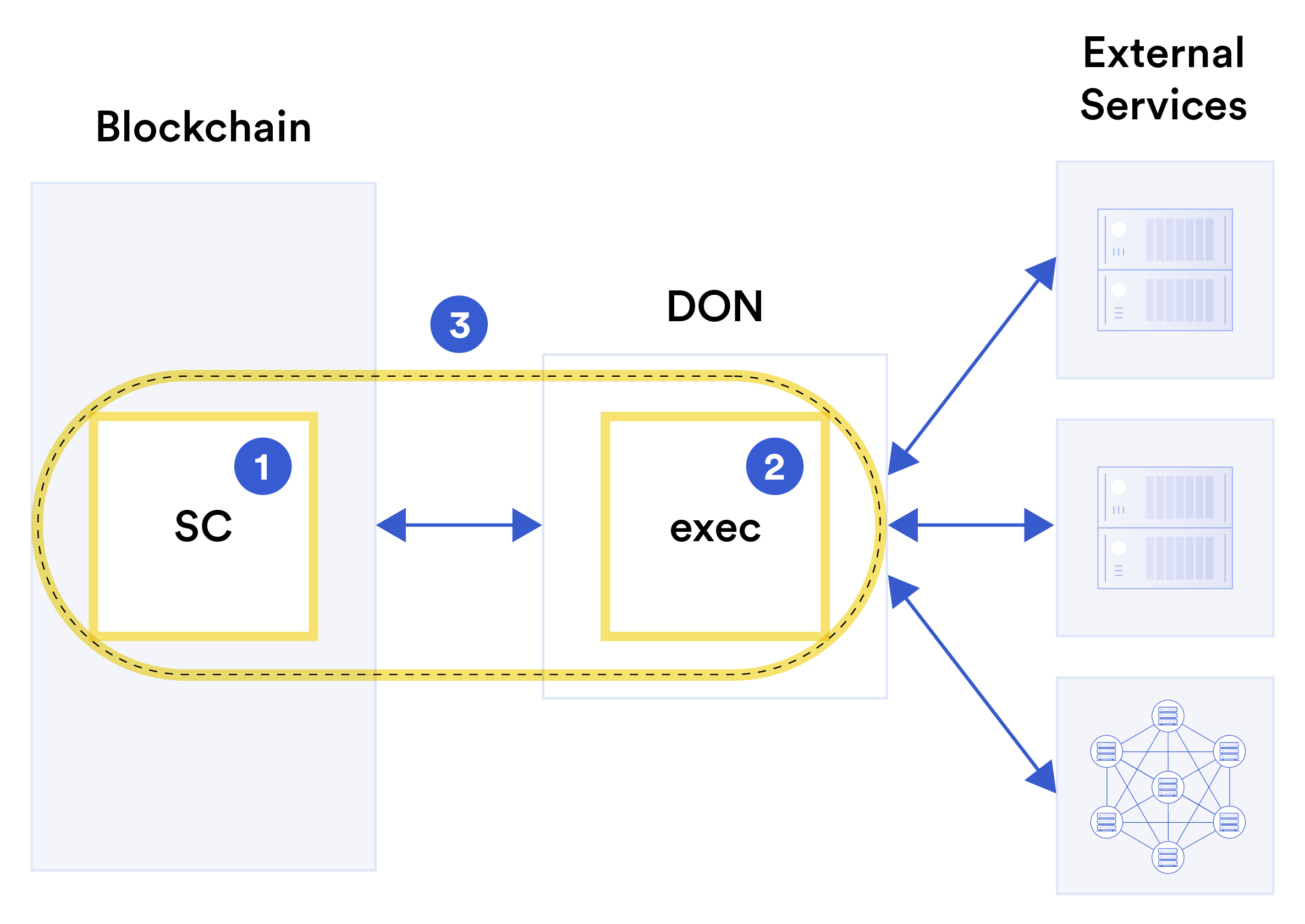
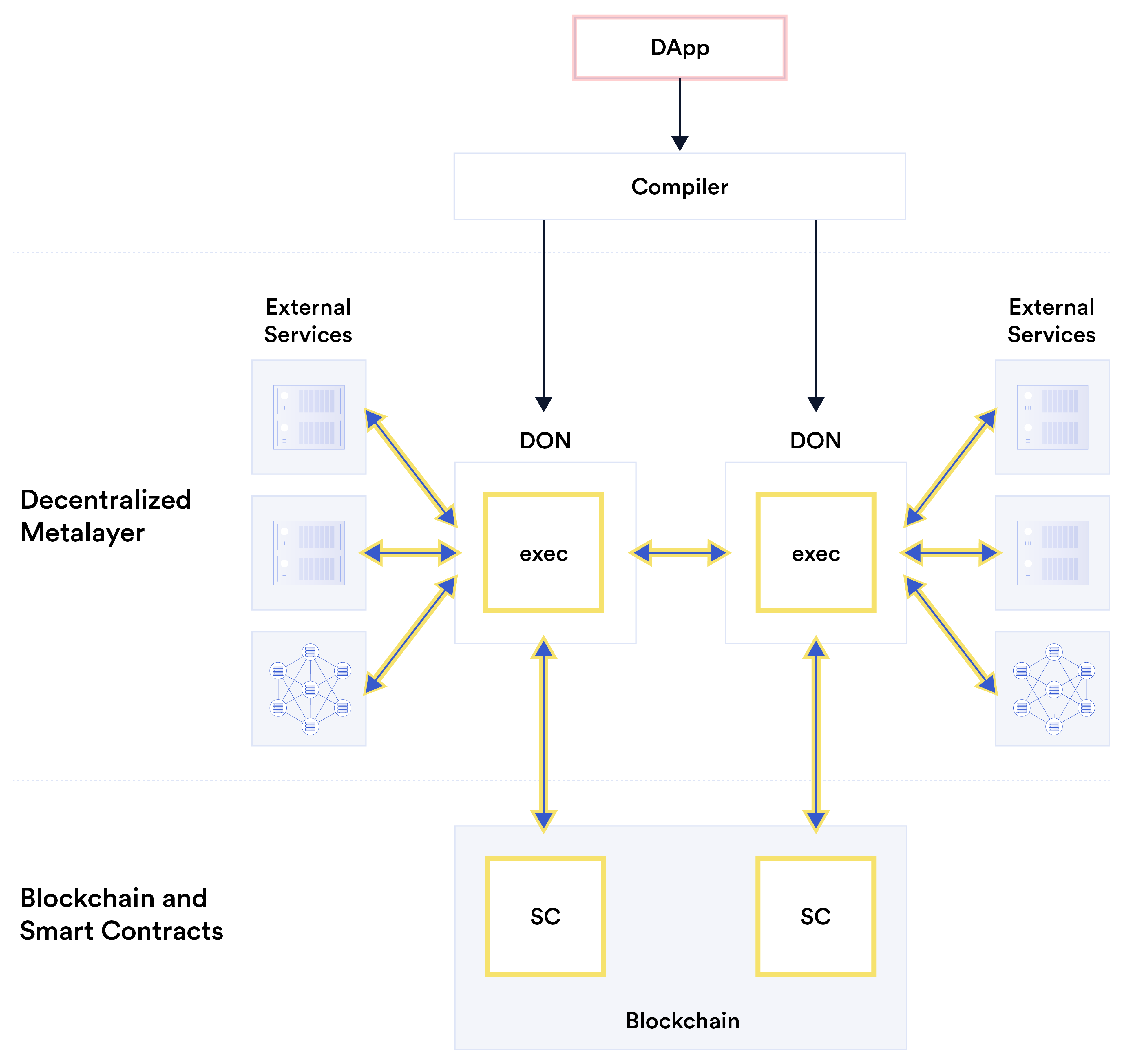
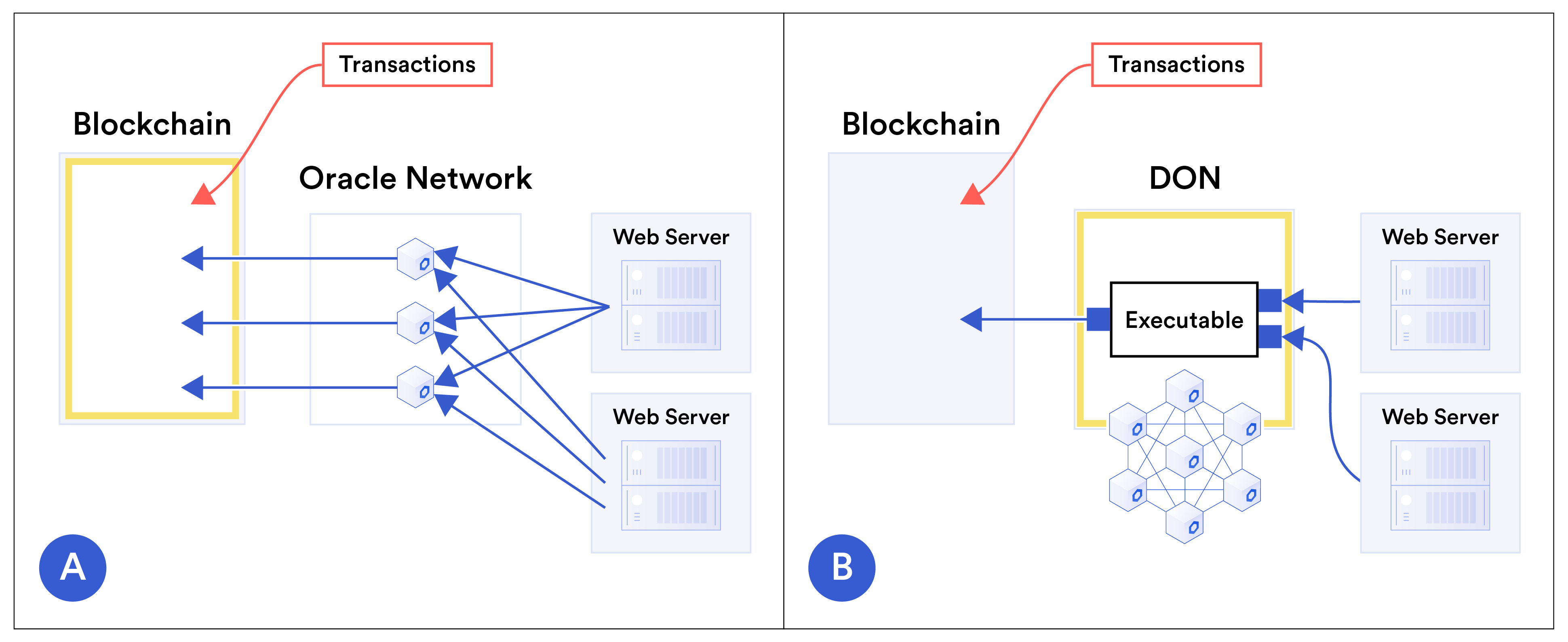
The figure shows the TEF architecture where user transactions pass through the main chain's mempool via Mempool Services (MS) into the DON. The TEF executable (exect) running on the DON processes transactions at high speed locally, handling transaction ingestion, fast execution, and low-cost oracle/adapter access. Periodically, exect syncs state updates back to the anchor contract (SCa) on the main chain using one of several techniques such as rollups, optimistic rollups, Validium, or threshold signing. SCa holds users' funds for asset custody, verifies correctness of state updates during syncing, and implements guard rails against DON failures.
Significance
The TEF schematic captures the key architectural insight that high-performance transaction processing and high-security asset custody can be separated across different system components without sacrificing the security guarantees of the main chain. This enables DeFi applications to achieve dramatically higher throughput and lower fees while retaining the trust properties of on-chain settlement.