 Solana
Network Design
Context
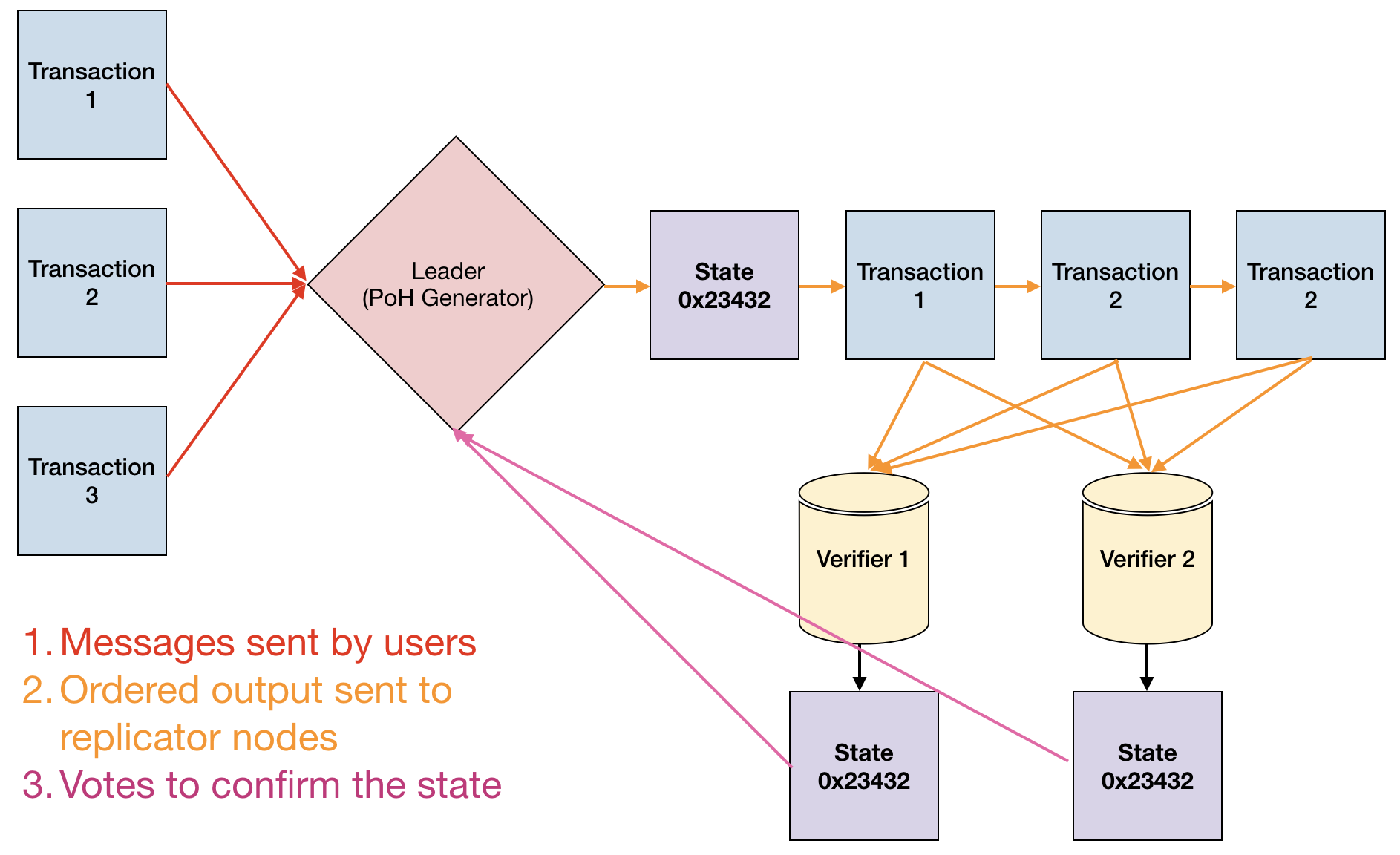
This figure appears in the 'Network Design' section, which describes how Solana's peer-to-peer network is organized around a rotating leader model. The section explains that a single validator at a time is designated as the leader, responsible for sequencing incoming transactions into the PoH stream and producing blocks. The leader schedule is deterministically derived from the PoH sequence and is known to all validators in advance, enabling direct transaction forwarding without a global mempool.
What This Figure Shows
The diagram shows the transaction flow in Solana's network: clients submit transactions directly to the current leader validator, which ingests them, orders them into the PoH sequence, and executes them in the Banking stage of its Transaction Processing Unit pipeline. The resulting block, expressed as a set of PoH entries with embedded transaction hashes, is then propagated to all other validators via the Turbine protocol — broken into erasure-coded shreds and distributed through a fanout tree to maximize bandwidth utilization. Other validators verify the PoH sequence, re-execute transactions against their local state, and cast votes on confirmed blocks. The diagram makes clear that the leader is a temporary role that rotates on a slot-by-slot basis according to a stake-weighted schedule.
Significance
This network design eliminates the mempool broadcast overhead present in most blockchain networks, where unconfirmed transactions must be gossiped to every node before being included in a block. By routing transactions directly to the known upcoming leader (Gulf Stream), Solana reduces confirmation latency and network bandwidth consumption. The single-leader model also eliminates the leader election communication overhead associated with BFT protocols that select a new leader each round.