
Cosmos: Dağıtılmış Defterlerden Oluşan Bir Ağ
Introducción
El éxito combinado del ecosistema de código abierto, El intercambio de archivos descentralizado y las criptomonedas públicas han inspiró la comprensión de que los protocolos descentralizados de Internet puede utilizarse para mejorar radicalmente la infraestructura socioeconómica. Hemos visto aplicaciones especializadas blockchain como Bitcoin [1] (una criptomoneda), Zerocash [2] (una criptomoneda para la privacidad), y plataformas smart contract generalizadas como Ethereum [3], con innumerables aplicaciones distribuidas para Etherium Virtual Máquina (EVM) como Augur (un mercado de predicción) y TheDAO [4] (un club de inversiones). Sin embargo, hasta la fecha, estos blockchain han sufrido una serie de de desventajas, entre ellas su grave ineficiencia energética, su mala o mala calidad desempeño limitado y mecanismos de gobernanza inmaduros. Propuestas para escalar el rendimiento de transacciones de Bitcoin, como Testigo segregado [5] y BitcoinNG [6], son escalamiento vertical Soluciones que siguen limitadas por la capacidad de un único espacio físico. máquina, con el fin de garantizar la propiedad de completa auditabilidad. Lightning Network [7] puede ayudar a escalar la transacción Bitcoin
volumen dejando algunas transacciones fuera del libro mayor por completo, y es muy adecuado para micropagos y preservación de la privacidad carriles de pago, pero puede no ser adecuado para más generalizados necesidades de escalamiento. Una solución ideal es aquella que permite que múltiples blockchains paralelos interoperar conservando sus propiedades de seguridad. esto tiene resultó difícil, si no imposible, con proof-of-work. Fusionado la minería, por ejemplo, permite que el trabajo realizado para asegurar una matriz cadena para ser reutilizada en una cadena secundaria, pero las transacciones aún deben ser validado, en orden, por cada nodo, y un blockchain extraído por fusión es vulnerable a un ataque si la mayoría del hashing poder en el El padre no está fusionando activamente al niño. Una reseña académica de arquitecturas de red alternativas blockchain se proporciona para contexto adicional y proporcionamos resúmenes de otras propuestas y sus inconvenientes en el Trabajo Relacionado. Aquí presentamos Cosmos, una novedosa arquitectura de red blockchain que aborda todos estos problemas. Cosmos es una red de muchos blockchains independientes, llamados zonas. Las zonas están alimentadas por Tendermint Core [8], que proporciona un alto rendimiento, motor de consenso consistente y seguro similar a PBFT, donde la estricta responsabilidad de forka garantiza el control del comportamiento de malware actores. El algoritmo de consenso BFT de Tendermint Core es muy adecuado para escalar proof-of-stake blockchains públicos. La primera zona en Cosmos se llama Cosmos Hub. El Cosmos Hub es una criptomoneda proof-of-stake multiactivo con un simple mecanismo de gobernanza que permite a la red adaptarse y actualizar. Además, el concentrador Cosmos se puede ampliar mediante conectando otras zonas. El hub y las zonas de la red Cosmos se comunican con entre sí a través de un protocolo de comunicación inter-blockchain (IBC), una especie de UDP o TCP virtual para blockchains. Las fichas pueden ser transferido de una zona a otra de forma segura y rápidasin necesidad de liquidez cambiaria entre zonas. En cambio, todas las transferencias entre zonas token pasan por el concentrador Cosmos, que realiza un seguimiento de la cantidad total de tokens en poder de cada zona. el hub aísla cada zona del fallo de otras zonas. porque cualquiera puede conectar una nueva zona al Cosmos Hub, las zonas lo permiten para compatibilidad futura con las nuevas innovaciones blockchain. En esta sección describimos el protocolo de consenso de Tendermint. y la interfaz utilizada para crear aplicaciones con él. Para más detalles, consulte el apéndice. En los algoritmos bizantinos clásicos tolerantes a fallos (BFT), cada nodo tiene el mismo peso. En Tendermint, los nodos tienen un valor no negativo. cantidad de poder de voto y nodos que tienen voto positivo potencia se llaman validators. Los validadores participan en el protocolo de consenso mediante la difusión de firmas criptográficas, o votos, para acordar el siguiente bloque. Los poderes de voto de los validadores se determinan en la génesis o se cambiado de manera determinista por el blockchain, dependiendo del aplicación. Por ejemplo, en una aplicación proof-of-stake como el Centro Cosmos, el poder de voto puede ser determinado por el monto de staking tokens garantizados como garantía. NOTA: Fracciones como ⅔ y ⅓ se refieren a fracciones del total de la votación. potencia, nunca el número total de validators, a menos que todos los validators tienen igual peso. >⅔ significa “más de ⅔”, ≥⅓ significa “al menos ⅓”. Tendermint es un protocolo de consenso BFT parcialmente sincrónico derivado del algoritmo de consenso DLS [20]. La menta tierna es
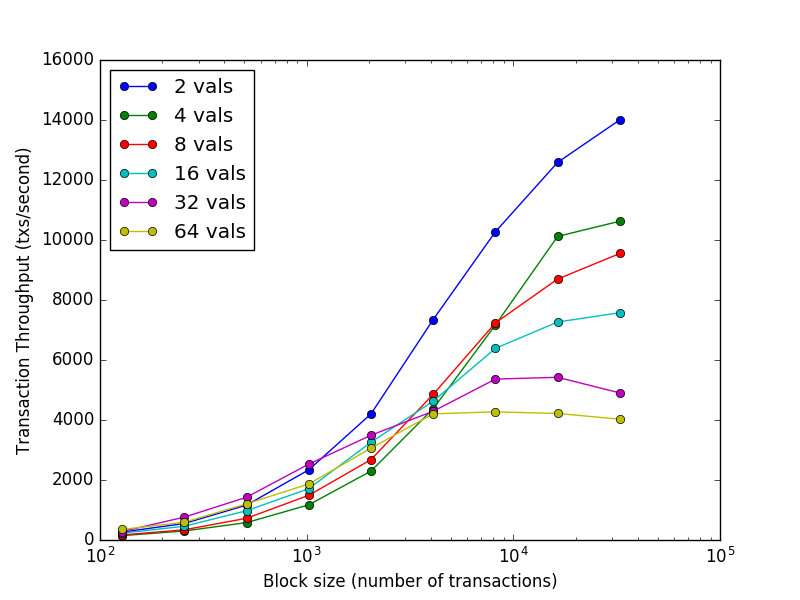
destaca por su simplicidad, rendimiento y responsabilidad de bifurcación. El protocolo requiere un conjunto conocido yxed de validators, donde cada validator se identifica por su clave pública. Los validadores intentan llegar a un consenso sobre un bloque a la vez, donde un bloque es una lista de transacciones. La votación por el consenso sobre un bloque se lleva a cabo en rondas. Cada ronda tiene un líder de ronda, o proponente, que propone un bloque. Los validators luego votan, por etapas, sobre si aceptar el bloque propuesto o pasar a la siguiente ronda. el El proponente de una ronda se elige de forma determinista entre los ordenados. lista de validators, en proporción a su poder de voto. Los detalles completos del protocolo se describen aquí. La seguridad de Tendermint se deriva de su uso de bizantino óptimo Tolerancia a fallos mediante votación supermayoría (>⅔) y bloqueo. mecanismo. Juntos, aseguran que: ≥⅓ del poder de voto debe ser bizantino para causar una violación de seguridad, donde se comprometen más de dos valores. si algún conjunto de validator alguna vez logra violar la seguridad, o incluso Si intenta hacerlo, podrá identificarlo mediante el protocolo. esto Incluye tanto la votación de los bloques conflictivos como la retransmisión. Votos injustificados. A pesar de sus sólidas garantías, Tendermint ofrece servicios excepcionales. rendimiento. En benchmarks de 64 nodos distribuidos en 7 centros de datos en 5 continentes, en instancias de nube de productos básicos, El consenso de Tendermint puede procesar miles de transacciones por segundo, con latencias de confirmación del orden de uno o dos segundos. En particular, el desempeño de más de mil transacciones por segundo se mantiene incluso en duras condiciones adversas, con validators fallan o transmiten votos elaborados con fines malintencionados. Ver Consulte la siguiente figura para obtener más detalles.
Un beneficio importante del algoritmo de consenso de Tendermint es la simplificación. seguridad ligera para el cliente, lo que lo convierte en un candidato ideal para dispositivos móviles y Casos de uso de Internet de las cosas. Mientras que un cliente ligero Bitcoin debe sincronizarse cadenas de encabezados de bloque y encuentre el que tenga la mayor prueba de funcionan, los clientes ligeros de Tendermint sólo necesitan mantenerse al día con los cambios al conjunto validator y luego verifique >⅔ PreCommits en el último bloque para determinar el último estado. Las pruebas de cliente ligeras y sucintas también permiten inter-blockchain comunicación. Tendermint tiene medidas de protección para prevenir ciertos ataques notables, como gastos dobles de largo alcance sin nada en juego y censura. Estos se analizan con más detalle en el apéndice.El algoritmo de consenso Tendermint se implementa en un programa llamado Tendermint Core. Tendermint Core es un “motor de consenso” independiente de la aplicación que puede convertir cualquier aplicación determinista de caja negra en una replicación distribuida blockchain. Tendermint Core se conecta a blockchain aplicaciones a través de la interfaz Blockchain de aplicaciones (ABCI) [17]. Por lo tanto, ABCI permite programar aplicaciones blockchain en cualquier lenguaje, no sólo el lenguaje de programación que el consenso motor está escrito. Además, ABCI hace posible fácilmente cambie la capa de consenso de cualquier pila blockchain existente. Hacemos una analogía con la conocida criptomoneda Bitcoin. Bitcoin es una criptomoneda blockchain donde cada nodo mantiene una base de datos de resultados de transacciones no gastadas (UTXO) totalmente auditada. si uno quería crear un sistema similar a Bitcoin encima de ABCI, Tendermint Core sería responsable de Compartir bloques y transacciones entre nodos Establecer un orden canónico/inmutable de transacciones (el blockchain) Mientras tanto, la aplicación ABCI sería responsable de Mantenimiento de la base de datos UTXO Validar firmas criptográficas de transacciones. Evitar que las transacciones gasten fondos inexistentes Permitir a los clientes consultar la base de datos UTXO Tendermint es capaz de descomponer el diseño blockchain mediante ofreciendo una API muy simple entre el proceso de solicitud y proceso de consenso.
giriiş
Açık kaynak ekosisteminin birleşik başarısı, merkezi olmayan yle paylaşımı ve halka açık kripto para birimleri merkezi olmayan internet protokollerinin olduğu anlayışına ilham verdi Sosyo-ekonomik altyapının radikal bir şekilde iyileştirilmesi için kullanılabilir. Bitcoin [1] gibi özel blockchain uygulamalar gördük (a kripto para birimi), Zerocash [2] (gizlilik için bir kripto para birimi) ve Ethereum [3] gibi genelleştirilmiş smart contract platformları, Etherium Virtual için sayısız dağıtılmış uygulama Augur (tahmin piyasası) ve TheDAO gibi makine (EVM) [4] (bir yatırım kulübü). Ancak bugüne kadar bu blockchain'lar çok sayıda sorunla karşı karşıya kaldı Brüt enerji verimsizliği, zayıf veya sınırlı performans ve olgunlaşmamış yönetişim mekanizmaları. Bitcoin adlı kişinin işlem hacmini ölçeklendirmeye yönelik teklifler, örneğin Ayrılmış Tanık [5] ve BitcoinNG [6], dikey ölçeklendirmedir tek bir fiziksel kapasiteyle sınırlı kalan çözümler Tam denetlenebilirlik özelliğini sağlamak için makine. Lightning Network [7], Bitcoin işleminin ölçeklendirilmesine yardımcı olabilir
bazı işlemleri defterin tamamen dışında bırakarak hacim, ve mikro ödemeler ve gizliliğin korunması için çok uygundur ödeme rayları, ancak daha genelleştirilmiş ödeme rayları için uygun olmayabilir ölçeklendirme ihtiyaçları. İdeal bir çözüm, birden fazla paralel blockchain'nin birbirine bağlanmasına izin veren çözümdür. güvenlik özelliklerini korurken birlikte çalışabilirler. Bu var proof-of-work ile imkansız olmasa da zor olduğu kanıtlanmıştır. Birleştirilmiş örneğin madencilik, bir ebeveynin güvenliğini sağlamak için yapılan işin yapılmasına olanak tanır zincirin bir alt zincirde yeniden kullanılması gerekir, ancak işlemlerin yine de olması gerekir sırasıyla her düğüm tarafından doğrulanır ve birleştirme madenciliği yapılır blockchain hashing gücünün çoğunluğunun üzerinde olması durumunda saldırıya karşı savunmasızdır ebeveyn çocuğu aktif olarak birleştirme madenciliği yapmıyor. Akademik bir inceleme alternatif blockchain ağ mimarilerinin sayısı sağlanmıştır ek bağlam ve diğer tekliflerin özetlerini sunuyoruz ve İlgili Çalışmalardaki dezavantajları. Burada yeni bir blockchain ağ mimarisi olan Cosmos'yi sunuyoruz bu, tüm bu sorunları giderir. Cosmos birçok kişiden oluşan bir ağdır bağımsız blockchain'ler, bölgeler olarak adlandırılır. Bölgeler tarafından desteklenmektedir Yüksek performans sağlayan Tendermint Core [8], tutarlı, güvenli PBFT benzeri konsensüs motoru; burada kötü niyetli davranışların kontrol altında tutulması için katı bir hesap verebilirlik garanti edilir aktörler. Tendermint Core'un BFT fikir birliği algoritması çok uygundur genel proof-of-stake blockchains'yi ölçeklendirmek için. Cosmos üzerindeki ilk bölgeye Cosmos Hub adı verilir. Cosmos Hub, basit bir yapıya sahip çok varlıklı bir proof-of-stake kripto para birimidir. Ağın uyum sağlamasını ve uyum sağlamasını sağlayan yönetişim mekanizması yükseltme. Ayrıca Cosmos Hub şu kadar genişletilebilir: diğer bölgeleri birbirine bağlamak. Cosmos ağının hub'ları ve bölgeleri aşağıdakilerle iletişim kurar: blockchain arası iletişim (IBC) protokolü aracılığıyla birbirlerine, blockchains için bir tür sanal UDP veya TCP. Jetonlar olabilir bir bölgeden diğerine güvenli ve hızlı bir şekilde aktarılırbölgeler arasında döviz likiditesine ihtiyaç duymadan. Bunun yerine, tüm bölgeler arası token aktarımlar Cosmos Hub'dan geçer; her bölgenin tuttuğu toplam tokens miktarını takip eder. hub, her bölgeyi diğer bölgelerin arızasından izole eder. Çünkü herkes Cosmos Hub'a yeni bir bölge bağlayabilir, bölgeler buna izin verir yeni blockchain yeniliklerle geleceğe yönelik uyumluluk için. Bu bölümde Tendermint konsensüs protokolünü açıklıyoruz ve onunla uygulamalar oluşturmak için kullanılan arayüz. Daha fazlası için ayrıntılar için eke bakın. Klasik Bizans hataya dayanıklı (BFT) algoritmalarında her düğüm aynı ağırlığa sahiptir. Tendermint'te düğümlerin negatif olmayan bir değeri vardır. oylama gücü miktarı ve olumlu oy kullanan düğümler güçlere validators denir. Doğrulayıcılar katılıyor kriptografik imzalar yayınlayarak fikir birliği protokolü veya bir sonraki blok üzerinde anlaşmaya varmak için oy kullandı. Doğrulayıcıların oy verme yetkileri başlangıçta belirlenir veya bağlı olarak blockchain tarafından deterministik olarak değiştirildi uygulama. Örneğin, aşağıdaki gibi bir proof-of-stake uygulamasında Cosmos Merkezde, oylama gücü şu şekilde belirlenebilir: staking tokens miktarı teminat olarak teminat altına alındı. NOT: ⅔ ve ⅓ gibi kesirler toplam oyların kesirlerini ifade eder güç, tüm validator'ler olmadıkça asla validator'lerin toplam sayısı eşit ağırlığa sahip. >⅔ “⅔'den fazla”, ≥⅓ “en az” anlamına gelir ⅓”. Tendermint kısmen senkronize bir BFT konsensüs protokolüdür DLS konsensüs algoritmasından türetilmiştir [20]. Nane:
basitliği, performansı ve çatal sorumluluğuyla dikkat çekiyor. Protokol, yxed bilinen bir validator kümesi gerektirir; burada her biri validator ortak anahtarıyla tanımlanır. Doğrulayıcılar şunları yapmaya çalışır: Bir bloğun bir liste olduğu her seferinde bir blok üzerinde fikir birliğine varmak işlemler. Blok üzerinde fikir birliği için oylama sürüyor mermi. Her turun bir tur lideri veya teklif sahibi vardır. bir blok öneriyor. validator'ler daha sonra aşamalı olarak oy verirler. Önerilen bloğu kabul etmek veya bir sonraki tura geçmek için. Bir tur için öneride bulunan kişi, sıralananlar arasından deterministik olarak seçilir. oylama güçleriyle orantılı olarak validator'lerin listesi. Protokolün tüm ayrıntıları burada açıklanmaktadır. Tendermint'in güvenliği optimal Bizans kullanımından kaynaklanmaktadır. Süper çoğunluk (>⅔) oylama ve kilitleme yoluyla hata toleransı mekanizma. Birlikte şunları sağlarlar: ≥⅓ ihlale neden olabilmesi için oylama gücünün Bizans olması gerekir ikiden fazla değerin taahhüt edildiği güvenlik. herhangi bir validator kümesi güvenliği ihlal etmeyi başarırsa veya hatta bunu yapmaya kalkışırlarsa protokol tarafından tanımlanabilirler. Bu hem blokların birleştirilmesi hem de yayın için oylamayı içerir haksız oylar Güçlü garantilerine rağmen Tendermint olağanüstü çözümler sunuyor performans. 7'ye dağıtılmış 64 düğümden oluşan kıyaslamalarda 5 kıtadaki veri merkezleri, emtia bulutu örnekleri, Tendermint konsensüs başına binlerce işlemi işleyebilir ikincisi, bir ila iki saniyelik taahhüt gecikmeleriyle. Özellikle, başına binin üzerinde işlem performansı ikincisi zorlu düşmanlık koşullarında bile korunur; validators çöküyor veya kötü niyetle hazırlanmış oylar yayınlıyor. Bkz. ayrıntılar için aşağıdaki resme bakın.
Tendermint'in fikir birliği algoritmasının önemli bir avantajı basitleştirilmiştir hafif istemci güvenliği, onu mobil ve mobil cihazlar için ideal bir aday haline getiriyor Nesnelerin interneti kullanım örnekleri. Bitcoin hafif istemcinin senkronize edilmesi gerekirken blok başlık zincirleri ve en fazla kanıta sahip olanı bulun Tendermint hafif istemcilerinin yalnızca değişikliklere ayak uydurması gerekir validator kümesine gidin ve ardından >⅔ Ön Taahhütleri doğrulayın. En son durumu belirlemek için en son blok. Kısa ve öz hafif istemci provaları aynı zamanda inter-blockchain'yi de etkinleştirir iletişim. Tendermint'in belirli durumları önlemek için koruyucu önlemleri vardır. Uzun menzilli, tehlikede olmayan çifte harcamalar gibi dikkate değer saldırılar ve sansür. Bunlar ekte daha ayrıntılı olarak tartışılmaktadır.Tendermint fikir birliği algoritması, Tendermint Core adlı program. Tendermint Core bir herhangi bir şeyi dönüştürebilen, uygulamadan bağımsız “fikir birliği motoru” deterministik kara kutu uygulamasını dağıtılmış olarak çoğaltılmış bir uygulamaya dönüştürün blockchain. Tendermint Core blockchain uygulamaya bağlanır Uygulama Blok Zinciri Arayüzü aracılığıyla (ABCI) [17]. Böylece, ABCI blockchain uygulamaların herhangi bir biçimde programlanmasına olanak tanır dil, yalnızca fikir birliğine varılan programlama dili değil motora yazılmıştır. Ek olarak ABCI bunu kolayca mümkün kılar mevcut herhangi bir blockchain yığınının fikir birliği katmanını değiştirin. Tanınmış kripto para birimi Bitcoin ile bir benzetme yapıyoruz. Bitcoin her düğümün koruduğu bir blockchain kripto para birimidir tamamen denetlenmiş Harcanmamış İşlem Çıkışı (UTXO) veritabanı. Eğer ABCI üzerine Bitcoin benzeri bir sistem oluşturmak isteniyordu, Tendermint Core şunlardan sorumlu olacak: Düğümler arasında blokları ve işlemleri paylaşma Kanonik/değişmez bir işlem sırası oluşturmak ( blockchain) Bu arada, ABCI uygulaması şunlardan sorumlu olacaktır: UTXO veritabanının bakımı İşlemlerin kriptografik imzalarını doğrulama İşlemlerin var olmayan fonları harcamasını önleme İstemcilerin UTXO veritabanını sorgulamasına izin veriliyor Tendermint, blockchain tasarımını şu şekilde ayrıştırabilir: başvuru süreci arasında çok basit bir API sunuyor ve fikir birliği süreci.
Cosmos Arquitectura
Cosmos es una red de blockchain paralelos independientes que están cada uno impulsado por algoritmos de consenso clásicos BFT como Menta tierna 1. El primer blockchain en esta red será el Cosmos Hub. el Cosmos El concentrador se conecta a muchos otros blockchains (o zonas) a través de un Nuevo protocolo de comunicación inter-blockchain. El centro Cosmos rastrea numerosos tipos token y mantiene un registro del total número de tokens en cada zona conectada. Las fichas pueden ser transferido de una zona a otra de forma segura y rápida sin necesidad de un intercambio líquido entre zonas, porque todos Las transferencias de monedas entre zonas pasan por el centro Cosmos. Esta arquitectura resuelve muchos problemas que el espacio blockchain enfrenta hoy en día, como la interoperabilidad de aplicaciones, la escalabilidad y capacidad de actualización perfecta. Por ejemplo, zonas derivadas de Bitcoind, Go-Ethereum, CryptoNote, ZCash o cualquier sistema blockchain pueden debe conectarse al concentrador Cosmos. Estas zonas permiten que Cosmos escalar infinitamente para satisfacer la demanda de transacciones globales. Las zonas también son un gran yt para un intercambio distribuido, que será compatible como bueno. Cosmos no es solo un libro mayor distribuido, y el Cosmos Hub no es un jardín amurallado ni el centro de su universo. somos Diseño de un protocolo para una red abierta de libros de contabilidad distribuidos. que puede servir como una nueva base para futuros sistemas financieros, basado en principios de criptografía, economía sólida, consenso teoría, transparencia y rendición de cuentas. El Cosmos Hub es el primer blockchain público en Cosmos Red, impulsada por el algoritmo de consenso BFT de Tendermint. el El proyecto de código abierto Tendermint nació en 2014 para abordar la velocidad, escalabilidad y problemas ambientales del algoritmo de consenso de prueba de trabajo de Bitcoin. Utilizando y mejorando productos probados
BFT algoritmos desarrollados en el MIT en 1988 [20], el Tendermint El equipo fue el primero en demostrar conceptualmente un proof-of-stake criptomoneda que aborda el problema de nada en juego sufrido por las criptomonedas proof-of-stake de primera generación, como como NXT y BitShares1.0. Hoy en día, prácticamente todas las billeteras móviles Bitcoin utilizan servidores confiables para proporcionarles verificación de transacciones. Esto se debe a que la prueba de trabajo requiere esperar muchas confirmaciones antes de La transacción puede considerarse irreversiblemente comprometida. Los ataques de doble gasto ya se han demostrado en servicios como CoinBase. A diferencia de otros sistemas de consenso blockchain, Tendermint ofrece Verificación de pagos de clientes móviles instantánea y demostrablemente segura. Dado que Tendermint está diseñado para no bifurcarse nunca, el móvil Las billeteras pueden recibir confirmación instantánea de la transacción, lo que hace que Los pagos prácticos y sin confianza son una realidad en los teléfonos inteligentes. esto tiene ramificaciones significativas para las aplicaciones de Internet de las cosas como bueno. Los validadores en Cosmos tienen una función similar a la de los mineros Bitcoin, pero en su lugar, utilice firmas criptográficas para votar. Los validadores son máquinas seguras y dedicadas que son responsables de cometer bloques. Los que no son validators pueden delegar sus staking tokens (llamados “átomos”) a cualquier validator para ganar una parte de las tarifas de bloque y átomo recompensas, pero corren el riesgo de ser castigados (recortados) si el delegado validator es pirateado o viola el protocolo. lo probado garantías de seguridad del consenso de Tendermint BFT, y la garantía depósito de partes interesadas–validators y delegados–proporcionar Seguridad demostrable y cuantificable para nodos y clientes ligeros. Los libros públicos distribuidos deben tener una constitución y un sistema de gobernanza. Bitcoin depende de la Fundación Bitcoin yminería para coordinar las actualizaciones, pero este es un proceso lento. Ethereum se dividió en ETH y ETC después de realizar una bifurcación para abordar El hack DAO, en gran parte porque no existía un contrato social previo ni mecanismo para tomar tales decisiones. Los validadores y delegados en el Cosmos Hub pueden votar en Propuestas que pueden cambiar parámetros preestablecidos del sistema. automáticamente (como el límite de gas de bloque), coordinar actualizaciones, como así como votar sobre enmiendas a la constitución legible por humanos que rigen las políticas del Cosmos Hub. la constitucion permite la cohesión entre las partes interesadas en temas como robos y errores (como el incidente TheDAO), lo que permite una solución más rápida y resolución más limpia. Cada zona también puede tener su propia constitución y gobernanza. mecanismo también. Por ejemplo, el concentrador Cosmos podría tener un constitución que impone la inmutabilidad en el Hub (sin retrocesos, salvo errores de la implementación del nodo Hub Cosmos), mientras que Cada zona puede establecer sus propias políticas con respecto a las reversiones. Al permitir la interoperabilidad entre diferentes zonas políticas, el La red Cosmos ofrece a sus usuarios la máxima libertad y potencial para experimentación sin permiso. Aquí describimos un modelo novedoso de descentralización y escalabilidad. Cosmos es una red de muchos blockchains impulsados por Menta tierna. Si bien las propuestas existentes apuntan a crear una “zona única blockchain” con pedido de transacciones globales totales, Cosmos permite que muchos blockchains se ejecuten simultáneamente entre sí manteniendo la interoperabilidad. En la base, el Cosmos Hub gestiona muchos blockchains llamadas “zonas” (a veces denominadas “fragmentos”, en referencia a la técnica de escalado de bases de datos conocida como “sharding”).
Un flujo constante de confirmaciones de bloques recientes de zonas publicadas en el Hub le permite mantenerse al día con el estado de cada zona. Asimismo, cada zona se mantiene al día con el estado del Hub (pero las zonas No se mantienen al día entre sí excepto indirectamente a través del Centro). Luego se comunican paquetes de información desde uno zona a otra publicando pruebas de Merkle como evidencia de que el Se envió y recibió información. Este mecanismo se llama comunicación inter-blockchain, o IBC para abreviar. Cualquiera de las zonas puede ser en sí misma centros para formar un gráfico acíclico, pero en aras de la claridad sólo describiremos los simples configuración donde solo hay un centro y muchos no centros zonas. El Cosmos Hub es un blockchain que aloja un multiactivo libro mayor distribuido, donde tokens pueden ser mantenidos por usuarios individuales o por zonas propias. Estos tokens se pueden mover de una zona a otro en un paquete especial IBC llamado "paquete de monedas". El centro es responsable de preservar la invariancia global del total cantidad de cada token en todas las zonas. IBC paquete de monedas las transacciones deben ser confirmadas por el remitente, el centro y el receptor blockchains.Dado que el Cosmos Hub actúa como el libro mayor central para todo sistema, la seguridad del Hub es de suma importancia. mientras cada zona puede ser un Tendermint blockchain que está asegurado por tan solo 4 (o incluso menos si no se necesita el consenso BFT), el Hub debe estar protegido por un conjunto globalmente descentralizado de validators que puede resistir los escenarios de ataque más severos, como un partición de la red continental o un ataque patrocinado por un estado-nación. Una zona Cosmos es una blockchain independiente que intercambia IBC mensajes con el Hub. Desde la perspectiva del Hub, una zona es un cuenta multi-activos, membresía dinámica y múltiples firmas que Puede enviar y recibir tokens usando IBC paquetes. como un cuenta de criptomonedas, una zona no puede transferir más tokens que lo tiene, pero puede recibir tokens de otras personas que los tengan. una zona puede ser designado como una "fuente" de uno o más tipos token, otorgándole el poder de inzate ese suministro token. Los átomos del concentrador Cosmos pueden ser apostados por validators de una zona conectado al concentrador. Mientras que los ataques de doble gasto en estas zonas resultaría en la reducción de átomos con la responsabilidad de Tendermint, una zona donde >⅔ del poder de voto están Los bizantinos pueden cometer un estado inválido. El concentrador Cosmos no verificar o ejecutar transacciones comprometidas en otras zonas, por lo que es Es responsabilidad de los usuarios enviar tokens a zonas en las que confían. En el futuro, el sistema de gobernanza del Cosmos Hub puede aprobar el Hub propuestas de mejora que den cuenta de las fallas de la zona. Para Por ejemplo, las transferencias salientes token desde algunas (o todas) zonas pueden estrangulado para permitir el corte de circuito de emergencia de zonas (una interrupción temporal de las token transferencias) cuando se detecta un ataque. Ahora veremos cómo el Hub y las zonas se comunican entre sí. otro. Por ejemplo, si hay tres blockchains, “Zona1”, “Zona2”,
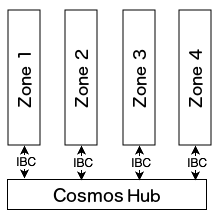
y "Hub", y deseamos que "Zone1" produzca un paquete destinado para “Zone2” pasando por “Hub”. Para mover un paquete de uno blockchain a otro, se publica una prueba en la cadena de recepción. La prueba afirma que la cadena de envío publicó un paquete para el supuesto destino. Para que la cadena receptora pueda comprobar esta prueba, debe poder mantenerse al día con los encabezados de bloque del remitente. esto El mecanismo es similar al utilizado por las cadenas laterales, que requiere dos cadenas que interactúan para ser conscientes una de la otra a través de un flujo bidireccional de datagramas de prueba de existencia (transacciones). El protocolo IBC se puede definir naturalmente utilizando dos tipos de transacciones: una transacción IBCBlockCommitTx , que permite una blockchain para demostrarle a cualquier observador de su bloque más reciente-hash, y una transacción IBCPacketTx , que permite que un blockchain demostrar a cualquier observador que el paquete dado fue efectivamente publicado por la aplicación del remitente, a través de una prueba de Merkle a la reciente bloque-hash. Al dividir la mecánica IBC en dos transacciones separadas, podemos permitir que el mecanismo de mercado de tarifas nativo de la cadena receptora determinar qué paquetes se confirman (es decir, se reconocen), mientras permitiendo total libertad en la cadena de envío en cuanto a cómo Se permiten muchos paquetes salientes. En el ejemplo anterior, para actualizar el bloque-hash de "Zona1" en "Hub" (o de "Hub" en "Zone2"), un IBCBlockCommitTxLa transacción debe publicarse en "Hub" con el bloque-hash de “Zona1” (o en “Zona2” con el bloque-hash de “Hub”). Consulte IBCBlockCommitTx y IBCPacketTx para obtener más información. en los dos tipos de transacciones IBC. De la misma manera que Bitcoin es más seguro al ser distribuido, libro mayor replicado masivamente, podemos hacer que los intercambios sean menos vulnerables a hacks externos e internos ejecutándolo en el blockchain. nosotros Llame a esto un intercambio distribuido. Lo que la comunidad de criptomonedas llama descentralizado El intercambio actual se basa en algo llamado transacciones de "cadena cruzada atómica" (AXC). Con una transacción AXC, dos usuarios en dos cadenas diferentes pueden realizar dos transacciones de transferencia que son comprometidos juntos en ambos libros mayores, o ninguno en absoluto (es decir, atómicamente). Por ejemplo, dos usuarios pueden intercambiar bitcoins por ether (o dos tokens cualesquiera en dos libros de contabilidad diferentes) utilizando transacciones AXC, aunque Bitcoin y Ethereum no están conectados entre sí otro. El beneficio de ejecutar un intercambio en transacciones AXC es que ninguno de los usuarios necesita confiar entre sí ni en el intercambio comercial servicio. La desventaja es que ambas partes deben estar en línea para que se produzca el comercio. Otro tipo de intercambio descentralizado es el replicado masivamente. intercambio distribuido que se ejecuta por sí solo blockchain. Usuarios en este tipo de intercambio puede enviar una orden limitada y convertir su computadora apagada y la operación se puede ejecutar sin que el usuario sea en línea. El blockchain coincide y completa la operación en nombre del comerciante.
Cosmos Mimarlık
Cosmos bağımsız paralel blockchain'lerden oluşan bir ağdır ve bunlar her biri klasik BFT fikir birliği algoritmaları tarafından desteklenmektedir: İhale 1. Bu ağdaki ilk blockchain, Cosmos Hub olacaktır. Cosmos Hub, diğer birçok blockchains'ye (veya bölgeye) bir ağ aracılığıyla bağlanır. yeni inter-blockchain iletişim protokolü. Cosmos Merkezi çok sayıda token türünü izler ve toplamın kaydını tutar bağlı her bölgedeki tokens sayısı. Jetonlar olabilir bir bölgeden diğerine güvenli ve hızlı bir şekilde aktarılır bölgeler arasında sıvı değişimine gerek kalmadan, çünkü hepsi bölgeler arası para transferleri Cosmos Hub üzerinden yapılır. Bu mimari, blockchain alanının karşılaştığı birçok sorunu çözmektedir. Uygulamaların birlikte çalışabilirliği, ölçeklenebilirliği ve kesintisiz yükseltilebilirlik. Örneğin, Bitcoind'den türetilen bölgeler, Go-Ethereum, CryptoNote, ZCash veya herhangi bir blockchain sistemi şunları yapabilir: Cosmos Hub'a takılmalıdır. Bu bölgeler Cosmos'nin şunları yapmasına izin verir: Küresel işlem talebini karşılamak için sonsuz ölçeklenebilirlik. Bölgeler aynı zamanda olarak desteklenecek olan dağıtılmış bir değişim için harika bir yt peki. Cosmos yalnızca tek bir dağıtılmış defter değildir ve Cosmos Hub duvarlarla çevrili bir bahçe ya da evrenin merkezi değil. Biz dağıtılmış defterlerden oluşan açık bir ağ için bir protokol tasarlamak gelecekteki finansal sistemler için yeni bir temel görevi görebilecek, Kriptografi ilkelerine, sağlam ekonomiye, fikir birliğine dayalı teori, şeffaflık ve hesap verebilirlik. Cosmos Hub, Cosmos bölgesindeki ilk genel blockchain merkezidir. Ağ, Tendermint'in BFT fikir birliği algoritması tarafından desteklenmektedir. Tendermint açık kaynak projesi 2014 yılında bu sorunu çözmek için doğdu. Bitcoin'nin çalışma kanıtı fikir birliği algoritmasının hızı, ölçeklenebilirliği ve çevresel sorunları. Kanıtlanmış olanı kullanarak ve geliştirerek
BFT MIT'de 1988'de geliştirilen algoritmalar [20], Tendermint ekip kavramsal olarak proof-of-stake'yi sergileyen ilk ekip oldu tehlikede olmayan hiçbir şey sorununu çözen kripto para birimi ilk nesil proof-of-stake kripto para birimlerinin sıkıntısını çekti NXT ve BitShares1.0 olarak. Bugün neredeyse tüm Bitcoin mobil cüzdanlar güvenilir sunucuları kullanıyor. onlara işlem doğrulaması sağlayın. Bunun nedeni, iş kanıtının bir onaydan önce birçok onayın beklenmesini gerektirmesidir. işlemin geri dönülemez şekilde taahhüt edildiği kabul edilebilir. Doublespend saldırıları halihazırda aşağıdaki gibi hizmetlerde gösterilmiştir: CoinBase. Diğer blockchain fikir birliği sistemlerinden farklı olarak Tendermint şunları sunar: anında ve kanıtlanabilir şekilde güvenli mobil müşteri ödeme doğrulaması. Tendermint hiçbir zaman çatallanmayacak şekilde tasarlandığından, mobil cüzdanlar anında işlem onayı alabilir, bu da Güvenilir ve pratik ödemeler akıllı telefonlarda gerçek oluyor. Bu Nesnelerin İnterneti uygulamaları için önemli sonuçlar doğurmaktadır. peki. Cosmos içindeki doğrulayıcılar, Bitcoin madencilerine benzer bir role sahiptir, ancak bunun yerine oy vermek için kriptografik imzaları kullanın. Doğrulayıcılar taahhüt etmekten sorumlu güvenli, özel makineler bloklar. validator olmayanlar staking token'leri devredebilir (çağrılır) Blok ücretlerinin ve atomun bir kısmını kazanmak için herhangi bir validator'ye "atomlar") ödüller, ancak cezalandırılma (kesilme) riskiyle karşı karşıya kalırlar; validator numaralı delege saldırıya uğradı veya protokolü ihlal etti. Kanıtlanmış Tendermint BFT konsensusunun güvenlik garantileri ve teminatlar paydaşların depozitosu–validators ve delegeler–sağlar Düğümler ve hafif istemciler için kanıtlanabilir, ölçülebilir güvenlik. Dağıtılmış kamu defterlerinin bir anayasası ve yönetim sistemi. Bitcoin, Bitcoin Vakfına güveniyor veyükseltmeleri koordine etmek için madencilik yapın, ancak bu yavaş bir süreçtir. Ethereum, adrese zorlanmanın ardından ETH ve ETC'ye bölündü DAO hacklenmesinin nedeni büyük ölçüde önceden bir toplumsal sözleşmenin olmamasıydı ne de bu tür kararları almaya yönelik mekanizma. Cosmos Merkezindeki doğrulayıcılar ve yetki verenler oy verebilir sistemin önceden ayarlanmış parametrelerini değiştirebilecek öneriler otomatik olarak (blok gaz limiti gibi), yükseltmeleri koordine edin insanların okuyabileceği anayasada yapılacak değişikliklere oy vermek Cosmos Hub'ın politikalarını yöneten. Anayasa gibi konularda paydaşlar arasında uyum sağlar. hırsızlık ve hatalar (TheDAO olayı gibi), daha hızlı ve daha temiz çözünürlük. Her bölgenin kendi anayasası ve yönetimi de olabilir mekanizması da. Örneğin, Cosmos Hub'ın bir özelliği olabilir Merkezde değişmezliği zorunlu kılan anayasa (geri alma yok, Cosmos Hub düğümü uygulamasının hataları için tasarruf edin), her bölge geri alma işlemleriyle ilgili kendi politikalarını belirleyebilir. Farklı politika alanları arasında birlikte çalışabilirliği sağlayarak, Cosmos ağı, kullanıcılarına en üst düzeyde özgürlük ve potansiyel sunar. izinsiz deneme. Burada yeni bir ademi merkeziyet ve ölçeklenebilirlik modelini tanımlıyoruz. Cosmos, birçok blockchain'den oluşan bir ağdır. Nane. Mevcut teklifler “tek bir blockchain” toplam küresel işlem sıralamasıyla birlikte, Cosmos birçok blockchain'nin birbiriyle eşzamanlı çalışmasına izin verir birlikte çalışabilirliği korurken. Temelde Cosmos Hub birçok bağımsız yönetimi yönetiyor blockchains "bölgeler" olarak adlandırılır (bazen "parçalar" olarak da anılır), "parçalama" olarak bilinen veritabanı ölçeklendirme tekniğine referans.
Yayınlanan bölgelerden gelen son blok işlemlerinin sürekli akışı Hub, Hub'ın her bölgenin durumunu takip etmesine olanak tanır. Benzer şekilde, her bölge Hub'ın durumuna ayak uydurur (ancak bölgeler aracılığıyla dolaylı olarak birbirinizi takip etmeyin. Merkez). Bilgi paketleri daha sonra birinden iletilir. Merkle-kanıtlarını kanıt olarak yayınlayarak bölgeden diğerine geçin. Bilgiler gönderildi ve alındı. Bu mekanizmaya denir inter-blockchain iletişim veya kısaca IBC. Bölgelerden herhangi biri döngüsel olmayan bir grafik oluşturmak için merkez olabilir, ancak netlik sağlamak amacıyla yalnızca basit olanı tanımlayacağız. Yalnızca bir hub'ın ve birçok hub'ın olmadığı yapılandırma bölgeler. Cosmos Hub, çoklu varlıkları barındıran bir blockchain'dır token'lerin bireysel kullanıcılar tarafından tutulabileceği dağıtılmış defter veya bölgelerin kendileri tarafından. Bu token'ler bir bölgeden taşınabilir diğerine "bozuk para paketi" adı verilen özel bir IBC paketinde. Merkez toplamın küresel değişmezliğini korumaktan sorumludur bölgeler genelinde her token miktarı. IBC bozuk para paketi işlemler gönderen, hub ve alıcı tarafından gerçekleştirilmelidir blockchains.Cosmos Merkez, tüm hesap için merkezi defter görevi gördüğü için Sistemde Hub'ın güvenliği büyük önem taşımaktadır. iken her bölge şu şekilde güvence altına alınan bir Tendermint blockchain olabilir: 4 kadar az (veya BFT fikir birliğine ihtiyaç duyulmuyorsa daha da az), Hub küresel olarak merkezi olmayan bir validator kümesi tarafından güvence altına alınmalıdır; gibi en şiddetli saldırı senaryolarına dayanabilir. kıtasal ağ bölünmesi veya ulus devlet destekli bir saldırı. Cosmos bölgesi, IBC alışverişini yapan bağımsız bir blockchain bölgesidir Hub ile mesajlar. Merkezin bakış açısına göre bir bölge bir çok varlıklı dinamik üyelikli çoklu imza hesabı IBC paketleri kullanarak tokens gönderip alabilir. Bir gibi kripto para birimi hesabı, bir bölge şu sayıdan daha fazla tokens aktaramaz sahiptir, ancak bunlara sahip olan diğer kişilerden token alabilir. Bir bölge bir veya daha fazla token türünün "kaynağı" olarak belirtilebilir, ona token arzını doldurma gücü veriyor. Cosmos Hub'ın atomları bir bölgenin validator'leri tarafından desteklenebilir Hub'a bağlı. Bu bölgelere çift harcama saldırıları yapılırken oylama gücünün >⅔'ünün olduğu bir bölge olan Tendermint'in hesap verebilirliği ile atomların parçalanmasıyla sonuçlanacaktır Bizans geçersiz durumu taahhüt edebilir. Cosmos Hub çalışmıyor diğer bölgelerde gerçekleştirilen işlemleri doğrulayın veya yürütün; güvendikleri bölgelere token'ler gönderme sorumluluğu kullanıcıların sorumluluğundadır. Gelecekte Cosmos Hub'ın yönetim sistemi Hub'ı geçebilir Bölge arızalarını hesaba katan iyileştirme önerileri. için örneğin, bazı (veya tüm) bölgelerden giden token aktarımlar Bölgelerin acil devre kesilmesine izin vermek için kısılabilir (token aktarımların geçici olarak durdurulması) bir saldırı algılandığında. Şimdi Hub ve bölgelerin birbiriyle nasıl iletişim kurduğuna bakıyoruz diğer. Örneğin, üç adet blockchains varsa, "Bölge1", "Bölge2",
ve “Hub” ve "Bölge1"in hedeflenen bir paket üretmesini diliyoruz. “Hub”tan geçen “Bölge2” için. Bir paketi birinden taşımak için blockchain diğerine, alıcı zincirine bir kanıt gönderilir. Kanıt, gönderen zincirin bir paket yayınladığını belirtir. iddia edilen varış noktası Alıcı zincirin bu kanıtı kontrol etmesi için gönderenin blok başlıklarını takip edebilmelidir. Bu mekanizma, yan zincirler tarafından kullanılan mekanizmaya benzer; Birbiriyle etkileşim halinde olan iki zincirin birbirinden haberdar olması varoluş kanıtı datagramlarının çift yönlü akışı (işlemler). IBC protokolü doğal olarak iki tür kullanılarak tanımlanabilir. işlemler: izin veren bir IBCBlockCommitTx işlemi blockchain herhangi bir gözlemciye en son bloğunun hash olduğunu kanıtlamak için, ve bir IBCPacketTx işlemi; bu, blockchain işleminin yapılmasına olanak tanır. herhangi bir gözlemciye verilen paketin gerçekten yayınlandığını kanıtlayın gönderenin başvurusuyla, Merkle-kanıtı aracılığıyla en son blok-hash. IBC mekaniğini iki ayrı işleme bölerek, Alıcı zincirin yerel ücret piyasası mekanizmasının hangi paketlerin işleneceğini (yani onaylanacağını) belirlerken, Gönderim zincirinde bunun nasıl yapılacağı konusunda tam bir özgürlük sağlanması birçok giden pakete izin verilir. Yukarıdaki örnekte, "Zone1"in-hash bloğunu güncellemek için “Hub”da (veya “Zone2”deki “Hub”da), bir IBCBlockCommitTxişlem “Hub” üzerinde hash bloğuyla yayınlanmalıdır. “Bölge1” (veya “Hub”ın hash bloğuyla "Bölge2" üzerinde). Daha fazla bilgi için IBCBlockCommitTx ve IBCPacketTx'e bakın. iki IBC işlem türünde. Aynı şekilde Bitcoin dağıtılmış olduğundan daha güvenlidir, toplu kopyalanmış defter sayesinde borsaları daha az savunmasız hale getirebiliriz blockchain üzerinde çalıştırarak harici ve dahili saldırıları gerçekleştirebilirsiniz. Biz buna dağıtılmış değişim diyoruz. Kripto para topluluğunun merkezi olmayan yapı olarak adlandırdığı şey Bugünkü borsalar “atomik çapraz zincir” (AXC) işlemleri adı verilen bir şeye dayanıyor. Bir AXC işlemiyle iki kullanıcı iki farklı zincir iki transfer işlemi yapabilir her iki defterde birlikte işlenir veya hiç yapılmaz (ör. atomik olarak). Örneğin, iki kullanıcı bitcoinleri eterle takas edebilir (veya AXC işlemlerini kullanarak iki farklı defterdeki herhangi iki tokens, Bitcoin ve Ethereum her birine bağlı olmasa da diğer. AXC işlemlerinde borsa çalıştırmanın faydası kullanıcıların birbirlerine veya ticari eşleştirmeye güvenmesine gerek yok hizmet. Dezavantajı ise her iki tarafın da çevrimiçi olması gerekmesidir. gerçekleşecek olan ticarettir. Merkezi olmayan değişimin bir başka türü de kitlesel olarak kopyalanan borsalardır. kendi başına çalışan dağıtılmış borsa blockchain. Kullanıcılar bu tür borsalar limit emri verebilir ve emirlerini çevirebilirler. bilgisayar kapalıdır ve işlem kullanıcı olmadan yürütülebilir çevrimiçi. blockchain eşleşir ve takası onun adına tamamlar tüccarın.
Aplicaciones
Un intercambio centralizado puede crear una cartera de pedidos profunda y limitada pedidos y así atraer a más comerciantes. La liquidez engendra más liquidez en el mundo cambiario, por lo que existe una fuerte red efecto (o al menos un efecto de que el ganador se lleva la mayor parte) en el intercambio negocio. El líder actual en intercambios de criptomonedas en la actualidad. es Poloniex con un volumen de 24 horas de $20M, y en segundo lugar está Bitynex con un volumen de 5 millones de dólares en 24 horas. Dada una red tan fuerte efectos, es poco probable que los intercambios descentralizados basados en AXC ganar volumen sobre los intercambios centralizados. Por una descentralización intercambio para competir con un intercambio centralizado, necesitaría para soportar carteras de pedidos profundas con órdenes limitadas. Sólo un distribuido El intercambio en un blockchain puede proporcionar eso. Tendermint proporciona beneficios adicionales para transacciones más rápidas se compromete. Priorizando la finalización rápida sin sacrificar coherencia, las zonas en Cosmos pueden analizar transacciones rápidamente, por tanto transacciones de orden de cambio como IBC token transferencias a y de otras zonas. Dado el estado actual de los intercambios de criptomonedas, una gran La aplicación para Cosmos es el intercambio distribuido (también conocido como el CosmosDEX). La capacidad de rendimiento de transacciones, así como La latencia de confirmación puede ser comparable a la de la centralizada. intercambios. Los comerciantes pueden enviar órdenes limitadas que se pueden ejecutar sin que ambas partes tengan que estar en línea. Y con Tendermint, el centro Cosmos y IBC, los operadores pueden mover fondos dentro y fuera de el intercambio hacia y desde otras zonas con rapidez. Una zona privilegiada puede actuar como fuente de un token puenteado de Otra criptomoneda. Un puente es similar a la relación. entre un centro y una zona Cosmos; ambos deben mantenerse al día con el últimos bloques del otro para verificar las pruebas de que tokens tienen pasó de uno a otro. Una "zona puente" en la Cosmos La red se mantiene al día con el Hub y con los demás.
criptomoneda. La dirección indirecta a través de la zona del puente permite La lógica del Hub es permanecer simple y agnóstica con respecto a otros. blockchain estrategias de consenso como Bitcoin proof-of-work minería. Cada zona puente validator ejecutaría un sistema impulsado por Tendermint blockchain con una aplicación puente especial ABCI, pero también un nodo completo de el “origen” blockchain. Cuando se extraen nuevos bloques en el origen, la zona del puente validators llegarán a un acuerdo sobre los bloques comprometidos firmando y compartir su respectiva visión local del blockchain del origen. propina. Cuando una zona puente recibe el pago en el origen (y Se acordó haber visto suficientes confirmaciones en el caso. de una cadena PoW como Ethereum o Bitcoin), un correspondiente Se crea una cuenta en la zona puente con ese saldo. En el caso de Ethereum, la zona puente puede compartir la misma validator: establecido como el concentrador Cosmos. En el lado Ethereum (el origen), un contrato puente permitiría a los titulares de ether enviar ether a la zona puente enviándolo al contrato puente en Ethereum. Una vez que el contrato puente recibe el éter, el El éter no se puede retirar a menos que se envíe un paquete IBC apropiado. recibido por el contrato puente de la zona puente. el El contrato-puente rastrea el conjunto validator de la zona-puente, que puede ser idéntico al conjunto validator del Cosmos Hub. En el caso de Bitcoin, el concepto es similar excepto que en lugar de un único contrato puente, cada UTXO estaría controlado por un umbral de pubscript P2SH multifirma. Debido a las limitaciones de En el sistema P2SH, los firmantes no pueden ser idénticos al Cosmos. Buje validator-conjunto.El éter en la zona del puente (“éter puenteado”) se puede transferir a y desde el Hub, y luego ser destruido con una transacción que lo envía a una dirección de retiro particular en Ethereum. Un IBC paquete que prueba que la transacción ocurrió en la zona puente se puede publicar en el contrato puente Ethereum para permitir que el éter para ser retirado. En el caso de Bitcoin, el sistema de secuencias de comandos restringido hace que sea Es difícil reflejar el mecanismo de transferencia de monedas IBC. Cada UTXO tiene su propio pubscript independiente, por lo que cada UTXO debe ser migrado a un nuevo UTXO cuando hay un cambio en el conjunto de Bitcoin firmantes del depósito de garantía. Una solución es comprimir y descomprima el conjunto UTXO según sea necesario para mantener el número total de UTXOs caídos. El riesgo de un contrato puente de este tipo es un conjunto validator deshonesto. ≥⅓ El poder de voto bizantino podría provocar una bifurcación y retirar el éter del contrato de puente en Ethereum mientras se mantiene el puente en la zona del puente. Peor aún, >⅔ del poder de voto bizantino puede robar éter directamente de quienes lo enviaron al contrato puente desviándose de la lógica de puenteo original de la zona del puente. Es posible abordar estos problemas diseñando el puente para que sea totalmente responsable. Por ejemplo, todos los paquetes IBC, desde el concentrador y el origen, podría requerir el reconocimiento por parte de la zona del puente en de tal manera que todas las transiciones de estado de la zona del puente puedan ser desafiado y verificado eficientemente por el centro o por el origen contrato-puente. El Hub y el origen deben permitir que la zona puente validators publique garantías y token transferencias fuera de la El contrato puente debe retrasarse (y la desvinculación de la garantía período lo suficientemente largo) para permitir que cualquier impugnación sea realizada por auditores independientes. Dejamos el diseño de la especificación y Implementación de este sistema abierto como futuro Cosmos
propuesta de mejora, que será aprobada por el Cosmos Hub sistema de gobernanza. Resolver el problema de escala es un tema abierto para Ethereum. Actualmente, los nodos Ethereum procesan cada transacción y También almacena todos los estados. enlace. Dado que Tendermint puede confirmar bloques mucho más rápido que los de Ethereum Zonas proof-of-work, EVM impulsadas por el consenso de Tendermint y operar con éter puenteado puede proporcionar un mayor rendimiento a Ethereum blockchains. Además, aunque el Cosmos Hub y IBC la mecánica de paquetes no permite una lógica de contrato arbitraria ejecución per se, se puede utilizar para coordinar token movimientos entre Ethereum contratos que se ejecutan en diferentes zonas, proporcionando una base para el escalamiento centrado en token Ethereum a través de fragmentación. Las zonas Cosmos ejecutan una lógica de aplicación arbitraria, que se define en el comienzo de la vida de la zona y potencialmente puede actualizarse a lo largo del tiempo por la gobernanza. Esta flexibilidad permite que Cosmos zonas actuar como puentes hacia otras criptomonedas como Ethereum o Bitcoin, y también permite derivados de esos blockchains, utilizando la misma base de código pero con un conjunto validator diferente y distribución inicial. Esto permite que muchas criptomonedas existentes frameworks, como los de Ethereum, Zerocash, Bitcoin, CryptoNote, etc., para usar con Tendermint Core, que es un motor de consenso de mayor rendimiento, en una red común, abriendo una tremenda oportunidad para la interoperabilidad entre plataformas. Además, como multiactivo blockchain, un único La transacción puede contener múltiples entradas y salidas, donde cada una La entrada puede ser de cualquier tipo token, lo que permite que Cosmos sirva directamente como una plataforma para el intercambio descentralizado, aunque se asumen pedidospara ser emparejado a través de otras plataformas. Alternativamente, una zona puede servir como un intercambio distribuido tolerante a fallas (con libros de pedidos), que Puede ser una mejora estricta con respecto a la centralizada existente. intercambios de criptomonedas que tienden a ser pirateados con el tiempo. Las zonas también pueden servir como versiones empresariales respaldadas por blockchain y sistemas gubernamentales, donde partes de un servicio particular que tradicionalmente están dirigidos por una organización o grupo de organizaciones en su lugar, se ejecutan como una aplicación ABCI en una zona determinada, que le permite heredar la seguridad y la interoperabilidad del público Cosmos red sin sacrificar el control sobre la red subyacente servicio. Por lo tanto, Cosmos puede ofrecer lo mejor de ambos mundos para organizaciones que buscan utilizar la tecnología blockchain pero que están desconfiado de ceder completamente el control a un tercero distribuido fiesta. Algunos afirman que un problema importante con las políticas que favorecen la coherencia algoritmos de consenso como Tendermint es que cualquier red partición que hace que no haya una sola partición con >⅔ el poder de voto (por ejemplo, ≥⅓ salir de una revista) detendrá el consenso por completo. La arquitectura Cosmos puede ayudar a mitigar este problema mediante el uso un centro global con zonas autónomas regionales, donde el poder de voto para cada zona se distribuyen en base a una zona geográfica común región. Por ejemplo, un paradigma común puede ser el de individuos ciudades o regiones para operar sus propias zonas mientras comparten una eje común (por ejemplo, el Cosmos Hub), que permite que la actividad municipal persistir en caso de que el concentrador se detenga debido a una red temporal partición. Tenga en cuenta que esto permite una verdadera geología, política y Características topológicas de la red que se deben considerar al diseñar sistemas robustos. Sistemas federados tolerantes a fallos.
NameCoin fue uno de los primeros blockchains en intentar resolver el problema de resolución de nombres adaptando el Bitcoin blockchain. Lamentablemente, ha habido varios problemas con este enfoque. Con Namecoin podemos comprobar que, por ejemplo, @satoshi fue registrado con una clave pública particular en algún momento en el pasado, pero no sabríamos si la clave pública había sido desde entonces actualizado recientemente a menos que descarguemos todos los bloques desde el último actualización de ese nombre. Esto se debe a la limitación de Bitcoin UTXO transacción Modelo de merkle-ización, donde solo el las transacciones (pero no el estado de la aplicación mutable) están adaptadas a Merkle en el bloque-hash. Esto nos permite probar la existencia, pero no la inexistencia de actualizaciones posteriores de un nombre. Por lo tanto, no podemos saber por seguro el valor más reciente de un nombre sin confiar en un completo nodo, o incurrir en costos significativos en ancho de banda al descargar todo el blockchain. Incluso si se implementara un árbol de búsqueda tipo Merkle en NameCoin, su dependencia de proof-of-work facilita la verificación del cliente problemático. Los clientes Light deben descargar una copia completa del encabezados para todos los bloques en todo el blockchain (o al menos todos los encabezados desde la última actualización de un nombre). Esto significa que el Los requisitos de ancho de banda aumentan linealmente con la cantidad de tiempo. [21]. Además, cambios de nombre en un proof-of-work blockchain requiere esperar proof-of-work bloques de confirmación adicionales, lo que puede tardar hasta una hora el Bitcoin. Con Tendermint, todo lo que necesitamos es el bloque más reciente: hash firmado por un quórum de validators (por poder de voto) y un Merkle prueba del valor actual asociado con el nombre. Esto lo hace Es posible tener un cliente ligero conciso, rápido y seguro. verificación de valores de nombres. En Cosmos, podemos tomar este concepto y ampliarlo más. cada uno La zona de registro de nombres en Cosmos puede tener un nombre de dominio de nivel superior (TLD) asociado, como “.com” o “.org”, y cada nombre-
La zona de registro puede tener su propia gobernanza y registro. reglas.
Uygulamalar
Merkezi bir borsa, derin bir limit emir defteri oluşturabilir siparişler verir ve böylece daha fazla tüccar çeker. Likidite daha fazlasını doğurur Borsa dünyasında likidite ve dolayısıyla güçlü bir ağ var takasta etkisi (veya en azından kazananın çoğunu alması etkisi) iş. Bugünün kripto para borsalarının mevcut lideri Poloniex 24 saatlik hacimle 20 milyon dolar ile ikinci sırada yer alıyor. Bitynex'in 24 saatlik hacmi 5 milyon dolar. Bu kadar güçlü bir ağ göz önüne alındığında AXC tabanlı merkezi olmayan borsaların Merkezi borsalarda hacim kazanma. Merkezi olmayan bir sistem için Merkezi bir borsayla rekabet edebilmek için borsanın derin emir defterlerini limitli emirlerle desteklemek. Yalnızca dağıtılmış blockchain üzerindeki değişim bunu sağlayabilir. Tendermint, daha hızlı işlem yapmanın ek faydalarını sağlar taahhüt eder. Ödün vermeden hızlı üretime öncelik vererek tutarlılık sayesinde Cosmos içindeki bölgeler işlemleri hızlı bir şekilde analiz edebilir; hem takas emri işlemleri hem de IBC token transferleri ve diğer bölgelerden. Kripto para borsalarının bugünkü durumu göz önüne alındığında, büyük bir Cosmos başvurusu dağıtılmış borsadır (diğer adıyla Cosmos DEX). İşlem çıkış kapasitesi ve taahhüt gecikmesi merkezileştirilmiş olanlarla karşılaştırılabilir olabilir borsalar. Yatırımcılar gerçekleştirilebilecek limitli emirler gönderebilirler her iki tarafın da çevrimiçi olmasına gerek kalmadan. Ve Tendermint ile, Cosmos merkezi ve IBC ile yatırımcılar fonları içeri ve dışarı taşıyabilirler hızlı bir şekilde diğer bölgelere gidiş-dönüş alışverişi. Ayrıcalıklı bir bölge, köprülenmiş bir token kaynağı olarak hareket edebilir başka bir kripto para birimi. Köprü ilişkiye benzer Cosmos hub ve bölge arasında; her ikisi de buna ayak uydurmalı tokens'nin sahip olduğu kanıtları doğrulamak için diğerinin en son blokları birinden diğerine taşındı. Cosmos üzerinde bir "köprü bölgesi" ağ hem Hub'a hem de diğerine ayak uydurur
kripto para birimi. Köprü bölgesi üzerinden yönlendirme, Hub'ın mantığının basit kalması ve diğerlerine göre agnostik olması blockchain Bitcoin'nın proof-of-work gibi fikir birliği stratejileri madencilik. Her köprü bölgesi validator Tendermint destekli bir sistem çalıştıracaktır. blockchain özel bir ABCI köprü uygulamasına ve aynı zamanda tam düğüme sahip “köken” blockchain. Başlangıç noktasında yeni bloklar çıkarıldığında köprü bölgesi validators imzalayarak taahhüt edilen bloklar üzerinde anlaşmaya varacak ve kaynağın blockchain ile ilgili yerel görüşlerini paylaşıyorlar ipucu. Bir köprü bölgesi başlangıç noktasında ödeme aldığında (ve davada yeterli onayın görüldüğü konusunda anlaşmaya varıldı Ethereum veya Bitcoin gibi bir PoW zincirinin), karşılık gelen Bu bakiye ile köprü bölgesinde hesap oluşturulur. Ethereum durumunda köprü bölgesi aynısını paylaşabilir validator--Cosmos Hub olarak ayarlandı. Ethereum tarafında ( Origin), bir köprü sözleşmesi, Ether sahiplerinin Ether göndermesine izin verecek tarihinde köprü sözleşmesine göndererek köprü bölgesine Ethereum. Köprü sözleşmesiyle eter alındıktan sonra, Uygun bir IBC paketi sağlanmadıkça eter geri çekilemez köprü sözleşmesiyle köprü bölgesinden alındı. köprü sözleşmesi köprü bölgesinin validator kümesini izler; Cosmos Hub'ın validator-setiyle aynı olabilir. Bitcoin durumunda kavram benzerdir ancak bunun yerine tek bir köprü sözleşmesi, her UTXO bir kişi tarafından kontrol edilecektir. eşik çoklu imza P2SH yayını. Sınırlamalar nedeniyle P2SH sisteminde imzalayanlar Cosmos ile aynı olamaz Hub validator-set.Köprü bölgesindeki eter ("köprülü eter") şuraya aktarılabilir: ve Hub'dan ve daha sonra bir işlemle yok edilmesi Ethereum adresindeki belirli bir para çekme adresine gönderir. Bir IBC İşlemin köprü bölgesinde gerçekleştiğini kanıtlayan paket etere izin vermek için Ethereum köprü sözleşmesine gönderilebilir geri çekilmek. Bitcoin durumunda, kısıtlı komut dosyası sistemi bunu yapar IBC para transfer mekanizmasını yansıtmak zor. Her biri UTXO kendi bağımsız yayın metni vardır, dolayısıyla her UTXO kümesinde bir değişiklik olduğunda yeni bir UTXO'ye taşındı Bitcoin emanet imzalayanlar. Çözümlerden biri sıkıştırmak ve toplam sayıyı korumak için UTXO-setinin sıkıştırmasını gerektiği kadar açın UTXOs'den fazlası kapatıldı. Böyle bir köprüleme sözleşmesinin riski hileli bir validator kümesidir. ≥⅓ Bizans'ın oy verme gücü eterin çekilmesine neden olabilir Ethereum üzerindeki köprü sözleşmesinden, köprüyü köprü bölgesinde tutarken. Daha da kötüsü, Bizans'ın oylama gücü >⅔ Eteri köprü sözleşmesine gönderenlerden doğrudan çalmak köprü bölgesinin orijinal köprüleme mantığından saparak. Köprüyü uygun şekilde tasarlayarak bu sorunları çözmek mümkündür. tamamen sorumlu. Örneğin, hub'dan gelen tüm IBC paketleri ve menşei, köprü bölgesi tarafından onaylanmayı gerektirebilir öyle ki köprü bölgesinin tüm durum geçişleri merkez ya da menşe tarafından verimli bir şekilde sorgulanmış ve doğrulanmıştır köprü sözleşmesi. Hub ve menşe, validators köprü bölgesinin teminat göndermesine ve token'nin merkezden transfer yapmasına izin vermelidir. Köprü sözleşmesi ertelenmeli (ve teminatların çözülmesi yeterince uzun bir süre) herhangi bir zorluğun üstesinden gelinmesine izin vermek için bağımsız denetçiler. Şartnamenin tasarımını bırakıyoruz ve bu sistemin uygulanması gelecekte açık olacak Cosmos
iyileştirme teklifi, Cosmos Merkez tarafından onaylanacak yönetim sistemi. Ölçekleme sorununu çözmek Ethereum için açık bir konudur. Şu anda Ethereum düğüm her bir işlemi işliyor ve ayrıca tüm durumları saklar. bağlantı. Tendermint, blokları Ethereum'den çok daha hızlı işleyebildiğinden proof-of-work, EVM bölgeleri Tendermint konsensusu tarafından desteklenmektedir ve köprülü eter üzerinde çalışmak daha yüksek performans sağlayabilir Ethereum blockchains. Ayrıca, Cosmos Hub ve IBC paket mekaniği keyfi sözleşme mantığına izin vermez kendi başına yürütme, token hareketleri koordine etmek için kullanılabilir farklı bölgelerde çalışan Ethereum sözleşmeler arasında, token merkezli Ethereum ölçeklendirme için bir temel sağlar parçalama. Cosmos bölgeleri, şu saatte tanımlanan rastgele uygulama mantığını çalıştırır: bölgenin yaşamının başlangıcıdır ve potansiyel olarak güncellenebilir zamanla yönetim tarafından Bu esneklik, Cosmos bölgelerinin Ethereum gibi diğer kripto para birimlerine köprü görevi görür veya Bitcoin ve aynı zamanda bu blockchain'lerin türevlerine de izin verir, aynı kod tabanını kullanıyor ancak farklı bir validator kümesiyle ve ilk dağıtım. Bu, mevcut birçok kripto para biriminin Ethereum, Zerocash, Bitcoin gibi çerçeveler, Tendermint Core ile kullanılacak CryptoNote vb. ortak bir ağ üzerinde daha yüksek performanslı bir fikir birliği motoru, arasında birlikte çalışabilirlik için muazzam bir fırsat yaratıyor platformlar. Ayrıca, çoklu varlık blockchain olarak tek bir işlem birden fazla girdi ve çıktı içerebilir; burada her biri giriş herhangi bir token türünde olabilir; bu, Cosmos öğesinin doğrudan şu şekilde hizmet vermesini sağlar: emirlerin varsayılmasına rağmen merkezi olmayan değişim için bir platformdiğer platformlar aracılığıyla eşleştirilecek. Alternatif olarak bir bölge hizmet verebilir Dağıtılmış, hataya dayanıklı bir borsa olarak (sipariş defterleri ile), mevcut merkezi sisteme göre kesin bir gelişme olabilir zamanla saldırıya uğrama eğiliminde olan kripto para borsaları. Bölgeler ayrıca kurumsal işletmenin blockchain destekli sürümleri olarak da hizmet verebilir ve belirli bir hizmetin parçalarının bulunduğu hükümet sistemleri geleneksel olarak bir kuruluş veya kuruluşlar grubu tarafından yönetilir bunun yerine belirli bir bölgede ABCI uygulaması olarak çalıştırılır; Kamunun güvenliğini ve birlikte çalışabilirliğini devralmasına izin verir Temeldeki kontrolden ödün vermeden Cosmos ağı hizmet. Dolayısıyla Cosmos her iki dünyanın da en iyisini sunabilir blockchain teknolojisini kullanmak isteyen ancak Kontrolü tamamen dağıtılmış bir üçüncüye bırakma konusunda ihtiyatlı davranın parti. Bazıları tutarlılığı tercih etmenin büyük bir sorun olduğunu iddia ediyor Tendermint gibi fikir birliği algoritmaları, herhangi bir ağın
⅔ ile tek bir bölümün olmamasına neden olan bölüm oylama gücü (örneğin ≥⅓ fanzinden çıkmak) fikir birliğini tamamen durduracaktır. Cosmos mimarisi, aşağıdakileri kullanarak bu sorunun azaltılmasına yardımcı olabilir: oy verme yetkisinin olduğu bölgesel özerk bölgelere sahip küresel bir merkez her bölge için ortak bir coğrafi temele göre dağıtılır bölge. Örneğin, ortak bir paradigma bireysel olabilir. şehirleri veya bölgeleri paylaşırken kendi bölgelerini işletmek ortak merkez (ör. Cosmos Merkez), belediye faaliyetlerinin hub'ın geçici bir ağ nedeniyle durması durumunda devam etmesi bölüm. Bunun gerçek jeolojik, politik ve Sağlam tasarımda dikkate alınması gereken ağ topolojik özellikleri Birleşik hataya dayanıklı sistemler.
NameCoin bu sorunu çözmeye çalışan ilk blockchain'lardan biriydi. Bitcoin blockchain uyarlanarak ad çözümleme sorunu. Ne yazık ki bu yaklaşımla ilgili çeşitli sorunlar yaşandı. Namecoin ile örneğin @satoshi'nin olduğunu doğrulayabiliriz. Geçmişte bir noktada belirli bir genel anahtarla kayıtlı olan, ancak genel anahtarın o zamandan beri kullanılıp kullanılmadığını bilemiyoruz. sonuncusundan bu yana tüm blokları indirmediğimiz sürece yakın zamanda güncellendi bu ismin güncellenmesi. Bunun nedeni Bitcoin'nin sınırlamasıdır UTXO işlem Merkleleştirme modeli; burada yalnızca işlemler (ancak değiştirilebilir uygulama durumu değil) Merkle'lidir hash bloğuna. Bu, bir ismin daha sonraki güncellemelerinin var olmadığını değil, varlığını kanıtlamamızı sağlar. Bu nedenle bunu bilemeyiz tam olarak güvenmeden bir ismin en son değerini kesin olarak belirlemek indirerek bant genişliğinde önemli maliyetlere neden olmak tamamı blockchain. NameCoin'de Merkle'li bir arama ağacı uygulanmış olsa bile, proof-of-work bağımlılığı, hafif istemci doğrulamasını sağlar sorunlu. Light istemcilerin tam bir kopyasını indirmeleri gerekir. blockchain'un tamamındaki tüm bloklar için başlıklar (veya en azından bir ismin son güncellemesinden bu yana başlıklar). Bu şu anlama gelir: bant genişliği gereksinimleri zaman miktarıyla doğrusal olarak ölçeklenir [21]. Ayrıca proof-of-work blockchain numaralı telefondaki ad değişiklikleri ek proof-of-work onaylama bloklarının beklenmesini gerektirir, Bitcoin tarihinde bu işlem bir saate kadar sürebilir. Tendermint ile ihtiyacımız olan tek şey en son blok-hash validators'lik bir çoğunluk (oy gücüne göre) ve bir Merkle tarafından imzalandı isimle ilişkili mevcut değerin kanıtı. Bu onu yapar kısa ve öz, hızlı ve güvenli bir ışık istemcisine sahip olmak mümkün ad değerlerinin doğrulanması. Cosmos'de bu konsepti alıp daha da genişletebiliriz. Her biri Cosmos içindeki ad kayıt bölgesi, ".com" veya ".org" gibi ilişkili bir üst düzey alan (TLD) adına sahip olabilir ve her ad-
kayıt bölgesinin kendi yönetimi ve kaydı olabilir kurallar.
Gobernanza y economía
Si bien el Cosmos Hub es un libro mayor distribuido de activos múltiples, existe un token nativo especial llamado átomo. Los átomos son los únicos staking token del concentrador Cosmos. Los átomos son una licencia para que su poseedor pueda votar, validar o delegar en otros validators. Me gusta Ethereum éter, los átomos también se pueden utilizar para pagar las tarifas de transacción para mitigar el spam. Átomos inzacionarios adicionales y transacción en bloque. las tarifas se recompensan a validators y a los delegados que delegan en validators. La transacción BurnAtomTx se puede utilizar para recuperar cualquier cantidad proporcional de tokens del fondo de reserva. La distribución inicial del átomo tokens y validators en Génesis se destinará a los donantes de la recaudación de fondos Cosmos (75%), donantes principales (5%), Cosmos Network Foundation (10%) y ALL IN BITS, Inc. (10%). Desde la génesis en adelante, 1/3 de la cantidad total de átomos Se recompensará a los validators vinculados y a los delegados cada año. Consulte el Plan Cosmos para obtener detalles adicionales. A diferencia de Bitcoin u otros proof-of-work blockchains, un Tendermint blockchain se vuelve más lento con más validator debido al aumento Complejidad de la comunicación. Afortunadamente, podemos apoyar lo suficiente validators para crear un blockchain robusto distribuido globalmente con tiempos de confirmación de transacciones muy rápidos y, como ancho de banda,
almacenamiento y capacidad de computación paralela, podremos para admitir más validators en el futuro. El día de la génesis, el número máximo de validators se establecerá en 100, y este número aumentará a una tasa del 13% durante 10 años, y liquidarse en 300 validators. Los poseedores de átomos que aún no lo son pueden convertirse en validators al firmar y enviar una transacción BondTx . la cantidad de Los átomos proporcionados como garantía deben ser distintos de cero. Cualquiera puede convertirse a validator en cualquier momento, excepto cuando el tamaño del actual El conjunto validator es mayor que el número máximo de validators permitido. En ese caso, la transacción sólo es válida si el monto de átomos es mayor que la cantidad de átomos efectivos que contiene el más pequeño validator, donde los átomos efectivos incluyen átomos delegados. Cuando un nuevo validator reemplaza un validator existente de tal manera, el validator existente se vuelve inactivo y todos los átomos y Los átomos delegados entran en el estado desligado. Debe imponerse alguna sanción a los validators por cualquier Desviación intencional o no intencional de lo sancionado. protocolo. Algunas pruebas son inmediatamente admisibles, como una doble señal a la misma altura y vuelta, o una violación de Año 0: 100 Año 1: 113 Año 2: 127 Año 3: 144 Año 4: 163 Año 5: 184 Año 6: 208 Año 7: 235 Año 8: 265 Año 9: 300 Año 10: 300 ...
“prevote-the-lock” (una regla del protocolo de consenso de Tendermint). Dicha evidencia resultará en que el validator pierda su buena reputación. y sus átomos enlazados, así como su participación proporcional de tokens en el fondo de reserva –llamado colectivamente su “participación”– se reducirá drásticamente. A veces, los validators no estarán disponibles, ya sea debido a cuestiones regionales interrupciones de la red, cortes de energía u otras razones. Si, en cualquier punto en los últimos bloques ValidatorTimeoutWindow , un validator El voto de confirmación no está incluido en el blockchain más de ValidatorTimeoutMaxAbsent veces, ese validator se convertirá en inactivo y perderá ValidatorTimeoutPenalty (POR PREDETERMINADO 1%) de su estaca. Algunos comportamientos “maliciosos” no producen resultados evidentemente discernibles. evidencia sobre el blockchain. En estos casos, los validators pueden coordinar fuera de banda para forzar el tiempo de espera de estos maliciosos validators, si hay un consenso de supermayoría. En situaciones en las que el Centro Cosmos se detiene debido a una coalición ≥⅓ de el poder de voto sale de la revista, o en situaciones en las que una coalición ≥⅓ del poder de voto censurar evidencia de comportamiento malicioso por parte de ingresando al blockchain, el hub debe recuperarse con un hard-fork propuesta de reorganización. (Enlace a “Bifurcaciones y ataques de censura”). Cosmos Hub validators puede aceptar cualquier token tipo o combinación de tipos como tarifas por procesar una transacción. Cada validator puede establecer subjetivamente el tipo de cambio que desee y elegir cualquier transacción que desee, siempre y cuando el BlockGasLimit sea no superado. Las tarifas cobradas, menos los impuestos que se especifican a continuación, se redistribuyen entre los accionistas vinculados en proporción a sus átomos enlazados, cada ValidatorPayoutPeriod (POR PREDETERMINADO 1 hora).De las tarifas de transacción cobradas, se aplicará el impuesto de reserva (2 % POR DEFECTO). ir hacia el grupo de reserva para aumentar el grupo de reserva y aumentar la seguridad y el valor de la red Cosmos. estos Los fondos también se pueden distribuir de acuerdo con las decisiones. realizadas por el sistema de gobierno. Poseedores de átomos que delegan su poder de voto a otros validators pagar una comisión al delegado validator. La comisión puede ser establecido por cada validator. La seguridad del Cosmos Hub es una función de la seguridad del validators subyacentes y la elección de delegación por parte de los delegados. Para fomentar el descubrimiento y la notificación temprana de los hallazgos vulnerabilidades, el Cosmos Hub alienta a los piratas informáticos a publicar exploits exitosos a través de una transacción ReportHackTx que dice: "Este validator fue pirateado. Por favor envíe la recompensa a esta dirección”. sobre tal exploit, el validator y los delegados quedarán inactivos, HackPunishmentRatio (predeterminado 5%) de los átomos de todos obtendrán cortado y HackRewardRatio (5 %) de los átomos de todos será recompensado en la dirección de recompensa del hacker. El validator debe recuperar los átomos restantes utilizando su clave de respaldo. Para evitar que se abuse de esta característica para transferir átomos no adquiridos, la porción de átomos adquiridos frente a los no adquiridos de validators y delegados antes y después del ReportHackTx siguen siendo los mismos, y la recompensa por hackers incluirá algunos átomos no adquiridos, si los hay. El Cosmos Hub es operado por una organización distribuida que requiere un mecanismo de gobernanza bien definido para coordinar varios cambios en el blockchain, como la variable
parámetros del sistema, así como actualizaciones de software y enmiendas constitucionales. Todos los validator son responsables de votar todas las propuestas. No poder votar una propuesta de manera oportuna resultará en el validator siendo desactivado automáticamente durante un período de tiempo llamado Período de penalización por ausentismo (POR PREDETERMINADO, 1 semana). Los delegados heredan automáticamente el voto del delegado. validator. Esta votación puede anularse manualmente. Átomos no enlazados no obtener ningún voto. Cada propuesta requiere un depósito de MinimumProposalDeposit tokens, que puede ser una combinación de uno o más tokens incluyendo los átomos. Para cada propuesta, los votantes pueden votar para tomar el depósito. Si más de la mitad de los votantes optan por tomar la depósito (por ejemplo, porque la propuesta era spam), el depósito va a reserva, excepto los átomos que se queman. Para cada propuesta, los votantes podrán votar con las siguientes opciones: si Sí con fuerza No No con fuerza abstenerse Una mayoría estricta de votos Sí o SíConFuerza (o No o votos NayWithForce) es necesario para que la propuesta se decida como aprobado (o decidido como fallido), pero 1/3+ puede vetar la mayoría decisión votando “con fuerza”. Cuando se veta por mayoría estricta, todos son castigados con la pérdida de VetoPenaltyFeeBlocks (POR DEFECTO el valor de 1 día de bloques) valor de tarifas (excepto impuestos que no se verá afectado), y el partido que vetó la mayoría
La decisión será castigada adicionalmente con la pérdida de VetoPenaltyAtoms. (POR DEFECTO 0,1%) de sus átomos. Cualquiera de los parámetros definidos aquí se puede cambiar con el paso de una ParameterChangeProposal . Los átomos pueden ser inzatados y los fondos del fondo de reserva gastados con el aprobación de una BountyProposal . Todas las demás propuestas, como la propuesta para mejorar el protocolo, se coordinará a través de la TextProposal genérica. Ver el plano. Ha habido muchas innovaciones en el consenso blockchain y escalabilidad en los últimos años. Esta sección proporciona una breve encuesta de un número selecto de importantes. El consenso en presencia de participantes malintencionados es un problema que se remonta a principios de la década de 1980, cuando Leslie Lamport acuñó el frase “falla bizantina” para referirse al comportamiento arbitrario del proceso que se desvía del comportamiento previsto, a diferencia de un "fallo de accidente", donde un proceso simplemente falla. Se descubrieron las primeras soluciones para redes síncronas donde hay un límite superior enlatencia del mensaje, aunque el uso práctico se limitó a niveles altamente entornos controlados, como controladores de aviones y Centros de datos sincronizados mediante relojes atómicos. No fue hasta el A finales de los 90 se creó la Tolerancia práctica a fallos bizantinos (PBFT) [11]. presentado como un consenso eficiente parcialmente sincrónico algoritmo capaz de tolerar hasta ⅓ de los procesos que se comportan arbitrariamente. PBFT se convirtió en el algoritmo estándar, generando muchos variaciones, incluida la más reciente creada por IBM como parte de su contribución a Hyperledger. El principal beneficio del consenso de Tendermint sobre PBFT es que Tendermint tiene una estructura subyacente mejorada y simplificada, algo de lo cual es el resultado de adoptar el paradigma blockchain. Los bloques de Tendermint deben comprometerse en orden, lo que evita la complejidad y sobrecarga de comunicación asociados con PBFT cambios de vista. En Cosmos y muchas criptomonedas, no existe Es necesario permitir que el bloque N+i donde i >= 1 se confirme, cuando el bloque N en sí aún no se ha comprometido. Si el ancho de banda es la razón por la cual bloquear N no se ha comprometido en una zona Cosmos, entonces no ayuda usar Votos para compartir ancho de banda por los bloques N+i. Si una partición de red o Los nodos de ofzine son la razón por la cual el bloque N no se ha comprometido, entonces N+i no me comprometeré de todos modos. Además, la agrupación de transacciones en bloques permite Merkle-hashing regular del estado de la aplicación, en lugar de resúmenes periódicos como con el esquema de puntos de control de PBFT. Esto permite para compromisos de transacciones demostrables más rápidos para clientes ligeros y más rápidos comunicación inter-blockchain. Tendermint Core también incluye muchas optimizaciones y características que van más allá de lo especificado en PBFT. Por ejemplo, los bloques propuestos por validators están divididos en partes, Merkle-izados, y chismear de tal manera que mejore la difusión rendimiento (consulte LibSwift [19] para inspirarse). Además, menta Core no hace ninguna suposición sobre el punto a punto
conectividad y funciones mientras la red P2P esté débilmente conectado. Si bien no es el primero en implementar proof-of-stake (PoS), BitShares1.0 [12] contribuyó considerablemente a la investigación y adopción de PoS blockchains, particularmente aquellos conocidos como PoS “delegados”. en BitShares, las partes interesadas eligen "testigos", responsables de realizar pedidos y realizar transacciones, y "delegados", responsables de Coordinar actualizaciones de software y cambios de parámetros. BitShares2.0 tiene como objetivo lograr un alto rendimiento (100k tx/s, 1s latencia) en condiciones ideales, con cada bloque firmado por un único firmante y la duración de la transacción tardan bastante más que el intervalo de bloque. Aún se está desarrollando una especificación canónica. Las partes interesadas pueden eliminar o reemplazar a los testigos que se portan mal en un diariamente, pero no hay ninguna garantía significativa de testigos o delegados a semejanza de Tendermint PoS que son cortados el caso de un ataque de doble gasto exitoso. Basándose en un enfoque iniciado por Ripple, Stellar [13] creó un modelo de Acuerdo Bizantino Federado en el que los procesos participar en el consenso no constituye un acuerdo fijo y global. conjunto conocido. Más bien, cada nodo de proceso selecciona uno o más “porciones de quórum”, cada una de las cuales constituye un conjunto de procesos confiables. un “quórum” en Stellar se define como un conjunto de nodos que contienen al menos al menos un segmento de quórum para cada nodo del conjunto, de modo que se puede llegar a un acuerdo. La seguridad del mecanismo Stellar se basa en la suposición que la intersección de dos quórums cualesquiera no esté vacía, mientras que la La disponibilidad de un nodo requiere que al menos uno de sus sectores de quórum constan enteramente de nodos correctos, creando un equilibrio entre Usar porciones de quórum grandes o pequeñas que pueden ser difíciles de equilibrar. sin imponer supuestos significativos sobre la confianza. Al final,los nodos deben de alguna manera elegir porciones de quórum adecuadas para que ser suficiente tolerancia a fallas (o cualquier "nodo intacto", de los cuales dependen gran parte de los resultados del artículo), y el único La estrategia proporcionada para garantizar que dicha configuración sea jerárquica. y similar al Border Gateway Protocol (BGP), utilizado por los principales ISP de Internet para establecer tablas de enrutamiento globales, y por el utilizado por los navegadores para gestionar certificados TLS; ambos notorios por su inseguridad. La crítica en el artículo Stellar a los sistemas de prueba de participación basados en Tendermint se ve mitigada por la estrategia token descrita. aquí, donde se emite un nuevo tipo de token llamado átomo que representan reclamaciones sobre porciones futuras de honorarios y recompensas. el La ventaja de proof-of-stake basado en Tendermint, entonces, es su relativo simplicidad, sin dejar de proporcionar seguridad suficiente y demostrable garantías. BitcoinNG es una mejora propuesta para Bitcoin que permitiría para formas de escalabilidad vertical, como aumentar el tamaño del bloque, sin las consecuencias económicas negativas típicamente asociadas con tal cambio, como el impacto desproporcionadamente grande sobre los pequeños mineros. Esta mejora se consigue separando elección de líder a partir de la transmisión de transacciones: los líderes son los primeros elegido por proof-of-work en “microbloques”, y luego capaz de transmitir transacciones que se confirmarán hasta un nuevo microbloque se encuentra. Esto reduce los requisitos de ancho de banda necesarios para ganar la carrera de PoW, permitiendo a los pequeños mineros competir de manera más justa, y permitir que las transacciones se realicen con mayor regularidad por parte del último minero en encontrar un microbloque. Casper [16] es un algoritmo de consenso propuesto proof-of-stake para Ethereum. Su modo principal de operación es el “consenso por apuesta”. Por dejar que validators apuesten iterativamente sobre qué bloque creen que será
comprometerse con el blockchain según las otras apuestas que han visto hasta ahora, eventualmente se podrá lograr la ynalidad. enlace. Esta es un área activa de investigación por parte del equipo de Casper. el El desafío está en construir un mecanismo de apuestas que pueda ser ha demostrado ser una estrategia evolutivamente estable. El principal beneficio de Casper, en comparación con Tendermint, puede ofrecer "disponibilidad exceso de coherencia” – el consenso no requiere > 2/3 de quórum de poder de voto, tal vez a costa de la velocidad de compromiso o complejidad de implementación. El protocolo Interledger [14] no es estrictamente una solución de escalabilidad. eso Proporciona una interoperación ad hoc entre diferentes libros de contabilidad. sistemas a través de una red de relaciones bilaterales poco acopladas. Al igual que Lightning Network, el propósito de ILP es facilitar pagos, pero se centra específicamente en pagos en diferentes tipos de libro mayor y extiende el mecanismo de transacciones atómicas a incluir no sólo hash-candados, sino también un quórum de notarios (llamado el Protocolo de Transporte Atómico). Este último mecanismo para hacer cumplir la atomicidad en las transacciones entre libros mayores es similar a El mecanismo SPV de cliente ligero de Tendermint, por lo que una ilustración del se justifica la distinción entre ILP y Cosmos/IBC, y proporcionado a continuación. 1. Los notarios de un conector en ILP no admiten membresía cambios y no permiten ponderaciones flexibles entre notarios. Por otro lado, IBC está diseñado específicamente para blockchains, donde validators pueden tener diferentes pesos, y donde la membresía puede cambiar en el transcurso del blockchain. 2. Al igual que en Lightning Network, el receptor del pago en ILP debe estar en línea para enviar una confirmación al remitente. en untoken transferencia sobre IBC, el conjunto validator del receptor blockchain es responsable de proporcionar confirmación, no el usuario receptor. 3. La diferencia más sorprendente es que los conectores del ILP no son responsable o mantener un estado autoritario sobre los pagos, mientras que en Cosmos, los validators de un hub son la autoridad de el estado de las transferencias IBC token así como la autoridad del cantidad de tokens retenidos por cada zona (pero no la cantidad de tokens mantenidos por cada cuenta dentro de una zona). Este es el innovación fundamental que permite una seguridad asimétrica transferencia de tokens de zona a zona; el análogo de ILP El conector en Cosmos es persistente y de máxima seguridad. blockchain libro mayor, el Cosmos Hub. 4. Los pagos entre libros contables en ILP deben estar respaldados por un libro de órdenes de intercambio, ya que no hay transferencia asimétrica de monedas de un libro mayor a otro, sólo la transferencia de valor o equivalentes de mercado. Las cadenas laterales [15] son un mecanismo propuesto para escalar el Bitcoin red a través de blockchains alternativos que están "vinculados en dos direcciones" a el Bitcoin blockchain. (La vinculación bidireccional equivale a puente. En Cosmos decimos "puente" para distinguirlo de la vinculación al mercado). Las cadenas laterales permiten que los bitcoins se muevan efectivamente desde el Bitcoin blockchain a la cadena lateral y viceversa, y permita Experimentación de nuevas funciones en la cadena lateral. Como en el Cosmos Hub, la cadena lateral y Bitcoin sirven como clientes ligeros de entre sí, utilizando pruebas SPV para determinar cuándo se deben transferido a la cadena lateral y viceversa. Por supuesto, desde Bitcoin usa proof-of-work, las cadenas laterales centradas alrededor de Bitcoin sufren de los muchos problemas y riesgos de proof-of-work como mecanismo de consenso. Además, este es un Bitcoin-maximalista solución que no admite de forma nativa una variedad de token y
topología de red entre zonas como lo hace Cosmos. Dicho esto, el núcleo El mecanismo de la clavija de dos vías es en principio el mismo que el empleado por la red Cosmos. Ethereum actualmente está investigando varias estrategias diferentes. para fragmentar el estado de Ethereum blockchain para abordar necesidades de escalabilidad. Estos esfuerzos tienen como objetivo mantener la capa de abstracción que ofrece la máquina virtual Ethereum actual a través del espacio estatal compartido. Múltiples esfuerzos de investigación son en marcha en este momento. [18][22] Cosmos y Ethereum 2.0 Mauve [22] tienen diferentes objetivos de diseño. Cosmos se trata específicamente de tokens. Mauve se trata de escalar cálculo general. Cosmos no está vinculado a EVM, por lo que incluso diferentes VM pueden interoperar. Cosmos permite al creador de la zona determinar quién valida la zona. Cualquiera puede iniciar una nueva zona en Cosmos (a menos que la gobernanza decide lo contrario). El concentrador aísla las fallas de zona para que las invariantes token globales sean conservado. Lightning Network es una red de transferencia propuesta token operando en una capa por encima del Bitcoin blockchain (y otros blockchains), permitiendo mejoras de muchos órdenes de magnitud en el rendimiento de las transacciones al mover la mayoría de las transacciones fuera del libro de consenso hacia los llamados "canales de pago".Esto es posible gracias a los scripts de criptomonedas en cadena, que permitir a las partes celebrar contratos estatales bilaterales donde el El estado se puede actualizar compartiendo firmas digitales y contratos. se puede cerrar publicando finalmente evidencia en el blockchain, un Mecanismo popularizado por primera vez mediante intercambios atómicos entre cadenas. Por abriendo canales de pago con muchas partes, participantes en el Lightning Network puede convertirse en puntos focales para enrutar el pagos de otros, lo que lleva a un canal de pago totalmente conectado red, a costa de que el capital quede inmovilizado en los canales de pago. Si bien Lightning Network también puede extenderse fácilmente a través de Múltiples blockchains independientes para permitir la transferencia de valor. a través de un mercado de cambios, no se puede utilizar para negociar asimétricamente transferir tokens de un blockchain a otro. El principal beneficio de la red Cosmos descrita aquí es para permitir dicha conexión directa token transferencias. Dicho esto, esperamos que los canales de pago y la Lightning Network será ampliamente adoptada junto con nuestra token mecanismo de transferencia, por motivos de ahorro de costes y privacidad. Testigo Segregado es un enlace de propuesta de mejora Bitcoin que tiene como objetivo aumentar el rendimiento de las transacciones por bloque 2X o 3X, y al mismo tiempo acelera la sincronización de bloques para nuevos nodos. La brillantez de esta solución está en cómo funciona dentro del limitaciones del protocolo actual de Bitcoin y permite una bifurcación suave actualización (es decir, los clientes con versiones anteriores del software seguirá funcionando después de la actualización). Tendermint, al ser nuevo protocolo, no tiene restricciones de diseño, por lo que tiene un escalado diferente prioridades. Principalmente, Tendermint utiliza un algoritmo de operación por turnos BFT basado en firmas criptográficas en lugar de minería, lo que trivialmente permite el escalado horizontal a través de múltiples paralelos blockchains, mientras que las confirmaciones de bloque regulares y más frecuentes permiten escala vertical también.
Yönetişim ve Ekonomi
Cosmos Hub çok varlıklı dağıtılmış bir defter olsa da, atom adı verilen özel bir yerli token. Atomlar tek staking Cosmos Hub'ın token. Atomlar, sahibine ait bir lisanstır. oy verin, doğrulayın veya diğer validator'lere yetki verin. Ethereum gibi eter, atomlar aynı zamanda işlem ücretlerini ödemek için de kullanılabilir spam'ı azaltın. Ek şişirici atomlar ve blok işlemi ücretler validator'lere ve yetki veren delegelere ödüllendirilir validators. BurnAtomTx işlemi herhangi bir veriyi kurtarmak için kullanılabilir. rezerv havuzundan orantılı miktarda tokens. tokens ve validators atomunun Genesis'teki ilk dağılımı Cosmos Bağış Kampanyasının bağışçılarına (%75), lider bağışçılara gidecek (%5), Cosmos Network Foundation (%10) ve ALL IN BITS, Inc. (%10). Oluşumdan itibaren toplam atom miktarının 1/3'ü her yıl kefil validator'lere ve delegelere ödüllendirilecektir. Ek ayrıntılar için Cosmos Plana bakın. Bitcoin veya diğer proof-of-work blockchain'lerden farklı olarak, bir Tendermint Artan hız nedeniyle blockchain daha fazla validator ile yavaşlıyor iletişim karmaşıklığı. Neyse ki yeterince destek verebiliyoruz validators, küresel olarak sağlam bir şekilde dağıtılmış blockchain oluşturmak için çok hızlı işlem onaylama süreleriyle ve bant genişliği olarak,
depolama ve paralel bilgi işlem kapasitesi artışları sayesinde şunları yapabileceğiz: gelecekte daha fazla validator desteklemek için. Yaratılış gününde maksimum validators sayısı şu şekilde ayarlanacak: 100, bu sayı 10 yıl boyunca %13 oranında artacak, 300 validators'ye yerleşti. Henüz atom sahibi olmayanlar şu tarihe kadar validators olabilirler. bir BondTx işleminin imzalanması ve gönderilmesi. miktarı Teminat olarak sağlanan atomların sıfırdan farklı olması gerekir. Herkes olabilir Geçerli boyutun boyutu dışında herhangi bir zamanda validator validator kümesi maksimum validators sayısından daha büyük izin verildi. Bu durumda işlem ancak tutarı kadar geçerli olur. atomları, tutulan etkin atomların miktarından daha fazladır. en küçük validator; burada etkin atomlar, devredilen atomları içerir. Yeni bir validator mevcut bir validator öğesinin yerini bu şekilde aldığında, mevcut validator devre dışı kalır ve tüm atomlar ve delege edilen atomlar bağlanmamış duruma girer. validators'ye herhangi bir ceza uygulanması gerekir. yaptırımlardan kasıtlı veya kasıtsız sapma protokol. Bazı deliller derhal kabul edilebilir. aynı yükseklikte ve yuvarlakta çift işaret veya kuralların ihlali Yıl 0: 100 Yıl 1: 113 2. Yıl: 127 Yıl 3: 144 4. Yıl: 163 Yıl 5: 184 Yıl 6: 208 Yıl 7: 235 Yıl 8: 265 Yıl 9: 300 Yıl 10: 300 ...
"kilidi önceden oyla" (Tendermint konsensüs protokolünün bir kuralı). Bu tür kanıtlar validator'nin iyi itibarını kaybetmesine neden olacaktır ve bağlı atomlarının yanı sıra tokens'nin orantılı payı topluca "hissesi" olarak adlandırılan rezerv havuzu kesilecek. Bazen bölgesel nedenlerden dolayı validators kullanılamayabilir ağ kesintileri, elektrik kesintisi veya diğer nedenler. Eğer herhangi bir zamanda geçmiş ValidatorTimeoutWindow bloklarındaki bir nokta, bir validator taahhüt oyu blockchain sayısından fazlasına dahil edilmedi ValidatorTimeoutMaxAbsent kez, bu validator olur etkin değil ve ValidatorTimeoutPenalty'yi (VARSAYILAN %1) kaybedersiniz hisse. Bazı “kötü niyetli” davranışlar açıkça fark edilebilir sonuçlar doğurmaz blockchain ile ilgili kanıt. Bu durumlarda validators şunları yapabilir: Bu kötü amaçlı yazılımların zaman aşımını zorlamak için bant dışı koordinasyonu sağlayın validators, eğer çoğunlukta bir fikir birliği varsa. Cosmos Merkezin ≥⅓ koalisyon nedeniyle durduğu durumlarda Oy gücünün tükenmesi veya ≥⅓ koalisyonun olduğu durumlarda oy verme yetkisinin kötü niyetli davranışlara dair kanıtlarını sansürlemek blockchain'ye girildiğinde hub'ın hard fork ile kurtarılması gerekir yeniden düzenleme teklifi. (“Çatallar ve Sansür Saldırıları”na bağlantı). Cosmos Hub validator'ler herhangi bir token türünü veya kombinasyonunu kabul edebilir Bir işlemin işlenmesine ilişkin ücretler gibi türler. Her validator şunları yapabilir: istediği döviz kurunu öznel olarak belirler ve seçer BlockGasLimit olduğu sürece istediği işlemler ne olursa olsun aşılmadı. Toplanan ücretlerden aşağıda belirtilen vergiler düşüldükten sonra, bağlı hissedarlara orantılı olarak yeniden dağıtılır. bağlı atomları, her ValidatorPayoutPeriod (VARSAYILAN 1 saat).Toplanan işlem ücretlerinden ReserveTax (VARSAYILAN %2) rezerv havuzunu arttırmak için rezerv havuzuna gidin ve Cosmos ağının güvenliğini ve değerini artırın. Bunlar fonlar da kararlara uygun olarak dağıtılabilir yönetim sistemi tarafından yapılmıştır. Oy verme yetkisini diğer validator'lere devreden atom sahipleri Yetki verilen validator'ye komisyon ödeyin. Komisyon şunları yapabilir: her validator tarafından ayarlanabilir. Cosmos Hub'ın güvenliği, temel validators ve yetki verenlerin yetki seçimi. Bulunanların keşfedilmesini ve erken raporlanmasını teşvik etmek amacıyla Cosmos Hub, bilgisayar korsanlarını güvenlik açıklarını yayınlamaya teşvik ediyor "Bu, validator saldırıya uğradı. Lütfen bu adrese ödül gönderin”. üzerine böyle bir istismar durumunda validator ve yetki verenler pasif hale gelecektir, Herkesin atomlarının HackPunishmentRatio (varsayılan %5'i) alınacak kesildi ve herkesin atomlarının HackRewardRatio'su (varsayılan %5) hackerın ödül adresine ödüllendirilecek. validator kalan atomları yedek anahtarlarını kullanarak kurtarmaları gerekir. Bu özelliğin kötüye kullanılmasını önlemek için aktarıma yatırımsız atomlar, yatırımsız atomlara karşı yatırımsız atomların kısmı validator'ler ve delegeler ReportHackTx'ten önce ve sonra aynı kalacak ve hacker ödülü bazı varsa, yatırımsız atomlar. Cosmos Hub, dağıtılmış bir kuruluş tarafından işletilmektedir. iyi tasarlanmış bir yönetim mekanizmasına ihtiyaç duymaktadır. değişken gibi blockchain'deki çeşitli değişiklikleri koordine edin
sistem parametrelerinin yanı sıra yazılım yükseltmeleri ve anayasa değişiklikleri. Tüm validator'ler tüm tekliflere oy vermekten sorumludur. başarısız Bir teklife zamanında oy vermek validator ile sonuçlanacaktır adı verilen bir süre boyunca otomatik olarak devre dışı bırakılır. Devamsızlık Cezası Süresi (VARSAYILAN 1 hafta). Delege edenler, delege edilenlerin oylarını otomatik olarak devralır validator. Bu oy manuel olarak geçersiz kılınabilir. Bağlanmamış atomlar oy alamamak Her teklif için MinimumProposalDeposit tutarında bir depozito gerekir tokens; bir veya daha fazla tokens'nin birleşimi olabilir atomlar dahil. Seçmenler her öneri için oy kullanabilirler. depozito. Seçmenlerin yarısından fazlası seçime girerse depozito (ör. teklifin spam olması nedeniyle), depozito şu adrese gider: yakılan atomlar hariç yedek havuz. Her öneri için seçmenler aşağıdaki seçeneklerle oy kullanabilir: Evet EvetWithForce Hayır NayWithForce Çekimser Evet veya YeaWithForce oylarının tam çoğunluğu (veya Hayır veya Teklifin şu şekilde karara bağlanması için NayWithForce oyu gereklidir) geçti (veya başarısız olduğuna karar verildi), ancak 1/3+ çoğunluğu veto edebilir “zorla” oy kullanarak karar verir. Kesin çoğunluk veto edildiğinde, herkes VetoPenaltyFeeBlocks'u kaybederek cezalandırılır (VARSAYILAN 1 günlük blok değerinde) tutarında ücret (vergiler hariç) etkilenmeyecektir) ve çoğunluğu veto eden taraf
karar ayrıca VetoPenaltyAtoms'un kaybedilmesiyle cezalandırılacaktır (VARSAYILAN %0,1) atomlarının. Burada tanımlanan parametrelerden herhangi biri değiştirilebilir. bir ParameterChangeProposal'ın iletilmesi. Atomlar şişirilebilir ve havuz fonları harcanabilir. Bir Ödül Teklifinin kabul edilmesi. Protokolün yükseltilmesi teklifi gibi diğer tüm teklifler, genel TextProposal aracılığıyla koordine edilecektir. Plana bakınız. blockchain fikir birliğinde birçok yenilik oldu ve Son birkaç yılda ölçeklenebilirlik. Bu bölüm kısa bir bilgi sağlar seçilmiş sayıda önemli olanın araştırılması. Kötü niyetli katılımcıların varlığında fikir birliği bir sorundur Leslie Lamport'un icat ettiği 1980'lerin başlarına kadar uzanıyor. "Bizans hatası" ifadesi, keyfi süreç davranışını ifade eder. “Çarpışma hatasının” aksine, amaçlanan davranıştan saparsa, burada bir süreç basitçe çöküyor. Erken çözümler keşfedildi bir üst sınırın olduğu senkronize ağlar içinmesaj gecikmesi, ancak pratik kullanım oldukça sınırlıydı uçak kontrolörleri gibi kontrollü ortamlar ve veri merkezleri atom saatleri aracılığıyla senkronize edilir. O zamana kadar değildi 90'ların sonlarında Pratik Bizans Hata Toleransının (PBFT) [11] olduğu Verimli, kısmen senkronize bir fikir birliği olarak tanıtıldı algoritma, davranan süreçlerin ⅓'üne kadar tolere edebilir keyfi olarak. PBFT standart algoritma haline geldi ve birçok kapsamında IBM tarafından en son oluşturulanlar da dahil olmak üzere varyasyonlar Hyperledger'a katkıları. PBFT üzerinde Tendermint fikir birliğinin ana avantajı şudur: Tendermint geliştirilmiş ve basitleştirilmiş bir temel yapıya sahiptir, bunlardan bazıları blockchain paradigmasını benimsemenin bir sonucudur. Tendermint blokları sırayla işlenmelidir, bu da PBFT ile ilişkili karmaşıklık ve iletişim ek yükü görünüm değişiklikleri. Cosmos ve birçok kripto para biriminde N bloğu olduğunda i >= 1'in işleme alınması için N+i bloğuna izin verilmesi gerekir kendisi henüz taahhütte bulunmadı. N bloğunun nedeni bant genişliği ise Cosmos bölgesinde taahhütte bulunmadıysa, kullanılmasına yardımcı olmaz N+i blokları için bant genişliği paylaşımı oyları. Bir ağ bölümü veya N bloğunun taahhüt edilmemesinin nedeni ofzine düğümleridir, o zaman N+i yine de taahhütte bulunmayacağım. Ayrıca işlemlerin bloklar halinde gruplandırılması, yerine uygulama durumunun düzenli Merkle-hashing'lenmesi PBFT'nın kontrol noktası şemasındaki gibi periyodik özetler. Bu izin verir hafif istemciler için daha hızlı kanıtlanabilir işlem taahhütleri ve daha hızlı blockchain arası iletişim. Tendermint Core ayrıca birçok optimizasyon ve özellik içerir PBFT'de belirtilenlerin ötesine geçen. Örneğin, validators tarafından önerilen bloklar Merkle'li parçalara bölünmüştür, ve yayıncılığı iyileştirecek şekilde dedikodu yapıldı performansı (ilham için bkz. LibSwift [19]). Ayrıca, Tendermint Core noktadan noktaya herhangi bir varsayımda bulunmaz
P2P ağı açık olduğu sürece bağlantı ve işlevler zayıf bağlantılı. proof-of-stake (PoS), BitShares1.0 [12] dağıtımını yapan ilk yıl olmasa da PoS'un araştırılmasına ve benimsenmesine önemli ölçüde katkıda bulundu blockchains, özellikle "yetkilendirilmiş" PoS olarak bilinenler. içinde BitShares, paydaşlar siparişten sorumlu "tanıkları" seçer işlemleri gerçekleştiren ve yürüten "temsilciler" yazılım güncellemelerini ve parametre değişikliklerini koordine etmek. BitShares2.0 yüksek performansa ulaşmayı hedefliyor (100k tx/s, 1s gecikme) ideal koşullarda, her bloğun tek bir kişi tarafından imzalandığı imzalayan kişi ve işlem bütünlüğü, imzalayandan biraz daha uzun sürüyor blok aralığı. Kanonik bir spesifikasyon halen geliştirilme aşamasındadır. Paydaşlar, uygunsuz davranan tanıkları bir platformda kaldırabilir veya değiştirebilir. günlük olarak, ancak önemli bir tanık veya tanık teminatı yoktur. Tendermint PoS benzeri delegeler kesildi Başarılı bir çift harcama saldırısı durumunda. Ripple'ın öncülüğünü yaptığı bir yaklaşımı temel alan Stellar [13], Federe Bizans Anlaşması modeli burada süreçler fikir birliğine katılmak yxed ve küresel bir anlaşma oluşturmaz bilinen küme. Bunun yerine, her süreç düğümü bir veya daha fazlasını seçer Her biri bir dizi güvenilir süreçten oluşan “çekirdek dilimleri”. bir Stellar içindeki “yesayı”nın, aşağıdakileri içeren bir düğüm kümesi olduğu tanımlanmaktadır: kümedeki her düğüm için en az bir yetersayı dilimi, öyle ki anlaşmaya varılabilir. Stellar mekanizmasının güvenliği şu varsayıma dayanır: herhangi iki yeter sayının kesişiminin boş olmadığı, ancak Bir düğümün kullanılabilirliği, çekirdek dilimlerinden en az birinin tamamen doğru düğümlerden oluşur ve bunlar arasında bir değiş-tokuş yaratır. Dengelenmesi zor olabilecek büyük veya küçük çekirdek dilimlerinin kullanılması Güvenle ilgili önemli varsayımlar empoze etmeden. Sonuçta,düğümlerin bir şekilde yeterli çekirdek dilimlerini seçmesi gerekir yeterli hata toleransı (veya herhangi bir "sağlam düğüm" olması, makalenin sonuçlarının çoğu buna bağlıdır) ve tek böyle bir yapılandırmanın hiyerarşik olmasını sağlamak için sağlanan strateji ve internetteki üst düzey ISP'ler tarafından küresel yönlendirme tabloları oluşturmak için kullanılan Sınır Ağ Geçidi Protokolüne (BGP) benzer ve TLS sertifikalarını yönetmek için tarayıcılar tarafından kullanılanlar; ikisi de meşhur güvensizlikleri için. Tendermint tabanlı hisse kanıtı sistemlerine ilişkin Stellar belgesindeki eleştiri, açıklanan token stratejisiyle hafifletildi burada atom adı verilen yeni bir token türü yayınlanır; ücret ve ödüllerin gelecekteki kısımlarına ilişkin talepleri temsil eder. Tendermint tabanlı proof-of-stake'nin avantajı görecelidir basitlik, aynı zamanda yeterli ve kanıtlanabilir güvenlik sağlarken garanti eder. BitcoinNG, Bitcoin için önerilen ve aşağıdakilere izin verecek bir iyileştirmedir: blok boyutunun arttırılması gibi dikey ölçeklenebilirlik biçimleri için, tipik olarak ilişkili olumsuz ekonomik sonuçlar olmadan orantısız derecede büyük etki gibi bir değişiklikle küçük madencilerde. Bu iyileştirme, ayrıştırılarak elde edilir. işlem yayınından lider seçimi: liderler ilk sırada proof-of-work tarafından "mikro bloklar" halinde seçildi ve ardından yeni bir mikro bloğa kadar gerçekleştirilecek yayın işlemleri Bulundu. Bu, gerekli bant genişliği gereksinimlerini azaltır. PoW yarışını kazanarak küçük madencilerin daha adil bir şekilde rekabet edebilmesini sağlayın, ve işlemlerin daha düzenli yapılmasına olanak sağlanması Mikro bloğu bulan son madenci. Casper [16] önerilen bir proof-of-stake fikir birliği algoritmasıdır. Ethereum. Başlıca çalışma şekli “bahse dayalı fikir birliği”dir. Tarafından validators'nin hangi blokta olacağına inandıkları üzerine yinelemeli olarak bahis oynamasına izin vermek
diğer bahislere bağlı olarak blockchain'ye bağlanın Şu ana kadar gördükleri gibi, sonunda aynılığa ulaşılabilir. bağlantı. Bu, Casper ekibinin aktif bir araştırma alanıdır. Buradaki zorluk, yapılabilecek bir bahis mekanizması oluşturmaktır. evrimsel olarak istikrarlı bir strateji olduğu kanıtlanmıştır. Başlıca faydası Casper, Tendermint ile karşılaştırıldığında "kullanılabilirlik" sunuyor olabilir aşırı tutarlılık” – fikir birliği >⅔ yeterli çoğunluk gerektirmez oylama gücü – belki taahhüt hızı pahasına veya uygulama karmaşıklığı. Interledger Protokolü [14] kesinlikle bir ölçeklenebilirlik çözümü değildir. o farklı defterler arasında geçici bir birlikte çalışma sağlar Gevşek bir şekilde bağlı ikili ilişkiler ağı aracılığıyla sistemler. Lightning Network gibi ILP'nin amacı da ödemeler, ancak özellikle farklı ödemeler arasındaki ödemelere odaklanıyor defter türleri ve atomik işlem mekanizmasını genişletir yalnızca hash kilitleri değil, aynı zamanda noter yetersayısını da içerir (buna denir) Atomik Taşıma Protokolü). için ikinci mekanizma Defterler arası işlemlerde atomikliğin uygulanması şuna benzer: Tendermint'in hafif istemci SPV mekanizması, yani ILP ve Cosmos/IBC arasındaki ayrım garanti edilir ve aşağıda verilmiştir. 1. ILP'deki bağlayıcının noterleri üyeliği desteklemez değişiklikler arasında zexible ağırlıklandırmaya izin vermeyin ve noterler. Öte yandan, IBC özellikle şunlar için tasarlanmıştır: blockchains; burada validators farklı ağırlıklara sahip olabilir ve üyeliğin dönem boyunca değişebileceği yer blockchain. 2. Lightning Network'te olduğu gibi ILP'de ödemenin alıcısı Gönderene onay gönderebilmek için çevrimiçi olmanız gerekir. birtoken, alıcının validator kümesi olan IBC üzerinden aktarım blockchain onayın sağlanmasından sorumludur, kullanıcıyı alıyor. 3. En çarpıcı fark, ILP'nin konnektörlerinin Ödemeler konusunda sorumlu veya yetkili devleti tutmak, Cosmos'de ise bir hub'ın validator'leri şu otoritenin yetkisindedir: IBC token eyaleti transferlerinin yanı sıra her bir bölgede tutulan tokens miktarı (ancak miktarı değil) token'ler bir bölge içindeki her hesapta tutulur). Bu Güvenli asimetriklik sağlayan temel yenilik token'lerin bölgeden bölgeye aktarılması; ILP'nin analogu Cosmos içindeki bağlayıcı kalıcı ve maksimum düzeyde güvenlidir blockchain defter, Cosmos Merkez. 4. ILP'deki defterler arası ödemelerin bir belgeyle desteklenmesi gerekir. Asimetrik transfer olmadığından takas emir defteri madeni paraların bir defterden diğerine aktarılması, yalnızca değerin veya piyasa eşdeğerleri. Yan zincirler [15], Bitcoin'yi ölçeklendirmek için önerilen bir mekanizmadır. "iki yönlü sabitlenmiş" alternatif blockchain'ler aracılığıyla ağ Bitcoin blockchain. (İki yönlü sabitleme şuna eşdeğerdir: köprüleme. Cosmos'de piyasa sabitlemeden ayırt etmek için "köprüleme" diyoruz). Yan zincirler, bitcoinlerin etkili bir şekilde hareket etmesini sağlar. Bitcoin blockchain yan zincire ve arkaya doğru ilerleyin ve aşağıdakilere izin verin: yan zincirdeki yeni özelliklerin denenmesi. Olarak Cosmos Hub, yan zincir ve Bitcoin hafif istemciler olarak hizmet eder madeni paraların ne zaman yatırılması gerektiğini belirlemek için SPV kanıtlarını kullanarak birbirlerine yan zincire ve arkaya aktarılır. Elbette, Bitcoin tarihinden beri proof-of-work kullanıyor, Bitcoin merkezli yan zincirler zarar görüyor proof-of-work'nın birçok sorunu ve riskinden dolayı Konsensüs mekanizması. Üstelik bu bir Bitcoin-maksimalist çeşitli token'leri yerel olarak desteklemeyen çözüm ve
Cosmos'un yaptığı gibi bölgeler arası ağ topolojisi. Bununla birlikte, çekirdek iki yönlü çivinin mekanizması prensipte bununla aynıdır Cosmos ağı tarafından kullanılıyor. Ethereum şu anda bir dizi farklı stratejiyi araştırıyor Ethereum blockchain adresinin durumunu parçalamak için ölçeklenebilirlik ihtiyaçları. Bu çabaların amacı, Geçerli Ethereum Sanal Makine tarafından sunulan soyutlama katmanı paylaşılan durum alanı boyunca. Çoklu araştırma çabaları şu sıralar sürüyor. [18][22] Cosmos ve Ethereum 2.0 Leylak rengi [22] farklı tasarım hedeflerine sahiptir. Cosmos özellikle tokens ile ilgilidir. Mauve ölçeklendirmeyle ilgilidir genel hesaplama. Cosmos EVM'ye bağlı değildir, dolayısıyla farklı VM'ler bile birlikte çalışabiliriz. Cosmos, bölgeyi oluşturanın bölgeyi kimin doğruladığını belirlemesine olanak tanır bölge. Cosmos bölgesinde herkes yeni bir alt bölge başlatabilir (yönetim olmadığı sürece) aksi yönde karar verir). Hub bölge hatalarını izole ederek global token değişmezlerinin korunmuş. Lightning Network önerilen bir token aktarım ağıdır Bitcoin blockchain (ve diğer genel) üzerindeki bir katmanda çalışan blockchains), birçok büyüklükte iyileştirmeye olanak sağlar işlemlerin çoğunluğunu taşıyarak işlem verimini artırın fikir birliği defterinin dışında sözde "ödeme kanallarına" aktarılır.Bu, zincir üstü kripto para birimi komut dosyalarıyla mümkün olmaktadır. Tarafların ikili devlet sözleşmeleri yapmalarına olanak sağlamak, dijital imzalar ve sözleşmeler paylaşılarak durum güncellenebilir kanıtların blockchain üzerinde Yynal olarak yayınlanmasıyla kapatılabilir. Mekanizma ilk olarak zincirler arası atomik takaslarla popüler hale getirildi. Tarafından Birçok tarafla ödeme kanallarının açılması, katılımcılar Lightning Network, yönlendirme için odak noktaları haline gelebilir başkalarının ödemeleri, tamamen bağlantılı bir ödeme kanalına yol açar sermayenin ödeme kanallarına bağlanması pahasına ağ. Lightning Network aynı zamanda kolaylıkla genişleyebilir. değer aktarımına izin vermek için birden fazla bağımsız blockchains bir döviz piyasası yoluyla asimetrik olarak kullanılamaz token'ları bir blockchain'den diğerine aktarın. Asıl fayda burada açıklanan Cosmos ağının amacı bu tür doğrudan token aktarımlar. Bununla birlikte, ödeme kanallarının ve Lightning Network, ürünlerimizle birlikte geniş çapta benimsenecek token aktarım mekanizması, maliyet tasarrufu ve gizlilik nedeniyle. Ayrılmış Tanık, bir Bitcoin iyileştirme teklifi bağlantısıdır. Blok başına işlem hacmini 2 kat veya 3 kat artırmayı hedefliyor, aynı anda yeni düğümler için blok senkronizasyonunu daha hızlı hale getirir. Bu çözümün mükemmelliği, sistem içinde nasıl çalıştığındadır. Bitcoin'nin mevcut protokolünün sınırlamaları vardır ve yumuşak çatala izin verir yükseltme (yani yazılımın eski sürümlerine sahip istemciler yükseltmeden sonra çalışmaya devam edin). Tendermint, yeni olmak protokolün tasarım kısıtlaması yoktur, dolayısıyla farklı bir ölçeklendirmeye sahiptir öncelikler. Tendermint öncelikle BFT hepsini bir kez deneme algoritması kullanır madencilik yerine kriptografik imzalara dayalı birden fazla paralel üzerinden yatay ölçeklendirmeye önemsiz bir şekilde izin verir blockchains, düzenli, daha sık blok işlemeleri izin verirken dikey ölçeklendirme de.
Consenso y detalles técnicos
Un protocolo de consenso bien diseñado debería proporcionar algunas Garantías en caso de que se supere la capacidad de tolerancia. y el consenso falla. Esto es especialmente necesario en el ámbito económico. sistemas, donde el comportamiento bizantino puede tener importantes consecuencias financieras. recompensa. La garantía más importante de este tipo es una forma de rendición de cuentas, en la que los procesos que provocaron que se alcanzara el consenso fallar (es decir, provocó que los clientes del protocolo aceptaran valores diferentes; tenedor) puede ser identificado y castigado de acuerdo con las reglas de la protocolo o, posiblemente, el sistema jurídico. Cuando el sistema legal es poco confiable o excesivamente costoso invocar, los validators pueden ser obligados a realizar depósitos de seguridad para poder participar, y aquellos Los depósitos pueden ser revocados o recortados cuando se detecta un comportamiento malicioso. detectado [10]. Tenga en cuenta que esto es diferente a Bitcoin, donde la bifurcación es algo habitual debido a la asincronía de la red y la naturaleza probabilística de ynding colisiones parciales hash. Dado que en muchos casos se produce una bifurcación maliciosa indistinguible de una bifurcación debido a la asincronía, Bitcoin no puede implementar de manera confiable la responsabilidad fork, aparte de la implícita Costo de oportunidad pagado por los mineros por extraer un bloque huérfano. A las etapas de votación las llamamos PreVote y PreCommit. Un voto puede ser a favor un bloque en particular o para Nil. Llamamos a una colección de >⅔ PreVotes para un solo bloque en la misma ronda, una polca y una colección de >⅔ PreCommits para un solo bloque en la misma ronda un Commit. Si >⅔ PreCommit for Nil en la misma ronda, pasan a la siguiente redondo. Tenga en cuenta que el determinismo estricto en el protocolo incurre en una débil Se debe detectar el supuesto de sincronía como líderes defectuosos y
saltado. Por lo tanto, validators esperan un tiempo, TimeoutPropose, antes de que Prevote Nil, y el valor de TimeoutPropose aumenta con cada ronda. Progresión a través de el resto de una ronda es completamente asincrónica, en el sentido de que el progreso es sólo realizado una vez que un validator escucha desde >⅔ de la red. En la práctica, Se necesitaría un adversario extremadamente fuerte para frustrar indefinidamente el supuesto de sincronía débil (lo que hace que el consenso no logre alguna vez comete un bloqueo), y hacerlo puede ser aún más difícil mediante el uso de valores aleatorios de TimeoutPropose en cada validator. Un conjunto adicional de restricciones, o reglas de bloqueo, garantiza que el La red eventualmente comprometerá solo un bloque en cada altura. Cualquiera Intento malicioso de provocar que se cometa más de un bloque. a una altura determinada se puede identificar. Primero, un PreCommit para un bloque. debe venir con justificación, en forma de polca para ese bloque. Si validator ya ha confirmado previamente un bloque en la ronda R_1, dicen que están encerrados en ese bloque, y la Polka solía justificar el El nuevo PreCommit en la ronda R_2 debe realizarse en una ronda R_polka donde R_1 < R_polka <= R_2. En segundo lugar, validators deben proponer y/o PreVote el bloque en el que están bloqueados. Juntos, estos condiciones garantizan que un validator no realice una confirmación previa sin evidencia suficiente como justificación, y que validators que tienen PreCommit ya no puede contribuir con evidencia al PreCommit algo más. Esto garantiza tanto la seguridad como la vitalidad del algoritmo de consenso. Los detalles completos del protocolo se describen aquí. La necesidad de sincronizar todos los encabezados de los bloques se elimina en TendermintPoS ya que la existencia de una cadena alternativa (una bifurcación) significa ≥⅓ de la participación en condiciones de servidumbre puede reducirse drásticamente. Por supuesto, dado que cortar requiere que alguien comparta evidencia de una bifurcación, los clientes ligeros deben almacenar cualquier bloque-hash confirma que ve. Además, los clientes ligerospodría permanecer sincronizado periódicamente con los cambios en el conjunto validator, en para evitar ataques de largo alcance (pero otras soluciones son posible). En espíritu similar a Ethereum, Tendermint permite que las aplicaciones incrustar una raíz global de Merkle hash en cada bloque, lo que permite consultas de estado verificables para cosas como saldos de cuentas, el valor almacenado en un contrato, o la existencia de una transacción no gastada salida, dependiendo de la naturaleza de la aplicación. Suponiendo un conjunto de redes de difusión suficientemente resiliente y un conjunto estático validator, cualquier bifurcación en el blockchain puede ser detectado y los depósitos de los validators infractores cortados. esto La innovación, sugerida por primera vez por Vitalik Buterin a principios de 2014, resuelve el problema de nada en juego de otros proof-of-stake criptomonedas (ver Trabajo Relacionado). Sin embargo, dado que validator establece debe poder cambiar, durante un largo período de tiempo, el original validators pueden desvincularse y, por lo tanto, serían libres de crear una nueva cadena a partir del bloque de génesis, sin incurrir en ningún coste ya que ya no tienen depósitos bloqueados. Este ataque llegó a ser conocido como ataque de largo alcance (LRA), en contraste con un ataque de corto alcance. Range Attack, donde los validators que actualmente están vinculados causan un fork y, por lo tanto, son punibles (suponiendo que un BFT responsable de fork algoritmo como el consenso de Tendermint). Los ataques de largo alcance son A menudo se piensa que es un golpe crítico para proof-of-stake. Afortunadamente, el LRA se puede mitigar de la siguiente manera. Primero, por un validator para desvincularse (recuperando así su depósito de garantía) y ya no gana honorarios por participar en el consenso), el El depósito debe hacerse intransferible por un período de tiempo. conocido como “período de desvinculación”, que puede ser del orden de semanas o meses. En segundo lugar, para que un cliente ligero esté seguro, el primer vez que se conecta a la red debe verificar un bloque reciente-hash contra una fuente confiable, o preferiblemente múltiples fuentes. esto
Esta condición a veces se denomina “subjetividad débil”. Finalmente, Para permanecer seguro, debe sincronizarse con la última versión validator configurada en menos con tanta frecuencia como la duración del período de desvinculación. esto garantiza que el cliente ligero conozca los cambios en validator establecido antes de que un validator tenga su capital no vinculado y, por lo tanto, ya no en juego, lo que le permitiría engañar al cliente realizando un ataque de largo alcance creando nuevos bloques comenzando en un altura donde fue adherido (suponiendo que tenga control de suficiente muchas de las primeras claves privadas). Tenga en cuenta que superar al LRA de esta manera requiere una revisión de el modelo de seguridad original de proof-of-work. En PoW, es Se supone que un cliente ligero puede sincronizarse con la altura actual desde el bloque de génesis confiable en cualquier momento simplemente procesando la prueba de trabajo en cada encabezado de bloque. Sin embargo, para superar al LRA debemos requieren que un cliente ligero se conecte con cierta regularidad para realizar un seguimiento de los cambios en el conjunto validator y que la primera vez que se conectan, deben tener especial cuidado al autenticarse lo que escuchan de la red contra fuentes confiables. de Por supuesto, este último requisito es similar al de Bitcoin, donde El protocolo y el software también deben obtenerse de un proveedor de confianza. fuente. El método anterior para prevenir LRA es muy adecuado para validators y nodos completos de un blockchain impulsado por Tendermint porque estos Los nodos están destinados a permanecer conectados a la red. el El método también es adecuado para clientes ligeros de los que se puede esperar que sincronizar con la red con frecuencia. Sin embargo, para clientes ligeros que No se espera que tengan acceso frecuente a Internet o a la red. blockchain red, se puede utilizar otra solución para superar el ERS. Los titulares que no sean validator token pueden publicar sus token como garantía con un período de desvinculación muy largo (por ejemplo, mucho más largo que el período de desvinculación para validators) y atender a clientes ligeros con un método secundario para dar fe de la validez de la información actual y pasado bloque-hashes. Si bien estos tokens no cuentan para el seguridad del consenso de blockchain, no obstante puedenProporcionar fuertes garantías para clientes ligeros. Si bloque histórico-hash Las consultas fueron admitidas en Ethereum, cualquiera podría vincular sus tokens en un smart contract especialmente diseñado y proporcionar servicios de certificación de pago, creando efectivamente un mercado para la seguridad LRA de clientes ligeros. Debido a la definición de compromiso en bloque, cualquier ≥⅓ coalición de El poder de voto puede detener el blockchain si sale de la revista o no. difundir sus votos. Una coalición así también puede censurar transacciones particulares rechazando bloques que incluyen estos transacciones, aunque esto resultaría en una proporción significativa de propuestas en bloque que serán rechazadas, lo que ralentizaría el ritmo de confirmaciones de bloque del blockchain, reduciendo su utilidad y valor. La maliciosa coalición también podría difundir los votos a cuentagotas, de modo que en cuanto a moler el bloque blockchain se compromete a detenerse casi por completo o participar en cualquier combinación de estos ataques. Finalmente, puede provocar la blockchain a bifurcar, mediante doble firma o violando el bloqueo reglas. Si también estuviera involucrado un adversario globalmente activo, podría dividirse la red de tal manera que pueda parecer que el error El subconjunto de validators fue responsable de la desaceleración. esto no es solo una limitación de Tendermint, sino más bien una limitación de todos protocolos de consenso cuya red está potencialmente controlada por un adversario activo. Para este tipo de ataques, un subconjunto de validators debería coordinar a través de medios externos para firmar una propuesta de reorganización que elige una bifurcación (y cualquier evidencia de la misma) y el subconjunto inicial de validators con sus firmas. Los validadores que firman dicha propuesta de reorganización renuncian a su garantía en todas las demás bifurcaciones. Los clientes deben verificar las firmas en la propuesta de reorganización, verificar cualquier evidencia, y emitir un juicio o solicitar una decisión al usuario final. Para Por ejemplo, una aplicación de billetera telefónica puede solicitar al usuario una información de seguridad.
advertencia, mientras que un refrigerador puede aceptar cualquier propuesta de reorganización firmado por +½ de los validators originales por poder de voto. No puede surgir ningún algoritmo bizantino tolerante a fallas no síncrono al consenso cuando ≥⅓ del poder de voto es deshonesto, pero un tenedor supone que ≥⅓ del poder de voto ya ha sido deshonesto al doble firma o cambio de cerradura sin justificación. Entonces, firmando La propuesta de reorganización es un problema de coordinación que no puede solucionarse. resuelto por cualquier protocolo no síncrono (es decir, automáticamente, y sin hacer suposiciones sobre la confiabilidad de la red subyacente). Por ahora, dejamos el problema de la coordinación de propuestas de reorganización a la coordinación humana a través del consenso social. en los medios de internet. Los validadores deben tener cuidado de garantizar que haya No quedan particiones de red restantes antes de firmar una propuesta de reorganización, para evitar situaciones en las que se firmen dos propuestas de reorganización contradictorias. Suponiendo que el medio y protocolo de coordinación externa sea robusto, se deduce que las bifurcaciones son menos preocupantes que la censura ataques. Además de las bifurcaciones y la censura, que requieren ≥⅓ bizantinos poder de voto, una coalición de >⅔ de poder de voto puede comprometerse Estado arbitrario e inválido. Esto es característico de cualquier (BFT) sistema de consenso. A diferencia de la doble firma, que crea bifurcaciones con evidencia fácilmente verificable, detectando la comisión de un el estado no válido requiere pares no validadores para verificar bloques completos, lo que implica que guardan una copia local del estado y ejecutan cada transacción, calculando la raíz del estado de forma independiente para ellos mismos. Una vez detectado, la única manera de manejar tal falla es a través del consenso social. Por ejemplo, en situaciones donde Bitcoin ha fallado, ya sea que se haya bifurcado debido a errores de software (como en marzo 2013), o cometer un estado inválido debido al comportamiento bizantino de mineros (como en julio de 2015), la comunidad bien conectada de empresas, desarrolladores, mineros y otras organizaciones estableció un consenso social sobre qué acciones manuales eranrequerido por los participantes para sanar la red. Además, desde Se puede esperar que validators de un Tendermint blockchain sean identificable, el compromiso de un estado inválido puede incluso ser punible por la ley o alguna jurisprudencia externa, si así se desea. ABCI consta de 3 tipos de mensajes principales que se entregan desde el núcleo de la aplicación. La aplicación responde con mensajes de respuesta correspondientes. El mensaje AppendTx es el caballo de batalla de la aplicación. cada uno La transacción en el blockchain se entrega con este mensaje. el La aplicación necesita validar cada transacción recibida con el Mensaje AppendTx contra el estado actual, protocolo de aplicación, y las credenciales criptográficas de la transacción. Un validado La transacción luego necesita actualizar el estado de la aplicación, mediante vinculando un valor en un almacén de valores clave o actualizando el UTXO base de datos. El mensaje CheckTx es similar a AppendTx, pero es solo para validar transacciones. Primeros controles de mempool de Tendermint Core la validez de una transacción con CheckTx, y solo los relés son válidos transacciones con sus pares. Las aplicaciones pueden comprobar un incremento nonce en la transacción y devolver un error en CheckTx si el nonce es viejo. El mensaje Commit se utiliza para calcular una criptografía compromiso con el estado actual de la aplicación, que se colocará en el encabezado del siguiente bloque. Esto tiene algunas propiedades útiles. Las inconsistencias en la actualización de ese estado ahora aparecerán como blockchain bifurcaciones que captan toda una clase de programación errores. Esto también simplifica el desarrollo de sistemas ligeros y seguros. clientes, ya que las pruebas de Merkle-hash se pueden verificar cotejándolas el bloque-hash, y el bloque-hash está firmado por un quórum de validators (por poder de voto).
Los mensajes ABCI adicionales permiten que la aplicación realice un seguimiento de y cambiar el conjunto validator, y para que la aplicación reciba el información del bloque, como la altura y los votos de confirmación. ABCI solicitudes/respuestas son mensajes simples de Protobuf. comprobar fuera del esquema yle. Argumentos: Datos ([]byte): los bytes de la transacción de solicitud. Devoluciones: Código (uint32): código de respuesta Datos ([]byte): bytes de resultado, si los hay Registro (cadena): mensaje de error o depuración Uso:
Adjunte y ejecute una transacción. Si la transacción es válida, devuelve CodeType.OK Argumentos: Datos ([]byte): los bytes de la transacción de solicitud. Devoluciones: Código (uint32): código de respuesta Datos ([]byte): bytes de resultado, si los hay Registro (cadena): mensaje de error o depuración Uso:
Validar una transacción. Este mensaje no debe mutar el estado. Las transacciones se ejecutan por primera vez a través de CheckTx antes transmitir a pares en la capa de mempool. puedes hacer CheckTx semi-estado y borre el estado al confirmar o BeginBlock, para permitir secuencias dependientes de transacciones en el mismo bloque.
Devoluciones: Datos ([]byte): La raíz de Merkle hash Registro (cadena): mensaje de error o depuración Uso:
Devuelve una raíz de Merkle hash del estado de la aplicación. Argumentos: Datos ([]byte): los bytes de solicitud de consulta. Devoluciones: Código (uint32): código de respuesta Datos ([]byte): los bytes de respuesta a la consulta. Registro (cadena): mensaje de error o depuración Uso:
Vacíe la cola de respuestas. Aplicaciones que implementan tipos. La aplicación no necesita implementar este mensaje: es manejado por el proyecto. Devoluciones: Datos ([]byte): los bytes de información Uso:
Devuelve información sobre el estado de la aplicación. Solicitud específico. Argumentos: Clave (cadena): clave para configurar
Valor (cadena): valor que se establecerá para la clave Devoluciones: Registro (cadena): mensaje de error o depuración Uso:
Establecer opciones de aplicación. P.ej. Clave = “modo”, Valor = “mempool” para una conexión de mempool, o Clave=“modo”, Valor=“consenso” para una conexión de consenso. Otras opciones son específicas de la aplicación. Argumentos: Validadores ([]Validador): Génesis inicial-validators Uso:
Llamado una vez sobre la génesis Argumentos: Altura (uint64): la altura del bloque que comienza Uso:
Señala el comienzo de un nuevo bloque. Llamado antes de cualquier AnexarTxs. Argumentos: Altura (uint64): la altura del bloque que finalizó Devoluciones: Validadores ([]Validador): validators modificados con nuevos poderes de voto (0 para eliminar) Uso:
Señala el final de un bloque. Después de todo, se llama antes de cada compromiso. transacciones Consulte el repositorio ABCI para obtener más detalles.Hay varias razones por las que un remitente puede querer el acuse de recibo de la entrega de un paquete por parte de la cadena receptora. Por ejemplo, es posible que el remitente no conozca el estado del cadena de destino, si se espera que esté defectuosa. O bien, el remitente puede desea imponer un tiempo de espera al paquete (con el parámetro MaxHeight rendimiento del paquete), mientras que cualquier cadena de destino puede sufrir un ataque de denegación de servicio con un aumento repentino en el número de mensajes entrantes. paquetes. En estos casos, el remitente puede exigir acuse de entrega configurando el estado del paquete inicial en AckPending . Entonces, es el responsabilidad de la cadena receptora de confirmar la entrega incluyendo un abreviado IBCPacket en la aplicación Merkle hash. Primero, se publican IBCBlockCommit y IBCPacketTx en "Hub". que prueba la existencia de un IBCPaquete en “Zona1”. di eso IBCPacketTx tiene el siguiente valor: DeChainID: "Zona1" FromBlockHeight: 100 (digamos) Paquete: un IBCPaquete:
Encabezado: un IBCPacketHeader:
SrcChainID: “Zona1”
DstChainID: “Zona2”
Número: 200 (digamos)
Estado: Confirmación pendiente
Tipo: “moneda”
MaxHeight: 350 (digamos que "Hub" está actualmente a una altura de 300)
Carga útil:
FromBlockHeight: 400 (digamos)
Paquete: un IBCPaquete:
Encabezado: un IBCPacketHeader:
SrcChainID: “Zona1”
DstChainID: “Zona2”
Número : 200
Estado: Acuse de recibo
Tipo: “moneda”
Altura máxima: 350
PayloadHash:
estado de “Zona2” por el bloque 350, habría establecido el estado automáticamente al Tiempo de espera . Esta evidencia de un tiempo de espera puede obtener se vuelve a publicar en "Zona1" y se puede devolver cualquier token. Hay dos tipos de Merkle trees admitidos en el Ecosistema Tendermint/Cosmos: El árbol simple y el IAVL+ Árbol. El árbol simple es un Merkle tree para una lista estática de elementos. si el número de elementos no es una potencia de dos, algunas hojas estarán en diferentes niveles. Simple Tree intenta mantener ambos lados del árbol misma altura, pero la izquierda puede ser una mayor. Este Merkle tree es utilizado para Merkle-izar las transacciones de un bloque, y el nivel superior elementos de la raíz del estado de la aplicación.El propósito de la estructura de datos IAVL+ es proporcionar información persistente almacenamiento para pares clave-valor en el estado de la aplicación, de modo que La raíz determinista de Merkle hash se puede calcular de manera eficiente. el El árbol se equilibra utilizando una variante del algoritmo AVL, y todos las operaciones son O (log (n)). En un árbol AVL, las alturas de los dos subárboles secundarios de cualquier nodo difieren como máximo en uno. Siempre que se viole esta condición por una actualización, el árbol se reequilibra creando O(log(n)) nuevos nodos que señalar los nodos no modificados del árbol viejo. En el AVL original algoritmo, los nodos internos también pueden contener pares clave-valor. El AVL+ algoritmo (tenga en cuenta el signo más) modifica el algoritmo AVL para mantener todos valores en los nodos hoja, mientras que solo se utilizan nodos de rama para almacenar claves. Esto simplifica el algoritmo manteniendo el rastro merkle hash corto. El árbol AVL+ es análogo a los intentos de Patricia de Ethereum. hay compensaciones. No es necesario hashed las claves antes de insertarlas en Árboles IAVL+, por lo que esto proporciona una iteración ordenada más rápida en la clave espacio que puede beneficiar algunas aplicaciones. La lógica es más sencilla implementar, requiriendo sólo dos tipos de nodos: nodos internos y nodos de las hojas. La prueba de Merkle es en promedio más corta, siendo una * / \ / \ / \ / \ * * / \ / \ / \ / \ / \ / \ * * * h6 / \ / \ / \ h0 h1 h2 h3 h4 h5 Un SimpleTree con 7 elementos
árbol binario equilibrado. Por otro lado, la raíz Merkle de un El árbol IAVL+ depende del orden de las actualizaciones. Admitiremos Merkle trees eficientes adicionales, como Patricia Trie de Ethereum cuando la variante binaria se convierte en disponible. En la implementación canónica, las transacciones se transmiten al Cosmos aplicación central a través de la interfaz ABCI. El Cosmos Hub aceptará una cantidad de transacciones principales tipos, incluidos SendTx , BondTx , UnbondTx , ReportHackTx , SlashTx , BurnAtomTx , ProposalCreateTx y ProposalVoteTx , que se explican por sí solos y se documentarán en un revisión futura de este documento. Aquí documentamos los dos principales tipos de transacciones para IBC: IBCBlockCommitTx y IBCPacketTx . Una transacción IBCBlockCommitTx se compone de: ChainID (cadena): el ID del blockchain BlockHash ([]byte): el bloque-hash bytes, la raíz de Merkle que incluye la aplicación-hash BlockPartsHeader (PartSetHeader): el encabezado del conjunto de piezas del bloque bytes, sólo necesarios para verificar las firmas de los votos BlockHeight (int): la altura de la confirmación BlockRound (int): la ronda de confirmación Comprometerse ([]Vote): El >⅔ Precommit de Tendermint vota que Comprende un compromiso de bloque. ValidatorsHash ([]byte): una raíz del árbol Merkle hash del nuevo validator conjunto
ValidatorsHashProof (SimpleProof): un SimpleTree Merkleproof para probar ValidatorsHash contra BlockHash
AppHash ([]byte): una raíz del árbol IAVLTree Merkle hash del
estado de la aplicación
AppHashProof (SimpleProof): un SimpleTree Merkle a prueba de
probando AppHash contra BlockHash
Un IBCPaquete se compone de:
Encabezado (IBCPacketHeader): el encabezado del paquete.
Carga útil ([]byte): los bytes de la carga útil del paquete. Opcional
PayloadHash ([]byte): el hash para los bytes del paquete.
Opcional
Debe estar presente uno de los tipos Payload o PayloadHash . El hash
de un IBCPaquete es una raíz Merkle simple de los dos elementos, Encabezado
y carga útil . Un IBCPacket sin la carga útil completa se denomina
paquete abreviado.
Un IBCPacketHeader se compone de:
SrcChainID (cadena): la fuente blockchain ID
DstChainID (cadena): el ID de destino blockchain
Número (int): un número único para todos los paquetes
Estado (enum): puede ser uno de AckPending, AckSent,
Confirmación recibida, No confirmación o tiempo de espera
Tipo (cadena): los tipos dependen de la aplicación. Cosmos
reserva el tipo de paquete "moneda"
MaxHeight (int): si el estado no es NoAckWanted o AckReceived
a esta altura, el estado pasa a ser Timeout. Opcional
Una transacción IBCPacketTx se compone de:FromChainID (cadena): el ID del blockchain que es
proporcionar este paquete; no necesariamente la fuente
FromBlockHeight (int): la altura blockchain en la que se
El siguiente paquete está incluido (Merkle-izado) en el bloque-hash de
la cadena de origen
Paquete (IBCPaquete): un paquete de datos, cuyo estado puede ser uno
de AckPending, AckSent, AckReceived, NoAck o Timeout
PacketProof (IAVLProof): un IAVLTree Merkle a prueba de pruebas
el hash del paquete contra el AppHash de la cadena de origen en
altura dada
La secuencia para enviar un paquete de “Zona1” a “Zona2”
a través del "Hub" se muestra en la {Figura X}. Primero, un IBCPacketTx
demuestra al "Hub" que el paquete está incluido en el estado de la aplicación de
“Zona1”. Luego, otro IBCPacketTx le demuestra a "Zone2" que el
El paquete está incluido en el estado de la aplicación de "Hub". Durante este
procedimiento, los rendimientos del IBCPacket son idénticos: el SrcChainID es
siempre "Zona1" y DstChainID siempre es "Zona2".
El PacketProof debe tener la ruta correcta a prueba de Merkle, como
sigue:
Cuando “Zone1” quiere enviar un paquete a “Zone2” a través de “Hub”,
los datos del IBCPacket son idénticos ya sea que el paquete esté Merkleizado en "Zone1", el "Hub" o "Zone2". El único yeld mutable es
Estado para el seguimiento de la entrega.
Agradecemos a nuestros amigos y pares por su ayuda en la conceptualización,
Revisar y brindar apoyo para nuestro trabajo con Tendermint.
y Cosmos.
IBC/
Zaki Manian de SkuChain brindó mucha ayuda para formatear y redacción, especialmente en la sección ABCI Jehan Tremback de Althea y Dustin Byington por ayudar con iteraciones iniciales Andrew Miller de Honey Badger por sus comentarios sobre el consenso Greg Slepak por sus comentarios sobre el consenso y la redacción También gracias a Bill Gleim y Seunghwan Han por varios contribuciones. Su nombre y organización aquí por su contribución. 1 Bitcoin: https://bitcoin.org/bitcoin.pdf 2CeroCash: http://zerocash-project.org/paper 3 Ethereum: https://github.com/ethereum/wiki/wiki/WhitePaper 4 ElDAO: https://download.slock.it/public/DAO/WhitePaper.pdf 5 Testigo Segregado: https://github.com/bitcoin/bips/blob/master/bip0141.mediawiki 6 BitcoinNG: https://arxiv.org/pdf/1510.02037v2.pdf 7 Red Lightning: https://lightning.network/lightningnetwork-paper-DRAFT-0.5.pdf 8 menta tierna: https://github.com/tendermint/tendermint/wiki 9 FLP Imposibilidad: https://groups.csail.mit.edu/tds/papers/Lynch/jacm85.pdf 10 Asesino: https://blog.ethereum.org/2014/01/15/slasher-apunitive-proof-of-stake-algorithm/ 11 PBFT: http://pmg.csail.mit.edu/papers/osdi99.pdf 12 bits compartidos: https://bitshares.org/technology/delegatedproof-of-stake-consensus/
13 Stellar: https://www.stellar.org/papers/stellar-consensusprotocol.pdf 14 Libro interior: https://interledger.org/rfcs/0001-interledgerarchitecture/ 15 cadenas laterales: https://blockstream.com/sidechains.pdf 16 Casper: https://blog.ethereum.org/2015/08/01/introducing-casperfriendly-ghost/ 17 ABCI: https://github.com/tendermint/abci 18 Ethereum Fragmentación: https://github.com/ethereum/EIPs/issues/53 19LibSwift: http://www.ds.ewi.tudelft.nl/yleadmin/pds/papers/Performa nceAnalysisOfLibswift.pdf 20 DLS: http://groups.csail.mit.edu/tds/papers/Lynch/jacm88.pdf 21 Seguridad del cliente ligero: https://en.bitcoin.it/wiki/Thin_Client_Security 22 Ethereum 2.0 Papel Malva: http://vitalik.ca/yles/mauve_paper.html https://www.docdroid.net/ec7xGzs/314477721-ethereumplatform-review-opportunities-and-challenges-for-privateand-consortium-blockchains.pdf.html
½ è
Fikir Birliği ve Teknik Detaylar
İyi tasarlanmış bir fikir birliği protokolü bazı özellikleri sağlamalıdır. Tolerans kapasitesinin aşılması durumunda garantiler ve fikir birliği başarısız olur. Bu özellikle ekonomik açıdan gereklidir. Bizans davranışının önemli mali etkiye sahip olabileceği sistemler ödül. Bu türden en önemli garanti, fikir birliğine yol açan süreçlerin başarısız (yani protokol istemcilerinin farklı değerleri kabul etmesine neden oldu - bir çatal) kurallarına göre belirlenebilir ve cezalandırılabilir. protokol veya muhtemelen hukuk sistemi. Hukuk sistemi ne zaman güvenilmez veya çağrılması aşırı pahalı, validators olabilir katılmak için depozito yatırmaya zorlananlar ve Kötü niyetli davranışlar ortaya çıktığında mevduatlar iptal edilebilir veya kesilebilir. [10] algılandı. Bunun, çatallanmanın olağan bir olay olduğu Bitcoin'den farklı olduğunu unutmayın ağ eşzamansızlığı ve göndermenin olasılıksal doğası nedeniyle kısmi hash çarpışmalar. Çoğu durumda kötü niyetli bir çatal olduğundan eşzamansızlık nedeniyle çataldan ayırt edilemez, Bitcoin olamaz Örtülü olanlar dışında çatal sorumluluğunu güvenilir bir şekilde uygulayın Yetim durumdaki bir bloğun madenciliği için madencilerin ödediği fırsat maliyeti. Oylama aşamalarına PreVote ve PreCommit diyoruz. Bir oy şuna olabilir: belirli bir blok veya Nil için. >⅔ ÖnOylardan oluşan bir koleksiyona diyoruz aynı turdaki tek bir blok için bir Polka ve >⅔ koleksiyonu Aynı turda tek bir blok için Ön Taahhütler. >⅔ ise Aynı turda Nil için Ön Komite, bir sonrakine geçiyorlar yuvarlak. Protokoldeki katı determinizmin zayıf bir etki yarattığını unutmayın. Hatalı liderlerin tespit edilmesi gerektiğinden senkronizasyon varsayımı ve
atlandı. Böylece, validators bir süre bekler, TimeoutPropose, Ön Oy Vermeden Önce ve değeri TimeoutPropose her turda artar. İlerleme bir turun geri kalanı tamamen eşzamansızdır, bu nedenle ilerleme yalnızca validator ağın >⅔'ünden haber aldığında yapılır. Pratikte, süresiz olarak engellemek için son derece güçlü bir düşman gerekirdi zayıf eşzamanlılık varsayımı (uzlaşının başarısız olmasına neden olur) asla bir blok gerçekleştirin) ve bunu yapmak daha da fazla yapılabilir Her birinde TimeoutPropose'un rastgele değerlerini kullanarak zor validator. Ek bir dizi kısıtlama veya Kilitleme Kuralı, ağ sonunda her yükseklikte yalnızca bir blok işleyecektir. Herhangi biri Birden fazla bloğun işlenmesine neden olmaya yönelik kötü niyetli girişim Belirli bir yükseklikte tanımlanabilir. İlk olarak, bir blok için PreCommit o blok için bir Polka şeklinde gerekçeli olarak gelmelidir. validator zaten R_1 turunda bir blok PreCommit'e sahipse, o blokta kilitli olduklarını söylüyorlardı ve Polka da bu durumu haklı çıkarıyordu. R_2 turundaki yeni Ön Taahhüt, R_polka turunda gelmelidir burada R_1 < R_polka <= R_2. İkincisi, validator'ler Teklif Vermeli ve/veya kilitli oldukları bloğa ÖnOy verin. Birlikte bunlar koşullar, bir validator'nin olmadan Ön Taahhüt yapmamasını sağlar Gerekçe olarak yeterli delil ve validator'ler PreCommit zaten PreCommit'e delil olarak katkıda bulunamaz başka bir şey. Bu hem güvenliği hem de canlılığı sağlar. fikir birliği algoritması. Protokolün tüm ayrıntıları burada açıklanmaktadır. Alternatif bir zincirin (çatal) varlığı ≥⅓ anlamına geldiğinden TendermintPoS'ta tüm blok başlıklarını senkronize etme ihtiyacı ortadan kalkar. bağlı hisse kesilebilir. Tabii ki, kesme işlemi gerektirdiğinden Birisi bir çatalın kanıtını paylaşıyorsa, hafif istemciler saklamalıdır herhangi bir blok-hash gördüğünü taahhüt eder. Ayrıca hafif istemcilervalidator kümesinde yapılan değişikliklerle periyodik olarak senkronize kalabilir. uzun menzilli saldırılardan kaçınmak için (ancak diğer çözümler mümkün). Ethereum'ye benzer bir ruhla Tendermint, uygulamaların her bloğa global bir Merkle kökü hash gömerek kolayca izin verin Hesap bakiyeleri, değer gibi şeyler için doğrulanabilir durum sorguları bir sözleşmede saklanması veya harcanmamış bir işlemin varlığı uygulamanın niteliğine bağlı olarak çıktı. Yeterince dayanıklı bir yayın ağları koleksiyonu varsayarsak ve statik bir validator kümesi varsa, blockchain içindeki herhangi bir çatal tespit edildi ve rahatsız edici validator'lerin mevduatları kesildi. Bu Vitalik Buterin'in ilk olarak 2014'ün başlarında önerdiği yenilik, diğer proof-of-stake'nin tehlikede olmayan hiçbir şey sorunu kripto para birimleri (bkz. İlgili Çalışma). Ancak validator ayarlandığından beri orijinali uzun bir süre boyunca değiştirebilmelidir validators'nin tümü bağımsız hale gelebilir ve dolayısıyla hiçbir maliyete katlanmadan, oluşum bloğundan yeni bir zincir oluşturun artık kilitli mevduatları yok. Bu saldırı gerçekleşti Kısa Menzilli Saldırının aksine Uzun Menzilli Saldırı (LRA) olarak bilinir Şu anda bağlı olan validator'lerin menzil saldırısına neden olduğu Menzil Saldırısı çataldır ve bu nedenle cezalandırılabilir (çataldan sorumlu olduğu varsayılarak BFT Tendermint fikir birliği gibi bir algoritma). Uzun Menzilli Saldırılar genellikle proof-of-stake'ye kritik bir darbe olduğu düşünülür. Neyse ki LRA aşağıdaki şekilde hafifletilebilir. Öncelikle bir süreliğine validator borcunu çözebilir (böylece teminat depozitolarını geri alabilir) ve artık fikir birliğine katılmak için ücret kazanmıyoruz), depozito belirli bir süre devredilemez hale getirilmelidir "bağların çözülme dönemi" olarak bilinen ve haftalar veya aylar. İkincisi, hafif istemcinin güvende olması için ilk ağa bağlandığında yeni bir bloğu doğrulaması gerekir-hash güvenilir bir kaynağa veya tercihen birden fazla kaynağa karşı. Bu
duruma bazen “zayıf öznellik” adı verilir. Son olarak, güvende kalabilmesi için şu tarihteki en son validator ayarıyla senkronize edilmesi gerekir en az bağlanma süresinin uzunluğu kadar sıklıkta. Bu Hafif istemcinin validator'deki değişikliklerden haberdar olmasını sağlar validator'nin sermayesi serbest olduğundan ve dolayısıyla artık tehlikede, bu da müşteriyi kandırmasına izin verecek bir noktadan başlayarak yeni bloklar oluşturarak uzun menzilli bir saldırı bağlandığı yerin yüksekliği (yeterince kontrole sahip olduğu varsayılarak) ilk özel anahtarların çoğu). LRA'nın bu şekilde üstesinden gelinmesinin, proof-of-work orijinal güvenlik modeli. PoW'da, hafif bir istemcinin mevcut yükseklikle senkronize edilebileceğini varsaydı. her blok başlığında iş kanıtını işleyerek istediğiniz zaman güvenilir bir oluşum bloğu oluşturabilirsiniz. Ancak LRA'nın üstesinden gelmek için hafif bir istemcinin belli bir düzenlilikle çevrimiçi olmasını gerektirir validator kümesindeki değişiklikleri takip edin ve ilk kez çevrimiçi olduklarında kimlik doğrulama konusunda özellikle dikkatli olmaları gerekir ağdan güvenilir kaynaklara karşı duyduklarını. arasında elbette, bu ikinci gereksinim Bitcoin gereksinimine benzer; burada protokol ve yazılımın da güvenilir bir yerden alınması gerekir. kaynak. LRA'yı önlemeye yönelik yukarıdaki yöntem validators için çok uygundur ve Tendermint destekli bir blockchain'nin tam düğümleri çünkü bunlar düğümlerin ağa bağlı kalması amaçlanır. yöntem aynı zamanda hafif istemciler için de uygundur. ağ ile sık sık senkronize edin. Ancak hafif istemciler için internete sık erişime sahip olmaları beklenmemektedir veya blockchain ağı, üstesinden gelmek için başka bir çözüm daha kullanılabilir LRA. validator olmayan token sahipleri token'lerini şu şekilde gönderebilir: çok uzun bir çözülme süresine sahip teminat (örneğin çok daha uzun validators için ayrılma döneminden daha uzun) ve hafif istemcilere hizmet veriyor Geçerliliğin geçerliliğini doğrulamak için ikincil bir yöntemle ve geçmiş blok-hashes. Bu token'ler hesaba katılmasa da blockchain'in fikir birliğinin güvenliği, yine deHafif müşteriler için güçlü garantiler sağlayın. Geçmiş blok ise-hash sorgulama Ethereum'de destekleniyordu, herkes kendi tokens'yi özel olarak tasarlanmış bir smart contract içinde sağlayın ve sağlayın Ücretli tasdik hizmetleri, hafif istemci LRA güvenliği için etkili bir pazar oluşturuyor. Blok taahhüdünün tanımlanması nedeniyle herhangi bir ≥⅓ koalisyonu oylama gücü blockchain'yi fanzin kapanıp kapanmayarak durdurabilir oylarını yayınlıyorlar. Böyle bir koalisyon aynı zamanda sansür de yapabilir bunları içeren blokları reddederek belirli işlemleri işlemler, ancak bu önemli bir oranda sonuçlanacaktır hızı yavaşlatacak blok tekliflerinin reddedilmesi blockchain'nin blok taahhütlerinin artması, faydasını ve değerini azaltır. Kötü niyetli koalisyon aynı zamanda oyları damla damla yayınlayabilir. blockchain blok taahhütlerinin neredeyse durma noktasına gelmesi veya devreye girmesi için bu saldırıların herhangi bir kombinasyonu. Son olarak aşağıdakilere neden olabilir: blockchain çift imzalayarak veya kilitlemeyi ihlal ederek çatallanmaya kurallar. Eğer küresel çapta aktif bir düşman da işin içinde olsaydı, bu durum bölüşülebilirdi. ağı yanlış gibi görünebilecek şekilde Yavaşlamadan validators alt kümesi sorumluydu. bu değil sadece Tendermint'in bir sınırlaması, daha ziyade hepsinin bir sınırlaması Ağı potansiyel olarak bir kişi tarafından kontrol edilen konsensüs protokolleri aktif düşman Bu tür saldırılar için validators'nin bir alt kümesi bir yeniden düzenleme teklifini imzalamak için harici yollarla koordinasyon sağlamak bir çatal (ve bunun herhangi bir kanıtını) ve başlangıç alt kümesini seçer validators imzalarıyla birlikte. Böyle bir yeniden düzenleme teklifini imzalayan doğrulayıcılar, diğer tüm çatallardaki teminatlarından vazgeçer. Müşteriler şunları yapmalıdır: Yeniden düzenleme teklifindeki imzaları doğrulayın, her türlü kanıtı doğrulayın, ve bir karar verin veya son kullanıcıyı bir karara yönlendirin. için Örneğin, bir telefon cüzdanı uygulaması kullanıcıya bir güvenlik kodu sorabilir.
uyarı, buzdolabı herhangi bir yeniden düzenleme teklifini kabul edebilirken Orijinal validator'lerin +½'si tarafından oylama yetkisiyle imzalanmıştır. Hiçbir senkronize olmayan Bizans hataya dayanıklı algoritma gelemez Oylama gücünün ≥⅓'ü sahtekâr olduğunda fikir birliğine varmak, ancak yine de çatallanmak oylama gücünün ≥⅓'ünün halihazırda sahtekâr olduğunu varsayar gerekçesiz olarak çift imza veya kilit değiştirme. Yani imzalamak yeniden düzenleme teklifi çözülemeyecek bir koordinasyon sorunudur senkronize olmayan herhangi bir protokolle çözülür (ör. otomatik olarak ve güvenilirliği hakkında varsayımlarda bulunmadan temel ağ). Şimdilik, yeniden düzenleme önerisi koordinasyonu sorununu toplumsal uzlaşma yoluyla insan koordinasyonuna bırakıyoruz. internet medyasında. Doğrulayıcılar, orada olduğundan emin olmak için dikkatli olmalıdır. Çakışan iki yeniden düzenleme teklifinin imzalandığı durumları önlemek için, bir yeniden düzenleme teklifinin imzalanmasından önce kalan ağ bölümü yoktur. Harici koordinasyon ortamının ve protokolün sağlam, buradan çatalların sansürden daha az endişe verici olduğu sonucu çıkıyor saldırılar. ≥⅓ Bizans gerektiren çatal ve sansüre ek olarak oylama gücü, >⅔ oylama gücünden oluşan bir koalisyon taahhütte bulunabilir keyfi, geçersiz durum. Bu herhangi bir (BFT) özelliğidir Konsensüs sistemi. Çatal oluşturan çift imzalamanın aksine kolayca doğrulanabilir kanıtlarla, bir kişinin bağlılığını tespit etmek geçersiz durum, doğrulama yapmayan eşlerin tüm blokları doğrulamasını gerektirir, bu, durumun yerel bir kopyasını tuttukları ve yürüttükleri anlamına gelir Her işlem için durum kökünü bağımsız olarak hesaplayarak kendileri. Bir kez tespit edildiğinde böyle bir arızayla baş etmenin tek yolu toplumsal mutabakat yoluyla gerçekleşir. Örneğin, Bitcoin durumunda yazılım hataları nedeniyle çatallanma başarısız oldu (Mart ayında olduğu gibi) 2013) veya Bizans davranışından dolayı geçersiz bir durumun gerçekleştirilmesi Madenciler (Temmuz 2015'te olduğu gibi), iyi bağlantılara sahip bir topluluk işletmeler, geliştiriciler, madenciler ve diğer kuruluşlar manuel eylemlerin ne olduğu konusunda toplumsal bir fikir birliği oluşturduKatılımcıların ağı iyileştirmesi gerekiyor. Ayrıca, beri validators İhale blockchain olması beklenebilir tanımlanabilir, geçersiz bir durumun taahhüdü bile olabilir istenirse kanun veya bazı harici içtihatlar tarafından cezalandırılabilir. ABCI, şu adresten teslim edilen 3 ana mesaj türünden oluşur: uygulamanın çekirdeği. Uygulama şu şekilde yanıt verir: karşılık gelen yanıt mesajları. AppendTx mesajı uygulamanın çalışma atıdır. Her biri blockchain içindeki işlem bu mesajla iletilir. uygulamanın, alınan her işlemi doğrulaması gerekir. Mevcut duruma, uygulama protokolüne karşı AppendTx mesajı, ve işlemin kriptografik kimlik bilgileri. Doğrulanmış işlemin daha sonra uygulama durumunu güncellemesi gerekir - tarafından bir değeri anahtar değerler deposuna bağlamak veya UTXO değerini güncelleyerek veritabanı. CheckTx mesajı AppendTx'e benzer ancak yalnızca işlemlerin doğrulanması. Tendermint Core'un ilk bellek havuzu kontrolleri CheckTx ile yapılan bir işlemin geçerliliği ve yalnızca aktarmaların geçerli olması akranlarıyla işlem yapıyor. Uygulamalar artan bir değeri kontrol edebilir işlemde nonce ve eğer CheckTx'te bir hata döndürüyorsa nonce eski. Taahhüt mesajı bir şifreleme hesaplamak için kullanılır mevcut başvuru durumuna bağlılık, sonraki blok başlığı. Bunun bazı kullanışlı özellikleri var. Bu durumun güncellenmesindeki tutarsızlıklar artık şu şekilde görünecek: blockchain tüm programlama sınıfını yakalayan çatallar hatalar. Bu aynı zamanda güvenli hafifliğin geliştirilmesini de kolaylaştırır. Merkle-hash kanıtları kontrol edilerek doğrulanabildiği için istemciler blok-hash ve blok-hash yetersayı tarafından imzalandı validators (oy gücüne göre).
Ek ABCI mesajları uygulamanın takip etmesine olanak tanır ve validator kümesini değiştirin ve uygulamanın yükseklik ve taahhüt oyları gibi bilgileri bloke edin. ABCI istekler/yanıtlar basit Protobuf mesajlarıdır. Kontrol et şemayı çıkarın. Argümanlar: Veri ([]bayt): İstek işlemi baytları İade: Kod (uint32): Yanıt kodu Veri ([]bayt): Varsa sonuç baytları Günlük (dize): Hata ayıklama veya hata mesajı Kullanımı:
Bir işlem ekleyin ve çalıştırın. İşlem geçerli ise CodeType.OK değerini döndürür Argümanlar: Veri ([]bayt): İstek işlemi baytları İade: Kod (uint32): Yanıt kodu Veri ([]bayt): Varsa sonuç baytları Günlük (dize): Hata ayıklama veya hata mesajı Kullanımı:
Bir işlemi doğrulayın. Bu mesaj, devlet. İşlemler ilk önce CheckTx üzerinden gerçekleştirilir bellek katmanındaki eşlere yayınlanır. Yapabilirsin CheckTx yarı durumlu ve Taahhüt üzerine durumu temizler veya BeginBlock , bağımlı işlem dizilerine izin vermek için aynı blokta.
İade: Veri ([]bayt): Merkle kökü hash Günlük (dize): Hata ayıklama veya hata mesajı Kullanımı:
Uygulama durumunun Merkle kökünü hash döndürün. Argümanlar: Veri ([]bayt): Sorgu isteği baytları İade: Kod (uint32): Yanıt kodu Veri ([]bayt): Sorgu yanıtı baytları Günlük (dize): Hata ayıklama veya hata mesajı Kullanımı:
Yanıt kuyruğunu temizleyin. Gerçekleştiren uygulamalar type.Uygulamanın bu mesajı uygulamasına gerek yoktur; proje tarafından ele alınmaktadır. İade: Veri ([]bayt): Bilgi baytları Kullanımı:
Uygulama durumuyla ilgili bilgileri döndürün. Başvuru özel. Argümanlar: Anahtar (dize): Ayarlanacak anahtar
Değer (dize): Anahtar için ayarlanacak değer İade: Günlük (dize): Hata ayıklama veya hata mesajı Kullanımı:
Uygulama seçeneklerini ayarlayın. Örn. Anahtar=“mod”, Değer=“bellek havuzu” için bir bellek havuzu bağlantısı veya Anahtar=“mod”, Değer=“fikir birliği” fikir birliği bağlantısı. Diğer seçenekler uygulamaya özeldir. Argümanlar: Doğrulayıcılar ([]Doğrulayıcı): İlk oluşum-validators Kullanımı:
Bir zamanlar yaradılışta çağrıldı Argümanlar: Yükseklik (uint64): Başlangıç bloğunun yüksekliği Kullanımı:
Yeni bir bloğun başlangıcını işaret eder. Herhangi birinden önce çağrıldı Ek Tx'ler. Argümanlar: Yükseklik (uint64): Biten blok yüksekliği İade: Doğrulayıcılar ([]Doğrulayıcı): validators yenisiyle değiştirildi oylama yetkileri (kaldırmak için 0) Kullanımı:
Bir bloğun sonunu işaret eder. Sonuçta her Taahhütten önce çağrıldı işlemler Daha fazla ayrıntı için ABCI deposuna bakın.Bir göndericinin bu bilgiyi istemesinin birkaç nedeni vardır. Paketin tesliminin alıcı zincir tarafından onaylanması. Örneğin, gönderen e-postanın durumunu bilmiyor olabilir. Arızalı olması bekleniyorsa hedef zincir. Veya gönderen pakete bir zaman aşımı uygulamak istiyorsanız (MaxHeight ile) Paket sarımı), ancak herhangi bir hedef zincir, gelen paketlerin sayısında ani bir artışla hizmet reddi saldırılarına maruz kalabilir. paketler. Bu durumlarda gönderici teslimat onayını talep edebilir. başlangıç paket durumunu AckPending olarak ayarlayarak. O halde, bu teslimatı onaylamak için teslim alma zincirinin sorumluluğundadır. Merkle uygulamasında IBCPacket olarak kısaltılmıştır hash. İlk olarak, "Hub" üzerinde bir IBCBlockCommit ve IBCPacketTx yayınlanır. bu, "Bölge1"de bir IBCPaket 'in varlığını kanıtlar. Bunu söyle IBCPacketTx şu değere sahiptir: FromChainID : “Bölge1” FromBlockHeight: 100 (örneğin) Paket : bir IBCPaket :
Başlık: an IBCPacketHeader:
SrcChainID : “Bölge1”
DstChainID : “Bölge2”
Sayı: 200 (örneğin)
Durum : Onay Bekleniyor
Tür: “para”
MaxHeight : 350 (“Hub”ın şu anda 300 yükseklikte olduğunu söyleyin)
Yük :
FromBlockHeight: 400 (örneğin)
Paket : bir IBCPaket :
Başlık : an IBCPacketHeader :
SrcChainID : “Bölge1”
DstChainID : “Bölge2”
Sayı : 200
Durum: AlındıGönderildi
Tür: “para”
Maksimum Yükseklik : 350
PayloadHash :
durumu 350 bloğundaki “Bölge2”den ayarlasaydı, durumu ayarlardı otomatik olarak Zaman Aşımı'na geçer. Bu zaman aşımı kanıtı, “Bölge1”e geri gönderilir ve tüm token'ler iade edilebilir. Desteklenen iki tür Merkle trees vardır Tendermint/Cosmos ekosistemi: Basit Ağaç ve IAVL+ Ağaç. Basit Ağaç, statik bir öğe listesi için Merkle tree'dur. Eğer öğelerin sayısı ikinin katı değil, bazı yapraklar farklı seviyeler. Simple Tree, ağacın her iki tarafını da aynı seviyede tutmaya çalışır. aynı yükseklikte, ancak soldaki daha büyük olabilir. Bu Merkle tree Bir bloğun işlemlerini ve üst seviyeyi Merkle-ize etmek için kullanılır uygulama durumu kökünün öğeleri.IAVL+ veri yapısının amacı kalıcı uygulama durumundaki anahtar/değer çiftleri için depolama, öyle ki deterministik Merkle kökü hash verimli bir şekilde hesaplanabilir. ağaç, AVL algoritmasının bir çeşidi kullanılarak dengelenir ve tümü işlemler O(log(n))'dir. Bir AVL ağacında herhangi bir düğümün iki alt alt ağacının yükseklikleri en fazla bir farklılık gösterir. Bu koşul herhangi bir şekilde ihlal edildiğinde güncelleme, ağaç O(log(n)) yeni düğümler oluşturularak yeniden dengelenir eski ağacın değiştirilmemiş düğümlerine işaret eder. Orijinal AVL'de Algoritmaya göre iç düğümler aynı zamanda anahtar/değer çiftlerini de tutabilir. AVL+ algoritma (artıya dikkat edin) tümünü koruyacak şekilde AVL algoritmasını değiştirir anahtarları depolamak için yalnızca dal düğümlerini kullanırken, yaprak düğümlerdeki değerler. Bu, merkle hash izini korurken algoritmayı basitleştirir kısa. AVL+ Ağacı, Ethereum'nin Patricia denemelerine benzer. var ödünleşimler. Anahtarların eklenmeden önce hashed edilmesi gerekmez IAVL+ ağaçları, böylece anahtarda daha hızlı sıralı yineleme sağlar bazı uygulamalara fayda sağlayabilecek alan. Mantık daha basit yalnızca iki tür düğüm gerektiren uygulama; iç düğümler ve yaprak düğümleri. Merkle kanıtı ortalama olarak daha kısadır; * / \ / \ / \ / \ * * / \ / \ / \ / \ / \ / \ * * * h6 / \ / \ / \ h0 h1 h2 h3 h4 h5 7 öğeli bir SimpleTree
dengeli ikili ağaç Öte yandan, bir sayının Merkle kökü IAVL+ ağacı güncellemelerin sırasına bağlıdır. Ek verimli Merkle tree'leri destekleyeceğiz, örneğin Ethereum’den Patricia Trie ikili değişken haline geldiğinde mevcut. Kanonik uygulamada, işlemler şu adrese aktarılır: ABCI arayüzü aracılığıyla Cosmos hub uygulaması. Cosmos Hub bir dizi birincil işlemi kabul edecektir SendTx , BondTx , UnbondTx , ReportHackTx dahil olmak üzere türler, SlashTx , BurnAtomTx , ProposalCreateTx ve ProposalVoteTx , bunlar oldukça açıklayıcıdır ve bir belgede belgelenecektir. Bu makalenin gelecekteki revizyonu. Burada iki birincil belgeyi belgeliyoruz IBC için işlem türleri: IBCBlockCommitTx ve IBCPacketTx. Bir IBCBlockCommitTx işlemi şunlardan oluşur: ChainID (string) : blockchain'nin kimliği BlockHash ([]byte) : Block-hash bayt, Merkle kökü bu uygulamayı içerir-hash BlockPartsHeader (PartSetHeader) : Blok parça kümesi başlığı bayt, yalnızca oy imzalarını doğrulamak için gerekli BlockHeight (int) : Taahhüdün yüksekliği BlockRound (int) : Taahhüt turu Taahhüt ([]Oy): >⅔ Tendermint Ön Taahhüdü şunu oylar: bir blok taahhüdünü içerir ValidatorsHash ([]byte) : Yeninin Merkle ağacı kökü hash validator ayarlandı
ValidatorsHashProof (SimpleProof): ValidatorsHash'in BlockHash'e karşı kanıtlanması için SimpleTree Merkleproof
AppHash ([]byte) : IAVLTree Merkle ağacı kökü hash
uygulama durumu
AppHashProof (SimpleProof): SimpleTree Merkle'ye karşı dayanıklı
AppHash'in BlockHash'a karşı kanıtlanması
Bir IBCPaket aşağıdakilerden oluşur:
Başlık (IBCPacketHeader): Paket başlığı
Yük ([]bayt): Paket yükünün baytları. İsteğe bağlı
PayloadHash ([]byte) : Paketin baytları için hash.
İsteğe bağlı
Payload veya PayloadHash'tan birinin mevcut olması gerekir. hash
IBCPaket 'in iki öğesi olan Başlık'ın basit Merkle köküdür
ve Yük . Tam yük taşımayan bir IBCPakete adı verilir
kısaltılmış paket
Bir IBCPacketHeader aşağıdakilerden oluşur:
SrcChainID (string) : Kaynak blockchain kimliği
DstChainID (string): Hedef blockchain kimliği
Sayı (int): Tüm paketler için benzersiz bir sayı
Durum (numaralandırma): AckPending , AckSent ,'den biri olabilir
AckReceived, NoAck veya Zaman Aşımı
Tür (dize): Türler uygulamaya bağlıdır. Cosmos
"jeton" paket türünü saklı tutar
MaxHeight (int): Durum NoAckWanted veya AckReceived değilse
bu yüksekliğe göre durum Timeout olur. İsteğe bağlı
Bir IBCPacketTx işlemi şunlardan oluşur:FromChainID (string) : blockchain'nın kimliği:
bu paketi sağlamak; mutlaka kaynak değil
FromBlockHeight (int) : blockchain yüksekliği
Aşağıdaki paket, hash bloğuna dahil edilmiştir (Merkle-ized)
kaynak zinciri
Paket (IBCPacket): Durumu bir olabilecek bir veri paketi
AckPending , AckSent , AckReceived , NoAck veya Timeout'un sayısı
PacketProof (IAVLProof): Kanıtlama için IAVLTree Merkle geçirmez
paketin hash kaynak zincirinin AppHash'ine karşı
verilen yükseklik
“Bölge1”den “Bölge2”ye paket gönderme sırası
"Hub" aracılığıyla geçiş {Şekil X}'te gösterilmektedir. İlk olarak bir IBCPacketTx
"Hub"a paketin uygulama durumuna dahil olduğunu kanıtlar
“Bölge1”. Daha sonra başka bir IBCPacketTx "Bölge2"ye şunu kanıtlar:
paket “Hub”un uygulama durumuna dahil edilir. Bu sırada
prosedür, IBCPacket verileri aynıdır: SrcChainID
her zaman “Bölge1”dir ve DstChainID her zaman "Bölge2"dir.
PacketProof doğru Merkle geçirmez yola sahip olmalıdır.
şöyle:
“Bölge1” “Hub” üzerinden “Bölge2”ye paket göndermek istediğinde,
IBCPaket verileri, paketin "Bölge1", "Hub" veya "Bölge2"de Merkleleştirilmiş olmasına bakılmaksızın aynıdır. Değişebilen tek sarı
Teslimatı takip etme durumu.
Kavramsallaştırmada yardım eden arkadaşlarımıza ve akranlarımıza teşekkür ederiz.
Tendermint ile yaptığımız çalışmaları gözden geçirmek ve destek sağlamak
ve Cosmos.
IBC/
SkuChain'den Zaki Manian, biçimlendirme konusunda çok yardımcı oldu ve özellikle ABCI bölümü altındaki ifadeler Althea'dan Jehan Tremback ve Dustin Byington'a yardımlarından dolayı ilk yinelemeler Honey Badger'dan Andrew Miller'a fikir birliğiyle ilgili geri bildirimleri için teşekkür ederiz Greg Slepak'a fikir birliği ve ifadelerle ilgili geribildirim için teşekkür ederiz. Ayrıca çeşitli katkılarından dolayı Bill Gleim ve Seunghwan Han'a teşekkürler. katkılar. Adınız ve kuruluşunuz katkılarınız için burada 1 Bitcoin: https://bitcoin.org/bitcoin.pdf 2 ZeroCash: http://zerocash-project.org/paper 3 Ethereum: https://github.com/ethereum/wiki/wiki/WhitePaper 4DAO: https://download.slock.it/public/DAO/WhitePaper.pdf 5 Ayrılmış Tanık: https://github.com/bitcoin/bips/blob/master/bip0141.mediawiki 6 BitcoinNG: https://arxiv.org/pdf/1510.02037v2.pdf 7 Yıldırım Ağı: https://lightning.network/lightningnetwork-paper-DRAFT-0.5.pdf 8 İhale: https://github.com/tendermint/tendermint/wiki 9 FLP İmkansızlığı: https://groups.csail.mit.edu/tds/papers/Lynch/jacm85.pdf 10 Kesici: https://blog.ethereum.org/2014/01/15/slasher-apunitive-proof-of-stake-algorithm/ 11 PBFT: http://pmg.csail.mit.edu/papers/osdi99.pdf 12 BitShares: https://bitshares.org/technology/delegatedproof-of-stake-consensus/
13 Stellar: https://www.stellar.org/papers/stellar-consensusprotocol.pdf 14 Interledger: https://interledger.org/rfcs/0001-interledgerarchitecture/ 15 Yan Zincir: https://blockstream.com/sidechains.pdf 16 Casper: https://blog.ethereum.org/2015/08/01/introducing-casperfriendly-ghost/ 17 ABCI: https://github.com/tendermint/abci 18 Ethereum Parçalama: https://github.com/ethereum/EIPs/issues/53 19 LibSwift: http://www.ds.ewi.tudelft.nl/yleadmin/pds/papers/Performa nceAnalizOfLibswift.pdf 20 DLS: http://groups.csail.mit.edu/tds/papers/Lynch/jacm88.pdf 21 İnce İstemci Güvenliği: https://en.bitcoin.it/wiki/Thin_Client_Security 22 Ethereum 2.0 Leylak Rengi Kağıt: http://vitalik.ca/yles/mauve_paper.html https://www.docdroid.net/ec7xGzs/314477721-ethereumplatform-review-opportunities-and-challenges-for-privateand-consortium-blockchains.pdf.html
3 e