Chainlink
Fair Sequencing Services vs Standard Mining
Context
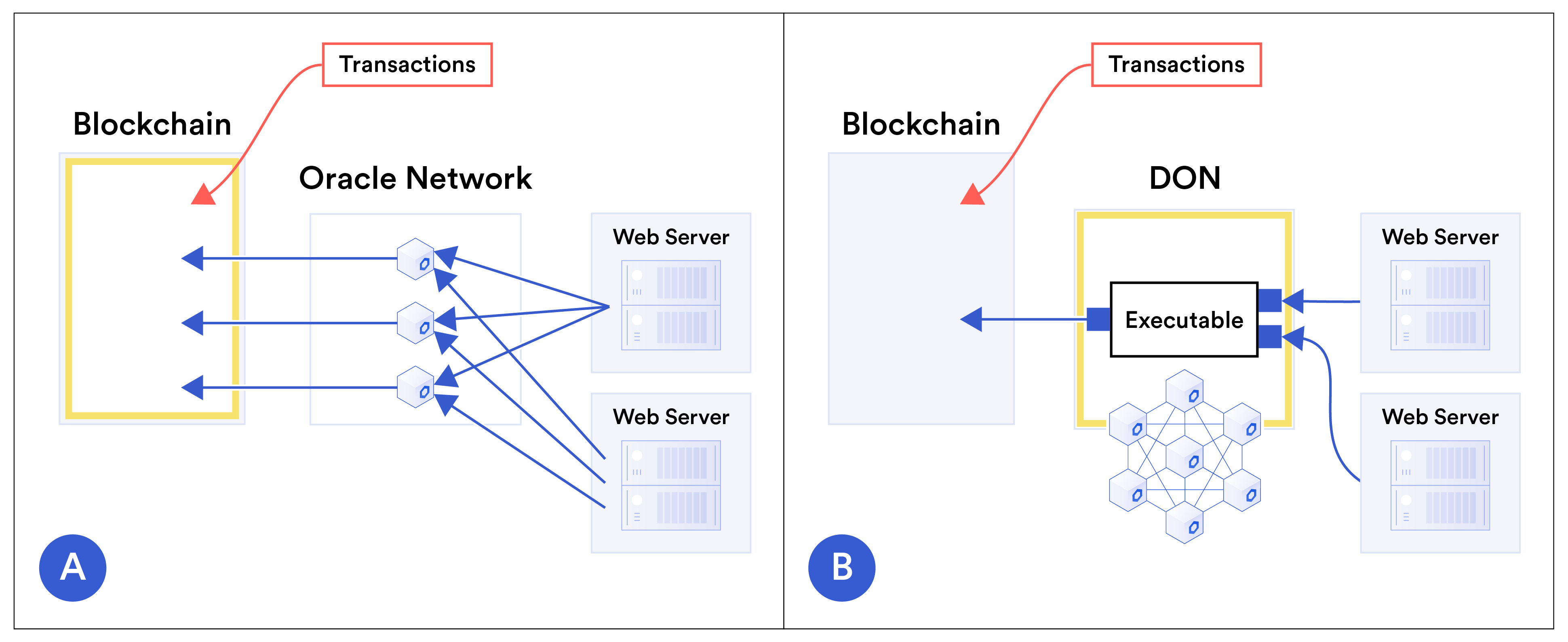
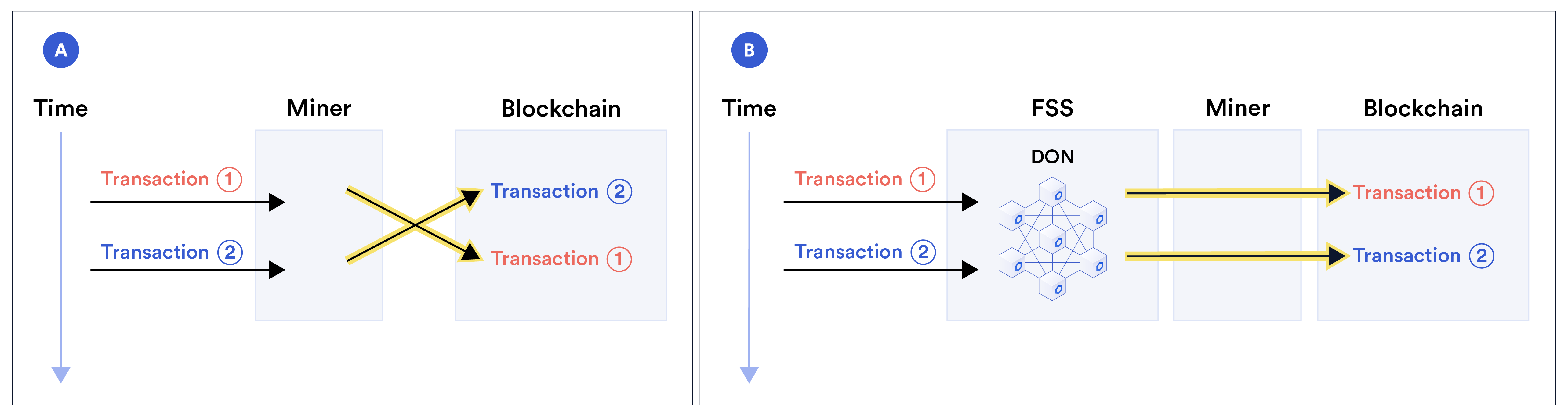
This figure appears in the Introduction during the discussion of order-fairness for transactions as one of the seven key design goals, introducing Fair Sequencing Services (FSS). It contrasts the standard mining-based transaction ordering process—where miners can manipulate order for profit—with the FSS approach, where a DON decentralizes ordering to prevent such manipulation. The whitepaper uses this figure to motivate the FSS design before the full technical treatment in Section 5.
What This Figure Shows
Figure A shows standard mining where a miner, exploiting its centralized power, swaps the order of two transactions: transaction 1 arrives before transaction 2, but the miner sequences it after transaction 2, enabling front-running or other exploitative behavior. Figure B shows how a DON decentralizes the ordering process among DON nodes. If a quorum of honest nodes receives transaction 1 before transaction 2, FSS causes transaction 1 to appear before transaction 2 on-chain by attaching contract-enforceable sequence numbers—preventing the miner from reordering them. Users also benefit by no longer needing to compete on gas price for preferential ordering.
Significance
This figure exposes a fundamental vulnerability in blockchain systems—the ephemeral centralization of transaction ordering in the hands of miners or validators—and shows how FSS addresses it. Front-running and related attacks (back-running, sandwiching) extracted significant value from DeFi users at the time of the whitepaper's writing, making FSS a high-demand capability.