 Solana
PoH Verification
Context
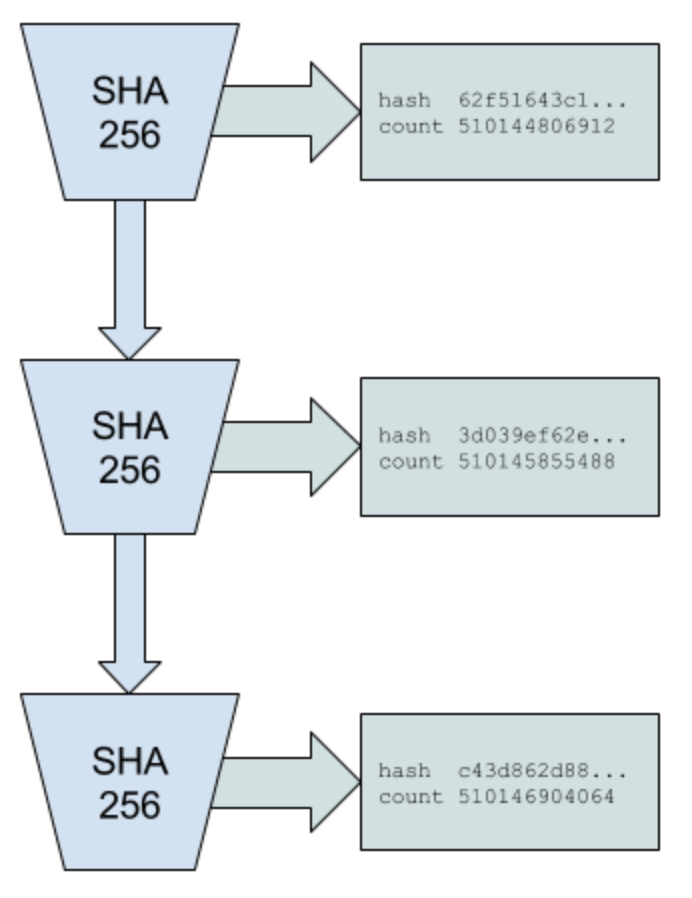
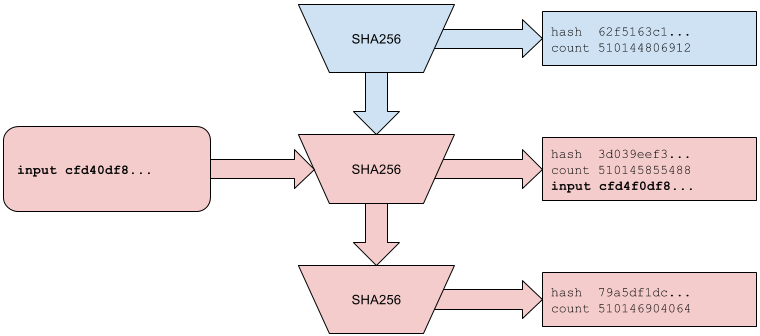
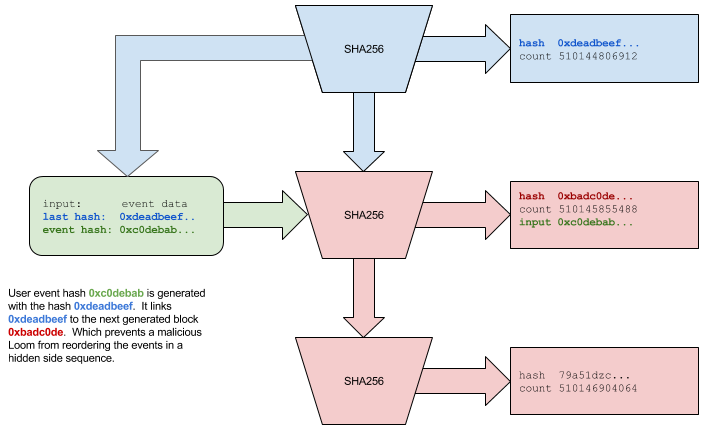
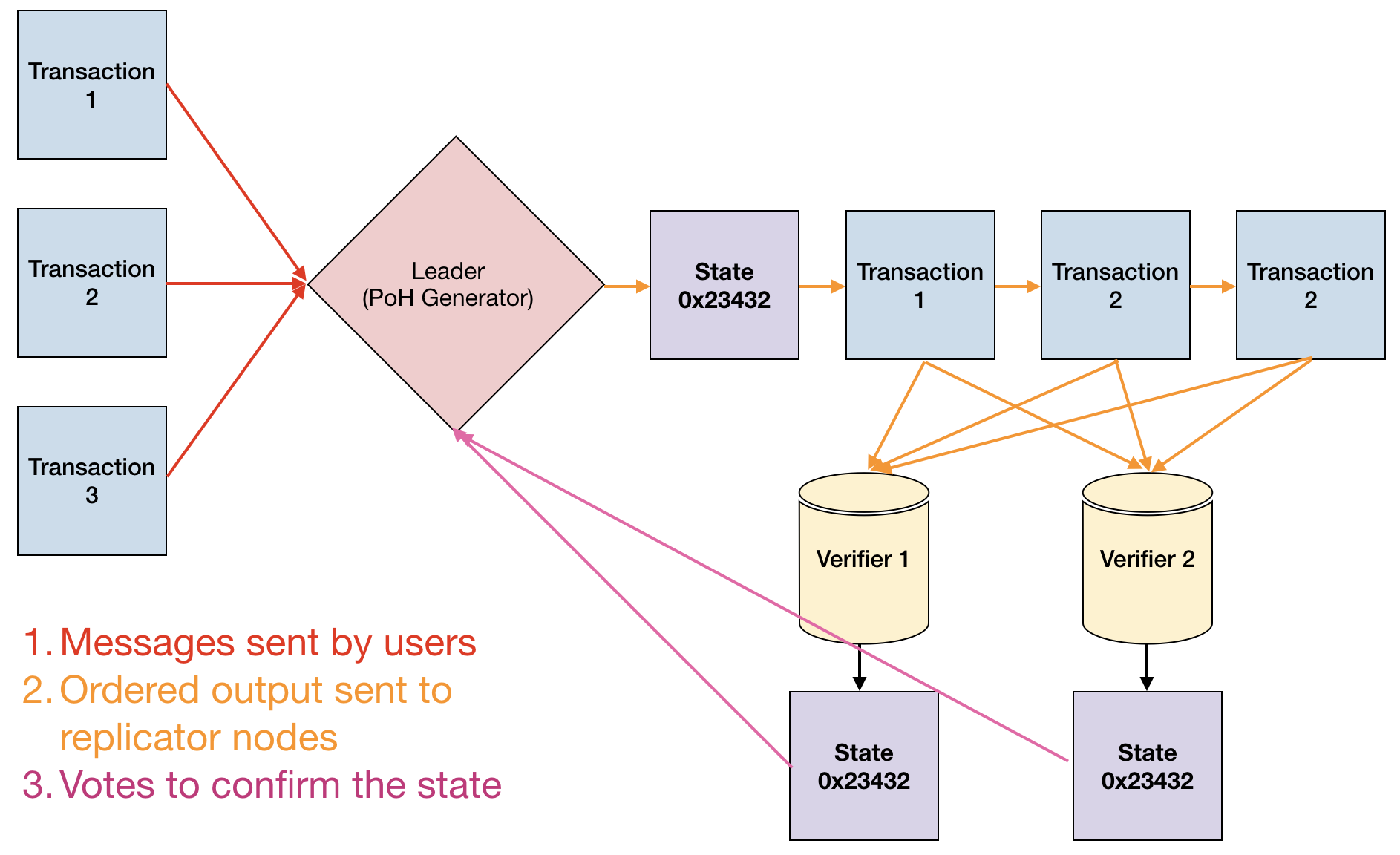
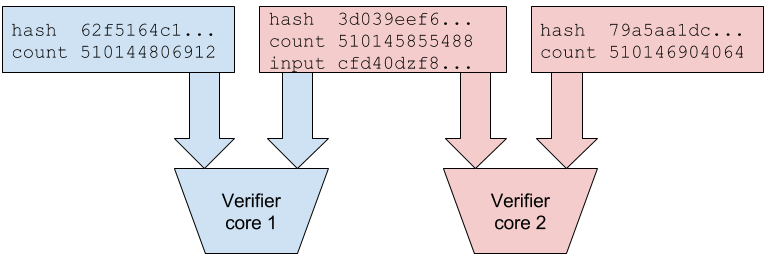
This figure appears in the 'Proof of History' section, in the discussion of the asymmetry between generation and verification of the PoH sequence. The section highlights that while generation is inherently sequential (a single core running as fast as possible), verification is embarrassingly parallel because the hash chain can be split into independent segments that any number of cores can check simultaneously.
What This Figure Shows
The diagram shows the parallel verification scheme: given a PoH sequence with checkpoints at positions 0, 1000, 2000, and 3000, a verifier with four CPU cores assigns one segment to each core. Core 1 recomputes hashes from position 0 to 999 and checks that its output matches the recorded checkpoint at 1000; Core 2 does the same for positions 1000 to 1999; and so on. Each core works independently without communicating with the others. If all cores confirm their segment endpoints match the declared checkpoints, the entire sequence is verified. The total verification time is thus approximately equal to the time for one core to verify one segment — roughly 1/c of the generation time, where c is the number of cores, because verification scales linearly with available parallelism.
Significance
The generation-verification asymmetry is what makes PoH practical as a network-wide timekeeping mechanism. Validators can confirm the validity of a long PoH sequence far faster than it takes to produce it, which means the overhead of verifying PoH does not become a bottleneck in block validation. This property also means that an attacker generating a forged PoH sequence would be detected quickly and cheaply by any validator with modern multi-core hardware.