 Solana
Proof of History Sequence
Context
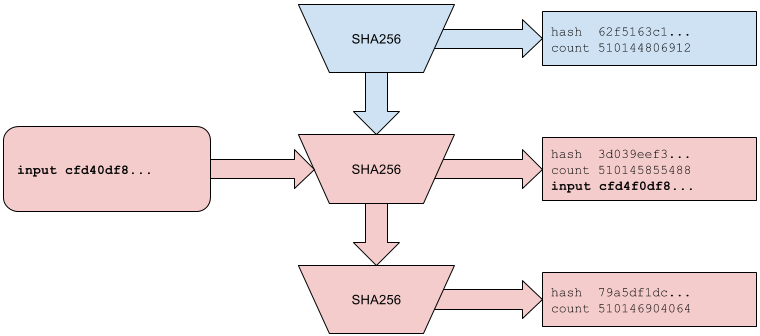
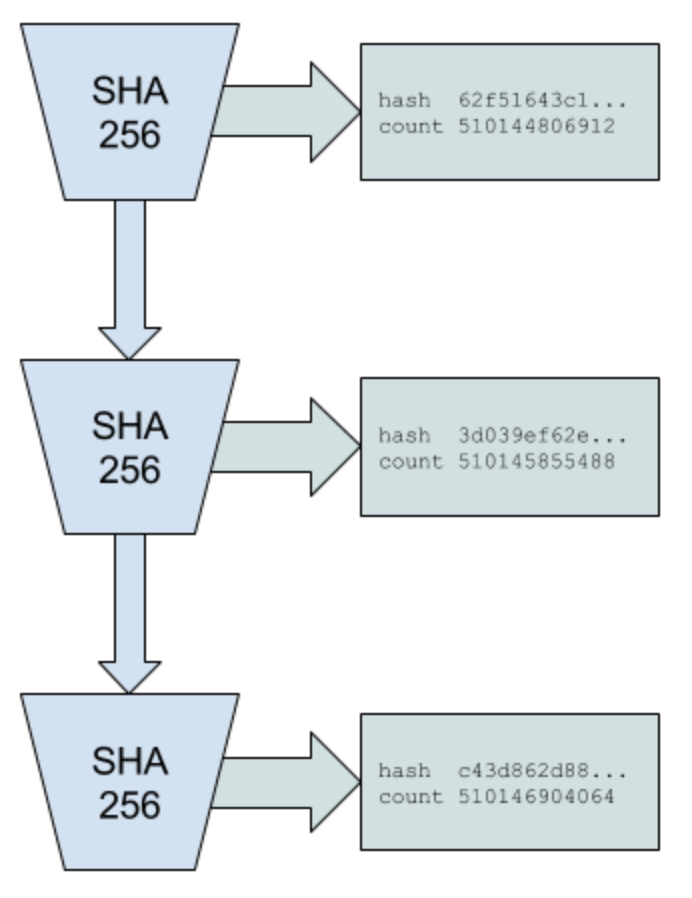
This figure appears in the 'Proof of History' section, which introduces PoH as a cryptographic timekeeping mechanism that allows validators to agree on the ordering and timing of events without exchanging timestamps. The section establishes that SHA-256's pre-image resistance is the security foundation: computing hash_n requires computing all intermediate hashes sequentially, making the chain a verifiable delay function where the number of hashes is a lower bound on elapsed time.
What This Figure Shows
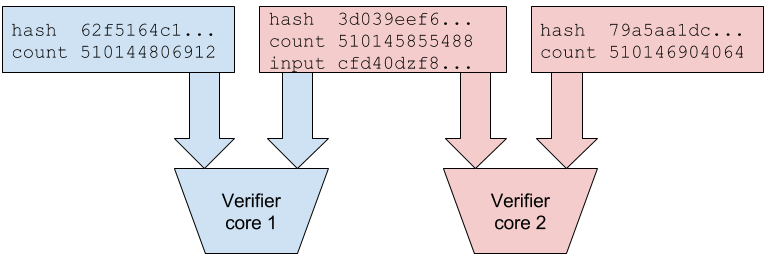
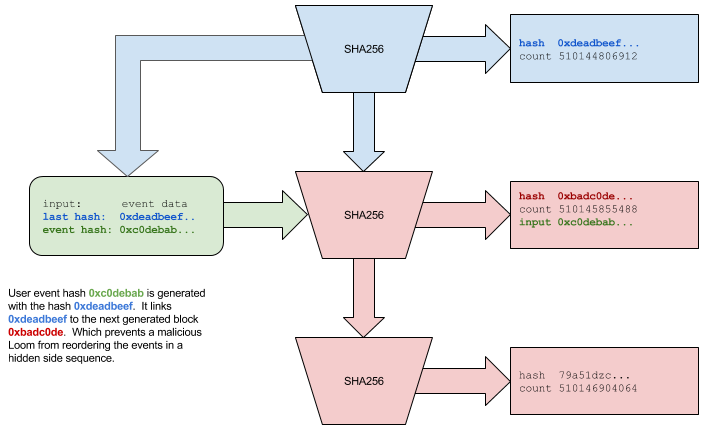
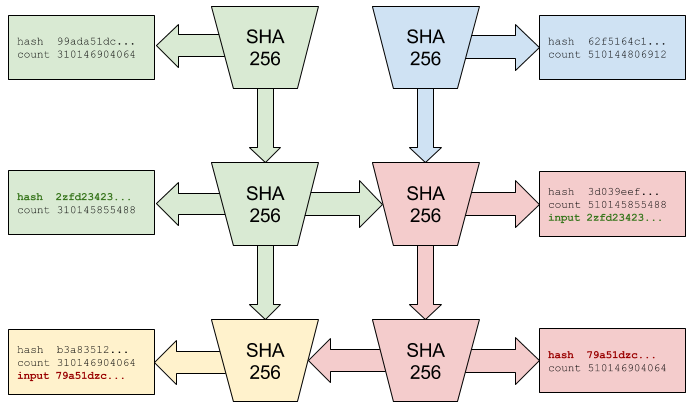
The diagram shows the basic PoH hash chain: starting from an initial value hash_0, each subsequent hash is computed as SHA256(previous_hash), producing hash_1, hash_2, hash_3, and so on, with a monotonically increasing counter recording the total number of computations. Not every hash is recorded; instead, periodic checkpoints (counter value, hash output pairs) are published to the ledger. The sequential dependency is the essential property — because SHA-256 is pre-image resistant, there is no shortcut to compute hash_n without computing hash_1 through hash_{n-1} first, meaning the chain cannot be generated faster than one hash at a time on a single compute unit. The counter provides a discrete, hardware-independent measure of elapsed computational time.
Significance
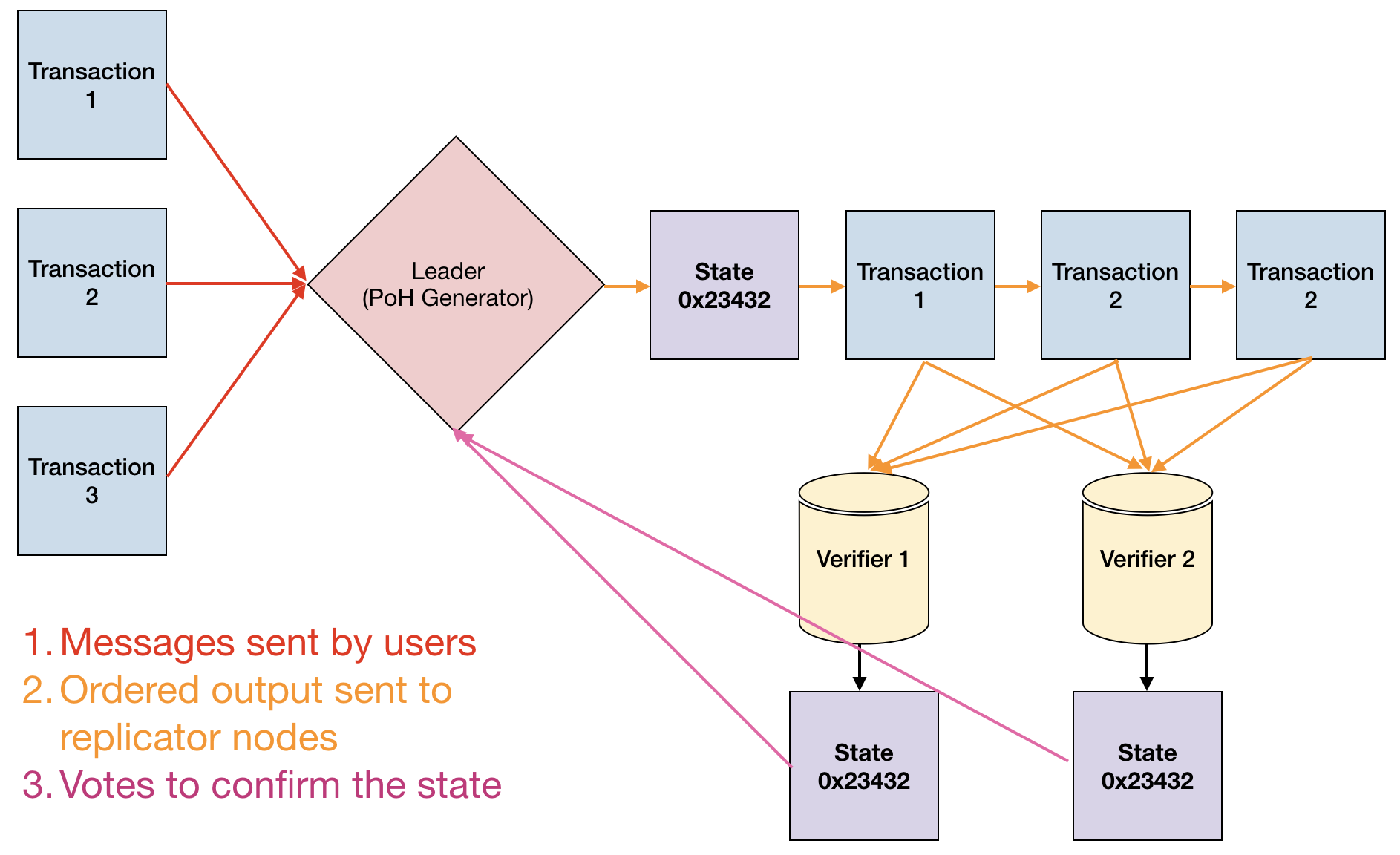
This diagram establishes the foundational primitive of the entire Solana architecture. Every other component — transaction ordering, leader scheduling, block production, and storage proofs — builds on the PoH hash chain as a shared, trustless clock. Without this primitive, Solana would require an explicit time-synchronization protocol between validators, introducing latency and coordination overhead.