TRON
TRON
TRON Architecture
Context
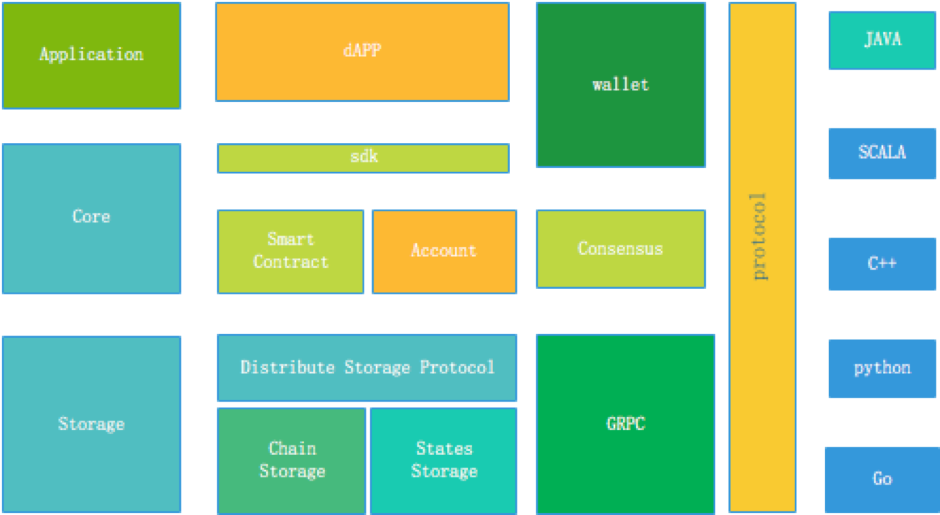
This figure appears in the Architecture section of the TRON whitepaper, establishing the structural organization of the network. It serves as the foundational reference diagram for the entire platform, showing the layered separation of concerns that governs how storage, computation, and application logic interact.
What This Figure Shows
The diagram presents TRON's three-tier architecture stacked vertically. The Storage Layer at the base provides block storage for raw blockchain data and state storage for account and contract state, analogous to Ethereum's combination of a block database and Merkle Patricia Trie. The Core Layer houses the protocol's computational engines: DPoS consensus, smart contract execution, account management, and transaction processing. The Application Layer at the top exposes the platform to developers via APIs and interfaces through which dApps, wallets, and tooling interact with the chain. This strict layering means changes to storage implementation do not require changes to application-layer contracts, and consensus logic is cleanly separated from user-facing APIs.
Significance
The three-layer architecture mirrors patterns from both Bitcoin and Ethereum while adding the explicit Application Layer to formalize the developer-facing interface. Understanding this diagram is essential for grasping how TRON achieves EVM-compatible smart contract execution on top of a DPoS consensus backbone.