
Solana: Новая архитектура для высокопроизводительного блокчейна
Abstract
Makalah ini menyajikan arsitektur baru untuk blockchain berkinerja tinggi. Solana mengimplementasikan mekanisme ketepatan waktu baru yang disebut Proof of History (PoH) — sebuah bukti untuk memverifikasi urutan dan perjalanan waktu antar peristiwa. PoH digunakan untuk mengkodekan perjalanan waktu yang tidak dapat dipercaya ke dalam ledger, menciptakan catatan sejarah yang membuktikan bahwa suatu peristiwa terjadi pada momen waktu tertentu.
Inovasi utamanya adalah PoH memungkinkan node dalam jaringan untuk menetapkan urutan peristiwa sementara tanpa mengharuskan mereka berkomunikasi satu sama lain. Dengan menggunakan fungsi penundaan yang dapat diverifikasi yang diimplementasikan sebagai rantai hash berurutan, sistem menghasilkan jam kriptografi yang menyediakan cara untuk memverifikasi perjalanan waktu antar peristiwa. Hal ini memungkinkan jaringan untuk memproses ribuan transaksi per detik dengan tetap menjaga desentralisasi dan keamanan.
PoH terintegrasi dengan mekanisme konsensus Proof of Stake (PoS). Kombinasi ini memungkinkan arsitektur blockchain yang sangat optimal di mana validators dapat memverifikasi transaksi secara paralel dan mencapai konsensus secara efisien. Sistem ini dirancang untuk disesuaikan dengan Hukum Moore, memanfaatkan peningkatan kinerja perangkat keras untuk meningkatkan throughput tanpa mengorbankan jaminan keamanan jaringan yang terdesentralisasi.
Abstract
В данной статье представлена новая архитектура высокопроизводительного блокчейна. Solana реализует новый механизм хронометража под названием Proof of History (PoH) -- доказательство для верификации порядка и хода времени между событиями. PoH используется для кодирования хода времени без необходимости доверия в леджере, создавая исторический реестр, доказывающий, что событие произошло в определённый момент времени.
Ключевая инновация заключается в том, что PoH позволяет узлам сети устанавливать временной порядок событий без необходимости взаимодействия друг с другом. Используя верифицируемую функцию задержки, реализованную в виде последовательной цепочки хешей, система генерирует криптографические часы, предоставляющие способ верификации хода времени между событиями. Это позволяет сети обрабатывать тысячи транзакций в секунду, сохраняя при этом децентрализацию и безопасность.
PoH интегрирован с механизмом консенсуса Proof of Stake (PoS). Такая комбинация обеспечивает высокооптимизированную архитектуру блокчейна, в которой валидаторы могут верифицировать транзакции параллельно и эффективно достигать консенсуса. Система спроектирована для масштабирования в соответствии с законом Мура, используя повышение производительности аппаратного обеспечения для увеличения пропускной способности без ущерба для гарантий безопасности децентрализованной сети.
Introduction
Tantangan mendasar dalam sistem blockchain adalah mencapai throughput transaksi yang tinggi dengan tetap menjaga desentralisasi dan keamanan. Implementasi blockchain saat ini dibatasi oleh mekanisme konsensusnya, yang memerlukan komunikasi ekstensif antar node untuk menyepakati waktu dan urutan kejadian. Overhead koordinasi ini menciptakan hambatan yang mencegah penskalaan blockchain yang ada untuk memenuhi permintaan aplikasi skala global.
Masalah intinya adalah waktu. Dalam sistem terdistribusi, node tidak dapat mengandalkan jam eksternal karena mereka tidak dapat mempercayai bahwa stempel waktu node lain akurat. Protokol konsensus blockchain tradisional menyelesaikan masalah ini dengan membuat node berkomunikasi secara luas untuk menyetujui keadaan saat ini dan urutan transaksi. Overhead komunikasi ini pada dasarnya membatasi throughput, karena jaringan hanya dapat memproses transaksi secepat node dapat mencapai konsensus mengenai pemesanannya.
Solana memperkenalkan Bukti Sejarah sebagai solusi untuk masalah waktu ini. PoH menyediakan cara kriptografi untuk membuktikan bahwa sejumlah waktu tertentu telah berlalu di antara peristiwa tanpa bergantung pada stempel waktu dari pelaku yang berpotensi jahat. Dengan membuat catatan sejarah yang dapat diverifikasi, PoH memungkinkan node untuk memproses transaksi secara independen sambil tetap dapat membuktikan urutan terjadinya peristiwa. Terobosan ini memungkinkan jaringan untuk memparalelkan pemrosesan transaksi dan meningkatkan throughput secara signifikan.
Kuncinya adalah jika kita dapat menciptakan sumber waktu yang tidak dapat dipercaya, kita dapat menghilangkan hambatan koordinasi dalam konsensus. Dengan PoH menyediakan jam kriptografi, validators dapat memproses transaksi secara paralel dan hanya perlu berkomunikasi untuk menyelesaikan pemesanan kanonik. Pergeseran arsitektur ini memungkinkan Solana mencapai tingkat kinerja yang sebelumnya dianggap mustahil dalam blockchain yang terdesentralisasi.
Introduction
Фундаментальная проблема блокчейн-систем заключается в достижении высокой пропускной способности транзакций при сохранении децентрализации и безопасности. Текущие реализации блокчейнов ограничены механизмами консенсуса, которые требуют обширной коммуникации между узлами для согласования времени и порядка событий. Эти координационные накладные расходы создают узкое место, препятствующее масштабированию существующих блокчейнов для удовлетворения потребностей глобальных приложений.
Ключевая проблема — время. В распределённых системах узлы не могут полагаться на внешние часы, поскольку не могут доверять точности временных меток других узлов. Традиционные протоколы консенсуса блокчейна решают эту проблему путём обширной коммуникации узлов для согласования текущего состояния и порядка транзакций. Эти коммуникационные накладные расходы фундаментально ограничивают пропускную способность, так как сеть может обрабатывать транзакции лишь с той скоростью, с которой узлы достигают консенсуса по их порядку.
Solana представляет Proof of History как решение проблемы синхронизации. PoH обеспечивает криптографический способ доказательства того, что между событиями прошло определённое количество времени, без необходимости полагаться на временные метки от потенциально злонамеренных участников. Создавая верифицируемую историческую запись, PoH позволяет узлам обрабатывать транзакции независимо, при этом сохраняя возможность доказать порядок происхождения событий. Этот прорыв позволяет сети параллелизировать обработку транзакций и значительно увеличить пропускную способность.
Ключевое понимание состоит в том, что если мы создадим доверенный источник времени, не требующий доверия, мы сможем устранить координационное узкое место из консенсуса. При наличии криптографических часов PoH валидаторы могут обрабатывать транзакции параллельно и взаимодействовать только для определения канонического порядка. Это архитектурное изменение позволяет Solana достигать уровней производительности, ранее считавшихся невозможными в децентрализованном блокчейне.
Outline
Makalah ini menjelaskan arsitektur teknis Solana, dengan fokus pada bagaimana Proof of History memungkinkan operasi blockchain berkinerja tinggi. Dokumen tersebut pertama-tama menjelaskan mekanisme PoH itu sendiri — bagaimana rantai hash berurutan menciptakan urutan peristiwa yang dapat diverifikasi. Kami merinci properti kriptografi yang membuat PoH aman dan menunjukkan bagaimana validators dapat memverifikasi urutan PoH secara efisien.
Makalah ini kemudian mengeksplorasi bagaimana PoH berintegrasi dengan konsensus Proof of Stake. Kami menjelaskan Tower BFT, algoritma PoS yang dirancang khusus untuk memanfaatkan properti temporal PoH. Integrasi ini memungkinkan validators untuk memilih status ledger pada stempel waktu PoH tertentu, sehingga menciptakan mekanisme konsensus yang cepat dan aman. Kami juga menjelaskan kondisi pemotongan yang mencegah perilaku jahat.
Selanjutnya, kami menyajikan desain jaringan Solana dan protokol propagasi data. Protokol Gulf Stream memungkinkan penerusan transaksi tanpa memerlukan mempool, memungkinkan klien mengirim transaksi langsung ke pemimpin yang akan datang. Kami menjelaskan cara kerja rotasi pemimpin dan bagaimana jaringan mempertahankan throughput yang tinggi bahkan ketika kepemimpinan berganti.
Terakhir, kita membahas arsitektur sistem termasuk Transaction Processing Unit (TPU), runtime paralel Sealevel, dan Proof of Replication untuk verifikasi penyimpanan data. Proyeksi kinerja menunjukkan bahwa Solana dapat memproses lebih dari 700.000 transaksi per detik pada jaringan gigabit standar, dengan penskalaan throughput seiring dengan peningkatan perangkat keras.
Outline
В данной работе описывается техническая архитектура Solana с акцентом на то, как Proof of History обеспечивает высокопроизводительную работу блокчейна. Документ сначала объясняет сам механизм PoH — как последовательная хеш-цепочка создаёт верифицируемый временной порядок событий. Мы подробно описываем криптографические свойства, обеспечивающие безопасность PoH, и демонстрируем, как валидаторы могут эффективно проверять последовательность PoH.
Затем статья исследует интеграцию PoH с консенсусом Proof of Stake. Мы описываем Tower BFT — алгоритм PoS, специально разработанный для использования временных свойств PoH. Интеграция позволяет валидаторам голосовать за состояние реестра при определённых временных метках PoH, создавая механизм консенсуса, который является одновременно быстрым и безопасным. Мы также объясняем условия штрафов, предотвращающих злонамеренное поведение.
Далее мы представляем сетевой дизайн Solana и протоколы распространения данных. Протокол Gulf Stream обеспечивает пересылку транзакций без необходимости в мемпуле, позволяя клиентам отправлять транзакции непосредственно предстоящим лидерам. Мы описываем работу ротации лидеров и способы поддержания высокой пропускной способности сети при смене лидерства.
Наконец, мы обсуждаем архитектуру системы, включая Transaction Processing Unit (TPU), параллельную среду выполнения Sealevel и Proof of Replication для верификации хранения данных. Прогнозы производительности показывают, что Solana может обрабатывать более 700 000 транзакций в секунду в стандартной гигабитной сети, при этом пропускная способность масштабируется с улучшением оборудования.
Network Design
Desain jaringan Solana berpusat di sekitar sistem pemimpin berputar di mana validators bergiliran memproduksi blok. Pemimpin bertanggung jawab untuk mengurutkan transaksi masuk ke dalam aliran PoH dan mempublikasikan blok yang dihasilkan ke jaringan. Pemimpin dipilih melalui algoritme pembobotan taruhan, dan jadwal rotasi diketahui sebelumnya, sehingga memungkinkan jaringan mengoptimalkan penerusan transaksi.
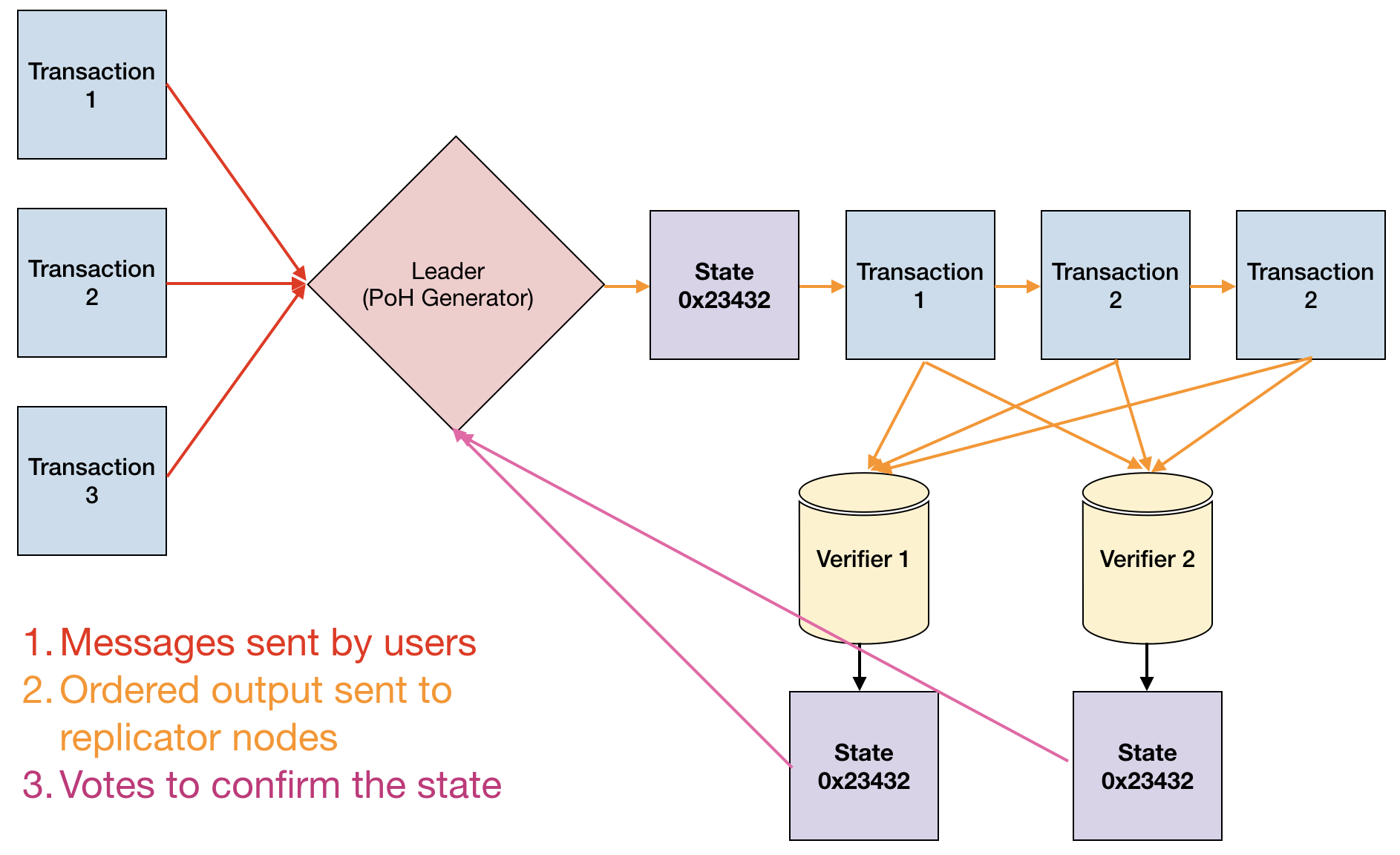
Protokol Gulf Stream menghilangkan kebutuhan akan mempool tradisional dengan memungkinkan klien meneruskan transaksi langsung ke pemimpin yang akan datang. Ketika klien mengajukan transaksi, transaksi diteruskan ke pemimpin yang diharapkan berdasarkan jadwal rotasi. Jika pemimpin saat ini tidak dapat memproses transaksi tersebut, maka transaksi tersebut akan diteruskan ke pemimpin yang diharapkan berikutnya. Desain ini mengurangi latensi konfirmasi dan memungkinkan validators mengeksekusi transaksi lebih awal, sehingga lebih mengoptimalkan throughput.
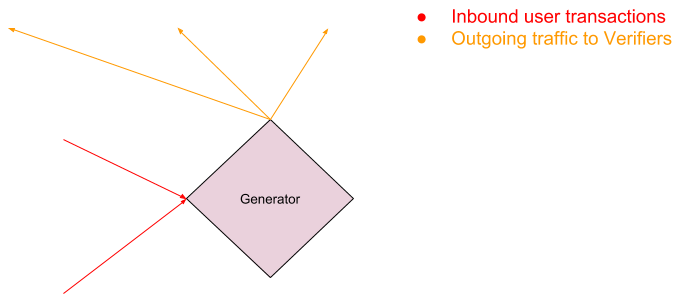
Penyebaran transaksi menggunakan pendekatan multi-layer. Klien mengirim transaksi ke validators, yang meneruskannya ke pemimpin saat ini atau yang akan datang. Pemimpin mengurutkan transaksi ke dalam aliran PoH, menciptakan pemesanan total. Setelah diurutkan, pemimpin mengirimkan aliran PoH dan data transaksi ke validators, yang memverifikasi urutan PoH dan mengeksekusi transaksi secara paralel.
Desain jaringan juga mencakup protokol propagasi blok turbin yang memecah blok menjadi paket-paket yang lebih kecil dan mendistribusikannya ke seluruh jaringan dalam struktur pohon. Pendekatan ini meminimalkan kebutuhan bandwidth untuk validators individual sekaligus memastikan propagasi blok yang cepat. Dikombinasikan dengan kemampuan PoH untuk memverifikasi urutan transaksi, arsitektur ini memungkinkan Solana mencapai throughput yang tinggi tanpa mengorbankan desentralisasi.
Network Design
Сетевой дизайн Solana основан на системе ротации лидеров, где валидаторы по очереди производят блоки. Лидер отвечает за упорядочивание входящих транзакций в поток PoH и публикацию результирующих блоков в сети. Лидеры выбираются с помощью алгоритма, взвешенного по стейку, а расписание ротации известно заранее, что позволяет сети оптимизировать пересылку транзакций.
Протокол Gulf Stream устраняет необходимость в традиционном мемпуле, позволяя клиентам пересылать транзакции непосредственно предстоящим лидерам. Когда клиент отправляет транзакцию, она пересылается ожидаемому лидеру на основе расписания ротации. Если текущий лидер не может обработать транзакцию, она пересылается следующему ожидаемому лидеру. Такой дизайн снижает задержку подтверждения и позволяет валидаторам выполнять транзакции заранее, дополнительно оптимизируя пропускную способность.
Распространение транзакций использует многоуровневый подход. Клиенты отправляют транзакции валидаторам, которые пересылают их текущему или предстоящему лидеру. Лидер упорядочивает транзакции в потоке PoH, создавая полный порядок. После упорядочивания лидер передаёт поток PoH и данные транзакций валидаторам, которые проверяют последовательность PoH и выполняют транзакции параллельно.
Сетевой дизайн также включает протокол распространения блоков Turbine, который разбивает блоки на более мелкие пакеты и распространяет их по сети в древовидной структуре. Этот подход минимизирует требования к пропускной способности для отдельных валидаторов, обеспечивая быстрое распространение блоков. В сочетании со способностью PoH верифицировать порядок транзакций эта архитектура позволяет Solana достигать высокой пропускной способности без ущерба для децентрализации.
Proof of History
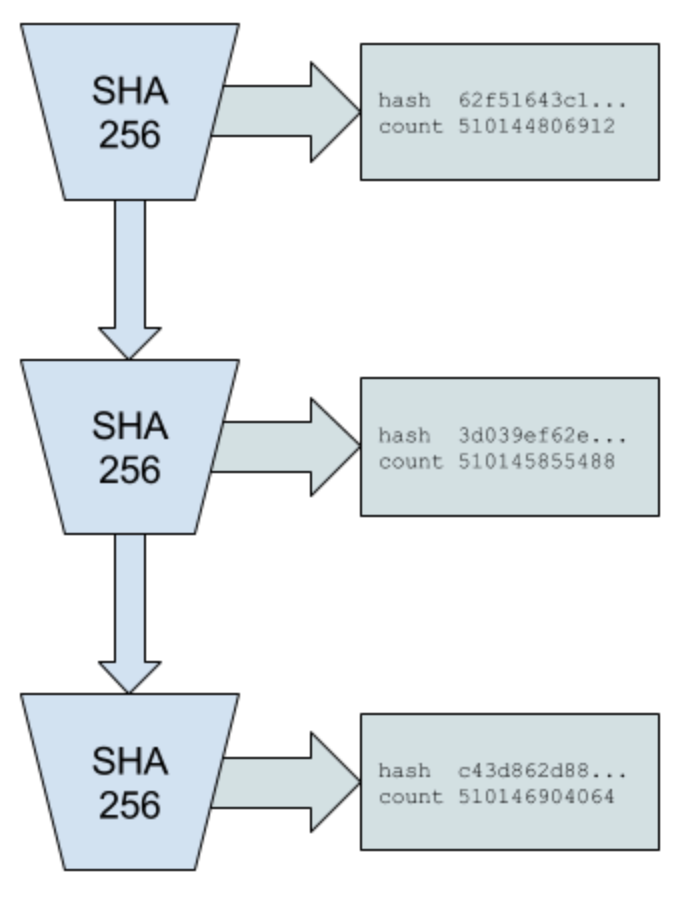
Bukti Riwayat adalah fungsi penundaan yang dapat diverifikasi yang diimplementasikan sebagai rantai hash berurutan menggunakan SHA-256. Generator PoH terus menghitung hash SHA-256, menggunakan setiap keluaran sebagai masukan untuk hash berikutnya. Hal ini menciptakan rantai berurutan di mana setiap hash hanya dapat dihitung setelah hash sebelumnya, sehingga membentuk urutan temporal yang dapat diverifikasi. Persyaratan komputasi untuk menghasilkan setiap hash menerapkan penundaan waktu minimum antar peristiwa.
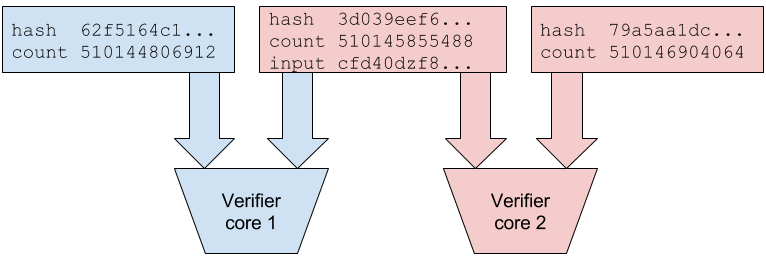
Properti utama PoH adalah murah untuk diverifikasi namun mahal untuk diproduksi. Verifikator dapat memeriksa seluruh urutan hash secara paralel dengan membaginya menjadi beberapa segmen dan memeriksa setiap segmen secara independen, kemudian memverifikasi bahwa segmen tersebut terhubung dengan benar. Namun, pembuatannya harus berurutan — tidak ada cara untuk memprediksi keluaran rantai hash tanpa benar-benar menghitung setiap langkah perantara. Ketidaksimetrisan antara pembangkitan dan verifikasi inilah yang membuat PoH praktis.
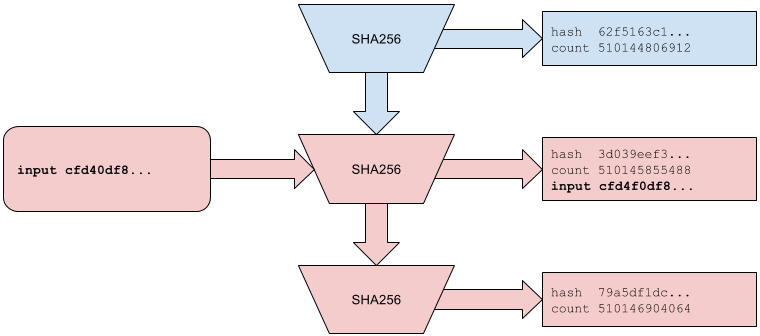
Peristiwa eksternal dan data transaksi dimasukkan ke dalam urutan PoH dengan mencampurkannya ke dalam rantai hash. Ketika sebuah transaksi tiba, hash-nya digabungkan dengan status PoH saat ini, menciptakan catatan yang membuktikan transaksi tersebut ada pada titik tersebut dalam urutan. Generator PoH secara berkala mencatat pos pemeriksaan, menerbitkan nilai hash saat ini bersama dengan jumlah hash yang dihitung sejak pos pemeriksaan terakhir. Pos pemeriksaan ini memungkinkan validators memverifikasi urutan PoH secara efisien tanpa menghitung ulang setiap hash.
Urutan PoH berfungsi sebagai jam kriptografi untuk seluruh jaringan. Karena rantai hash bersifat berurutan dan dapat diverifikasi, node mana pun dapat membuktikan bahwa sejumlah waktu tertentu telah berlalu antara dua peristiwa hanya dengan menunjukkan hash yang dihitung selama interval tersebut. Hal ini menghilangkan kebutuhan node untuk mempercayai stempel waktu eksternal atau berkoordinasi satu sama lain untuk menetapkan urutan waktu, sehingga menghilangkan hambatan mendasar dalam konsensus blockchain tradisional.
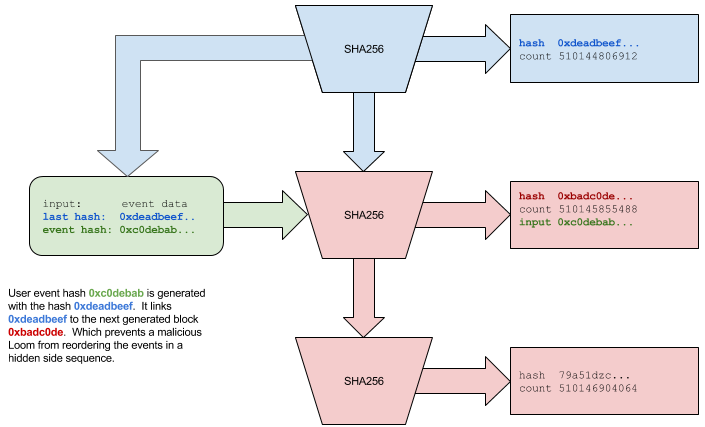
Proof of History
Proof of History — это верифицируемая функция задержки, реализованная в виде последовательной хеш-цепочки с использованием SHA-256. Генератор PoH непрерывно вычисляет хеши SHA-256, используя каждый выход в качестве входа для следующего хеша. Это создаёт последовательную цепочку, где каждый хеш может быть вычислен только после предыдущего, устанавливая верифицируемый временной порядок. Вычислительные требования для генерации каждого хеша обеспечивают минимальную временную задержку между событиями.
Ключевое свойство PoH заключается в том, что верификация обходится дёшево, а производство — дорого. Верификатор может проверить всю последовательность хешей параллельно, разделив её на сегменты и проверив каждый сегмент независимо, а затем убедившись, что сегменты правильно соединяются. Однако генерация должна быть последовательной — нет способа предсказать выход хеш-цепочки без фактического вычисления каждого промежуточного шага. Эта асимметрия между генерацией и верификацией делает PoH практичным.
Внешние события и данные транзакций вставляются в последовательность PoH путём их смешивания с хеш-цепочкой. Когда поступает транзакция, её хеш комбинируется с текущим состоянием PoH, создавая запись, доказывающую существование транзакции в данной точке последовательности. Генератор PoH периодически фиксирует контрольные точки, публикуя текущее значение хеша вместе с количеством хешей, вычисленных с последней контрольной точки. Эти контрольные точки позволяют валидаторам эффективно проверять последовательность PoH без пересчёта каждого хеша.
Последовательность PoH служит криптографическими часами для всей сети. Поскольку хеш-цепочка является последовательной и верифицируемой, любой узел может доказать, что между двумя событиями прошло определённое количество времени, просто показав хеши, вычисленные за этот интервал. Это устраняет необходимость для узлов доверять внешним временным меткам или координироваться друг с другом для установления временного порядка, устраняя фундаментальное узкое место в традиционном консенсусе блокчейна.
Proof of History Sequence
Urutan Proof of History adalah rangkaian hash SHA-256 yang berkesinambungan di mana setiap hash bergantung pada keluaran sebelumnya. Urutannya dimulai dengan nilai benih awal, yang di-hash untuk menghasilkan keluaran pertama. Keluaran ini menjadi masukan untuk hash berikutnya, dan proses berulang tanpa batas. Generator juga memelihara penghitung yang melacak jumlah total hash yang dihitung, yang berfungsi sebagai "stempel waktu" PoH untuk kejadian di ledger.
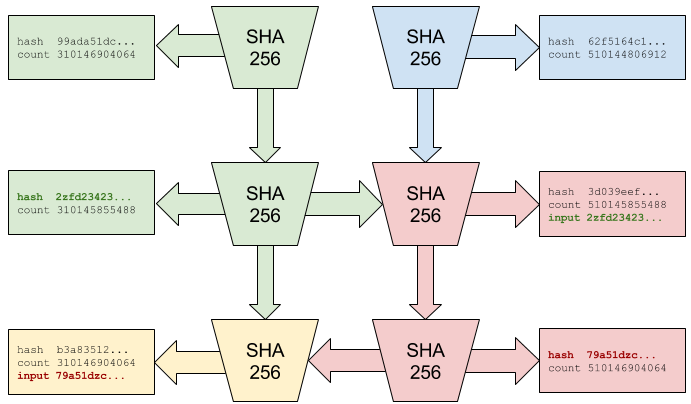
Ketika data perlu dimasukkan ke dalam urutan (seperti hash transaksi atau tanda tangan validator), data tersebut digabungkan dengan status hash saat ini menggunakan fungsi pencampuran deterministik. Misalnya, jika status hash saat ini adalah hash_n dan kita ingin memasukkan data D, kita menghitung hash_{n+1} = SHA256(hash_n || D), dengan || menunjukkan penggabungan. Titik penyisipan dicatat bersama dengan nilai penghitung, membuktikan bahwa data D ada pada titik tertentu dalam urutan tersebut.
Verifikasi rangkaian PoH dapat diparalelkan dengan membagi rantai menjadi beberapa segmen. Misalnya, validator mungkin menerima pos pemeriksaan PoH setiap 10.000 hash. Untuk memverifikasi urutan antar pos pemeriksaan, validator dapat membagi 10.000 hash menjadi 100 segmen yang masing-masing terdiri dari 100 hash, memverifikasi setiap segmen secara independen secara paralel, dan kemudian memverifikasi bahwa segmen tersebut terhubung dengan benar. Hal ini memungkinkan verifikasi untuk diskalakan secara horizontal dengan jumlah inti CPU yang tersedia.
Urutan tersebut juga mendukung bukti efisien bahwa dua peristiwa terjadi dalam urutan tertentu. Dengan adanya dua penyisipan data pada nilai counter n dan m di mana n m, siapa pun dapat memverifikasi bahwa kejadian di n terjadi sebelum kejadian di m dengan memeriksa rantai hash di antara titik-titik tersebut. Properti ini memungkinkan Solana membuat catatan sejarah yang dapat diverifikasi dari semua peristiwa di jaringan tanpa memerlukan node untuk terus online atau mempercayai sumber waktu eksternal.
Proof of History Sequence
Последовательность Proof of History представляет собой непрерывную цепочку хешей SHA-256, где каждый хеш зависит от предыдущего выхода. Последовательность начинается с начального значения-зерна, которое хешируется для получения первого выхода. Этот выход становится входом для следующего хеша, и процесс повторяется бесконечно. Генератор также ведёт счётчик, отслеживающий общее количество вычисленных хешей, который служит «временной меткой» PoH для событий в реестре.
Когда данные необходимо вставить в последовательность (например, хеши транзакций или подписи валидаторов), они комбинируются с текущим состоянием хеша с использованием детерминированной функции смешивания. Например, если текущее состояние хеша — hash_n и мы хотим вставить данные D, мы вычисляем hash_{n+1} = SHA256(hash_n || D), где || обозначает конкатенацию. Точка вставки записывается вместе со значением счётчика, доказывая, что данные D существовали в этой конкретной точке последовательности.
Верификация последовательности PoH может быть распараллелена путём разделения цепочки на сегменты. Например, валидатор может получать контрольные точки PoH каждые 10 000 хешей. Для верификации последовательности между контрольными точками валидатор может разделить 10 000 хешей на 100 сегментов по 100 хешей, проверить каждый сегмент независимо и параллельно, а затем убедиться, что сегменты правильно соединяются. Это позволяет верификации горизонтально масштабироваться с количеством доступных ядер CPU.
Последовательность также поддерживает эффективные доказательства того, что два события произошли в определённом порядке. При наличии двух вставок данных при значениях счётчика n и m, где n m, любой может проверить, что событие при n произошло до события при m, проверив хеш-цепочку между этими точками. Это свойство позволяет Solana создавать верифицируемую историческую запись всех событий в сети без необходимости постоянного нахождения узлов в сети или доверия внешним источникам времени.
Timestamp
Proof of History berfungsi sebagai jam terdesentralisasi yang memberikan stempel waktu pada peristiwa tanpa bergantung pada waktu jam dinding. Setiap hash PoH mewakili "centang" terpisah dari jam kriptografi, dan nilai penghitungnya berfungsi sebagai stempel waktu. Karena rantai hash bersifat berurutan dan dapat diverifikasi, stempel waktu ini tidak dapat dipercaya — pengamat mana pun dapat memverifikasi bahwa stempel waktu tersebut sah dengan memeriksa rantai hash.
Di Solana, setiap validator dapat menghasilkan urutan PoH sendiri ketika bertindak sebagai pemimpin. Ketika validators merotasi kepemimpinan, mereka menyinkronkan urutan PoH mereka menggunakan pos pemeriksaan terakhir yang dikonfirmasi dari pemimpin sebelumnya. Hal ini memastikan kesinambungan catatan temporal meskipun validators yang berbeda bergiliran memproduksi blok. Jaringan menetapkan garis waktu kanonik dengan mencapai konsensus mengenai rangkaian PoH mana yang akan diterima sebagai bagian dari ledger resmi.
Sistem ini menangani penyimpangan jam dan perbedaan kinerja perangkat keras melalui kombinasi rotasi pemimpin dan konsensus. Jika pemimpin yang jahat atau salah mencoba untuk menghasilkan stempel waktu PoH pada tingkat yang salah (terlalu cepat atau terlalu lambat), validators dapat mendeteksi hal ini dengan membandingkan tingkat tick PoH terhadap generator PoH lokal mereka sendiri. Penyimpangan yang signifikan dari tingkat yang diharapkan menunjukkan adanya masalah, dan validators dapat menolak blok dari pemimpin yang rangkaian PoH-nya menyimpang terlalu jauh dari median jaringan.
Mekanisme penandaan waktu ini memecahkan salah satu masalah mendasar dalam sistem terdistribusi: menetapkan gagasan umum tentang waktu tanpa otoritas pusat yang tepercaya. Dengan menggunakan PoH sebagai jam terdesentralisasi, Solana memungkinkan validators memproses transaksi secara paralel sambil mempertahankan pemesanan yang konsisten secara global. Stempel waktu juga memberikan landasan untuk fitur berbasis waktu seperti berakhirnya transaksi, operasi terjadwal, dan pengukuran kinerja.
Timestamp
Proof of History функционирует как децентрализованные часы, присваивающие временные метки событиям без зависимости от реального времени. Каждый хеш PoH представляет дискретный «тик» криптографических часов, а значение счётчика служит временной меткой. Поскольку хеш-цепочка является последовательной и верифицируемой, эти временные метки не требуют доверия — любой наблюдатель может проверить легитимность временной метки, проверив хеш-цепочку.
В Solana каждый валидатор может генерировать собственную последовательность PoH при работе в качестве лидера. При ротации лидерства валидаторы синхронизируют свои последовательности PoH, используя последнюю подтверждённую контрольную точку предыдущего лидера. Это обеспечивает непрерывность временной записи даже при смене валидаторов, производящих блоки. Сеть устанавливает каноническую временную линию путём достижения консенсуса о том, какие последовательности PoH принимать как часть официального реестра.
Система справляется с дрейфом часов и различиями в производительности оборудования посредством комбинации ротации лидеров и консенсуса. Если злонамеренный или неисправный лидер пытается генерировать временные метки PoH с неправильной скоростью (слишком быстро или слишком медленно), валидаторы могут обнаружить это, сравнив частоту тиков PoH со своими локальными генераторами PoH. Значительные отклонения от ожидаемой частоты указывают на проблему, и валидаторы могут отклонить блоки от лидеров, чьи последовательности PoH слишком сильно отклоняются от медианы сети.
Этот механизм временных меток решает одну из фундаментальных проблем распределённых систем: установление общего понятия времени без доверенного центрального органа. Используя PoH в качестве децентрализованных часов, Solana позволяет валидаторам обрабатывать транзакции параллельно, поддерживая глобально согласованный порядок. Временные метки также обеспечивают основу для функций, основанных на времени, таких как истечение срока транзакций, запланированные операции и измерение производительности.
Proof of Stake Consensus
Mekanisme konsensus Solana, yang disebut Tower BFT, adalah algoritma Proof of Stake yang dirancang khusus untuk memanfaatkan properti temporal Proof of History. Validator mempertaruhkan token SOL untuk berpartisipasi dalam konsensus dan mendapatkan hadiah karena memvalidasi blok dengan benar. Sistem pemungutan suara dengan bobot taruhan memastikan bahwa validators dengan kepentingan ekonomi yang lebih besar dalam jaringan memiliki pengaruh yang lebih besar secara proporsional terhadap keputusan konsensus.
Inovasi inti di Tower BFT adalah penggunaan periode lockout yang meningkat secara eksponensial dengan setiap pemungutan suara berturut-turut. Ketika validator memberikan suara pada hash PoH, mereka berkomitmen pada fork ledger tersebut untuk sejumlah tick PoH tertentu. Jika mereka memberikan suara pada blok berikutnya di pertigaan itu, periode penguncian menjadi dua kali lipat. Hal ini menciptakan insentif ekonomi yang kuat bagi validators untuk terus memberikan suara pada fork yang sama, karena peralihan fork memerlukan menunggu hingga lockout yang lebih awal berakhir.
Khususnya, jika validator memberikan suara pada sebuah blok pada stempel waktu PoH t, mereka tidak dapat memberikan suara pada fork yang bertentangan hingga tanda 2^n terlampaui, dengan n adalah jumlah suara berturut-turut yang telah mereka buat pada fork saat ini. Mekanisme penguncian eksponensial ini membuat sistem aman dari serangan jarak jauh sekaligus memungkinkan penyelesaian yang cepat. Setelah mayoritas pemegang saham telah memberikan suara pada sebuah blok dengan kedalaman yang cukup, blok tersebut secara efektif diselesaikan.
Kondisi pemotongan menegakkan perilaku jujur. Jika validator memberikan suara pada dua fork yang bertentangan selama periode ketika keduanya harus dikunci, maka fork tersebut akan dipangkas — token yang dipertaruhkan akan dihancurkan sebagian dan dihapus dari set validator. Hal ini membuat tidak masuk akal secara ekonomi untuk mencoba mengelak atau perilaku Byzantine lainnya. Kombinasi stempel waktu PoH yang dapat diverifikasi dan penguncian eksponensial Tower BFT menciptakan mekanisme konsensus yang cepat dan aman, mencapai penyelesaian dalam hitungan detik dengan tetap menjaga jaminan keamanan sistem BFT tradisional.
Proof of Stake Consensus
Механизм консенсуса Solana, называемый Tower BFT, представляет собой алгоритм Proof of Stake, специально разработанный для использования временных свойств Proof of History. Валидаторы стейкают токены SOL для участия в консенсусе и получения вознаграждений за корректную валидацию блоков. Система голосования, взвешенная по стейку, гарантирует, что валидаторы с большей экономической заинтересованностью в сети имеют пропорционально большее влияние на решения консенсуса.
Ключевая инновация Tower BFT — использование периодов блокировки, экспоненциально возрастающих с каждым последовательным голосом. Когда валидатор голосует за хеш PoH, он берёт на себя обязательство по данному форку реестра на определённое количество тиков PoH. Если он голосует за следующий блок в том же форке, период блокировки удваивается. Это создаёт сильный экономический стимул для валидаторов продолжать голосовать за тот же форк, поскольку переключение на другой форк потребует ожидания истечения предыдущих блокировок.
Конкретно, если валидатор голосует за блок при временной метке PoH t, он не может голосовать за конфликтующий форк, пока не пройдёт 2^n тиков, где n — количество последовательных голосов на текущем форке. Этот механизм экспоненциальной блокировки делает систему устойчивой к атакам дальнего действия, одновременно обеспечивая быструю финализацию. Как только суперБольшинство стейка проголосовало за блок с достаточной глубиной, этот блок фактически финализирован.
Условия штрафования обеспечивают честное поведение. Если валидатор голосует за два конфликтующих форка в период, когда он должен быть заблокирован, он штрафуется — его застейканные токены частично уничтожаются и он исключается из набора валидаторов. Это делает экономически иррациональным попытки двойного голосования или иного византийского поведения. Сочетание верифицируемых временных меток PoH и экспоненциальных блокировок Tower BFT создаёт механизм консенсуса, который является одновременно быстрым и безопасным, достигая финализации за секунды при сохранении гарантий безопасности традиционных BFT-систем.
Streaming Proof of Replication
Bukti Replikasi (PoRep) adalah mekanisme yang memungkinkan validators membuktikan bahwa mereka menyimpan data ledger tanpa mengungkapkan data itu sendiri atau memerlukan komputasi intensif. Solana mengimplementasikan versi streaming PoRep di mana validators terus menunjukkan bahwa mereka mereplikasi status blockchain. Hal ini penting untuk keamanan jaringan, karena memastikan bahwa data ledger didistribusikan dengan benar di validators dan tidak terkonsentrasi di beberapa lokasi.
Mekanisme PoRep bekerja dengan meminta validators mengenkripsi segmen ledger menggunakan enkripsi mode CBC (Cipher Block Chaining) dengan kunci khusus validator yang berasal dari identitasnya. Proses enkripsi sedemikian rupa sehingga setiap blok terenkripsi bergantung pada blok sebelumnya, menciptakan rantai yang unik untuk setiap validator. Hal ini mencegah validators sekadar menyalin data terenkripsi satu sama lain — setiap validator harus menyimpan dan memproses data ledger asli untuk menghasilkan versi terenkripsi uniknya.
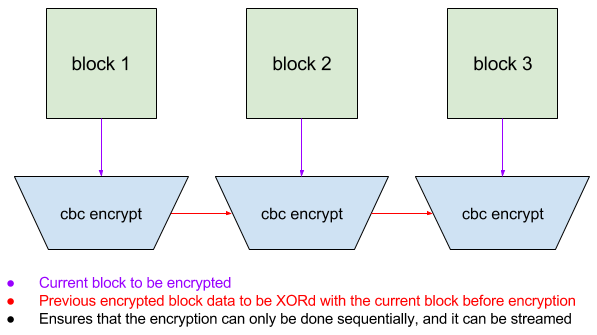
Secara berkala, jaringan mengeluarkan tantangan kepada validators yang meminta mereka menyediakan blok terenkripsi tertentu. Karena enkripsi dirantai, validator harus menyimpan semua blok sebelumnya untuk menghasilkan respons yang benar. validator mengirimkan blok terenkripsinya bersama dengan bukti Merkle yang menunjukkan posisinya di ledger terenkripsi. Jaringan dapat memverifikasi bukti ini dengan cepat tanpa perlu mendekripsi atau mengenkripsi ulang data.
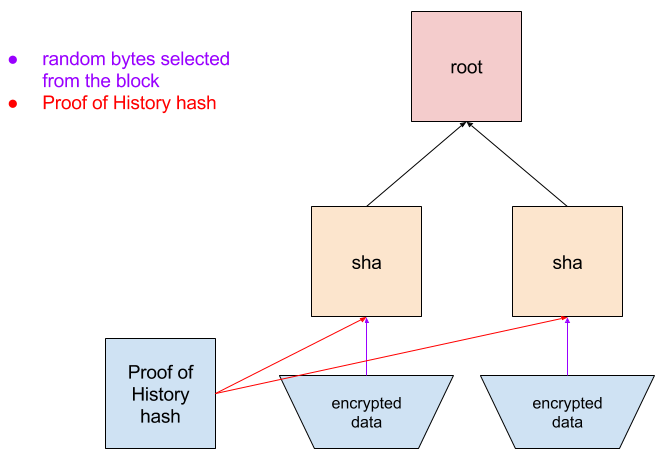
Pendekatan streaming pada PoRep ini memiliki overhead yang rendah dibandingkan dengan sistem bukti penyimpanan tradisional. Validator dapat mengenkripsi data yang diterima dan merespons tantangan dengan latensi minimal. Sistem juga memungkinkan pemulihan jika terjadi kehilangan data — jika validator kehilangan sebagian dari ledger, mereka dapat mengunduh ulang dari validators lain dan mengenkripsinya kembali. Kombinasi PoRep dengan stempel waktu PoH menciptakan sistem akuntabilitas lengkap di mana jaringan dapat memverifikasi kapan data dibuat dan apakah data disimpan dengan benar di seluruh jaringan validator.
Streaming Proof of Replication
Proof of Replication (PoRep) — это механизм, позволяющий валидаторам доказать, что они хранят данные реестра, не раскрывая сами данные и не требуя интенсивных вычислений. Solana реализует потоковую версию PoRep, где валидаторы непрерывно демонстрируют репликацию состояния блокчейна. Это необходимо для безопасности сети, так как обеспечивает правильное распределение данных реестра между валидаторами, а не их концентрацию в нескольких местах.
Механизм PoRep работает следующим образом: валидаторы шифруют сегменты реестра с использованием шифрования в режиме CBC (Cipher Block Chaining) с уникальным ключом валидатора, полученным из его идентификатора. Процесс шифрования таков, что каждый зашифрованный блок зависит от предыдущего, создавая цепочку, уникальную для каждого валидатора. Это предотвращает простое копирование зашифрованных данных между валидаторами — каждый валидатор должен хранить и обрабатывать исходные данные реестра для генерации своей уникальной зашифрованной версии.
Периодически сеть выдаёт задания валидаторам, требуя предоставить определённые зашифрованные блоки. Поскольку шифрование является цепочечным, валидатор должен хранить все предшествующие блоки для генерации правильного ответа. Валидатор предоставляет свой зашифрованный блок вместе с доказательством Меркла, показывающим его положение в зашифрованном реестре. Сеть может быстро проверить это доказательство без необходимости расшифровки или повторного шифрования данных.
Этот потоковый подход к PoRep имеет низкие накладные расходы по сравнению с традиционными системами доказательства хранения. Валидаторы могут шифровать данные по мере их поступления и отвечать на задания с минимальной задержкой. Система также обеспечивает восстановление в случае потери данных — если валидатор теряет часть реестра, он может загрузить её у других валидаторов и повторно зашифровать. Сочетание PoRep с временными метками PoH создаёт полную систему подотчётности, где сеть может проверить как время создания данных, так и их правильное хранение по всей сети валидаторов.
System Architecture
Arsitektur sistem Solana dirancang sebagai saluran di mana berbagai tahapan pemrosesan transaksi terjadi secara paralel. Transaction Processing Unit (TPU) merupakan komponen inti yang bertanggung jawab menangani transaksi masuk. TPU terdiri dari beberapa tahapan: pengambilan (mengumpulkan transaksi), verifikasi tanda tangan, perbankan (eksekusi transaksi), dan menulis (melakukan penyimpanan). Setiap tahap beroperasi secara paralel pada transaksi yang berbeda, mirip dengan pipeline CPU.
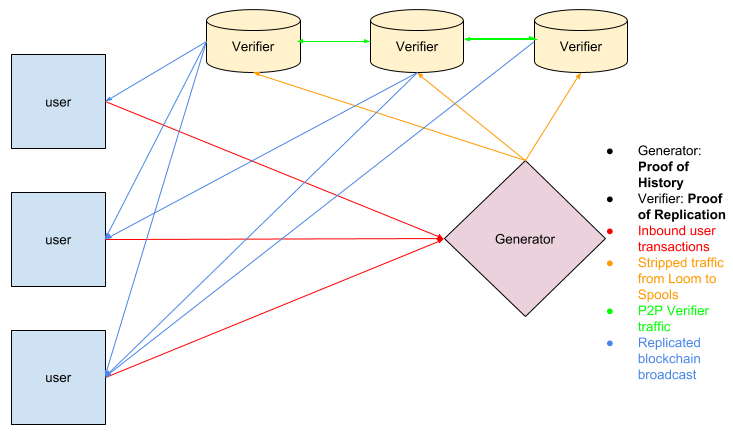
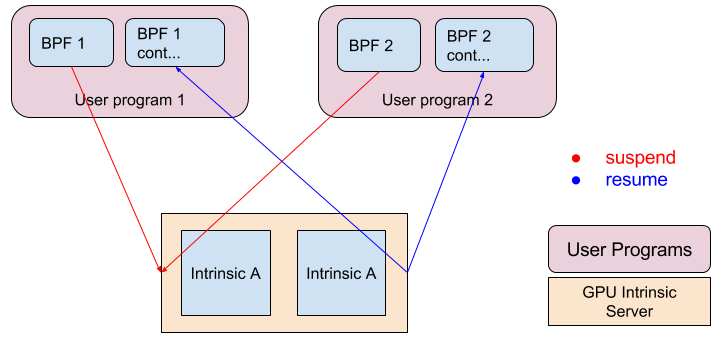
Verifikasi tanda tangan dipercepat menggunakan GPU, yang sangat efisien pada operasi kriptografi kurva elips yang diperlukan untuk memverifikasi tanda tangan transaksi. Dengan memindahkan tugas komputasi intensif ini ke GPU, Solana dapat memverifikasi tanda tangan dengan kecepatan melebihi 900.000 per detik pada perangkat keras komoditas. Verifikasi tanda tangan paralel ini mencegah validasi kriptografi menjadi hambatan bahkan pada tingkat transaksi yang sangat tinggi.
Runtime Sealevel adalah mesin eksekusi kontrak pintar paralel Solana. Tidak seperti blockchain tradisional yang mengeksekusi transaksi secara berurutan, Sealevel menganalisis transaksi untuk mengidentifikasi akun mana yang mereka akses dan mengeksekusi transaksi yang tidak bertentangan secara paralel di beberapa inti CPU. Transaksi yang mengakses akun yang sama dijalankan secara berurutan untuk menjaga konsistensi, namun transaksi yang mengakses akun berbeda dapat berjalan secara bersamaan. Paralelisme ini dimungkinkan karena PoH menetapkan urutan global — validators dapat mengeksekusi transaksi dalam urutan apa pun selama transaksi tersebut diterapkan pada status dalam urutan yang ditentukan PoH.
Arsitekturnya juga mencakup komponen yang dioptimalkan untuk propagasi dan penyimpanan blok. Protokol propagasi blok turbin menggunakan pengkodean penghapusan untuk memecah blok menjadi paket-paket lebih kecil yang didistribusikan ke seluruh jaringan dalam struktur pohon, sehingga meminimalkan kebutuhan bandwidth. Jaringan Archivers menyediakan penyimpanan terdesentralisasi untuk data historis ledger, menggunakan PoRep untuk memastikan ketersediaan data. Bersama-sama, komponen-komponen ini menciptakan sistem yang dapat memproses ratusan ribu transaksi per detik dengan tetap menjaga sifat desentralisasi dan keamanan dari sebuah blockchain.
System Architecture
Системная архитектура Solana спроектирована как конвейер, где различные стадии обработки транзакций выполняются параллельно. Transaction Processing Unit (TPU) — центральный компонент, отвечающий за обработку входящих транзакций. TPU состоит из нескольких стадий: fetch (сбор транзакций), верификация подписей, banking (выполнение транзакций) и write (запись в хранилище). Каждая стадия работает параллельно над разными транзакциями, аналогично конвейеру процессора.
Верификация подписей ускоряется с помощью GPU, которые высокоэффективны в операциях криптографии на эллиптических кривых, необходимых для проверки подписей транзакций. Перенося эту вычислительно интенсивную задачу на GPU, Solana может проверять подписи со скоростью более 900 000 в секунду на стандартном оборудовании. Эта параллельная верификация подписей предотвращает превращение криптографической проверки в узкое место даже при очень высоких скоростях обработки транзакций.
Среда выполнения Sealevel — это параллельный движок исполнения смарт-контрактов Solana. В отличие от традиционных блокчейнов, выполняющих транзакции последовательно, Sealevel анализирует транзакции для определения используемых аккаунтов и выполняет неконфликтующие транзакции параллельно на нескольких ядрах CPU. Транзакции, обращающиеся к одним и тем же аккаунтам, выполняются последовательно для поддержания согласованности, но транзакции, обращающиеся к разным аккаунтам, могут выполняться одновременно. Этот параллелизм возможен благодаря глобальному порядку, установленному PoH — валидаторы могут выполнять транзакции в любом порядке, если применяют их к состоянию в последовательности, определённой PoH.
Архитектура также включает оптимизированные компоненты для распространения и хранения блоков. Протокол распространения блоков Turbine использует стирающее кодирование для разбиения блоков на более мелкие пакеты, распространяемые по сети в древовидной структуре, минимизируя требования к пропускной способности. Сеть Archivers обеспечивает децентрализованное хранение исторических данных реестра, используя PoRep для гарантии доступности данных. Вместе эти компоненты создают систему, способную обрабатывать сотни тысяч транзакций в секунду, сохраняя свойства децентрализации и безопасности блокчейна.
Performance
Arsitektur Solana dirancang untuk mencapai tingkat kinerja yang dapat disesuaikan dengan peningkatan perangkat keras, mengikuti Hukum Moore. Pada koneksi jaringan standar 1 gigabit, throughput maksimum teoretis adalah sekitar 710.000 transaksi per detik, dengan asumsi 176 byte per transaksi (termasuk tanda tangan dan metadata). Perhitungan ini didasarkan pada bandwidth jaringan sebagai hambatan utama, dan hambatan komputasi dihilangkan melalui paralelisasi.
Verifikasi tanda tangan, yang sering kali menjadi faktor pembatas kinerja blockchain, dipercepat menggunakan paralelisasi GPU. Sebuah GPU dapat memverifikasi lebih dari 900.000 tanda tangan ed25519 per detik, yang melebihi batas throughput jaringan. Ini berarti verifikasi tanda tangan tidak membatasi kinerja sistem — hambatannya beralih ke bandwidth jaringan dan eksekusi transaksi. Untuk transaksi sederhana yang hanya mentransfer nilai tanpa logika kontrak pintar yang rumit, tahap perbankan dapat memproses transaksi dengan tarif yang sesuai dengan tarif input jaringan.
Generator PoH berjalan pada inti CPU khusus, menghasilkan sekitar 4.000 hash per milidetik pada prosesor 4GHz. Pada tingkat ini, urutan PoH memberikan stempel waktu dengan granularitas 0,25 mikrodetik, yang cukup untuk memesan jutaan transaksi per detik. Sifat pembangkitan PoH yang berurutan berarti komponen ini tidak dapat diparalelkan, namun throughputnya cukup tinggi sehingga tidak membatasi kinerja sistem secara keseluruhan.
Seiring dengan peningkatan perangkat keras, throughput Solana akan meningkat sesuai skalanya. Jaringan yang lebih cepat, GPU yang lebih bertenaga, dan CPU yang lebih baik semuanya berkontribusi pada tingkat transaksi yang lebih tinggi. Sistem dirancang untuk memanfaatkan peningkatan ini tanpa memerlukan perubahan protokol. Pendekatan skalabilitas ini kontras dengan blockchain yang pada dasarnya dibatasi oleh mekanisme konsensus berurutan, memungkinkan Solana mencapai tingkat kinerja yang sebelumnya dianggap mustahil dalam sistem desentralisasi dengan tetap menjaga jaminan keamanan dan desentralisasi.
Performance
Архитектура Solana разработана для достижения уровней производительности, масштабирующихся с улучшением оборудования в соответствии с законом Мура. При стандартном гигабитном сетевом подключении теоретическая максимальная пропускная способность составляет примерно 710 000 транзакций в секунду при размере транзакции 176 байт (включая подписи и метаданные). Этот расчёт основан на пропускной способности сети как основном узком месте, при этом вычислительные узкие места устранены посредством параллелизации.
Верификация подписей, часто являющаяся ограничивающим фактором производительности блокчейна, ускоряется с помощью параллелизации на GPU. Один GPU может проверять более 900 000 подписей ed25519 в секунду, что превышает предел пропускной способности сети. Это означает, что верификация подписей не ограничивает производительность системы — узкое место смещается к пропускной способности сети и выполнению транзакций. Для простых транзакций, только переводящих значение без сложной логики смарт-контрактов, стадия banking может обрабатывать транзакции со скоростью, соответствующей входной скорости сети.
Генератор PoH работает на выделенном ядре CPU, производя примерно 4 000 хешей в миллисекунду на процессоре 4 ГГц. При такой скорости последовательность PoH обеспечивает временные метки с точностью 0,25 микросекунды, что достаточно для упорядочивания миллионов транзакций в секунду. Последовательная природа генерации PoH означает, что этот компонент не может быть распараллелен, но пропускная способность достаточно высока, чтобы не ограничивать общую производительность системы.
По мере улучшения оборудования пропускная способность Solana масштабируется соответственно. Более быстрые сети, более мощные GPU и улучшенные CPU — всё это способствует увеличению скорости обработки транзакций. Система спроектирована для использования этих улучшений без необходимости изменения протокола. Этот подход к масштабированию контрастирует с блокчейнами, фундаментально ограниченными последовательными механизмами консенсуса, позволяя Solana достигать уровней производительности, ранее считавшихся невозможными в децентрализованной системе, при сохранении гарантий безопасности и децентрализации.
Conclusion
Proof of History mewakili terobosan mendasar dalam arsitektur blockchain dengan memecahkan masalah waktu yang membatasi skalabilitas ledger yang didistribusikan. Dengan membuat jam kriptografi yang dapat diverifikasi, PoH memungkinkan validators untuk menetapkan urutan peristiwa secara temporal tanpa overhead komunikasi ekstensif yang diperlukan oleh mekanisme konsensus tradisional. Inovasi ini menghilangkan hambatan kritis dan memungkinkan pemrosesan transaksi diparalelkan di seluruh jaringan.
Integrasi PoH dengan komponen sistem yang dioptimalkan — verifikasi tanda tangan yang dipercepat GPU, eksekusi transaksi paralel melalui Sealevel, dan protokol propagasi blok yang efisien — menciptakan blockchain yang dapat memproses ratusan ribu transaksi per detik pada perangkat keras komoditas. Yang lebih penting lagi, arsitekturnya dirancang untuk disesuaikan dengan peningkatan perangkat keras, yang berarti kinerja akan terus meningkat seiring dengan kecepatan prosesor dan jaringan yang lebih mumpuni.
Desain Solana menunjukkan bahwa kinerja tinggi dan desentralisasi tidak bisa dipisahkan satu sama lain. Dengan memanfaatkan PoH sebagai landasan konsensus dan koordinasi sistem, jaringan mencapai tingkat throughput yang sebanding dengan database terpusat sambil menjaga properti keamanan dan ketahanan sensor dari blockchain yang terdesentralisasi. Mekanisme konsensus Tower BFT dengan pembobotan pasak memastikan bahwa jaringan tetap aman terhadap aktor Byzantine sekaligus mencapai penyelesaian yang cepat.
Penerapan arsitektur ini memberikan jalan praktis ke depan bagi teknologi blockchain untuk mencapai adopsi global. Aplikasi yang memerlukan throughput transaksi yang tinggi – seperti bursa terdesentralisasi, platform game, dan sistem keuangan – kini dapat dibangun pada infrastruktur yang benar-benar terdesentralisasi tanpa mengorbankan kinerja. Proof of History membuka pintu bagi aplikasi blockchain generasi baru yang sebelumnya tidak dapat dijalankan karena kendala skalabilitas.
Conclusion
Proof of History представляет собой фундаментальный прорыв в архитектуре блокчейна, решая проблему синхронизации, которая ограничивала масштабируемость распределённых реестров. Создавая верифицируемые криптографические часы, PoH позволяет валидаторам устанавливать временной порядок событий без обширных коммуникационных накладных расходов, требуемых традиционными механизмами консенсуса. Эта инновация устраняет критическое узкое место и позволяет параллелизировать обработку транзакций по всей сети.
Интеграция PoH с оптимизированными системными компонентами — верификацией подписей с ускорением на GPU, параллельным выполнением транзакций через Sealevel и эффективными протоколами распространения блоков — создаёт блокчейн, способный обрабатывать сотни тысяч транзакций в секунду на стандартном оборудовании. Важнее всего то, что архитектура спроектирована для масштабирования с улучшением оборудования, что означает продолжение роста производительности по мере ускорения процессоров и повышения возможностей сетей.
Дизайн Solana демонстрирует, что высокая производительность и децентрализация не являются взаимоисключающими. Используя PoH в качестве основы для консенсуса и координации системы, сеть достигает уровней пропускной способности, сопоставимых с централизованными базами данных, сохраняя при этом свойства безопасности и устойчивости к цензуре децентрализованного блокчейна. Механизм консенсуса Tower BFT, взвешенный по стейку, обеспечивает безопасность сети от византийских участников при достижении быстрой финализации.
Реализация этой архитектуры обеспечивает практический путь к глобальному принятию технологии блокчейн. Приложения, требующие высокой пропускной способности транзакций — такие как децентрализованные биржи, игровые платформы и финансовые системы — теперь могут быть построены на по-настоящему децентрализованной инфраструктуре без компромиссов в производительности. Proof of History открывает дверь новому поколению блокчейн-приложений, ранее невозможных из-за ограничений масштабируемости.