
Buku Putih TRON
Perkenalan
1.1 Visi
TRON adalah proyek ambisius yang didedikasikan untuk pembentukan Internet yang benar-benar terdesentralisasi dan teknologinya
infrastruktur. Protokol TRON, salah satu sistem operasi berbasis blockchain terbesar di dunia
dunia, menawarkan dukungan blockchain publik dengan throughput tinggi, skalabilitas tinggi, dan ketersediaan tinggi untuk
semua Aplikasi Terdesentralisasi (DApps) di ekosistem TRON. Akuisisi Juli 2018 atas
BitTorrent semakin mengukuhkan kepemimpinan TRON dalam mewujudkan ekosistem terdesentralisasi.
1.2 Latar Belakang
Pengenalan Bitcoin pada tahun 2009 merevolusi persepsi masyarakat terhadap keuangan tradisional sistem setelah Resesi Hebat (2007-2008). Seperti dana lindung nilai terpusat dan bank runtuh karena spekulasi derivatif keuangan yang tidak jelas, blockchain teknologi menyediakan a buku besar universal yang transparan dimana siapa pun dapat memperoleh informasi transaksi. Itu transaksi diamankan secara kriptografis menggunakan mekanisme konsensus Proof of Work (PoW), sehingga mencegah masalah pembelanjaan ganda.
Pada akhir tahun 2013, buku putih Ethereum mengusulkan jaringan di mana smart contracts dan a Mesin Virtual Ethereum Turing-complete (EVM) akan memungkinkan pengembang untuk berinteraksi dengan jaringan melalui DApps. Namun, karena volume transaksi pada Bitcoin dan Ethereum mencapai puncaknya pada tahun 2017, Hal ini terlihat dari rendahnya waktu proses transaksi dan tingginya biaya transaksi mata uang kripto seperti Bitcoin dan Ethereum dalam kondisi saat ini tidak dapat diskalakan untuk digunakan secara luas adopsi. Oleh karena itu, TRON didirikan dan diharapkan sebagai solusi inovatif untuk permasalahan mendesak ini tantangan skalabilitas.
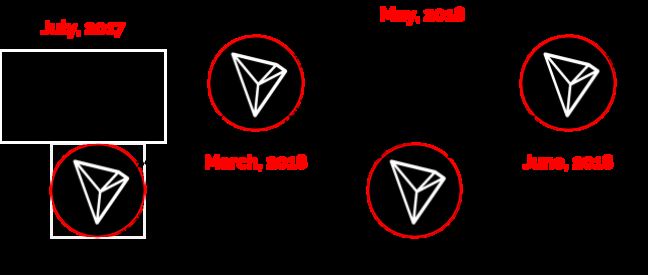
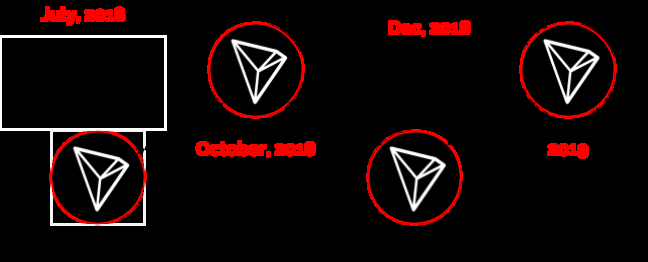
1.3 Sejarah TRON DAO didirikan pada Juli 2017 di Singapura. Pada bulan Desember 2017, TRON telah meluncurkan protokol sumber terbukanya. Testnet, Blockchain Explorer, dan Web Wallet semuanya diluncurkan pada bulan Maret 2018. TRON Mainnet diluncurkan segera setelahnya pada bulan Mei 2018, menandai Rilis Odyssey 2.0 sebagai tonggak teknis. Pada bulan Juni 2018, TRON mendeklarasikan kemerdekaannya dengan pembuatan blok Genesis, bersamaan dengan akuisisi BitTorrent pada Juli 2018. Di Oktober 2018, TRON meluncurkan TRON Mesin Virtual (TVM), perangkat pengembang yang lengkap, dan sistem pendukung 360. Peta jalan TRON melibatkan penggabungan 100 juta pengguna BitTorrent dengan jaringan TRON melalui Project Atlas, serta membina komunitas pengembang untuk meluncurkan DApps baru yang menarik di jaringan TRON1. 1 V1.0 tersedia di https://tron.network/static/doc/white_paper_v_1_0.pdf
1.4 Terminologi
Alamat/Dompet Alamat atau dompet yang berisi kredensial akun di jaringan TRON dihasilkan oleh a pasangan kunci, yang terdiri dari kunci privat dan kunci publik, yang terakhir berasal dari kunci publik melalui suatu algoritma. Kunci publik biasanya digunakan untuk enkripsi kunci sesi, tanda tangan verifikasi, dan mengenkripsi data yang dapat didekripsi dengan kunci pribadi yang sesuai.
ABI Antarmuka biner aplikasi (ABI) adalah antarmuka antara dua modul program biner; biasanya salah satu modul ini adalah perpustakaan atau fasilitas sistem operasi, dan yang lainnya dijalankan oleh pengguna program.
API Antarmuka pemrograman aplikasi (API) terutama digunakan untuk pengembangan klien pengguna. Dengan API dukungan, platform penerbitan token juga dapat dirancang oleh pengembang sendiri.
Aset Dalam dokumen TRON, aset sama dengan token, yang juga dinotasikan sebagai TRC-10 token.
Titik Bandwidth (BP) Agar jaringan tetap beroperasi dengan lancar, TRON transaksi jaringan menggunakan BP sebagai bahan bakarnya. Setiap akun mendapat 5000 BP harian gratis dan lebih banyak lagi dapat diperoleh dengan membekukan TRX untuk BP. Baik TRX maupun TRC-10 token transfer adalah transaksi normal yang dikenakan biaya BP. Penerapan dan eksekusi kontrak cerdas transaksi mengkonsumsi BP dan Energi.
Blokir Blok berisi catatan digital transaksi. Satu blok lengkap terdiri dari angka ajaib, ukuran blok, header blok, penghitung transaksi, dan data transaksi.
Blokir Hadiah Hadiah produksi blok dikirim ke sub-akun (alamat/dompet). Perwakilan Super bisa klaim hadiahnya di Tronscan atau melalui API secara langsung.
Blokir Tajuk Header blok adalah bagian dari sebuah blok. TRON header blok berisi hash blok sebelumnya, Merkle root, stempel waktu, versi, dan alamat saksi.Dompet Dingin Dompet dingin, juga dikenal sebagai dompet offline, menjaga kunci pribadi tetap terputus dari siapa pun jaringan. Dompet dingin biasanya dipasang pada perangkat "dingin" (misalnya komputer atau ponsel tetap offline) untuk memastikan keamanan kunci pribadi TRX.
DApp Aplikasi Terdesentralisasi adalah Aplikasi yang beroperasi tanpa pihak yang dipercaya secara terpusat. Sebuah aplikasi yang memungkinkan interaksi/kesepakatan/komunikasi langsung antara pengguna akhir dan/atau sumber daya tanpa perantara.
gRPC gRPC (Panggilan Prosedur Jarak Jauh gRPC) adalah sistem panggilan prosedur jarak jauh (RPC) sumber terbuka 2 awalnya dikembangkan di Google. Ia menggunakan HTTP/2 untuk transportasi, Protocol Buffer sebagai antarmuka bahasa deskripsi, dan menyediakan fitur seperti otentikasi, streaming dan aliran dua arah kontrol, pengikatan pemblokiran atau non-pemblokiran, serta pembatalan dan batas waktu. Ini menghasilkan pengikatan klien dan server lintas platform untuk banyak bahasa. Skenario penggunaan paling umum termasuk menghubungkan layanan dalam arsitektur gaya layanan mikro dan menghubungkan perangkat seluler, dan klien browser ke layanan backend.
Dompet Panas Dompet panas, juga dikenal sebagai dompet online, memungkinkan kunci pribadi pengguna untuk digunakan secara online, sehingga bisa saja digunakan rentan terhadap potensi kerentanan atau intersepsi oleh aktor jahat.
JDK Java Development Kit adalah Java SDK yang digunakan untuk aplikasi Java. Ini adalah inti dari Jawa pengembangan, terdiri dari lingkungan aplikasi Java (perpustakaan kelas JVM+Java) dan Java alat.
KhaosDB TRON memiliki KhaosDB di memori node penuh yang dapat menyimpan semua rantai bercabang yang baru dihasilkan dalam jangka waktu tertentu dan mendukung saksi untuk beralih dari rantai aktifnya dengan cepat menjadi rantai utama yang baru. Lihat 2.2.2 Penyimpanan Status untuk lebih jelasnya.
TingkatDB LevelDB awalnya diadopsi dengan tujuan utama untuk memenuhi persyaratan R/W yang cepat dan cepat pengembangan. Setelah meluncurkan Mainnet, TRON meningkatkan basis datanya menjadi sepenuhnya disesuaikan seseorang memenuhi kebutuhannya sendiri. Lihat 2.2.1 Penyimpanan Blockchain untuk lebih jelasnya.
Akar Merkle Akar Merkle adalah hash dari semua hashes dari semua transaksi yang dimasukkan sebagai bagian dari blok dalam blockchain jaringan. Lihat 3.1 Bukti Kepemilikan yang Didelegasikan (DPoS) untuk rincian lebih lanjut. 2 https://en.wikipedia.org/wiki/GRPC
Testnet Publik (Shasta) Versi jaringan yang berjalan dalam konfigurasi node tunggal. Pengembang dapat terhubung dan menguji fitur tanpa khawatir tentang kerugian ekonomi. Testnet tokens tidak memiliki nilai dan siapa pun bisa meminta lebih banyak dari faucet publik.
RPC
3
Dalam komputasi terdistribusi, panggilan prosedur jarak jauh (RPC) adalah ketika program komputer menyebabkan a
prosedur (subrutin) untuk dieksekusi di ruang alamat yang berbeda (biasanya di komputer lain di
jaringan bersama), yang diberi kode seolah-olah itu adalah panggilan prosedur normal (lokal), tanpa
programmer secara eksplisit mengkodekan detail untuk interaksi jarak jauh.
Skalabilitas Skalabilitas adalah fitur Protokol TRON. Ini adalah kemampuan suatu sistem, jaringan, atau proses untuk menangani peningkatan jumlah pekerjaan atau potensinya untuk diperluas guna mengakomodasi pertumbuhan tersebut.
MATAHARI SUN menggantikan drop sebagai unit terkecil TRX. 1 TRX = 1.000.000 MATAHARI.
Hasil Throughput tinggi adalah fitur TRON Mainnet. Diukur dalam Transaksi Per Detik (TPS), yaitu kapasitas transaksi maksimal dalam satu detik.
Stempel waktu Perkiraan waktu produksi blok dicatat sebagai stempel waktu Unix, yang merupakan jumlah milidetik yang telah berlalu sejak 00:00:00 01 Jan 1970 UTC.
TKC Konfigurasi token.
KKR-10 Standar kripto token pada platform TRON. Aturan dan antarmuka tertentu harus diikuti saat mengadakan penawaran koin perdana pada TRON blockchain.
TRX TRX adalah singkatan dari Tronix, yang merupakan mata uang kripto resmi TRON.
3 https://en.wikipedia.org/wiki/Remote_procedure_call
Perkenalan
1.1 Visi
TRON adalah proyek ambisius yang didedikasikan untuk pembentukan Internet yang benar-benar terdesentralisasi dan teknologinya
infrastruktur. Protokol TRON, salah satu sistem operasi berbasis blockchain terbesar di dunia
dunia, menawarkan dukungan blockchain publik dengan throughput tinggi, skalabilitas tinggi, dan ketersediaan tinggi untuk
semua Aplikasi Terdesentralisasi (DApps) di ekosistem TRON. Akuisisi Juli 2018 atas
BitTorrent semakin mengukuhkan kepemimpinan TRON dalam mewujudkan ekosistem terdesentralisasi.
1.2 Latar Belakang
Pengenalan Bitcoin pada tahun 2009 merevolusi persepsi masyarakat terhadap keuangan tradisional sistem setelah Resesi Hebat (2007-2008). Seperti dana lindung nilai terpusat dan bank runtuh karena spekulasi derivatif keuangan yang tidak jelas, blockchain teknologi menyediakan a buku besar universal yang transparan dimana siapa pun dapat memperoleh informasi transaksi. Itu transaksi diamankan secara kriptografis menggunakan mekanisme konsensus Proof of Work (PoW), sehingga mencegah masalah pembelanjaan ganda.
Pada akhir tahun 2013, buku putih Ethereum mengusulkan jaringan di mana smart contracts dan a Mesin Virtual Ethereum Turing-complete (EVM) akan memungkinkan pengembang untuk berinteraksi dengan jaringan melalui DApps. Namun, karena volume transaksi pada Bitcoin dan Ethereum mencapai puncaknya pada tahun 2017, Hal ini terlihat dari rendahnya waktu proses transaksi dan tingginya biaya transaksi mata uang kripto seperti Bitcoin dan Ethereum dalam kondisi saat ini tidak dapat diskalakan untuk digunakan secara luas adopsi. Oleh karena itu, TRON didirikan dan diharapkan sebagai solusi inovatif untuk permasalahan mendesak ini tantangan skalabilitas.
1.3 Sejarah TRON DAO didirikan pada Juli 2017 di Singapura. Pada bulan Desember 2017, TRON telah meluncurkan protokol sumber terbukanya. Testnet, Blockchain Explorer, dan Web Wallet semuanya diluncurkan pada bulan Maret 2018. TRON Mainnet diluncurkan segera setelahnya pada bulan Mei 2018, menandai Rilis Odyssey 2.0 sebagai tonggak teknis. Pada bulan Juni 2018, TRON mendeklarasikan kemerdekaannya dengan pembuatan blok Genesis, bersamaan dengan akuisisi BitTorrent pada Juli 2018. Di Oktober 2018, TRON meluncurkan TRON Mesin Virtual (TVM), perangkat pengembang yang lengkap, dan sistem pendukung 360. Peta jalan TRON melibatkan penggabungan 100 juta pengguna BitTorrent dengan jaringan TRON melalui Project Atlas, serta membina komunitas pengembang untuk meluncurkan DApps baru yang menarik di jaringan TRON1. 1 V1.0 tersedia di https://tron.network/static/doc/white_paper_v_1_0.pdf
1.4 Terminologi
Alamat/Dompet Alamat atau dompet yang berisi kredensial akun di jaringan TRON dihasilkan oleh a pasangan kunci, yang terdiri dari kunci privat dan kunci publik, yang terakhir berasal dari kunci publik melalui suatu algoritma. Kunci publik biasanya digunakan untuk enkripsi kunci sesi, tanda tangan verifikasi, dan mengenkripsi data yang dapat didekripsi dengan kunci pribadi yang sesuai.
ABI Antarmuka biner aplikasi (ABI) adalah antarmuka antara dua modul program biner; biasanya salah satu modul ini adalah perpustakaan atau fasilitas sistem operasi, dan yang lainnya dijalankan oleh pengguna program.
API Antarmuka pemrograman aplikasi (API) terutama digunakan untuk pengembangan klien pengguna. Dengan API dukungan, platform penerbitan token juga dapat dirancang oleh pengembang sendiri.
Aset Dalam dokumen TRON, aset sama dengan token, yang juga dinotasikan sebagai TRC-10 token.
Titik Bandwidth (BP) Agar jaringan tetap beroperasi dengan lancar, TRON transaksi jaringan menggunakan BP sebagai bahan bakarnya. Setiap akun mendapat 5000 BP harian gratis dan lebih banyak lagi dapat diperoleh dengan membekukan TRX untuk BP. Baik TRX maupun TRC-10 token transfer adalah transaksi normal yang dikenakan biaya BP. Penerapan dan eksekusi kontrak cerdas transaksi mengkonsumsi BP dan Energi.
Blokir Blok berisi catatan digital transaksi. Satu blok lengkap terdiri dari angka ajaib, ukuran blok, header blok, penghitung transaksi, dan data transaksi.
Blokir Hadiah Hadiah produksi blok dikirim ke sub-akun (alamat/dompet). Perwakilan Super bisa klaim hadiahnya di Tronscan atau melalui API secara langsung.
Blokir Tajuk Header blok adalah bagian dari sebuah blok. TRON header blok berisi hash blok sebelumnya, Merkle root, stempel waktu, versi, dan alamat saksi.Dompet Dingin Dompet dingin, juga dikenal sebagai dompet offline, menjaga kunci pribadi tetap terputus dari siapa pun jaringan. Dompet dingin biasanya dipasang pada perangkat "dingin" (misalnya komputer atau ponsel tetap offline) untuk memastikan keamanan kunci pribadi TRX.
DApp Aplikasi Terdesentralisasi adalah Aplikasi yang beroperasi tanpa pihak yang dipercaya secara terpusat. Sebuah aplikasi yang memungkinkan interaksi/kesepakatan/komunikasi langsung antara pengguna akhir dan/atau sumber daya tanpa perantara.
gRPC gRPC (Panggilan Prosedur Jarak Jauh gRPC) adalah sistem panggilan prosedur jarak jauh (RPC) sumber terbuka 2 awalnya dikembangkan di Google. Ia menggunakan HTTP/2 untuk transportasi, Protocol Buffer sebagai antarmuka bahasa deskripsi, dan menyediakan fitur seperti otentikasi, streaming dan aliran dua arah kontrol, pengikatan pemblokiran atau non-pemblokiran, serta pembatalan dan batas waktu. Ini menghasilkan pengikatan klien dan server lintas platform untuk banyak bahasa. Skenario penggunaan paling umum termasuk menghubungkan layanan dalam arsitektur gaya layanan mikro dan menghubungkan perangkat seluler, dan klien browser ke layanan backend.
Dompet Panas Dompet panas, juga dikenal sebagai dompet online, memungkinkan kunci pribadi pengguna untuk digunakan secara online, sehingga bisa saja digunakan rentan terhadap potensi kerentanan atau intersepsi oleh aktor jahat.
JDK Java Development Kit adalah Java SDK yang digunakan untuk aplikasi Java. Ini adalah inti dari Jawa pengembangan, terdiri dari lingkungan aplikasi Java (perpustakaan kelas JVM+Java) dan Java alat.
KhaosDB TRON memiliki KhaosDB di memori node penuh yang dapat menyimpan semua rantai bercabang yang baru dihasilkan dalam jangka waktu tertentu dan mendukung saksi untuk beralih dari rantai aktifnya dengan cepat menjadi rantai utama yang baru. Lihat 2.2.2 Penyimpanan Status untuk lebih jelasnya.
TingkatDB LevelDB awalnya diadopsi dengan tujuan utama untuk memenuhi persyaratan R/W yang cepat dan cepat pengembangan. Setelah meluncurkan Mainnet, TRON meningkatkan basis datanya menjadi sepenuhnya disesuaikan seseorang memenuhi kebutuhannya sendiri. Lihat 2.2.1 Penyimpanan Blockchain untuk lebih jelasnya.
Akar Merkle Akar Merkle adalah hash dari semua hashes dari semua transaksi yang dimasukkan sebagai bagian dari blok dalam blockchain jaringan. Lihat 3.1 Bukti Kepemilikan yang Didelegasikan (DPoS) untuk rincian lebih lanjut. 2 https://en.wikipedia.org/wiki/GRPC
Testnet Publik (Shasta) Versi jaringan yang berjalan dalam konfigurasi node tunggal. Pengembang dapat terhubung dan menguji fitur tanpa khawatir tentang kerugian ekonomi. Testnet tokens tidak memiliki nilai dan siapa pun bisa meminta lebih banyak dari faucet publik.
RPC
3
Dalam komputasi terdistribusi, panggilan prosedur jarak jauh (RPC) adalah ketika program komputer menyebabkan a
prosedur (subrutin) untuk dieksekusi di ruang alamat yang berbeda (biasanya di komputer lain di
jaringan bersama), yang diberi kode seolah-olah itu adalah panggilan prosedur normal (lokal), tanpa
programmer secara eksplisit mengkodekan detail untuk interaksi jarak jauh.
Skalabilitas Skalabilitas adalah fitur Protokol TRON. Ini adalah kemampuan suatu sistem, jaringan, atau proses untuk menangani peningkatan jumlah pekerjaan atau potensinya untuk diperluas guna mengakomodasi pertumbuhan tersebut.
MATAHARI SUN menggantikan drop sebagai unit terkecil TRX. 1 TRX = 1.000.000 MATAHARI.
Hasil Throughput tinggi adalah fitur TRON Mainnet. Diukur dalam Transaksi Per Detik (TPS), yaitu kapasitas transaksi maksimal dalam satu detik.
Stempel waktu Perkiraan waktu produksi blok dicatat sebagai stempel waktu Unix, yang merupakan jumlah milidetik yang telah berlalu sejak 00:00:00 01 Jan 1970 UTC.
TKC Konfigurasi token.
KKR-10 Standar kripto token pada platform TRON. Aturan dan antarmuka tertentu harus diikuti saat mengadakan penawaran koin perdana pada TRON blockchain.
TRX TRX adalah singkatan dari Tronix, yang merupakan mata uang kripto resmi TRON.
3 https://en.wikipedia.org/wiki/Remote_procedure_call
Arsitektur
TRON mengadopsi arsitektur 3 lapisan yang dibagi menjadi Lapisan Penyimpanan, Lapisan Inti, dan Lapisan Aplikasi. Protokol TRON mematuhi Google Protobuf, yang secara intrinsik mendukung multi-bahasa ekstensi.
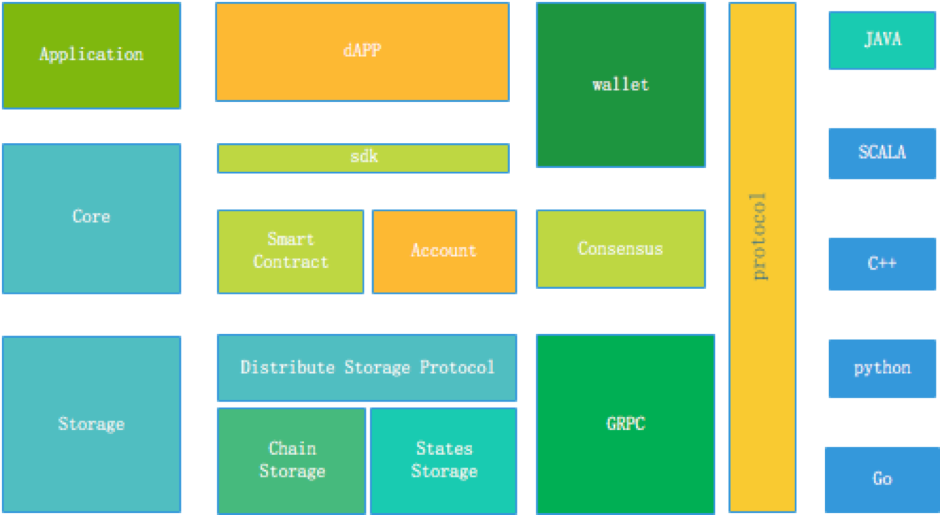
Gambar 1: TRON Arsitektur 3 Lapisan
2.1 Inti
Ada beberapa modul di lapisan inti, termasuk smart contracts, manajemen akun, dan konsensus. Mesin virtual berbasis tumpukan diimplementasikan pada TRON dan instruksi yang dioptimalkan set digunakan. Untuk lebih mendukung pengembang DApp, Solidity dipilih sebagai smart contract 4 bahasa, diikuti dengan dukungan masa depan untuk bahasa tingkat lanjut lainnya. Selain itu, konsensus TRON mekanismenya didasarkan pada Delegated Proof of Stake (DPoS) dan banyak inovasi yang dilakukan dalam untuk memenuhi persyaratan uniknya. 2.2 Penyimpanan
TRON merancang protokol penyimpanan terdistribusi unik yang terdiri dari Block Storage dan State Penyimpanan. Gagasan tentang database grafik diperkenalkan ke dalam desain lapisan penyimpanan untuk lebih baik memenuhi kebutuhan penyimpanan data yang terdiversifikasi di dunia nyata. 2.2.1 Penyimpanan Blockchain
Penyimpanan TRON blockchain memilih menggunakan LevelDB, yang dikembangkan oleh Google dan terbukti sukses dengan banyak perusahaan dan proyek. Ini memiliki kinerja tinggi dan mendukung byte sewenang-wenang array sebagai kunci dan nilai, pengambilan tunggal, penempatan dan penghapusan, penempatan dan penghapusan batch, dua arah iterator, dan kompresi sederhana menggunakan algoritma Snappy yang sangat cepat. 2.2.2 Penyimpanan Negara
TRON memiliki KhaosDB di memori node penuh yang dapat menyimpan semua rantai bercabang yang baru dihasilkan dalam jangka waktu tertentu dan mendukung saksi untuk beralih dari rantai aktifnya dengan cepat menjadi rantai utama yang baru. Ini juga dapat melindungi penyimpanan blockchain dengan membuatnya lebih stabil berakhir secara tidak normal dalam keadaan peralihan. 2.3 Aplikasi
Pengembang dapat membuat beragam DApps dan dompet khusus di TRON. Sejak TRON memungkinkan smart contracts untuk dikerahkan dan dijalankan, peluang aplikasi utilitas adalah tidak terbatas. 4 Dokumentasi resmi soliditas: https://solidity.readthedocs.io/
2.4 Protokol
Protokol TRON mematuhi Google Protocol Buffer , yang netral bahasa, netral platform, 5 dan cara yang dapat diperluas untuk membuat serialisasi data terstruktur untuk digunakan dalam protokol komunikasi, penyimpanan data, dan banyak lagi. 2.4.1 Buffer Protokol
Protocol Buffers (Protobuf) adalah mekanisme otomatis yang fleksibel, efisien untuk membuat serialisasi terstruktur data, mirip dengan JSON atau XML, tetapi jauh lebih kecil, lebih cepat, dan sederhana.
Definisi Protobuf (.proto) dapat digunakan untuk menghasilkan kode untuk C++, Java, C#, Python, Ruby, Bahasa Golang, dan Objective-C melalui generator kode resmi. Berbagai pihak ketiga implementasi juga tersedia untuk banyak bahasa lainnya. Protobuf memudahkan pengembangan klien dengan menyatukan definisi API dan juga mengoptimalkan transfer data. Klien dapat mengambil API .proto dari repositori protokol TRON dan berintegrasi melalui kode yang dibuat secara otomatis perpustakaan.
Sebagai perbandingan, Protocol Buffer berukuran 3 hingga 10 kali lebih kecil dan 20 hingga 100 kali lebih cepat dibandingkan XML, dengan sintaksis yang tidak terlalu ambigu. Protobuf menghasilkan kelas akses data yang lebih mudah digunakan secara terprogram. 2.4.2 HTTP
TRON Protokol menyediakan alternatif API HTTP RESTful untuk API Protobuf. Mereka berbagi hal yang sama antarmuka tetapi HTTP API dapat dengan mudah digunakan di klien javascript. 2.5 TRON Mesin Virtual (TVM)
TVM adalah mesin virtual lengkap Turing yang ringan dan dikembangkan untuk ekosistem TRON. Itu
TVM terhubung secara mulus dengan ekosistem pengembangan yang ada untuk menyediakan kebutuhan bagi jutaan orang di seluruh dunia
pengembang dengan sistem blockchain yang dibuat khusus yang efisien, nyaman, stabil, aman, dan
terukur.
2.6 Pertukaran Terdesentralisasi (DEX)
5 dokumentasi resmi Buffer Protokol Google: https://developers.google.com/protocol-buffers/Jaringan TRON secara asli mendukung fungsi pertukaran yang terdesentralisasi. Pertukaran yang terdesentralisasi terdiri dari beberapa pasangan perdagangan. Pasangan dagang (notasi “Bursa”) adalah Pasar Bursa antara TRC-10 tokens, atau antara TRC-10 token dan TRX. Akun mana pun dapat membuat perdagangan berpasangan di antara token mana pun, meskipun pasangan yang sama sudah ada di jaringan TRON. Perdagangan dan fluktuasi harga pasangan dagang mengikuti Protokol Bancor. Jaringan TRON menetapkan hal itu 6 bobot kedua token di semua pasangan dagang adalah sama, jadi rasio saldonya adalah harga di antara mereka. Misalnya, pertimbangkan pasangan perdagangan yang berisi dua token, ABC dan DEF. ABC punya saldo 10 juta dan DEF saldo 1 juta. Karena bobotnya sama, 10 ABC = 1 DEF. Artinya perbandingan ABC terhadap DEF adalah 10 ABC per DEF. 2.7 Implementasi
Kode TRON blockchain diimplementasikan di Java dan awalnya merupakan cabang dari EthereumJ.
6 Situs resmi Protokol Bancor: https://about.bancor.network/protocol/
Arsitektur
TRON mengadopsi arsitektur 3 lapisan yang dibagi menjadi Lapisan Penyimpanan, Lapisan Inti, dan Lapisan Aplikasi. Protokol TRON mematuhi Google Protobuf, yang secara intrinsik mendukung multi-bahasa ekstensi.
Gambar 1: TRON Arsitektur 3 Lapisan
2.1 Inti
Ada beberapa modul di lapisan inti, termasuk smart contracts, manajemen akun, dan konsensus. Mesin virtual berbasis tumpukan diimplementasikan pada TRON dan instruksi yang dioptimalkan set digunakan. Untuk lebih mendukung pengembang DApp, Solidity dipilih sebagai smart contract 4 bahasa, diikuti dengan dukungan masa depan untuk bahasa tingkat lanjut lainnya. Selain itu, konsensus TRON mekanismenya didasarkan pada Delegated Proof of Stake (DPoS) dan banyak inovasi yang dilakukan dalam untuk memenuhi persyaratan uniknya. 2.2 Penyimpanan
TRON merancang protokol penyimpanan terdistribusi unik yang terdiri dari Block Storage dan State Penyimpanan. Gagasan tentang database grafik diperkenalkan ke dalam desain lapisan penyimpanan untuk lebih baik memenuhi kebutuhan penyimpanan data yang terdiversifikasi di dunia nyata. 2.2.1 Penyimpanan Blockchain
Penyimpanan TRON blockchain memilih menggunakan LevelDB, yang dikembangkan oleh Google dan terbukti sukses dengan banyak perusahaan dan proyek. Ini memiliki kinerja tinggi dan mendukung byte sewenang-wenang array sebagai kunci dan nilai, pengambilan tunggal, penempatan dan penghapusan, penempatan dan penghapusan batch, dua arah iterator, dan kompresi sederhana menggunakan algoritma Snappy yang sangat cepat. 2.2.2 Penyimpanan Negara
TRON memiliki KhaosDB di memori node penuh yang dapat menyimpan semua rantai bercabang yang baru dihasilkan dalam jangka waktu tertentu dan mendukung saksi untuk beralih dari rantai aktifnya dengan cepat menjadi rantai utama yang baru. Ini juga dapat melindungi penyimpanan blockchain dengan membuatnya lebih stabil berakhir secara tidak normal dalam keadaan peralihan. 2.3 Aplikasi
Pengembang dapat membuat beragam DApps dan dompet khusus di TRON. Sejak TRON memungkinkan smart contracts untuk dikerahkan dan dijalankan, peluang aplikasi utilitas adalah tidak terbatas. 4 Dokumentasi resmi soliditas: https://solidity.readthedocs.io/
2.4 Protokol
Protokol TRON mematuhi Google Protocol Buffer , yang netral bahasa, netral platform, 5 dan cara yang dapat diperluas untuk membuat serialisasi data terstruktur untuk digunakan dalam protokol komunikasi, penyimpanan data, dan banyak lagi. 2.4.1 Buffer Protokol
Protocol Buffers (Protobuf) adalah mekanisme otomatis yang fleksibel, efisien untuk membuat serialisasi terstruktur data, mirip dengan JSON atau XML, tetapi jauh lebih kecil, lebih cepat, dan sederhana.
Definisi Protobuf (.proto) dapat digunakan untuk menghasilkan kode untuk C++, Java, C#, Python, Ruby, Bahasa Golang, dan Objective-C melalui generator kode resmi. Berbagai pihak ketiga implementasi juga tersedia untuk banyak bahasa lainnya. Protobuf memudahkan pengembangan klien dengan menyatukan definisi API dan juga mengoptimalkan transfer data. Klien dapat mengambil API .proto dari repositori protokol TRON dan berintegrasi melalui kode yang dibuat secara otomatis perpustakaan.
Sebagai perbandingan, Protocol Buffer berukuran 3 hingga 10 kali lebih kecil dan 20 hingga 100 kali lebih cepat dibandingkan XML, dengan sintaksis yang tidak terlalu ambigu. Protobuf menghasilkan kelas akses data yang lebih mudah digunakan secara terprogram. 2.4.2 HTTP
TRON Protokol menyediakan alternatif API HTTP RESTful untuk API Protobuf. Mereka berbagi hal yang sama antarmuka tetapi HTTP API dapat dengan mudah digunakan di klien javascript. 2.5 TRON Mesin Virtual (TVM)
TVM adalah mesin virtual lengkap Turing yang ringan dan dikembangkan untuk ekosistem TRON. Itu
TVM terhubung secara mulus dengan ekosistem pengembangan yang ada untuk menyediakan kebutuhan bagi jutaan orang di seluruh dunia
pengembang dengan sistem blockchain yang dibuat khusus yang efisien, nyaman, stabil, aman, dan
terukur.
2.6 Pertukaran Terdesentralisasi (DEX)
5 dokumentasi resmi Buffer Protokol Google: https://developers.google.com/protocol-buffers/Jaringan TRON secara asli mendukung fungsi pertukaran yang terdesentralisasi. Pertukaran yang terdesentralisasi terdiri dari beberapa pasangan perdagangan. Pasangan dagang (notasi “Bursa”) adalah Pasar Bursa antara TRC-10 tokens, atau antara TRC-10 token dan TRX. Akun mana pun dapat membuat perdagangan berpasangan di antara token mana pun, meskipun pasangan yang sama sudah ada di jaringan TRON. Perdagangan dan fluktuasi harga pasangan dagang mengikuti Protokol Bancor. Jaringan TRON menetapkan hal itu 6 bobot kedua token di semua pasangan dagang adalah sama, jadi rasio saldonya adalah harga di antara mereka. Misalnya, pertimbangkan pasangan perdagangan yang berisi dua token, ABC dan DEF. ABC punya saldo 10 juta dan DEF saldo 1 juta. Karena bobotnya sama, 10 ABC = 1 DEF. Artinya perbandingan ABC terhadap DEF adalah 10 ABC per DEF. 2.7 Implementasi
Kode TRON blockchain diimplementasikan di Java dan awalnya merupakan cabang dari EthereumJ.
6 Situs resmi Protokol Bancor: https://about.bancor.network/protocol/
Konsensus
3.1 Bukti Kepemilikan yang Didelegasikan (DPoS)
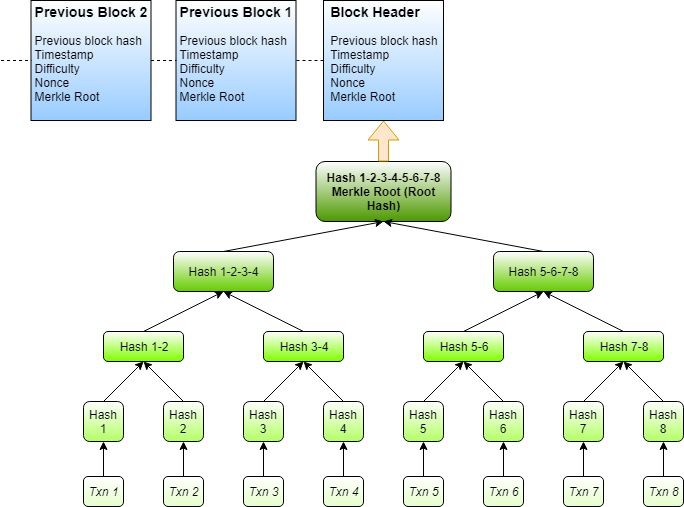
Mekanisme konsensus yang paling awal adalah mekanisme konsensus Proof of Work (PoW). Ini protokol saat ini diterapkan di Bitcoin dan Ethereum . Dalam sistem PoW, transaksi 7 8 disiarkan melalui jaringan dikelompokkan menjadi blok-blok baru untuk konfirmasi penambang. Itu proses konfirmasi melibatkan hashing transaksi menggunakan algoritma kriptografi hashing hingga a akar merkle telah tercapai, menciptakan pohon merkle:
Gambar 2: 8 transaksi TRX hash dimasukkan ke dalam root merkle. Root merkle ini kemudian dimasukkan ke dalam header blok, yang mana dilampirkan ke blok yang telah dikonfirmasi sebelumnya untuk membentuk blockchain. Hal ini memungkinkan pelacakan yang mudah dan transparan transaksi, stempel waktu, dan informasi terkait lainnya.
7 Bitcoin kertas putih: https://bitcoin.org/bitcoin.pdf 8 Ethereum kertas putih: https://github.com/ethereum/wiki/wiki/White-Paper
Algoritma kriptografi hashing berguna dalam pencegahan serangan jaringan karena mereka memilikinya
beberapa properti:
9
●
Ukuran panjang Input/Output - Algoritme dapat meneruskan input dengan ukuran panjang berapa pun, dan
menghasilkan nilai hash dengan panjang tetap.
●
Efisiensi - Algoritma ini relatif mudah dan cepat untuk dihitung.
●
Resistensi gambar awal - Untuk keluaran tertentu z, tidak mungkin menemukan masukan x sedemikian rupa
h(x) = z. Dengan kata lain, algoritma hashing h(x) adalah fungsi satu arah yang hanya
output dapat ditemukan, diberi input. Hal sebaliknya tidak mungkin dilakukan.
●
Ketahanan tumbukan - Secara komputasi tidak mungkin menemukan pasangan x1≠ x2sehingga h(x1)
= jam(x2). Dengan kata lain, probabilitas menemukan dua input berbeda hashing menjadi sama
keluarannya sangat rendah. Properti ini juga menyiratkan resistensi preimage kedua.
●
Resistensi gambar awal kedua - Mengingat x1, dan dengan demikian h(x1), secara komputasi tidak mungkin untuk
carilah x2 sehingga h(x1) = h(x2). Meskipun properti ini mirip dengan resistensi tabrakan, itu
properti berbeda karena dikatakan bahwa penyerang dengan x1 tertentu akan menemukannya secara komputasi
tidak mungkin menemukan x2 hashing ke keluaran yang sama.
●
deterministik - memetakan setiap masukan ke satu dan hanya satu keluaran.
●
Avalanche efek - perubahan kecil pada masukan menghasilkan keluaran yang sama sekali berbeda.
Properti ini memberikan nilai intrinsik pada jaringan mata uang kripto dengan memastikan tidak terjadi serangan mengkompromikan jaringan. Saat penambang mengonfirmasi sebuah blok, mereka diberi hadiah tokens sebagai blok bawaan insentif untuk partisipasi jaringan. Namun, seiring dengan kapitalisasi pasar cryptocurrency global terus meningkat, para penambang menjadi terpusat dan memfokuskan sumber daya komputasi mereka menimbun tokens sebagai aset, bukan untuk tujuan partisipasi jaringan. Penambang CPU menyerah GPU, yang kemudian digantikan oleh ASIC yang bertenaga. Dalam sebuah penelitian penting, kekuatan total konsumsi pertambangan Bitcoin diperkirakan mencapai 3 GW, sebanding dengan Irlandia 10 konsumsi daya. Studi yang sama memproyeksikan total konsumsi listrik akan mencapai 8 GW dalam waktu dekat masa depan.
Untuk mengatasi masalah limbah energi, diusulkan mekanisme konsensus Proof of Stake (PoS) oleh banyak jaringan baru. Dalam jaringan PoS, pemegang token mengunci saldo token mereka menjadi blok validators. validator bergiliran melamar dan memberikan suara pada blok berikutnya. Namun masalahnya dengan PoS standar adalah bahwa pengaruh validator berkorelasi langsung dengan jumlah token yang dikunci. Hal ini mengakibatkan pihak-pihak yang menimbun sejumlah besar mata uang dasar jaringan tersebut digunakan secara tidak semestinya pengaruhnya dalam ekosistem jaringan.
Mekanisme konsensus TRON menggunakan sistem Bukti Kepemilikan yang Didelegasikan yang inovatif di mana 27
Perwakilan Super (SR) menghasilkan blok untuk jaringan. Setiap 6 jam, pemegang akun TRX
yang membekukan akunnya dapat memilih kandidat SR pilihan, dengan 27 kandidat teratas
dianggap SR. Pemilih dapat memilih SR berdasarkan kriteria seperti proyek yang disponsori oleh SR
9 PAAR, C., PELZL, J., Memahami Kriptografi: Buku Ajar untuk Pelajar dan Praktisi, edisi 2010.
Springer-Verlag Berlin Heidelberg, 2010.
10 https://www.sciencedirect.com/science/article/pii/S2542435118301776meningkatkan adopsi TRX, dan penghargaan didistribusikan kepada pemilih. Hal ini memungkinkan terciptanya sistem yang lebih demokratis dan
ekosistem yang terdesentralisasi. Rekening SR adalah rekening biasa, tapi akumulasi suaranya
memungkinkan mereka menghasilkan blok. Dengan tingkat throughput yang rendah Bitcoin dan Ethereum karena
mekanisme konsensus PoW dan masalah skalabilitas, sistem DPoS TRON menawarkan solusi inovatif
mekanisme menghasilkan 2000 TPS dibandingkan dengan Bitcoin sebanyak 3 TPS dan Ethereum sebanyak 15 TPS.
Jaringan protokol TRON menghasilkan satu blok setiap tiga detik, dengan setiap blok memberikan 32 TRX ke Perwakilan Super. Sebanyak 336.384.000 TRX akan diberikan setiap tahun kepada 27 SR. Setiap kali SR menyelesaikan produksi blok, hadiah dikirim ke sub-akun di buku besar super. SR dapat memeriksa, tetapi tidak secara langsung menggunakan TRX tokens ini. Penarikan dapat dilakukan oleh masing-masing SR setiap 24 jam sekali, mentransfer hadiah dari sub-akun ke SR yang ditentukan akun.
Tiga jenis node pada jaringan TRON adalah Witness Node, Full Node, dan Solidity Node. Node saksi diatur oleh SR dan terutama bertanggung jawab untuk produksi blok dan proposal pembuatan/pemungutan suara. Node penuh menyediakan API dan menyiarkan transaksi dan blok. Sinkronisasi node soliditas blok dari Full Node lainnya dan juga menyediakan API yang dapat diindeks.
Konsensus
3.1 Bukti Kepemilikan yang Didelegasikan (DPoS)
Mekanisme konsensus yang paling awal adalah mekanisme konsensus Proof of Work (PoW). Ini protokol saat ini diterapkan di Bitcoin dan Ethereum . Dalam sistem PoW, transaksi 7 8 disiarkan melalui jaringan dikelompokkan menjadi blok-blok baru untuk konfirmasi penambang. Itu proses konfirmasi melibatkan hashing transaksi menggunakan algoritma kriptografi hashing hingga a akar merkle telah tercapai, menciptakan pohon merkle:
Gambar 2: 8 transaksi TRX hash dimasukkan ke dalam root merkle. Root merkle ini kemudian dimasukkan ke dalam header blok, yang mana dilampirkan ke blok yang telah dikonfirmasi sebelumnya untuk membentuk blockchain. Hal ini memungkinkan pelacakan yang mudah dan transparan transaksi, stempel waktu, dan informasi terkait lainnya.
7 Bitcoin kertas putih: https://bitcoin.org/bitcoin.pdf 8 Ethereum kertas putih: https://github.com/ethereum/wiki/wiki/White-Paper
Algoritma kriptografi hashing berguna dalam pencegahan serangan jaringan karena mereka memilikinya
beberapa properti:
9
●
Ukuran panjang Input/Output - Algoritme dapat meneruskan input dengan ukuran panjang berapa pun, dan
menghasilkan nilai hash dengan panjang tetap.
●
Efisiensi - Algoritma ini relatif mudah dan cepat untuk dihitung.
●
Resistensi gambar awal - Untuk keluaran tertentu z, tidak mungkin menemukan masukan x sedemikian rupa
h(x) = z. Dengan kata lain, algoritma hashing h(x) adalah fungsi satu arah yang hanya
output dapat ditemukan, diberi input. Hal sebaliknya tidak mungkin dilakukan.
●
Ketahanan tumbukan - Secara komputasi tidak mungkin menemukan pasangan x1≠ x2sehingga h(x1)
= jam(x2). Dengan kata lain, probabilitas menemukan dua input berbeda hashing menjadi sama
keluarannya sangat rendah. Properti ini juga menyiratkan resistensi preimage kedua.
●
Resistensi gambar awal kedua - Mengingat x1, dan dengan demikian h(x1), secara komputasi tidak mungkin untuk
carilah x2 sehingga h(x1) = h(x2). Meskipun properti ini mirip dengan resistensi tabrakan, itu
properti berbeda karena dikatakan bahwa penyerang dengan x1 tertentu akan menemukannya secara komputasi
tidak mungkin menemukan x2 hashing ke keluaran yang sama.
●
deterministik - memetakan setiap masukan ke satu dan hanya satu keluaran.
●
Avalanche efek - perubahan kecil pada masukan menghasilkan keluaran yang sama sekali berbeda.
Properti ini memberikan nilai intrinsik pada jaringan mata uang kripto dengan memastikan tidak terjadi serangan mengkompromikan jaringan. Saat penambang mengonfirmasi sebuah blok, mereka diberi hadiah tokens sebagai blok bawaan insentif untuk partisipasi jaringan. Namun, seiring dengan kapitalisasi pasar cryptocurrency global terus meningkat, para penambang menjadi terpusat dan memfokuskan sumber daya komputasi mereka menimbun tokens sebagai aset, bukan untuk tujuan partisipasi jaringan. Penambang CPU menyerah GPU, yang kemudian digantikan oleh ASIC yang bertenaga. Dalam sebuah penelitian penting, kekuatan total konsumsi pertambangan Bitcoin diperkirakan mencapai 3 GW, sebanding dengan Irlandia 10 konsumsi daya. Studi yang sama memproyeksikan total konsumsi listrik akan mencapai 8 GW dalam waktu dekat masa depan.
Untuk mengatasi masalah limbah energi, diusulkan mekanisme konsensus Proof of Stake (PoS) oleh banyak jaringan baru. Dalam jaringan PoS, pemegang token mengunci saldo token mereka menjadi blok validators. validator bergiliran melamar dan memberikan suara pada blok berikutnya. Namun masalahnya dengan PoS standar adalah bahwa pengaruh validator berkorelasi langsung dengan jumlah token yang dikunci. Hal ini mengakibatkan pihak-pihak yang menimbun sejumlah besar mata uang dasar jaringan tersebut digunakan secara tidak semestinya pengaruhnya dalam ekosistem jaringan.
Mekanisme konsensus TRON menggunakan sistem Bukti Kepemilikan yang Didelegasikan yang inovatif di mana 27
Perwakilan Super (SR) menghasilkan blok untuk jaringan. Setiap 6 jam, pemegang akun TRX
yang membekukan akunnya dapat memilih kandidat SR pilihan, dengan 27 kandidat teratas
dianggap SR. Pemilih dapat memilih SR berdasarkan kriteria seperti proyek yang disponsori oleh SR
9 PAAR, C., PELZL, J., Memahami Kriptografi: Buku Ajar untuk Pelajar dan Praktisi, edisi 2010.
Springer-Verlag Berlin Heidelberg, 2010.
10 https://www.sciencedirect.com/science/article/pii/S2542435118301776meningkatkan adopsi TRX, dan penghargaan didistribusikan kepada pemilih. Hal ini memungkinkan terciptanya sistem yang lebih demokratis dan
ekosistem yang terdesentralisasi. Rekening SR adalah rekening biasa, tapi akumulasi suaranya
memungkinkan mereka menghasilkan blok. Dengan tingkat throughput yang rendah Bitcoin dan Ethereum karena
mekanisme konsensus PoW dan masalah skalabilitas, sistem DPoS TRON menawarkan solusi inovatif
mekanisme menghasilkan 2000 TPS dibandingkan dengan Bitcoin sebanyak 3 TPS dan Ethereum sebanyak 15 TPS.
Jaringan protokol TRON menghasilkan satu blok setiap tiga detik, dengan setiap blok memberikan 32 TRX ke Perwakilan Super. Sebanyak 336.384.000 TRX akan diberikan setiap tahun kepada 27 SR. Setiap kali SR menyelesaikan produksi blok, hadiah dikirim ke sub-akun di buku besar super. SR dapat memeriksa, tetapi tidak secara langsung menggunakan TRX tokens ini. Penarikan dapat dilakukan oleh masing-masing SR setiap 24 jam sekali, mentransfer hadiah dari sub-akun ke SR yang ditentukan akun.
Tiga jenis node pada jaringan TRON adalah Witness Node, Full Node, dan Solidity Node. Node saksi diatur oleh SR dan terutama bertanggung jawab untuk produksi blok dan proposal pembuatan/pemungutan suara. Node penuh menyediakan API dan menyiarkan transaksi dan blok. Sinkronisasi node soliditas blok dari Full Node lainnya dan juga menyediakan API yang dapat diindeks.
Akun
4.1 Jenis
Tiga jenis akun di jaringan TRON adalah akun reguler, akun token, dan akun kontrak.
1.
Akun reguler digunakan untuk transaksi standar.
2.
Akun token digunakan untuk menyimpan TRC-10 tokens.
3.
Akun kontrak adalah smart contract akun yang dibuat oleh akun biasa dan dapat berupa
dipicu oleh akun reguler juga.
4.2 Penciptaan
Ada tiga cara untuk membuat akun TRON:
1. Buat akun baru melalui API 2. Transfer TRX ke alamat akun baru 3. Transfer TRC-10 token apa pun ke alamat akun baru
Pasangan kunci offline yang terdiri dari alamat (kunci publik) dan kunci pribadi, dan tidak dicatat oleh TRON jaringan, juga dapat dihasilkan. Algoritma pembuatan alamat pengguna terdiri dari menghasilkan pasangan kunci dan kemudian mengekstraksi kunci publik (array byte 64-byte yang mewakili x, y koordinat). Hash kunci publik menggunakan fungsi SHA3-256 (protokol SHA3 yang diadopsi adalah KECCAK-256) dan ekstrak 20 byte terakhir hasilnya. Tambahkan 41 ke awal array byte dan pastikan panjang alamat awal adalah 21 byte. Hash alamatnya dua kali menggunakan fungsi SHA3-256 dan ambil 4 byte pertama sebagai kode verifikasi. Tambahkan kode verifikasi di akhir inisial alamat dan dapatkan alamat dalam format base58check melalui pengkodean base58. Sebuah kode Alamat mainnet dimulai dengan T dan panjangnya 34 byte. 4.3 Struktur
Tiga jenis akun yang berbeda adalah Normal, AssetIssue, dan Kontrak. Akun berisi 7 parameter:
1.
account_name: nama untuk akun ini – mis. Akun Tagihan.
2.
type: jenis akun ini – mis. 0 (singkatan dari tipe 'Normal').
3.
saldo: saldo akun ini – mis. 4213312.
4.
vote: menerima suara di akun ini – mis. {(“0x1b7w…9xj3”,323),
(“0x8djq…j12m”,88),…,(“0x82nd…mx6i”,10001)}.
5.
aset: aset lain yang diharapkan TRX di akun ini – mis. {<"Token Keinginan", 66666>, <"Anjing",
233>}.
6.
last_operation_time: waktu pengoperasian terakhir akun ini.
Protobuf data structure:
message Account {
message Vote {
bytes vote_address = 1;
int64 vote_count = 2;
}
bytes accout_name = 1;
AccountType type = 2;
bytes address = 3;
int64 balance = 4;
repeated Vote votes = 5;
map<string, int64> asset = 6;
int64 latest_operation_time = 10;
}
enum AccountType {
Normal = 0;
AssetIssue = 1;
Contract = 2;
}
Akun
4.1 Jenis
Tiga jenis akun di jaringan TRON adalah akun reguler, akun token, dan akun kontrak.
1.
Akun reguler digunakan untuk transaksi standar.
2.
Akun token digunakan untuk menyimpan TRC-10 tokens.
3.
Akun kontrak adalah smart contract akun yang dibuat oleh akun biasa dan dapat berupa
dipicu oleh akun reguler juga.
4.2 Penciptaan
Ada tiga cara untuk membuat akun TRON:
1. Buat akun baru melalui API 2. Transfer TRX ke alamat akun baru 3. Transfer TRC-10 token apa pun ke alamat akun baru
Pasangan kunci offline yang terdiri dari alamat (kunci publik) dan kunci pribadi, dan tidak dicatat oleh TRON jaringan, juga dapat dihasilkan. Algoritma pembuatan alamat pengguna terdiri dari menghasilkan pasangan kunci dan kemudian mengekstraksi kunci publik (array byte 64-byte yang mewakili x, y koordinat). Hash kunci publik menggunakan fungsi SHA3-256 (protokol SHA3 yang diadopsi adalah KECCAK-256) dan ekstrak 20 byte terakhir hasilnya. Tambahkan 41 ke awal array byte dan pastikan panjang alamat awal adalah 21 byte. Hash alamatnya dua kali menggunakan fungsi SHA3-256 dan ambil 4 byte pertama sebagai kode verifikasi. Tambahkan kode verifikasi di akhir inisial alamat dan dapatkan alamat dalam format base58check melalui pengkodean base58. Sebuah kode Alamat mainnet dimulai dengan T dan panjangnya 34 byte. 4.3 Struktur
Tiga jenis akun yang berbeda adalah Normal, AssetIssue, dan Kontrak. Akun berisi 7 parameter:
1.
account_name: nama untuk akun ini – mis. Akun Tagihan.
2.
type: jenis akun ini – mis. 0 (singkatan dari tipe 'Normal').
3.
saldo: saldo akun ini – mis. 4213312.
4.
vote: menerima suara di akun ini – mis. {(“0x1b7w…9xj3”,323),
(“0x8djq…j12m”,88),…,(“0x82nd…mx6i”,10001)}.
5.
aset: aset lain yang diharapkan TRX di akun ini – mis. {<"Token Keinginan", 66666>, <"Anjing",
233>}.
6.
last_operation_time: waktu pengoperasian terakhir akun ini.
Protobuf data structure:
message Account {
message Vote {
bytes vote_address = 1;
int64 vote_count = 2;
}
bytes accout_name = 1;
AccountType type = 2;
bytes address = 3;
int64 balance = 4;
repeated Vote votes = 5;
map<string, int64> asset = 6;
int64 latest_operation_time = 10;
}
enum AccountType {
Normal = 0;
AssetIssue = 1;
Contract = 2;
}
Blok
Sebuah blok biasanya berisi header blok dan beberapa transaksi.
Protobuf data structure:
message Block {
BlockHeader block_header = 1;
repeated Transaction transactions = 2;
}
5.1 Tajuk Blok
Header blok berisi raw_data, witness_signature, dan blockID.
Protobuf data structure:
message BlockHeader {
message raw {
int64 timestamp = 1;
bytes txTrieRoot = 2;
bytes parentHash = 3;
uint64 number = 4;
uint64 version = 5;
bytes witness_address = 6;
}
bytes witness_signature = 2;
bytes blockID = 3;
}
5.1.1 Data Mentah
Data mentah dilambangkan sebagairaw_data di Protobuf. Ini berisi data mentah dari sebuah pesan, berisi 6 parameter:
1. stempel waktu: stempel waktu pesan ini – mis. 1543884429000. 2. txTrieRoot: Akar Pohon Merkle – mis. 7dacsa…3ed. 3. parentHash: hash dari blok terakhir – mis. 7dacsa…3ed. 4. nomor: tinggi balok – mis. 4638708. 5. versi: dicadangkan – mis. 5.
6. Witness_address: alamat saksi yang dikemas dalam blok ini – mis. 41928c...4d21. 5.1.2 Tanda Tangan Saksi
Tanda tangan saksi dilambangkan dengan tanda tangan saksi di Protobuf, yang merupakan tanda tangan untuk ini blok header dari node saksi. 5.1.3 ID Blokir
ID Blok dilambangkan sebagai blockID di Protobuf. Ini berisi identifikasi atom suatu blok. Sebuah Blok ID berisi 2 parameter: 1. hash: hash blok. 2. nomor: hash dan tinggi balok. 5.2 Transaksi 5.2.1 Penandatanganan
Proses penandatanganan transaksi TRON mengikuti algoritma kriptografi ECDSA standar, dengan a
Kurva seleksi SECP256K1. Kunci privat adalah angka acak, dan kunci publik adalah sebuah titik di
kurva elips. Proses pembuatan kunci publik terdiri dari pembangkitan nomor acak terlebih dahulu sebagai a
kunci privat, lalu mengalikan titik dasar kurva elips dengan kunci privat untuk mendapatkan
kunci publik. Ketika suatu transaksi terjadi, data mentah transaksi diubah terlebih dahulu ke dalam format byte.
Data mentah kemudian mengalami SHA-256 hashing. Kunci pribadi yang sesuai dengan kontrak
alamat kemudian menandatangani hasil SHA256 hash. Hasil tanda tangan kemudian ditambahkan ke
transaksi.
5.2.2 Model Bandwidth
Transaksi biasa hanya menggunakan titik bandwidth, tetapi operasi smart contract menggunakan keduanya titik energi dan bandwidth. Ada dua jenis titik bandwidth yang tersedia. Pengguna bisa mendapatkan keuntungan titik bandwidth dari pembekuan TRX, sementara 5000 titik bandwidth gratis juga tersedia setiap hari.
Ketika transaksi TRX disiarkan, transaksi tersebut ditransmisikan dan disimpan dalam bentuk array byte jaringan. Bandwidth Poin yang dikonsumsi oleh satu transaksi = jumlah byte transaksi dikalikan dengan tingkat poin bandwidth. Misalnya, jika panjang array byte suatu transaksi adalah 200, maka transaksi tersebut menghabiskan 200 titik bandwidth. Namun, jika transfer TRX atau token menghasilkan akun target yang dibuat, maka hanya titik bandwidth yang dikonsumsi untuk membuat akun tersebut akan dipotong, dan poin bandwidth tambahan tidak akan dipotong. Dalam pembuatan akun skenario, jaringan pertama-tama akan menggunakan titik bandwidth yang diperoleh pemrakarsa transaksidari pembekuan TRX. Jika jumlah ini tidak mencukupi, maka jaringan akan menghabiskan transaksi tersebut TRX inisiator.
Dalam skenario transfer TRX standar dari satu akun TRX ke akun TRX lainnya, jaringan akan menggunakan yang pertama poin bandwidth yang diperoleh pemrakarsa transaksi untuk membekukan TRX. Jika itu tidak cukup, maka lakukanlah mengkonsumsi dari 5.000 poin bandwidth harian gratis. Jika itu masih belum cukup, maka jaringan mengkonsumsi TRX dari pemrakarsa transaksi. Jumlahnya dihitung berdasarkan jumlah byte yang masuk transaksi dikalikan 10 SUN. Jadi, bagi sebagian besar pemegang TRX yang belum tentu membeku TRX mereka untuk berpartisipasi dalam pemungutan suara SR, langkah pertama otomatis dilewati (karena saldo TRX dibekukan = 0) dan 5.000 bandwidth gratis setiap hari mendukung transaksi.
Untuk transfer TRC-10 token, jaringan terlebih dahulu memverifikasi apakah total titik bandwidth bebas dari aset token yang diterbitkan sudah mencukupi. Jika tidak maka bandwidth point yang didapat dari pembekuan TRX adalah dikonsumsi. Jika titik bandwidth masih belum cukup, maka akan menghabiskan TRX transaksi pemrakarsa.
5.2.3 Biaya
Jaringan TRON umumnya tidak mengenakan biaya untuk sebagian besar transaksi, namun karena sistem pembatasan dan keadilan, penggunaan bandwidth dan transaksi memerlukan biaya tertentu.
Biaya biaya dibagi menjadi beberapa kategori berikut: 1. Transaksi normal memerlukan poin bandwidth. Pengguna dapat menggunakan poin bandwidth harian gratis (5000) atau bekukan TRX untuk mendapatkan lebih banyak. Ketika titik bandwidth tidak mencukupi, TRX akan mencukupi digunakan langsung dari rekening pengirim. TRX yang dibutuhkan adalah jumlah byte * 10 SUN. 2. Kontrak pintar membutuhkan energi (Bagian 6) tetapi juga memerlukan titik bandwidth untuk itu transaksi untuk disiarkan dan dikonfirmasi. Biaya bandwidth sama seperti di atas. 3. Semua transaksi kueri gratis. Itu tidak memerlukan energi atau bandwidth.
Jaringan TRON juga menetapkan serangkaian biaya tetap untuk transaksi berikut: 1. Membuat simpul saksi: 9999 TRX 2. Menerbitkan TRC-10 token: 1024 TRX 3. Membuat akun baru: 0,1 TRX 4. Membuat pasangan pertukaran: 1024 TRX 5.2.4 Transaksi sebagai Bukti Kepemilikan (TaPoS)
TRON menggunakan TaPoS untuk memastikan semua transaksi mengkonfirmasi blockchain utama, sambil membuatnya
sulit untuk memalsukan rantai palsu. Di TaPoS, jaringan mengharuskan setiap transaksi menyertakan bagian dari
hash dari header blok terbaru. Persyaratan ini mencegah transaksi diputar ulang
garpu tidak termasuk blok yang direferensikan, dan juga memberi sinyal pada jaringan bahwa pengguna tertentu dan merekataruhannya berada pada garpu tertentu. Mekanisme konsensus ini melindungi jaringan dari Penolakan
Layanan, 51%, penambangan egois, dan serangan pembelanjaan ganda.
5.2.5 Konfirmasi Transaksi
Suatu transaksi dimasukkan dalam blok masa depan setelah disiarkan ke jaringan. Setelah 19 blok ditambang pada TRON (termasuk bloknya sendiri), transaksi dikonfirmasi. Setiap blok diproduksi oleh salah satu dari 27 Perwakilan Super teratas dalam mode round robin. Setiap blok membutuhkan waktu ~3 detik untuk melakukannya ditambang di blockchain. Waktu mungkin sedikit berbeda untuk setiap Perwakilan Super karena jaringannya kondisi dan konfigurasi mesin. Secara umum, suatu transaksi dianggap dikonfirmasi sepenuhnya setelahnya ~1 menit. 5.2.6 Struktur
Transaction APIs consist of the following functions: message Transaction { message Contract { enum ContractType { AccountCreateContract = 0; // Create account/wallet TransferContract = 1; // Transfer TRX TransferAssetContract = 2; // Transfer TRC10 token VoteWitnessContract = 4; // Vote for Super Representative (SR) WitnessCreateContract = 5; // Create a new SR account AssetIssueContract = 6; // Create a new TRC10 token WitnessUpdateContract = 8; // Update SR information ParticipateAssetIssueContract = 9; // Purchase TRC10 token AccountUpdateContract = 10; // Update account/wallet information FreezeBalanceContract = 11; // Freeze TRX for bandwidth or energy UnfreezeBalanceContract = 12; // Unfreeze TRX WithdrawBalanceContract = 13; // Withdraw SR rewards, once per day UnfreezeAssetContract = 14; // Unfreeze TRC10 token UpdateAssetContract = 15; // Update a TRC10 token’s information ProposalCreateContract = 16; // Create a new network proposal by any SR ProposalApproveContract = 17; // SR votes yes for a network proposal ProposalDeleteContract = 18; // Delete a network proposal by owner CreateSmartContract = 30; // Deploy a new smart contract TriggerSmartContract = 31; // Call a function on a smart contract GetContract = 32; // Get an existing smart contract UpdateSettingContract = 33; // Update a smart contract’s parameters ExchangeCreateContract = 41; // Create a token trading pair on DEX ExchangeInjectContract = 42; // Inject funding into a trading pair
ExchangeWithdrawContract = 43; // Withdraw funding from a trading pair ExchangeTransactionContract = 44; // Perform token trading UpdateEnergyLimitContract = 45; // Update origin_energy_limit on a smart contract } } }
Blok
Sebuah blok biasanya berisi header blok dan beberapa transaksi.
Protobuf data structure:
message Block {
BlockHeader block_header = 1;
repeated Transaction transactions = 2;
}
5.1 Tajuk Blok
Header blok berisi raw_data, witness_signature, dan blockID.
Protobuf data structure:
message BlockHeader {
message raw {
int64 timestamp = 1;
bytes txTrieRoot = 2;
bytes parentHash = 3;
uint64 number = 4;
uint64 version = 5;
bytes witness_address = 6;
}
bytes witness_signature = 2;
bytes blockID = 3;
}
5.1.1 Data Mentah
Data mentah dilambangkan sebagairaw_data di Protobuf. Ini berisi data mentah dari sebuah pesan, berisi 6 parameter:
1. stempel waktu: stempel waktu pesan ini – mis. 1543884429000. 2. txTrieRoot: Akar Pohon Merkle – mis. 7dacsa…3ed. 3. parentHash: hash dari blok terakhir – mis. 7dacsa…3ed. 4. nomor: tinggi balok – mis. 4638708. 5. versi: dicadangkan – mis. 5.
6. Witness_address: alamat saksi yang dikemas dalam blok ini – mis. 41928c...4d21. 5.1.2 Tanda Tangan Saksi
Tanda tangan saksi dilambangkan dengan tanda tangan saksi di Protobuf, yang merupakan tanda tangan untuk ini blok header dari node saksi. 5.1.3 ID Blokir
ID Blok dilambangkan sebagai blockID di Protobuf. Ini berisi identifikasi atom suatu blok. Sebuah Blok ID berisi 2 parameter: 1. hash: hash blok. 2. nomor: hash dan tinggi balok. 5.2 Transaksi 5.2.1 Penandatanganan
Proses penandatanganan transaksi TRON mengikuti algoritma kriptografi ECDSA standar, dengan a
Kurva seleksi SECP256K1. Kunci privat adalah angka acak, dan kunci publik adalah sebuah titik di
kurva elips. Proses pembuatan kunci publik terdiri dari pembangkitan nomor acak terlebih dahulu sebagai a
kunci privat, lalu mengalikan titik dasar kurva elips dengan kunci privat untuk mendapatkan
kunci publik. Ketika suatu transaksi terjadi, data mentah transaksi diubah terlebih dahulu ke dalam format byte.
Data mentah kemudian mengalami SHA-256 hashing. Kunci pribadi yang sesuai dengan kontrak
alamat kemudian menandatangani hasil SHA256 hash. Hasil tanda tangan kemudian ditambahkan ke
transaksi.
5.2.2 Model Bandwidth
Transaksi biasa hanya menggunakan titik bandwidth, tetapi operasi smart contract menggunakan keduanya titik energi dan bandwidth. Ada dua jenis titik bandwidth yang tersedia. Pengguna bisa mendapatkan keuntungan titik bandwidth dari pembekuan TRX, sementara 5000 titik bandwidth gratis juga tersedia setiap hari.
Ketika transaksi TRX disiarkan, transaksi tersebut ditransmisikan dan disimpan dalam bentuk array byte jaringan. Bandwidth Poin yang dikonsumsi oleh satu transaksi = jumlah byte transaksi dikalikan dengan tingkat poin bandwidth. Misalnya, jika panjang array byte suatu transaksi adalah 200, maka transaksi tersebut menghabiskan 200 titik bandwidth. Namun, jika transfer TRX atau token menghasilkan akun target yang dibuat, maka hanya titik bandwidth yang dikonsumsi untuk membuat akun tersebut akan dipotong, dan poin bandwidth tambahan tidak akan dipotong. Dalam pembuatan akun skenario, jaringan pertama-tama akan menggunakan titik bandwidth yang diperoleh pemrakarsa transaksidari pembekuan TRX. Jika jumlah ini tidak mencukupi, maka jaringan akan menghabiskan transaksi tersebut TRX inisiator.
Dalam skenario transfer TRX standar dari satu akun TRX ke akun TRX lainnya, jaringan akan menggunakan yang pertama poin bandwidth yang diperoleh pemrakarsa transaksi untuk membekukan TRX. Jika itu tidak cukup, maka lakukanlah mengkonsumsi dari 5.000 poin bandwidth harian gratis. Jika itu masih belum cukup, maka jaringan mengkonsumsi TRX dari pemrakarsa transaksi. Jumlahnya dihitung berdasarkan jumlah byte yang masuk transaksi dikalikan 10 SUN. Jadi, bagi sebagian besar pemegang TRX yang belum tentu membeku TRX mereka untuk berpartisipasi dalam pemungutan suara SR, langkah pertama otomatis dilewati (karena saldo TRX dibekukan = 0) dan 5.000 bandwidth gratis setiap hari mendukung transaksi.
Untuk transfer TRC-10 token, jaringan terlebih dahulu memverifikasi apakah total titik bandwidth bebas dari aset token yang diterbitkan sudah mencukupi. Jika tidak maka bandwidth point yang didapat dari pembekuan TRX adalah dikonsumsi. Jika titik bandwidth masih belum cukup, maka akan menghabiskan TRX transaksi pemrakarsa.
5.2.3 Biaya
Jaringan TRON umumnya tidak mengenakan biaya untuk sebagian besar transaksi, namun karena sistem pembatasan dan keadilan, penggunaan bandwidth dan transaksi memerlukan biaya tertentu.
Biaya biaya dibagi menjadi beberapa kategori berikut: 1. Transaksi normal memerlukan poin bandwidth. Pengguna dapat menggunakan poin bandwidth harian gratis (5000) atau bekukan TRX untuk mendapatkan lebih banyak. Ketika titik bandwidth tidak mencukupi, TRX akan mencukupi digunakan langsung dari rekening pengirim. TRX yang dibutuhkan adalah jumlah byte * 10 SUN. 2. Kontrak pintar membutuhkan energi (Bagian 6) tetapi juga memerlukan titik bandwidth untuk itu transaksi untuk disiarkan dan dikonfirmasi. Biaya bandwidth sama seperti di atas. 3. Semua transaksi kueri gratis. Itu tidak memerlukan energi atau bandwidth.
Jaringan TRON juga menetapkan serangkaian biaya tetap untuk transaksi berikut: 1. Membuat simpul saksi: 9999 TRX 2. Menerbitkan TRC-10 token: 1024 TRX 3. Membuat akun baru: 0,1 TRX 4. Membuat pasangan pertukaran: 1024 TRX 5.2.4 Transaksi sebagai Bukti Kepemilikan (TaPoS)
TRON menggunakan TaPoS untuk memastikan semua transaksi mengkonfirmasi blockchain utama, sambil membuatnya
sulit untuk memalsukan rantai palsu. Di TaPoS, jaringan mengharuskan setiap transaksi menyertakan bagian dari
hash dari header blok terbaru. Persyaratan ini mencegah transaksi diputar ulang
garpu tidak termasuk blok yang direferensikan, dan juga memberi sinyal pada jaringan bahwa pengguna tertentu dan merekataruhannya berada pada garpu tertentu. Mekanisme konsensus ini melindungi jaringan dari Penolakan
Layanan, 51%, penambangan egois, dan serangan pembelanjaan ganda.
5.2.5 Konfirmasi Transaksi
Suatu transaksi dimasukkan dalam blok masa depan setelah disiarkan ke jaringan. Setelah 19 blok ditambang pada TRON (termasuk bloknya sendiri), transaksi dikonfirmasi. Setiap blok diproduksi oleh salah satu dari 27 Perwakilan Super teratas dalam mode round robin. Setiap blok membutuhkan waktu ~3 detik untuk melakukannya ditambang di blockchain. Waktu mungkin sedikit berbeda untuk setiap Perwakilan Super karena jaringannya kondisi dan konfigurasi mesin. Secara umum, suatu transaksi dianggap dikonfirmasi sepenuhnya setelahnya ~1 menit. 5.2.6 Struktur
Transaction APIs consist of the following functions: message Transaction { message Contract { enum ContractType { AccountCreateContract = 0; // Create account/wallet TransferContract = 1; // Transfer TRX TransferAssetContract = 2; // Transfer TRC10 token VoteWitnessContract = 4; // Vote for Super Representative (SR) WitnessCreateContract = 5; // Create a new SR account AssetIssueContract = 6; // Create a new TRC10 token WitnessUpdateContract = 8; // Update SR information ParticipateAssetIssueContract = 9; // Purchase TRC10 token AccountUpdateContract = 10; // Update account/wallet information FreezeBalanceContract = 11; // Freeze TRX for bandwidth or energy UnfreezeBalanceContract = 12; // Unfreeze TRX WithdrawBalanceContract = 13; // Withdraw SR rewards, once per day UnfreezeAssetContract = 14; // Unfreeze TRC10 token UpdateAssetContract = 15; // Update a TRC10 token’s information ProposalCreateContract = 16; // Create a new network proposal by any SR ProposalApproveContract = 17; // SR votes yes for a network proposal ProposalDeleteContract = 18; // Delete a network proposal by owner CreateSmartContract = 30; // Deploy a new smart contract TriggerSmartContract = 31; // Call a function on a smart contract GetContract = 32; // Get an existing smart contract UpdateSettingContract = 33; // Update a smart contract’s parameters ExchangeCreateContract = 41; // Create a token trading pair on DEX ExchangeInjectContract = 42; // Inject funding into a trading pair
ExchangeWithdrawContract = 43; // Withdraw funding from a trading pair ExchangeTransactionContract = 44; // Perform token trading UpdateEnergyLimitContract = 45; // Update origin_energy_limit on a smart contract } } }
TRON Mesin Virtual
6.1 Pendahuluan
TRON Mesin Virtual (TVM) adalah mesin virtual lengkap Turing ringan yang dikembangkan untuk ekosistem TRON. Tujuannya adalah untuk menyediakan sistem blockchain yang dibuat khusus dan efisien, nyaman, stabil, aman dan terukur.
TVM awalnya bercabang dari EVM dan dapat terhubung secara mulus dengan soliditas yang ada smart contract 11 ekosistem pembangunan. Berdasarkan hal tersebut, TVM juga mendukung konsensus DPoS.
TVM menggunakan konsep Energi. Berbeda dengan mekanisme Gas pada EVM, pengoperasiannya transaksi dan smart contracts di TVM gratis, tanpa menggunakan TRX. Secara teknis, dapat dieksekusi kapasitas komputasi di TVM tidak dibatasi oleh total jumlah penyimpanan tokens. 6.2 Alur Kerja
Kompiler pertama-tama menerjemahkan Soliditas smart contract menjadi bytecode yang dapat dibaca dan dieksekusi di TVM. TVM kemudian memproses data melalui opcode, yang setara dengan mengoperasikan logika dari mesin negara terbatas berbasis tumpukan. Terakhir, TVM mengakses blockchain data dan memanggil Antarmuka Data Eksternal melalui lapisan Interoperasi. 11 EVM: Ethereum Mesin Virtual (https://github.com/ethereum/ethereumj)
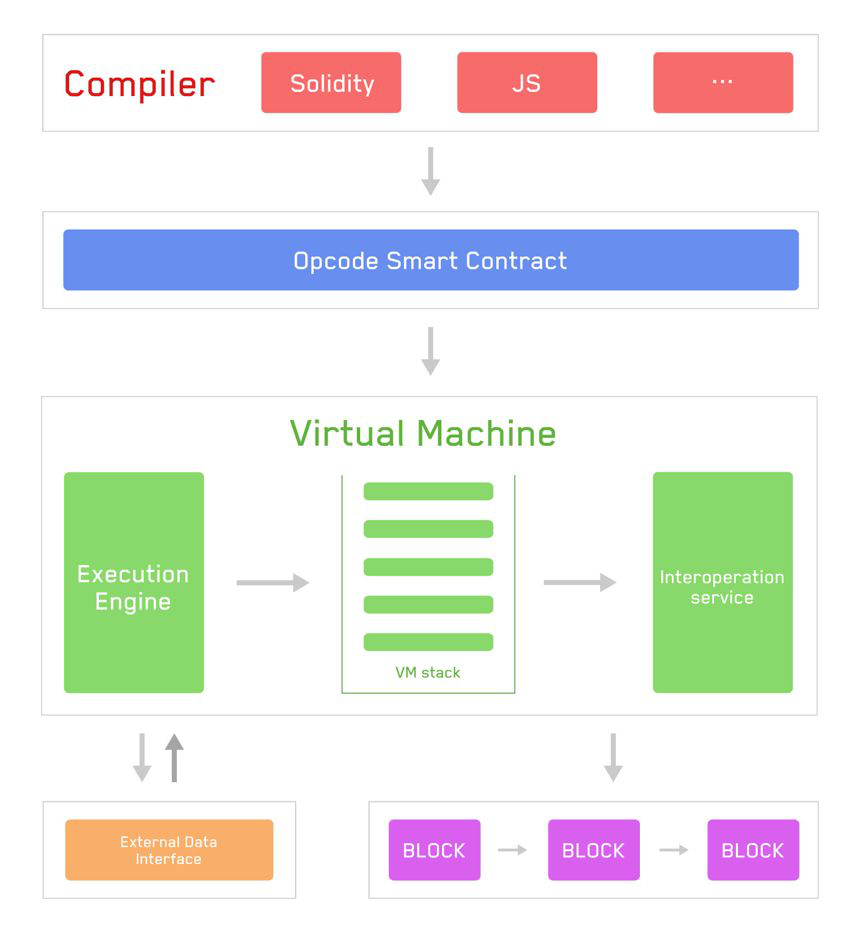
Gambar 3: Alur Kerja TVM
6.3 Kinerja 6.3.1 Arsitektur Ringan
TVM mengadopsi arsitektur ringan dengan tujuan mengurangi konsumsi sumber daya sebagai jaminan kinerja sistem. 6.3.2 Kuat
Transfer TRX dan smart contract eksekusi hanya memerlukan poin bandwidth, bukan TRX, yang mana mengecualikan TRON dari serangan. Konsumsi bandwidth dapat diprediksi dan statis sejak keduanya biaya langkah komputasi adalah tetap. 6.3.3 Kompatibilitas Tinggi
TVM kompatibel dengan EVM dan akan kompatibel dengan lebih banyak VM mainstream di masa mendatang. Dengan demikian, semua smart contract di EVM dapat dieksekusi di TVM. 6.3.4 Biaya Rendah
Karena pengaturan bandwidth TVM, biaya pengembangan berkurang dan pengembang dapat fokus pada hal tersebut pengembangan logika kode kontrak mereka. TVM juga menawarkan antarmuka lengkap untuk kontrak penerapan, pemicuan, dan tampilan untuk menawarkan kenyamanan bagi pengembang.
TRON Mesin Virtual
6.1 Pendahuluan
TRON Mesin Virtual (TVM) adalah mesin virtual lengkap Turing ringan yang dikembangkan untuk ekosistem TRON. Tujuannya adalah untuk menyediakan sistem blockchain yang dibuat khusus dan efisien, nyaman, stabil, aman dan terukur.
TVM awalnya bercabang dari EVM dan dapat terhubung secara mulus dengan soliditas yang ada smart contract 11 ekosistem pembangunan. Berdasarkan hal tersebut, TVM juga mendukung konsensus DPoS.
TVM menggunakan konsep Energi. Berbeda dengan mekanisme Gas pada EVM, pengoperasiannya transaksi dan smart contracts di TVM gratis, tanpa menggunakan TRX. Secara teknis, dapat dieksekusi kapasitas komputasi di TVM tidak dibatasi oleh total jumlah penyimpanan tokens. 6.2 Alur Kerja
Kompiler pertama-tama menerjemahkan Soliditas smart contract menjadi bytecode yang dapat dibaca dan dieksekusi di TVM. TVM kemudian memproses data melalui opcode, yang setara dengan mengoperasikan logika dari mesin negara terbatas berbasis tumpukan. Terakhir, TVM mengakses blockchain data dan memanggil Antarmuka Data Eksternal melalui lapisan Interoperasi. 11 EVM: Ethereum Mesin Virtual (https://github.com/ethereum/ethereumj)
Gambar 3: Alur Kerja TVM
6.3 Kinerja 6.3.1 Arsitektur Ringan
TVM mengadopsi arsitektur ringan dengan tujuan mengurangi konsumsi sumber daya sebagai jaminan kinerja sistem. 6.3.2 Kuat
Transfer TRX dan smart contract eksekusi hanya memerlukan poin bandwidth, bukan TRX, yang mana mengecualikan TRON dari serangan. Konsumsi bandwidth dapat diprediksi dan statis sejak keduanya biaya langkah komputasi adalah tetap. 6.3.3 Kompatibilitas Tinggi
TVM kompatibel dengan EVM dan akan kompatibel dengan lebih banyak VM mainstream di masa mendatang. Dengan demikian, semua smart contract di EVM dapat dieksekusi di TVM. 6.3.4 Biaya Rendah
Karena pengaturan bandwidth TVM, biaya pengembangan berkurang dan pengembang dapat fokus pada hal tersebut pengembangan logika kode kontrak mereka. TVM juga menawarkan antarmuka lengkap untuk kontrak penerapan, pemicuan, dan tampilan untuk menawarkan kenyamanan bagi pengembang.
Kontrak Cerdas
7.1 Pendahuluan
smart contract adalah protokol yang memverifikasi negosiasi kontrak secara digital. Mereka mendefinisikan aturan dan hukuman yang terkait dengan suatu perjanjian dan juga secara otomatis menegakkan kewajiban tersebut. Yang pintar kode kontrak memfasilitasi, memverifikasi, dan menegakkan negosiasi atau kinerja perjanjian atau transaksi. Dari perspektif tokenisasi, smart contracts juga memfasilitasi pendanaan otomatis transfer antara pihak-pihak yang berpartisipasi jika kriteria tertentu dipenuhi.
TRON smart contracts ditulis dalam bahasa Soliditas. Setelah ditulis dan diuji, mereka bisa dikompilasi menjadi bytecode, kemudian disebarkan ke jaringan TRON untuk Mesin Virtual TRON. Sekali dikerahkan, smart contracts dapat ditanyakan melalui alamat kontraknya. Aplikasi kontrak Antarmuka Biner (ABI) menunjukkan fungsi panggilan kontrak dan digunakan untuk berinteraksi dengan jaringan. 7.2 Model Energi
Batas energi maksimum untuk meluncurkan dan memicu smart contract merupakan fungsi dari beberapa fungsi variabel:
● Energi dinamis dari pembekuan 1 TRX adalah 50.000.000.000 (Batas Energi Total) / (Energi Total Berat) ● Batas energi adalah batas energi akun harian dari pembekuan TRX ● Energi akun harian yang tersisa dari pembekuan TRX dihitung sebagai Batas Energi - Energi Digunakan ● Batas biaya di TRX diatur dalam smart contract panggilan penerapan/pemicu ● TRX yang tersisa dapat digunakan di akun ● Energi per TRX jika dibeli langsung (10 SUN = 1 Energi) = 100.000, SR dapat melakukan voting penyesuaian
Ada dua skenario konsumsi untuk menghitung batas energi maksimum untuk penerapan dan
pemicu. Logikanya dapat diungkapkan sebagai berikut:
const R = Dynamic Energy Limit
const F = Daily account energy from freezing TRX
const E = Remaining daily account energy from freezing TRX
const L = Fee limit in TRX set in deploy/trigger call
const T = Remaining usable TRX in account
const C = Energy per TRX if purchased directly
// Calculate M, defined as maximum energy limit for deployment/trigger of smart contract if F > LR let M = min(E+TC, LR) else let M = E+TC 7.3 Penerapan
Ketika TRON soliditas smart contract dikompilasi, Mesin Virtual TRON membaca kompilasi kode byte. Bytecode terdiri dari bagian untuk penerapan kode, kode kontrak, dan Auxdata. Auxdata adalah sidik jari kriptografi kode sumber, yang digunakan untuk verifikasi. Penyebaran bytecode menjalankan fungsi konstruktor dan menyiapkan variabel penyimpanan awal. Penyebaran kode juga menghitung kode kontrak dan mengembalikannya ke TVM. ABI adalah file JSON yang menjelaskan fungsi TRON smart contract. File ini mendefinisikan nama fungsi, pembayarannya, nilai pengembalian fungsi, dan mutabilitas statusnya. 7.4 Fungsi Pemicu
Setelah TRON smart contract dikerahkan, fungsinya dapat dipicu secara individual baik melalui TronStudio atau melalui panggilan API. Fungsi pengubah status memerlukan Energi sedangkan fungsi hanya baca mengeksekusi tanpa Energi. 7.5 TRON Soliditas
TRON Soliditas adalah cabang dari bahasa Soliditas Ethereum. TRON memodifikasi proyek asli menjadi mendukung unit TRX dan SUN (1 TRX = 1.000.000 SUN). Sintaks bahasa lainnya adalah kompatibel dengan Soliditas ^0.4.24. Dengan demikian Tron Virtual Machine (TVM) hampir 100% kompatibel dengan instruksi EVM.
Kontrak Cerdas
7.1 Pendahuluan
smart contract adalah protokol yang memverifikasi negosiasi kontrak secara digital. Mereka mendefinisikan aturan dan hukuman yang terkait dengan suatu perjanjian dan juga secara otomatis menegakkan kewajiban tersebut. Yang pintar kode kontrak memfasilitasi, memverifikasi, dan menegakkan negosiasi atau kinerja perjanjian atau transaksi. Dari perspektif tokenisasi, smart contracts juga memfasilitasi pendanaan otomatis transfer antara pihak-pihak yang berpartisipasi jika kriteria tertentu dipenuhi.
TRON smart contracts ditulis dalam bahasa Soliditas. Setelah ditulis dan diuji, mereka bisa dikompilasi menjadi bytecode, kemudian disebarkan ke jaringan TRON untuk Mesin Virtual TRON. Sekali dikerahkan, smart contracts dapat ditanyakan melalui alamat kontraknya. Aplikasi kontrak Antarmuka Biner (ABI) menunjukkan fungsi panggilan kontrak dan digunakan untuk berinteraksi dengan jaringan. 7.2 Model Energi
Batas energi maksimum untuk meluncurkan dan memicu smart contract merupakan fungsi dari beberapa fungsi variabel:
● Energi dinamis dari pembekuan 1 TRX adalah 50.000.000.000 (Batas Energi Total) / (Energi Total Berat) ● Batas energi adalah batas energi akun harian dari pembekuan TRX ● Energi akun harian yang tersisa dari pembekuan TRX dihitung sebagai Batas Energi - Energi Digunakan ● Batas biaya di TRX diatur dalam smart contract panggilan penerapan/pemicu ● TRX yang tersisa dapat digunakan di akun ● Energi per TRX jika dibeli langsung (10 SUN = 1 Energi) = 100.000, SR dapat melakukan voting penyesuaian
Ada dua skenario konsumsi untuk menghitung batas energi maksimum untuk penerapan dan
pemicu. Logikanya dapat diungkapkan sebagai berikut:
const R = Dynamic Energy Limit
const F = Daily account energy from freezing TRX
const E = Remaining daily account energy from freezing TRX
const L = Fee limit in TRX set in deploy/trigger call
const T = Remaining usable TRX in account
const C = Energy per TRX if purchased directly
// Calculate M, defined as maximum energy limit for deployment/trigger of smart contract if F > LR let M = min(E+TC, LR) else let M = E+TC 7.3 Penerapan
Ketika TRON soliditas smart contract dikompilasi, Mesin Virtual TRON membaca kompilasi kode byte. Bytecode terdiri dari bagian untuk penerapan kode, kode kontrak, dan Auxdata. Auxdata adalah sidik jari kriptografi kode sumber, yang digunakan untuk verifikasi. Penyebaran bytecode menjalankan fungsi konstruktor dan menyiapkan variabel penyimpanan awal. Penyebaran kode juga menghitung kode kontrak dan mengembalikannya ke TVM. ABI adalah file JSON yang menjelaskan fungsi TRON smart contract. File ini mendefinisikan nama fungsi, pembayarannya, nilai pengembalian fungsi, dan mutabilitas statusnya. 7.4 Fungsi Pemicu
Setelah TRON smart contract dikerahkan, fungsinya dapat dipicu secara individual baik melalui TronStudio atau melalui panggilan API. Fungsi pengubah status memerlukan Energi sedangkan fungsi hanya baca mengeksekusi tanpa Energi. 7.5 TRON Soliditas
TRON Soliditas adalah cabang dari bahasa Soliditas Ethereum. TRON memodifikasi proyek asli menjadi mendukung unit TRX dan SUN (1 TRX = 1.000.000 SUN). Sintaks bahasa lainnya adalah kompatibel dengan Soliditas ^0.4.24. Dengan demikian Tron Virtual Machine (TVM) hampir 100% kompatibel dengan instruksi EVM.
Token
8.1 Token TRC-10
Di jaringan TRON, setiap akun dapat menerbitkan token dengan biaya 1024 TRX. Untuk menerbitkan tokens, penerbit perlu menentukan nama token, total kapitalisasi, nilai tukar ke TRX, durasi sirkulasi, deskripsi, situs web, konsumsi bandwidth maksimum per akun, total konsumsi bandwidth, dan jumlah token dibekukan. Setiap penerbitan token juga dapat dikonfigurasi token Poin Bandwidth transfer harian maksimum setiap akun, maksimum harian seluruh jaringan token Poin Bandwidth transfer, total persediaan token, durasi penguncian dalam hari, dan jumlah total dari tokens terkunci. 8.2 Token TRC-20
TRC-20 adalah standar teknis yang digunakan untuk smart contracts yang menerapkan tokens yang didukung oleh TRON Mesin Virtual. Ini sepenuhnya kompatibel dengan ERC-20.
Antarmukanya adalah sebagai berikut:
kontrak TRC20Antarmuka {
fungsi totalSupply() pengembalian konstan publik (uint);
fungsi balanceOf(alamat tokenPemilik) pengembalian konstan publik (uint
saldo);
tunjangan fungsi(alamat tokenPemilik, alamat pembelanja) konstanta publik
kembali (tidak tersisa);
transfer fungsi(alamat ke, uint tokens) pengembalian publik (bool sukses);
fungsi menyetujui(alamat pembelanja, uint tokens) pengembalian publik (bool
sukses);
fungsi transferFrom(alamat dari, alamat ke, uint tokens) publik
kembali (bool sukses);
acara Transfer(alamat diindeks dari, alamat diindeks ke, uint tokens);
Persetujuan acara(alamat diindeks tokenPemilik, alamat pembelanja yang diindeks, uint
tokens); }
Dari sudut pandang pengembang, ada beberapa perbedaan antara TRC-10 dan TRC-20. Beberapa perbedaan utamanya adalah TRC-10 tokens dapat diakses oleh API dan smart contracts sementara TRC-20 tokens memungkinkan penyesuaian antarmuka tetapi hanya dapat diakses dalam smart contracts.
Dari sudut pandang biaya, TRC-10 tokens memiliki biaya transaksi 1000 kali lebih rendah daripada
TRC-20, tetapi menanggung biaya bandwidth untuk transfer dan deposit API. Transfer dan deposit secara cerdas
kontrak untuk TRC-10 tokens menghabiskan biaya bandwidth dan energi.
8.3 Selanjutnya
Karena TRON menggunakan versi Soliditas yang sama dengan Ethereum, lebih banyak standar token dapat segera dibuat porting ke TRON.
Token
8.1 Token TRC-10
Di jaringan TRON, setiap akun dapat menerbitkan token dengan biaya 1024 TRX. Untuk menerbitkan tokens, penerbit perlu menentukan nama token, total kapitalisasi, nilai tukar ke TRX, durasi sirkulasi, deskripsi, situs web, konsumsi bandwidth maksimum per akun, total konsumsi bandwidth, dan jumlah token dibekukan. Setiap penerbitan token juga dapat dikonfigurasi token Poin Bandwidth transfer harian maksimum setiap akun, maksimum harian seluruh jaringan token Poin Bandwidth transfer, total persediaan token, durasi penguncian dalam hari, dan jumlah total dari tokens terkunci. 8.2 Token TRC-20
TRC-20 adalah standar teknis yang digunakan untuk smart contracts yang menerapkan tokens yang didukung oleh TRON Mesin Virtual. Ini sepenuhnya kompatibel dengan ERC-20.
Antarmukanya adalah sebagai berikut:
kontrak TRC20Antarmuka {
fungsi totalSupply() pengembalian konstan publik (uint);
fungsi balanceOf(alamat tokenPemilik) pengembalian konstan publik (uint
saldo);
tunjangan fungsi(alamat tokenPemilik, alamat pembelanja) konstanta publik
kembali (tidak tersisa);
transfer fungsi(alamat ke, uint tokens) pengembalian publik (bool sukses);
fungsi menyetujui(alamat pembelanja, uint tokens) pengembalian publik (bool
sukses);
fungsi transferFrom(alamat dari, alamat ke, uint tokens) publik
kembali (bool sukses);
acara Transfer(alamat diindeks dari, alamat diindeks ke, uint tokens);
Persetujuan acara(alamat diindeks tokenPemilik, alamat pembelanja yang diindeks, uint
tokens); }
Dari sudut pandang pengembang, ada beberapa perbedaan antara TRC-10 dan TRC-20. Beberapa perbedaan utamanya adalah TRC-10 tokens dapat diakses oleh API dan smart contracts sementara TRC-20 tokens memungkinkan penyesuaian antarmuka tetapi hanya dapat diakses dalam smart contracts.
Dari sudut pandang biaya, TRC-10 tokens memiliki biaya transaksi 1000 kali lebih rendah daripada
TRC-20, tetapi menanggung biaya bandwidth untuk transfer dan deposit API. Transfer dan deposit secara cerdas
kontrak untuk TRC-10 tokens menghabiskan biaya bandwidth dan energi.
8.3 Selanjutnya
Karena TRON menggunakan versi Soliditas yang sama dengan Ethereum, lebih banyak standar token dapat segera dibuat porting ke TRON.
Tata Kelola
9.1 Perwakilan Super 9.1.1 Umum
Setiap akun di jaringan TRON dapat mendaftar dan berkesempatan menjadi Super Perwakilan (dilambangkan dengan SR). Setiap orang dapat memilih calon SR. 27 kandidat teratas dengan suara terbanyak akan menjadi SR yang mempunyai hak dan kewajiban untuk menghasilkan blok. Suaranya adalah dihitung setiap 6 jam dan SR akan berubah sesuai dengan itu.
Untuk mencegah serangan berbahaya, ada biaya untuk menjadi kandidat SR. Saat melamar, 9999 TRX akan dibakar dari akun pemohon. Setelah berhasil, akun tersebut dapat bergabung dengan SR pemilu. 9.1.2 Pemilu
TRON Kekuasaan (dilambangkan TP) diperlukan untuk memilih dan besarnya TP tergantung pada pilihan pemilih aset beku (TRX).
TP dihitung dengan cara berikut:
dll
1 TRX dibekukan untuk mendapatkan bandwidth
1
=
Setiap akun di jaringan TRON mempunyai hak untuk memilih SR mereka sendiri.
Setelah rilis (dicairkan, tersedia setelah 3 hari), pengguna tidak akan memiliki aset yang dibekukan dan kehilangan semuanya TP sesuai. Akibatnya, semua suara menjadi tidak sah untuk putaran pemungutan suara yang sedang berlangsung dan yang akan datang kecuali TRX dibekukan lagi untuk memilih.
Perhatikan bahwa jaringan TRON hanya mencatat suara terbaru, yang berarti setiap suara baru akan meniadakan semua suara sebelumnya. 9.1.3 Hadiah sebuah. Hadiah Suara
Juga dikenal sebagai Hadiah Kandidat, yang mana 127 kandidat teratas diperbarui setiap putaran (6
jam) akan membagikan 115.200 TRX yang ditambang. Hadiah akan dibagi sesuai dengan bobot suara
diterima masing-masing kandidat. Setiap tahun, total hadiah untuk kandidat adalah 168.192.000 TRX.
Total hadiah suara per putaran
Mengapa 115.200 TRX setiap putaran?
15,00TRX
total hadiah suara per putaran (V R/putaran)
1
2
=
V R/putaran = 16 T RX/blok × 20 blok/menit × 60 menit/jam × 6 jam/putaran
Perhatian: ini disetel oleh WITNESS_STANDBY_ALLOWANCE = 115.200 TRX. Lihat parameter jaringan dinamis.
Total hadiah suara per tahun
Mengapa 168.192.000 TRX setiap tahun?
168, 192, 000 T RX = total imbalan suara per tahun (V R/tahun)
V R/tahun = 115, 200 T RX/putaran × 4 putaran/hari × 365 hari/tahun
b. Blokir Hadiah
Juga dikenal sebagai Super Representative Reward, yaitu 27 kandidat (SR) teratas yang terpilih
setiap putaran (6 jam) akan membagikan sekitar 230.400 TRX yang telah ditambang. Hadiahnya akan dibagi rata
antara 27 SR (dikurangi total blok hadiah yang terlewat karena kesalahan jaringan). Sebanyak
336.384.000 TRX akan diberikan setiap tahun kepada 27 SR.
Total hadiah blok per putaran
Mengapa 230.400 TRX setiap putaran?
230, 400 T RX = total hadiah blok per putaran (BR/putaran)
BR/putaran = 32 T RX/blok × 20 blok/mnt × 60 menit/jam × 6 jam/putaran
Perhatian: hadiah blok unit ditetapkan sebesar WITNESS_PAY_PER_BLOCK = 32 TRX. Lihat jaringan dinamis
parameter.
Total hadiah blok per tahun
Mengapa 336.384.000 TRX setiap tahun?
336.384.000 T RX = total hadiah blok per tahun (BR/tahun)
BR/tahun = 230,400 T RX/putaran × 4 putaran/hari × 365 hari/tahun
1 Januari 2021
Tidak akan ada inflasi di jaringan TRON sebelum 1 Januari 2021, dan TRON DAO akan
berikan semua hadiah blok dan hadiah kandidat sebelum tanggal tersebut.
C. Perhitungan Hadiah
Perhitungan imbalan SR
imbalan total
hadiah suara (VR)
hadiah blok (BR)
t
=
+
R
jumlah VR
V
=
×
total suara
suara yang diterima calon SR
R
blok terlewatkan
2
B
=
27
jumlah BR -
× 3
Catatan: hadiah dihitung per SR per putaran (6 jam)
Peringkat 28 hingga peringkat 127 perhitungan reward calon SR imbalan total hadiah suara (VR) t =
R
jumlah VR
V
=
×
total suara
suara yang diterima calon SR
Catatan: hadiah dihitung per kandidat SR per putaran (6 jam)
9.2 Komite
9.2.1 Umum
Komite digunakan untuk mengubah TRON parameter jaringan dinamis, seperti pembuatan blok
hadiah, biaya transaksi, dll. Panitia terdiri dari 27 SR pada putaran saat ini. Setiap SR
berhak mengusulkan dan memberikan suara terhadap usul. Jika sebuah proposal mendapat 19 suara atau lebih, maka itu benar
disetujui dan parameter jaringan baru akan diterapkan pada periode pemeliharaan berikutnya (3 hari).
9.2.2 Parameter Jaringan Dinamis
0.
PEMELIHARAAN_TIME_INTERVAL
sebuah.
Deskripsi
Ubah waktu interval pemeliharaan dalam ms. Dikenal sebagai waktu interval pemungutan suara SR per
bulat.
B.
Contoh
[6 * 3600 * 1000] ms - yaitu 6 jam.
C.
Jangkauan
[3271000, 2436001000] mdtk
1.
AKUN_UPGRADE_COST
sebuah.
Deskripsi
Ubah biaya pengajuan akun SR.
B.
Contoh
[9.999.000.000] SUN - yaitu 9.999 TRX.
C.
Jangkauan
[0,100 000 000 000 000 000] MATAHARI
2.
CREATE_ACCOUNT_FEE
sebuah.
Deskripsi
Ubah biaya pembuatan akun.B.
Contoh
[100.000] SUN - yaitu 1 TRX.
C.
Jangkauan
[0,100 000 000 000 000 000] MATAHARI
3.
TRANSAKSI_FEE
sebuah.
Deskripsi
Ubah jumlah biaya yang digunakan untuk mendapatkan bandwidth tambahan.
B.
Contoh
[10] MATAHARI/byte.
C.
Jangkauan
[0,100 000 000 000 000 000] MATAHARI/byte
4.
ASSET_ISSUE_FEE
sebuah.
Deskripsi
Ubah biaya penerbitan aset.
B.
Contoh
[1024.000.000] MATAHARI - yaitu 1024 TRX.
C.
Jangkauan
[0,100 000 000 000 000 000] MATAHARI
5.
WITNESS_PAY_PER_BLOCK
sebuah.
Deskripsi
Ubah hadiah pembuatan blok SR. Dikenal sebagai hadiah blok unit.
B.
Contoh
[32.000.000] SUN - yaitu 32 TRX.
C.
Jangkauan
[0,100 000 000 000 000 000] MATAHARI
6.
WITNESS_STANDBY_ALLOWANCE
sebuah.
Deskripsi
Ubah hadiah yang diberikan kepada 127 kandidat SR teratas. Dikenal sebagai hadiah suara total
per putaran.
B.
Contoh
[115.200.000.000] SUN - yaitu 115.200 TRX.
C.
Jangkauan
[0,100 000 000 000 000 000] MATAHARI
7.
CREATE_NEW_ACCOUNT_FEE_IN_SYSTEM_CONTRACT
sebuah.
Deskripsi
Ubah biaya pembuatan akun. Gabungkan parameter jaringan dinamis #8 untuk mendapatkan
total biaya pembuatan akun:
REATE_NEW_ACCOUNT_FEE_IN_SY STEM_CONTRACT
REATE_NEW_ACCOUNT_BANDWIDTH_RATE
C
× C
b. Contoh [0] MATAHARI. C. Jangkauan [0,100 000 000 000 000 000] MATAHARI 8. CREATE_NEW_ACCOUNT_BANDWIDTH_RATE
sebuah.
Deskripsi
Ubah biaya pembuatan akun. Gabungkan parameter jaringan dinamis #7 untuk mendapatkan
total biaya pembuatan akun:
REATE_NEW_ACCOUNT_FEE_IN_SY STEM_CONTRACT
REATE_NEW_ACCOUNT_BANDWIDTH_RATE
C
× C
b. Contoh [1]. C. Jangkauan [0,100,000,000,000,000,000] 9. IZINKAN_CREATION_OF_CONTRACTS sebuah. Deskripsi Untuk mengaktifkan Mesin Virtual Tron (TVM). B. Contoh Benar - diatur untuk diaktifkan dan berlaku sejak 10/10/2018 23:47 UTC. C. Jangkauan Benar/Salah 10. HAPUS_THE_POWER_OF_THE_GR sebuah. Deskripsi Hapus suara awal GR Genesis b. Contoh Benar - berlaku pada 4/11/2018 08:46 UTC. C. Jangkauan Benar/Salah - Pemberitahuan: tidak dapat menyetel kembali ke Salah dari Benar. 11. ENERGI_FEE sebuah. Deskripsi Ubah biaya 1 energi. B. Contoh 20 MATAHARI. C. Jangkauan [0,100 000 000 000 000 000] MATAHARI 12. EXCHANGE_CREATE_FEE sebuah. Deskripsi Ubah biaya pembuatan pasangan perdagangan. Dikenal sebagai biaya pembuatan tatanan perdagangan. B. Contoh [1.024.000.000] MATAHARI - yaitu 1024 TRX. C. Jangkauan [0,100 000 000 000 000 000] MATAHARI 13. MAX_CPU_TIME_OF_ONE_TX sebuah. Deskripsi Ubah waktu eksekusi maksimum satu transaksi. Dikenal sebagai batas waktu habis satu transaksi. B. Contoh 50 ms. C. Jangkauan
[0, 1000] mdtk
14. IZINKAN_UPDATE_ACCOUNT_NAME
sebuah.
Deskripsi
Ubah opsi untuk mengizinkan akun memperbarui nama akunnya.
B.
Contoh
Salah - yang tersedia untuk diusulkan dari java-tron Odyssey v3.2.
C.
Jangkauan
Benar/Salah - Pemberitahuan: tidak dapat menyetel kembali ke Salah dari Benar.
15. IZINKAN_SAME_TOKEN_NAME
sebuah.
Deskripsi
Ubah validasi untuk mengizinkan token berbeda memiliki nama duplikat.
B.
Contoh
Salah - yang tersedia untuk diusulkan dari java-tron Odyssey v3.2.
C.
Jangkauan
Benar/Salah - Pemberitahuan: tidak dapat menyetel kembali ke Salah dari Benar.
16. IZINKAN_DELEGATE_RESOURCE
sebuah.
Deskripsi
Ubah validasi untuk mengizinkan penerbitan token dengan nama duplikat, sehingga
tokenID dari token, dalam tipe data bilangan bulat panjang, akan menjadi satu-satunya atomik
identifikasi token.
B.
Contoh
Salah - yang tersedia untuk diusulkan dari java-tron Odyssey v3.2.
C.
Jangkauan
Benar/Salah - Pemberitahuan: tidak dapat menyetel kembali ke Salah dari Benar.
17. TOTAL_ENERGY_LIMIT
sebuah.
Deskripsi
Ubah batas energi total seluruh jaringan.
B.
Contoh
[50.000.000.000.000.000] SUN - yaitu 50.000.000.000 TRX.
C.
Jangkauan
[0,100,000,000,000,000,000] MATAHARI
18. IZINKAN_TVM_TRANSFER_TRC10
sebuah.
Deskripsi
Izinkan transfer TRC-10 token dalam smart contracts.
ALLOW_UPDATE_ACCOUNT_NAME, ALLOW_SAME_TOKEN_NAME,
ALLOW_DELEGATE_RESOURCE semua proposal harus disetujui sebelum diajukan
perubahan parameter ini.
B.
Contoh
Salah - yang tersedia untuk diusulkan dari java-tron Odyssey v3.2.
C.
Jangkauan
Benar/Salah - Pemberitahuan: tidak dapat menyetel kembali ke Salah dari Benar.9.2.3 Membuat Proposal
Hanya akun SR yang berhak mengusulkan perubahan parameter jaringan dinamis. 9.2.4 Usulan Pemungutan Suara
Hanya anggota komite (SR) yang dapat memberikan suara untuk suatu proposal dan anggota yang tidak memberikan suara pada waktunya akan dianggap tidak setuju. Proposal aktif selama 3 hari setelah dibuat. Pemungutan suara bisa diubah atau diambil selama jendela pemungutan suara 3 hari. Setelah periode berakhir, proposal akan berakhir berhasil (19+ suara) atau gagal (dan berakhir). 9.2.5 Membatalkan Proposal
Pengusul dapat membatalkan usulannya sebelum menjadi efektif. 9.3 Struktur
SR adalah saksi dari blok yang baru dibuat. Seorang saksi mengandung 8 parameter:
1.
alamat: alamat saksi ini – mis. 0xu82h…7237.
2.
voteCount: jumlah suara yang diterima pada saksi ini – mis. 234234.
3.
pubKey: kunci publik untuk saksi ini – mis. 0xu82h…7237.
4.
url: url untuk saksi ini – mis. https://www.noonetrust.com.
5.
totalProducted: jumlah blok yang dihasilkan oleh saksi ini – mis. 2434.
6.
totalMissed: jumlah blok yang terlewatkan oleh saksi ini – mis. 7.
7.
lastBlockNum: ketinggian blok terbaru – mis. 4522.
8.
isjobs: bendera boolean.
Struktur data Protobuf:
pesan Saksi{
byte alamat = 1;
int64 jumlah suara = 2;
byte pubKey = 3;
string url = 4;
int64 total Diproduksi = 5;
int64 totalTerlewatkan = 6;
int64 newBlockNum = 7;
bool isJobs = 8;
}
- Pengembangan DApp 10.1 API
Jaringan TRON menawarkan beragam pilihan lebih dari 60+ gateway API HTTP untuk berinteraksi dengan jaringan melalui Node Penuh dan Soliditas. Selain itu, TronWeb adalah perpustakaan JavaScript yang komprehensif berisi fungsi API yang memungkinkan pengembang menerapkan smart contract, ubah blockchain negara bagian, kueri blockchain dan informasi kontrak, perdagangan di DEX, dan banyak lagi. API ini gateway dapat diarahkan ke privatenet lokal, testnet Shasta, atau TRON Mainnet.
10.2 Jaringan
TRON memiliki testnet Shasta dan juga Mainnet. Pengembang dapat terhubung ke jaringan dengan
menyebarkan node, berinteraksi melalui TronStudio, atau menggunakan API melalui layanan TronGrid. Jaringan Tron
layanan terdiri dari klaster simpul dengan beban seimbang yang dihosting di server AWS di seluruh dunia. Sebagai DApp
pengembangan ditingkatkan dan volume panggilan API meningkat, TronGrid berhasil melakukan peningkatan tersebut
lalu lintas API.
10.3 Alat
TRON menawarkan serangkaian alat pengembangan untuk memungkinkan pengembang membuat DApps yang inovatif.
TronBox adalah kerangka kerja yang memungkinkan pengembang menguji dan menyebarkan smart contracts melalui TronWeb
API. TronGrid adalah layanan API yang dihosting dan diseimbangkan bebannya yang memungkinkan pengembang untuk mengakses
TRON jaringan tanpa harus menjalankan nodenya sendiri. TronGrid menawarkan akses ke Shasta
testnet serta TRON Mainnet. TronStudio adalah Pengembangan Terintegrasi yang komprehensif
Lingkungan (IDE) yang memungkinkan pengembang untuk mengkompilasi, menyebarkan, dan men-debug Solidity smart mereka
kontrak. TronStudio berisi node penuh internal yang menciptakan lingkungan lokal pribadi untuk
smart contract pengujian sebelum penerapan. Pustaka TronWeb API menghubungkan pengembang ke
jaringan melalui berbagai pilihan panggilan HTTP API yang dibungkus dalam JavaScript.
10.4 Sumber Daya
Hub Pengembang TRON adalah situs dokumentasi API komprehensif yang dirancang khusus 12 pengembang yang ingin membangun jaringan TRON. Hub Pengembang menyediakan tingkat tinggi pemahaman konseptual tentang TRON dan memandu pengguna melalui detail interaksi dengan 12 Pusat Pengembang: https://developers.tron.network/
jaringan. Panduan ini memandu pengembang melalui penyiapan node, penerapan, dan interaksi dengan smart
kontrak, interaksi dan implementasi API, membuat contoh DApps, dan menggunakan masing-masingnya
alat pengembang. Selain itu, saluran komunitas pengembang tersedia melalui Discord.
13
13 Perselisihan: https://discordapp.com/invite/GsRgsTD
- Kesimpulan
TRON adalah solusi blockchain terukur yang menggunakan metode inovatif untuk mengatasi tantangan yang dihadapi oleh jaringan blockchain lama. Telah mencapai lebih dari 2 juta transaksi per hari, dengan lebih dari 700 ribu akun TRX, dan melampaui 2000 TPS, TRON telah memungkinkan komunitas dalam menciptakan jaringan yang terdesentralisasi dan demokratis.
Tata Kelola
9.1 Perwakilan Super 9.1.1 Umum
Setiap akun di jaringan TRON dapat mendaftar dan berkesempatan menjadi Super Perwakilan (dilambangkan dengan SR). Setiap orang dapat memilih calon SR. 27 kandidat teratas dengan suara terbanyak akan menjadi SR yang mempunyai hak dan kewajiban untuk menghasilkan blok. Suaranya adalah dihitung setiap 6 jam dan SR akan berubah sesuai dengan itu.
Untuk mencegah serangan berbahaya, ada biaya untuk menjadi kandidat SR. Saat melamar, 9999 TRX akan dibakar dari akun pemohon. Setelah berhasil, akun tersebut dapat bergabung dengan SR pemilu. 9.1.2 Pemilu
TRON Kekuasaan (dilambangkan TP) diperlukan untuk memilih dan besarnya TP tergantung pada pilihan pemilih aset beku (TRX).
TP dihitung dengan cara berikut:
dll
1 TRX dibekukan untuk mendapatkan bandwidth
1
=
Setiap akun di jaringan TRON mempunyai hak untuk memilih SR mereka sendiri.
Setelah rilis (dicairkan, tersedia setelah 3 hari), pengguna tidak akan memiliki aset yang dibekukan dan kehilangan semuanya TP sesuai. Akibatnya, semua suara menjadi tidak sah untuk putaran pemungutan suara yang sedang berlangsung dan yang akan datang kecuali TRX dibekukan lagi untuk memilih.
Perhatikan bahwa jaringan TRON hanya mencatat suara terbaru, yang berarti setiap suara baru akan meniadakan semua suara sebelumnya. 9.1.3 Hadiah sebuah. Hadiah Suara
Juga dikenal sebagai Hadiah Kandidat, yang mana 127 kandidat teratas diperbarui setiap putaran (6
jam) akan membagikan 115.200 TRX yang ditambang. Hadiah akan dibagi sesuai dengan bobot suara
diterima masing-masing kandidat. Setiap tahun, total hadiah untuk kandidat adalah 168.192.000 TRX.
Total hadiah suara per putaran
Mengapa 115.200 TRX setiap putaran?
15,00TRX
total hadiah suara per putaran (V R/putaran)
1
2
=
V R/putaran = 16 T RX/blok × 20 blok/menit × 60 menit/jam × 6 jam/putaran
Perhatian: ini disetel oleh WITNESS_STANDBY_ALLOWANCE = 115.200 TRX. Lihat parameter jaringan dinamis.
Total hadiah suara per tahun
Mengapa 168.192.000 TRX setiap tahun?
168, 192, 000 T RX = total imbalan suara per tahun (V R/tahun)
V R/tahun = 115, 200 T RX/putaran × 4 putaran/hari × 365 hari/tahun
b. Blokir Hadiah
Juga dikenal sebagai Super Representative Reward, yaitu 27 kandidat (SR) teratas yang terpilih
setiap putaran (6 jam) akan membagikan sekitar 230.400 TRX yang telah ditambang. Hadiahnya akan dibagi rata
antara 27 SR (dikurangi total blok hadiah yang terlewat karena kesalahan jaringan). Sebanyak
336.384.000 TRX akan diberikan setiap tahun kepada 27 SR.
Total hadiah blok per putaran
Mengapa 230.400 TRX setiap putaran?
230, 400 T RX = total hadiah blok per putaran (BR/putaran)
BR/putaran = 32 T RX/blok × 20 blok/mnt × 60 menit/jam × 6 jam/putaran
Perhatian: hadiah blok unit ditetapkan sebesar WITNESS_PAY_PER_BLOCK = 32 TRX. Lihat jaringan dinamis
parameter.
Total hadiah blok per tahun
Mengapa 336.384.000 TRX setiap tahun?
336.384.000 T RX = total hadiah blok per tahun (BR/tahun)
BR/tahun = 230,400 T RX/putaran × 4 putaran/hari × 365 hari/tahun
1 Januari 2021
Tidak akan ada inflasi di jaringan TRON sebelum 1 Januari 2021, dan TRON DAO akan
berikan semua hadiah blok dan hadiah kandidat sebelum tanggal tersebut.
C. Perhitungan Hadiah
Perhitungan imbalan SR
imbalan total
hadiah suara (VR)
hadiah blok (BR)
t
=
+
R
jumlah VR
V
=
×
total suara
suara yang diterima calon SR
R
blok terlewatkan
2
B
=
27
jumlah BR -
× 3
Catatan: hadiah dihitung per SR per putaran (6 jam)
Peringkat 28 hingga peringkat 127 perhitungan reward calon SR imbalan total hadiah suara (VR) t =
R
jumlah VR
V
=
×
total suara
suara yang diterima calon SR
Catatan: hadiah dihitung per kandidat SR per putaran (6 jam)
9.2 Komite
9.2.1 Umum
Komite digunakan untuk mengubah TRON parameter jaringan dinamis, seperti pembuatan blok
hadiah, biaya transaksi, dll. Panitia terdiri dari 27 SR pada putaran saat ini. Setiap SR
berhak mengusulkan dan memberikan suara terhadap usul. Jika sebuah proposal mendapat 19 suara atau lebih, maka itu benar
disetujui dan parameter jaringan baru akan diterapkan pada periode pemeliharaan berikutnya (3 hari).
9.2.2 Parameter Jaringan Dinamis
0.
PEMELIHARAAN_TIME_INTERVAL
sebuah.
Deskripsi
Ubah waktu interval pemeliharaan dalam ms. Dikenal sebagai waktu interval pemungutan suara SR per
bulat.
B.
Contoh
[6 * 3600 * 1000] ms - yaitu 6 jam.
C.
Jangkauan
[3271000, 2436001000] mdtk
1.
AKUN_UPGRADE_COST
sebuah.
Deskripsi
Ubah biaya pengajuan akun SR.
B.
Contoh
[9.999.000.000] SUN - yaitu 9.999 TRX.
C.
Jangkauan
[0,100 000 000 000 000 000] MATAHARI
2.
CREATE_ACCOUNT_FEE
sebuah.
Deskripsi
Ubah biaya pembuatan akun.B.
Contoh
[100.000] SUN - yaitu 1 TRX.
C.
Jangkauan
[0,100 000 000 000 000 000] MATAHARI
3.
TRANSAKSI_FEE
sebuah.
Deskripsi
Ubah jumlah biaya yang digunakan untuk mendapatkan bandwidth tambahan.
B.
Contoh
[10] MATAHARI/byte.
C.
Jangkauan
[0,100 000 000 000 000 000] MATAHARI/byte
4.
ASSET_ISSUE_FEE
sebuah.
Deskripsi
Ubah biaya penerbitan aset.
B.
Contoh
[1024.000.000] MATAHARI - yaitu 1024 TRX.
C.
Jangkauan
[0,100 000 000 000 000 000] MATAHARI
5.
WITNESS_PAY_PER_BLOCK
sebuah.
Deskripsi
Ubah hadiah pembuatan blok SR. Dikenal sebagai hadiah blok unit.
B.
Contoh
[32.000.000] SUN - yaitu 32 TRX.
C.
Jangkauan
[0,100 000 000 000 000 000] MATAHARI
6.
WITNESS_STANDBY_ALLOWANCE
sebuah.
Deskripsi
Ubah hadiah yang diberikan kepada 127 kandidat SR teratas. Dikenal sebagai hadiah suara total
per putaran.
B.
Contoh
[115.200.000.000] SUN - yaitu 115.200 TRX.
C.
Jangkauan
[0,100 000 000 000 000 000] MATAHARI
7.
CREATE_NEW_ACCOUNT_FEE_IN_SYSTEM_CONTRACT
sebuah.
Deskripsi
Ubah biaya pembuatan akun. Gabungkan parameter jaringan dinamis #8 untuk mendapatkan
total biaya pembuatan akun:
REATE_NEW_ACCOUNT_FEE_IN_SY STEM_CONTRACT
REATE_NEW_ACCOUNT_BANDWIDTH_RATE
C
× C
b. Contoh [0] MATAHARI. C. Jangkauan [0,100 000 000 000 000 000] MATAHARI 8. CREATE_NEW_ACCOUNT_BANDWIDTH_RATE
sebuah.
Deskripsi
Ubah biaya pembuatan akun. Gabungkan parameter jaringan dinamis #7 untuk mendapatkan
total biaya pembuatan akun:
REATE_NEW_ACCOUNT_FEE_IN_SY STEM_CONTRACT
REATE_NEW_ACCOUNT_BANDWIDTH_RATE
C
× C
b. Contoh [1]. C. Jangkauan [0,100,000,000,000,000,000] 9. IZINKAN_CREATION_OF_CONTRACTS sebuah. Deskripsi Untuk mengaktifkan Mesin Virtual Tron (TVM). B. Contoh Benar - diatur untuk diaktifkan dan berlaku sejak 10/10/2018 23:47 UTC. C. Jangkauan Benar/Salah 10. HAPUS_THE_POWER_OF_THE_GR sebuah. Deskripsi Hapus suara awal GR Genesis b. Contoh Benar - berlaku pada 4/11/2018 08:46 UTC. C. Jangkauan Benar/Salah - Pemberitahuan: tidak dapat menyetel kembali ke Salah dari Benar. 11. ENERGI_FEE sebuah. Deskripsi Ubah biaya 1 energi. B. Contoh 20 MATAHARI. C. Jangkauan [0,100 000 000 000 000 000] MATAHARI 12. EXCHANGE_CREATE_FEE sebuah. Deskripsi Ubah biaya pembuatan pasangan perdagangan. Dikenal sebagai biaya pembuatan tatanan perdagangan. B. Contoh [1.024.000.000] MATAHARI - yaitu 1024 TRX. C. Jangkauan [0,100 000 000 000 000 000] MATAHARI 13. MAX_CPU_TIME_OF_ONE_TX sebuah. Deskripsi Ubah waktu eksekusi maksimum satu transaksi. Dikenal sebagai batas waktu habis satu transaksi. B. Contoh 50 ms. C. Jangkauan
[0, 1000] mdtk
14. IZINKAN_UPDATE_ACCOUNT_NAME
sebuah.
Deskripsi
Ubah opsi untuk mengizinkan akun memperbarui nama akunnya.
B.
Contoh
Salah - yang tersedia untuk diusulkan dari java-tron Odyssey v3.2.
C.
Jangkauan
Benar/Salah - Pemberitahuan: tidak dapat menyetel kembali ke Salah dari Benar.
15. IZINKAN_SAME_TOKEN_NAME
sebuah.
Deskripsi
Ubah validasi untuk mengizinkan token berbeda memiliki nama duplikat.
B.
Contoh
Salah - yang tersedia untuk diusulkan dari java-tron Odyssey v3.2.
C.
Jangkauan
Benar/Salah - Pemberitahuan: tidak dapat menyetel kembali ke Salah dari Benar.
16. IZINKAN_DELEGATE_RESOURCE
sebuah.
Deskripsi
Ubah validasi untuk mengizinkan penerbitan token dengan nama duplikat, sehingga
tokenID dari token, dalam tipe data bilangan bulat panjang, akan menjadi satu-satunya atomik
identifikasi token.
B.
Contoh
Salah - yang tersedia untuk diusulkan dari java-tron Odyssey v3.2.
C.
Jangkauan
Benar/Salah - Pemberitahuan: tidak dapat menyetel kembali ke Salah dari Benar.
17. TOTAL_ENERGY_LIMIT
sebuah.
Deskripsi
Ubah batas energi total seluruh jaringan.
B.
Contoh
[50.000.000.000.000.000] SUN - yaitu 50.000.000.000 TRX.
C.
Jangkauan
[0,100,000,000,000,000,000] MATAHARI
18. IZINKAN_TVM_TRANSFER_TRC10
sebuah.
Deskripsi
Izinkan transfer TRC-10 token dalam smart contracts.
ALLOW_UPDATE_ACCOUNT_NAME, ALLOW_SAME_TOKEN_NAME,
ALLOW_DELEGATE_RESOURCE semua proposal harus disetujui sebelum diajukan
perubahan parameter ini.
B.
Contoh
Salah - yang tersedia untuk diusulkan dari java-tron Odyssey v3.2.
C.
Jangkauan
Benar/Salah - Pemberitahuan: tidak dapat menyetel kembali ke Salah dari Benar.9.2.3 Membuat Proposal
Hanya akun SR yang berhak mengusulkan perubahan parameter jaringan dinamis. 9.2.4 Usulan Pemungutan Suara
Hanya anggota komite (SR) yang dapat memberikan suara untuk suatu proposal dan anggota yang tidak memberikan suara pada waktunya akan dianggap tidak setuju. Proposal aktif selama 3 hari setelah dibuat. Pemungutan suara bisa diubah atau diambil selama jendela pemungutan suara 3 hari. Setelah periode berakhir, proposal akan berakhir berhasil (19+ suara) atau gagal (dan berakhir). 9.2.5 Membatalkan Proposal
Pengusul dapat membatalkan usulannya sebelum menjadi efektif. 9.3 Struktur
SR adalah saksi dari blok yang baru dibuat. Seorang saksi mengandung 8 parameter:
1.
alamat: alamat saksi ini – mis. 0xu82h…7237.
2.
voteCount: jumlah suara yang diterima pada saksi ini – mis. 234234.
3.
pubKey: kunci publik untuk saksi ini – mis. 0xu82h…7237.
4.
url: url untuk saksi ini – mis. https://www.noonetrust.com.
5.
totalProducted: jumlah blok yang dihasilkan oleh saksi ini – mis. 2434.
6.
totalMissed: jumlah blok yang terlewatkan oleh saksi ini – mis. 7.
7.
lastBlockNum: ketinggian blok terbaru – mis. 4522.
8.
isjobs: bendera boolean.
Struktur data Protobuf:
pesan Saksi{
byte alamat = 1;
int64 jumlah suara = 2;
byte pubKey = 3;
string url = 4;
int64 total Diproduksi = 5;
int64 totalTerlewatkan = 6;
int64 newBlockNum = 7;
bool isJobs = 8;
}
- Pengembangan DApp 10.1 API
Jaringan TRON menawarkan beragam pilihan lebih dari 60+ gateway API HTTP untuk berinteraksi dengan jaringan melalui Node Penuh dan Soliditas. Selain itu, TronWeb adalah perpustakaan JavaScript yang komprehensif berisi fungsi API yang memungkinkan pengembang menerapkan smart contract, ubah blockchain negara bagian, kueri blockchain dan informasi kontrak, perdagangan di DEX, dan banyak lagi. API ini gateway dapat diarahkan ke privatenet lokal, testnet Shasta, atau TRON Mainnet.
10.2 Jaringan
TRON memiliki testnet Shasta dan juga Mainnet. Pengembang dapat terhubung ke jaringan dengan
menyebarkan node, berinteraksi melalui TronStudio, atau menggunakan API melalui layanan TronGrid. Jaringan Tron
layanan terdiri dari klaster simpul dengan beban seimbang yang dihosting di server AWS di seluruh dunia. Sebagai DApp
pengembangan ditingkatkan dan volume panggilan API meningkat, TronGrid berhasil melakukan peningkatan tersebut
lalu lintas API.
10.3 Alat
TRON menawarkan serangkaian alat pengembangan untuk memungkinkan pengembang membuat DApps yang inovatif.
TronBox adalah kerangka kerja yang memungkinkan pengembang menguji dan menyebarkan smart contracts melalui TronWeb
API. TronGrid adalah layanan API yang dihosting dan diseimbangkan bebannya yang memungkinkan pengembang untuk mengakses
TRON jaringan tanpa harus menjalankan nodenya sendiri. TronGrid menawarkan akses ke Shasta
testnet serta TRON Mainnet. TronStudio adalah Pengembangan Terintegrasi yang komprehensif
Lingkungan (IDE) yang memungkinkan pengembang untuk mengkompilasi, menyebarkan, dan men-debug Solidity smart mereka
kontrak. TronStudio berisi node penuh internal yang menciptakan lingkungan lokal pribadi untuk
smart contract pengujian sebelum penerapan. Pustaka TronWeb API menghubungkan pengembang ke
jaringan melalui berbagai pilihan panggilan HTTP API yang dibungkus dalam JavaScript.
10.4 Sumber Daya
Hub Pengembang TRON adalah situs dokumentasi API komprehensif yang dirancang khusus 12 pengembang yang ingin membangun jaringan TRON. Hub Pengembang menyediakan tingkat tinggi pemahaman konseptual tentang TRON dan memandu pengguna melalui detail interaksi dengan 12 Pusat Pengembang: https://developers.tron.network/
jaringan. Panduan ini memandu pengembang melalui penyiapan node, penerapan, dan interaksi dengan smart
kontrak, interaksi dan implementasi API, membuat contoh DApps, dan menggunakan masing-masingnya
alat pengembang. Selain itu, saluran komunitas pengembang tersedia melalui Discord.
13
13 Perselisihan: https://discordapp.com/invite/GsRgsTD
- Kesimpulan
TRON adalah solusi blockchain terukur yang menggunakan metode inovatif untuk mengatasi tantangan yang dihadapi oleh jaringan blockchain lama. Telah mencapai lebih dari 2 juta transaksi per hari, dengan lebih dari 700 ribu akun TRX, dan melampaui 2000 TPS, TRON telah memungkinkan komunitas dalam menciptakan jaringan yang terdesentralisasi dan demokratis.