 Aave
Aave
資金借入ワークフロー
Context
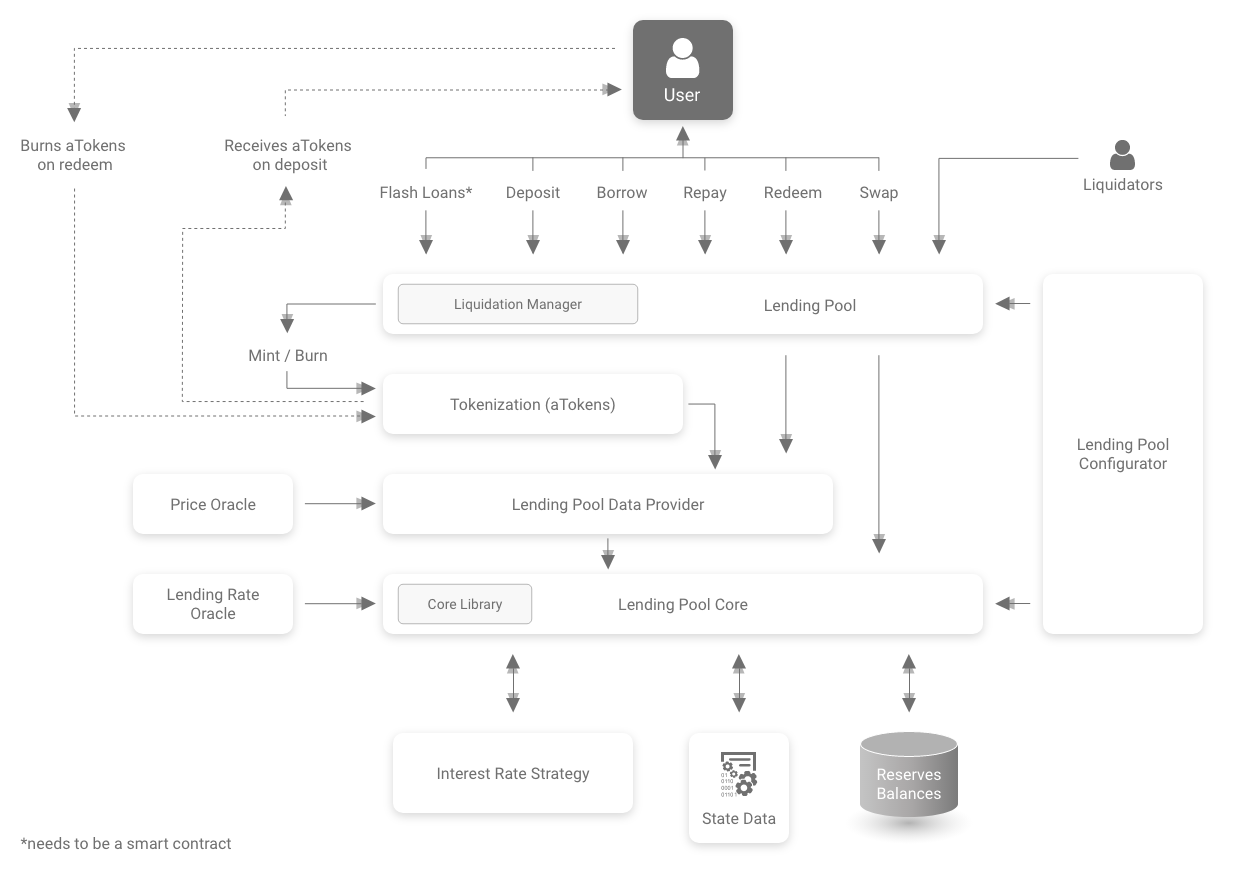
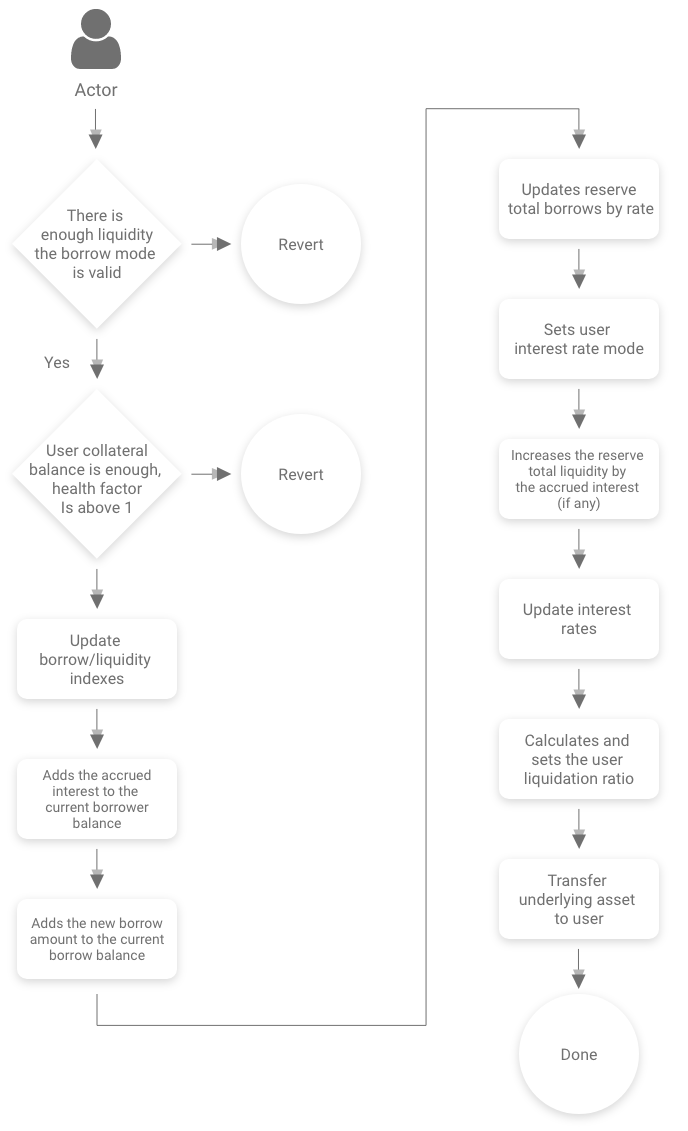
This figure is presented in Section 3.3 'Borrow' and diagrams the workflow for opening a borrowing position against collateral already held in the protocol. It is one of the more complex workflows because it requires health factor validation and collateral locking before funds can be transferred. The diagram captures all the state checks and contract calls involved.
What This Figure Shows
The Borrow Funds workflow begins when a user calls borrow() specifying a reserve, amount, and interest rate mode (stable or variable). LendingPool delegates to LendingPoolDataProvider to compute the user's available borrowing power based on the ETH-equivalent value of their collateral and the weighted-average LTV, then checks that the requested amount does not exceed this limit. It also verifies that the resulting health factor would remain above 1. Once validated, the chosen interest rate (Rv for variable, Rs for stable) is recorded alongside the borrow opening timestamp and the current variable borrow index (Bvc) for variable positions. The collateral tokens are locked and cannot be transferred. Finally, LendingPoolCore transfers the requested asset to the user. Interest begins accruing immediately and compounds continuously.
Significance
The borrow workflow is the core value driver for Aave, enabling users to access liquidity without selling their crypto assets. The health factor check at borrow time is the primary solvency protection mechanism, ensuring the protocol maintains adequate collateralization before any funds leave the pool. The choice between stable and variable rate modes, enforced here, gives borrowers flexibility in managing their interest rate exposure — a key differentiator of Aave versus simpler DeFi lending protocols.