 Aave
Aave
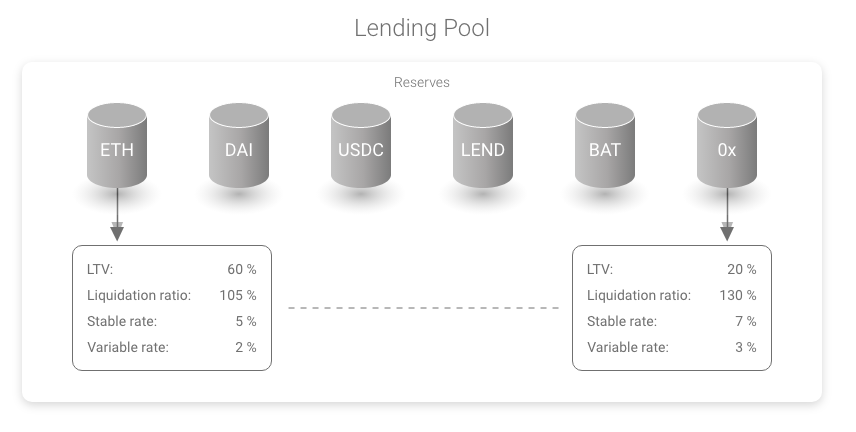
Параметры пула кредитования
Context
This figure appears in the 'Basic Concepts' subsection immediately after introducing the Loan-To-Value (LTV) concept, providing a concrete numerical example of per-reserve risk parameters. It is referenced as 'figure 3' in the text and shows parameters such as LTV ratio, liquidation threshold, and reserve factor for specific assets. The whitepaper uses it to explain how each reserve is individually configured rather than using a single global risk setting.
What This Figure Shows
The Lending Pool Parameters figure shows the specific risk configuration attached to each supported reserve asset, including the Loan-To-Value (LTV) ratio that determines the maximum borrowing power relative to deposited collateral, the liquidation threshold (LQ) at which a position becomes eligible for liquidation, and the liquidation bonus that incentivizes external actors to repay undercollateralized loans. A user's overall LTV is the weighted average of the LTVs of all their collateral assets, weighted by their ETH-equivalent value. When the health factor drops below 1, the position is undercollateralized and subject to liquidation. The parameters differ by asset, reflecting their individual market risk profiles.
Significance
Per-reserve parameterization is the mechanism through which Aave manages systemic risk — risky assets receive lower LTV ratios and tighter liquidation thresholds, limiting how much borrowing power they grant. This figure makes it clear that risk is handled at the asset level rather than the protocol level, enabling Aave to support a wide range of assets with varying volatility profiles. It directly motivates the health factor formula and the liquidation process described later in Section 3.6.