Filecoin
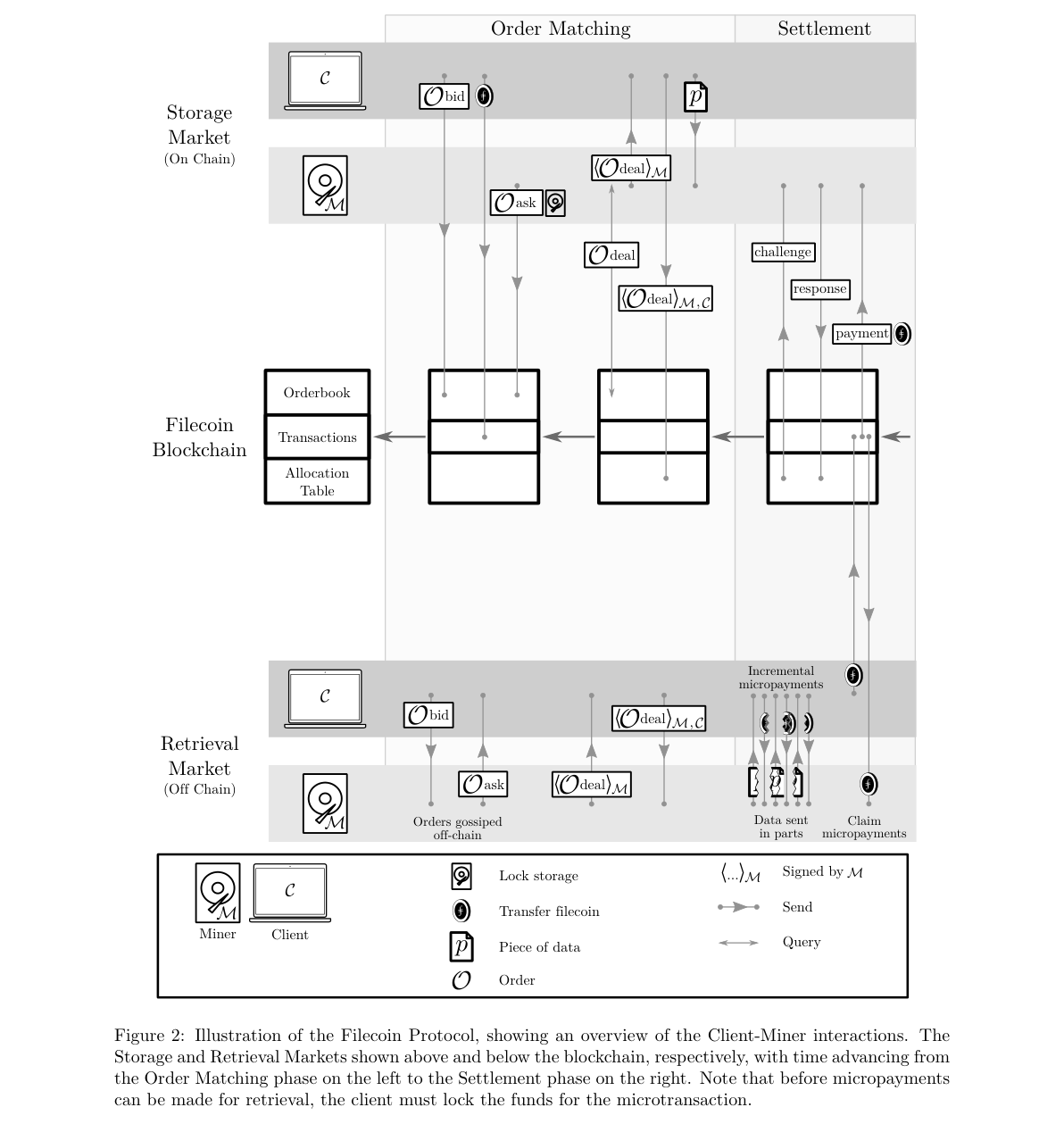
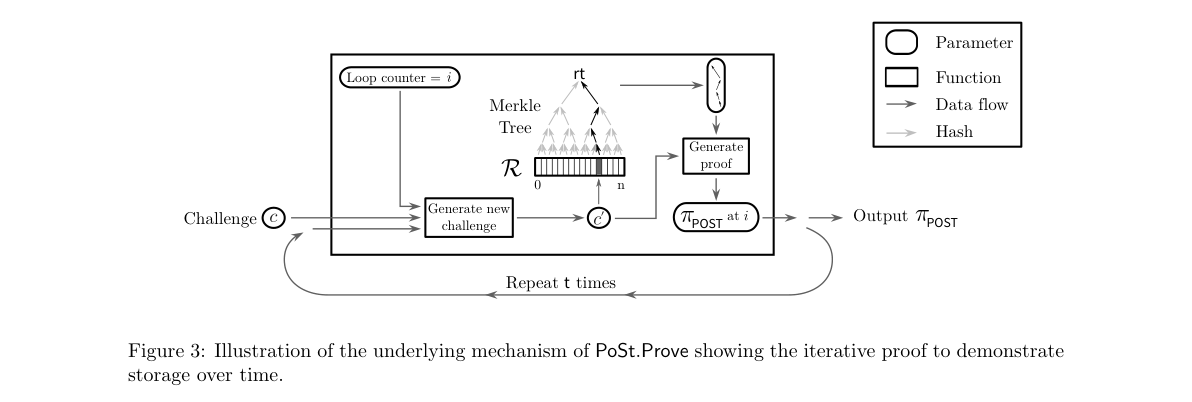
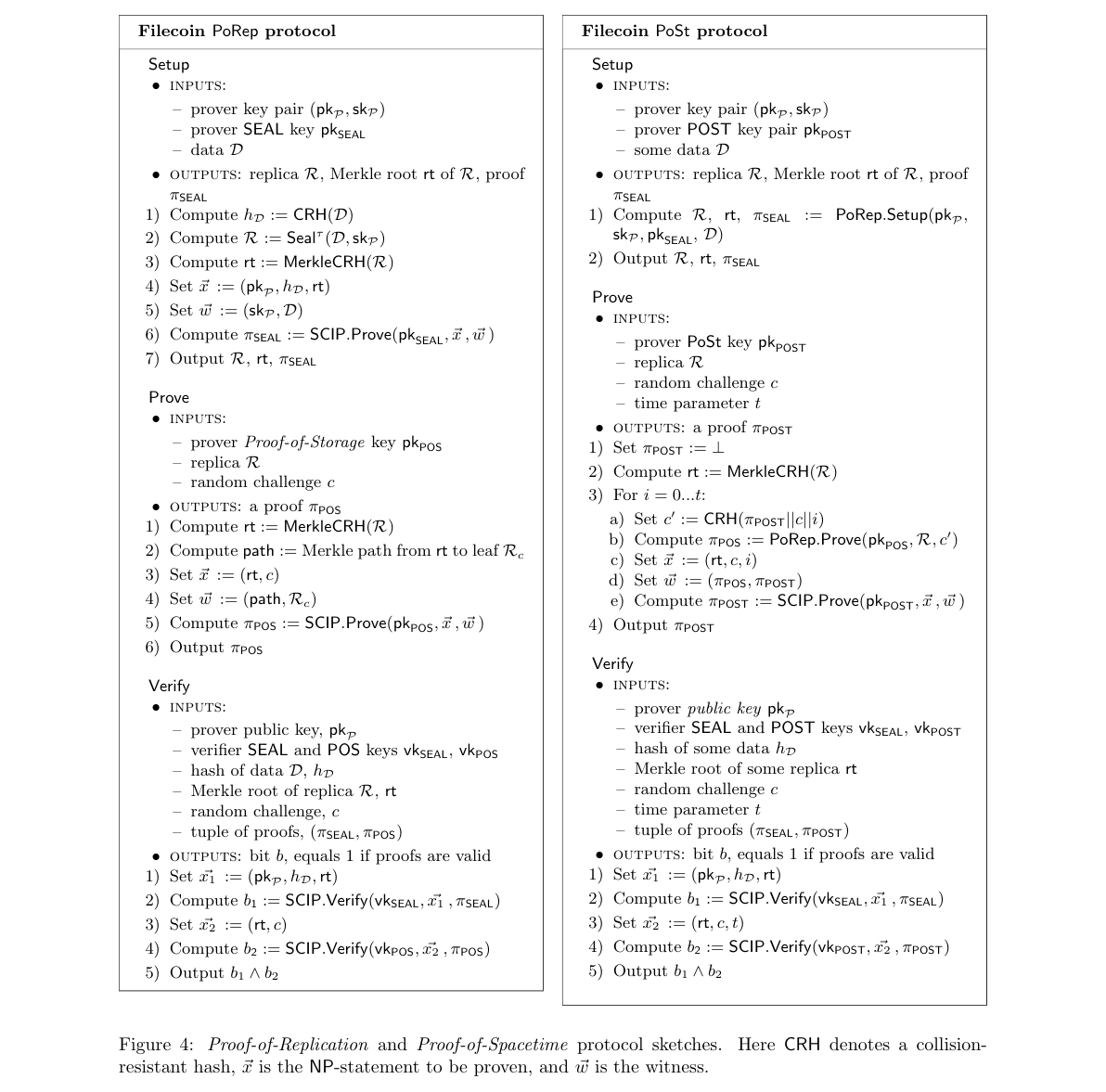
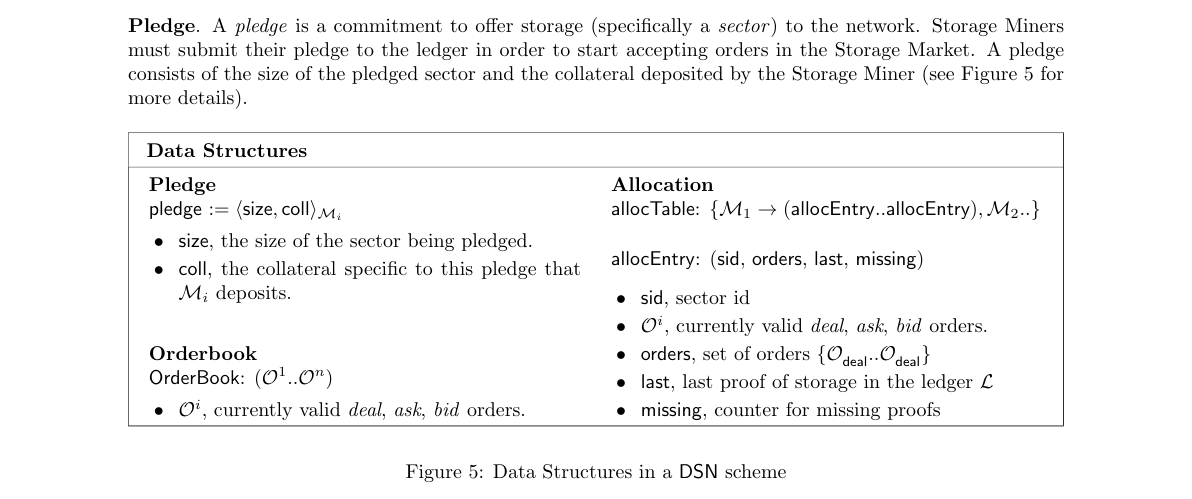
Схема протокола Filecoin
Context
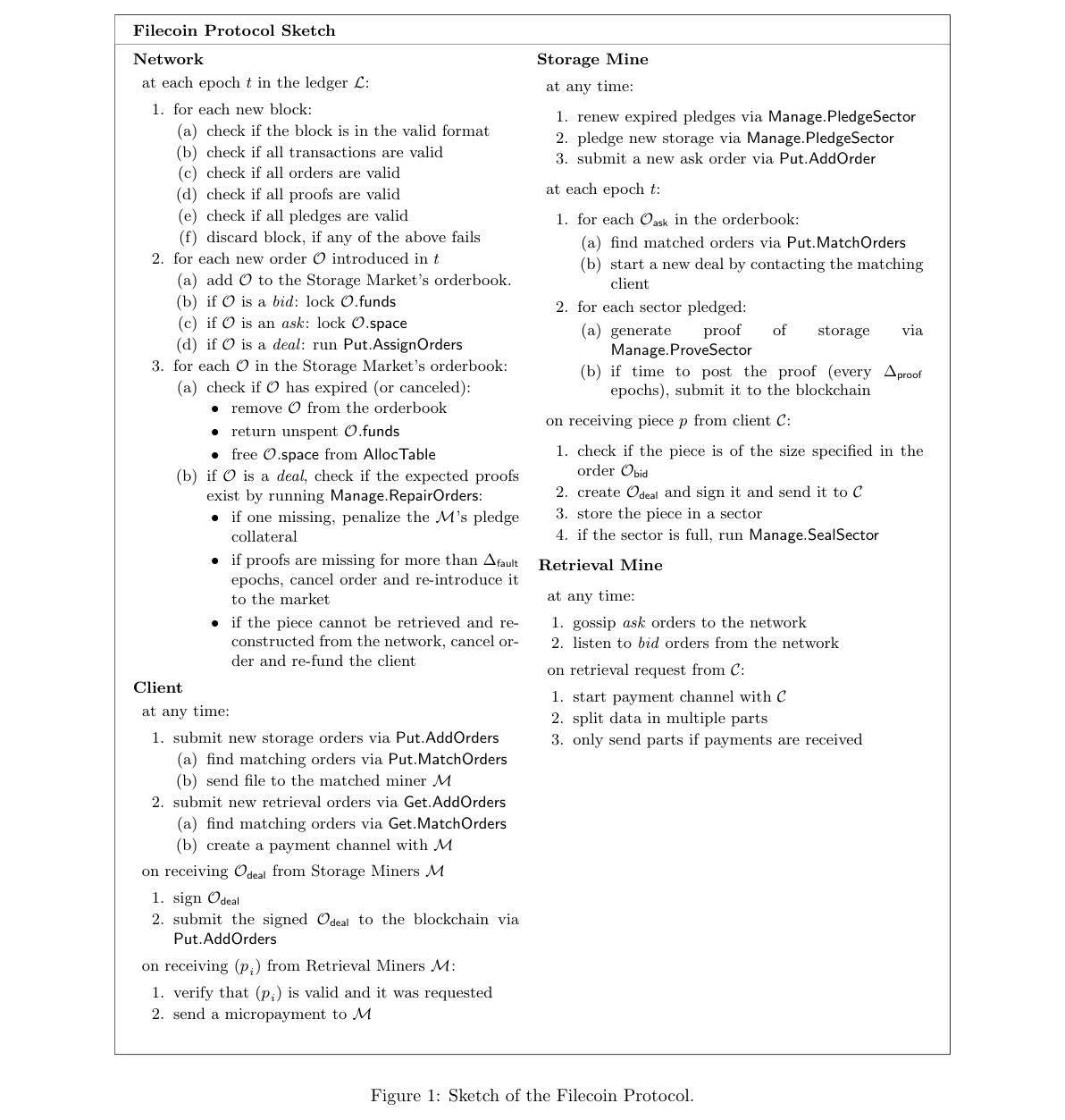
Figure 1 appears at the end of the Introduction section after the Protocol Overview, serving as the primary reference diagram for the entire Filecoin system. It uses formal pseudocode-style notation to describe the concurrent responsibilities of each participant role: Network, Client, Storage Miner, and Retrieval Miner. The figure is explicitly cited as the canonical 'Filecoin Protocol Sketch' that captures the full system in a single artifact.
What This Figure Shows
The figure is structured as four parallel protocol descriptions, each scoped to a participant type. The Network section describes per-epoch ledger duties: validating blocks (format, transactions, orders, proofs, pledges), processing new orders into the Storage Market orderbook (locking funds for bids, locking space for asks, triggering Put.AssignOrders for deals), and auditing live orders via Manage.RepairOrders — penalizing miners for missing proofs and re-introducing failed orders. The Client section shows how clients initiate Put requests (matching orders, sending files) and Get requests (matching orders, opening payment channels and sending micropayments per proof received). The Storage Miner section covers pledge renewal, submitting ask orders, matching with bid orders, receiving pieces, sealing full sectors, and periodically submitting Proof-of-Spacetime proofs every delta_proof epochs. The Retrieval Miner section describes gossiping ask orders, listening for bids, establishing payment channels, splitting data into parts, and gating transmission on micropayment receipt.
Significance
This sketch is the single most comprehensive representation of Filecoin's operational logic, making explicit that mining power is tied to active storage rather than computational waste — a fundamental departure from proof-of-work blockchains. It makes the incentive alignment tangible: miners earn block rewards and storage fees only by continuously proving storage, and the Network automatically penalizes or removes miners that fail. The figure anchors every subsequent technical section of the whitepaper.