 Bitcoin
Transaction Chain
Context
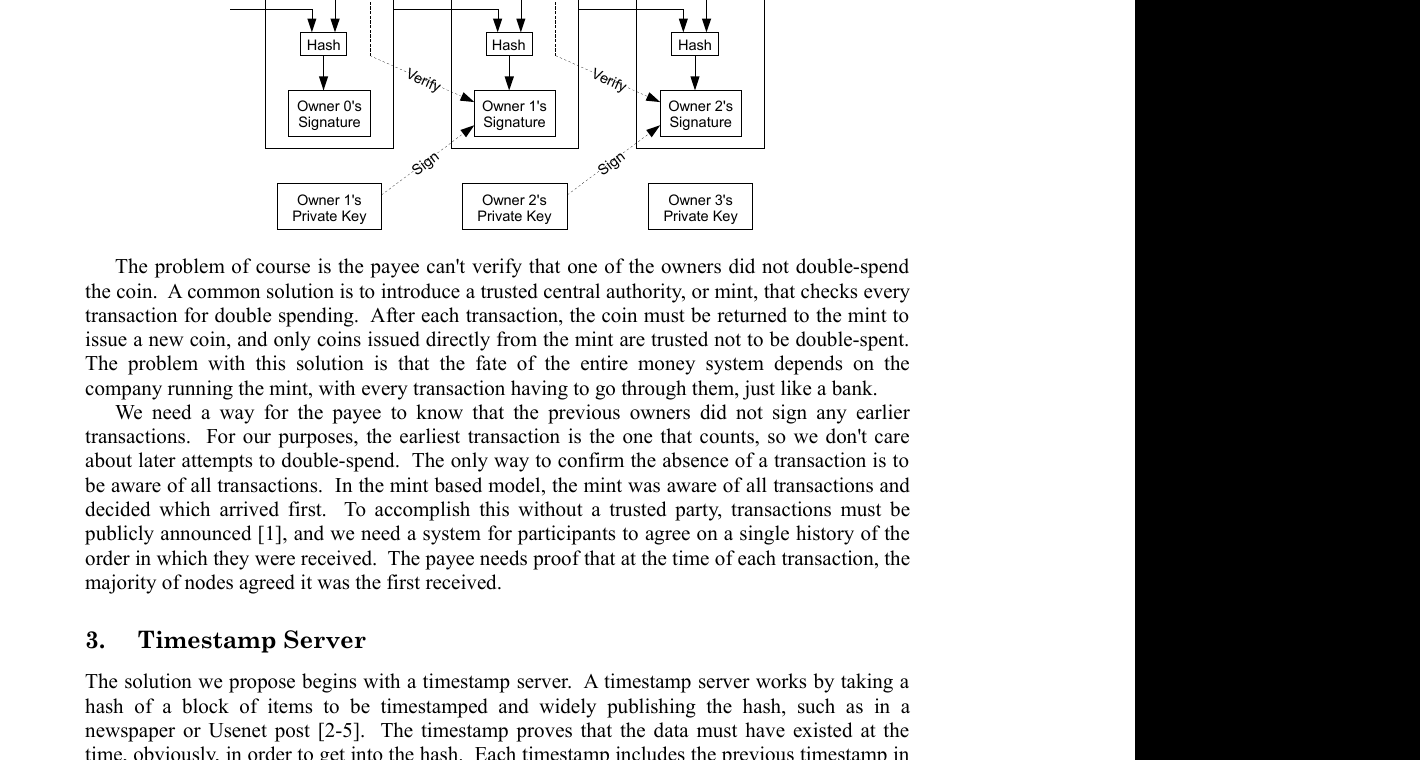
This figure appears in the Transactions section, which defines an electronic coin as a chain of digital signatures. It illustrates how Bitcoin solves the fundamental problem of digital ownership transfer: proving that a coin's history is legitimate without relying on a central authority. The section introduces the double-spend problem that motivates the rest of the Bitcoin design.
What This Figure Shows
The diagram shows a chain of transactions where each owner transfers a coin by digitally signing a hash of the previous transaction combined with the next owner's public key. Each link in the chain is cryptographically bound to all prior links, meaning any tampering with an earlier transaction invalidates every subsequent signature. A payee can walk the chain of signatures to verify the complete ownership history. However, the diagram also exposes the critical limitation: a payee cannot independently confirm that a prior owner did not sign a conflicting transaction sending the same coin elsewhere. This gap — the double-spend problem — motivates the need for a distributed consensus mechanism described in later sections.
Significance
This figure establishes the foundational data structure of Bitcoin: the transaction chain. It demonstrates why cryptographic signatures alone are insufficient for a trustless payment system and sets up the core design challenge that proof-of-work and the blockchain solve. Understanding this model is essential to grasping why decentralized consensus is necessary.