 Solana
PoH Data Insertion
Context
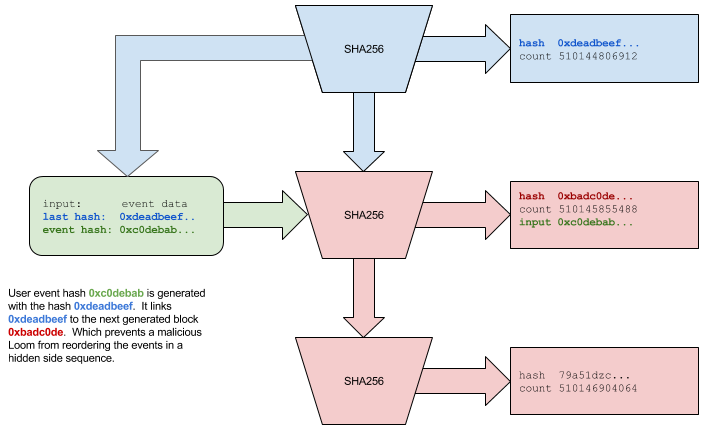
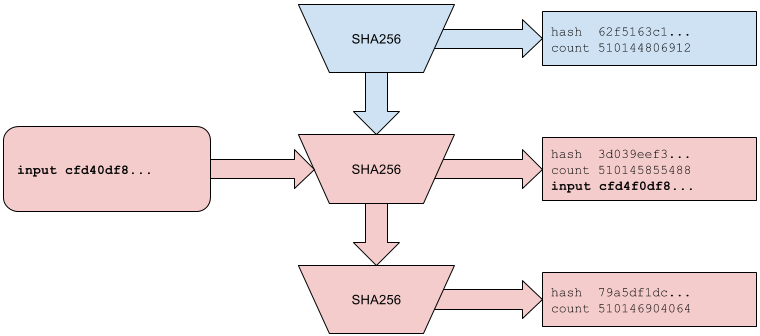
This figure appears in the 'Proof of History' section, specifically in the discussion of how external events — transactions, messages, or arbitrary data — can be timestamped within the PoH sequence. The section explains that inserting data by incorporating it into the hash computation permanently binds the data to a specific position in the sequence, creating a verifiable record of when the data existed relative to all other events in the chain.
What This Figure Shows
The diagram illustrates the data insertion process: when external data D arrives at position n in the hash chain, the generator computes hash_{n+1} = SHA256(hash_n || SHA256(D)), incorporating D into the next hash output. The resulting PoH record entry contains the counter value, the data D, and hash_{n+1}. Because hash_{n+1} depends on both the prior chain state hash_n and the data D, altering D would produce a different hash_{n+1} and invalidate every subsequent hash in the chain. The insertion thus proves two things simultaneously: that D existed before hash_{n+1} was computed, and that D was recorded after hash_n was computed, bounding D's timestamp within a verifiable interval of the PoH sequence.
Significance
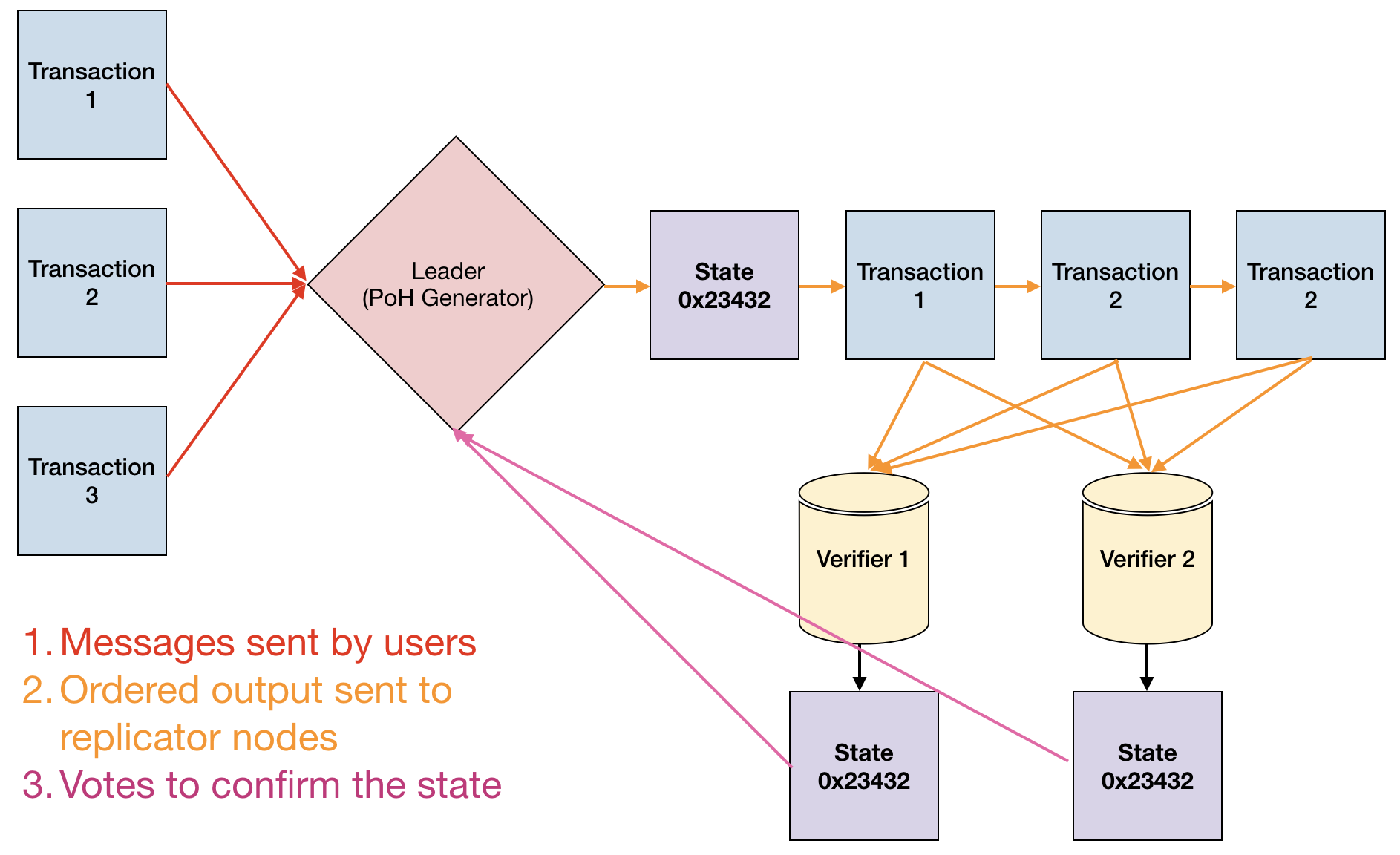
This insertion mechanism is what transforms the PoH sequence from a pure timekeeping device into a transaction ordering system. By mixing transaction hashes into the PoH chain, the leader creates an immutable, cryptographically verifiable total ordering of all events on the network. The impossibility of retroactively inserting data without invalidating the chain is what prevents transaction reordering attacks and eliminates the need for a separate consensus round to establish ordering.