
イーサリアム:次世代スマートコントラクトと分散型アプリケーションプラットフォーム
Abstract
Ethereum هو منصة عملة مشفرة وتطبيقات لامركزية من الجيل التالي تقدم blockchain مزودة بلغة برمجة مدمجة كاملة تورنغ (Turing-complete). يتيح ذلك لأي شخص كتابة smart contracts وتطبيقات لامركزية حيث يمكنهم إنشاء قواعدهم الخاصة للملكية وأشكال المعاملات ودوال انتقال الحالة (state transition functions).
الابتكار الجوهري لـ Ethereum هو دمج تقنية blockchain التي ابتكرها Bitcoin مع بيئة برمجة عامة الأغراض. بينما يوفر Bitcoin نظام انتقال حالة بسيط لنقل العملة من حساب إلى آخر، يوفر Ethereum منصة يمكن للمطورين فيها بناء أي نوع من التطبيقات اللامركزية التي يمكنهم تخيلها، من العملات البديلة والأدوات المالية إلى أنظمة تسجيل النطاقات والمنظمات اللامركزية.
يحقق Ethereum ذلك من خلال بناء ما هو في جوهره الطبقة التأسيسية المجردة النهائية: blockchain مزودة بلغة برمجة مدمجة كاملة تورنغ، تتيح لأي شخص كتابة smart contracts وتطبيقات لامركزية حيث يمكنهم إنشاء قواعدهم الخاصة للملكية وأشكال المعاملات ودوال انتقال الحالة. يمكن كتابة نسخة أساسية من Namecoin في سطرين من الكود، ويمكن بناء بروتوكولات أخرى مثل العملات وأنظمة السمعة في أقل من عشرين سطراً.
Abstract
Ethereumは、チューリング完全なプログラミング言語を内蔵したブロックチェーンを導入する、次世代の暗号通貨および分散型アプリケーションプラットフォームです。これにより、誰でもスマートコントラクトや分散型アプリケーションを作成し、所有権、トランザクション形式、状態遷移関数に関する独自のルールを自由に定義することができます。
Ethereumの根本的なイノベーションは、Bitcoinによって開拓されたブロックチェーン技術と汎用プログラミング環境を組み合わせたことにあります。Bitcoinがある口座から別の口座への通貨移動のためのシンプルな状態遷移システムを提供するのに対し、Ethereumは開発者が想像しうるあらゆる種類の分散型アプリケーション——代替通貨や金融商品からドメイン登録システム、分散型組織に至るまで——を構築できるプラットフォームを提供します。
Ethereumは、本質的に究極の抽象的基盤レイヤーを構築することでこれを実現します。すなわち、チューリング完全なプログラミング言語を内蔵したブロックチェーンであり、誰でもスマートコントラクトや分散型アプリケーションを作成して、所有権、トランザクション形式、状態遷移関数に関する独自のルールを自由に定義できます。Namecoinの基本的なバージョンはわずか2行のコードで記述でき、通貨やレピュテーションシステムなどの他のプロトコルは20行未満で構築できます。
Introduction and Existing Concepts
إن مفهوم العملة الرقمية اللامركزية، بالإضافة إلى التطبيقات البديلة مثل سجلات الملكية، موجود منذ عقود. قدمت بروتوكولات النقد الإلكتروني المجهولة في الثمانينيات والتسعينيات، التي اعتمدت بشكل رئيسي على بدائية تشفيرية تُعرف باسم Chaumian blinding، عملة بدرجة عالية من الخصوصية، لكن هذه البروتوكولات فشلت إلى حد كبير في اكتساب الزخم بسبب اعتمادها على وسيط مركزي. في عام 1998، أصبح b-money لـ Wei Dai أول اقتراح يقدم فكرة إنشاء المال من خلال حل الألغاز الحسابية بالإضافة إلى الإجماع اللامركزي، لكن الاقتراح كان شحيحاً في التفاصيل حول كيفية تنفيذ الإجماع اللامركزي فعلياً.
في عام 2009، تم تنفيذ عملة لامركزية لأول مرة عملياً بواسطة Satoshi Nakamoto، حيث جمع بين البدائيات المُرسّخة لإدارة الملكية من خلال تشفير public key مع خوارزمية إجماع لتتبع من يملك العملات، تُعرف باسم "proof of work". كانت الآلية وراء proof of work اختراقاً في هذا المجال لأنها حلت مشكلتين في آن واحد. أولاً، قدمت خوارزمية إجماع بسيطة وفعالة بشكل معتدل، تسمح للعقد في الشبكة بالاتفاق جماعياً على مجموعة من التحديثات القانونية لحالة دفتر Bitcoin. ثانياً، قدمت آلية تسمح بالدخول الحر إلى عملية الإجماع، حيث حلت المشكلة السياسية المتعلقة بتحديد من يؤثر على الإجماع، مع منع هجمات sybil في الوقت نفسه.
أثبت blockchain الخاص بـ Bitcoin متانة ملحوظة على مدى سنوات تشغيله، لكنه محدود بطبيعته. صُممت لغة البرمجة النصية لـ Bitcoin عمداً لتكون مقيدة وغير Turing-complete، حيث تفتقر إلى الحلقات والعديد من الميزات الأخرى التي ستكون ضرورية لبناء تطبيقات أكثر تعقيداً. يوجد هذا القيد لمنع الحلقات اللانهائية وأشكال أخرى من الهجمات الحسابية، لكنه يقيد بشدة ما يمكن بناؤه فوق Bitcoin.
على مدى السنوات الخمس الماضية، كان هناك عدد من المحاولات لتوسيع وظائف Bitcoin. سعت Colored coins لاستخدام blockchain الخاص بـ Bitcoin لتتبع ملكية الأصول البديلة، وحاول Namecoin إنشاء قاعدة بيانات لامركزية لتسجيل الأسماء، واستهدفت بروتوكولات metacoin المتنوعة بناء طبقات إضافية فوق Bitcoin. بينما أظهرت هذه المقاربات وعداً، كانت محدودة في نهاية المطاف بقدرات Bitcoin البرمجية وعدم القدرة على الوصول إلى بيانات blockchain من داخل البرامج النصية.
ما يعتزم Ethereum تقديمه هو blockchain بلغة برمجة Turing-complete مدمجة كاملة الميزات يمكن استخدامها لإنشاء "عقود" يمكنها ترميز دوال state transition عشوائية، مما يسمح للمستخدمين بإنشاء أي من الأنظمة الموصوفة أعلاه، بالإضافة إلى العديد من الأنظمة الأخرى التي لم نتخيلها بعد، ببساطة عن طريق كتابة المنطق في بضعة أسطر من التعليمات البرمجية.
Introduction and Existing Concepts
分散型デジタル通貨の概念は、財産登記などの代替的応用と同様に、数十年前から存在していました。1980年代から1990年代にかけての匿名電子マネープロトコルは、主にチャウミアンブラインディングと呼ばれる暗号プリミティブに依存しており、高度なプライバシーを備えた通貨を提供していましたが、中央集権的な仲介者への依存のため、これらのプロトコルは普及に至りませんでした。1998年、Wei Daiのb-moneyが、計算パズルの解決による貨幣創造と分散型コンセンサスの概念を導入した最初の提案となりましたが、分散型コンセンサスの実際の実装方法についての詳細は不十分でした。
2009年、Satoshi Nakamotoによって、分散型通貨が初めて実用的に実装されました。公開鍵暗号による所有権管理の確立された技術と、誰がコインを所有しているかを追跡するための「プルーフ・オブ・ワーク」と呼ばれるコンセンサスアルゴリズムを組み合わせたものです。プルーフ・オブ・ワークの仕組みは、2つの問題を同時に解決したという点で画期的でした。第一に、ネットワーク内のノードがBitcoin台帳の状態に対する正規の更新セットに集団的に合意できる、シンプルかつ適度に効果的なコンセンサスアルゴリズムを提供しました。第二に、コンセンサスプロセスへの自由な参加を可能にする仕組みを提供し、誰がコンセンサスに影響を与えるかを決定するという政治的問題を解決すると同時に、シビル攻撃を防止しました。
Bitcoinブロックチェーンは長年の運用を通じて驚くほど堅牢であることが証明されましたが、本質的な限界があります。Bitcoinのスクリプト言語は意図的に制限的かつ非チューリング完全に設計されており、ループやより複雑なアプリケーションの構築に必要な多くの機能を欠いています。この制限は無限ループやその他の計算攻撃を防ぐために存在しますが、Bitcoin上に構築できるものを大幅に制約しています。
過去5年間で、Bitcoinの機能を拡張するための多くの試みがありました。カラードコインはBitcoinブロックチェーンを利用して代替資産の所有権を追跡しようとし、Namecoinは分散型の名前登録データベースの作成を試み、様々なメタコインプロトコルがBitcoin上に追加レイヤーを構築することを目指しました。これらのアプローチは有望でしたが、Bitcoinのスクリプト機能の制限とスクリプト内からブロックチェーンデータにアクセスできないことにより、最終的には限界がありました。
Ethereumが提供しようとしているのは、完全なチューリング完全プログラミング言語を内蔵したブロックチェーンです。この言語は、任意の状態遷移関数をエンコードできる「コントラクト」の作成に使用でき、ユーザーは上述のシステムのいずれか、さらには我々がまだ想像していない多くのシステムを、わずか数行のコードでロジックを記述するだけで作成することができます。
Bitcoin As A State Transition System
من الناحية التقنية، يمكن التفكير في دفتر الحسابات لعملة مشفرة مثل Bitcoin كنظام state transition، حيث يوجد "حالة" تتكون من حالة ملكية جميع عملات bitcoin الموجودة و"دالة state transition" تأخذ حالة ومعاملة وتُخرج حالة جديدة هي النتيجة. في نظام مصرفي قياسي، على سبيل المثال، الحالة هي كشف الرصيد، والمعاملة هي طلب لنقل \(X من A إلى B، ودالة state transition تُنقص القيمة في حساب A بمقدار \)X وتزيد القيمة في حساب B بمقدار \(X. إذا كان حساب A يحتوي على أقل من \)X في المقام الأول، فإن دالة state transition تُرجع خطأ.
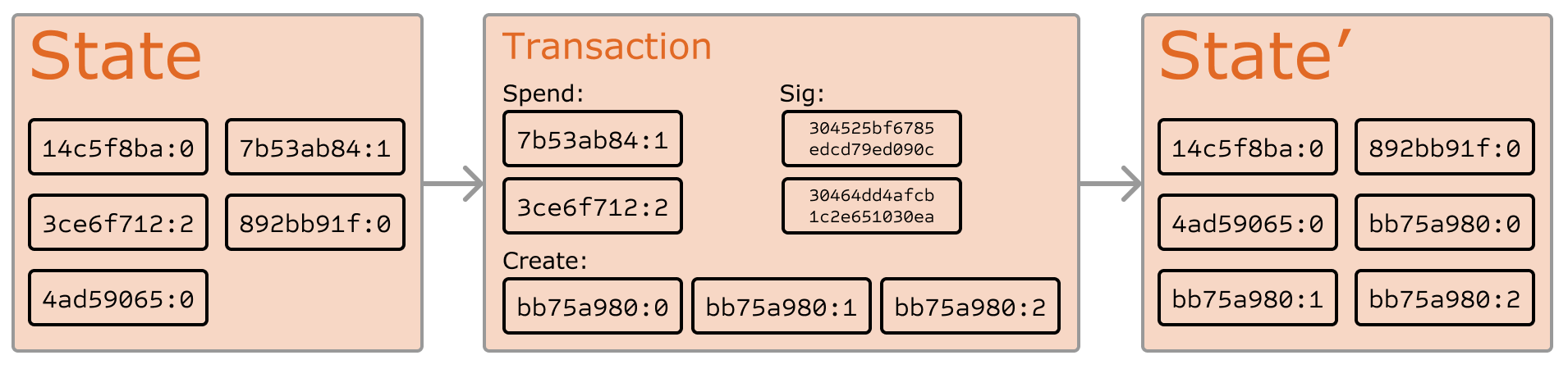
"الحالة" في Bitcoin هي مجموعة جميع العملات (تقنياً، "مخرجات المعاملات غير المنفقة" أو UTXO) التي تم سكها ولم تُنفق بعد، حيث يملك كل UTXO فئة ومالكاً (معرف بعنوان 20 بايت وهو في الأساس public key تشفيرية). تحتوي المعاملة على مدخل واحد أو أكثر، يحتوي كل مدخل على إشارة إلى UTXO موجود وتوقيع تشفيري أُنتج بواسطة private key المرتبط بعنوان المالك، ومخرج واحد أو أكثر، يحتوي كل مخرج على UTXO جديد ليُضاف إلى الحالة.
يمكن تعريف دالة state transition APPLY(S,TX) - S' تقريباً كما يلي:
- لكل مدخل في TX، إذا لم يكن UTXO المُشار إليه موجوداً في S، أرجع خطأ.
- إذا لم يتطابق التوقيع المُقدم مع مالك UTXO، أرجع خطأ.
- إذا كان مجموع فئات جميع UTXO المدخلة أقل من مجموع فئات جميع UTXO المُخرجة، أرجع خطأ.
- أرجع S مع إزالة جميع UTXO المدخلة وإضافة جميع UTXO المُخرجة.
يمنع النصف الأول من الخطوة الأولى مرسلي المعاملات من إنفاق عملات غير موجودة، والنصف الثاني من الخطوة الأولى يمنع مرسلي المعاملات من إنفاق عملات أشخاص آخرين، والخطوة الثانية تفرض حفظ القيمة. لاستخدام هذا للدفع، البروتوكول كالتالي: لنفترض أن Alice تريد إرسال 11.7 BTC إلى Bob. أولاً، ستبحث Alice عن مجموعة من UTXO المتاحة التي تملكها بإجمالي لا يقل عن 11.7 BTC. واقعياً، لن تتمكن Alice من الحصول على 11.7 BTC بالضبط؛ لنقل أن أصغر ما يمكنها الحصول عليه هو 6+4+2=12. ثم تُنشئ معاملة بتلك المدخلات الثلاثة ومخرجين. المخرج الأول سيكون 11.7 BTC بعنوان Bob كمالك، والمخرج الثاني سيكون 0.3 BTC المتبقية كـ "باقي"، بملكية Alice نفسها.
Bitcoin As A State Transition System
技術的な観点から、Bitcoinのような暗号通貨の台帳は状態遷移システムと考えることができます。「状態」はすべての既存bitcoinの所有権の状況で構成され、「状態遷移関数」は状態とトランザクションを受け取り、結果として新しい状態を出力します。標準的な銀行システムでは、例えば、状態は貸借対照表であり、トランザクションはAからBへ\(Xを移動する要求であり、状態遷移関数はAの口座の値を\)X減少させ、Bの口座の値を\(X増加させます。もしAの口座に最初から\)X未満しかなければ、状態遷移関数はエラーを返します。
Bitcoinにおける「状態」は、鋳造されたがまだ使われていないすべてのコイン(技術的には「未使用トランザクション出力」またはUTXO)の集合です。各UTXOは額面と所有者(本質的に暗号公開鍵である20バイトのアドレスで定義される)を持っています。トランザクションは1つ以上の入力を含み、各入力は既存のUTXOへの参照と所有者のアドレスに関連付けられた秘密鍵によって生成された暗号署名を含みます。また、1つ以上の出力を含み、各出力は状態に追加される新しいUTXOを含みます。
状態遷移関数APPLY(S,TX) - S'は、おおよそ以下のように定義できます:
- TX内の各入力について、参照されたUTXOがSに存在しない場合、エラーを返す。
- 提供された署名がUTXOの所有者と一致しない場合、エラーを返す。
- すべての入力UTXOの額面の合計が、すべての出力UTXOの額面の合計より小さい場合、エラーを返す。
- すべての入力UTXOが削除され、すべての出力UTXOが追加されたSを返す。
最初のステップの前半は、トランザクション送信者が存在しないコインを使うことを防ぎ、最初のステップの後半は、トランザクション送信者が他人のコインを使うことを防ぎ、2番目のステップは価値の保存を強制します。これを支払いに使用するためのプロトコルは次の通りです:AliceがBobに11.7 BTCを送りたいとします。まず、Aliceは自分が所有する利用可能なUTXOの中から合計が少なくとも11.7 BTCになるセットを探します。現実的には、Aliceはちょうど11.7 BTCを得ることはできません。得られる最小の組み合わせが6+4+2=12だとします。そして、3つの入力と2つの出力を持つトランザクションを作成します。最初の出力はBobのアドレスを所有者とする11.7 BTCであり、2番目の出力は残りの0.3 BTCの「おつり」で、所有者はAlice自身です。
Mining
لو كان لدينا وصول إلى خدمة مركزية موثوقة، لكان تنفيذ هذا النظام بسيطاً؛ يمكن ببساطة برمجته كما هو موصوف، باستخدام القرص الصلب لخادم مركزي لتتبع الحالة. ومع ذلك، مع Bitcoin نحاول بناء نظام عملة لامركزي، لذا سنحتاج إلى دمج نظام state transition مع نظام إجماع لضمان أن الجميع يتفق على ترتيب المعاملات. تتطلب عملية الإجماع اللامركزية في Bitcoin أن تحاول العقد في الشبكة باستمرار إنتاج حزم من المعاملات تُسمى "كتل". تهدف الشبكة إلى إنتاج كتلة واحدة تقريباً كل عشر دقائق، حيث تحتوي كل كتلة على طابع زمني، وnonce، وإشارة إلى (أي hash) الكتلة السابقة وقائمة بجميع المعاملات التي تمت منذ الكتلة السابقة.
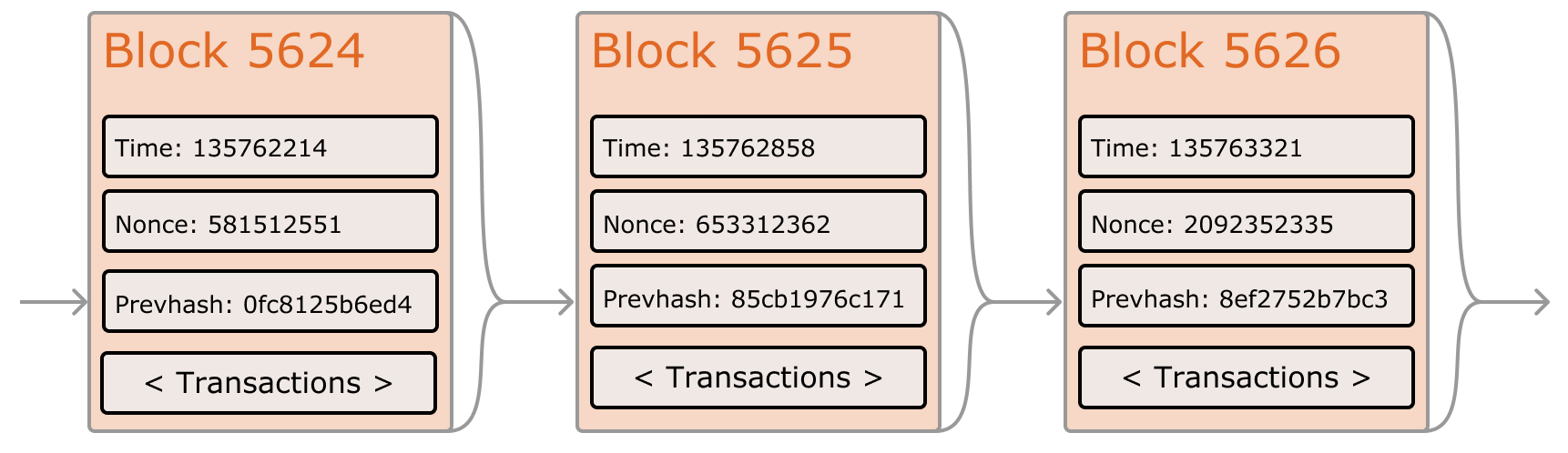
بمرور الوقت، ينشئ هذا "blockchain" مستمراً ومتنامياً باستمرار يتم تحديثه باستمرار لتمثيل أحدث حالة لدفتر Bitcoin. خوارزمية التحقق من صلاحية الكتلة، معبراً عنها في هذا النموذج، هي كالتالي:
- تحقق من أن الكتلة السابقة المُشار إليها بواسطة الكتلة موجودة وصالحة.
- تحقق من أن الطابع الزمني للكتلة أكبر من الكتلة السابقة وأقل من ساعتين في المستقبل.
- تحقق من أن proof of work على الكتلة صالح.
- ليكن S الحالة في نهاية الكتلة السابقة.
- لنفترض أن TX هي قائمة معاملات الكتلة بـ n معاملة. لكل i في 0...n-1، اضبط S = APPLY(S,TX[i]). إذا أرجع أي تطبيق خطأ، اخرج وأرجع false.
- أرجع true، وسجل S كالحالة في نهاية هذه الكتلة.
في الأساس، يجب أن توفر كل معاملة في الكتلة انتقال حالة صالحاً مما كانت عليه الحالة القانونية قبل تنفيذ المعاملة إلى حالة جديدة ما. لاحظ أن الحالة ليست مُرمزة في الكتلة بأي شكل؛ هي مجرد تجريد يتذكره عقدة التحقق ولا يمكن حسابها (بأمان) لأي كتلة إلا بالبدء من حالة التكوين وتطبيق كل معاملة في كل كتلة بالتتابع.
يُكافأ المُعدّن على عمله الحسابي بعملات bitcoin جديدة بالإضافة إلى رسوم المعاملات. تعمل عملية التعدين كالتالي: يأخذ المُعدّنون رأس الكتلة ويقومون بتجزئته بشكل متكرر بقيم nonce مختلفة حتى يجدوا hash أقل من هدف صعوبة معين. عندما يجد مُعدّن مثل هذا الـ hash، يبث الكتلة إلى الشبكة، وتتحقق العقد الأخرى من صلاحية الـ hash وصلاحية جميع المعاملات في الكتلة. يتم تعديل هدف الصعوبة تلقائياً بواسطة البروتوكول كل 2016 كتلة (حوالي أسبوعين) لضمان إنتاج الكتل بمعدل ثابت تقريباً.
لاحظ أنه على المدى الطويل، يعتمد أمان blockchain على وجود حافز مالي للمُعدّنين للتصرف بأمانة. إذا سيطر مهاجم على أكثر من 50% من قوة التعدين في الشبكة، فيمكنه تنفيذ "هجوم 51%" بإنشاء blockchain بديل ينمو أسرع من السلسلة الصادقة. ومع ذلك، سيتطلب مثل هذا الهجوم موارد حسابية هائلة ومن المرجح أن تصبح مكافآت تعدين المهاجم عديمة القيمة مع فقدان الشبكة الثقة في سلامة blockchain.
Mining
信頼できる中央集権的なサービスにアクセスできれば、このシステムの実装は自明です。記述された通りにコーディングし、中央サーバーのハードドライブを使って状態を追跡するだけで済みます。しかし、Bitcoinでは分散型通貨システムを構築しようとしているため、すべての人がトランザクションの順序に合意することを保証するために、状態遷移システムとコンセンサスシステムを組み合わせる必要があります。Bitcoinの分散型コンセンサスプロセスでは、ネットワーク内のノードが「ブロック」と呼ばれるトランザクションのパッケージを継続的に生成しようと試みます。ネットワークはおよそ10分ごとに1つのブロックを生成することを意図しており、各ブロックにはタイムスタンプ、ノンス、前のブロックへの参照(すなわちハッシュ)、および前のブロック以降に行われたすべてのトランザクションのリストが含まれます。
時間の経過とともに、これはBitcoin台帳の最新の状態を表すために常に更新される、永続的で成長し続ける「ブロックチェーン」を生み出します。このパラダイムにおいてブロックが有効かどうかを検証するアルゴリズムは以下の通りです:
- ブロックが参照する前のブロックが存在し、有効であることを確認する。
- ブロックのタイムスタンプが前のブロックのタイムスタンプより大きく、未来の2時間以内であることを確認する。
- ブロックのプルーフ・オブ・ワークが有効であることを確認する。
- Sを前のブロックの終了時点の状態とする。
- TXをn個のトランザクションからなるブロックのトランザクションリストとする。0...n-1のすべてのiについて、S = APPLY(S,TX[i])とする。いずれかの適用がエラーを返した場合、終了してfalseを返す。
- trueを返し、Sをこのブロックの終了時点の状態として登録する。
本質的に、ブロック内の各トランザクションは、トランザクション実行前の正規の状態から新しい状態への有効な状態遷移を提供しなければなりません。状態はブロック内にいかなる形でもエンコードされていないことに注意してください。状態は純粋に検証ノードによって記憶される抽象概念であり、ジェネシス状態から始めてすべてのブロック内のすべてのトランザクションを順次適用することによってのみ、任意のブロックに対して(安全に)計算できます。
マイナーは、新しく作成されたbitcoinとトランザクション手数料によって計算作業に対する報酬を受け取ります。マイニングプロセスは次のように機能します:マイナーはブロックヘッダーを取得し、特定の難易度ターゲット以下のハッシュを見つけるまで、異なるノンス値で繰り返しハッシュ化します。マイナーがそのようなハッシュを見つけると、ブロックをネットワークにブロードキャストし、他のノードがハッシュの有効性とブロック内のすべてのトランザクションの有効性を検証します。難易度ターゲットは、ブロックがおおよそ一定の速度で生成されることを保証するために、プロトコルによって2016ブロック(約2週間)ごとに自動的に調整されます。
長期的には、ブロックチェーンのセキュリティはマイナーが正直に行動する経済的インセンティブを持っていることに依存することに注意してください。攻撃者がネットワークのマイニングパワーの50%以上を制御する場合、正直なチェーンよりも速く成長する代替ブロックチェーンを作成することで「51%攻撃」を実行できる可能性があります。しかし、そのような攻撃には膨大な計算リソースが必要であり、ブロックチェーンの完全性に対するネットワークの信頼が失われることで、攻撃者のマイニング報酬が無価値になる可能性が高いでしょう。
Merkle Trees
أشجار Merkle هي بنية بيانات أساسية تُستخدم في كتل Bitcoin لتمكين التحقق الفعال والآمن من تضمين المعاملات. شجرة Merkle هي شجرة ثنائية من القيم المُجزّأة حيث تحتوي عقد الأوراق على قيم hash للمعاملات الفردية، وتحتوي كل عقدة داخلية على hash لطفليها، وتُبنى بشكل متكرر حتى hash جذر واحد يُخزن في رأس الكتلة. تسمح هذه البنية الهرمية لأي شخص بالتحقق من أن معاملة محددة مُدرجة في كتلة عن طريق تنزيل فرع Merkle فقط—سلسلة القيم المُجزّأة من المعاملة حتى الجذر—بدلاً من تنزيل جميع المعاملات في الكتلة.
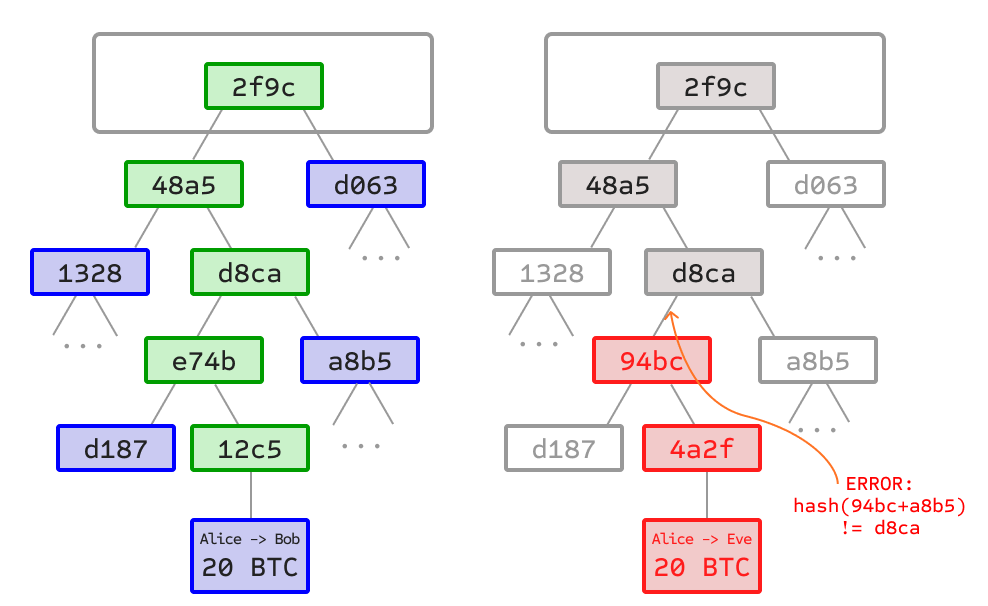
مكاسب الكفاءة كبيرة: بينما يجب على عقدة Bitcoin كاملة تخزين blockchain بالكامل (حوالي 15 جيجابايت اعتباراً من 2013)، تحتاج عقدة التحقق المبسط من الدفع (SPV) فقط إلى تنزيل رؤوس الكتل التي تحتوي على جذور Merkle، مما يتطلب 4 ميجابايت فقط من البيانات. للتحقق من معاملة، تطلب عقدة SPV فرع Merkle من العقد الكاملة، مما يتطلب بيانات O(log n) فقط حيث n هو عدد المعاملات في الكتلة. هذا التحجيم اللوغاريتمي يجعل من الممكن تشغيل عملاء خفيفي الوزن على الأجهزة المحمولة والبيئات محدودة الموارد.
يُظهر استخدام Bitcoin لأشجار Merkle مبدأً رئيسياً: يمكن للبنى التشفيرية أن تقلل بشكل كبير من متطلبات الثقة والموارد للمشاركة في شبكة لامركزية. هذا المبدأ نفسه يكمن وراء تصميم Ethereum، حيث تُستخدم أشجار Merkle ليس فقط للمعاملات ولكن أيضاً لتخزين الحالة والإيصالات، مما يُمكّن بروتوكولات عميل خفيف أكثر تطوراً.
Merkle Trees
マークル木は、Bitcoinブロックにおいてトランザクションの包含を効率的かつ安全に検証するために使用される基本的なデータ構造です。マークル木はハッシュの二分木であり、リーフノードには個々のトランザクションのハッシュが含まれ、各内部ノードにはその2つの子のハッシュが含まれ、再帰的に構築されて最終的にブロックヘッダーに格納される単一のルートハッシュになります。この階層構造により、ブロック内のすべてのトランザクションをダウンロードすることなく、トランザクションからルートまでのハッシュの連鎖であるマークルブランチのみをダウンロードすることで、特定のトランザクションがブロックに含まれていることを誰でも検証できます。
効率性の向上は顕著です:完全なBitcoinノードはブロックチェーン全体を保存する必要がありますが(2013年時点で約15GB)、簡易支払い検証(SPV)ノードはマークルルートを含むブロックヘッダーのみをダウンロードすればよく、必要なデータはわずか4MBです。トランザクションを検証するために、SPVノードはフルノードにマークルブランチを要求しますが、これにはブロック内のトランザクション数をnとしてO(log n)のデータしか必要ありません。この対数的なスケーリングにより、モバイルデバイスやリソースの限られた環境でも軽量クライアントを実行することが可能になります。
Bitcoinのマークル木の使用は重要な原則を示しています:暗号構造は分散型ネットワークへの参加に必要な信頼とリソースの要件を劇的に削減できるということです。この同じ原則はEthereumの設計にも基盤として存在しており、マークル木はトランザクションだけでなく状態とレシートの保存にも使用され、さらに洗練されたライトクライアントプロトコルを可能にしています。
Alternative Blockchain Applications
ألهم نجاح blockchain الخاص بـ Bitcoin محاولات عديدة لتوسيع المفهوم إلى ما هو أبعد من العملة البسيطة. كان Namecoin، الذي أُطلق في عام 2010، من أوائل الأمثلة—قاعدة بيانات لامركزية لتسجيل الأسماء مبنية على blockchain، تسمح للمستخدمين بتسجيل أسماء في نطاق أسماء موزع لا يمكن لأي سلطة مركزية رقابته أو إلغاؤه. ظهرت Colored coins كطريقة لتمثيل أصول بديلة على blockchain الخاص بـ Bitcoin عن طريق "وسم" مخرجات معاملات محددة لتمثيل ملكية أصول حقيقية أو أسهم شركات أو عملات مشفرة أخرى. أضافت Metacoins والبروتوكولات الفوقية مثل Mastercoin (لاحقاً Omni) وظائف إضافية فوق Bitcoin عن طريق ترميز بيانات إضافية في معاملات Bitcoin وبناء قواعد بروتوكول منفصلة فوقها.
ومع ذلك، عانت جميع هذه المقاربات من قيود جوهرية فرضتها بنية Bitcoin. لغة البرمجة النصية لـ Bitcoin مقيدة عمداً—لا يمكنها الوصول إلى حالة blockchain، وتفتقر إلى الحلقات وتدفق التحكم المعقد، وتوفر استبطاناً محدوداً لقيم المعاملات. تطلب بناء تطبيقات متطورة حلولاً بديلة محرجة: ترميز البيانات الوصفية في حقول معاملات لم تُصمم لهذا الغرض أبداً، والاعتماد على بنية تحتية خارج السلسلة للمنطق المعقد، أو قبول قيود شديدة على ما يمكن للبروتوكول إنجازه.
حفّزت هذه القيود البحث عن منصة blockchain أكثر عمومية. بدلاً من بناء بروتوكول آخر ذو غرض خاص فوق أساس Bitcoin المحدود، يتبنى Ethereum مقاربة مختلفة: توفير blockchain بلغة برمجة Turing-complete مدمجة، تسمح لأي شخص بكتابة smart contracts وتطبيقات لامركزية بقواعد عشوائية للملكية وصيغ المعاملات ودوال state transition.
Alternative Blockchain Applications
Bitcoinのブロックチェーンの成功は、この概念を単純な通貨を超えて拡張する多くの試みを触発しました。2010年に開始されたNamecoinは最も初期の例の一つであり、ブロックチェーン上に構築された分散型名前登録データベースで、中央機関が検閲や取り消しできない分散型の名前空間にユーザーが名前を登録できるようにしました。カラードコインは、特定のトランザクション出力に「タグ付け」することで、Bitcoinブロックチェーン上で現実世界の資産、会社の株式、または他の暗号通貨の所有権を表す代替資産の手段として登場しました。Mastercoin(後のOmni)などのメタコインやメタプロトコルは、Bitcoinトランザクションに追加データをエンコードし、その上に別のプロトコルルールを構築することで、Bitcoin上に追加機能をレイヤー化しました。
しかし、これらのアプローチはすべて、Bitcoinのアーキテクチャによって課される根本的な制限に苦しみました。Bitcoinのスクリプト言語は意図的に制限されており、ブロックチェーンの状態にアクセスできず、ループや複雑な制御フローを欠き、トランザクション値への内省が限られています。洗練されたアプリケーションを構築するには、不格好な回避策が必要でした:本来そのような目的を想定していないトランザクションフィールドにメタデータをエンコードしたり、複雑なロジックのためにオフチェーンインフラストラクチャに依存したり、プロトコルが達成できることの厳しい制限を受け入れたりする必要がありました。
これらの制約が、より汎用的なブロックチェーンプラットフォームの探求を動機づけました。Bitcoinの限られた基盤の上にさらに別の特殊目的プロトコルを構築するのではなく、Ethereumは異なるアプローチを取ります:チューリング完全なプログラミング言語を内蔵したブロックチェーンを提供し、誰でもスマートコントラクトや分散型アプリケーションを作成して、所有権、トランザクション形式、状態遷移関数に関する任意のルールを定義できるようにします。
Scripting
Bitcoin Script، اللغة المستخدمة لتعريف شروط الإنفاق لمعاملات Bitcoin، صُممت عمداً بقيود شديدة. إنها ليست Turing-complete—والأبرز أنها تفتقر إلى الحلقات وبنى تدفق التحكم المعقدة. تعمل اللغة كبيئة تنفيذ بسيطة قائمة على المكدس حيث تقوم العمليات بدفع وسحب القيم، وتقييم الشروط التشفيرية، وتُرجع في النهاية true أو false لتحديد ما إذا كانت المعاملة صالحة. بينما توفر هذه البساطة فوائد أمنية وتسهل التحليل الرسمي، فإنها تجعل العديد من أنواع التطبيقات مستحيلة التنفيذ.
تقع هذه القيود في ثلاث فئات رئيسية. أولاً، عدم اكتمال Turing يمنع تنفيذ آلات الحالة المعقدة وأشجار القرار أو أي خوارزمية تتطلب التكرار. ثانياً، عمى القيمة يعني أن البرامج النصية لا يمكنها تحديد تحكم دقيق في مبالغ السحب—يمكن إنفاق UTXO فقط بالكامل، مع إرسال الباقي إلى مخرج جديد. لا يمكن للبرنامج النصي، على سبيل المثال، تحديد السحب بحد أقصى X يومياً مع إبقاء الباقي مقفلاً. ثالثاً، عدم الوعي بحالة blockchain يعني أن UTXO إما منفقة أو غير منفقة بدون حالات وسيطة، مما يجعل العقود متعددة المراحل مستحيلة التنفيذ بالكامل على السلسلة.
تجعل هذه القيود التطبيقات المتطورة مثل المنظمات اللامركزية المستقلة، ومحافظ التوفير بحدود السحب، والبورصات اللامركزية، أو أسواق التنبؤ إما مستحيلة أو تتطلب آليات خارج السلسلة محرجة. قد يتطلب عقد مالي متقدم الوصول إلى بيانات السوق، والقدرة على الحفاظ على حالة داخلية عبر معاملات متعددة، ومنطق شرطي معقد—لا يمكن لـ Bitcoin Script توفير أي منها. يزيل Ethereum هذه القيود بتوفير لغة Turing-complete مع وصول كامل إلى حالة blockchain.
Scripting
Bitcoin Script——Bitcoinトランザクションの使用条件を定義するために使用される言語——は、意図的に厳しい制限のもとに設計されています。チューリング完全ではなく、特にループや複雑な制御フロー構造を欠いています。この言語は、値のプッシュとポップ、暗号条件の評価を行い、最終的にトランザクションが有効かどうかを判定するためにtrueまたはfalseを返す、単純なスタックベースの実行環境として動作します。このシンプルさはセキュリティ上の利点を提供し、形式的分析を容易にしますが、多くの種類のアプリケーションの実装を不可能にもしています。
これらの制限は主に3つのカテゴリに分類されます。第一に、チューリング完全性の欠如は、複雑な状態機械、決定木、または反復を必要とするいかなるアルゴリズムの実装も妨げます。第二に、値の不可視性は、スクリプトが引き出し金額に対するきめ細かい制御を指定できないことを意味します——UTXOはその全額でしか使用できず、おつりは新しい出力に送られます。例えば、スクリプトは1日あたりの引き出しをX以下に制限し、残りをロックしたままにするということができません。第三に、ブロックチェーン状態の認識の欠如は、UTXOが使用済みか未使用のいずれかであり中間状態がないことを意味し、多段階のコントラクトをオンチェーンのみで実装することを不可能にしています。
これらの制約により、分散型自律組織、引き出し制限付きの貯蓄ウォレット、分散型取引所、予測市場などの高度なアプリケーションは、不可能であるか、不格好なオフチェーンメカニズムを必要とします。高度な金融コントラクトは、市場データへのアクセス、複数のトランザクションにわたる内部状態の維持、複雑な条件ロジックを必要とするかもしれません——これらのいずれもBitcoin Scriptでは提供できません。Ethereumは、ブロックチェーン状態への完全なアクセスを備えたチューリング完全言語を提供することで、これらの制限を取り除きます。
Ethereum
الهدف الأساسي لـ Ethereum هو توفير blockchain بلغة برمجة Turing-complete مدمجة تسمح لأي شخص بكتابة smart contracts وتطبيقات لامركزية حيث يمكنهم إنشاء قواعدهم العشوائية الخاصة للملكية وصيغ المعاملات ودوال state transition. بدلاً من تصميم بروتوكول لتطبيقات محددة مثل العملة أو تسجيل الأسماء أو تداول الأصول، يوفر Ethereum طبقة أساسية—منصة حوسبة موزعة قائمة على blockchain يمكن للمطورين استخدامها لبناء أي تطبيق يمكنهم تخيله.
تختلف البنية جوهرياً عن نموذج UTXO الخاص بـ Bitcoin. يستخدم Ethereum نظاماً قائماً على الحسابات حيث تتكون حالة blockchain من تعيين من العناوين إلى كائنات الحسابات. كل حساب لديه رصيد، وعداد معاملات (nonce)، ولحسابات العقود، كود مرتبط وتخزين. تتضمن المنصة لغة برمجة Turing-complete مدمجة لكتابة كود العقود الذي يُنفذ في Ethereum Virtual Machine (EVM)، وهي بيئة تنفيذ قائمة على المكدس تعالج المعاملات وانتقالات الحالة.
تُمكّن هذه العمومية مجموعة واسعة من التطبيقات: عملات مشفرة بديلة بقواعد إصدار مخصصة، ومشتقات مالية وstablecoins، وأنظمة هوية وسمعة، وتخزين ملفات لامركزي، ومنظمات لامركزية مستقلة (DAOs)، وغير ذلك الكثير. تؤكد الورقة البيضاء أن Ethereum ليس مُحسّناً لأي حالة استخدام معينة بل يوفر اللبنات الأساسية—حسابات ومعاملات ولغة Turing-complete وتنفيذ مقاس بالـ gas—التي يمكن للمطورين دمجها لإنشاء أي تطبيقات يتطلبها النظام البيئي.
Ethereum
Ethereumの根本的な目標は、チューリング完全なプログラミング言語を内蔵したブロックチェーンを提供し、誰でもスマートコントラクトや分散型アプリケーションを作成して、所有権、トランザクション形式、状態遷移関数に関する独自のルールを自由に定義できるようにすることです。通貨、名前登録、資産取引などの特定のアプリケーション向けにプロトコルを設計するのではなく、Ethereumは基盤レイヤー——開発者が想像しうるあらゆるアプリケーションを構築するために使用できるブロックチェーンベースの分散コンピューティングプラットフォーム——を提供します。
このアーキテクチャはBitcoinのUTXOモデルとは根本的に異なります。Ethereumはアカウントベースのシステムを使用しており、ブロックチェーンの状態はアドレスからアカウントオブジェクトへのマッピングで構成されます。各アカウントは残高、トランザクションカウンター(ノンス)を持ち、コントラクトアカウントの場合は関連するコードとストレージも持ちます。プラットフォームには、Ethereum仮想マシン(EVM)——トランザクションと状態遷移を処理するスタックベースの実行環境——で実行されるコントラクトコードを記述するための、チューリング完全なプログラミング言語が内蔵されています。
この汎用性により、幅広いアプリケーションが可能になります:カスタム発行ルールを持つ代替暗号通貨、金融デリバティブとステーブルコイン、アイデンティティおよびレピュテーションシステム、分散型ファイルストレージ、分散型自律組織(DAO)、その他多数。ホワイトペーパーは、Ethereumが特定のユースケースに最適化されているのではなく、アカウント、トランザクション、チューリング完全言語、ガスによる計量実行という基本的なビルディングブロックを提供し、開発者がそれらを組み合わせてエコシステムが求めるあらゆるアプリケーションを作成できることを強調しています。
Ethereum Accounts
في Ethereum، تتكون الحالة من حسابات، وهناك نوعان أساسيان. الحسابات المملوكة خارجياً (EOAs) تُتحكم بواسطة مفاتيح خاصة وليس لها كود مرتبط—تمثل المستخدمين البشريين أو الكيانات الخارجية التي تتفاعل مع blockchain. حسابات العقود تُتحكم بواسطة كود العقد الخاص بها وتُفعّل عند تلقي رسالة أو معاملة. يتشارك كلا النوعين بنية مشتركة: كل حساب لديه nonce (عداد يُستخدم لضمان أن كل معاملة تُعالج مرة واحدة فقط)، ورصيد ether، وللعقود تحديداً، كود العقد وتخزين دائم.
Ether هي العملة المشفرة الداخلية الأساسية لـ Ethereum، وتعمل كوسيط لنقل القيمة والوحدة الأساسية لدفع رسوم المعاملات (gas). على عكس نموذج UTXO الخاص بـ Bitcoin حيث تتوزع القيمة عبر مخرجات متعددة غير منفقة، تحافظ حسابات Ethereum على رصيد بسيط يزداد عند تلقي ether وينقص عند إرساله. يُبسّط هذا النموذج القائم على الحسابات أنواعاً كثيرة من التطبيقات، خاصة تلك التي تتطلب حالة دائمة أو تحكم وصول معقد، رغم أنه يُقدم اعتبارات أمنية مختلفة مقارنة بمقاربة Bitcoin.
التمييز بين EOAs وحسابات العقود حاسم لفهم عمل Ethereum. يمكن لـ EOAs بدء المعاملات بإنشاء وتوقيع رسائل بمفاتيحها الخاصة، ودفع رسوم gas لتضمين معاملاتها في الكتل. لا تستطيع حسابات العقود بدء المعاملات بنفسها لكن يمكنها إرسال رسائل إلى عقود أخرى استجابة لتلقي معاملة أو رسالة، مما يُمكّن سلاسل تنفيذ معقدة حيث تُطلق معاملة خارجية واحدة تفاعلات متعددة بين العقود.
Ethereum Accounts
Ethereumにおいて、状態はアカウントで構成されており、2つの基本的な種類があります。外部所有アカウント(EOA)は秘密鍵によって制御され、関連するコードを持ちません——ブロックチェーンと対話する人間のユーザーや外部エンティティを表します。コントラクトアカウントはそのコントラクトコードによって制御され、メッセージまたはトランザクションを受信した際に起動されます。両方の種類は共通の構造を共有しています:すべてのアカウントはノンス(各トランザクションが一度だけ処理されることを保証するために使用されるカウンター)、Ether残高を持ち、コントラクトの場合は特にコントラクトコードと永続ストレージを持ちます。
Etherは Ethereumの主要な内部暗号通貨であり、価値移転の手段とトランザクション手数料(ガス)を支払うための基本単位の両方として機能します。価値が複数の未使用出力に分散されるBitcoinのUTXOモデルとは異なり、Ethereumのアカウントは単純な残高を維持し、Etherを受信すると増加し、送信すると減少します。このアカウントベースのモデルは、特に永続的な状態や複雑なアクセス制御を必要とする多くの種類のアプリケーションを簡素化しますが、Bitcoinのアプローチとは異なるセキュリティ上の考慮事項を導入します。
EOAとコントラクトアカウントの区別は、Ethereumの動作を理解する上で極めて重要です。EOAは秘密鍵でメッセージを作成・署名してトランザクションを開始でき、トランザクションがブロックに含まれるためにガス手数料を支払います。コントラクトアカウントは自らトランザクションを開始することはできませんが、トランザクションやメッセージの受信に応じて他のコントラクトにメッセージを送信できます。これにより、単一の外部トランザクションが複数のコントラクト間のインタラクションをトリガーする、複雑な実行チェーンが可能になります。
Messages and Transactions
المعاملات في Ethereum هي حزم بيانات موقعة تُنشأ بواسطة حسابات مملوكة خارجياً وتُبث إلى الشبكة. تحتوي المعاملة على عنوان المستلم، وتوقيع تشفيري يُثبت هوية المرسل، ومقدار ether المُراد تحويله، وحقل بيانات اختياري (حاسم للتفاعل مع العقود)، وSTARTGAS (الحد الأقصى لعدد الخطوات الحسابية المسموح بها للمعاملة)، وGASPRICE (الرسوم لكل خطوة حسابية يرغب المرسل في دفعها). يجمع المُعدّنون هذه المعاملات ويتحققون منها وينفذونها ويضمونها في الكتل، ويتلقون رسوم gas كتعويض.
الرسائل مشابهة مفاهيمياً للمعاملات لكنها تُنتج بواسطة العقود بدلاً من الجهات الخارجية. عندما يُنفذ كود عقد، يمكنه إرسال رسائل إلى عقود أخرى—تحتوي هذه الرسائل الداخلية على المرسل (عنوان العقد)، والمستلم، ومقدار ether المُراد تحويله، وحمولة بيانات اختيارية، وحد STARTGAS. تُمكّن الرسائل التواصل بين العقود، مما يسمح ببناء تطبيقات معقدة من عقود متعددة متفاعلة بدلاً من برامج متجانسة.
آلية gas حاسمة لمنع إساءة الاستخدام: كل خطوة حسابية وعملية تخزين وبايت بيانات في المعاملة تستهلك gas. إذا نفد gas المعاملة قبل اكتمالها، تُعاد جميع تغييرات الحالة (باستثناء دفع gas للمُعدّن)، مما يمنع الحلقات اللانهائية أو الحوسبة المفرطة من تعطيل الشبكة. يُحدد المرسل كلاً من ميزانية gas الإجمالية (STARTGAS) والسعر الذي يرغب في دفعه لكل وحدة (GASPRICE)، ويُسترد أي gas غير مستخدم بعد اكتمال التنفيذ.
Messages and Transactions
Ethereumにおけるトランザクションは、外部所有アカウントによって作成され、ネットワークにブロードキャストされる署名付きデータパッケージです。トランザクションには、受信者アドレス、送信者の身元を証明する暗号署名、送金するEtherの量、オプションのデータフィールド(コントラクトとのインタラクションにおいて重要)、STARTGAS(トランザクションに許可される計算ステップの最大数)、およびGASPRICE(送信者が計算ステップごとに支払う意思のある手数料)が含まれます。マイナーはこれらのトランザクションを収集し、検証し、実行し、ブロックに含め、報酬としてガス手数料を受け取ります。
メッセージはトランザクションと概念的に似ていますが、外部アクターではなくコントラクトによって生成されます。コントラクトのコードが実行されると、他のコントラクトにメッセージを送信できます——これらの内部メッセージには、送信者(コントラクトアドレス)、受信者、送金するEtherの量、オプションのデータペイロード、およびSTARTGAS制限が含まれます。メッセージはコントラクト間の通信を可能にし、モノリシックなプログラムではなく、複数の相互作用するコントラクトから複雑なアプリケーションを構築できるようにします。
ガスメカニズムは不正利用を防ぐために不可欠です:トランザクション内のすべての計算ステップ、ストレージ操作、データバイトがガスを消費します。トランザクションが完了前にガスを使い果たした場合、すべての状態変更はロールバックされます(マイナーへのガス支払いを除く)。これにより、無限ループや過剰な計算がネットワークを停止させることを防ぎます。送信者はガス予算の合計(STARTGAS)と単位あたりの支払い価格(GASPRICE)の両方を指定し、実行完了後に未使用のガスは返金されます。
Ethereum State Transition Function
تُعرّف دالة state transition في Ethereum APPLY(S,TX) - S' كيف تُحوّل المعاملة حالة blockchain، وتتبع تسلسلاً دقيقاً من الخطوات. أولاً، يتحقق النظام من صلاحية المعاملة: التحقق من صحة التوقيع، وتأكيد أن nonce يتطابق مع nonce حساب المرسل، والتأكد من أن المرسل لديه رصيد كافٍ لدفع التكلفة المسبقة (STARTGAS × GASPRICE بالإضافة إلى القيمة المُرسلة). إذا فشل أي فحص، تُرفض المعاملة قبل بدء التنفيذ. إذا كانت صالحة، تُخصم رسوم المعاملة من حساب المرسل، ويُزاد nonce المرسل، ويُضبط عداد gas أولي على STARTGAS ناقص رسوم لكل بايت من بيانات المعاملة.
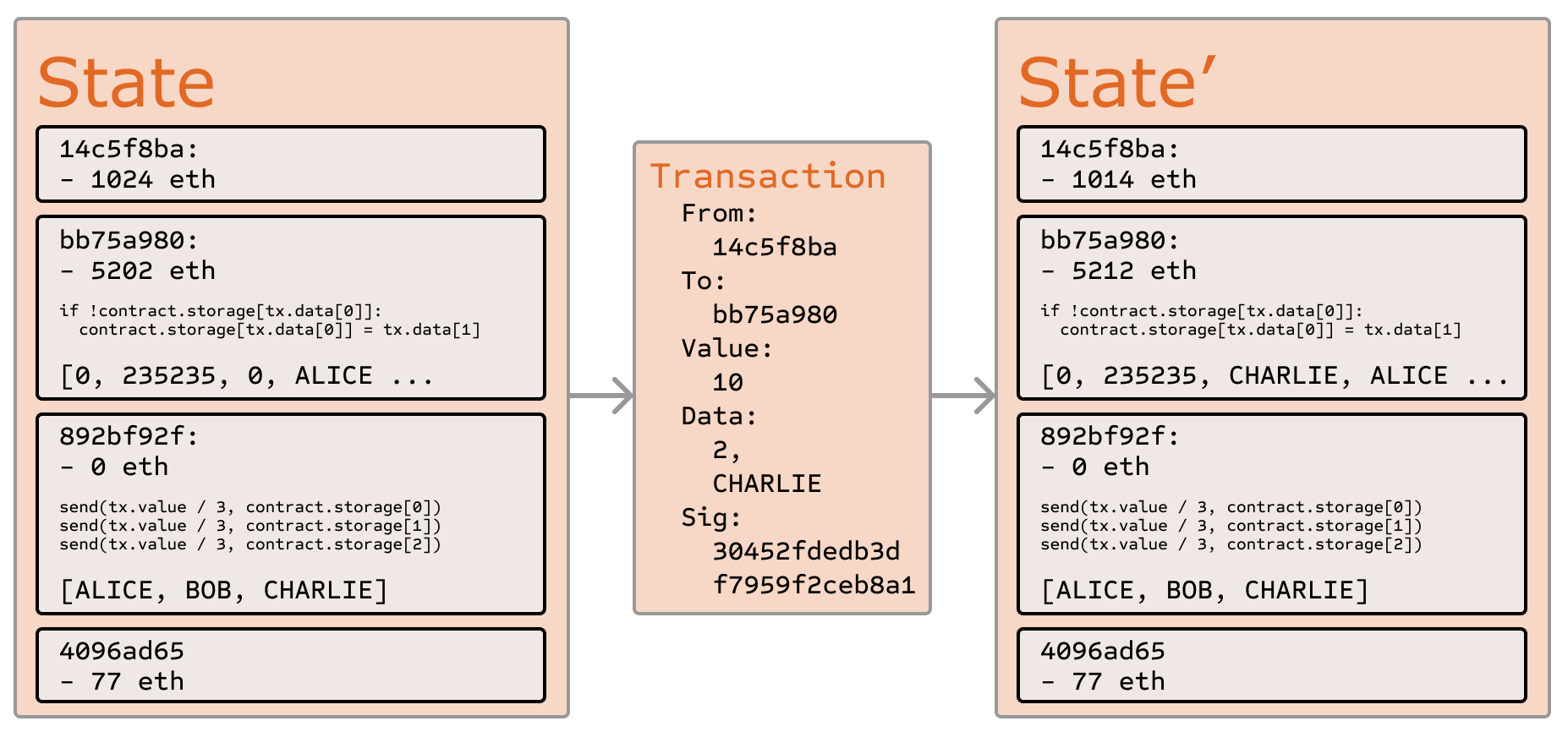
بعد ذلك، ينقل النظام قيمة ether المحددة من المرسل إلى المستلم. إذا كان المستلم حساباً مملوكاً خارجياً، يكتمل هذا المعاملة. إذا كان المستلم حساب عقد، يعمل كود العقد في Ethereum Virtual Machine، مستهلكاً gas لكل عملية حتى يكتمل الكود بنجاح، أو يتوقف الكود صراحة، أو ينفد gas. أثناء التنفيذ، يمكن للعقد قراءة وتعديل تخزينه، وإرسال رسائل إلى عقود أخرى، وإنشاء عقود جديدة.
أخيراً، إذا فشل نقل القيمة (رصيد غير كافٍ) أو فشل تنفيذ الكود (نفاد gas أو حدوث خطأ)، تُعاد جميع تغييرات الحالة—لكن المرسل لا يزال يدفع رسوم gas للمُعدّن عن الحوسبة المُنجزة. إذا نجح التنفيذ، يُسترد gas المتبقي إلى المرسل، ويُرسل gas المُستهلك إلى المُعدّن كرسوم. تضمن هذه الآلية تعويض المُعدّنين عن الحوسبة مع منع التنفيذ الجامح من استهلاك موارد غير محدودة.
Ethereum State Transition Function
Ethereumの状態遷移関数APPLY(S,TX) - S'は、トランザクションがブロックチェーンの状態をどのように変換するかを定義し、正確な一連のステップに従います。まず、システムはトランザクションの有効性を検証します:署名が正しいことの確認、ノンスが送信者のアカウントノンスと一致することの確認、送信者が前払い費用(STARTGAS × GASPRICE加えて送金額)を支払うのに十分な残高を持っていることの確認です。いずれかのチェックが失敗した場合、実行開始前にトランザクションは拒否されます。有効であれば、トランザクション手数料が送信者のアカウントから差し引かれ、送信者のノンスがインクリメントされ、トランザクションデータのバイトごとの手数料を差し引いたSTARTGASに初期ガスカウンターが設定されます。
次に、システムは指定されたEther値を送信者から受信者に送金します。受信者が外部所有アカウントの場合、これでトランザクションは完了します。受信者がコントラクトアカウントの場合、コントラクトのコードがEthereum仮想マシン内で実行され、コードが正常に完了するか、コードが明示的に停止するか、ガスが尽きるまで、各操作でガスを消費します。実行中、コントラクトはそのストレージの読み書き、他のコントラクトへのメッセージの送信、新しいコントラクトの作成が可能です。
最後に、値の送金が失敗した場合(残高不足)またはコード実行が失敗した場合(ガス切れまたはエラー発生)、すべての状態変更がロールバックされます——ただし、送信者は実行された計算に対するガス手数料をマイナーに支払います。実行が成功した場合、残りのガスは送信者に返金され、消費されたガスは手数料としてマイナーに送られます。このメカニズムにより、マイナーは計算に対する報酬を受け取り、同時に制御不能な実行が無制限のリソースを消費することを防ぎます。
Code Execution
آلة Ethereum الافتراضية (EVM) هي بيئة التشغيل حيث يُنفذ كود العقد—آلة افتراضية منخفضة المستوى قائمة على المكدس، مشابهة مفاهيمياً لآلة Java الافتراضية أو WebAssembly. يُخزن كود العقد كتسلسل من البايتات، حيث يمثل كل بايت عملية (opcode) يمكن لـ EVM تنفيذها. نموذج التنفيذ بسيط وحتمي عمداً: يجب أن تصل كل عقدة تشغل EVM بنفس حالة الإدخال والمعاملة إلى نفس حالة الإخراج، مما يضمن الإجماع عبر الشبكة.
يوفر EVM ثلاثة أنواع مميزة من التخزين للحوسبة. المكدس هو بنية "آخر من يدخل أول من يخرج" (LIFO) محدودة بـ 1024 عنصراً، تُستخدم لقيم العمليات الفورية. الذاكرة هي مصفوفة بايت قابلة للتوسع لانهائياً تستمر فقط خلال استدعاء رسالة واحدة وتُعاد تهيئتها بين عمليات التنفيذ. التخزين هو مخزن key-value دائم مرتبط بشكل دائم بكل حساب عقد، حيث تحافظ العقود على حالتها طويلة المدى عبر المعاملات. تُسعّر أنواع التخزين هذه بشكل مختلف في gas—عمليات المكدس والذاكرة رخيصة، بينما عمليات التخزين مكلفة لمنع تضخم blockchain.
أثناء التنفيذ، يمكن لكود العقد الوصول إلى سياق حاسم: يمكنه قراءة عنوان مرسل الرسالة، ومقدار ether المُرسل، وحمولة البيانات المقدمة من المُستدعي، وخصائص مستوى الكتلة مثل رقم الكتلة الحالي والطابع الزمني وعنوان المُعدّن. يمكن للكود إرجاع مصفوفة بايت إخراج إلى المُستدعي ويمكنه إرسال رسائل إلى عقود أخرى أو إنشاء عقود جديدة. نموذج التنفيذ هذا Turing-complete—الحلقات وتدفق التحكم المعقد ممكنان—لكن آلية gas تضمن أن جميع الحوسبة تنتهي في وقت محدود، حيث تحل مشكلة التوقف اقتصادياً بدلاً من قيود اللغة.
Code Execution
Ethereum仮想マシン(EVM)は、コントラクトコードが実行されるランタイム環境であり、Java仮想マシンやWebAssemblyと概念的に類似した低レベルのスタックベース仮想マシンです。コントラクトコードはバイトの列として格納され、各バイトはEVMが実行できるオペレーション(オペコード)を表します。実行モデルは意図的にシンプルかつ決定論的です:同じ入力状態とトランザクションでEVMを実行するすべてのノードは、同じ出力状態に到達しなければならず、ネットワーク全体のコンセンサスを保証します。
EVMは計算のために3つの異なるタイプのストレージを提供します。スタックは1024要素に制限された後入先出(LIFO)構造であり、即座の操作値に使用されます。メモリは単一のメッセージコールの間だけ持続し、実行間でリセットされる無限に拡張可能なバイト配列です。ストレージは各コントラクトアカウントに永続的に関連付けられた永続キーバリューストアであり、コントラクトがトランザクションをまたいで長期的な状態を維持する場所です。これらのストレージタイプはガス料金が異なります——スタックとメモリの操作は安価ですが、ストレージ操作はブロックチェーンの肥大化を防ぐために高価です。
実行中、コントラクトコードは重要なコンテキストにアクセスできます:メッセージ送信者のアドレス、送られたEtherの量、呼び出し元が提供したデータペイロード、現在のブロック番号、タイムスタンプ、マイナーアドレスなどのブロックレベルのプロパティを読み取ることができます。コードは呼び出し元に出力バイト配列を返すことができ、他のコントラクトにメッセージを送信したり、新しいコントラクトを作成したりできます。この実行モデルはチューリング完全であり、ループや複雑な制御フローが可能ですが、ガスメカニズムによりすべての計算が有限時間で終了することが保証され、言語の制限ではなく経済的な方法で停止性問題を解決しています。
Blockchain and Mining
blockchain الخاص بـ Ethereum مشابه جوهرياً لـ Bitcoin، حيث يعمل كقاعدة بيانات تحتوي على كل معاملة تم تنفيذها. ومع ذلك، بينما يُخزن Bitcoin قائمة المعاملات فقط، يُخزن Ethereum كلاً من قائمة المعاملات والحالة الأحدث. كل كتلة في Ethereum تحتوي على hash الكتلة السابقة، وجذر الحالة (hash الجذر لـ Merkle Patricia trie الذي يمثل الحالة الكاملة)، وجذر المعاملات، وجذر الإيصالات (يُخزن بيانات من تنفيذ المعاملات)، بالإضافة إلى قيم الصعوبة والطابع الزمني وnonce. الحالة نفسها هي Merkle Patricia trie كبير يُعيّن العناوين إلى كائنات الحسابات، حيث كل حساب لديه رصيد وnonce وكود (إن وُجد) وتخزين.

يستخدم Ethereum نسخة معدلة من بروتوكول GHOST (الشجرة الفرعية الأثقل المرصودة بجشع) لمعالجة مشاكل الأمان الناشئة عن أوقات الكتل السريعة. في بروتوكولات السلسلة الأطول التقليدية، تؤدي الكتل السريعة إلى معدلات عالية من الكتل القديمة، مما يقلل أمان الشبكة ويزيد مخاطر المركزية لأن المُعدّنين الكبار يُهدرون حوسبة أقل على الكتل القديمة. يُضمّن GHOST الكتل القديمة (تُسمى "أعمام" في Ethereum) في حساب أي سلسلة هي الأطول، ويوفر مكافآت جزئية لكتل الأعمام، محفزاً المُعدّنين على الإشارة إليها. يسمح هذا لـ Ethereum بالحفاظ على وقت كتلة مستهدف يبلغ حوالي 12 ثانية مع الحفاظ على أمان الشبكة.
تعمل خوارزمية التعدين بشكل مشابه لـ proof-of-work الخاص بـ Bitcoin، مما يتطلب من المُعدّنين إيجاد nonce بحيث يكون hash الكتلة أقل من هدف صعوبة معين. ومع ذلك، فإن خوارزمية التعدين كثيفة الذاكرة في Ethereum (Ethash) مصممة لتكون مقاومة لـ ASIC، مما يُعزز نظام تعدين أكثر لامركزية. تتكيف الصعوبة ديناميكياً بناءً على أوقات الكتل للحفاظ على هدف ~12 ثانية، مما يضمن إنتاج كتل متسق بينما يوفر بروتوكول GHOST ضمانات أمنية رغم أوقات الكتل الأسرع مقارنة بمتوسط Bitcoin البالغ 10 دقائق.
Blockchain and Mining
Ethereumのブロックチェーンは基本的にBitcoinのものと類似しており、これまでに実行されたすべてのトランザクションを含むデータベースとして機能します。しかし、Bitcoinがトランザクションリストのみを格納するのに対し、Ethereumはトランザクションリストと最新の状態の両方を格納します。Ethereumの各ブロックには、前のブロックのハッシュ、ステートルート(全体の状態を表すマークル・パトリシアトライのルートハッシュ)、トランザクションルート、レシートルート(トランザクション実行からのデータを格納)、そして難易度、タイムスタンプ、ノンスの値が含まれます。状態自体は、アドレスからアカウントオブジェクトへのマッピングである大きなマークル・パトリシアトライであり、各アカウントは残高、ノンス、コード(存在する場合)、およびストレージを持ちます。
Ethereumは、高速なブロック時間から生じるセキュリティ問題に対処するために、GHOST(Greedy Heaviest Observed Subtree)プロトコルの修正版を使用しています。従来の最長チェーンプロトコルでは、高速なブロックは高い陳腐化率をもたらし、ネットワークセキュリティを低下させ、大規模なマイナーが陳腐ブロックでの計算の無駄が少ないため、中央集権化のリスクを増加させます。GHOSTは陳腐ブロック(Ethereumでは「アンクル」と呼ばれる)をどのチェーンが最長かの計算に含め、アンクルブロックに部分的な報酬を提供し、マイナーがそれらを参照するインセンティブを与えます。これにより、Ethereumはネットワークセキュリティを維持しながら、約12秒のターゲットブロック時間を維持できます。
マイニングアルゴリズムはBitcoinのプルーフ・オブ・ワークと同様に機能し、マイナーはブロックのハッシュが特定の難易度ターゲット以下になるノンスを見つける必要があります。しかし、Ethereumのメモリハードなマイニングアルゴリズム(Ethash)はASIC耐性を持つように設計されており、より分散化されたマイニングエコシステムを促進します。難易度はブロック時間に基づいて動的に調整され、約12秒のターゲットを維持し、一貫したブロック生成を保証します。一方、GHOSTプロトコルはBitcoinの10分の平均と比較してより高速なブロック時間にもかかわらず、セキュリティ保証を提供します。
Applications
تقع التطبيقات التي يمكن بناؤها على Ethereum في ثلاث فئات عريضة. الفئة الأولى هي التطبيقات المالية، التي توفر للمستخدمين طرقاً أكثر قوة لإدارة والدخول في عقود تتعلق بأموالهم. يشمل ذلك العملات الفرعية، والمشتقات المالية، وعقود التحوط، ومحافظ التوفير بحدود السحب، والوصايا التي توزع الأموال تلقائياً، وحتى عقود التوظيف التي تحسب الدفع بناءً على إتمام العمل المُتحقق منه. تستفيد هذه التطبيقات من قابلية Ethereum للبرمجة لإنشاء أدوات مالية معقدة سيكون تنفيذها مستحيلاً أو صعباً للغاية في الأنظمة التقليدية أو حتى على Bitcoin.
الفئة الثانية هي التطبيقات شبه المالية، حيث المال متورط لكن هناك أيضاً مكون غير نقدي كبير فيما يتم فعله. مثال مثالي هو المكافآت ذاتية التنفيذ لحلول المشاكل الحسابية. يمكن لشخص نشر مشكلة حسابية مع مكافأة، ويمكن للعقد التحقق تلقائياً من الحلول المُقدمة ودفع المكافأة لأول إجابة صحيحة. تجسر هذه الفئة بين المالية البحتة والمجالات الأخرى، باستخدام الحوافز الاقتصادية لحل المشاكل أو تنسيق السلوك.
الفئة الثالثة هي التطبيقات التي لا علاقة لها بالمال على الإطلاق، مثل التصويت عبر الإنترنت وأنظمة الحوكمة اللامركزية. تُظهر هذه التطبيقات غير المالية مرونة Ethereum كمنصة عامة الغرض. تشمل الأمثلة أنظمة أسماء النطاقات اللامركزية مثل Namecoin، وأنظمة السمعة، وتخزين الملفات اللامركزي، وأدوات الحوكمة التنظيمية. من بين جميع أنواع التطبيقات هذه، برزت أنظمة الرموز كأكثرها شيوعاً وأساسية، حيث تعمل كلبنات بناء للعديد من التطبيقات الأخرى.
Applications
Ethereum上に構築できるアプリケーションは、大きく3つのカテゴリに分類されます。第一のカテゴリは金融アプリケーションであり、ユーザーに自分のお金に関するコントラクトを管理・締結するより強力な方法を提供します。これにはサブ通貨、金融デリバティブ、ヘッジコントラクト、引き出し制限付きの貯蓄ウォレット、自動的に資金を分配する遺言、さらには検証された作業完了に基づいて支払いを計算する雇用契約が含まれます。これらのアプリケーションはEthereumのプログラマビリティを活用して、従来のシステムやBitcoin上でも実装が不可能または極めて困難な複雑な金融商品を作成します。
第二のカテゴリは半金融アプリケーションであり、お金が関与しますが、行われていることの非金銭的な側面も相当なものです。完璧な例は、計算問題の解決に対する自己強制型の報奨金です。誰かが報酬とともに計算問題を投稿し、コントラクトが提出された解決策を自動的に検証し、最初の正解に報奨金を支払うことができます。このカテゴリは純粋な金融と他の領域を橋渡しし、経済的インセンティブを使用して問題を解決したり行動を調整したりします。
第三のカテゴリは、お金とは一切関係のないアプリケーションであり、オンライン投票や分散型ガバナンスシステムなどです。これらの非金融アプリケーションは、汎用プラットフォームとしてのEthereumの柔軟性を示しています。例としては、Namecoinのような分散型ドメインネームシステム、レピュテーションシステム、分散型ファイルストレージ、組織ガバナンスツールなどがあります。すべてのアプリケーションタイプの中で、トークンシステムが最も一般的かつ基本的なものとして台頭しており、他の多くのアプリケーションのビルディングブロックとして機能しています。
Token Systems
أنظمة الرموز بسيطة بشكل مدهش في التنفيذ على Ethereum، رغم كونها واحدة من أقوى وأكثر التطبيقات شيوعاً. في جوهرها، أنظمة الرموز هي ببساطة قاعدة بيانات بعملية واحدة: طرح X وحدة من الحساب A وإضافة X وحدة إلى الحساب B، بشرط أن A كان لديه على الأقل X وحدة قبل المعاملة وأن المعاملة مُصرح بها من A. يتطلب التنفيذ الحفاظ على تعيين من العناوين إلى الأرصدة وتوفير دالة نقل تُجري الفحوصات المناسبة قبل نقل الرموز بين الحسابات.
كود العقد لنظام رموز أساسي بسيط بشكل ملحوظ ويمكن كتابته في بضعة أسطر فقط. يتكون من بنية بيانات تُعيّن العناوين إلى الأرصدة، ودالة تهيئة تُخصص العرض الأولي للرموز، ودالة نقل تتحقق من رصيد المرسل وتصريحه قبل تنفيذ النقل. هذه البساطة تتناقض بشكل صارخ مع التعقيد المطلوب لتنفيذ أنظمة مماثلة على Bitcoin، والتي ستتطلب حلولاً بديلة كبيرة وقيوداً بسبب قدرات Bitcoin البرمجية المحدودة.
يمكن أن تمثل الرموز على Ethereum فعلياً أي شيء ذي قيمة. قد تمثل عملات فرعية بسياسات نقدية خاصة بها، أو مشتقات مالية تتتبع أصولاً خارجية، أو أسهم شركات بحقوق أرباح، أو نقاط ولاء في برامج العملاء، أو سلع مثل الذهب أو النفط، أو حتى تمثيلات للممتلكات المادية. تسمح قابلية Ethereum للبرمجة لهذه الرموز بقواعد عشوائية تحكم سلوكها، مثل قيود النقل، أو آليات الحرق التلقائي، أو توزيعات الأرباح، أو حقوق الحوكمة. جعلت هذه المرونة أنظمة الرموز اللبنة الأساسية لمعظم نظام Ethereum البيئي.
Token Systems
トークンシステムは、最も強力で一般的なアプリケーションの一つであるにもかかわらず、Ethereum上での実装は驚くほど簡単です。その核心において、トークンシステムは単一の操作を持つデータベースに過ぎません:アカウントAからX単位を差し引き、アカウントBにX単位を加える。ただし、トランザクション前にAが少なくともX単位を保有しており、トランザクションがAによって承認されていることが条件です。実装には、アドレスから残高へのマッピングを維持し、トークンをアカウント間で移動する前に適切なチェックを行う送金関数を提供する必要があります。
基本的なトークンシステムのコントラクトコードは非常にシンプルで、わずか数行で記述できます。アドレスから残高へのマッピングのデータ構造、初期トークン供給量を割り当てる初期化関数、送信者の残高と承認をチェックしてから送金を実行する送金関数で構成されます。このシンプルさは、Bitcoinの制限されたスクリプト機能のために大幅な回避策と制限が必要な同様のシステムの実装の複雑さとは対照的です。
Ethereum上のトークンは、価値のあるものであれば事実上何でも表すことができます。独自の金融政策を持つサブ通貨、外部資産を追跡する金融デリバティブ、配当権付きの会社株式、顧客プログラムのロイヤリティポイント、金や石油などの商品、さらには物理的財産の表現までも可能です。Ethereumのプログラマビリティにより、これらのトークンは送金制限、自動バーンメカニズム、配当分配、ガバナンス権限など、その行動を支配する任意のルールを持つことができます。この柔軟性により、トークンシステムはEthereumエコシステムの大部分の基盤となるビルディングブロックとなっています。
Financial Derivatives and Stable-Value Currencies
تمثل المشتقات المالية أحد أكثر التطبيقات أساسية وأهمية لعقود Ethereum الذكية. يوضح عقد تحوط بسيط الآلية الأساسية: يودع الطرف A مبلغاً معيناً من ether بقيمة \(1000، ويودع الطرف B مبلغاً مكافئاً، ويسجل العقد قيمة ether بالدولار في تلك اللحظة باستخدام تغذية بيانات. بعد 30 يوماً، يعيد العقد حساب القيمة ويرسل ether بقيمة \)1000 إلى A والباقي إلى B. إذا ارتفع سعر ether، يتلقى A ether أقل لكنه يحافظ على قيمة $1000؛ وإذا انخفض، يتلقى A المزيد من ether للحفاظ على تلك القيمة. يسمح هذا لـ A بالتحوط ضد التقلبات بينما يضارب B على تحركات الأسعار.
يتطلب تنفيذ مثل هذه العقود الوصول إلى بيانات خارجية من خلال عقود oracle أو تغذيات البيانات. توفر هذه الـ oracles معلومات الأسعار أو بيانات الطقس أو معلومات أخرى من العالم الحقيقي تحتاجها العقود للتنفيذ بشكل صحيح. بينما تُقدم الـ oracles اعتمادية ثقة، يمكن تصميمها بتكرار وحوافز اقتصادية تشفيرية لتوفير بيانات موثوقة. العقد نفسه ببساطة يستعلم من الـ oracle، ويُجري حسابات بناءً على تلك البيانات، ويوزع الأموال وفقاً لمنطقه المبرمج.
يمكن بناء Stablecoins وأدوات مالية أكثر تعقيداً باستخدام آليات مماثلة. قد يحافظ عقد stablecoin على احتياطي من ether ويُصدر رموزاً مرتبطة بعملة ورقية، معدلاً تلقائياً العرض أو متطلبات الضمان بناءً على تغذيات الأسعار. عقود الخيارات والعقود الآجلة والمبادلات والمشتقات الأخرى التي تتطلب عادةً أطراً قانونية معقدة ووسطاء موثوقين يمكن بدلاً من ذلك ترميزها كعقود ذكية ذاتية التنفيذ. تُمكّن بنية التمويل القابلة للبرمجة هذه هندسة مالية متطورة مع الحفاظ على ضمانات الشفافية والأمان لتقنية blockchain.
Financial Derivatives and Stable-Value Currencies
金融デリバティブは、Ethereumスマートコントラクトの最も基本的かつ重要なアプリケーションの一つです。シンプルなヘッジコントラクトが基本的な仕組みを示しています:当事者Aが1000ドル相当のEtherを預け入れ、当事者Bが同等の金額を預け入れ、コントラクトがデータフィードを使用してその時点でのEtherのUSD価値を記録します。30日後、コントラクトは価値を再計算し、1000ドル相当のEtherをAに送り、残りをBに送ります。Etherの価格が上昇した場合、Aはより少ないEtherを受け取りますが1000ドルの価値を維持します。価格が下落した場合、Aはその価値を維持するためにより多くのEtherを受け取ります。これにより、Aはボラティリティに対してヘッジし、Bは価格変動に投機することができます。
このようなコントラクトの実装には、オラクルコントラクトやデータフィードを通じた外部データへのアクセスが必要です。これらのオラクルは、コントラクトが適切に実行するために必要な価格情報、気象データ、その他の現実世界の情報を提供します。オラクルは信頼への依存を導入しますが、冗長性と暗号経済的インセンティブを備えた設計により、信頼性の高いデータを提供できます。コントラクト自体は単にオラクルに問い合わせ、そのデータに基づいて計算を行い、プログラムされたロジックに従って資金を分配します。
ステーブルコインやより複雑な金融商品も、同様のメカニズムを使用して構築できます。ステーブルコインのコントラクトは、Etherのリザーブを維持し、法定通貨にペッグされたトークンを発行し、価格フィードに基づいて供給量や担保要件を自動的に調整することができます。オプション契約、先物、スワップ、その他のデリバティブは、通常であれば複雑な法的枠組みと信頼できる仲介者を必要としますが、代わりに自己実行型のスマートコントラクトとしてエンコードできます。このプログラマブルな金融インフラストラクチャは、ブロックチェーン技術の透明性とセキュリティ保証を維持しながら、高度な金融工学を可能にします。
Identity and Reputation Systems
نظام تسجيل الأسماء المشابه لـ Namecoin قابل للتنفيذ بسهولة على Ethereum ويُعد أبسط مثال على نظام هوية. يحافظ العقد على قاعدة بيانات بجدول key-value يُعيّن الأسماء إلى البيانات المرتبطة (مثل عناوين IP أو المفاتيح العامة أو معلومات أخرى). يمكن لأي شخص تسجيل اسم بإرسال معاملة إلى العقد مع رسوم تسجيل صغيرة، بشرط ألا يكون الاسم مأخوذاً بالفعل. يمكن للمالك تحديث البيانات المرتبطة في أي وقت، ويمكن جعل الأسماء قابلة للنقل أو دائمة وفقاً للقواعد المُرمزة في العقد.
يمكن بناء أنظمة هوية أكثر تقدماً على هذا الأساس لتشمل درجات السمعة وعلاقات شبكة الثقة والتحقق اللامركزي من الهوية. على سبيل المثال، يمكن لعقد الحفاظ على درجات السمعة بناءً على المعاملات المُتحقق منها أو تقييمات الأقران أو إتمام المهام. ستكون هذه الدرجات مرئية للعموم ومرتبطة تشفيرياً بعناوين محددة، مما يُنشئ سمعة محمولة تتبع المستخدمين عبر التطبيقات. يمكن لأنظمة شبكة الثقة أن تسمح للمستخدمين بالتصديق على هويات الآخرين، بناء رسوم بيانية اجتماعية تساعد في التمييز بين المستخدمين الشرعيين والجهات السيئة.
تصبح أنظمة الهوية والسمعة هذه قوية بشكل خاص عند دمجها مع تطبيقات أخرى. يمكن لسوق أن يتطلب درجات سمعة دنيا للبائعين، أو منصة إقراض أن تُعدل أسعار الفائدة بناءً على سمعة المقترض، أو شبكة اجتماعية أن تستخدم شبكة الثقة لتصفية البريد العشوائي والمحتوى الاحتيالي. من خلال توفير بنية تحتية مشتركة للهوية يمكن لأي تطبيق الاستعلام عنها، يُمكّن Ethereum فئة جديدة من التطبيقات القائمة على الثقة التي لا تعتمد على مزودي هوية مركزيين أو أنظمة سمعة مملوكة.
Identity and Reputation Systems
Namecoinに類似した名前登録システムは、Ethereum上で簡単に実装でき、アイデンティティシステムの最もシンプルな例として機能します。コントラクトは、名前から関連データ(IPアドレス、公開鍵、その他の情報など)へのマッピングであるキーバリューテーブルを持つデータベースを維持します。その名前がまだ取得されていなければ、少額の登録料とともにコントラクトにトランザクションを送信することで、誰でも名前を登録できます。所有者はいつでも関連データを更新でき、名前はコントラクトにエンコードされたルールに従って、譲渡可能にも永続的にもできます。
この基盤の上に、レピュテーションスコア、信頼の網の関係、分散型アイデンティティ検証を含む、より高度なアイデンティティシステムを構築できます。例えば、コントラクトは検証済みトランザクション、ピア評価、タスクの完了に基づいてレピュテーションスコアを維持できます。これらのスコアは公開され、暗号的に特定のアドレスに紐付けられ、アプリケーション間で持ち運び可能なレピュテーションを作成します。信頼の網システムにより、ユーザーは他者のアイデンティティを保証し、正当なユーザーと悪意ある行為者を区別するのに役立つソーシャルグラフを構築できます。
このようなアイデンティティおよびレピュテーションシステムは、他のアプリケーションと統合された場合に特に強力になります。マーケットプレイスは販売者に最低限のレピュテーションスコアを要求でき、融資プラットフォームは借り手のレピュテーションに基づいて金利を調整でき、ソーシャルネットワークは信頼の網を使用してスパムや不正コンテンツをフィルタリングできます。あらゆるアプリケーションが照会できるアイデンティティのための共有インフラストラクチャを提供することで、Ethereumは中央集権的なアイデンティティプロバイダーや独自のレピュテーションシステムに依存しない、新たな信頼ベースのアプリケーション群を可能にします。
Decentralized File Storage
يمكن تنفيذ تخزين الملفات اللامركزي من خلال عقود Ethereum التي تنسق بين المستخدمين الذين يحتاجون إلى التخزين والمزودين الذين يقدمونه. في نموذج "Dropbox اللامركزي"، سيدفع المستخدمون رسوماً شهرية لتحميل الملفات، مع توزيع العقد للمدفوعات على مزودي التخزين الذين يُثبتون أنهم يُخزنون البيانات فعلاً. تعمل آلية الإثبات من خلال تحديات تشفيرية دورية: يختار العقد عشوائياً أجزاء من الملفات ويطلب من المزودين تقديم إثباتات Merkle tree تُظهر أنهم يملكون تلك البيانات. المزودون الذين يفشلون في التحديات أو يصبحون غير متصلين سيخسرون ودائعهم وتدفق المدفوعات المستقبلية.
يقدم هذا النهج عدة مزايا على التخزين المركزي. تُمكّن إثباتات Merkle tree التحقق الفعال—يمكن للمستخدمين والعقد تأكيد توفر الملفات دون تنزيل الملفات بالكامل. يوزع النظام طبيعياً الملفات عبر مزودين مستقلين متعددين، مما يُنشئ تكراراً دون الحاجة إلى بروتوكولات نسخ صريحة. تُوائم الحوافز الاقتصادية سلوك المزودين مع احتياجات المستخدمين: يكسب المزودون المال بتخزين البيانات بشكل موثوق ويخسرون المال إذا فشلوا في ذلك. يُلغي هذا متطلب الثقة المتأصل في حلول التخزين المركزية.
يمكن أن تكون تكاليف التخزين في مثل هذا النظام أقل من البدائل المركزية لعدة أسباب. إلغاء التسعير الاحتكاري يسمح للمنافسة السوقية بدفع التكاليف إلى قرب التكلفة الفعلية للتخزين. التكرار الضمني من عدة مستخدمين يُخزنون ملفات مماثلة يمكن أن يقلل من متطلبات التخزين الإجمالية. لا حاجة لبنية تحتية مكلفة لمراكز البيانات أو نفقات عامة مؤسسية. ومع ذلك، تبقى التحديات حول آليات الدفع وضمان مشاركة كافية من المزودين وإدارة المفاضلة بين التكرار والتكلفة. رغم هذه التحديات، يُظهر التخزين اللامركزي كيف يمكن لـ Ethereum تنسيق تفاعلات معقدة متعددة الأطراف من خلال الحوافز الاقتصادية وحدها.
Decentralized File Storage
分散型ファイルストレージは、ストレージを必要とするユーザーとストレージを提供するプロバイダーの間を調整するEthereumコントラクトを通じて実装できます。「分散型Dropbox」モデルでは、ユーザーが月額料金を支払ってファイルをアップロードし、コントラクトがデータを実際に保存していることを証明するストレージプロバイダーに支払いを分配します。証明メカニズムは定期的な暗号チャレンジを通じて機能します:コントラクトがファイルの一部をランダムに選択し、プロバイダーにそのデータを所持していることを示すマークル木の証明を提供するよう求めます。チャレンジに失敗したりオフラインになったプロバイダーは、保証金と将来の支払いの流れを失います。
このアプローチは中央集権的なストレージに対していくつかの利点を提供します。マークル木の証明により効率的な検証が可能です——ユーザーとコントラクトはファイル全体をダウンロードすることなくファイルの可用性を確認できます。システムは自然にファイルを複数の独立したプロバイダーに分散させ、明示的なレプリケーションプロトコルを必要とせずに冗長性を生み出します。経済的インセンティブはプロバイダーの行動をユーザーのニーズに合わせます:プロバイダーはデータを確実に保存することで収益を得、それを怠ると損失を被ります。これにより、中央集権的なストレージソリューションに固有の信頼要件が排除されます。
このようなシステムにおけるストレージコストは、いくつかの理由から中央集権的な代替手段よりも低くなる可能性があります。独占的価格設定の排除により、市場競争がコストをストレージの実際のコストに近いところまで引き下げます。複数のユーザーが類似のファイルを保存することによる暗黙的な冗長性が、総ストレージ要件を削減できます。高価なデータセンターインフラストラクチャや企業のオーバーヘッドが不要です。しかし、支払いメカニズム、十分なプロバイダー参加の確保、冗長性とコストのトレードオフの管理に関する課題が残っています。これらの課題にもかかわらず、分散型ストレージは、Ethereumが経済的インセンティブのみを通じて複雑な多者間のインタラクションを調整できることを示しています。
Decentralized Autonomous Organizations
المنظمة اللامركزية المستقلة (DAO) هي كيان افتراضي لديه مجموعة من الأعضاء أو المساهمين الذين يملكون جماعياً الحق في إنفاق أموال الكيان وتعديل كوده. تعمل DAO نموذجية بقاعدة بسيطة: يُحتاج 67% من الأعضاء لاتخاذ قرارات الإنفاق أو تعديل كود المنظمة. يمكن للأعضاء تقديم مقترحات والتصويت عليها، وإذا حصل مقترح على دعم كافٍ، ينفذ العقد القرار تلقائياً. يمكن أن تكون حصص العضوية قابلة للنقل، مما يسمح بسوق سائلة لمشاركة DAO، ويمكن أن يكون لفئات مختلفة من الحصص حقوق تصويت أو مطالبات اقتصادية مختلفة.
أبسط تصميم DAO هو عقد ذاتي التعديل يحافظ على قائمة بالأعضاء ويتطلب تصويت أغلبية 2/3 لتغيير أي جانب من العقد، بما في ذلك قواعد التصويت الخاصة به. سيقدم الأعضاء تغييرات الكود كمعاملات، وسيصوت أعضاء آخرون، وعند الوصول إلى العتبة، سيُحدث العقد نفسه. قد تتضمن التصاميم الأكثر تطوراً أنظمة تصويت مُفوضة حيث يمكن للأعضاء تخصيص قوتهم التصويتية لممثلين، أو ديمقراطية سائلة حيث يمكن تفويض الأصوات ولكن استرجاعها في أي وقت للقرارات المهمة.
يمكن لـ DAOs أن تخدم أغراضاً متنوعة تتجاوز إدارة الأموال البسيطة. يمكن أن تعمل DAO كشركة لامركزية، توظف المقاولين وتشتري الخدمات وتوزع الأرباح على المساهمين—كل ذلك يحكمه كود smart contract بدلاً من الهياكل القانونية التقليدية. يمكن أن تعمل كصندوق استثمار لامركزي، حيث يصوت الأعضاء على المشاريع التي يُموّلونها. يمكن أن تدير مورداً مشتركاً، حيث يصوت أصحاب المصلحة على قواعد التخصيص. الفكرة الرئيسية هي أنه بترميز قواعد الحوكمة في كود شفاف وغير قابل للتغيير وربطها بحصة اقتصادية، يمكن لـ DAOs تنسيق قرارات المجموعة دون الحاجة إلى إدارة هرمية تقليدية أو إنفاذ قانوني.
Decentralized Autonomous Organizations
分散型自律組織(DAO)は、メンバーまたは株主のセットを持ち、その組織の資金を支出しコードを修正する権利を集団的に持つ仮想エンティティです。典型的なDAOはシンプルなルールで運営されます:支出の決定または組織のコードの修正にはメンバーの67%が必要です。メンバーは提案を提出し、投票することができ、提案が十分な支持を得た場合、コントラクトが自動的にその決定を実行します。メンバーシップシェアは譲渡可能にでき、DAOへの参加に流動的な市場を可能にし、異なるクラスのシェアは異なる議決権や経済的請求権を持つことができます。
最もシンプルなDAOの設計は、メンバーリストを維持し、コントラクトのいかなる側面(自身の投票ルールを含む)の変更にも3分の2の多数決を必要とする自己修正コントラクトです。メンバーはコード変更をトランザクションとして提出し、他のメンバーが投票し、閾値に達するとコントラクトが自身を更新します。より洗練された設計には、メンバーが投票権を代表者に委任できる代理投票システムや、投票を委任できるが重要な決定の際にはいつでも取り戻せるリキッドデモクラシーなどがあります。
DAOは単純な資金管理を超えて様々な目的に使用できます。DAOは分散型企業として機能し、請負業者を雇用し、サービスを購入し、利益を株主に分配することができ——すべてが従来の法的構造ではなくスマートコントラクトコードによって統治されます。分散型投資ファンドとして運営され、メンバーがどのプロジェクトに資金を提供するかを投票できます。共有資源を管理し、利害関係者が配分ルールについて投票できます。重要な洞察は、ガバナンスルールを透明で不変のコードにエンコードし、経済的利害と結びつけることで、DAOは従来の階層的な管理や法的強制なしにグループの意思決定を調整できるということです。
Further Applications
إلى جانب الفئات الرئيسية التي نوقشت بالفعل، يُمكّن Ethereum العديد من التطبيقات الأخرى. يمكن لمحافظ التوفير ذات ميزات الأمان المتطورة فرض حدود سحب يومية مع توفير مفاتيح طوارئ للاسترداد، مما يحمي المستخدمين من السرقة مع الحفاظ على السيطرة النهائية. يمكن لعقود التأمين على المحاصيل الدفع تلقائياً للمزارعين بناءً على تغذيات بيانات الطقس، مما يُلغي معالجة المطالبات ويقلل النفقات الإدارية. يمكن لتطبيقات المقامرة من نظير إلى نظير العمل دون أي وسيط موثوق، حيث تحتفظ العقود الذكية بالرهانات وتدفع تلقائياً للفائزين بناءً على أرقام عشوائية قابلة للتحقق أو بيانات أحداث العالم الحقيقي.
تسمح أسواق التنبؤ على السلسلة للمستخدمين بالمراهنة على أحداث مستقبلية، مما يُنشئ آليات تنبؤ قوية من خلال حكمة الجماهير. يمكن تعزيزها ببروتوكولات على غرار SchellingCoin لإنشاء oracles لامركزية: يُبلّغ المشاركون بشكل مستقل عن البيانات (مثل نتائج الانتخابات أو أحوال الطقس)، ويتلقى من تتطابق تقاريرهم مع الأغلبية مكافآت بينما يُعاقب المنحرفون. يُحفز هذا النهج الاقتصادي التشفيري الإبلاغ الصادق ويمكن أن يوفر بيانات العالم الحقيقي الموثوقة لعقود أخرى دون الحاجة إلى الثقة في أي مزود oracle واحد.
تمثل محافظ التوقيع المتعدد تطبيقاً مهماً آخر، مما يُمكّن من التحكم المشترك في الأموال بين أطراف متعددة. قد تتطلب محفظة multi-sig بنمط 2-of-3 موافقة أي طرفين من ثلاثة أطراف معينة على المعاملة قبل إنفاق الأموال، وهو مفيد لترتيبات الضمان أو خزائن الشركات أو الأمان الشخصي. يمكن للأسواق اللامركزية أن تجمع بين أنظمة الهوية ودرجات السمعة وعقود الضمان وآليات حل النزاعات لتمكين التجارة من نظير إلى نظير دون منصات مركزية. يُظهر كل من هذه التطبيقات كيف تُمكّن قابلية Ethereum للبرمجة نماذج ثقة وهياكل تنظيمية جديدة.
Further Applications
すでに議論した主要なカテゴリを超えて、Ethereumは他にも多数のアプリケーションを可能にします。高度なセキュリティ機能を持つ貯蓄ウォレットは、回復用の緊急キーを提供しながら日次の引き出し制限を課し、最終的な管理権を維持しつつ盗難からユーザーを保護できます。農作物保険コントラクトは、気象データフィードに基づいて農家に自動的に支払いを行い、保険金請求処理を排除し管理上のオーバーヘッドを削減できます。ピアツーピアのギャンブルアプリケーションは、信頼できる仲介者なしで運営でき、スマートコントラクトが賭け金を保持し、検証可能な乱数または現実世界のイベントデータに基づいて自動的に勝者に支払います。
オンチェーンの予測市場は、ユーザーが将来のイベントに賭けることを可能にし、群衆の知恵を通じて強力な予測メカニズムを生み出します。これらはSchellingCoinスタイルのプロトコルで強化し、分散型オラクルを作成できます:参加者は独立してデータ(選挙結果や気象条件など)を報告し、多数派と一致した報告をした者には報酬が与えられ、外れ値にはペナルティが課されます。この暗号経済的アプローチは正直な報告にインセンティブを与え、単一のオラクルプロバイダーへの信頼を必要とせずに、他のコントラクトに信頼性の高い現実世界のデータを提供できます。
マルチシグウォレットは、複数の当事者間での資金の共有管理を可能にするもう一つの重要なアプリケーションです。2-of-3のマルチシグウォレットは、資金の支出前に指定された3者のうちいずれか2者による承認を必要とし、エスクロー取引、企業の財務管理、個人のセキュリティに有用です。分散型マーケットプレイスは、アイデンティティシステム、レピュテーションスコア、エスクローコントラクト、紛争解決メカニズムを組み合わせて、中央集権的なプラットフォームなしにピアツーピアの商取引を可能にできます。これらのアプリケーションのそれぞれが、Ethereumのプログラマビリティが新しい信頼モデルと組織構造を可能にすることを示しています。
Miscellanea And Concerns
يتضمن تنفيذ Ethereum لبروتوكول GHOST المُعدل قواعد محددة لتضمين الأعمام والمكافآت. يجب أن يكون الأعمام أبناء مباشرين لسلف الكتلة الحالية (بين 2 و7 أجيال للخلف)، ويجب أن يكونوا رؤوس كتل صالحة، ويجب أن يكونوا متميزين عن الأعمام السابقين، ويجب ألا يكونوا أسلافاً مباشرين للكتلة الحالية. تتلقى كتل الأعمام 87.5% من مكافأة الكتلة القياسية، بينما تتلقى الكتلة المُضمّنة 3.125% إضافية لكل عم مُضمّن (حتى عمين). يُشجع هيكل الحوافز هذا المُعدّنين على الإشارة إلى الكتل القديمة التي يلاحظونها، مما يُعزز أمان الشبكة مع مكافأة المُعدّنين الذين عانوا من سوء حظ مؤقت في انتشار الشبكة.
يعتمد نظام الرسوم على مفهوم "gas"، حيث لكل عملية حسابية تكلفة gas ثابتة. على سبيل المثال، تكلف عملية الضرب 5 gas، وتكلف تجزئة SHA256 عشرين gas، ولكل معاملة تكلفة أساسية قدرها 21,000 gas. يُحدد المستخدمون كلاً من حد gas (الحد الأقصى لـ gas الذي يرغبون في استهلاكه) وسعر gas (كم من ether سيدفعون لكل وحدة gas). يخدم هذا النظام أغراضاً متعددة: يمنع الحلقات اللانهائية وهجمات حجب الخدمة بضمان أن كل حوسبة مدفوعة، ويُنشئ سوقاً لمساحة الكتلة حيث يتزايد المستخدمون عبر أسعار gas، ويسمح للمُعدّنين بتحديد حد أدنى لسعر gas يقبلونه، حامياً موارد الشبكة.
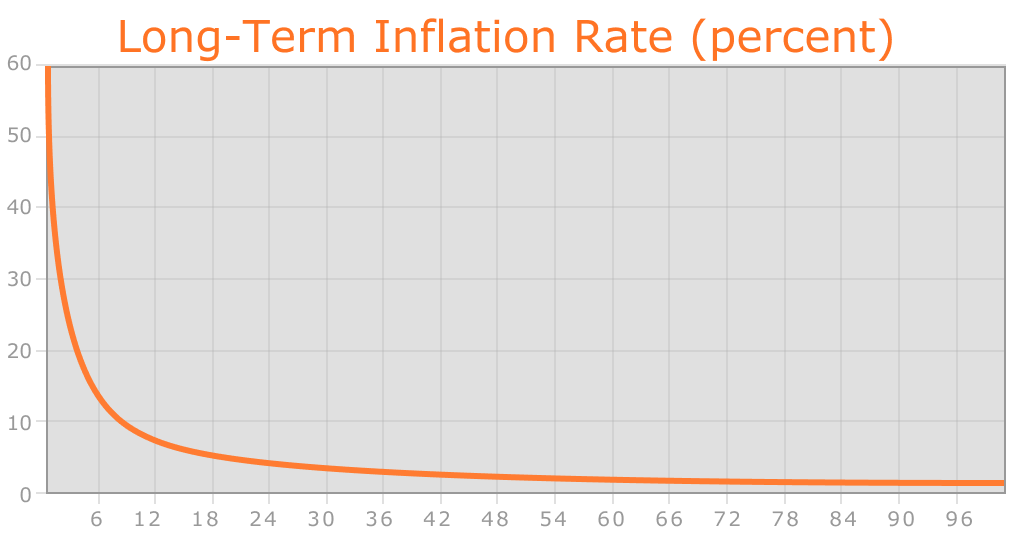
تبقى قابلية التوسع مصدر قلق كبير، حيث يجب على كل عقدة كاملة معالجة كل معاملة للتحقق من الحالة. تُعاني بنى blockchain الحالية لمطابقة إنتاجية المعاملات في الأنظمة المركزية. تشمل الحلول المحتملة تجزئة الحالة، حيث تُعالج عقد مختلفة مجموعات فرعية مختلفة من المعاملات، والانتقال من proof-of-work إلى إجماع proof-of-stake، الذي يمكن أن يُمكّن إنتاج كتل أكثر كفاءة. يمكن للعملاء الخفيفين الذين يستخدمون إثباتات Merkle التحقق من المعاملات دون معالجة جميع الكتل، لكن يجب أن يُعالج شخص ما كل شيء. تمثل تحديات قابلية التوسع هذه مجالات نشطة للبحث والتطوير حاسمة لجدوى Ethereum على المدى الطويل.
Miscellanea And Concerns
Ethereumの修正GHOSTプロトコルの実装には、アンクルの包含と報酬に関する具体的なルールが含まれます。アンクルは現在のブロックの祖先の直接の子でなければならず(2世代から7世代前の間)、有効なブロックヘッダーでなければならず、以前のアンクルとは異なるものでなければならず、現在のブロックの直接の祖先であってはなりません。アンクルブロックは標準的なブロック報酬の87.5%を受け取り、包含するブロックは包含されたアンクル1つあたり追加の3.125%を受け取ります(最大2つのアンクルまで)。このインセンティブ構造により、マイナーは観察した陳腐ブロックを参照するよう促され、ネットワークセキュリティを強化しながら、ネットワーク伝播の一時的な不運を経験したマイナーに報酬を与えます。
手数料システムは「ガス」の概念に基づいており、すべての計算操作には固定のガスコストがあります。例えば、乗算操作は5ガス、SHA256ハッシュは20ガスのコストがかかり、すべてのトランザクションには21,000ガスの基本コストがかかります。ユーザーはガスリミット(消費する意思のある最大ガス)とガスプライス(ガス単位あたり支払うEtherの量)の両方を指定します。このシステムは複数の目的を果たします:すべての計算に対価が支払われることを保証することで無限ループやサービス拒否攻撃を防止し、ユーザーがガスプライスを通じて入札するブロックスペースの市場を作り出し、マイナーが受け入れる最低ガスプライスを設定できるようにしてネットワークリソースを保護します。
スケーラビリティは依然として重大な懸念事項です。すべてのフルノードが状態を検証するためにすべてのトランザクションを処理しなければならないからです。現在のブロックチェーンアーキテクチャは、中央集権的なシステムのトランザクションスループットに匹敵するのに苦労しています。潜在的な解決策には、異なるノードが異なるトランザクションのサブセットを処理するステートシャーディングや、より効率的なブロック生成を可能にするプルーフ・オブ・ワークからプルーフ・オブ・ステークへの移行が含まれます。マークル証明を使用するライトクライアントは、すべてのブロックを処理せずにトランザクションを検証できますが、誰かがすべてを処理しなければなりません。これらのスケーラビリティの課題は、Ethereumの長期的な存続可能性にとって重要な、活発な研究開発分野を表しています。
Conclusion
صُمم بروتوكول Ethereum في الأصل كنسخة مُحسّنة من عملة مشفرة، توفر ميزات متقدمة مثل الضمان على blockchain وحدود السحب والعقود المالية من خلال لغة برمجة عالية التعميم. ومع ذلك، يتجاوز بروتوكول Ethereum مجرد العملة بكثير. البروتوكولات حول تخزين الملفات اللامركزي والحوسبة اللامركزية وأسواق التنبؤ اللامركزية، من بين عشرات المفاهيم الأخرى، لديها القدرة على زيادة كفاءة صناعة الحوسبة بشكل كبير وتوفير دفعة هائلة لبروتوكولات نظير إلى نظير الأخرى بإضافة طبقة اقتصادية لأول مرة.
بدلاً من توفير مجموعة محدودة من العمليات المصممة لحالات استخدام محددة، يوفر Ethereum لغة برمجة Turing-complete تُمكّن المطورين من بناء أي تطبيق يمكنهم تصميمه. تريد اختراع مشتق مالي خاص بك؟ إنشاء عملتك الخاصة؟ إنشاء حكومة على blockchain؟ كل هذا قابل للتنفيذ بسهولة مع نظام Ethereum البرمجي. قوة المنصة لا تكمن في التنبؤ بالتطبيقات التي ستُبنى، بل في توفير البنية التحتية الأساسية التي تجعل بناءها سهلاً.
مفهوم دالة state transition عشوائية كما نُفذ بواسطة بروتوكول Ethereum يوفر منصة ذات إمكانات فريدة. بدلاً من أن يكون بروتوكولاً مغلقاً ذا غرض واحد مخصصاً لتطبيقات محددة في تخزين البيانات أو المقامرة أو المالية، فإن Ethereum مفتوح الأفق بتصميمه، ونعتقد أنه مناسب للغاية لخدمة طبقة أساسية لعدد كبير من البروتوكولات المالية وغير المالية في السنوات القادمة. التطبيقات التي ستُبنى على Ethereum في المستقبل قد تكون تطبيقات لا يمكننا حتى تخيلها اليوم، وتلك الإمكانية المفتوحة تمثل الوعد الحقيقي للمنصة.
Conclusion
Ethereumプロトコルは当初、オンブロックチェーンのエスクロー、引き出し制限、金融コントラクトなどの高度な機能を、高度に汎用化されたプログラミング言語を通じて提供する、暗号通貨のアップグレード版として構想されました。しかし、Ethereumプロトコルは単なる通貨をはるかに超えています。分散型ファイルストレージ、分散型計算、分散型予測市場を含む数十のコンセプトに関するプロトコルは、計算産業の効率を大幅に向上させ、初めて経済レイヤーを追加することで他のピアツーピアプロトコルに大きな後押しを提供する可能性があります。
特定のユースケース向けに設計された限定的な操作セットを提供するのではなく、Ethereumは開発者が設計できるあらゆるアプリケーションを構築できるチューリング完全なプログラミング言語を提供します。独自の金融デリバティブを発明したいですか?独自の通貨を作成したいですか?ブロックチェーン上に政府を設立したいですか?これらはすべてEthereumのスクリプトシステムで簡単に実装可能です。プラットフォームの力は、どのようなアプリケーションが構築されるかを予測することにあるのではなく、それらの構築を容易にする基盤インフラストラクチャを提供することにあります。
Ethereumプロトコルによって実装された任意の状態遷移関数の概念は、独自の可能性を持つプラットフォームを提供します。データストレージ、ギャンブル、または金融における特定のアプリケーションを意図した閉鎖的で単一目的のプロトコルであるのではなく、Ethereumは設計上オープンエンドです。そして我々は、今後数年間にわたって、多数の金融および非金融プロトコルの基盤レイヤーとして機能するのに極めて適していると信じています。将来Ethereum上に構築されるアプリケーションは、今日の我々には想像もできないものかもしれません。そのオープンエンドの可能性こそが、このプラットフォームの真の約束を表しています。
References and Further Reading
تستند ورقة Ethereum البيضاء إلى أعمال سابقة واسعة في أبحاث العملات المشفرة والأنظمة الموزعة. يُوصف بروتوكول Bitcoin الأساسي في ورقة Satoshi Nakamoto الأصلية لعام 2008 "Bitcoin: A Peer-to-Peer Electronic Cash System"، التي قدمت مفهوم العملة الرقمية القائمة على blockchain. تشمل المحاولات المبكرة لتوسيع وظائف Bitcoin نظام Namecoin، وهو نظام تسجيل أسماء لامركزي يُظهر تطبيقات blockchain خارج نطاق العملة، رغم تقييده بقدرات Bitcoin البرمجية المحدودة.
اقترحت ورقة Colored coins البيضاء طريقة لتمثيل أصول بديلة على blockchain الخاص بـ Bitcoin عن طريق "تلوين" عملات bitcoin محددة لتمثيل أصول أخرى، بينما حاول Mastercoin إنشاء طبقة بروتوكول فوق Bitcoin لأدوات مالية أكثر تعقيداً. أبرز كلاهما قيود البناء على Bitcoin وحفّز الحاجة إلى منصة أكثر مرونة. وفّر مفهوم الشركات اللامركزية المستقلة، المُستكشف في Bitcoin Magazine، أسساً نظرية للحوكمة التنظيمية من خلال العقود الذكية.
تشمل المكونات التقنية الرئيسية التحقق المبسط من الدفع (SPV) للعملاء الخفيفين، وأشجار Merkle للتحقق الفعال من البيانات، وأشجار Patricia لتمثيل حالة Ethereum. يُعالج بروتوكول GHOST (الشجرة الفرعية الأثقل المرصودة بجشع)، المُوصف في ورقة تشفير عام 2013، مشاكل الأمان الناشئة عن أوقات الكتل السريعة ويُشكل أساس آلية إجماع Ethereum. تمثل هذه المراجع الأسس الفكرية التي بُني عليها Ethereum، حيث تجمع رؤى من العملات المشفرة والأنظمة الموزعة والتشفير ونظرية الألعاب لإنشاء منصة blockchain عامة الغرض.
References and Further Reading
Ethereumのホワイトペーパーは、暗号通貨および分散システム研究における広範な先行研究の上に構築されています。基盤となるBitcoinプロトコルは、Satoshi Nakamotoの2008年の原論文「Bitcoin: A Peer-to-Peer Electronic Cash System」に記述されており、ブロックチェーンベースのデジタル通貨の概念を導入しました。Bitcoinの機能を拡張する初期の試みには、通貨を超えたブロックチェーンアプリケーションを実証した分散型名前登録システムであるNamecoinが含まれますが、Bitcoinの制限されたスクリプト機能により限界がありました。
カラードコインのホワイトペーパーは、特定のbitcoinに「色付け」することでBitcoinブロックチェーン上で代替資産を表現する方法を提案し、Mastercoinはより複雑な金融商品のためにBitcoin上にプロトコルレイヤーを作成しようとしました。両者はBitcoin上に構築することの限界を浮き彫りにし、より柔軟なプラットフォームの必要性を動機づけました。Bitcoin Magazineで探求された分散型自律企業の概念は、スマートコントラクトによる組織ガバナンスの理論的基盤を提供しました。
主要な技術的コンポーネントには、ライトクライアント向けの簡易支払い検証(SPV)、効率的なデータ検証のためのマークル木、Ethereumの状態表現のためのパトリシアトライが含まれます。2013年の暗号学論文に記述されたGHOST(Greedy Heaviest Observed Subtree)プロトコルは、高速なブロック時間から生じるセキュリティ問題に対処し、Ethereumのコンセンサスメカニズムの基盤を形成しています。これらの参考文献は、Ethereumが構築された知的基盤を表しており、暗号通貨、分散システム、暗号学、ゲーム理論からの洞察を組み合わせて、汎用ブロックチェーンプラットフォームを作成しています。