
以太坊:下一代智能合约和去中心化应用平台
Abstract
Ethereum एक अगली पीढ़ी का cryptocurrency और विकेन्द्रीकृत एप्लिकेशन प्लेटफॉर्म है जो एक अंतर्निहित Turing-complete प्रोग्रामिंग भाषा के साथ एक blockchain प्रस्तुत करता है। यह किसी को भी smart contracts और विकेन्द्रीकृत एप्लिकेशन लिखने की अनुमति देता है जहाँ वे स्वामित्व, लेनदेन प्रारूपों और state transition functions के लिए अपने मनमाने नियम बना सकते हैं।
Ethereum का मूलभूत नवाचार Bitcoin द्वारा अग्रणी blockchain तकनीक को एक सामान्य-उद्देश्य प्रोग्रामिंग वातावरण के साथ जोड़ना है। जबकि Bitcoin एक खाते से दूसरे खाते में मुद्रा स्थानांतरित करने के लिए एक सरल state transition system प्रदान करता है, Ethereum एक ऐसा प्लेटफॉर्म प्रदान करता है जहाँ डेवलपर्स वैकल्पिक मुद्राओं और वित्तीय उपकरणों से लेकर डोमेन पंजीकरण प्रणालियों और विकेन्द्रीकृत संगठनों तक, किसी भी प्रकार का विकेन्द्रीकृत एप्लिकेशन बना सकते हैं।
Ethereum यह मूलतः अंतिम अमूर्त आधारभूत परत बनाकर प्राप्त करता है: एक अंतर्निहित Turing-complete प्रोग्रामिंग भाषा वाला blockchain, जो किसी को भी smart contracts और विकेन्द्रीकृत एप्लिकेशन लिखने की अनुमति देता है जहाँ वे स्वामित्व, लेनदेन प्रारूपों और state transition functions के लिए अपने मनमाने नियम बना सकते हैं। Namecoin का एक न्यूनतम संस्करण कोड की दो पंक्तियों में लिखा जा सकता है, और मुद्राओं और प्रतिष्ठा प्रणालियों जैसे अन्य प्रोटोकॉल बीस से कम पंक्तियों में बनाए जा सकते हैं।
Abstract
以太坊是下一代加密货币和去中心化应用平台,它引入了一种内置图灵完备编程语言的区块链。这使得任何人都可以编写智能合约和去中心化应用,在其中创建自己的任意所有权规则、交易格式和状态转换函数。
以太坊的根本创新在于将比特币首创的区块链技术与通用编程环境相结合。比特币提供了一个简单的状态转换系统,用于将货币从一个账户转移到另一个账户,而以太坊则提供了一个平台,开发者可以在其上构建任何他们能想象的去中心化应用——从替代货币和金融工具到域名注册系统和去中心化组织。
以太坊通过构建本质上是终极抽象基础层来实现这一目标:一个内置图灵完备编程语言的区块链,允许任何人编写智能合约和去中心化应用,在其中创建自己的任意所有权规则、交易格式和状态转换函数。Namecoin的简化版本可以用两行代码编写,而其他协议如货币和信誉系统可以在二十行以内构建完成。
Introduction and Existing Concepts
विकेंद्रीकृत डिजिटल मुद्रा की अवधारणा, साथ ही संपत्ति रजिस्ट्री जैसे वैकल्पिक अनुप्रयोग, दशकों से अस्तित्व में रहे हैं। 1980 और 1990 के दशक के अनाम ई-कैश प्रोटोकॉल, जो मुख्य रूप से Chaumian blinding नामक एक क्रिप्टोग्राफिक प्रिमिटिव पर निर्भर थे, उच्च स्तर की गोपनीयता वाली मुद्रा प्रदान करते थे, लेकिन ये प्रोटोकॉल एक केंद्रीकृत मध्यस्थ पर निर्भरता के कारण लोकप्रिय नहीं हो पाए। 1998 में, Wei Dai की b-money कम्प्यूटेशनल पहेलियों को हल करके धन बनाने और विकेंद्रीकृत सहमति के विचार को पेश करने वाला पहला प्रस्ताव बना, लेकिन यह प्रस्ताव इस बारे में विवरण में कमी रखता था कि विकेंद्रीकृत सहमति वास्तव में कैसे लागू की जा सकती है।
2009 में, Satoshi Nakamoto द्वारा पहली बार एक विकेंद्रीकृत मुद्रा को व्यवहार में लागू किया गया, जिसमें public key cryptography के माध्यम से स्वामित्व प्रबंधन के लिए स्थापित प्रिमिटिव को "proof of work" नामक एक सहमति एल्गोरिदम के साथ जोड़ा गया। Proof of work के पीछे की प्रणाली इस क्षेत्र में एक सफलता थी क्योंकि इसने एक साथ दो समस्याओं को हल किया। पहला, इसने एक सरल और मध्यम रूप से प्रभावी सहमति एल्गोरिदम प्रदान किया, जो नेटवर्क में नोड्स को Bitcoin लेजर की स्थिति के अपडेट पर सामूहिक रूप से सहमत होने की अनुमति देता था। दूसरा, इसने सहमति प्रक्रिया में मुक्त प्रवेश की अनुमति देने का एक तंत्र प्रदान किया, यह तय करने की राजनीतिक समस्या को हल करते हुए कि सहमति को कौन प्रभावित करता है, साथ ही sybil attacks को रोकते हुए।
Bitcoin blockchain अपने संचालन के वर्षों में उल्लेखनीय रूप से मजबूत साबित हुआ है, लेकिन यह स्वाभाविक रूप से सीमित है। Bitcoin की स्क्रिप्टिंग भाषा जानबूझकर प्रतिबंधात्मक और गैर-Turing-complete होने के लिए डिज़ाइन की गई है, जिसमें लूप और कई अन्य सुविधाओं की कमी है जो अधिक जटिल अनुप्रयोग बनाने के लिए आवश्यक होंगी। यह सीमा अनंत लूप और अन्य प्रकार के कम्प्यूटेशनल हमलों को रोकने के लिए मौजूद है, लेकिन यह Bitcoin के ऊपर क्या बनाया जा सकता है, इसे गंभीर रूप से प्रतिबंधित करती है।
पिछले पांच वर्षों में, Bitcoin की कार्यक्षमता का विस्तार करने के कई प्रयास हुए हैं। Colored coins ने वैकल्पिक संपत्तियों के स्वामित्व को ट्रैक करने के लिए Bitcoin blockchain का उपयोग करने की कोशिश की, Namecoin ने एक विकेंद्रीकृत नाम पंजीकरण डेटाबेस बनाने का प्रयास किया, और विभिन्न metacoin प्रोटोकॉल ने Bitcoin के ऊपर अतिरिक्त परतें बनाने का लक्ष्य रखा। हालांकि इन दृष्टिकोणों ने वादा दिखाया, वे अंततः Bitcoin की स्क्रिप्टिंग क्षमताओं और स्क्रिप्ट के भीतर से blockchain डेटा तक पहुंचने में असमर्थता से सीमित थे।
Ethereum जो प्रदान करना चाहता है वह एक अंतर्निहित पूर्ण रूप से विकसित Turing-complete प्रोग्रामिंग भाषा वाला blockchain है जिसका उपयोग "contracts" बनाने के लिए किया जा सकता है जो मनमाने state transition functions को एन्कोड कर सकते हैं, जिससे उपयोगकर्ता ऊपर वर्णित किसी भी प्रणाली को, साथ ही कई अन्य जिनकी हमने अभी तक कल्पना नहीं की है, बस कुछ पंक्तियों के कोड में तर्क लिखकर बना सकते हैं।
Introduction and Existing Concepts
去中心化数字货币的概念以及诸如财产登记等替代应用已经存在了数十年。20世纪80年代和90年代的匿名电子现金协议主要依赖一种被称为乔姆盲签名的密码学原语,提供了高度隐私的货币,但这些协议由于依赖中心化中介机构而未能广泛流行。1998年,戴维的b-money成为第一个引入通过解决计算难题来创造货币以及去中心化共识理念的提案,但该提案在如何实际实现去中心化共识方面缺乏细节。
2009年,中本聪首次在实践中实现了去中心化货币,他将通过公钥密码学管理所有权的成熟原语与一种用于追踪币的所有权的共识算法——即"工作量证明"——结合在一起。工作量证明背后的机制是该领域的一个突破,因为它同时解决了两个问题。首先,它提供了一种简单且适度有效的共识算法,使网络中的节点能够集体就比特币账本状态的一组规范更新达成一致。其次,它提供了一种允许自由参与共识过程的机制,解决了由谁来影响共识的政治问题,同时防止了女巫攻击。
比特币区块链在多年运行中已证明了其卓越的稳健性,但它本质上是有局限的。比特币的脚本语言被有意设计为限制性的、非图灵完备的,缺少循环和许多其他构建更复杂应用所必需的功能。这种限制的存在是为了防止无限循环和其他形式的计算攻击,但它严重限制了可以在比特币之上构建的内容。
在过去五年中,已经有许多尝试来扩展比特币的功能。彩色币试图利用比特币区块链来追踪替代资产的所有权,域名币试图创建一个去中心化的域名注册数据库,各种元币协议旨在在比特币之上构建额外的层级。虽然这些方法展现了前景,但最终都受到比特币脚本能力的限制以及脚本内无法访问区块链数据的制约。
以太坊的目标是提供一个内置完整图灵完备编程语言的区块链,该语言可用于创建"合约",对任意状态转换函数进行编码,使用户只需用几行代码编写逻辑,就能创建上述任何系统以及许多我们尚未想象到的系统。
Bitcoin As A State Transition System
तकनीकी दृष्टिकोण से, Bitcoin जैसी cryptocurrency का लेजर एक state transition system के रूप में सोचा जा सकता है, जहां एक "state" होता है जिसमें सभी मौजूदा bitcoins की स्वामित्व स्थिति होती है और एक "state transition function" होता है जो एक state और एक transaction लेता है और एक नया state आउटपुट करता है जो परिणाम है। एक मानक बैंकिंग प्रणाली में, उदाहरण के लिए, state एक बैलेंस शीट है, transaction A से B को \(X स्थानांतरित करने का अनुरोध है, और state transition function A के खाते में मूल्य को \)X से कम करता है और B के खाते में मूल्य को \(X से बढ़ाता है। यदि A के खाते में पहले से \)X से कम है, तो state transition function एक त्रुटि लौटाता है।
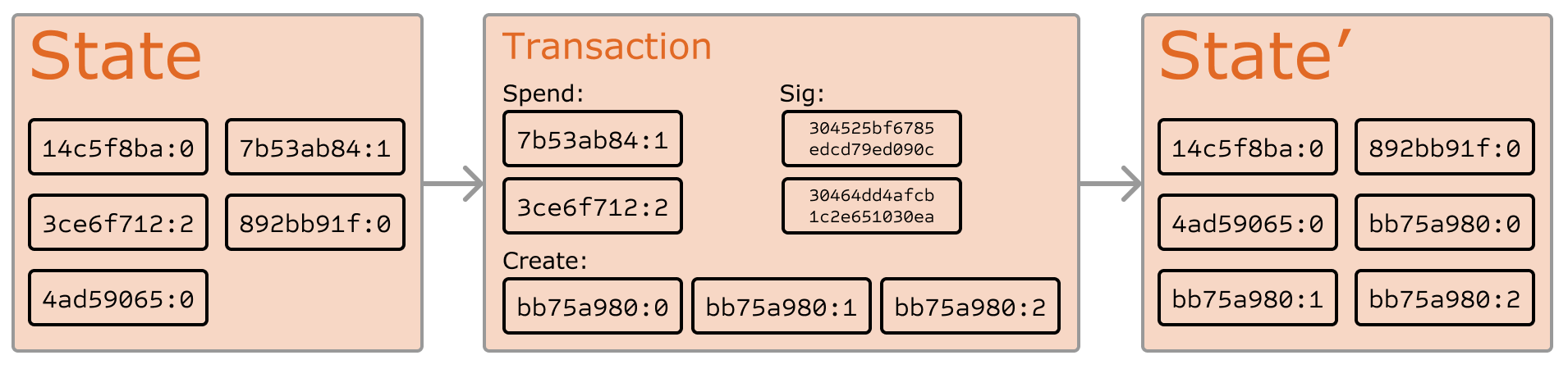
Bitcoin में "state" सभी coins (तकनीकी रूप से, "unspent transaction outputs" या UTXO) का संग्रह है जो बनाए गए हैं और अभी तक खर्च नहीं किए गए हैं, जिसमें प्रत्येक UTXO का एक मूल्यवर्ग और एक स्वामी होता है (जो एक 20-byte address द्वारा परिभाषित होता है जो अनिवार्य रूप से एक cryptographic public key है)। एक transaction में एक या अधिक inputs होते हैं, जिसमें प्रत्येक input में एक मौजूदा UTXO का संदर्भ और स्वामी के address से जुड़ी private key द्वारा उत्पादित एक cryptographic signature होती है, और एक या अधिक outputs होते हैं, जिसमें प्रत्येक output में state में जोड़ा जाने वाला एक नया UTXO होता है।
State transition function APPLY(S,TX) - S' को मोटे तौर पर निम्नानुसार परिभाषित किया जा सकता है:
- TX में प्रत्येक input के लिए, यदि संदर्भित UTXO S में नहीं है, तो त्रुटि लौटाएं।
- यदि प्रदान की गई signature UTXO के स्वामी से मेल नहीं खाती, तो त्रुटि लौटाएं।
- यदि सभी input UTXO के मूल्यवर्गों का योग सभी output UTXO के मूल्यवर्गों के योग से कम है, तो त्रुटि लौटाएं।
- सभी input UTXO हटाए गए और सभी output UTXO जोड़े गए S लौटाएं।
पहले चरण का पहला भाग transaction भेजने वालों को उन coins को खर्च करने से रोकता है जो मौजूद नहीं हैं, पहले चरण का दूसरा भाग transaction भेजने वालों को अन्य लोगों के coins खर्च करने से रोकता है, और दूसरा चरण मूल्य के संरक्षण को लागू करता है। भुगतान के लिए इसका उपयोग करने के लिए, प्रोटोकॉल इस प्रकार है: मान लीजिए Alice Bob को 11.7 BTC भेजना चाहती है। सबसे पहले, Alice उपलब्ध UTXO का एक सेट खोजेगी जो वह रखती है जो कम से कम 11.7 BTC का कुल योग है। वास्तव में, Alice को ठीक 11.7 BTC नहीं मिल पाएगा; मान लें कि सबसे छोटा जो वह प्राप्त कर सकती है वह 6+4+2=12 है। फिर वह उन तीन inputs और दो outputs के साथ एक transaction बनाती है। पहला output 11.7 BTC होगा जिसका स्वामी Bob का address होगा, और दूसरा output शेष 0.3 BTC "change" होगा, जिसका स्वामी स्वयं Alice होगी।
Bitcoin As A State Transition System
从技术角度来看,像比特币这样的加密货币的账本可以被视为一个状态转换系统,其中有一个由所有现有比特币的所有权状态组成的"状态",以及一个接受状态和交易并输出新状态的"状态转换函数"。在标准银行系统中,例如,状态是一张资产负债表,交易是将\(X从A转移到B的请求,状态转换函数将A账户中的值减少\)X,并将B账户中的值增加\(X。如果A的账户余额一开始就少于\)X,状态转换函数将返回错误。
比特币中的"状态"是所有已被铸造且尚未花费的币的集合(技术上称为"未花费的交易输出"或UTXO),每个UTXO都有一个面额和一个所有者(由一个20字节的地址定义,本质上是一个密码学公钥)。一笔交易包含一个或多个输入,每个输入包含对一个现有UTXO的引用和由所有者地址关联的私钥产生的密码学签名,以及一个或多个输出,每个输出包含一个要添加到状态中的新UTXO。
状态转换函数APPLY(S,TX) - S'可以大致定义如下:
- 对于TX中的每个输入,如果引用的UTXO不在S中,返回错误。
- 如果提供的签名与UTXO的所有者不匹配,返回错误。
- 如果所有输入UTXO的面额之和小于所有输出UTXO的面额之和,返回错误。
- 返回移除所有输入UTXO并添加所有输出UTXO后的S。
第一步的前半部分防止交易发送者花费不存在的币,第一步的后半部分防止交易发送者花费他人的币,第二步确保价值守恒。为了使用此方法进行支付,协议如下:假设Alice想要向Bob发送11.7 BTC。首先,Alice将寻找一组她拥有的、总计至少为11.7 BTC的可用UTXO。实际上,Alice不太可能恰好得到11.7 BTC;假设她能得到的最小组合是6+4+2=12。然后她创建一笔有三个输入和两个输出的交易。第一个输出将是11.7 BTC,所有者为Bob的地址,第二个输出将是剩余的0.3 BTC"找零",所有者为Alice自己。
Mining
यदि हमारे पास एक विश्वसनीय केंद्रीकृत सेवा तक पहुंच होती, तो इस प्रणाली को लागू करना सरल होता; इसे ठीक वैसे ही कोड किया जा सकता था जैसा वर्णित है, state का ट्रैक रखने के लिए एक केंद्रीकृत सर्वर की हार्ड ड्राइव का उपयोग करते हुए। हालांकि, Bitcoin के साथ हम एक विकेंद्रीकृत मुद्रा प्रणाली बनाने की कोशिश कर रहे हैं, इसलिए हमें state transaction system को एक consensus system के साथ जोड़ना होगा ताकि यह सुनिश्चित किया जा सके कि हर कोई transactions के क्रम पर सहमत हो। Bitcoin की विकेंद्रीकृत consensus प्रक्रिया के लिए नेटवर्क में नोड्स को लगातार transactions के पैकेज बनाने का प्रयास करने की आवश्यकता होती है जिन्हें "blocks" कहा जाता है। नेटवर्क का उद्देश्य लगभग हर दस मिनट में एक block का उत्पादन करना है, जिसमें प्रत्येक block में एक timestamp, एक nonce, पिछले block का संदर्भ (अर्थात hash), और पिछले block के बाद से हुए सभी transactions की सूची होती है।
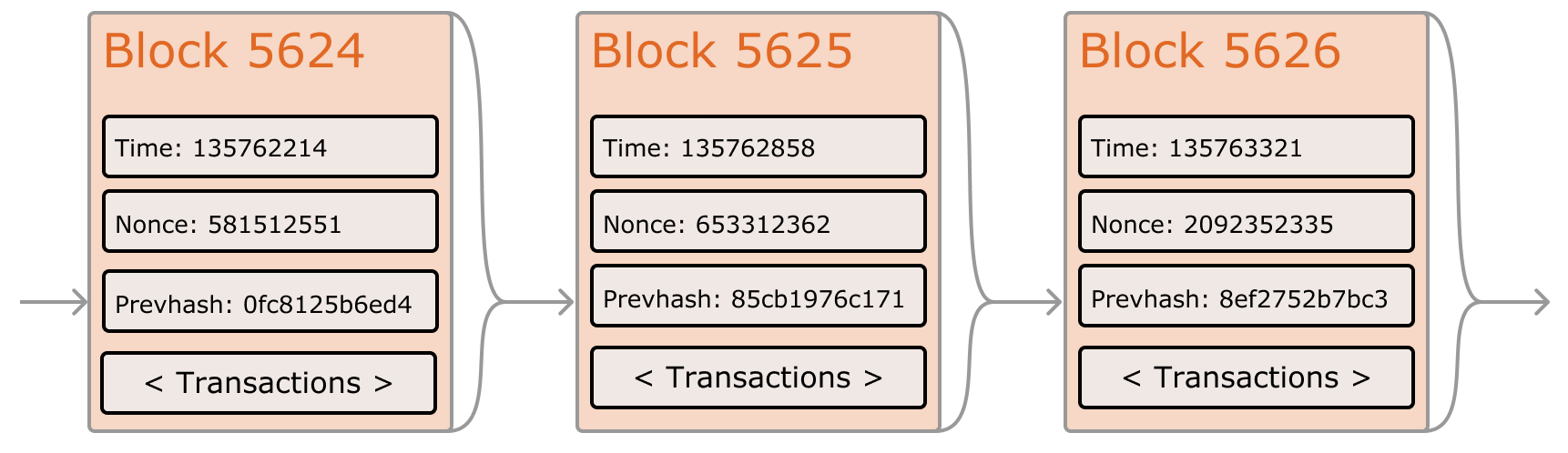
समय के साथ, यह एक स्थायी, लगातार बढ़ता हुआ "blockchain" बनाता है जो Bitcoin लेजर की नवीनतम स्थिति का प्रतिनिधित्व करने के लिए लगातार अपडेट होता रहता है। यह जांचने का एल्गोरिदम कि क्या कोई block वैध है, इस प्रतिमान में निम्नानुसार है:
- जांचें कि block द्वारा संदर्भित पिछला block मौजूद है और वैध है।
- जांचें कि block का timestamp पिछले block के timestamp से अधिक है और भविष्य में 2 घंटे से कम है।
- जांचें कि block पर proof of work वैध है।
- मान लें S पिछले block के अंत में state है।
- मान लें TX block की transaction सूची है जिसमें n transactions हैं। 0...n-1 में सभी i के लिए, S = APPLY(S,TX[i]) सेट करें। यदि कोई भी अनुप्रयोग त्रुटि लौटाता है, बाहर निकलें और false लौटाएं।
- true लौटाएं, और S को इस block के अंत में state के रूप में पंजीकृत करें।
अनिवार्य रूप से, block में प्रत्येक transaction को एक वैध state transition प्रदान करना चाहिए उस state से जो transaction निष्पादित होने से पहले canonical state था किसी नए state तक। ध्यान दें कि state किसी भी तरह से block में एन्कोड नहीं है; यह पूरी तरह से एक अमूर्तता है जिसे validating node द्वारा याद रखा जाता है और किसी भी block के लिए केवल genesis state से शुरू करके और प्रत्येक block में प्रत्येक transaction को क्रमिक रूप से लागू करके (सुरक्षित रूप से) गणना की जा सकती है।
Miner को उनके कम्प्यूटेशनल कार्य के लिए नव-निर्मित bitcoins और transaction fees के साथ पुरस्कृत किया जाता है। Mining प्रक्रिया इस प्रकार काम करती है: miners block header लेते हैं और अलग-अलग nonce मूल्यों के साथ बार-बार hash करते हैं जब तक उन्हें एक hash नहीं मिल जाता जो एक निश्चित difficulty target से नीचे हो। जब कोई miner ऐसा hash पाता है, तो वे block को नेटवर्क में प्रसारित करते हैं, और अन्य नोड्स सत्यापित करते हैं कि hash वैध है और block में सभी transactions वैध हैं। Difficulty target को प्रोटोकॉल द्वारा प्रत्येक 2016 blocks (लगभग दो सप्ताह) में स्वचालित रूप से समायोजित किया जाता है ताकि blocks लगभग स्थिर दर पर उत्पादित हों।
ध्यान दें कि दीर्घकाल में, blockchain की सुरक्षा miners के ईमानदारी से व्यवहार करने के वित्तीय प्रोत्साहन पर निर्भर करती है। यदि कोई हमलावर नेटवर्क की mining शक्ति के 50% से अधिक को नियंत्रित करता है, तो वे संभावित रूप से एक वैकल्पिक blockchain बनाकर "51% attack" कर सकते हैं जो ईमानदार chain से तेजी से बढ़ती है। हालांकि, ऐसे हमले के लिए भारी कम्प्यूटेशनल संसाधनों की आवश्यकता होगी और संभवतः हमलावर के mining पुरस्कार बेकार हो जाएंगे क्योंकि नेटवर्क blockchain की अखंडता में विश्वास खो देगा।
Mining
如果我们能够获得一个可信的中心化服务,这个系统将很容易实现;它可以完全按照描述进行编码,使用中心化服务器的硬盘来跟踪状态。然而,对于比特币,我们试图构建一个去中心化的货币系统,因此我们需要将状态转换系统与共识系统相结合,以确保每个人都对交易顺序达成一致。比特币的去中心化共识过程要求网络中的节点不断尝试生产被称为"区块"的交易包。网络预期大约每十分钟产生一个区块,每个区块包含一个时间戳、一个随机数、对前一个区块的引用(即哈希值)以及自前一个区块以来发生的所有交易的列表。
随着时间的推移,这创建了一个持久的、不断增长的"区块链",不断更新以代表比特币账本的最新状态。在此范式中,检查一个区块是否有效的算法如下:
- 检查该区块引用的前一个区块是否存在且有效。
- 检查该区块的时间戳是否大于前一个区块的时间戳,且不超过未来2小时。
- 检查该区块上的工作量证明是否有效。
- 令S为前一个区块末尾的状态。
- 假设TX是该区块包含n笔交易的交易列表。对于所有i在0...n-1范围内,设S = APPLY(S,TX[i])。如果任何应用返回错误,退出并返回false。
- 返回true,并将S注册为该区块末尾的状态。
本质上,区块中的每笔交易都必须提供一个有效的状态转换,从交易执行前的规范状态转换到某个新状态。注意,状态并未以任何方式编码在区块中;它纯粹是由验证节点记忆的抽象概念,只能通过从创世状态开始并顺序应用每个区块中的每笔交易来(安全地)计算任何区块的状态。
矿工通过新创建的比特币和交易费获得计算工作的奖励。挖矿过程如下:矿工获取区块头并使用不同的随机数值反复对其进行哈希运算,直到找到一个低于特定难度目标的哈希值。当矿工找到这样的哈希值时,他们将区块广播到网络,其他节点验证哈希值有效且区块中的所有交易有效。难度目标由协议每2016个区块(大约两周)自动调整,以确保区块以大致恒定的速率产生。
请注意,从长远来看,区块链的安全性取决于矿工是否有经济激励来诚实行事。如果攻击者控制了网络超过50%的挖矿算力,他们就有可能通过创建一条比诚实链增长更快的替代区块链来执行"51%攻击"。然而,这样的攻击需要巨大的计算资源,并且随着网络对区块链完整性失去信心,攻击者的挖矿奖励可能变得毫无价值。
Merkle Trees
Merkle trees एक मौलिक डेटा संरचना है जो Bitcoin blocks में transaction समावेश के कुशल और सुरक्षित सत्यापन को सक्षम करने के लिए उपयोग की जाती है। Merkle tree hashes का एक बाइनरी ट्री है जहां leaf nodes में व्यक्तिगत transactions के hash होते हैं, और प्रत्येक interior node में उसके दो बच्चों का hash होता है, जो पुनरावर्ती रूप से एक एकल root hash तक बनता है जो block header में संग्रहीत होता है। यह श्रेणीबद्ध संरचना किसी को भी यह सत्यापित करने की अनुमति देती है कि एक विशिष्ट transaction एक block में शामिल है, केवल Merkle branch डाउनलोड करके—transaction से root तक hashes की श्रृंखला—block में सभी transactions डाउनलोड करने के बजाय।
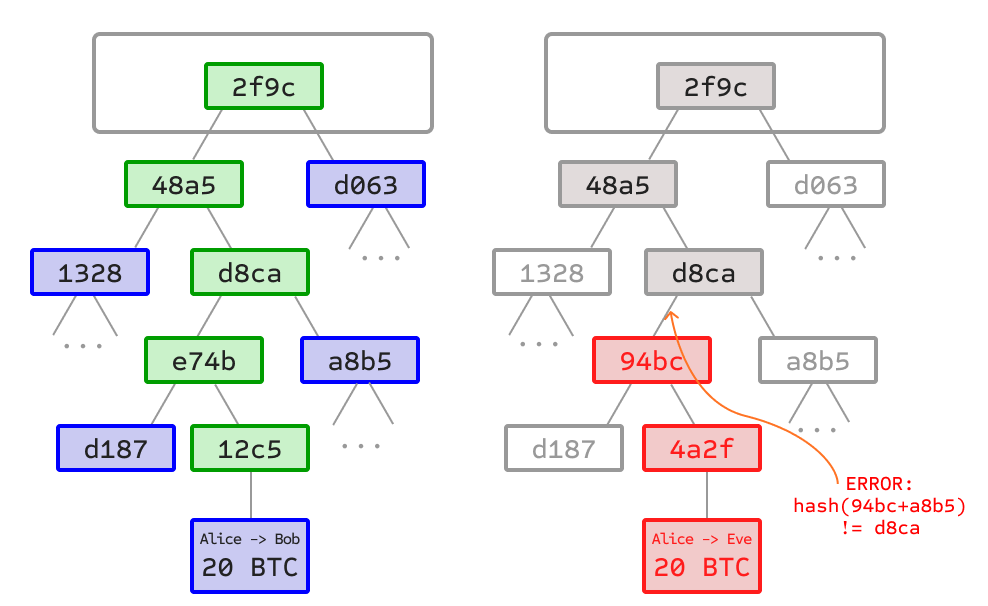
दक्षता लाभ पर्याप्त हैं: जबकि एक पूर्ण Bitcoin node को संपूर्ण blockchain (2013 तक लगभग 15GB) संग्रहीत करना चाहिए, एक simplified payment verification (SPV) node को केवल Merkle roots वाले block headers डाउनलोड करने की आवश्यकता होती है, जिसके लिए केवल 4MB डेटा की आवश्यकता होती है। किसी transaction को सत्यापित करने के लिए, एक SPV node पूर्ण nodes से Merkle branch का अनुरोध करता है, जिसके लिए केवल O(log n) डेटा की आवश्यकता होती है जहां n block में transactions की संख्या है। यह logarithmic scaling मोबाइल उपकरणों और कम-संसाधन वातावरण पर लाइटवेट क्लाइंट चलाना संभव बनाती है।
Bitcoin का Merkle trees का उपयोग एक प्रमुख सिद्धांत को प्रदर्शित करता है: cryptographic संरचनाएं एक विकेंद्रीकृत नेटवर्क में भाग लेने के लिए विश्वास और संसाधन आवश्यकताओं को नाटकीय रूप से कम कर सकती हैं। यही सिद्धांत Ethereum के डिज़ाइन का आधार है, जहां Merkle trees का उपयोग न केवल transactions के लिए बल्कि state और receipt storage के लिए भी किया जाता है, जो और भी अधिक परिष्कृत light client प्रोटोकॉल को सक्षम करता है।
Merkle Trees
默克尔树是比特币区块中使用的一种基础数据结构,用于实现高效和安全的交易包含验证。默克尔树是一种哈希二叉树,其中叶节点包含各个交易的哈希值,每个内部节点包含其两个子节点的哈希值,递归地向上构建到存储在区块头中的单个根哈希值。这种层次结构允许任何人通过只下载默克尔分支——从交易到根的哈希链——而不是下载区块中的所有交易,来验证特定交易是否包含在某个区块中。
效率提升是显著的:虽然一个完整的比特币节点必须存储整个区块链(截至2013年约15GB),简化支付验证(SPV)节点只需下载包含默克尔根的区块头,仅需要4MB的数据。为了验证一笔交易,SPV节点从完整节点请求默克尔分支,这只需要O(log n)的数据,其中n是区块中的交易数量。这种对数级的扩展性使得在移动设备和资源受限的环境中运行轻量级客户端成为可能。
比特币对默克尔树的使用展示了一个关键原则:密码学结构可以大幅降低参与去中心化网络的信任和资源要求。同样的原则也是以太坊设计的基础,在以太坊中,默克尔树不仅用于交易,还用于状态和收据存储,从而实现更复杂的轻客户端协议。
Alternative Blockchain Applications
Bitcoin के blockchain की सफलता ने अवधारणा को सरल मुद्रा से परे विस्तारित करने के कई प्रयासों को प्रेरित किया। Namecoin, 2010 में लॉन्च किया गया, सबसे शुरुआती उदाहरणों में से एक था—एक blockchain पर निर्मित विकेंद्रीकृत नाम पंजीकरण डेटाबेस, जो उपयोगकर्ताओं को एक वितरित namespace में नाम पंजीकृत करने की अनुमति देता था जिसे कोई केंद्रीय प्राधिकरण सेंसर या रद्द नहीं कर सकता था। Colored coins Bitcoin blockchain पर वैकल्पिक संपत्तियों का प्रतिनिधित्व करने के एक तरीके के रूप में उभरे, विशिष्ट transaction outputs को "टैग" करके वास्तविक-दुनिया की संपत्तियों, कंपनी शेयरों, या अन्य cryptocurrencies के स्वामित्व का प्रतिनिधित्व करते हुए। Metacoins और meta-protocols जैसे Mastercoin (बाद में Omni) ने Bitcoin transactions में अतिरिक्त डेटा एन्कोड करके और उसके ऊपर अलग प्रोटोकॉल नियम बनाकर Bitcoin के ऊपर अतिरिक्त कार्यक्षमता जोड़ी।
हालांकि, ये सभी दृष्टिकोण Bitcoin की वास्तुकला द्वारा लगाई गई मौलिक सीमाओं से ग्रस्त थे। Bitcoin स्क्रिप्टिंग भाषा जानबूझकर प्रतिबंधित है—यह blockchain state तक नहीं पहुंच सकती, लूप और जटिल control flow की कमी है, और transaction मूल्यों में सीमित introspection प्रदान करती है। परिष्कृत अनुप्रयोग बनाने के लिए अजीब समाधानों की आवश्यकता होती थी: metadata को transaction fields में एन्कोड करना जो उस उद्देश्य के लिए कभी नहीं बने थे, जटिल तर्क के लिए off-chain infrastructure पर निर्भर रहना, या प्रोटोकॉल क्या कर सकता है इसकी गंभीर सीमाओं को स्वीकार करना।
इन बाधाओं ने एक अधिक सामान्य-उद्देश्य blockchain प्लेटफॉर्म की खोज को प्रेरित किया। Bitcoin की सीमित नींव के ऊपर एक और विशेष-उद्देश्य प्रोटोकॉल बनाने के बजाय, Ethereum एक अलग दृष्टिकोण अपनाता है: एक अंतर्निहित Turing-complete प्रोग्रामिंग भाषा वाला blockchain प्रदान करना, जो किसी को भी smart contracts और विकेंद्रीकृत अनुप्रयोग लिखने की अनुमति देता है जिसमें स्वामित्व, transaction प्रारूपों, और state transition functions के लिए मनमाने नियम हों।
Alternative Blockchain Applications
比特币区块链的成功激发了许多将该概念扩展到简单货币之外的尝试。域名币(Namecoin)于2010年推出,是最早的例子之一——一个建立在区块链上的去中心化域名注册数据库,允许用户在分布式命名空间中注册域名,且没有中央权威机构可以审查或撤销。彩色币作为一种在比特币区块链上表示替代资产的方式出现,通过"标记"特定的交易输出来代表现实世界资产、公司股份或其他加密货币的所有权。万事达币(Mastercoin,后来的Omni)等元币和元协议通过在比特币交易中编码额外数据并在其上构建独立的协议规则,在比特币之上层叠了额外的功能。
然而,所有这些方法都受到比特币架构强加的根本性限制。比特币脚本语言被有意限制——它无法访问区块链状态,缺少循环和复杂的控制流,并且对交易值的内省能力有限。构建复杂的应用需要笨拙的变通方法:在从未为此目的设计的交易字段中编码元数据,依赖链下基础设施来处理复杂逻辑,或者接受协议能力上的严重限制。
这些约束推动了对更通用区块链平台的探索。以太坊不是在比特币有限的基础上再构建另一个特殊用途的协议,而是采取了不同的方法:提供一个内置图灵完备编程语言的区块链,允许任何人编写具有任意所有权规则、交易格式和状态转换函数的智能合约和去中心化应用。
Scripting
Bitcoin Script, Bitcoin transactions के लिए खर्च शर्तों को परिभाषित करने के लिए उपयोग की जाने वाली भाषा, जानबूझकर गंभीर सीमाओं के साथ डिज़ाइन की गई है। यह Turing-complete नहीं है—विशेष रूप से, इसमें लूप और जटिल control flow संरचनाओं की कमी है। भाषा एक सरल stack-based execution environment के रूप में काम करती है जहां ऑपरेशन मूल्यों को push और pop करते हैं, cryptographic शर्तों का मूल्यांकन करते हैं, और अंततः यह निर्धारित करने के लिए true या false लौटाते हैं कि कोई transaction वैध है या नहीं। हालांकि यह सरलता सुरक्षा लाभ प्रदान करती है और औपचारिक विश्लेषण को आसान बनाती है, यह कई प्रकार के अनुप्रयोगों को लागू करना असंभव भी बनाती है।
ये सीमाएं तीन मुख्य श्रेणियों में आती हैं। पहला, Turing-completeness की कमी जटिल state machines, decision trees, या पुनरावृत्ति की आवश्यकता वाले किसी भी एल्गोरिदम को लागू करने से रोकती है। दूसरा, value-blindness का मतलब है कि स्क्रिप्ट निकासी राशि पर सूक्ष्म नियंत्रण निर्दिष्ट नहीं कर सकती—एक UTXO केवल अपनी संपूर्णता में खर्च किया जा सकता है, शेष राशि एक नए output को भेजी जाती है। एक स्क्रिप्ट, उदाहरण के लिए, प्रति दिन अधिकतम X तक निकासी को सीमित नहीं कर सकती जबकि शेष राशि लॉक रहे। तीसरा, blockchain state जागरूकता की कमी का मतलब है कि UTXO या तो खर्च किए गए हैं या नहीं किए गए हैं बिना किसी मध्यवर्ती स्थिति के, जो बहु-चरण contracts को पूरी तरह से on-chain लागू करना असंभव बनाती है।
ये बाधाएं decentralized autonomous organizations, निकासी सीमाओं वाले बचत वॉलेट, विकेंद्रीकृत एक्सचेंज, या prediction markets जैसे परिष्कृत अनुप्रयोगों को या तो असंभव बनाती हैं या अजीब off-chain तंत्रों की आवश्यकता होती है। एक उन्नत वित्तीय contract को बाजार डेटा तक पहुंच, कई transactions में आंतरिक state बनाए रखने की क्षमता, और जटिल सशर्त तर्क की आवश्यकता हो सकती है—जिनमें से कोई भी Bitcoin Script प्रदान नहीं कर सकती। Ethereum blockchain state तक पूर्ण पहुंच के साथ एक Turing-complete भाषा प्रदान करके इन सीमाओं को हटाता है।
Scripting
比特币脚本(Bitcoin Script)是用于定义比特币交易花费条件的语言,它被有意设计为具有严格的限制。它不是图灵完备的——最显著的是缺少循环和复杂的控制流结构。该语言作为一个简单的基于栈的执行环境运行,其中操作进行压栈和出栈、评估密码学条件,并最终返回true或false以确定交易是否有效。虽然这种简单性带来了安全性优势并使形式化分析更加容易,但它也使许多类型的应用无法实现。
这些限制可以分为三个主要类别。首先,缺乏图灵完备性使得无法实现复杂的状态机、决策树或任何需要迭代的算法。其次,值盲性意味着脚本无法对提取金额进行细粒度控制——UTXO只能被整体花费,找零被发送到新的输出。脚本无法例如限制每天最多提取X的金额,同时将余额保持锁定。第三,缺乏区块链状态感知意味着UTXO要么已花费要么未花费,没有中间状态,使得多阶段合约无法纯粹在链上实现。
这些约束使得去中心化自治组织、带提取限额的储蓄钱包、去中心化交易所或预测市场等复杂应用要么无法实现,要么需要笨拙的链下机制。一个高级金融合约可能需要访问市场数据、在多笔交易之间维护内部状态的能力以及复杂的条件逻辑——这些都是比特币脚本无法提供的。以太坊通过提供一种图灵完备的语言并完全访问区块链状态来消除这些限制。
Ethereum
Ethereum का मौलिक लक्ष्य एक अंतर्निहित Turing-complete प्रोग्रामिंग भाषा वाला blockchain प्रदान करना है जो किसी को भी smart contracts और विकेंद्रीकृत अनुप्रयोग लिखने की अनुमति देता है जहां वे स्वामित्व, transaction प्रारूपों, और state transition functions के लिए अपने स्वयं के मनमाने नियम बना सकते हैं। विशिष्ट अनुप्रयोगों जैसे मुद्रा, नाम पंजीकरण, या संपत्ति व्यापार के लिए एक प्रोटोकॉल डिज़ाइन करने के बजाय, Ethereum एक आधारभूत परत प्रदान करता है—एक blockchain-आधारित वितरित कंप्यूटिंग प्लेटफॉर्म जिसका उपयोग डेवलपर्स किसी भी अनुप्रयोग को बनाने के लिए कर सकते हैं जिसकी वे कल्पना कर सकते हैं।
वास्तुकला Bitcoin के UTXO मॉडल से मौलिक रूप से भिन्न है। Ethereum एक account-based system का उपयोग करता है जहां blockchain state addresses से account objects तक एक mapping से मिलकर बना होता है। प्रत्येक account में एक balance, एक transaction counter (nonce), और contract accounts के लिए, संबंधित code और storage होता है। प्लेटफॉर्म में contract code लिखने के लिए एक अंतर्निहित Turing-complete प्रोग्रामिंग भाषा शामिल है जो Ethereum Virtual Machine (EVM) में निष्पादित होती है, एक stack-based execution environment जो transactions और state transitions को प्रोसेस करता है।
यह सामान्यता अनुप्रयोगों की एक विशाल श्रेणी को सक्षम करती है: कस्टम जारी करने के नियमों वाली वैकल्पिक cryptocurrencies, वित्तीय derivatives और stablecoins, पहचान और प्रतिष्ठा प्रणालियां, विकेंद्रीकृत फ़ाइल स्टोरेज, decentralized autonomous organizations (DAOs), और बहुत कुछ। Whitepaper इस बात पर जोर देता है कि Ethereum किसी विशेष उपयोग के मामले के लिए अनुकूलित नहीं है बल्कि मौलिक बिल्डिंग ब्लॉक प्रदान करता है—accounts, transactions, एक Turing-complete भाषा, और gas-metered execution—जिन्हें डेवलपर्स जो भी अनुप्रयोग पारिस्थितिकी तंत्र की मांग करता है उसे बनाने के लिए जोड़ सकते हैं।
Ethereum
以太坊的根本目标是提供一个内置图灵完备编程语言的区块链,允许任何人编写智能合约和去中心化应用,在其中创建自己的任意所有权规则、交易格式和状态转换函数。以太坊不是为货币、域名注册或资产交易等特定应用设计协议,而是提供一个基础层——一个基于区块链的分布式计算平台,开发者可以用它来构建任何他们能想象的应用。
其架构与比特币的UTXO模型有根本区别。以太坊使用基于账户的系统,其中区块链状态由地址到账户对象的映射组成。每个账户都有余额、交易计数器(nonce),对于合约账户还有关联的代码和存储。该平台包含一种内置的图灵完备编程语言,用于编写在以太坊虚拟机(EVM)中执行的合约代码,EVM是一个基于栈的执行环境,处理交易和状态转换。
这种通用性使得广泛的应用成为可能:具有自定义发行规则的替代加密货币、金融衍生品和稳定币、身份和信誉系统、去中心化文件存储、去中心化自治组织(DAO)等等。白皮书强调,以太坊并非针对任何特定用例进行优化,而是提供基本构建块——账户、交易、图灵完备语言和燃料计量执行——开发者可以将这些组合起来,创建生态系统所需的任何应用。
Ethereum Accounts
Ethereum में, state accounts से बना है, और दो मौलिक प्रकार हैं। Externally owned accounts (EOAs) private keys द्वारा नियंत्रित होते हैं और उनके पास कोई संबंधित code नहीं होता—वे blockchain के साथ बातचीत करने वाले मानव उपयोगकर्ताओं या बाहरी संस्थाओं का प्रतिनिधित्व करते हैं। Contract accounts उनके contract code द्वारा नियंत्रित होते हैं और जब वे कोई message या transaction प्राप्त करते हैं तब सक्रिय होते हैं। दोनों प्रकार एक सामान्य संरचना साझा करते हैं: प्रत्येक account में एक nonce (यह सुनिश्चित करने के लिए उपयोग किया जाने वाला काउंटर कि प्रत्येक transaction केवल एक बार प्रोसेस किया जा सके), एक ether balance, और contracts के लिए विशेष रूप से, contract code और स्थायी storage होता है।
Ether Ethereum की प्राथमिक आंतरिक cryptocurrency है, जो मूल्य हस्तांतरण के माध्यम और transaction fees (gas) का भुगतान करने की मौलिक इकाई दोनों के रूप में कार्य करती है। Bitcoin के UTXO मॉडल के विपरीत जहां मूल्य कई unspent outputs में वितरित होता है, Ethereum accounts एक सरल balance बनाए रखते हैं जो ether प्राप्त करने पर बढ़ता है और भेजने पर घटता है। यह account-based मॉडल कई प्रकार के अनुप्रयोगों को सरल बनाता है, विशेष रूप से जिन्हें स्थायी state या जटिल access control की आवश्यकता होती है, हालांकि यह Bitcoin के दृष्टिकोण की तुलना में अलग सुरक्षा विचार प्रस्तुत करता है।
EOAs और contract accounts के बीच का अंतर Ethereum के संचालन को समझने के लिए महत्वपूर्ण है। EOAs अपनी private keys के साथ messages बनाकर और हस्ताक्षर करके transactions शुरू कर सकते हैं, उनके transactions को blocks में शामिल करने के लिए gas fees का भुगतान करते हैं। Contract accounts स्वयं transactions शुरू नहीं कर सकते लेकिन किसी transaction या message प्राप्त करने के जवाब में अन्य contracts को messages भेज सकते हैं, जो निष्पादन की जटिल श्रृंखलाओं को सक्षम करते हैं जहां एक बाहरी transaction कई contract-to-contract interactions को ट्रिगर करता है।
Ethereum Accounts
在以太坊中,状态由账户组成,有两种基本类型。外部拥有账户(EOA)由私钥控制,没有关联代码——它们代表与区块链交互的人类用户或外部实体。合约账户由其合约代码控制,在收到消息或交易时被激活。两种类型共享一个通用结构:每个账户都有一个nonce(用于确保每笔交易只能被处理一次的计数器)、以太币余额,而合约特别还拥有合约代码和持久存储。
以太币是以太坊的主要内部加密货币,既作为价值转移的媒介,也是支付交易费用(燃料费)的基本单位。与比特币的UTXO模型——价值分布在多个未花费输出中——不同,以太坊账户维护一个简单的余额,接收以太币时增加,发送时减少。这种基于账户的模型简化了许多类型的应用,特别是那些需要持久状态或复杂访问控制的应用,尽管与比特币的方法相比,它引入了不同的安全考量。
EOA与合约账户之间的区别对于理解以太坊的运作至关重要。EOA可以通过使用私钥创建和签署消息来发起交易,支付燃料费以使其交易被包含在区块中。合约账户本身不能发起交易,但可以在收到交易或消息时向其他合约发送消息,从而实现复杂的执行链,其中单笔外部交易触发多个合约之间的交互。
Messages and Transactions
Ethereum में transactions externally owned accounts द्वारा बनाए गए और नेटवर्क में प्रसारित किए गए हस्ताक्षरित डेटा पैकेज हैं। एक transaction में प्राप्तकर्ता address, भेजने वाले की पहचान साबित करने वाला एक cryptographic signature, स्थानांतरित करने के लिए ether की मात्रा, एक वैकल्पिक data field (contracts के साथ बातचीत के लिए महत्वपूर्ण), STARTGAS (transaction को लेने की अनुमत अधिकतम कम्प्यूटेशनल चरणों की संख्या), और GASPRICE (प्रति कम्प्यूटेशनल चरण भेजने वाला जो शुल्क देने को तैयार है) होता है। Miners इन transactions को एकत्र करते हैं, उन्हें मान्य करते हैं, निष्पादित करते हैं, और blocks में शामिल करते हैं, मुआवजे के रूप में gas fees प्राप्त करते हैं।
Messages अवधारणात्मक रूप से transactions के समान हैं लेकिन बाहरी अभिनेताओं के बजाय contracts द्वारा उत्पादित होते हैं। जब किसी contract का code निष्पादित होता है, तो यह अन्य contracts को messages भेज सकता है—इन आंतरिक messages में भेजने वाला (contract address), प्राप्तकर्ता, स्थानांतरित करने के लिए ether की मात्रा, एक वैकल्पिक data payload, और एक STARTGAS सीमा होती है। Messages contract-to-contract संचार को सक्षम करते हैं, जो जटिल अनुप्रयोगों को मोनोलिथिक कार्यक्रमों के बजाय कई परस्पर क्रिया करने वाले contracts से बनाने की अनुमति देते हैं।
Gas तंत्र दुरुपयोग रोकने के लिए महत्वपूर्ण है: एक transaction में प्रत्येक कम्प्यूटेशनल चरण, storage ऑपरेशन, और data byte gas की खपत करता है। यदि कोई transaction पूरा होने से पहले gas समाप्त हो जाता है, तो सभी state परिवर्तन वापस कर दिए जाते हैं (miner को gas भुगतान को छोड़कर), जो अनंत लूप या अत्यधिक computation को नेटवर्क को रोकने से बचाता है। भेजने वाला कुल gas बजट (STARTGAS) और प्रति इकाई जो कीमत वे भुगतान करने को तैयार हैं (GASPRICE) दोनों निर्दिष्ट करता है, और निष्पादन पूरा होने के बाद कोई भी अप्रयुक्त gas वापस कर दिया जाता है।
Messages and Transactions
以太坊中的交易是由外部拥有账户创建并广播到网络的签名数据包。一笔交易包含接收方地址、证明发送方身份的密码学签名、要转移的以太币数量、一个可选的数据字段(对于与合约交互至关重要)、STARTGAS(交易被允许执行的最大计算步数)和GASPRICE(发送方愿意为每个计算步骤支付的费用)。矿工收集这些交易,验证它们,执行它们,并将它们包含在区块中,收取燃料费作为补偿。
消息在概念上类似于交易,但由合约而非外部参与者产生。当合约的代码执行时,它可以向其他合约发送消息——这些内部消息包含发送方(合约地址)、接收方、要转移的以太币数量、可选的数据载荷和STARTGAS限制。消息使得合约之间能够通信,允许从多个交互合约而非单体程序中构建复杂应用。
燃料机制对于防止滥用至关重要:交易中的每个计算步骤、存储操作和数据字节都消耗燃料。如果交易在完成前耗尽燃料,所有状态更改将被还原(但向矿工支付的燃料费除外),从而防止无限循环或过度计算使网络瘫痪。发送方指定燃料总预算(STARTGAS)和愿意为每单位支付的价格(GASPRICE),执行完成后任何未使用的燃料将被退还。
Ethereum State Transition Function
Ethereum state transition function APPLY(S,TX) - S' परिभाषित करता है कि कैसे एक transaction blockchain state को रूपांतरित करता है, और यह चरणों के एक सटीक अनुक्रम का पालन करता है। सबसे पहले, सिस्टम transaction की वैधता की जांच करता है: signature सही है यह सत्यापित करना, nonce भेजने वाले के account nonce से मेल खाता है यह पुष्टि करना, और भेजने वाले के पास अग्रिम लागत (STARTGAS x GASPRICE और भेजा जा रहा मूल्य) का भुगतान करने के लिए पर्याप्त balance है यह सुनिश्चित करना। यदि कोई भी जांच विफल होती है, तो transaction निष्पादन शुरू होने से पहले अस्वीकार कर दिया जाता है। यदि वैध है, तो transaction शुल्क भेजने वाले के account से काट लिया जाता है, भेजने वाले का nonce बढ़ाया जाता है, और एक प्रारंभिक gas counter STARTGAS माइनस transaction data के लिए प्रति-byte शुल्क पर सेट किया जाता है।
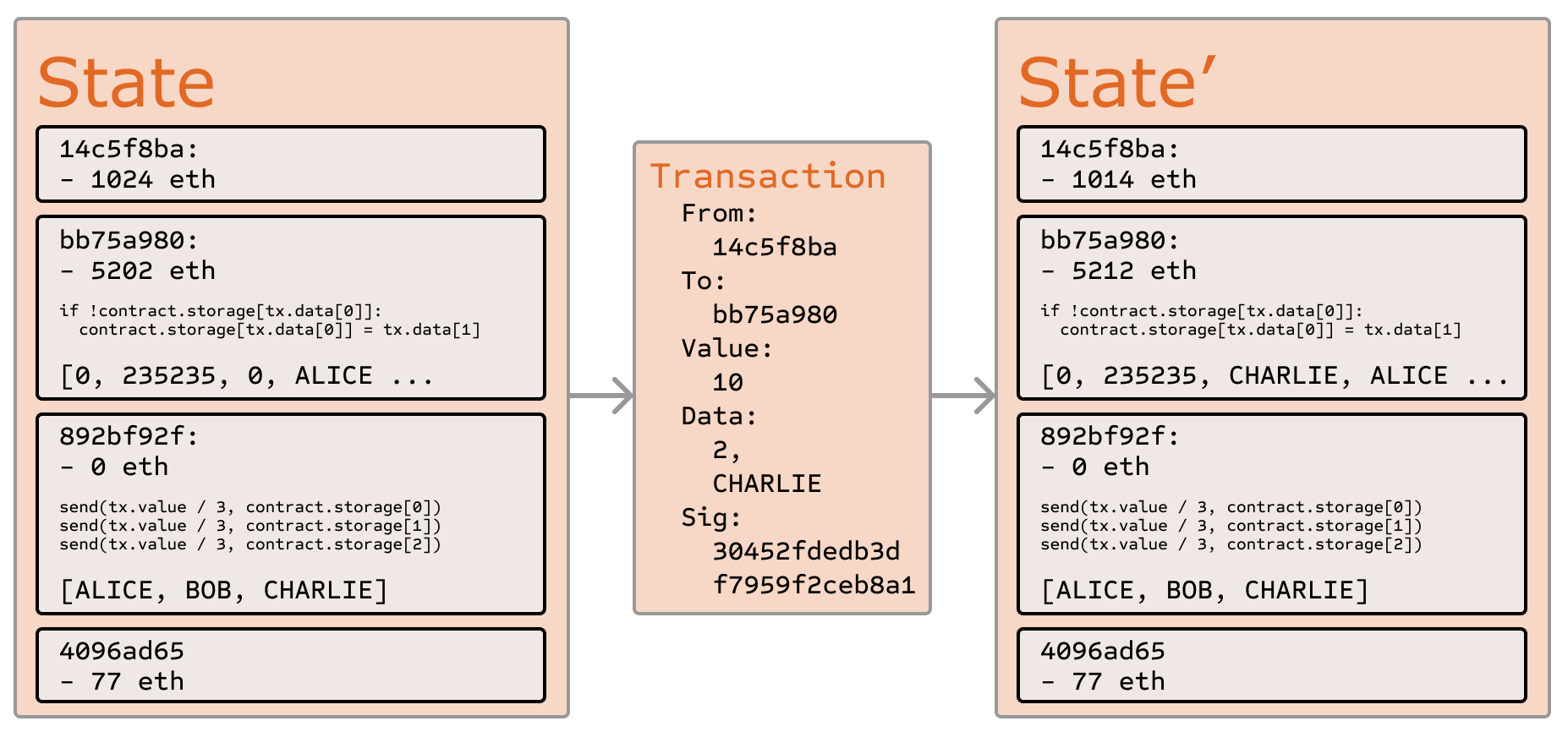
इसके बाद, सिस्टम निर्दिष्ट ether मूल्य को भेजने वाले से प्राप्तकर्ता को स्थानांतरित करता है। यदि प्राप्तकर्ता एक externally owned account है, तो यह transaction को पूरा करता है। यदि प्राप्तकर्ता एक contract account है, तो contract का code Ethereum Virtual Machine में चलता है, प्रत्येक ऑपरेशन के लिए gas की खपत करते हुए जब तक या तो code सफलतापूर्वक पूरा नहीं हो जाता, code स्पष्ट रूप से रुक नहीं जाता, या gas समाप्त नहीं हो जाता। निष्पादन के दौरान, contract अपने storage को पढ़ और संशोधित कर सकता है, अन्य contracts को messages भेज सकता है, और नए contracts बना सकता है।
अंत में, यदि मूल्य स्थानांतरण विफल हो जाता है (अपर्याप्त balance) या code निष्पादन विफल हो जाता है (gas समाप्त होना या किसी त्रुटि से टकराना), तो सभी state परिवर्तन वापस कर दिए जाते हैं—सिवाय इसके कि भेजने वाला अभी भी किए गए computation के लिए miner को gas fees का भुगतान करता है। यदि निष्पादन सफल रहा, तो शेष gas भेजने वाले को वापस कर दिया जाता है, और जो gas खपत किया गया वह miner को शुल्क के रूप में भेजा जाता है। यह तंत्र सुनिश्चित करता है कि miners को computation के लिए मुआवजा दिया जाए जबकि भगोड़ा निष्पादन असीमित संसाधनों की खपत करने से रोका जाए।
Ethereum State Transition Function
以太坊状态转换函数APPLY(S,TX) - S'定义了交易如何转换区块链状态,它遵循精确的步骤序列。首先,系统检查交易的有效性:验证签名是否正确,确认nonce与发送方账户的nonce匹配,并确保发送方有足够的余额来支付预付费用(STARTGAS x GASPRICE加上要发送的值)。如果任何检查失败,交易在执行开始前就被拒绝。如果有效,交易费用从发送方账户扣除,发送方的nonce递增,初始燃料计数器被设置为STARTGAS减去交易数据的每字节费用。
接下来,系统将指定的以太币值从发送方转移到接收方。如果接收方是外部拥有账户,交易到此完成。如果接收方是合约账户,合约的代码在以太坊虚拟机中运行,每个操作消耗燃料,直到代码成功完成、代码显式停止或燃料耗尽。在执行期间,合约可以读取和修改其存储、向其他合约发送消息以及创建新合约。
最后,如果值转移失败(余额不足)或代码执行失败(燃料耗尽或遇到错误),所有状态更改将被还原——但发送方仍需为已执行的计算向矿工支付燃料费。如果执行成功,剩余燃料退还给发送方,已消耗的燃料作为费用发送给矿工。这种机制确保矿工获得计算补偿,同时防止失控的执行消耗无限资源。
Code Execution
Ethereum Virtual Machine (EVM) वह runtime environment है जहां contract code निष्पादित होता है—एक low-level, stack-based virtual machine जो अवधारणा में Java Virtual Machine या WebAssembly के समान है। Contract code bytes के एक अनुक्रम के रूप में संग्रहीत होता है, जहां प्रत्येक byte एक ऑपरेशन (opcode) का प्रतिनिधित्व करता है जिसे EVM निष्पादित कर सकता है। निष्पादन मॉडल जानबूझकर सरल और deterministic है: समान input state और transaction के साथ EVM चलाने वाले प्रत्येक node को समान output state पर पहुंचना चाहिए, जो नेटवर्क में consensus सुनिश्चित करता है।
EVM computation के लिए तीन अलग-अलग प्रकार के storage प्रदान करता है। Stack एक last-in-first-out (LIFO) संरचना है जो 1024 तत्वों तक सीमित है, तत्काल ऑपरेशन मूल्यों के लिए उपयोग की जाती है। Memory एक अनंत रूप से विस्तारणीय byte array है जो केवल एक message call की अवधि के लिए बनी रहती है और executions के बीच reset हो जाती है। Storage प्रत्येक contract account से स्थायी रूप से जुड़ा हुआ persistent key-value store है, जहां contracts transactions के पार अपनी दीर्घकालिक state बनाए रखते हैं। इन storage प्रकारों की gas में अलग-अलग कीमत होती है—stack और memory ऑपरेशन सस्ते हैं, जबकि storage ऑपरेशन blockchain bloat को रोकने के लिए महंगे हैं।
निष्पादन के दौरान, contract code के पास महत्वपूर्ण संदर्भ तक पहुंच होती है: यह message भेजने वाले का address, भेजी गई ether की मात्रा, कॉलर द्वारा प्रदान किया गया data payload, और block-level गुण जैसे वर्तमान block number, timestamp, और miner address पढ़ सकता है। Code कॉलर को एक output byte array लौटा सकता है और अन्य contracts को messages भेज सकता है या नए contracts बना सकता है। यह निष्पादन मॉडल Turing-complete है—लूप और जटिल control flow संभव हैं—लेकिन gas तंत्र सुनिश्चित करता है कि सभी computation सीमित समय में समाप्त हो, भाषा प्रतिबंधों के बजाय आर्थिक रूप से halting problem को हल करते हुए।
Code Execution
以太坊虚拟机(EVM)是合约代码执行的运行时环境——一个低层级的、基于栈的虚拟机,在概念上类似于Java虚拟机或WebAssembly。合约代码存储为字节序列,其中每个字节代表EVM可以执行的一个操作(操作码)。执行模型被刻意设计为简单且确定性的:每个使用相同输入状态和交易运行EVM的节点必须得出相同的输出状态,确保网络达成共识。
EVM为计算提供三种不同类型的存储。栈是一个限制为1024个元素的后进先出(LIFO)结构,用于即时操作值。内存是一个可无限扩展的字节数组,仅在单次消息调用期间持续存在,在执行间被重置。存储是与每个合约账户永久关联的持久键值存储,合约在其中跨交易维护其长期状态。这些存储类型在燃料定价上不同——栈和内存操作便宜,而存储操作昂贵,以防止区块链膨胀。
在执行期间,合约代码可以访问关键的上下文信息:它可以读取消息发送方的地址、发送的以太币数量、调用方提供的数据载荷,以及区块级属性如当前区块号、时间戳和矿工地址。代码可以向调用方返回一个输出字节数组,并且可以向其他合约发送消息或创建新合约。这种执行模型是图灵完备的——循环和复杂的控制流是可能的——但燃料机制确保所有计算在有限时间内终止,通过经济手段而非语言限制解决了停机问题。
Blockchain and Mining
Ethereum blockchain मौलिक रूप से Bitcoin के समान है, जो कभी निष्पादित हुए प्रत्येक transaction को रखने वाले डेटाबेस के रूप में कार्य करता है। हालांकि, जबकि Bitcoin केवल एक transaction सूची संग्रहीत करता है, Ethereum transaction सूची और सबसे हालिया state दोनों को संग्रहीत करता है। Ethereum में प्रत्येक block में पिछले block का hash, एक state root (संपूर्ण state का प्रतिनिधित्व करने वाले Merkle Patricia trie का root hash), एक transaction root, एक receipt root (transaction निष्पादन से डेटा संग्रहीत करने वाला), difficulty, timestamp, और nonce मान होते हैं। State स्वयं एक बड़ा Merkle Patricia trie है जो addresses को account objects से मैप करता है, जहां प्रत्येक account में balance, nonce, code (यदि मौजूद हो), और storage होता है।

Ethereum तेज block समय से उत्पन्न होने वाली सुरक्षा समस्याओं को संबोधित करने के लिए GHOST (Greedy Heaviest Observed Subtree) प्रोटोकॉल के एक संशोधित संस्करण का उपयोग करता है। पारंपरिक longest-chain प्रोटोकॉल में, तेज blocks उच्च stale दरों की ओर ले जाते हैं, जो नेटवर्क सुरक्षा को कम करते हैं और केंद्रीकरण जोखिम बढ़ाते हैं क्योंकि बड़े miners stales पर कम computation बर्बाद करते हैं। GHOST stale blocks (Ethereum में "uncles" कहे जाते हैं) को सबसे लंबी chain की गणना में शामिल करता है, और uncle blocks को आंशिक पुरस्कार प्रदान करता है, miners को उन्हें संदर्भित करने के लिए प्रोत्साहित करता है। यह Ethereum को नेटवर्क सुरक्षा बनाए रखते हुए लगभग 12 सेकंड का लक्ष्य block समय बनाए रखने की अनुमति देता है।
Mining एल्गोरिदम Bitcoin के proof-of-work के समान काम करता है, miners को एक nonce खोजने की आवश्यकता होती है ताकि block का hash एक निश्चित difficulty target से नीचे हो। हालांकि, Ethereum का memory-hard mining एल्गोरिदम (Ethash) ASIC-resistant होने के लिए डिज़ाइन किया गया है, जो एक अधिक विकेंद्रीकृत mining पारिस्थितिकी तंत्र को बढ़ावा देता है। Difficulty block समय के आधार पर गतिशील रूप से समायोजित होती है ताकि ~12 सेकंड का लक्ष्य बनाए रखा जा सके, जो Bitcoin के 10-मिनट के औसत की तुलना में तेज block समय के बावजूद GHOST प्रोटोकॉल सुरक्षा गारंटी प्रदान करते हुए सुसंगत block उत्पादन सुनिश्चित करता है।
Blockchain and Mining
以太坊区块链与比特币的基本相似,作为包含所有已执行交易的数据库。然而,比特币只存储交易列表,而以太坊同时存储交易列表和最新状态。以太坊中的每个区块包含前一个区块的哈希值、状态根(代表整个状态的默克尔帕特里夏树的根哈希)、交易根、收据根(存储交易执行数据),以及难度值、时间戳和nonce值。状态本身是一棵大型默克尔帕特里夏树,将地址映射到账户对象,每个账户都有余额、nonce、代码(如果有的话)和存储。
以太坊使用了GHOST(贪婪最重观察子树)协议的修改版本,以解决快速出块时间带来的安全问题。在传统的最长链协议中,快速出块会导致高孤块率,降低网络安全性并增加中心化风险,因为大型矿工在孤块上浪费的计算更少。GHOST协议将孤块(在以太坊中称为"叔块")纳入最长链的计算中,并为叔块提供部分奖励,激励矿工引用它们。这使得以太坊能够在保持网络安全的同时,维持大约12秒的目标出块时间。
挖矿算法与比特币的工作量证明类似,要求矿工找到一个nonce,使得区块的哈希值低于特定的难度目标。然而,以太坊的内存密集型挖矿算法(Ethash)被设计为抗ASIC的,促进更去中心化的挖矿生态系统。难度根据出块时间动态调整,以维持约12秒的目标,确保稳定的区块生产,而GHOST协议在比特币平均10分钟更快的出块时间下提供安全保障。
Applications
Ethereum पर बनाए जा सकने वाले अनुप्रयोग तीन व्यापक श्रेणियों में आते हैं। पहली श्रेणी वित्तीय अनुप्रयोग है, जो उपयोगकर्ताओं को उनके धन से जुड़े contracts में प्रवेश करने और प्रबंधित करने के अधिक शक्तिशाली तरीके प्रदान करती है। इसमें उप-मुद्राएं, वित्तीय derivatives, hedging contracts, निकासी सीमाओं वाले बचत वॉलेट, स्वचालित रूप से धन वितरित करने वाली वसीयत, और यहां तक कि सत्यापित कार्य पूर्णता के आधार पर भुगतान की गणना करने वाले रोजगार contracts शामिल हैं। ये अनुप्रयोग जटिल वित्तीय साधन बनाने के लिए Ethereum की प्रोग्रामेबिलिटी का लाभ उठाते हैं जो पारंपरिक प्रणालियों या Bitcoin पर भी लागू करना असंभव या अत्यंत कठिन होगा।
दूसरी श्रेणी अर्ध-वित्तीय अनुप्रयोग है, जहां धन शामिल है लेकिन जो किया जा रहा है उसमें एक पर्याप्त गैर-मौद्रिक घटक भी है। एक आदर्श उदाहरण कम्प्यूटेशनल समस्याओं के समाधान के लिए स्व-प्रवर्तित इनाम है। कोई व्यक्ति इनाम के साथ एक कम्प्यूटेशनल समस्या पोस्ट कर सकता है, और contract स्वचालित रूप से प्रस्तुत समाधानों को सत्यापित कर सकता है और पहले सही उत्तर को इनाम का भुगतान कर सकता है। यह श्रेणी शुद्ध वित्त और अन्य क्षेत्रों के बीच पुल बनाती है, समस्याओं को हल करने या व्यवहार को समन्वित करने के लिए आर्थिक प्रोत्साहनों का उपयोग करती है।
तीसरी श्रेणी ऐसे अनुप्रयोग हैं जिनका धन से कोई संबंध नहीं है, जैसे ऑनलाइन मतदान और विकेंद्रीकृत शासन प्रणालियां। ये गैर-वित्तीय अनुप्रयोग एक सामान्य-उद्देश्य प्लेटफॉर्म के रूप में Ethereum की लचीलापन प्रदर्शित करते हैं। उदाहरणों में Namecoin जैसी विकेंद्रीकृत डोमेन नाम प्रणालियां, प्रतिष्ठा प्रणालियां, विकेंद्रीकृत फ़ाइल स्टोरेज, और संगठनात्मक शासन उपकरण शामिल हैं। इन सभी अनुप्रयोग प्रकारों में, token systems सबसे आम और मौलिक के रूप में उभरे हैं, जो कई अन्य अनुप्रयोगों के लिए बिल्डिंग ब्लॉक के रूप में कार्य करते हैं।
Applications
可以在以太坊上构建的应用大致分为三大类。第一类是金融应用,为用户提供更强大的方式来管理和签订涉及资金的合约。这包括子货币、金融衍生品、对冲合约、带提取限额的储蓄钱包、自动分配资金的遗嘱,甚至是根据验证的工作完成情况计算薪酬的雇佣合约。这些应用利用以太坊的可编程性来创建在传统系统甚至比特币上都不可能或极其难以实现的复杂金融工具。
第二类是半金融应用,涉及资金但也有大量非货币成分。一个完美的例子是为计算问题的解决方案设立的自动执行的悬赏。某人可以发布一个计算问题和奖励,合约可以自动验证提交的解决方案并向第一个正确答案支付悬赏金。这一类别连接了纯金融和其他领域,利用经济激励来解决问题或协调行为。
第三类是与金钱完全无关的应用,例如在线投票和去中心化治理系统。这些非金融应用展示了以太坊作为通用平台的灵活性。例子包括类似域名币的去中心化域名系统、信誉系统、去中心化文件存储和组织治理工具。在所有这些应用类型中,代币系统已成为最常见和最基本的类型,作为许多其他应用的构建基础。
Token Systems
Token systems Ethereum पर लागू करने में आश्चर्यजनक रूप से सरल हैं, सबसे शक्तिशाली और आम अनुप्रयोगों में से एक होने के बावजूद। अपने मूल में, token systems बस एक डेटाबेस हैं जिसमें एक एकल ऑपरेशन है: account A से X इकाइयां घटाएं और account B में X इकाइयां जोड़ें, इस शर्त के साथ कि transaction से पहले A के पास कम से कम X इकाइयां थीं और transaction A द्वारा अधिकृत है। कार्यान्वयन के लिए addresses से balances तक एक mapping बनाए रखना और एक transfer function प्रदान करना आवश्यक है जो accounts के बीच tokens स्थानांतरित करने से पहले उचित जांच करता है।
एक बुनियादी token system के लिए contract code उल्लेखनीय रूप से सरल है और कुछ ही पंक्तियों में लिखा जा सकता है। इसमें addresses को balances से मैप करने वाली डेटा संरचना, प्रारंभिक token supply आवंटित करने वाला एक initialization function, और transfer निष्पादित करने से पहले भेजने वाले के balance और authorization की जांच करने वाला एक transfer function शामिल है। यह सरलता Bitcoin पर समान प्रणालियों को लागू करने के लिए आवश्यक जटिलता के विपरीत है, जिसके लिए Bitcoin की प्रतिबंधित स्क्रिप्टिंग क्षमताओं के कारण महत्वपूर्ण समाधानों और सीमाओं की आवश्यकता होगी।
Ethereum पर tokens वस्तुतः मूल्य की किसी भी चीज़ का प्रतिनिधित्व कर सकते हैं। वे अपनी मौद्रिक नीतियों वाली उप-मुद्राओं, बाहरी संपत्तियों को ट्रैक करने वाले वित्तीय derivatives, लाभांश अधिकारों वाले कंपनी शेयरों, ग्राहक कार्यक्रमों में loyalty points, सोने या तेल जैसी वस्तुओं, या यहां तक कि भौतिक संपत्ति के प्रतिनिधित्व का प्रतिनिधित्व कर सकते हैं। Ethereum की प्रोग्रामेबिलिटी इन tokens को उनके व्यवहार को नियंत्रित करने वाले मनमाने नियम रखने की अनुमति देती है, जैसे transfer प्रतिबंध, स्वचालित burning तंत्र, लाभांश वितरण, या शासन अधिकार। इस लचीलेपन ने token systems को Ethereum पारिस्थितिकी तंत्र के अधिकांश भाग का मूलभूत बिल्डिंग ब्लॉक बना दिया है।
Token Systems
代币系统在以太坊上实现起来出人意料地简单,尽管它是最强大和最常见的应用之一。在其核心,代币系统只是一个具有单一操作的数据库:从账户A减去X个单位并向账户B添加X个单位,条件是A在交易前至少拥有X个单位且交易由A授权。实现这一点需要维护一个地址到余额的映射,并提供一个在账户之间转移代币之前执行适当检查的转账函数。
基本代币系统的合约代码非常简单,可以用几行代码编写。它由一个将地址映射到余额的数据结构、一个分配初始代币供应量的初始化函数,以及一个在执行转账前检查发送方余额和授权的转账函数组成。这种简单性与在比特币上实现类似系统所需的复杂性形成了鲜明对比,后者由于比特币受限的脚本能力而需要大量的变通方法和限制。
以太坊上的代币可以代表几乎任何有价值的东西。它们可能代表具有自己货币政策的子货币、追踪外部资产的金融衍生品、拥有分红权的公司股份、客户计划中的积分、黄金或石油等大宗商品,甚至是实物财产的表示。以太坊的可编程性允许这些代币具有管理其行为的任意规则,例如转账限制、自动销毁机制、分红分配或治理权利。这种灵活性使代币系统成为以太坊生态系统的基础构建模块。
Financial Derivatives and Stable-Value Currencies
वित्तीय derivatives Ethereum smart contracts के सबसे मौलिक और महत्वपूर्ण अनुप्रयोगों में से एक का प्रतिनिधित्व करते हैं। एक सरल hedging contract बुनियादी तंत्र को प्रदर्शित करता है: पक्ष A \(1000 मूल्य की एक निश्चित मात्रा में ether जमा करता है, पक्ष B समतुल्य राशि जमा करता है, और contract एक data feed का उपयोग करके उस समय ether का USD मूल्य दर्ज करता है। 30 दिनों के बाद, contract मूल्य की पुनर्गणना करता है और A को \)1000 मूल्य का ether भेजता है और शेष B को भेजता है। यदि ether की कीमत बढ़ी है, तो A को कम ether मिलता है लेकिन $1000 मूल्य बनाए रखता है; यदि गिरी है, तो A को उस मूल्य को बनाए रखने के लिए अधिक ether मिलता है। यह A को अस्थिरता के खिलाफ hedge करने की अनुमति देता है जबकि B मूल्य आंदोलनों पर अटकलें लगाता है।
ऐसे contracts के कार्यान्वयन के लिए oracle contracts या data feeds के माध्यम से बाहरी डेटा तक पहुंच की आवश्यकता होती है। ये oracles मूल्य जानकारी, मौसम डेटा, या अन्य वास्तविक-दुनिया की जानकारी प्रदान करते हैं जो contracts को ठीक से निष्पादित करने के लिए चाहिए। जबकि oracles एक विश्वास निर्भरता प्रस्तुत करते हैं, उन्हें विश्वसनीय डेटा प्रदान करने के लिए अतिरेक और cryptoeconomic प्रोत्साहनों के साथ डिज़ाइन किया जा सकता है। Contract स्वयं बस oracle से क्वेरी करता है, उस डेटा के आधार पर गणना करता है, और अपने प्रोग्राम किए गए तर्क के अनुसार धन वितरित करता है।
Stablecoins और अधिक जटिल वित्तीय साधन समान तंत्रों का उपयोग करके बनाए जा सकते हैं। एक stablecoin contract ether का भंडार बनाए रख सकता है और fiat मुद्रा से जुड़े tokens जारी कर सकता है, मूल्य feeds के आधार पर supply या collateral आवश्यकताओं को स्वचालित रूप से समायोजित करते हुए। Options contracts, futures, swaps, और अन्य derivatives जिन्हें सामान्यतः जटिल कानूनी ढांचों और विश्वसनीय मध्यस्थों की आवश्यकता होती है, उन्हें इसके बजाय स्व-निष्पादन smart contracts के रूप में एन्कोड किया जा सकता है। यह प्रोग्रामेबल वित्त अवसंरचना blockchain प्रौद्योगिकी की पारदर्शिता और सुरक्षा गारंटियों को बनाए रखते हुए परिष्कृत वित्तीय इंजीनियरिंग को सक्षम करती है।
Financial Derivatives and Stable-Value Currencies
金融衍生品是以太坊智能合约最基本和最重要的应用之一。一个简单的对冲合约展示了基本机制:甲方存入价值1000美元的一定数量以太币,乙方存入等值金额,合约使用数据源记录当时以太币的美元价值。30天后,合约重新计算价值,将价值1000美元的以太币发送给甲方,剩余部分发送给乙方。如果以太币价格上涨,甲方收到的以太币较少但维持1000美元价值;如果价格下跌,甲方收到更多以太币以维持该价值。这使得甲方可以对冲波动性风险,而乙方则对价格走势进行投机。
此类合约的实现需要通过预言机合约或数据源来访问外部数据。这些预言机提供价格信息、天气数据或合约正确执行所需的其他现实世界信息。虽然预言机引入了信任依赖,但可以通过冗余设计和加密经济激励来提供可靠数据。合约本身只需查询预言机,根据该数据执行计算,并按照其编程逻辑分配资金。
稳定币和更复杂的金融工具可以使用类似的机制构建。稳定币合约可以维护以太币储备并发行锚定法定货币的代币,根据价格源自动调整供应量或抵押要求。期权合约、期货合约、互换合约以及其他通常需要复杂法律框架和可信中介的衍生品可以被编码为自动执行的智能合约。这种可编程金融基础设施在维护区块链技术的透明性和安全保证的同时,实现了复杂的金融工程。
Identity and Reputation Systems
Namecoin के समान एक नाम पंजीकरण प्रणाली Ethereum पर सरलता से लागू की जा सकती है और एक पहचान प्रणाली का सबसे सरल उदाहरण है। Contract एक key-value table के साथ एक डेटाबेस बनाए रखता है जो नामों को संबंधित डेटा (जैसे IP addresses, public keys, या अन्य जानकारी) से मैप करता है। कोई भी व्यक्ति एक छोटे पंजीकरण शुल्क के साथ contract को एक transaction भेजकर एक नाम पंजीकृत कर सकता है, बशर्ते वह नाम पहले से लिया न गया हो। स्वामी किसी भी समय संबंधित डेटा को अपडेट कर सकता है, और contract में एन्कोड किए गए नियमों के अनुसार नामों को हस्तांतरणीय या स्थायी बनाया जा सकता है।
अधिक उन्नत पहचान प्रणालियां इस नींव पर प्रतिष्ठा स्कोर, web of trust संबंधों, और विकेंद्रीकृत पहचान सत्यापन को शामिल करने के लिए बनाई जा सकती हैं। उदाहरण के लिए, एक contract सत्यापित transactions, सहकर्मी रेटिंग, या कार्यों के पूर्ण होने के आधार पर प्रतिष्ठा स्कोर बनाए रख सकता है। ये स्कोर सार्वजनिक रूप से दृश्य होंगे और cryptographically विशिष्ट addresses से जुड़े होंगे, जो एक पोर्टेबल प्रतिष्ठा बनाते हैं जो अनुप्रयोगों में उपयोगकर्ताओं का अनुसरण करती है। Web of trust प्रणालियां उपयोगकर्ताओं को दूसरों की पहचान की पुष्टि करने की अनुमति दे सकती हैं, सामाजिक ग्राफ बनाते हुए जो वैध उपयोगकर्ताओं को बुरे अभिनेताओं से अलग करने में मदद करते हैं।
ऐसी पहचान और प्रतिष्ठा प्रणालियां अन्य अनुप्रयोगों के साथ एकीकृत होने पर विशेष रूप से शक्तिशाली हो जाती हैं। एक marketplace विक्रेताओं के लिए न्यूनतम प्रतिष्ठा स्कोर की आवश्यकता कर सकता है, एक ऋण प्लेटफॉर्म उधारकर्ता की प्रतिष्ठा के आधार पर ब्याज दरों को समायोजित कर सकता है, या एक सोशल नेटवर्क स्पैम और धोखाधड़ी सामग्री को फ़िल्टर करने के लिए web of trust का उपयोग कर सकता है। एक साझा पहचान अवसंरचना प्रदान करके जिसे कोई भी अनुप्रयोग क्वेरी कर सकता है, Ethereum विश्वास-आधारित अनुप्रयोगों का एक नया वर्ग सक्षम करता है जो केंद्रीकृत पहचान प्रदाताओं या मालिकाना प्रतिष्ठा प्रणालियों पर निर्भर नहीं करता।
Identity and Reputation Systems
类似域名币的域名注册系统在以太坊上可以轻而易举地实现,是身份系统最简单的例子。合约维护一个包含键值表的数据库,将名称映射到关联数据(如IP地址、公钥或其他信息)。任何人都可以通过向合约发送交易并附上少量注册费来注册一个名称,前提是该名称尚未被占用。所有者可以随时更新关联数据,名称可以根据合约中编码的规则设置为可转让或永久性的。
在此基础上可以构建更高级的身份系统,包括信誉评分、信任网络关系和去中心化身份验证。例如,合约可以基于已验证的交易、同行评级或任务完成情况来维护信誉评分。这些评分将是公开可见的,并与特定地址进行密码学绑定,创建一个跨应用跟随用户的可移植信誉。信任网络系统可以允许用户为他人的身份背书,构建有助于区分合法用户和不良行为者的社交图谱。
当与其他应用集成时,此类身份和信誉系统变得特别强大。市场可以要求卖家达到最低信誉评分,借贷平台可以根据借款人的信誉调整利率,社交网络可以使用信任网络来过滤垃圾信息和欺诈内容。通过提供任何应用都可以查询的共享身份基础设施,以太坊实现了一类不依赖中心化身份提供商或专有信誉系统的新型信任应用。
Decentralized File Storage
विकेंद्रीकृत फ़ाइल स्टोरेज को Ethereum contracts के माध्यम से लागू किया जा सकता है जो storage की आवश्यकता वाले उपयोगकर्ताओं और इसे प्रदान करने वाले प्रदाताओं के बीच समन्वय करते हैं। एक "विकेंद्रीकृत Dropbox" मॉडल में, उपयोगकर्ता फ़ाइलें अपलोड करने के लिए मासिक शुल्क का भुगतान करेंगे, contract storage प्रदाताओं को भुगतान वितरित करेगा जो साबित करते हैं कि वे वास्तव में डेटा संग्रहीत कर रहे हैं। प्रमाण तंत्र आवधिक cryptographic चुनौतियों के माध्यम से काम करता है: contract यादृच्छिक रूप से फ़ाइलों के भागों का चयन करता है और प्रदाताओं से Merkle tree proofs प्रदान करने के लिए कहता है जो प्रदर्शित करते हैं कि उनके पास वह डेटा है। जो प्रदाता चुनौतियों में विफल होते हैं या ऑफ़लाइन हो जाते हैं वे अपनी जमा राशि और भविष्य की भुगतान धारा खो देंगे।
यह दृष्टिकोण केंद्रीकृत storage पर कई फायदे प्रदान करता है। Merkle tree proofs कुशल सत्यापन सक्षम करते हैं—उपयोगकर्ता और contract पूरी फ़ाइलें डाउनलोड किए बिना फ़ाइल उपलब्धता की पुष्टि कर सकते हैं। सिस्टम स्वाभाविक रूप से कई स्वतंत्र प्रदाताओं में फ़ाइलें वितरित करता है, स्पष्ट replication प्रोटोकॉल की आवश्यकता के बिना redundancy बनाता है। आर्थिक प्रोत्साहन प्रदाता व्यवहार को उपयोगकर्ता आवश्यकताओं के साथ संरेखित करते हैं: प्रदाता विश्वसनीय रूप से डेटा संग्रहीत करके पैसा कमाते हैं और ऐसा करने में विफल होने पर पैसा खोते हैं। यह केंद्रीकृत storage समाधानों में अंतर्निहित विश्वास आवश्यकता को समाप्त करता है।
ऐसी प्रणाली में storage लागत कई कारणों से केंद्रीकृत विकल्पों से संभावित रूप से कम हो सकती है। एकाधिकार मूल्य निर्धारण का उन्मूलन बाजार प्रतिस्पर्धा को लागत को storage की वास्तविक लागत के करीब ले जाने की अनुमति देता है। समान फ़ाइलें संग्रहीत करने वाले कई उपयोगकर्ताओं से अंतर्निहित redundancy कुल storage आवश्यकताओं को कम कर सकती है। महंगी data center अवसंरचना या कॉर्पोरेट overhead की कोई आवश्यकता नहीं है। हालांकि, भुगतान तंत्र, पर्याप्त प्रदाता भागीदारी सुनिश्चित करने, और redundancy और लागत के बीच संतुलन प्रबंधित करने के आसपास चुनौतियां बनी हुई हैं। इन चुनौतियों के बावजूद, विकेंद्रीकृत storage प्रदर्शित करता है कि कैसे Ethereum केवल आर्थिक प्रोत्साहनों के माध्यम से जटिल बहु-पक्षीय बातचीत को समन्वित कर सकता है।
Decentralized File Storage
去中心化文件存储可以通过以太坊合约来实现,在需要存储的用户和提供存储的供应商之间进行协调。在"去中心化Dropbox"模式中,用户按月付费上传文件,合约将付款分配给证明自己实际存储了数据的存储供应商。证明机制通过定期的密码学挑战实现:合约随机选择文件的部分内容,并要求供应商提供默克尔树证明,证明他们拥有该数据。挑战失败或下线的供应商将失去其押金和未来的付款流。
这种方法相比中心化存储有几个优势。默克尔树证明实现了高效验证——用户和合约可以在不下载整个文件的情况下确认文件可用性。该系统自然地将文件分布在多个独立的供应商之间,在无需显式复制协议的情况下创建冗余。经济激励使供应商的行为与用户需求保持一致:供应商通过可靠存储数据赚钱,如果未能做到则亏钱。这消除了中心化存储解决方案中固有的信任需求。
此类系统的存储成本有可能因多种原因而低于中心化替代方案。消除垄断定价使市场竞争将成本推至接近实际存储成本。多个用户存储类似文件产生的隐性冗余可以减少总存储需求。无需昂贵的数据中心基础设施或企业管理费用。然而,在支付机制、确保足够的供应商参与以及管理冗余与成本之间的权衡方面仍然存在挑战。尽管存在这些挑战,去中心化存储展示了以太坊如何仅通过经济激励来协调复杂的多方交互。
Decentralized Autonomous Organizations
एक Decentralized Autonomous Organization (DAO) एक आभासी इकाई है जिसके सदस्यों या शेयरधारकों का एक समूह होता है जो सामूहिक रूप से इकाई के धन को खर्च करने और उसके code को संशोधित करने का अधिकार रखते हैं। एक विशिष्ट DAO एक सरल नियम के साथ संचालित होता है: खर्च निर्णय लेने या संगठन के code को संशोधित करने के लिए 67% सदस्यों की आवश्यकता होती है। सदस्य प्रस्ताव प्रस्तुत कर सकते हैं, उन पर मतदान कर सकते हैं, और यदि किसी प्रस्ताव को पर्याप्त समर्थन मिलता है, तो contract स्वचालित रूप से निर्णय को निष्पादित करता है। सदस्यता शेयर हस्तांतरणीय हो सकते हैं, DAO भागीदारी के लिए एक तरल बाजार की अनुमति देते हुए, और शेयरों के विभिन्न वर्गों में अलग-अलग मतदान अधिकार या आर्थिक दावे हो सकते हैं।
सबसे सरल DAO डिज़ाइन एक स्व-संशोधित contract है जो सदस्यों की एक सूची बनाए रखता है और contract के किसी भी पहलू को बदलने के लिए 2/3 बहुमत मतदान की आवश्यकता होती है, जिसमें इसके अपने मतदान नियम भी शामिल हैं। सदस्य transactions के रूप में code परिवर्तन प्रस्तुत करेंगे, अन्य सदस्य मतदान करेंगे, और threshold तक पहुंचने पर, contract स्वयं को अपडेट करेगा। अधिक परिष्कृत डिज़ाइन में प्रत्यायोजित मतदान प्रणालियां शामिल हो सकती हैं जहां सदस्य अपनी मतदान शक्ति प्रतिनिधियों को सौंप सकते हैं, या liquid democracy जहां मतों को प्रत्यायोजित किया जा सकता है लेकिन महत्वपूर्ण निर्णयों के लिए किसी भी समय वापस लिया जा सकता है।
DAOs सरल धन प्रबंधन से परे विभिन्न उद्देश्यों की सेवा कर सकते हैं। एक DAO एक विकेंद्रीकृत निगम के रूप में कार्य कर सकता है, ठेकेदारों को काम पर रखना, सेवाएं खरीदना, और शेयरधारकों को लाभ वितरित करना—सब पारंपरिक कानूनी संरचनाओं के बजाय smart contract code द्वारा शासित। यह एक विकेंद्रीकृत निवेश कोष के रूप में संचालित हो सकता है, सदस्य मतदान करते हैं कि किन परियोजनाओं को वित्तपोषित किया जाए। यह एक सामान्य संसाधन का प्रबंधन कर सकता है, हितधारक आवंटन नियमों पर मतदान करते हुए। मुख्य अंतर्दृष्टि यह है कि शासन नियमों को पारदर्शी, अपरिवर्तनीय code में एन्कोड करके और उन्हें आर्थिक हिस्सेदारी से जोड़कर, DAOs पारंपरिक श्रेणीबद्ध प्रबंधन या कानूनी प्रवर्तन की आवश्यकता के बिना समूह निर्णयों को समन्वित कर सकते हैं।
Decentralized Autonomous Organizations
去中心化自治组织(DAO)是一个虚拟实体,拥有一组成员或股东,他们共同有权花费该实体的资金并修改其代码。典型的DAO遵循一个简单规则:需要67%的成员同意才能做出支出决定或修改组织的代码。成员可以提交提案、对提案投票,如果提案获得足够支持,合约将自动执行该决定。成员份额可以是可转让的,允许DAO参与权的流动市场,不同类别的份额可以拥有不同的投票权或经济权益。
最简单的DAO设计是一个自我修改的合约,维护一个成员列表,并要求三分之二多数投票来更改合约的任何方面,包括其自身的投票规则。成员以交易的形式提交代码变更,其他成员投票,达到阈值后合约将自行更新。更复杂的设计可能包括委托投票系统,成员可以将投票权分配给代表,或者流动民主,投票可以被委托但在重要决定时可以随时收回。
DAO可以服务于超越简单资金管理的各种目的。DAO可以作为去中心化公司运作,雇佣承包商、购买服务并向股东分配利润——所有这些都由智能合约代码而非传统法律结构治理。它可以作为去中心化投资基金运作,由成员投票决定资助哪些项目。它可以管理公共资源,由利益相关者投票决定分配规则。关键洞察在于,通过将治理规则编码为透明的、不可变的代码并将其与经济利益绑定,DAO可以在不需要传统等级管理或法律执行的情况下协调群体决策。
Further Applications
पहले से चर्चित प्रमुख श्रेणियों के अलावा, Ethereum कई अन्य अनुप्रयोगों को सक्षम करता है। परिष्कृत सुरक्षा सुविधाओं वाले बचत वॉलेट दैनिक निकासी सीमा लगा सकते हैं जबकि पुनर्प्राप्ति के लिए आपातकालीन keys प्रदान करते हैं, चोरी से सुरक्षा करते हुए अंतिम नियंत्रण बनाए रखते हैं। फसल बीमा contracts मौसम data feeds के आधार पर स्वचालित रूप से किसानों को भुगतान कर सकते हैं, दावा प्रसंस्करण को समाप्त करते हुए और प्रशासनिक overhead को कम करते हुए। Peer-to-peer जुआ अनुप्रयोग किसी भी विश्वसनीय मध्यस्थ के बिना संचालित हो सकते हैं, smart contracts दांव रखते हुए और सत्यापन योग्य random numbers या वास्तविक-दुनिया की घटना डेटा के आधार पर स्वचालित रूप से विजेताओं को भुगतान करते हुए।
On-chain prediction markets उपयोगकर्ताओं को भविष्य की घटनाओं पर दांव लगाने की अनुमति देते हैं, भीड़ की बुद्धि के माध्यम से शक्तिशाली पूर्वानुमान तंत्र बनाते हैं। इन्हें विकेंद्रीकृत oracles बनाने के लिए SchellingCoin-शैली प्रोटोकॉल के साथ बढ़ाया जा सकता है: प्रतिभागी स्वतंत्र रूप से डेटा (जैसे चुनाव परिणाम या मौसम की स्थिति) रिपोर्ट करते हैं, और जिनकी रिपोर्ट बहुमत से मेल खाती हैं उन्हें पुरस्कार मिलता है जबकि विचलन करने वालों को दंडित किया जाता है। यह cryptoeconomic दृष्टिकोण ईमानदार रिपोर्टिंग को प्रोत्साहित करता है और किसी एक oracle प्रदाता पर विश्वास की आवश्यकता के बिना अन्य contracts को विश्वसनीय वास्तविक-दुनिया डेटा प्रदान कर सकता है।
Multi-signature wallets एक और महत्वपूर्ण अनुप्रयोग का प्रतिनिधित्व करते हैं, जो कई पक्षों के बीच धन का साझा नियंत्रण सक्षम करते हैं। एक 2-of-3 multi-sig wallet में धन खर्च करने से पहले तीन निर्दिष्ट पक्षों में से किन्हीं दो को transaction को मंजूरी देने की आवश्यकता हो सकती है, जो escrow व्यवस्थाओं, कॉर्पोरेट treasuries, या व्यक्तिगत सुरक्षा के लिए उपयोगी है। विकेंद्रीकृत marketplaces पहचान प्रणालियों, प्रतिष्ठा स्कोर, escrow contracts, और विवाद समाधान तंत्रों को जोड़कर केंद्रीकृत प्लेटफॉर्म के बिना peer-to-peer वाणिज्य को सक्षम कर सकते हैं। इनमें से प्रत्येक अनुप्रयोग प्रदर्शित करता है कि कैसे Ethereum की प्रोग्रामेबिलिटी नए विश्वास मॉडल और संगठनात्मक संरचनाओं को सक्षम करती है।
Further Applications
除了已经讨论的主要类别之外,以太坊还支持众多其他应用。带有复杂安全功能的储蓄钱包可以施加每日提取限额,同时提供用于恢复的紧急密钥,在保持最终控制权的同时保护用户免受盗窃。农作物保险合约可以根据天气数据源自动向农民支付赔偿,消除理赔处理过程并减少管理开销。点对点赌博应用可以在没有任何可信中介的情况下运作,智能合约持有赌注并根据可验证的随机数或现实世界的事件数据自动向赢家支付。
链上预测市场允许用户对未来事件下注,通过群体智慧创建强大的预测机制。这些可以通过谢林币(SchellingCoin)风格的协议来增强,以创建去中心化预言机:参与者独立报告数据(如选举结果或天气状况),与多数一致的报告获得奖励,而异常值则受到惩罚。这种加密经济方法激励诚实报告,可以为其他合约提供可靠的现实世界数据,而无需信任任何单一预言机提供者。
多重签名钱包是另一个重要应用,实现多方对资金的共同控制。一个2-of-3多重签名钱包可能要求三个指定方中的任意两个批准交易才能花费资金,适用于托管安排、企业金库或个人安全。去中心化市场可以结合身份系统、信誉评分、托管合约和争议解决机制来实现无需中心化平台的点对点商务。这些应用中的每一个都展示了以太坊的可编程性如何实现新的信任模型和组织结构。
Miscellanea And Concerns
Ethereum के संशोधित GHOST प्रोटोकॉल के कार्यान्वयन में uncle समावेश और पुरस्कारों के लिए विशिष्ट नियम शामिल हैं। Uncles वर्तमान block के पूर्वज के प्रत्यक्ष बच्चे होने चाहिए (2 से 7 पीढ़ियों के बीच), वैध block headers होने चाहिए, पिछले uncles से अलग होने चाहिए, और वर्तमान block के प्रत्यक्ष पूर्वज नहीं होने चाहिए। Uncle blocks मानक block reward का 87.5% प्राप्त करते हैं, जबकि शामिल करने वाला block प्रति uncle अतिरिक्त 3.125% प्राप्त करता है (अधिकतम दो uncles तक)। यह प्रोत्साहन संरचना miners को उनके द्वारा देखे गए stale blocks को संदर्भित करने के लिए प्रोत्साहित करती है, नेटवर्क सुरक्षा को मजबूत करते हुए उन miners को पुरस्कृत करती है जिन्हें नेटवर्क प्रसार में अस्थायी दुर्भाग्य का अनुभव हुआ।
शुल्क प्रणाली "gas" की अवधारणा पर आधारित है, जहां प्रत्येक कम्प्यूटेशनल ऑपरेशन की एक निश्चित gas लागत होती है। उदाहरण के लिए, एक multiplication ऑपरेशन की लागत 5 gas है, एक SHA256 hash की लागत 20 gas है, और प्रत्येक transaction की आधार लागत 21,000 gas है। उपयोगकर्ता gas limit (अधिकतम gas जो वे खपत करने को तैयार हैं) और gas price (प्रति gas इकाई कितना ether वे भुगतान करेंगे) दोनों निर्दिष्ट करते हैं। यह प्रणाली कई उद्देश्यों की सेवा करती है: यह सभी computation का भुगतान सुनिश्चित करके अनंत लूप और denial-of-service हमलों को रोकती है, यह block space के लिए एक बाजार बनाती है जहां उपयोगकर्ता gas prices के माध्यम से बोली लगाते हैं, और यह miners को न्यूनतम gas price सेट करने की अनुमति देती है जिसे वे स्वीकार करने को तैयार हैं, नेटवर्क संसाधनों की रक्षा करती है।
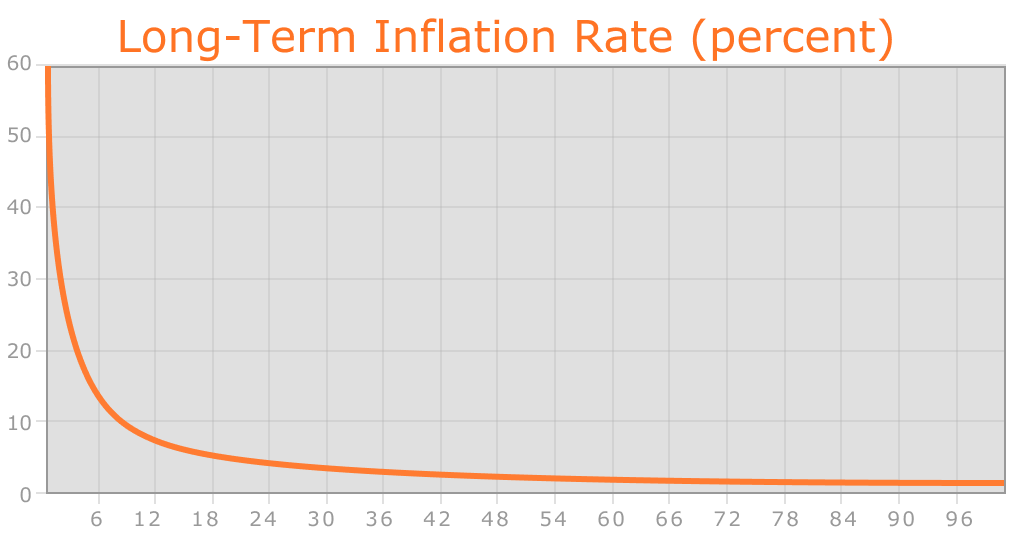
Scalability एक महत्वपूर्ण चिंता बनी हुई है, क्योंकि प्रत्येक पूर्ण node को state सत्यापित करने के लिए प्रत्येक transaction को प्रोसेस करना होगा। वर्तमान blockchain आर्किटेक्चर केंद्रीकृत प्रणालियों के transaction throughput से मिलान करने में संघर्ष करते हैं। संभावित समाधानों में state sharding शामिल है, जहां विभिन्न nodes transactions के विभिन्न उपसमूहों को प्रोसेस करते हैं, और proof-of-work से proof-of-stake consensus में संक्रमण, जो अधिक कुशल block उत्पादन सक्षम कर सकता है। Merkle proofs का उपयोग करने वाले light clients सभी blocks को प्रोसेस किए बिना transactions को सत्यापित कर सकते हैं, लेकिन किसी को फिर भी सब कुछ प्रोसेस करना होगा। ये scalability चुनौतियां Ethereum की दीर्घकालिक व्यवहार्यता के लिए महत्वपूर्ण अनुसंधान और विकास के सक्रिय क्षेत्रों का प्रतिनिधित्व करती हैं।
Miscellanea And Concerns
以太坊对修改版GHOST协议的实现包括叔块纳入和奖励的具体规则。叔块必须是当前区块祖先的直接子块(回溯2到7代),必须是有效的区块头,必须与之前的叔块不同,且不能是当前区块的直接祖先。叔块获得标准区块奖励的87.5%,而包含叔块的区块每包含一个叔块获得额外3.125%的奖励(最多两个叔块)。这种激励结构鼓励矿工引用他们观察到的孤块,增强网络安全,同时奖励在网络传播中暂时运气不佳的矿工。
费用系统基于"燃料"的概念,每个计算操作都有固定的燃料成本。例如,一次乘法运算消耗5个燃料单位,一次SHA256哈希运算消耗20个燃料单位,每笔交易的基础成本为21,000个燃料单位。用户指定燃料上限(愿意消耗的最大燃料量)和燃料价格(每单位燃料愿意支付的以太币数量)。这个系统有多重目的:通过确保所有计算都需要付费来防止无限循环和拒绝服务攻击,创建一个用户通过燃料价格竞价的区块空间市场,并允许矿工设定愿意接受的最低燃料价格来保护网络资源。
可扩展性仍然是一个重大关切,因为每个全节点必须处理每笔交易以验证状态。当前的区块链架构难以匹配中心化系统的交易吞吐量。潜在的解决方案包括状态分片——不同节点处理不同的交易子集,以及从工作量证明向权益证明共识的转变——这可以实现更高效的区块生产。使用默克尔证明的轻客户端可以在不处理所有区块的情况下验证交易,但总得有人处理所有内容。这些可扩展性挑战代表了对以太坊长期可行性至关重要的活跃研究和开发领域。
Conclusion
Ethereum प्रोटोकॉल मूल रूप से एक cryptocurrency के उन्नत संस्करण के रूप में कल्पना किया गया था, जो एक उच्च सामान्यीकृत प्रोग्रामिंग भाषा के माध्यम से on-blockchain escrow, निकासी सीमा, और वित्तीय contracts जैसी उन्नत सुविधाएं प्रदान करता था। हालांकि, Ethereum प्रोटोकॉल केवल मुद्रा से बहुत आगे जाता है। विकेंद्रीकृत फ़ाइल स्टोरेज, विकेंद्रीकृत computation, और विकेंद्रीकृत prediction markets के आसपास के प्रोटोकॉल, दर्जनों अन्य अवधारणाओं के साथ, कम्प्यूटेशनल उद्योग की दक्षता को काफी बढ़ाने और पहली बार एक आर्थिक परत जोड़कर अन्य peer-to-peer प्रोटोकॉल को एक बड़ा बढ़ावा प्रदान करने की क्षमता रखते हैं।
विशिष्ट उपयोग मामलों के लिए डिज़ाइन किए गए ऑपरेशनों का एक सीमित सेट प्रदान करने के बजाय, Ethereum एक Turing-complete प्रोग्रामिंग भाषा प्रदान करता है जो डेवलपर्स को कोई भी अनुप्रयोग बनाने में सक्षम बनाता है जिसे वे डिज़ाइन कर सकें। अपना स्वयं का वित्तीय derivative आविष्कार करना चाहते हैं? अपनी स्वयं की मुद्रा बनाना चाहते हैं? Blockchain पर एक सरकार स्थापित करना चाहते हैं? ये सभी Ethereum की स्क्रिप्टिंग प्रणाली के साथ सरलता से कार्यान्वित करने योग्य हैं। प्लेटफॉर्म की शक्ति यह भविष्यवाणी करने में नहीं है कि कौन से अनुप्रयोग बनाए जाएंगे, बल्कि मूलभूत अवसंरचना प्रदान करने में है जो उन्हें बनाना आसान बनाती है।
Ethereum प्रोटोकॉल द्वारा कार्यान्वित एक मनमाने state transition function की अवधारणा अद्वितीय क्षमता वाला एक प्लेटफॉर्म प्रदान करती है। डेटा स्टोरेज, जुए, या वित्त में विशिष्ट अनुप्रयोगों के लिए एक बंद-अंत, एकल-उद्देश्य प्रोटोकॉल होने के बजाय, Ethereum डिज़ाइन द्वारा खुले-अंत वाला है, और हम मानते हैं कि यह आने वाले वर्षों में बड़ी संख्या में वित्तीय और गैर-वित्तीय दोनों प्रोटोकॉल के लिए एक मूलभूत परत के रूप में सेवा करने के लिए अत्यंत उपयुक्त है। भविष्य में Ethereum पर बनाए जाने वाले अनुप्रयोग ऐसे हो सकते हैं जिनकी हम आज कल्पना भी नहीं कर सकते, और वह खुली संभावना प्लेटफॉर्म का वास्तविक वादा है।
Conclusion
以太坊协议最初被构想为加密货币的升级版本,通过高度通用的编程语言提供链上托管、提取限额和金融合约等高级功能。然而,以太坊协议远不止于货币。围绕去中心化文件存储、去中心化计算和去中心化预测市场的协议,以及数十个其他概念,有潜力大幅提高计算行业的效率,并通过首次添加经济层为其他点对点协议提供巨大推动力。
以太坊不是提供为特定用例设计的有限操作集,而是提供一种图灵完备的编程语言,使开发者能够构建他们所能设计的任何应用。想要发明自己的金融衍生品?创建自己的货币?在区块链上建立一个政府?这些在以太坊的脚本系统中都可以轻而易举地实现。该平台的力量不在于预测将构建什么应用,而在于提供使构建这些应用变得容易的基础设施。
以太坊协议实现的任意状态转换函数的概念提供了一个具有独特潜力的平台。以太坊不是一个封闭的、面向特定数据存储、赌博或金融应用的单一用途协议,而是在设计上就是开放式的,我们相信它极其适合在未来数年中作为大量金融和非金融协议的基础层。未来在以太坊上构建的应用可能是我们今天甚至无法想象的,而这种开放式的可能性代表了该平台的真正前景。
References and Further Reading
Ethereum whitepaper cryptocurrency और वितरित प्रणालियों के अनुसंधान में व्यापक पूर्व कार्य पर आधारित है। मूलभूत Bitcoin प्रोटोकॉल का वर्णन Satoshi Nakamoto के मूल 2008 पेपर "Bitcoin: A Peer-to-Peer Electronic Cash System" में किया गया है, जिसने blockchain-आधारित डिजिटल मुद्रा की अवधारणा पेश की। Bitcoin की कार्यक्षमता का विस्तार करने के शुरुआती प्रयासों में Namecoin शामिल है, एक विकेंद्रीकृत नाम पंजीकरण प्रणाली जो मुद्रा से परे blockchain अनुप्रयोगों को प्रदर्शित करती है, हालांकि Bitcoin की प्रतिबंधित स्क्रिप्टिंग क्षमताओं द्वारा सीमित।
Colored coins whitepaper ने विशिष्ट bitcoins को अन्य संपत्तियों का प्रतिनिधित्व करने के लिए "coloring" करके Bitcoin blockchain पर वैकल्पिक संपत्तियों का प्रतिनिधित्व करने की एक विधि प्रस्तावित की, जबकि Mastercoin ने अधिक जटिल वित्तीय साधनों के लिए Bitcoin के ऊपर एक प्रोटोकॉल परत बनाने का प्रयास किया। दोनों ने Bitcoin पर निर्माण की सीमाओं को उजागर किया और एक अधिक लचीले प्लेटफॉर्म की आवश्यकता को प्रेरित किया। Bitcoin Magazine में खोजी गई विकेंद्रीकृत स्वायत्त निगमों की अवधारणा ने smart contracts के माध्यम से संगठनात्मक शासन के लिए सैद्धांतिक आधार प्रदान किया।
प्रमुख तकनीकी घटकों में light clients के लिए simplified payment verification (SPV), कुशल डेटा सत्यापन के लिए Merkle trees, और Ethereum के state प्रतिनिधित्व के लिए Patricia tries शामिल हैं। 2013 के एक cryptography पेपर में वर्णित GHOST (Greedy Heaviest Observed Subtree) प्रोटोकॉल तेज block समय से उत्पन्न सुरक्षा मुद्दों को संबोधित करता है और Ethereum के consensus तंत्र का आधार बनाता है। ये संदर्भ उन बौद्धिक नींवों का प्रतिनिधित्व करते हैं जिन पर Ethereum बनाया गया था, एक सामान्य-उद्देश्य blockchain प्लेटफॉर्म बनाने के लिए cryptocurrency, वितरित प्रणालियों, cryptography, और game theory से अंतर्दृष्टि को जोड़ते हुए।
References and Further Reading
以太坊白皮书建立在加密货币和分布式系统研究的大量先前工作之上。基础性的比特币协议在中本聪2008年的原始论文《比特币:一种点对点电子现金系统》中进行了描述,该论文引入了基于区块链的数字货币概念。早期扩展比特币功能的尝试包括域名币——一个去中心化的域名注册系统,展示了货币之外的区块链应用,尽管受限于比特币的脚本能力。
彩色币白皮书提出了一种通过"着色"特定比特币来在比特币区块链上表示替代资产的方法,而万事达币试图在比特币之上创建一个用于更复杂金融工具的协议层。两者都凸显了在比特币之上构建的局限性,并推动了对更灵活平台的需求。去中心化自治公司的概念在《比特币杂志》中进行了探讨,为通过智能合约进行组织治理提供了理论基础。
关键技术组件包括用于轻客户端的简化支付验证(SPV)、用于高效数据验证的默克尔树,以及用于以太坊状态表示的帕特里夏树。GHOST(贪婪最重观察子树)协议在2013年的一篇密码学论文中进行了描述,解决了快速出块时间带来的安全问题,构成了以太坊共识机制的基础。这些参考文献代表了以太坊所建立的知识基础,结合了加密货币、分布式系统、密码学和博弈论的洞见,创建了一个通用区块链平台。