Solana: สถาปัตยกรรมใหม่สำหรับบล็อกเชนประสิทธิภาพสูง
Abstract
This paper presents a new blockchain architecture based on Proof of History (PoH) — a proof for verifying order and passage of time between events. PoH is used to encode trustless passage of time into a ledger, creating a historical record that proves that an event occurred at a specific moment in time. When used alongside a Proof of Stake consensus algorithm, PoH can reduce messaging overhead in a Byzantine Fault Tolerant replicated state machine, resulting in sub-second finality times.
The key innovation is the construction of a verifiable delay function implemented as a sequential pre-image resistant hash chain. The PoH sequence continuously runs and outputs a cryptographic proof that some amount of time has elapsed between two events. Data can be inserted into the sequence by appending it to the state that is hashed, thereby creating a timestamp that guarantees the data existed before the next hash was generated. This mechanism establishes a globally available, non-interactive source of time that all participants can verify independently.
By providing a trusted clock before consensus, PoH dramatically reduces the communication complexity of agreement. Validators can verify the relative ordering of events and the passage of time between them without communicating with each other. This allows the system to choose a leader, have that leader sequence user messages, and have validators process those messages in the order dictated by the PoH sequence, all without the traditional overhead of two-phase commit or synchronous coordination. The result is a blockchain capable of processing hundreds of thousands of transactions per second on a standard gigabit network while preserving the decentralization and security guarantees expected of a permissionless system.
The architecture integrates PoH with a Tower BFT consensus mechanism, a data plane optimized for streaming (Turbine), a mempool-less transaction forwarding protocol (Gulf Stream), a parallel smart contract runtime (Sealevel), and a Proof of Replication scheme for distributed storage verification. Together these components form a system whose throughput scales naturally with improvements in hardware — faster processors generate more PoH hashes per second, faster GPUs verify more signatures, and higher-bandwidth networks carry more transaction data — allowing performance to track Moore's Law without protocol changes.
Abstract
บทความนี้นำเสนอสถาปัตยกรรมใหม่สำหรับบล็อกเชนที่มีประสิทธิภาพสูง Solana ใช้กลไกการบอกเวลาแบบใหม่ที่เรียกว่า Proof of History (PoH) ซึ่งเป็นข้อพิสูจน์ในการตรวจสอบลำดับและการผ่านของเวลาระหว่างเหตุการณ์ต่างๆ PoH ใช้เพื่อเข้ารหัสเวลาที่ผ่านไปอย่างไม่ไว้วางใจใน ledger สร้างบันทึกทางประวัติศาสตร์ที่พิสูจน์ว่ามีเหตุการณ์เกิดขึ้นในช่วงเวลาหนึ่งโดยเฉพาะ
นวัตกรรมที่สำคัญคือ PoH ช่วยให้โหนดในเครือข่ายสร้างลำดับเหตุการณ์ชั่วคราวโดยไม่จำเป็นต้องสื่อสารระหว่างกัน ด้วยการใช้ฟังก์ชันหน่วงเวลาที่ตรวจสอบได้ซึ่งนำมาใช้เป็นสายโซ่แฮชตามลำดับ ระบบจะสร้างนาฬิกาเข้ารหัสที่ให้วิธีการตรวจสอบการผ่านของเวลาระหว่างเหตุการณ์ สิ่งนี้ทำให้เครือข่ายสามารถประมวลผลธุรกรรมหลายพันรายการต่อวินาทีในขณะที่ยังคงการกระจายอำนาจและความปลอดภัยไว้
PoH ถูกรวมเข้ากับกลไกฉันทามติ Proof of Stake (PoS) การรวมกันนี้ทำให้เกิดสถาปัตยกรรมบล็อกเชนที่ได้รับการปรับให้เหมาะสมที่สุด โดยที่ validators สามารถตรวจสอบธุรกรรมแบบขนานและบรรลุฉันทามติได้อย่างมีประสิทธิภาพ ระบบได้รับการออกแบบให้ปรับขนาดตามกฎของมัวร์ โดยใช้ประโยชน์จากการเพิ่มประสิทธิภาพฮาร์ดแวร์เพื่อปรับปรุงปริมาณงานโดยไม่กระทบต่อการรับประกันความปลอดภัยของเครือข่ายแบบกระจายอำนาจ
Introduction
Blockchains are an implementation of fault tolerant replicated state machines. Currently available public blockchains do not rely on time, or make a weak assumption about the participants' abilities to keep time. Each node in the network typically maintains its own local clock without any guarantee that it is consistent with any other node in the network. The lack of a trusted source of time means that when a message timestamp is used to accept or reject a message, there is no guarantee that every other participant in the network will make the exact same choice. This limitation forces blockchain protocols into complex coordination patterns where nodes must exchange messages to agree on ordering.
The key observation driving Solana's design is that if a reliable source of time is available — a clock that all participants can verify without trusting each other — many of the fundamental scaling limitations of existing blockchains can be removed. In traditional consensus systems like PBFT or Tendermint, every validator must communicate with every other validator to agree on the order of transactions. This produces O(n^2) message complexity, which limits the practical network size and throughput. If ordering is established before consensus begins, validators only need to confirm that they have seen the same sequence, dramatically reducing the communication required.
Proof of History provides exactly this: a cryptographic clock that produces a verifiable record of time passage. PoH is implemented as a sequential computation — a SHA-256 hash chain where each output is used as the input for the next hash. Because SHA-256 is a pre-image resistant function, the only way to produce the output for a given position in the chain is to compute every intermediate hash from the starting point. This means the chain cannot be parallelized or shortcut, and the number of hashes between two events represents a provable lower bound on the real time that has elapsed between them.
The PoH generator runs continuously, producing hashes as fast as the hardware allows. When an event occurs (such as a transaction arriving), its data is mixed into the hash chain by including it as part of the next hash input. The resulting hash and the current counter value form a timestamp for that event. Any verifier can check that the event was incorporated at that specific position in the chain by recomputing the hashes from a known checkpoint. Because SHA-256 is cheap to verify in parallel but expensive to generate sequentially, a single PoH generator can timestamp events at the rate of a single core, while thousands of verifier cores can confirm those timestamps simultaneously.
This paper describes a new blockchain design that leverages PoH as a global clock, enabling a pipeline of optimizations: leader-based block production with predetermined schedules, streaming block propagation, GPU-accelerated signature verification, and parallel transaction execution. The net effect is a system that pushes the bottleneck from consensus messaging to raw hardware throughput — specifically, the bandwidth of the network connection and the speed of the PoH generator's CPU core.
Introduction
ความท้าทายพื้นฐานในระบบบล็อกเชนคือการบรรลุปริมาณธุรกรรมที่สูงในขณะที่ยังคงรักษาการกระจายอำนาจและความปลอดภัยไว้ การใช้งานบล็อกเชนในปัจจุบันถูกจำกัดด้วยกลไกที่เป็นเอกฉันท์ ซึ่งจำเป็นต้องมีการสื่อสารที่กว้างขวางระหว่างโหนดเพื่อให้ตกลงเรื่องเวลาและการเรียงลำดับของเหตุการณ์ ค่าใช้จ่ายในการประสานงานนี้ทำให้เกิดปัญหาคอขวดที่ป้องกันไม่ให้บล็อกเชนที่มีอยู่ขยายขนาดเพื่อตอบสนองความต้องการของแอปพลิเคชันระดับโลก
ปัญหาหลักคือเวลา ในระบบแบบกระจาย โหนดไม่สามารถพึ่งพานาฬิกาภายนอกได้ เนื่องจากไม่สามารถเชื่อถือได้ว่าการประทับเวลาของโหนดอื่นนั้นแม่นยำ โปรโตคอลฉันทามติบล็อคเชนแบบดั้งเดิมจะแก้ปัญหานี้โดยให้โหนดสื่อสารอย่างกว้างขวางเพื่อตกลงกับสถานะปัจจุบันและลำดับของธุรกรรม ค่าใช้จ่ายในการสื่อสารนี้จำกัดปริมาณงานโดยพื้นฐาน เนื่องจากเครือข่ายสามารถประมวลผลธุรกรรมได้เร็วเท่ากับที่โหนดสามารถบรรลุความเห็นพ้องต้องกันในการสั่งซื้อเท่านั้น
Solana แนะนำ Proof of History เพื่อเป็นแนวทางแก้ไขปัญหาเรื่องเวลานี้ PoH จัดเตรียมวิธีการเข้ารหัสเพื่อพิสูจน์ว่าระยะเวลาหนึ่งผ่านไประหว่างเหตุการณ์ต่างๆ โดยไม่ต้องอาศัยการประทับเวลาจากผู้ที่อาจเป็นอันตราย ด้วยการสร้างบันทึกประวัติที่ตรวจสอบได้ PoH ช่วยให้โหนดสามารถประมวลผลธุรกรรมได้อย่างอิสระ ในขณะที่ยังคงสามารถพิสูจน์ลำดับของเหตุการณ์ที่เกิดขึ้นได้ ความก้าวหน้าครั้งนี้ทำให้เครือข่ายสามารถประมวลผลธุรกรรมแบบขนานและเพิ่มปริมาณงานได้อย่างมาก
ข้อมูลเชิงลึกที่สำคัญคือ ถ้าเราสามารถสร้างแหล่งที่มาของเวลาที่ไม่น่าไว้วางใจ เราก็สามารถขจัดปัญหาคอขวดของการประสานงานออกจากฉันทามติได้ ด้วย PoH ที่มีนาฬิกาเข้ารหัส validators สามารถประมวลผลธุรกรรมแบบขนาน และจำเป็นต้องสื่อสารเพื่อสรุปลำดับตามรูปแบบบัญญัติเท่านั้น การเปลี่ยนแปลงทางสถาปัตยกรรมนี้ช่วยให้ Solana บรรลุระดับประสิทธิภาพที่ก่อนหน้านี้คิดว่าเป็นไปไม่ได้ในบล็อกเชนแบบกระจายอำนาจ
Outline
The remainder of this paper is organized as follows. We first describe the Proof of History mechanism in detail, explaining its construction from sequential SHA-256 hashing and the properties that make it suitable as a verifiable delay function. We then describe how data is inserted into the PoH sequence and how the resulting timestamps can be verified efficiently.
Next, we present the network design of Solana, including the leader rotation mechanism, the data plane used for block propagation, and the transaction forwarding protocol that eliminates the need for a traditional mempool. We explain how the predetermined leader schedule, made possible by PoH's trusted clock, enables clients to send transactions directly to the upcoming leader, reducing confirmation latency.
We then describe how Proof of History integrates with a Proof of Stake consensus algorithm. The consensus mechanism, Tower BFT, uses PoH as a cryptographic clock to implement time-based lockouts that grow exponentially with each consecutive vote. This design produces a system where the cost of reverting a confirmed block increases exponentially over time, providing practical finality within seconds.
The paper proceeds to describe Streaming Proof of Replication, a mechanism for validators to prove they are storing a copy of the ledger state. This component addresses data availability — the requirement that enough copies of the blockchain data exist across the network for any participant to reconstruct the full state.
Finally, we present the system architecture as an integrated pipeline. The Transaction Processing Unit (TPU) fetches transactions, verifies signatures on the GPU, executes transactions in parallel using the Sealevel runtime, and writes the results to the ledger. We present performance projections based on the computational limits of current hardware and demonstrate that the system can process over 710,000 transactions per second on a standard gigabit network, with this throughput scaling as hardware improves over time.
Throughout the paper, we compare our approach against existing designs where relevant. Traditional blockchains process transactions sequentially and reach consensus through all-to-all communication. Solana replaces these serial bottlenecks with a pipelined, parallelized architecture where the PoH sequence serves as the coordinating mechanism, allowing each component to operate at its maximum hardware-limited throughput.
Outline
เอกสารนี้จะอธิบายสถาปัตยกรรมทางเทคนิคของ Solana โดยเน้นไปที่วิธีที่ Proof of History ช่วยให้การดำเนินงานบล็อกเชนมีประสิทธิภาพสูงได้อย่างไร ในขั้นแรกเอกสารจะอธิบายกลไก PoH เองว่า hash chain แบบต่อเนื่องสร้างการเรียงลำดับเหตุการณ์ชั่วคราวที่ตรวจสอบได้อย่างไร เราให้รายละเอียดเกี่ยวกับคุณสมบัติการเข้ารหัสที่ทำให้ PoH ปลอดภัย และสาธิตวิธีที่ validators สามารถตรวจสอบลำดับ PoH ได้อย่างมีประสิทธิภาพ
จากนั้น บทความนี้จะสำรวจว่า PoH ผสานรวมกับฉันทามติ Proof of Stake ได้อย่างไร เราอธิบาย Tower BFT ซึ่งเป็นอัลกอริทึม PoS ที่ออกแบบมาโดยเฉพาะเพื่อใช้ประโยชน์จากคุณสมบัติชั่วคราวของ PoH การผสานรวมช่วยให้ validators ลงคะแนนสถานะของ ledger ณ เวลาประทับ PoH ที่เฉพาะเจาะจง สร้างกลไกที่เป็นเอกฉันท์ที่ทั้งรวดเร็วและปลอดภัย นอกจากนี้เรายังอธิบายเงื่อนไขการตัดเฉือนที่ป้องกันพฤติกรรมที่เป็นอันตรายด้วย
ต่อไป เราจะนำเสนอการออกแบบเครือข่ายและโปรโตคอลการเผยแพร่ข้อมูลของ Solana โปรโตคอล Gulf Stream ช่วยให้สามารถส่งต่อธุรกรรมได้โดยไม่จำเป็นต้องใช้ mempool ช่วยให้ลูกค้าส่งธุรกรรมโดยตรงไปยังผู้นำที่กำลังจะมาถึง เราอธิบายวิธีการทำงานของการหมุนเวียนผู้นำ และวิธีที่เครือข่ายรักษาปริมาณงานที่สูง แม้ว่าผู้นำจะเปลี่ยนไปก็ตาม
สุดท้ายนี้ เราจะพูดถึงสถาปัตยกรรมระบบ รวมถึงหน่วยประมวลผลธุรกรรม (TPU), รันไทม์แบบขนาน Sealevel และ Proof of Replication สำหรับการตรวจสอบการจัดเก็บข้อมูล การคาดการณ์ประสิทธิภาพแสดงให้เห็นว่า Solana สามารถประมวลผลธุรกรรมได้มากกว่า 700,000 รายการต่อวินาทีบนเครือข่ายกิกะบิตมาตรฐาน โดยมีการปรับขนาดปริมาณงานเมื่อฮาร์ดแวร์ได้รับการปรับปรุง
Network Design
Solana's network operates on a rotating leader model where a single validator at a time is designated as the leader, responsible for producing the PoH sequence and ordering transactions into blocks. Validators are assigned leader slots according to a stake-weighted schedule that is derived deterministically from the PoH sequence itself. Because every validator can independently compute the same leader schedule from the same PoH state, the rotation is globally consistent without requiring any coordination messages.
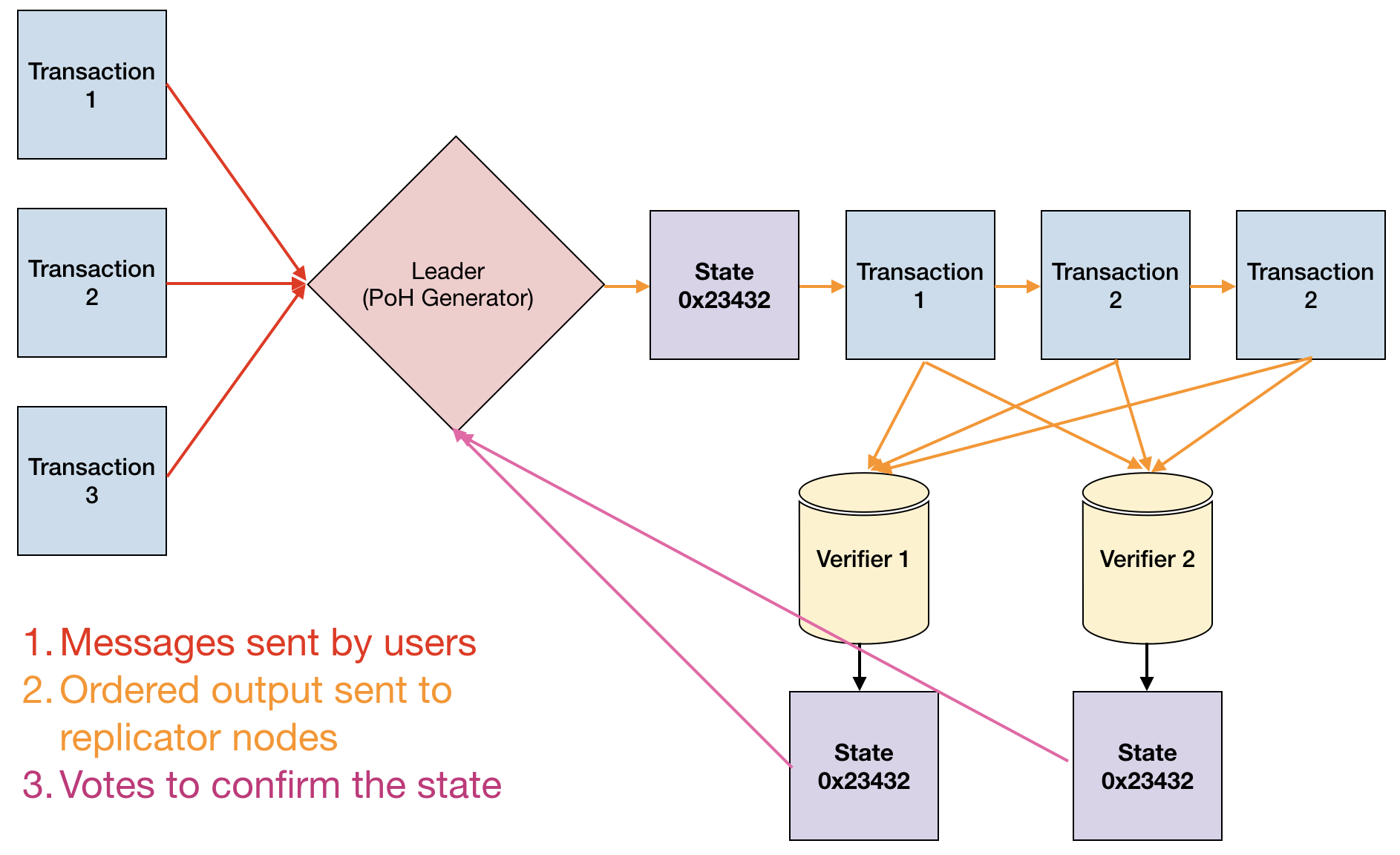
A leader slot lasts for a fixed number of PoH ticks (currently configured at 800ms worth of hashes). During its slot, the leader ingests transactions from clients, orders them into the PoH stream, and produces a block that is streamed to the rest of the network. At the end of its slot, the next leader in the schedule takes over, continuing the PoH sequence from where the previous leader stopped. If a leader fails to produce a block during its slot — due to a crash, network partition, or malicious behavior — the slot is skipped and the next leader begins its rotation, with the gap in the PoH sequence serving as a verifiable record that time passed but no block was produced.
The data plane uses a protocol called Turbine, which is designed to maximize the use of network bandwidth while minimizing the data each individual validator must transmit. When a leader produces a block, it does not broadcast the entire block to every validator. Instead, the block is broken into small packets called shreds using Reed-Solomon erasure coding. The leader sends each shred to a different validator in a tree structure called a fanout tree. Each validator that receives a shred retransmits it to a fixed number of downstream validators in the tree, and those validators retransmit to their downstream neighbors, and so on. This creates a propagation pattern similar to BitTorrent, where the network's aggregate bandwidth is used to distribute the block rather than requiring the leader to have enough bandwidth to serve every validator directly.
Erasure coding is critical to Turbine's design. The leader encodes each block into data shreds and recovery shreds such that any sufficiently large subset of the total shreds is enough to reconstruct the full block. Even if some shreds are lost due to network failures or if some validators in the fanout tree fail to retransmit, the remaining validators can still recover the complete block from the shreds they did receive. This provides resilience against both random packet loss and targeted adversarial behavior.
Gulf Stream is Solana's transaction forwarding protocol, which eliminates the traditional mempool used by most blockchain networks. In a conventional blockchain, transactions are broadcast to the entire network and stored in each node's mempool until they are included in a block. This approach wastes bandwidth, as every transaction is transmitted to every node regardless of whether that node will process it. Gulf Stream instead forwards transactions directly to the expected leader. Because the leader schedule is known in advance (derived from the PoH state), clients and validators can determine which validator will be the leader for upcoming slots and forward transactions accordingly.
When a client submits a transaction, it includes a recent blockhash (a reference to a recent PoH checkpoint) that serves as a transaction lifetime marker. The transaction is valid only for a limited number of slots after the referenced blockhash. If the transaction is not processed within that window, it expires and the client must resubmit it with a more recent blockhash. This expiration mechanism prevents stale transactions from accumulating and allows validators to prune unprocessed transactions efficiently, keeping memory usage bounded without maintaining a global mempool.
The combination of known leader schedules, direct transaction forwarding, and transaction expiration means that by the time a validator becomes the leader, it already has most of the transactions it needs to build its block. There is no need to wait for mempool synchronization or to gossip unconfirmed transactions across the network. This design reduces confirmation latency because transactions arrive at the leader before it begins its slot, and it reduces network bandwidth consumption because transactions are forwarded along targeted paths rather than broadcast to all validators.
Network Design
การออกแบบเครือข่ายของ Solana มีศูนย์กลางอยู่ที่ระบบผู้นำแบบหมุนเวียน โดยที่ validators ผลัดกันสร้างบล็อก ผู้นำมีหน้าที่รับผิดชอบในการจัดลำดับธุรกรรมขาเข้าลงในสตรีม PoH และเผยแพร่บล็อกผลลัพธ์ไปยังเครือข่าย ผู้นำจะถูกเลือกผ่านอัลกอริธึมแบบถ่วงน้ำหนักเดิมพัน และทราบกำหนดการหมุนเวียนล่วงหน้า ช่วยให้เครือข่ายเพิ่มประสิทธิภาพการส่งต่อธุรกรรมได้
โปรโตคอลกัลฟ์สตรีมช่วยลดความจำเป็นในการใช้ mempool แบบเดิม โดยช่วยให้ลูกค้าสามารถส่งต่อธุรกรรมโดยตรงไปยังผู้นำที่กำลังจะมาถึงได้ เมื่อลูกค้าส่งธุรกรรม มันจะถูกส่งต่อไปยังผู้นำที่คาดหวังตามกำหนดการหมุนเวียน หากผู้นำปัจจุบันไม่สามารถประมวลผลธุรกรรมได้ ก็จะส่งต่อไปยังผู้นำที่คาดหวังคนถัดไป การออกแบบนี้ช่วยลดเวลาแฝงในการยืนยัน และอนุญาตให้ validators ดำเนินธุรกรรมล่วงหน้า เพิ่มประสิทธิภาพปริมาณงานให้ดียิ่งขึ้น
การเผยแพร่ธุรกรรมใช้วิธีการแบบหลายชั้น ลูกค้าส่งธุรกรรมไปที่ validators ซึ่งส่งต่อไปยังผู้นำปัจจุบันหรือที่กำลังจะมาถึง ผู้นำจัดลำดับธุรกรรมลงในสตรีม PoH สร้างการเรียงลำดับทั้งหมด เมื่อจัดลำดับแล้ว ผู้นำจะส่งสตรีม PoH และข้อมูลธุรกรรมไปยัง validators ซึ่งจะตรวจสอบลำดับ PoH และดำเนินธุรกรรมแบบขนาน
การออกแบบเครือข่ายยังรวมถึงโปรโตคอลการแพร่กระจายบล็อกกังหันที่แบ่งบล็อกออกเป็นแพ็คเก็ตขนาดเล็กและกระจายไปทั่วเครือข่ายในโครงสร้างแบบต้นไม้ วิธีการนี้จะช่วยลดความต้องการแบนด์วิธสำหรับ validators แต่ละรายการให้เหลือน้อยที่สุด ในขณะเดียวกันก็รับประกันการแพร่กระจายของบล็อกอย่างรวดเร็ว เมื่อรวมกับความสามารถของ PoH ในการตรวจสอบลำดับของธุรกรรม สถาปัตยกรรมนี้ช่วยให้ Solana บรรลุปริมาณงานสูงโดยไม่ต้องเสียสละการกระจายอำนาจ
Proof of History
Proof of History is a sequence of computations that provides a cryptographic way to verify the passage of time between two events. It uses a sequential pre-image resistant hash function — specifically SHA-256 — that is run continuously, with the previous output used as the next input. Periodically, the current count and hash output are recorded, and each recorded sample can be verified by an external computer in the time it takes to evaluate the hash function from the starting state to the recorded sample.
The construction is straightforward. Starting from some initial hash value hash_0, the PoH generator computes:
hash_1 = SHA256(hash_0)
hash_2 = SHA256(hash_1)
hash_3 = SHA256(hash_2)
...
hash_n = SHA256(hash_{n-1})
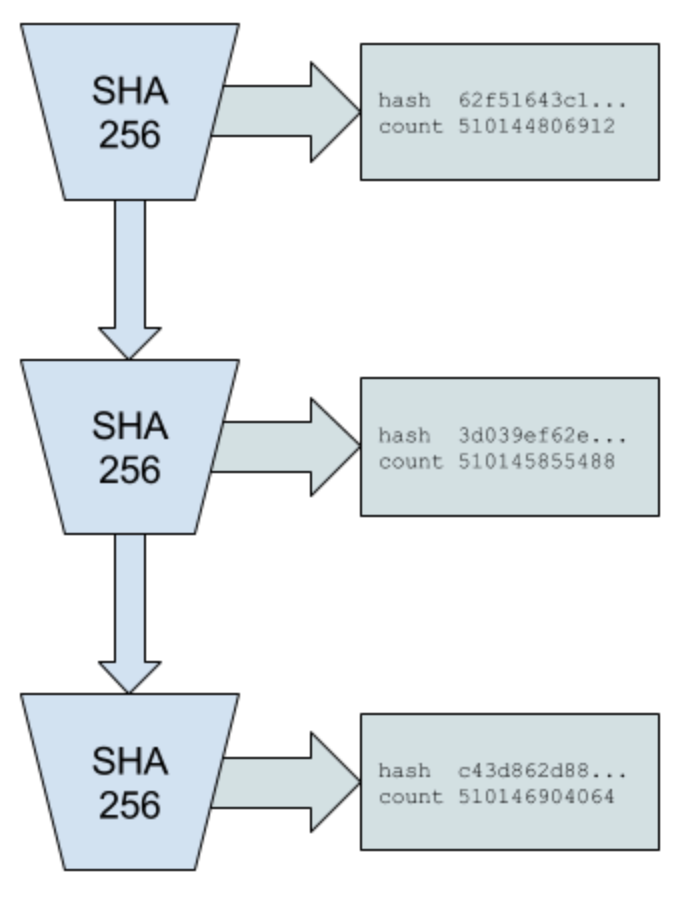
Each hash in the sequence can only be computed after the previous one. Because SHA-256 is pre-image resistant, there is no known way to find hash_n without computing all intermediate hashes hash_1 through hash_{n-1}. This property means the sequence acts as a verifiable delay function (VDF): producing n hashes requires sequential work proportional to n, and no amount of parallel hardware can accelerate the computation. The elapsed wall-clock time to generate n hashes on a given processor provides a lower bound on the real time that passed during generation.
The critical asymmetry exploited by PoH is between generation and verification. While the hash chain must be generated sequentially on a single core, it can be verified in parallel by splitting it into segments. If a verifier receives the sequence along with checkpoints (hash value and counter pairs), it can divide the work among multiple cores. For example, given checkpoints at positions 0, 1000, 2000, and 3000, four cores can simultaneously verify the segments [0,1000], [1000,2000], [2000,3000] by each recomputing 1000 hashes and checking that the endpoint matches. This means verification is approximately c times faster than generation, where c is the number of cores available to the verifier.
Generation (sequential, single core):

  hash_0 → hash_1 → hash_2 → ... → hash_999 → hash_1000 → ... → hash_2000

Verification (parallel, multi-core):

  Core 1: hash_0    → ... → hash_999  ✓ matches checkpoint
  Core 2: hash_1000 → ... → hash_1999 ✓ matches checkpoint
  Core 3: hash_2000 → ... → hash_2999 ✓ matches checkpoint
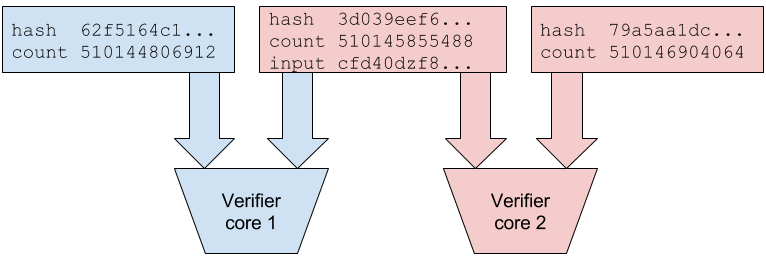
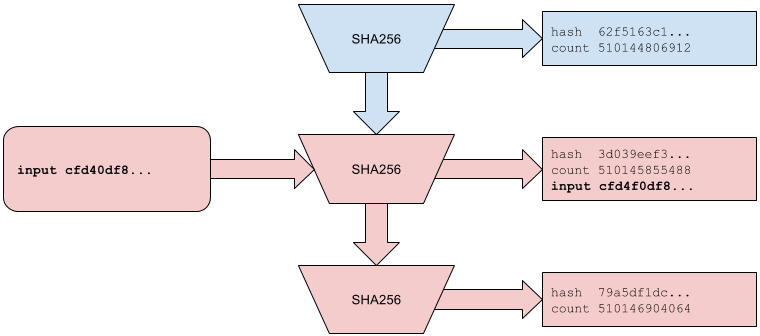
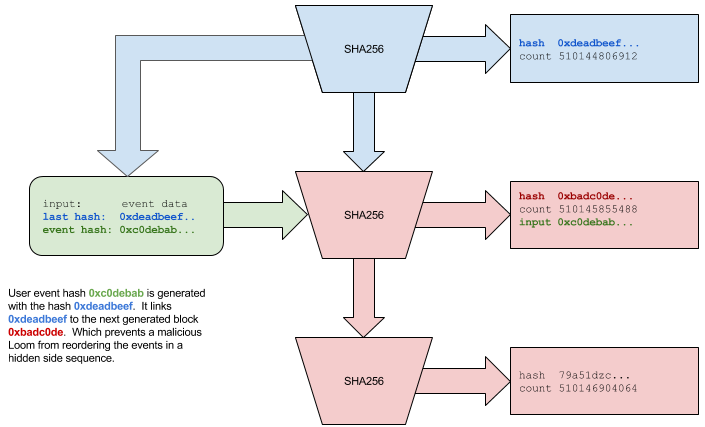
Data can be inserted into the PoH sequence to create timestamps. When external data — such as a transaction hash, a photograph of a newspaper front page, or any arbitrary bytes — needs to be timestamped, it is appended to the current hash state and included in the next hash computation. For example, if the current state is hash_n and external data D arrives, the generator computes hash_{n+1} = SHA256(hash_n || SHA256(D)), where || denotes concatenation. The PoH record then includes the entry (n+1, D, hash_{n+1}), proving that data D existed before hash_{n+1} was computed and after hash_n was computed. The data insertion is irreversible: removing or altering D would change hash_{n+1} and every subsequent hash in the chain.
This data insertion mechanism provides a total ordering of events. If event A is inserted at position n and event B is inserted at position m where n m, then the hash chain proves that A was recorded before B. The number of hashes between positions n and m provides a lower bound on the time that elapsed between the two events. This ordering is non-interactive — any observer who has access to the hash chain can independently verify the ordering without communicating with the generator or any other observer.
The security of PoH rests on the pre-image resistance of SHA-256. An attacker who wants to forge a PoH sequence — inserting a different event at a given position while maintaining a valid hash chain — would need to recompute the entire chain from the point of forgery. Because the generator is running continuously at the maximum speed of a single core, the attacker's forged chain would always be behind the legitimate chain. To catch up, the attacker would need hardware that is faster than the generator's hardware on a single-core sequential SHA-256 computation, which is bounded by the laws of physics and the current state of semiconductor technology. This makes PoH manipulation economically and physically impractical for any reasonably provisioned generator.
Proof of History
Proof of History เป็นฟังก์ชันหน่วงเวลาที่ตรวจสอบได้ซึ่งใช้งานเป็นห่วงโซ่แฮชตามลำดับโดยใช้ SHA-256 ตัวสร้าง PoH คำนวณแฮช SHA-256 อย่างต่อเนื่อง โดยใช้แต่ละเอาต์พุตเป็นอินพุตสำหรับแฮชถัดไป สิ่งนี้จะสร้างลำดับลูกโซ่โดยที่แต่ละแฮชสามารถคำนวณได้หลังจากแฮชก่อนหน้าเท่านั้น สร้างการเรียงลำดับชั่วคราวที่ตรวจสอบได้ ข้อกำหนดในการคำนวณเพื่อสร้างแต่ละแฮชบังคับให้มีการหน่วงเวลาขั้นต่ำระหว่างเหตุการณ์
คุณสมบัติหลักของ PoH คือ มีราคาถูกในการตรวจสอบแต่มีราคาแพงในการผลิต ผู้ตรวจสอบสามารถตรวจสอบลำดับแฮชทั้งหมดแบบขนานโดยแยกออกเป็นส่วนๆ และตรวจสอบแต่ละส่วนแยกจากกัน จากนั้นตรวจสอบว่าส่วนต่างๆ เชื่อมต่อกันอย่างถูกต้อง อย่างไรก็ตาม การสร้างจะต้องเป็นไปตามลำดับ — ไม่มีวิธีใดที่จะคาดเดาผลลัพธ์ของห่วงโซ่แฮชได้โดยไม่ต้องคำนวณทุกขั้นตอนระหว่างกลางจริงๆ ความไม่สมดุลระหว่างการสร้างและการตรวจสอบนี้คือสิ่งที่ทำให้ PoH ใช้งานได้จริง
เหตุการณ์ภายนอกและข้อมูลธุรกรรมจะถูกแทรกลงในลำดับ PoH โดยการผสมเหตุการณ์เหล่านั้นลงในห่วงโซ่แฮช เมื่อธุรกรรมมาถึง แฮชของธุรกรรมจะถูกรวมเข้ากับสถานะ PoH ปัจจุบัน สร้างบันทึกที่พิสูจน์ว่ามีธุรกรรมอยู่ที่จุดนั้นในลำดับ ตัวสร้าง PoH จะบันทึกจุดตรวจสอบเป็นระยะ โดยเผยแพร่ค่าแฮชปัจจุบันพร้อมกับจำนวนแฮชที่คำนวณตั้งแต่จุดตรวจสอบครั้งล่าสุด จุดตรวจสอบเหล่านี้อนุญาตให้ validators ตรวจสอบลำดับ PoH ได้อย่างมีประสิทธิภาพโดยไม่ต้องคำนวณทุกแฮชใหม่
ลำดับ PoH ทำหน้าที่เป็นนาฬิกาเข้ารหัสสำหรับทั้งเครือข่าย เนื่องจากห่วงโซ่แฮชเป็นแบบต่อเนื่องและตรวจสอบได้ โหนดใดๆ จึงสามารถพิสูจน์ได้ว่าระยะเวลาหนึ่งผ่านไประหว่างสองเหตุการณ์ เพียงแค่แสดงแฮชที่ถูกคำนวณในช่วงเวลานั้น ซึ่งช่วยลดความจำเป็นที่โหนดจะต้องเชื่อถือการประทับเวลาภายนอกหรือประสานงานซึ่งกันและกันเพื่อสร้างลำดับชั่วคราว ซึ่งช่วยขจัดปัญหาคอขวดพื้นฐานในฉันทามติบล็อกเชนแบบดั้งเดิม
Proof of History Sequence
The Proof of History sequence is a continuous stream of hash computations that serves as the backbone of Solana's temporal ordering system. The sequence begins with an arbitrary seed value and proceeds indefinitely, with the generator computing SHA-256 hashes as fast as the underlying hardware allows. Alongside the hash values, the generator maintains a monotonically increasing counter that records the total number of hashes computed since the sequence began. This counter serves as the canonical "clock tick" for the network.
The PoH output is recorded as a series of entries, each containing the counter value, the hash output, and optionally any data that was mixed into the hash at that position. Not every hash is recorded — the generator may output entries at regular intervals (for example, every 800,000 hashes), producing checkpoints that divide the sequence into verifiable segments. Between checkpoints, the generator may also produce entries at irregular intervals whenever data is inserted into the sequence. The complete sequence of entries forms the PoH log, which serves as a verifiable timeline for all events on the network.
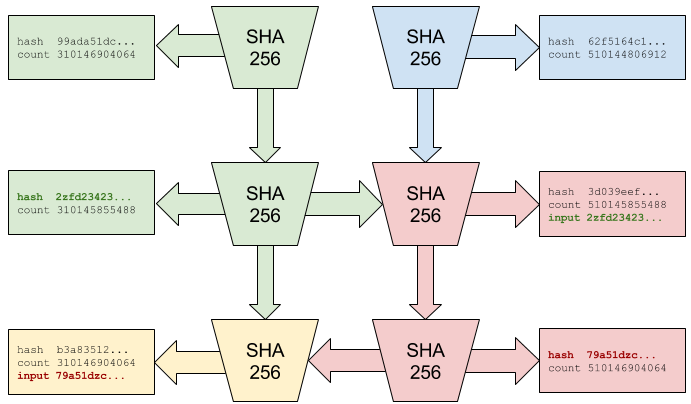
Multiple data items can be inserted at the same PoH index by hashing them together before mixing into the state. For example, if transactions Tx_1 and Tx_2 arrive simultaneously, the generator computes hash_{n+1} = SHA256(hash_n || SHA256(Tx_1) || SHA256(Tx_2)). The ordering within a single PoH index is determined by the generator (the leader), while the ordering between different PoH indices is determined by the hash chain. This two-level ordering scheme provides both fine-grained (intra-tick) and coarse-grained (inter-tick) temporal resolution.
Verification of the PoH sequence proceeds in two phases. In the first phase, a verifier checks the structural integrity of the hash chain by recomputing hashes between checkpoints and confirming that the computed output matches the recorded checkpoint value. This can be parallelized across multiple cores, with each core independently verifying one segment. In the second phase, the verifier checks that data insertions are correct by confirming that the hash at each insertion point correctly incorporates the declared data. Both phases can run simultaneously on different cores, making verification significantly faster than generation.
The PoH sequence also supports light proofs. A node that wants to prove that a specific event occurred at a specific position in the PoH sequence need not transmit the entire hash chain. Instead, it can provide the event data, the PoH hash at the insertion point, the hashes at the surrounding checkpoints, and a compact proof that the checkpoints are part of the canonical PoH sequence (confirmed by validator votes). The verifier can then check the segment containing the insertion point and confirm the event's position without processing the full sequence.
A critical design consideration is the speed of the PoH generator. The generator should use the fastest available single-core hardware for SHA-256 computation, because the rate of hash production determines the "tick rate" of the cryptographic clock. If an adversary has access to significantly faster hardware, they could generate an alternative PoH sequence faster than the legitimate generator, potentially creating a forged timeline. In practice, the fastest SHA-256 hardware available is commodity ASIC or high-end CPU hardware, and the difference in single-core performance between the fastest and second-fastest hardware is small — typically within a factor of two. This means an attacker's forged sequence would still fall behind the legitimate sequence as long as the legitimate generator starts first and the attacker cannot sustain twice the single-core hash rate indefinitely.
The PoH sequence naturally handles the passage of time during periods of inactivity. When no transactions are being submitted, the generator continues to compute hashes, producing "empty ticks" that advance the clock without recording any events. These empty ticks prove that time passed even when no activity occurred, which is important for features like transaction expiration and for distinguishing between a leader that produced an empty slot (because no transactions arrived) and a leader that failed to produce any output at all.
Proof of History Sequence
ลำดับ Proof of History คือสายโซ่ต่อเนื่องของแฮช SHA-256 โดยแต่ละแฮชขึ้นอยู่กับเอาต์พุตก่อนหน้า ลำดับเริ่มต้นด้วยค่าเริ่มต้น ซึ่งถูกแฮชเพื่อสร้างเอาต์พุตแรก เอาต์พุตนี้จะกลายเป็นอินพุตสำหรับแฮชถัดไป และกระบวนการจะทำซ้ำอย่างไม่มีกำหนด ตัวสร้างยังรักษาตัวนับที่ติดตามจำนวนแฮชทั้งหมดที่คำนวณ ซึ่งทำหน้าที่เป็น "การประทับเวลา" ของ PoH สำหรับเหตุการณ์ใน ledger
เมื่อจำเป็นต้องแทรกข้อมูลลงในลำดับ (เช่น แฮชของธุรกรรมหรือลายเซ็น validator) ข้อมูลจะรวมกับสถานะแฮชปัจจุบันโดยใช้ฟังก์ชันผสมที่กำหนดขึ้น ตัวอย่างเช่น หากสถานะแฮชปัจจุบันคือ hash_n และเราต้องการแทรกข้อมูล D เราจะคำนวณ hash_{n+1} = SHA256(hash_n || D) โดยที่ || หมายถึงการต่อข้อมูลเข้าด้วยกัน จุดแทรกจะถูกบันทึกพร้อมกับค่าตัวนับ เพื่อพิสูจน์ว่ามีข้อมูล D อยู่ที่จุดเฉพาะนั้นในลำดับ
การตรวจสอบลำดับ PoH สามารถดำเนินการแบบขนานได้โดยการแยกสายโซ่ออกเป็นส่วนต่างๆ ตัวอย่างเช่น validator อาจได้รับจุดตรวจสอบ PoH ทุกๆ 10,000 แฮช ในการตรวจสอบลำดับระหว่างจุดตรวจสอบ validator สามารถแบ่งแฮช 10,000 รายการออกเป็น 100 ส่วน ส่วนละ 100 แฮช ตรวจสอบแต่ละส่วนแยกจากกันในแบบคู่ขนาน จากนั้นตรวจสอบว่าส่วนต่างๆ เชื่อมต่อกันอย่างถูกต้อง ซึ่งช่วยให้การตรวจสอบขยายขนาดในแนวนอนตามจำนวนคอร์ CPU ที่มีอยู่ได้
ลำดับยังสนับสนุนการพิสูจน์ที่มีประสิทธิภาพว่าเหตุการณ์สองเหตุการณ์เกิดขึ้นในลำดับเฉพาะ ด้วยการแทรกข้อมูลสองครั้งที่ค่าตัวนับ n และ m โดยที่ n m ใครๆ ก็สามารถตรวจสอบได้ว่าเหตุการณ์ที่ n เกิดขึ้นก่อนเหตุการณ์ที่ m โดยการตรวจสอบสายโซ่แฮชระหว่างจุดเหล่านั้น คุณสมบัตินี้ช่วยให้ Solana สร้างบันทึกประวัติที่ตรวจสอบได้ของเหตุการณ์ทั้งหมดในเครือข่าย โดยไม่ต้องกำหนดให้โหนดออนไลน์อย่างต่อเนื่องหรือเชื่อถือแหล่งเวลาภายนอก
Timestamp
Each hash and counter published by the PoH generator represents a unique timestamp. This timestamp is a proof that the data was created before the hash was generated. The PoH sequence can be used to embed wall-clock time estimates that validators collectively agree upon, creating a bridge between the cryptographic clock and human-readable time.
The mechanism works as follows. Each PoH tick represents a cryptographic timestamp — a position in the hash chain that can be verified but that does not directly correspond to a wall-clock time. To establish a mapping between PoH ticks and real-world time, validators periodically submit signed observations of their local wall-clock time along with the current PoH tick count. These observations are recorded in the PoH stream. After collecting observations from a sufficient number of validators, the network can compute a bounded estimate of the real-world time at each PoH tick by taking the stake-weighted median of the reported times.
Validator Timestamp Observations:

PoH Tick 500000:
  Validator A (10% stake): 2017-11-15T12:00:00.000Z
  Validator B (15% stake): 2017-11-15T12:00:00.012Z
  Validator C (20% stake): 2017-11-15T12:00:00.005Z
  Validator D (5% stake):  2017-11-15T12:00:00.008Z

Stake-weighted median → 2017-11-15T12:00:00.006Z
Bound: ±20ms (based on PoH tick rate and observation spread)
The bound on the wall-clock estimate depends on two factors: the variance in network propagation delays (which affects when different validators observe the same PoH tick) and the granularity of the PoH clock (which depends on the hash rate of the generator). On a 4GHz processor computing approximately 4 million SHA-256 hashes per second, the PoH clock has a resolution of approximately 0.25 microseconds per tick. Network propagation delays are typically on the order of tens to hundreds of milliseconds, so the bound on wall-clock estimates is dominated by network latency rather than PoH resolution.
This timestamp mechanism is important for several protocol features. Transaction expiration relies on timestamps to determine when a transaction's referenced blockhash has become too old. Stake lockup periods use timestamps to determine when staked tokens can be withdrawn. Oracle integrations use timestamps to verify the freshness of external data feeds. And any on-chain program that needs to implement time-dependent logic — such as scheduled payments, time-locked contracts, or rate limiting — can use the PoH-derived timestamps as a trusted time source.
A critical security property of PoH timestamps is that they cannot be manipulated by a single malicious leader. A leader could attempt to assign incorrect wall-clock times to PoH ticks, but because the wall-clock estimates are computed from the stake-weighted median of multiple validators' observations, a single malicious validator (even one with significant stake) cannot significantly skew the median. To shift the median by more than the normal observation variance, an attacker would need to control a majority of the stake, which would compromise the security of the consensus mechanism itself and is therefore outside the threat model.
The PoH clock also provides a mechanism for detecting leaders that are running at an abnormal rate. If a leader is generating PoH hashes significantly faster or slower than expected (relative to the observed wall-clock rate of previous leaders), validators can detect this discrepancy and reject blocks from that leader. This prevents attacks where a malicious leader attempts to compress or extend time by manipulating the rate of PoH generation. The expected PoH rate is calibrated based on the observed performance of the network's hardware, and validators maintain a running estimate of the normal rate to detect anomalies.
Timestamp
Proof of History ทำหน้าที่เป็นนาฬิกากระจายอำนาจที่กำหนดเวลาให้กับเหตุการณ์โดยไม่ต้องอาศัยเวลาของนาฬิกาแขวน แฮช PoH แต่ละรายการแสดงถึง "เครื่องหมายถูก" ที่ไม่ต่อเนื่องของนาฬิกาเข้ารหัส และค่าตัวนับจะทำหน้าที่เป็นการประทับเวลา เนื่องจากสายแฮชเป็นแบบต่อเนื่องและตรวจสอบได้ การประทับเวลาเหล่านี้จึงไม่น่าเชื่อถือ ผู้สังเกตการณ์ทุกคนสามารถตรวจสอบได้ว่าการประทับเวลานั้นถูกต้องโดยการตรวจสอบสายแฮช
ใน Solana แต่ละ validator สามารถสร้างลำดับ PoH ของตัวเองได้เมื่อทำหน้าที่เป็นผู้นำ เมื่อ validators หมุนเวียนผู้นำ พวกเขาจะซิงโครไนซ์ลำดับ PoH ของตนโดยใช้จุดตรวจสอบที่ยืนยันล่าสุดจากผู้นำคนก่อน สิ่งนี้ทำให้มั่นใจถึงความต่อเนื่องของบันทึกชั่วคราว แม้ว่า validators ที่แตกต่างกันจะผลัดกันสร้างบล็อกก็ตาม เครือข่ายสร้างไทม์ไลน์ตามรูปแบบบัญญัติโดยบรรลุข้อตกลงร่วมกันว่าลำดับ PoH ใดที่จะยอมรับเป็นส่วนหนึ่งของ ledger อย่างเป็นทางการ
ระบบจะจัดการกับการเลื่อนของสัญญาณนาฬิกาและความแปรปรวนในประสิทธิภาพของฮาร์ดแวร์ผ่านการผสมผสานระหว่างการหมุนเวียนผู้นำและความเห็นพ้องต้องกัน หากผู้นำที่เป็นอันตรายหรือผิดพลาดพยายามสร้างการประทับเวลา PoH ในอัตราที่ไม่ถูกต้อง (เร็วเกินไปหรือช้าเกินไป) validators สามารถตรวจจับสิ่งนี้ได้โดยการเปรียบเทียบอัตราเห็บ PoH กับตัวสร้าง PoH ในพื้นที่ของตนเอง การเบี่ยงเบนอย่างมีนัยสำคัญจากอัตราที่คาดไว้บ่งบอกถึงปัญหา และ validators สามารถปฏิเสธบล็อกจากผู้นำที่มีลำดับ PoH แตกต่างจากค่ามัธยฐานของเครือข่ายมากเกินไป
กลไกการประทับเวลานี้แก้ปัญหาพื้นฐานประการหนึ่งในระบบแบบกระจาย: การสร้างแนวคิดทั่วไปเกี่ยวกับเวลาโดยไม่มีหน่วยงานกลางที่เชื่อถือได้ ด้วยการใช้ PoH เป็นนาฬิกากระจายอำนาจ Solana ช่วยให้ validators ประมวลผลธุรกรรมแบบขนานในขณะที่ยังคงรักษาลำดับที่สอดคล้องกันทั่วโลก การประทับเวลายังจัดเตรียมรากฐานสำหรับฟีเจอร์ตามเวลา เช่น การหมดอายุของธุรกรรม การดำเนินการตามกำหนดการ และการวัดประสิทธิภาพ
Proof of Stake Consensus
Solana uses a Proof of Stake consensus mechanism called Tower BFT that is specifically designed to leverage the temporal guarantees provided by Proof of History. In Tower BFT, validators stake SOL tokens as collateral and vote on the validity of blocks produced by leaders. Validators earn rewards proportional to their stake for correctly participating in consensus, and they risk having their stake slashed if they violate the protocol rules. The stake-weighted voting ensures that the consensus decision reflects the economic interests of the network's stakeholders.
The fundamental innovation in Tower BFT is the use of PoH as a clock for implementing exponentially increasing lockout periods. When a validator votes on a block at a specific PoH slot, it commits to that fork of the ledger. Each consecutive vote on the same fork doubles the lockout period before the validator can switch to an alternative fork. Specifically, if a validator has made n consecutive votes on a particular fork, the lockout period before the oldest of those votes expires is 2^n PoH slots. This exponential growth means that after a modest number of consecutive votes (for example, 32), the lockout period becomes astronomically long — over 4 billion slots, which at typical slot times would take decades to expire.
Tower BFT Exponential Lockout:

Vote #  Lockout (slots)   Cumulative commitment
─────────────────────────────────────────────────
1       2                 Low — can switch forks quickly
2       4
3       8
4       16
5       32
...
12      4,096             Minutes of lockout
...
20      1,048,576         Hours of lockout
...
32      4,294,967,296     Effectively permanent (decades)
This lockout mechanism creates a natural finality gradient. A block that has received votes from validators representing a supermajority of stake, where those validators have many consecutive votes on the fork containing that block, is effectively finalized. Reverting such a block would require those validators to wait for their lockouts to expire — a period that grows exponentially and quickly becomes impractical. In practice, blocks achieve effective finality within seconds, as validators rapidly accumulate consecutive votes on the canonical fork.
The integration with PoH is what makes this lockout scheme practical. In traditional BFT systems, lockout periods would need to be measured in wall-clock time, which requires nodes to trust each other's clocks or engage in complex time-synchronization protocols. With PoH, lockout periods are measured in PoH slots — a verifiable, tamper-proof unit of time. Every validator can independently verify whether a given lockout has expired by checking the PoH sequence, without trusting any other node's clock. This eliminates the ambiguity that would otherwise make time-based lockouts vulnerable to manipulation.
Slashing is the mechanism by which validators are penalized for violating protocol rules. The primary slashable offense is equivocation: voting on two conflicting forks during a period when the validator should be locked out on one fork. If a validator votes on fork A and then votes on a conflicting fork B before their lockout on A expires, any observer who possesses both votes can construct a slashing proof. This proof demonstrates that the validator violated its lockout commitment, and the network can automatically destroy a portion of the validator's staked tokens as punishment. The economic cost of slashing makes equivocation irrational for any validator whose stake exceeds the potential profit from the attack.
Leader selection in Tower BFT is determined by the PoH sequence and the current stake distribution. The leader schedule is computed deterministically from a recent snapshot of the stake distribution and a seed derived from the PoH state. This computation is performed independently by every validator, and because both inputs (stake distribution and PoH state) are part of the consensus state, all honest validators arrive at the same leader schedule. The schedule is computed for upcoming epochs (periods of several hundred thousand slots), giving the network advance notice of which validator will lead each slot. This predictability enables the Gulf Stream transaction forwarding protocol and allows validators to prepare for their leadership slots in advance.
Validators that are not currently serving as leader participate in consensus by voting on blocks produced by the current leader. When a validator receives a block, it verifies the PoH sequence, executes the transactions in the block, and if everything is valid, casts a vote for that block by signing the block's hash along with the PoH slot number. These votes are themselves transactions that are submitted to the leader of the current slot for inclusion in the PoH stream. Once a block has received votes representing more than two-thirds of the total stake, it is considered confirmed and all validators can advance their local view of the finalized state.
Proof of Stake Consensus
กลไกฉันทามติของ Solana ที่เรียกว่า Tower BFT เป็นอัลกอริธึม Proof of Stake ที่ออกแบบมาโดยเฉพาะเพื่อใช้ประโยชน์จากคุณสมบัติชั่วคราวของ Proof of History ผู้ตรวจสอบจะเดิมพันโทเค็น SOL เพื่อเข้าร่วมฉันทามติและรับรางวัลจากการตรวจสอบความถูกต้องของบล็อก ระบบการลงคะแนนแบบถ่วงน้ำหนักหุ้นทำให้มั่นใจได้ว่า validators ที่มีผลประโยชน์ทางเศรษฐกิจมากกว่าในเครือข่ายจะมีอิทธิพลเหนือการตัดสินใจที่เป็นเอกฉันท์ตามสัดส่วนมากกว่า
นวัตกรรมหลักใน Tower BFT คือการใช้ระยะเวลาล็อคที่เพิ่มขึ้นแบบทวีคูณเมื่อมีการโหวตแต่ละครั้งติดต่อกัน เมื่อ validator โหวตให้กับแฮช PoH พวกเขายอมรับการแยกของ ledger สำหรับขีด PoH จำนวนหนึ่ง หากพวกเขาโหวตบล็อกถัดไปในทางแยกนั้น ระยะเวลาการล็อคจะเพิ่มเป็นสองเท่า สิ่งนี้สร้างแรงจูงใจทางเศรษฐกิจที่แข็งแกร่งสำหรับ validators ที่จะลงคะแนนเสียงบนส้อมเดิมต่อไป เนื่องจากการสลับส้อมจะต้องรอให้การล็อคก่อนหน้านี้หมดอายุ
โดยเฉพาะอย่างยิ่ง หาก validator โหวตบนบล็อกที่ประทับเวลา PoH t พวกเขาจะไม่สามารถลงคะแนนใน fork ที่ขัดแย้งกันจนกว่าเครื่องหมาย 2^n จะผ่านไป โดยที่ n คือจำนวนการโหวตติดต่อกันที่พวกเขาได้ทำบน fork ปัจจุบัน กลไกการล็อคแบบเอกซ์โปเนนเชียลนี้ทำให้ระบบปลอดภัยจากการโจมตีระยะไกล ในขณะเดียวกันก็ทำให้สามารถสรุปผลได้อย่างรวดเร็ว เมื่อเสียงข้างมากของเดิมพันได้ลงคะแนนในบล็อกที่มีความลึกเพียงพอ บล็อกนั้นก็จะได้รับการสรุปผลอย่างมีประสิทธิภาพ
เงื่อนไขที่รุนแรงบังคับใช้พฤติกรรมที่ซื่อสัตย์ หาก validator โหวตให้กับส้อมสองอันที่ขัดแย้งกันในช่วงเวลาที่ควรถูกล็อค โทเค็นเหล่านั้นจะถูกเฉือน — โทเค็นที่เดิมพันจะถูกทำลายบางส่วนและจะถูกลบออกจากชุด validator ซึ่งทำให้ไม่สมเหตุสมผลในเชิงเศรษฐกิจที่จะพยายามคลุมเครือหรือพฤติกรรม Byzantine อื่นๆ การผสมผสานระหว่างการประทับเวลาที่ตรวจสอบได้ของ PoH และการล็อกเอาท์แบบเอ็กซ์โปเนนเชียลของ Tower BFT ทำให้เกิดกลไกที่เป็นเอกฉันท์ที่ทั้งรวดเร็วและปลอดภัย โดยบรรลุผลขั้นสุดท้ายในไม่กี่วินาที ขณะเดียวกันก็รักษาการรับประกันความปลอดภัยของระบบ BFT แบบดั้งเดิม
Streaming Proof of Replication
Proof of Replication (PoRep) addresses the data availability problem in blockchain systems: ensuring that sufficient copies of the ledger data exist across the network so that any participant can reconstruct the complete state. In many blockchain designs, there is no verifiable mechanism to ensure that validators are actually storing the data they claim to store. A validator might discard historical data after processing it, relying on other validators to maintain copies. If enough validators adopt this strategy, the network's data redundancy degrades and the ledger may become unrecoverable.
Solana implements a streaming version of PoRep that allows validators to continuously prove they are storing and replicating ledger segments. The approach is based on encrypting the ledger data with a validator-specific key and then proving that the encrypted data exists and is stored correctly. Because each validator's encrypted copy is unique (due to the validator-specific key), a validator cannot fake their storage proof by copying another validator's encrypted data.
The encryption process uses CBC (Cipher Block Chaining) mode, where each encrypted block depends on the plaintext of the current block and the ciphertext of the previous block. This chaining property is essential: to produce the encrypted version of block n, the validator must possess both the plaintext of block n and the ciphertext of block n-1. This means the validator cannot compute arbitrary encrypted blocks without having processed all preceding blocks, ensuring that the encrypted ledger is a faithful replica of the original data.
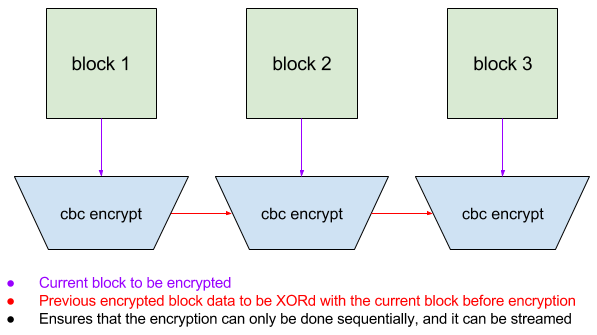
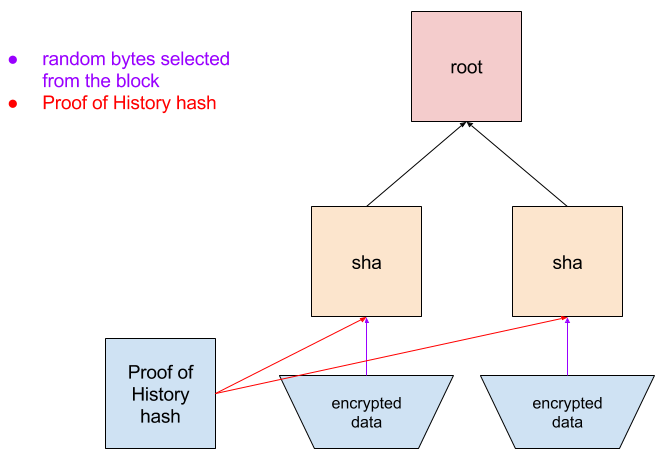
The validator-specific encryption key is derived from the validator's identity (their public key) and a PoH-derived seed that changes periodically. This periodic key rotation ensures that validators must re-encrypt their stored data at regular intervals, preventing them from performing the encryption once and then discarding the plaintext. The PoH seed for key derivation is chosen such that the encryption key for a given period cannot be known until that period begins, preventing validators from pre-computing encrypted data.
Storage challenges are issued through the PoH sequence. The network periodically selects random positions in the encrypted ledger and requests validators to provide the encrypted block at that position along with a Merkle proof demonstrating its position in the validator's encrypted ledger tree. Because the challenge positions are derived from the PoH state (which cannot be predicted in advance), validators cannot selectively store only the blocks that they expect to be challenged on. They must store the complete encrypted ledger to respond correctly to arbitrary challenges.
The verification of challenge responses is efficient. A verifier needs only the validator's public key, the PoH-derived encryption seed, the challenged position, and the Merkle root of the validator's encrypted ledger (which is published on-chain). The verifier computes the expected encryption key, checks that the provided encrypted block is consistent with the claimed plaintext at that position using CBC decryption, and verifies the Merkle proof against the published root. This entire verification can be done without accessing the validator's full encrypted ledger.
The streaming aspect of Solana's PoRep means that the encryption and proof generation happen continuously as new blocks are produced, rather than in discrete rounds. As the leader produces new blocks, validators encrypt them into their local PoRep store immediately. Challenge responses can be generated at any time by looking up the requested position in the local encrypted ledger and constructing a Merkle proof. This continuous operation ensures that proof of replication is always current and does not introduce latency spikes from periodic proof generation.
The combination of PoRep with PoH creates a complete accountability framework for data storage. PoH provides verifiable timestamps that record when data was created, and PoRep provides verifiable proofs that the data is being stored and replicated across the network. Together, they ensure that the blockchain's historical data remains available and intact, even if individual validators leave the network or attempt to discard data to reduce their storage costs.
Streaming Proof of Replication
Proof of Replication (PoRep) เป็นกลไกที่ช่วยให้ validators พิสูจน์ได้ว่ากำลังจัดเก็บข้อมูล ledger โดยไม่ต้องเปิดเผยข้อมูลหรือต้องใช้การคำนวณอย่างเข้มข้น Solana ใช้ PoRep เวอร์ชันสตรีมมิ่ง โดยที่ validators แสดงให้เห็นอย่างต่อเนื่องว่ากำลังจำลองสถานะบล็อกเชน นี่เป็นสิ่งสำคัญสำหรับการรักษาความปลอดภัยเครือข่าย เนื่องจากช่วยให้แน่ใจว่าข้อมูล ledger มีการกระจายอย่างเหมาะสมทั่วทั้ง validators และไม่กระจุกตัวอยู่ในตำแหน่งบางแห่ง
กลไก PoRep ทำงานโดยให้ validators เข้ารหัสเซ็กเมนต์ของ ledger โดยใช้การเข้ารหัสโหมด CBC (Cipher Block Chaining) พร้อมด้วยคีย์เฉพาะ validator ที่ได้มาจากข้อมูลระบุตัวตน กระบวนการเข้ารหัสนั้นทำให้แต่ละบล็อกที่เข้ารหัสนั้นขึ้นอยู่กับบล็อกก่อนหน้า สร้างสายโซ่ที่ไม่ซ้ำกันสำหรับแต่ละ validator การทำเช่นนี้จะป้องกันไม่ให้ validators คัดลอกข้อมูลที่เข้ารหัสจากกัน โดย validator แต่ละตัวจะต้องจัดเก็บและประมวลผลข้อมูล ledger ดั้งเดิมเพื่อสร้างเวอร์ชันที่เข้ารหัสที่ไม่ซ้ำกัน
เครือข่ายจะออกคำถามท้าทาย validators เป็นระยะ โดยขอให้จัดเตรียมบล็อกที่เข้ารหัสเฉพาะ เนื่องจากการเข้ารหัสเป็นแบบลูกโซ่ validator จะต้องจัดเก็บบล็อกก่อนหน้าทั้งหมดเพื่อสร้างการตอบสนองที่ถูกต้อง validator ส่งบล็อกที่เข้ารหัสพร้อมกับหลักฐาน Merkle ที่แสดงตำแหน่งใน ledger ที่เข้ารหัส เครือข่ายสามารถตรวจสอบหลักฐานนี้ได้อย่างรวดเร็วโดยไม่จำเป็นต้องถอดรหัสหรือเข้ารหัสข้อมูลอีกครั้ง
วิธีการสตรีมไปยัง PoRep นี้มีค่าใช้จ่ายต่ำเมื่อเทียบกับระบบพิสูจน์การจัดเก็บแบบดั้งเดิม เครื่องมือตรวจสอบสามารถเข้ารหัสข้อมูลเมื่อมาถึงและตอบสนองต่อความท้าทายโดยมีเวลาแฝงน้อยที่สุด ระบบยังเปิดใช้งานการกู้คืนในกรณีที่ข้อมูลสูญหาย หาก validator สูญเสียส่วนหนึ่งของ ledger ก็สามารถดาวน์โหลดใหม่จาก validators อื่นและเข้ารหัสอีกครั้งได้ การผสมผสานระหว่าง PoRep กับการประทับเวลา PoH จะสร้างระบบความรับผิดชอบที่สมบูรณ์ ซึ่งเครือข่ายสามารถตรวจสอบทั้งเมื่อมีการสร้างข้อมูลและจัดเก็บอย่างเหมาะสมผ่านเครือข่าย validator
System Architecture
Solana's system architecture is organized as a multi-stage pipeline, analogous to the instruction pipeline in a modern CPU. Each stage of the pipeline performs a specific function, and multiple stages operate concurrently on different batches of transactions. This pipelining ensures that the hardware is utilized continuously — while one batch of transactions is being executed, the next batch is having its signatures verified, and the batch after that is being fetched from the network. The result is a system that achieves throughput limited by the slowest pipeline stage rather than the sum of all stage latencies.
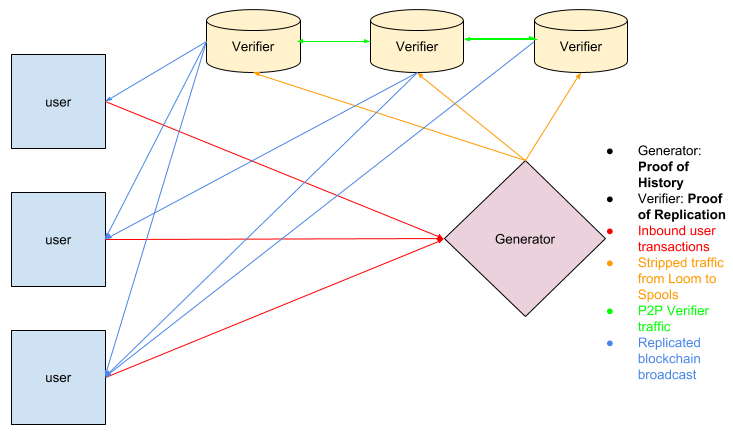
The Transaction Processing Unit (TPU) is the core component of the pipeline. It consists of four stages that process transactions sequentially within each stage but concurrently across stages:
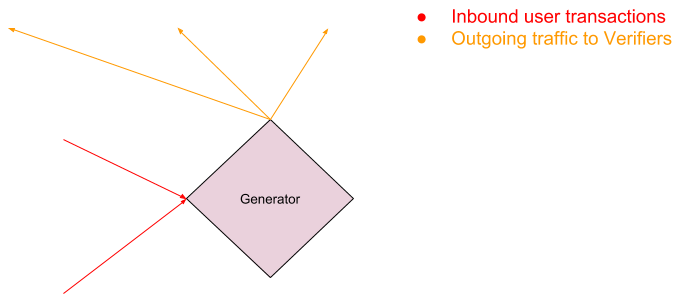
The Fetch stage receives transaction packets from the network. Transactions arrive via UDP, and the fetch stage groups them into batches for the next pipeline stage. UDP is used instead of TCP because the overhead of TCP connection management and congestion control is unnecessary when transactions are small, independently verifiable, and can be safely dropped and retried. The fetch stage also performs basic structural validation, discarding malformed packets before they consume resources in later stages.
The SigVerify stage performs cryptographic signature verification on each transaction. Solana uses Ed25519 signatures, and this stage offloads the verification to GPUs using CUDA. A single modern GPU can verify over 900,000 Ed25519 signatures per second by executing thousands of verification operations in parallel across its CUDA cores. This is the key to removing signature verification as a bottleneck — while a single CPU core might verify only a few thousand signatures per second, a commodity GPU can handle nearly a million. The GPU receives a batch of transactions, verifies all signatures in parallel, and returns the results indicating which transactions have valid signatures.
The Banking stage is where transactions are actually executed against the current state of the ledger. This stage uses Sealevel, Solana's parallel smart contract runtime. Sealevel analyzes each transaction to determine which accounts it reads from and writes to. Transactions that access disjoint sets of accounts can be executed in parallel across multiple CPU cores, because they cannot interfere with each other. Transactions that access overlapping accounts are serialized to prevent race conditions.
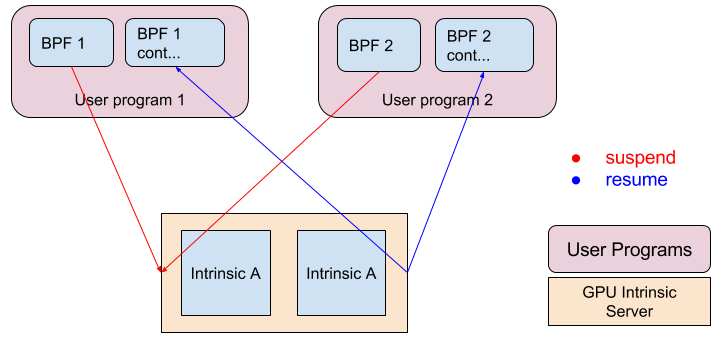
This account-level parallelism is possible because Solana programs (smart contracts) must declare upfront which accounts they will access. The runtime uses this declaration to build a dependency graph and schedule non-conflicting transactions across available CPU cores. Programs are executed in a sandboxed BPF (Berkeley Packet Filter) virtual machine, which provides memory safety and deterministic execution. The BPF runtime also enforces compute budgets to prevent any single transaction from consuming excessive resources.
The Write stage commits the executed transactions to the ledger and integrates them into the PoH sequence. The leader's PoH generator incorporates the transaction results into the hash chain, producing a PoH entry that timestamps the batch of executed transactions. The entry, along with the transaction data and execution results, is then transmitted to other validators via the Turbine protocol and written to local persistent storage.
The Cloudbreak state storage system is designed to support the parallelism required by the rest of the pipeline. Traditional blockchain state storage uses a single key-value store (such as LevelDB or RocksDB) that serializes all read and write operations. Cloudbreak uses memory-mapped files and a concurrent data structure that allows multiple threads to read and write different accounts simultaneously. Accounts are stored in separate memory regions, so accessing one account does not block access to another. This architecture ensures that the state storage layer does not become a bottleneck even when thousands of transactions are being executed in parallel.
The overall system architecture also includes the Archiver network, which provides long-term decentralized storage for historical ledger data. Active validators need only maintain the recent state and a sliding window of recent blocks. Older blocks are offloaded to Archiver nodes, which prove they are storing the data using the Proof of Replication mechanism described earlier. This separation of concerns allows validators to operate with bounded storage requirements while ensuring that the full history of the ledger remains available to any participant who needs it.
System Architecture
สถาปัตยกรรมระบบของ Solana ได้รับการออกแบบให้เป็นไปป์ไลน์ที่ขั้นตอนต่างๆ ของการประมวลผลธุรกรรมเกิดขึ้นพร้อมกัน หน่วยประมวลผลธุรกรรม (TPU) เป็นองค์ประกอบหลักที่รับผิดชอบในการจัดการธุรกรรมที่เข้ามา TPU ประกอบด้วยหลายขั้นตอน: ดึงข้อมูล (รวบรวมธุรกรรม) การตรวจสอบลายเซ็น การธนาคาร (การดำเนินการธุรกรรม) และการเขียน (ยินยอมที่จะจัดเก็บข้อมูล) แต่ละขั้นตอนดำเนินการแบบขนานในธุรกรรมที่แตกต่างกัน คล้ายกับการวางท่อ CPU
การตรวจสอบลายเซ็นจะถูกเร่งให้เร็วขึ้นโดยใช้ GPU ซึ่งมีประสิทธิภาพสูงในการดำเนินการเข้ารหัสแบบเส้นโค้งวงรี ซึ่งจำเป็นในการตรวจสอบลายเซ็นของธุรกรรม ด้วยการถ่ายงานที่ต้องใช้การคำนวณสูงนี้ไปยัง GPU ทำให้ Solana สามารถตรวจสอบลายเซ็นในอัตราที่เกิน 900,000 ต่อวินาทีบนฮาร์ดแวร์สินค้าโภคภัณฑ์ การตรวจสอบลายเซ็นแบบขนานนี้ช่วยป้องกันการตรวจสอบการเข้ารหัสไม่ให้กลายเป็นคอขวด แม้จะมีอัตราการทำธุรกรรมที่สูงมากก็ตาม
รันไทม์ Sealevel คือกลไกการดำเนินการสัญญาอัจฉริยะแบบขนานของ Solana ต่างจากบล็อกเชนแบบดั้งเดิมที่ดำเนินธุรกรรมตามลำดับ Sealevel วิเคราะห์ธุรกรรมเพื่อระบุบัญชีที่พวกเขาเข้าถึง และดำเนินธุรกรรมที่ไม่ขัดแย้งในแบบคู่ขนานบนแกน CPU หลายตัว ธุรกรรมที่เข้าถึงบัญชีเดียวกันจะได้รับการดำเนินการตามลำดับเพื่อรักษาความสอดคล้อง แต่ธุรกรรมที่เข้าถึงบัญชีที่แตกต่างกันสามารถดำเนินการพร้อมกันได้ ความขนานนี้เป็นไปได้เนื่องจาก PoH สร้างการเรียงลำดับทั่วโลก — validators สามารถทำธุรกรรมในลำดับใดก็ได้ ตราบใดที่ธุรกรรมเหล่านั้นใช้กับสถานะในลำดับที่ระบุ PoH
สถาปัตยกรรมยังรวมถึงส่วนประกอบที่ได้รับการปรับปรุงสำหรับการแพร่กระจายและการจัดเก็บข้อมูลแบบบล็อก โปรโตคอลการแพร่กระจายบล็อกกังหันใช้การเข้ารหัสการลบข้อมูลเพื่อแบ่งบล็อกออกเป็นแพ็กเก็ตขนาดเล็กที่กระจายไปทั่วเครือข่ายในโครงสร้างแบบต้นไม้ ช่วยลดความต้องการแบนด์วิดท์ให้เหลือน้อยที่สุด เครือข่าย Archivers มอบพื้นที่จัดเก็บข้อมูลแบบกระจายอำนาจสำหรับข้อมูลประวัติ ledger โดยใช้ PoRep เพื่อรับรองความพร้อมใช้งานของข้อมูล ส่วนประกอบเหล่านี้ร่วมกันสร้างระบบที่สามารถประมวลผลธุรกรรมนับแสนรายการต่อวินาที ในขณะที่ยังคงรักษาคุณสมบัติการกระจายอำนาจและความปลอดภัยของบล็อกเชน
Performance
The theoretical throughput of the Solana architecture is determined by three potential bottlenecks: network bandwidth, signature verification rate, and transaction execution rate. The system is designed so that improvements in any of these dimensions directly increase throughput, with the overall rate limited by whichever bottleneck is currently the tightest.
On a standard 1 gigabit per second (Gbps) network connection, the maximum data throughput is approximately 125 megabytes per second. A typical Solana transaction is 250 bytes including the signature, account addresses, instruction data, and metadata. At 250 bytes per transaction, a 1 Gbps connection can carry approximately 500,000 transactions per second. With 10 Gbps networking (increasingly available in data centers), this number rises to approximately 5 million transactions per second. The Turbine block propagation protocol ensures that the network's aggregate bandwidth is utilized efficiently, so the bottleneck is the leader's outbound bandwidth rather than the total network capacity.
Throughput Projections by Network Bandwidth:

Network    Bandwidth     Tx Size    Max Throughput
──────────────────────────────────────────────────
1 Gbps     125 MB/s      250 B      500,000 TPS
10 Gbps    1.25 GB/s     250 B      5,000,000 TPS
40 Gbps    5 GB/s        250 B      20,000,000 TPS
Signature verification, often the computational bottleneck in blockchain systems, is addressed through GPU parallelization. A single NVIDIA GTX 1080 Ti GPU can verify approximately 900,000 Ed25519 signatures per second. Higher-end GPUs and future hardware generations will increase this rate further. Because signature verification is embarrassingly parallel (each signature is independent), the verification rate scales linearly with the number of GPU cores. With multiple GPUs, a single node can verify millions of signatures per second, ensuring that cryptographic validation does not constrain the system.
The PoH generator runs on a dedicated CPU core, producing approximately 4 million SHA-256 hashes per second on a 4 GHz processor. This provides a clock resolution of 0.25 microseconds per tick, which is more than sufficient for ordering millions of transactions per second. The sequential nature of PoH generation means this component cannot be parallelized, but the hash rate is high enough that the PoH generator is not a bottleneck. As CPU clock speeds increase and SHA-256 instruction sets improve (Intel SHA Extensions, ARM Cryptography Extensions), the PoH tick rate will increase accordingly.
Transaction execution throughput depends on the complexity of the transactions and the degree of parallelism achievable. For simple value transfers that access only two accounts (sender and receiver), the execution rate is very high because most transfers involve different accounts and can be executed in parallel. For smart contract interactions that access shared state, parallelism is reduced and execution becomes the bottleneck. The Sealevel runtime is designed to maximize parallelism by executing non-conflicting transactions on different CPU cores, and modern server hardware with 32 or more cores provides substantial parallel execution capacity.
Pipeline Stage Throughput (approximate, current hardware):

Stage              Hardware         Throughput
─────────────────────────────────────────────────
Fetch              1 Gbps NIC       500,000 TPS
SigVerify          1x GTX 1080 Ti   900,000 SPS
Banking/Execute    32-core CPU      ~400,000 TPS (simple transfers)
PoH Generator      4 GHz core       4,000,000 hashes/sec
Write/Storage      NVMe SSD         ~1,000,000 IOPS
A critical property of Solana's performance model is that it scales with Moore's Law. As hardware improves across all dimensions — faster CPUs, more powerful GPUs, higher-bandwidth networks, faster storage — the system's throughput increases proportionally without requiring any changes to the protocol. This is a deliberate design choice that distinguishes Solana from blockchains whose throughput is limited by protocol-level constraints (such as fixed block sizes or fixed block intervals) that require governance decisions and hard forks to change. In Solana, the protocol automatically takes advantage of whatever hardware is available, meaning that the performance ceiling rises continuously as technology advances.
Latency is another critical performance dimension. The end-to-end latency from transaction submission to confirmation depends on several factors: network propagation time to the leader, the leader's slot length (currently approximately 400ms), the time for the block to propagate to validators via Turbine, and the time for validators to vote and reach confirmation (typically 1-2 additional slots). In total, a transaction submitted to the current leader can be confirmed in approximately 400ms to 800ms under normal conditions. This latency is orders of magnitude lower than proof-of-work blockchains (which require minutes) and comparable to or faster than most proof-of-stake systems.
Performance
สถาปัตยกรรมของ Solana ได้รับการออกแบบมาเพื่อให้บรรลุระดับประสิทธิภาพที่ปรับขนาดได้ด้วยการปรับปรุงฮาร์ดแวร์ตามกฎของมัวร์ สำหรับการเชื่อมต่อเครือข่ายมาตรฐาน 1 กิกะบิต ปริมาณงานสูงสุดตามทฤษฎีจะอยู่ที่ประมาณ 710,000 ธุรกรรมต่อวินาที โดยถือว่า 176 ไบต์ต่อธุรกรรม (รวมลายเซ็นและข้อมูลเมตา) การคำนวณนี้อิงตามแบนด์วิดท์เครือข่ายที่เป็นคอขวดหลัก โดยที่คอขวดในการคำนวณจะถูกลบออกผ่านการทำขนาน
การตรวจสอบลายเซ็นซึ่งมักเป็นปัจจัยจำกัดในประสิทธิภาพของบล็อกเชน จะถูกเร่งให้เร็วขึ้นโดยใช้ GPU แบบขนาน GPU ตัวเดียวสามารถตรวจสอบลายเซ็น ed25519 ได้มากกว่า 900,000 รายการต่อวินาที ซึ่งเกินขีดจำกัดปริมาณงานของเครือข่าย ซึ่งหมายความว่าการตรวจสอบลายเซ็นไม่ได้จำกัดประสิทธิภาพของระบบ — คอขวดจะเปลี่ยนไปที่แบนด์วิดท์เครือข่ายและการดำเนินการธุรกรรม สำหรับธุรกรรมง่ายๆ ที่โอนเฉพาะมูลค่าโดยไม่มีตรรกะของสัญญาอัจฉริยะที่ซับซ้อน ขั้นตอนการธนาคารสามารถประมวลผลธุรกรรมในอัตราที่ตรงกับอัตราอินพุตของเครือข่าย
ตัวสร้าง PoH ทำงานบนแกน CPU เฉพาะ ซึ่งสร้างแฮชประมาณ 4,000 ต่อมิลลิวินาทีบนโปรเซสเซอร์ 4GHz ในอัตรานี้ ลำดับ PoH จะให้การประทับเวลาที่มีความละเอียด 0.25 ไมโครวินาที ซึ่งเพียงพอสำหรับการสั่งซื้อธุรกรรมหลายล้านรายการต่อวินาที ลักษณะตามลำดับของการสร้าง PoH หมายความว่าส่วนประกอบนี้ไม่สามารถขนานกันได้ แต่ปริมาณงานสูงพอที่จะไม่จำกัดประสิทธิภาพโดยรวมของระบบ
เมื่อฮาร์ดแวร์ได้รับการปรับปรุง ปริมาณงานของ Solana ก็จะปรับขนาดตามไปด้วย เครือข่ายที่เร็วขึ้น GPU ที่ทรงพลังยิ่งขึ้น และ CPU ที่ได้รับการปรับปรุง ล้วนส่งผลให้อัตราการทำธุรกรรมสูงขึ้น ระบบได้รับการออกแบบมาเพื่อใช้ประโยชน์จากการปรับปรุงเหล่านี้โดยไม่ต้องเปลี่ยนโปรโตคอล วิธีการขยายขนาดนี้แตกต่างกับบล็อกเชนที่ถูกจำกัดโดยพื้นฐานโดยกลไกฉันทามติตามลำดับ ซึ่งช่วยให้ Solana บรรลุระดับประสิทธิภาพที่ก่อนหน้านี้คิดว่าเป็นไปไม่ได้ในระบบกระจายอำนาจ ในขณะที่ยังคงรักษาความปลอดภัยและการรับประกันการกระจายอำนาจ
Conclusion
This paper has presented a new blockchain architecture built on Proof of History, a mechanism for creating a verifiable, trustless record of time passage using sequential SHA-256 hashing. By establishing a cryptographic clock before consensus, PoH removes the coordination bottleneck that limits the throughput of existing blockchain systems. Validators no longer need to communicate extensively to agree on the ordering of events — the PoH sequence provides a canonical timeline that all participants can verify independently.
The key insight underlying Solana's design is that time is the missing primitive in distributed systems. Traditional consensus protocols must solve two problems simultaneously: agreeing on what happened and agreeing on when it happened. By separating these concerns — using PoH to establish when and consensus to confirm what — the system reduces the complexity of consensus from a coordination-intensive process to a simple confirmation step. This separation enables a pipeline architecture where block production, propagation, signature verification, and transaction execution all happen concurrently, maximizing hardware utilization.
The integration of PoH with the other components of the architecture produces a system with several distinctive properties. Tower BFT provides fast finality through exponentially increasing lockouts anchored to verifiable PoH timestamps. Gulf Stream eliminates the mempool by leveraging the predictable leader schedule that PoH enables. Turbine uses erasure coding and tree-structured propagation to distribute blocks efficiently. Sealevel executes non-conflicting transactions in parallel across multiple CPU cores. And Streaming Proof of Replication ensures that the ledger data is properly stored and replicated across the network.
The performance characteristics of this architecture are fundamentally different from those of previous blockchain designs. Instead of being limited by protocol-level constraints — fixed block sizes, fixed block intervals, sequential execution — Solana's throughput is limited only by the hardware available to validators. On current commodity hardware, the system can process hundreds of thousands of transactions per second with sub-second confirmation times. As hardware continues to improve following Moore's Law, these numbers will increase without requiring protocol changes or governance decisions.
The implications for blockchain adoption are significant. Many applications that require high throughput and low latency — decentralized exchanges, payment systems, gaming platforms, social networks, and Internet-of-Things data processing — have been unable to build on existing blockchain infrastructure due to performance limitations. Solana's architecture demonstrates that it is possible to build a blockchain that achieves performance levels comparable to centralized systems while maintaining the decentralization, security, and censorship resistance that make blockchains valuable. Proof of History provides the foundation for a new generation of decentralized applications that can operate at the scale demanded by global adoption.
Conclusion
Proof of History แสดงถึงความก้าวหน้าขั้นพื้นฐานในสถาปัตยกรรมบล็อกเชนโดยการแก้ปัญหาเรื่องเวลาที่จำกัดความสามารถในการปรับขนาดของ ledgers แบบกระจาย ด้วยการสร้างนาฬิกาเข้ารหัสลับที่ตรวจสอบได้ PoH ช่วยให้ validators สร้างการเรียงลำดับเหตุการณ์ชั่วคราวโดยไม่มีค่าใช้จ่ายด้านการสื่อสารที่ครอบคลุมซึ่งกำหนดโดยกลไกฉันทามติแบบดั้งเดิม นวัตกรรมนี้ช่วยขจัดปัญหาคอขวดที่สำคัญและช่วยให้การประมวลผลธุรกรรมสามารถขนานกันทั่วทั้งเครือข่ายได้
การบูรณาการ PoH เข้ากับส่วนประกอบของระบบที่ได้รับการปรับปรุง - การตรวจสอบลายเซ็นที่เร่งด้วย GPU การดำเนินการธุรกรรมแบบขนานผ่าน Sealevel และโปรโตคอลการแพร่กระจายบล็อกที่มีประสิทธิภาพ - สร้างบล็อกเชนที่สามารถประมวลผลธุรกรรมนับแสนรายการต่อวินาทีบนฮาร์ดแวร์สินค้าโภคภัณฑ์ ที่สำคัญกว่านั้น สถาปัตยกรรมได้รับการออกแบบให้ปรับขนาดได้ด้วยการปรับปรุงฮาร์ดแวร์ ซึ่งหมายความว่าประสิทธิภาพจะเพิ่มขึ้นอย่างต่อเนื่องเมื่อโปรเซสเซอร์เร็วขึ้นและเครือข่ายมีความสามารถมากขึ้น
การออกแบบของ Solana แสดงให้เห็นว่าประสิทธิภาพสูงและการกระจายอำนาจไม่ได้แยกจากกัน ด้วยการใช้ประโยชน์จาก PoH เป็นรากฐานสำหรับความเห็นพ้องต้องกันและการประสานงานของระบบ เครือข่ายบรรลุระดับการรับส่งข้อมูลที่เทียบได้กับฐานข้อมูลแบบรวมศูนย์ ในขณะที่ยังคงรักษาคุณสมบัติด้านความปลอดภัยและการต้านทานการเซ็นเซอร์ของบล็อกเชนแบบกระจายอำนาจ กลไกฉันทามติ Tower BFT แบบถ่วงน้ำหนักเดิมพันช่วยให้แน่ใจว่าเครือข่ายยังคงปลอดภัยจากนักแสดง Byzantine ในขณะที่บรรลุผลขั้นสุดท้ายอย่างรวดเร็ว
การนำสถาปัตยกรรมนี้ไปใช้ถือเป็นแนวทางปฏิบัติสำหรับเทคโนโลยีบล็อกเชนเพื่อขยายไปสู่การนำไปใช้ทั่วโลก แอปพลิเคชันที่ต้องการทรูพุตธุรกรรมสูง เช่น การแลกเปลี่ยนแบบกระจายอำนาจ แพลตฟอร์มเกม และระบบทางการเงิน สามารถสร้างบนโครงสร้างพื้นฐานแบบกระจายอำนาจอย่างแท้จริง โดยไม่กระทบต่อประสิทธิภาพการทำงาน Proof of History เปิดประตูสู่แอปพลิเคชันบล็อกเชนรุ่นใหม่ที่ก่อนหน้านี้ไม่สามารถทำได้เนื่องจากข้อจำกัดด้านความสามารถในการขยาย