Polygon
Mô phỏng Return on Work
Context
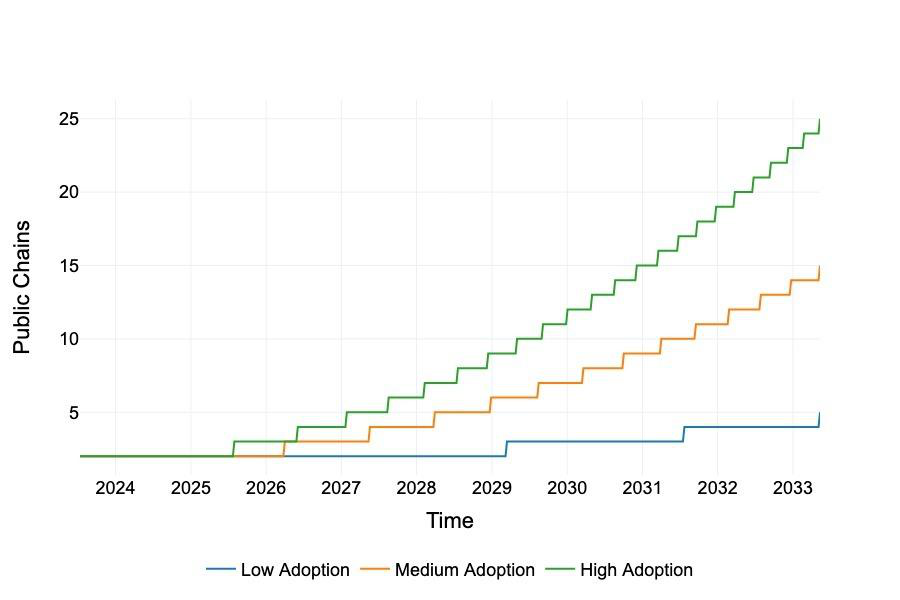
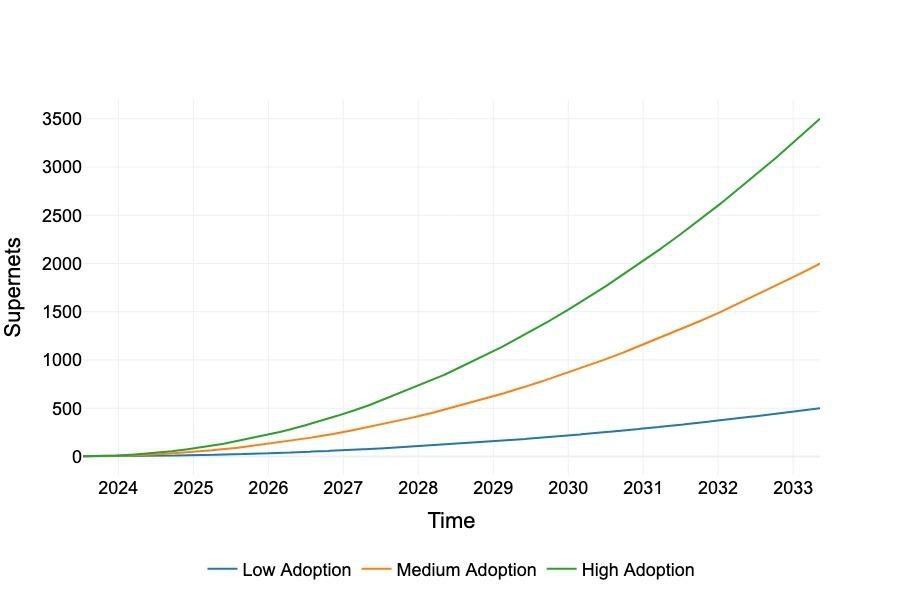
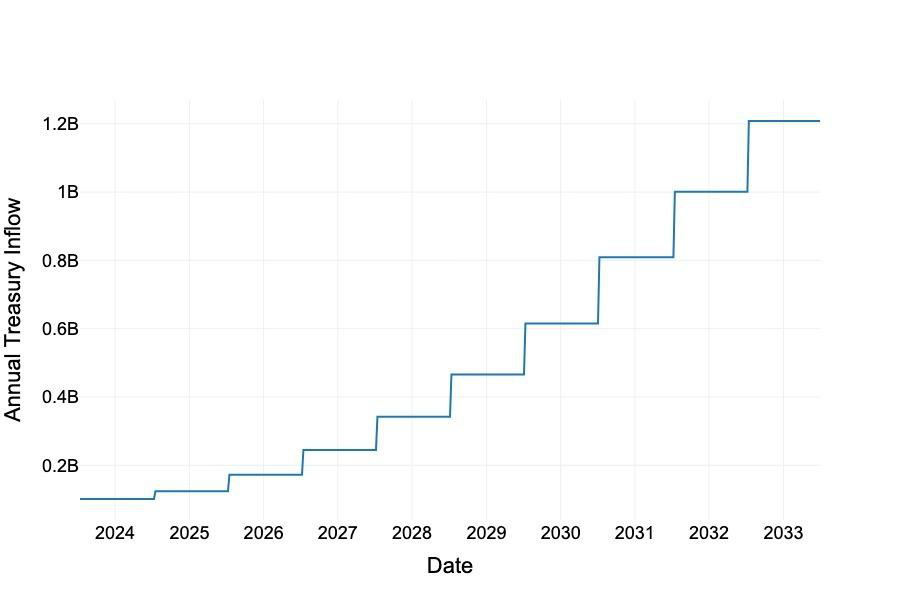
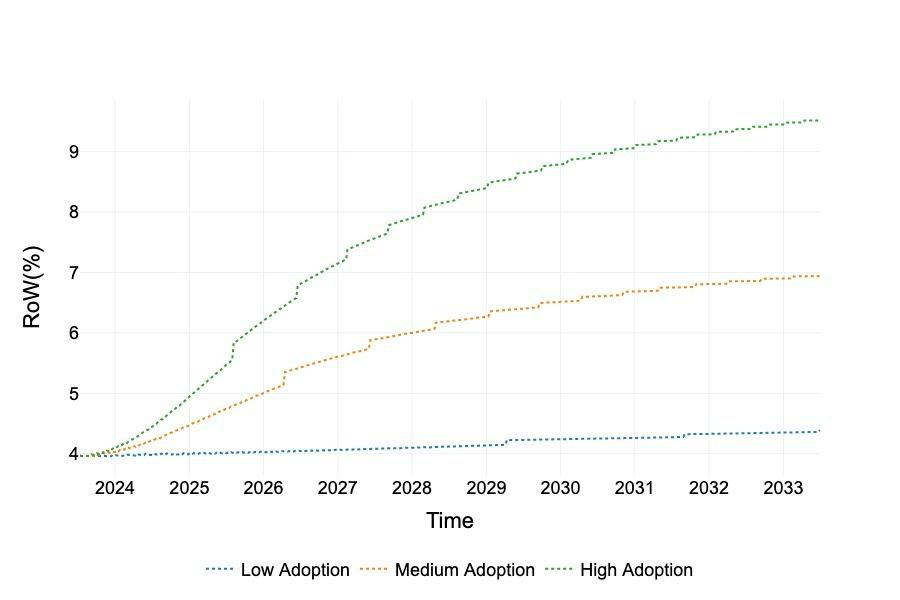
This figure appears in the economic analysis subsection, which translates chain growth projections and emission schedules into concrete return estimates for validators. The section defines 'return on work' as the annualized yield earned per unit of staked POL, combining both issuance-funded base rewards and fee revenue from securing multiple chains.
What This Figure Shows
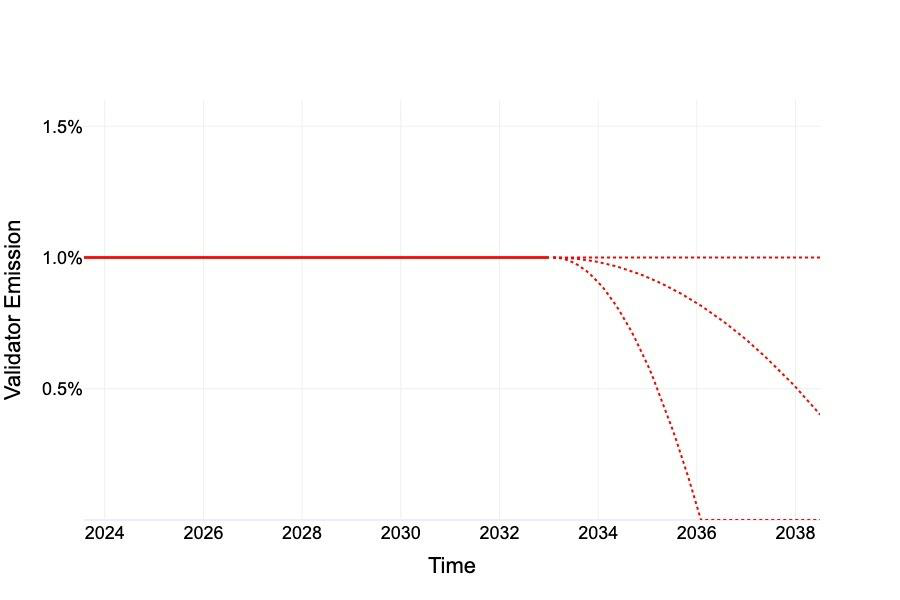
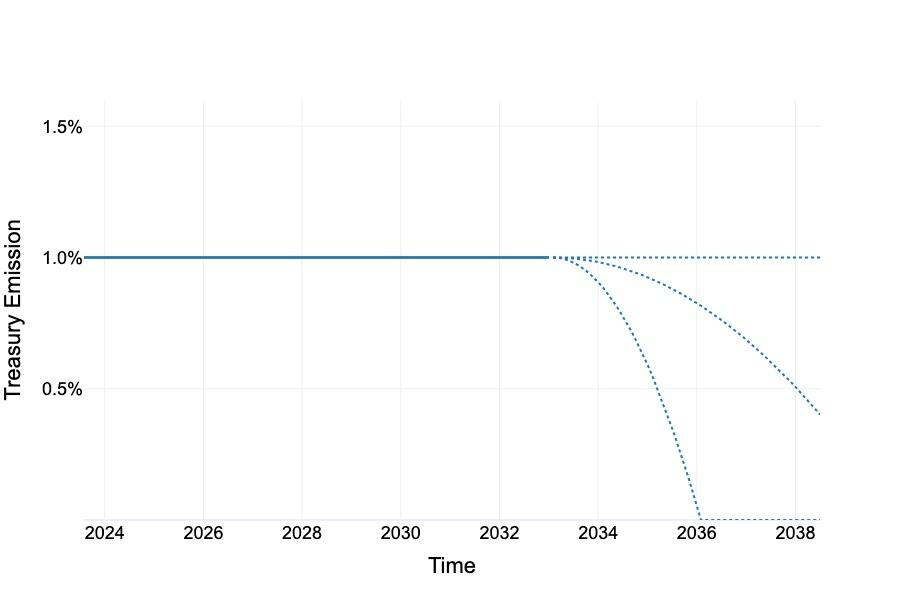
The chart plots simulated annual return on work for Polygon validators over time under the previously defined growth scenarios. In the early period, returns are dominated by POL issuance subsidies, which are high in percentage terms because total staked POL is small relative to the emission rate. As chain adoption grows and fee revenue accumulates, the fee component grows and required issuance can be reduced — validators maintain attractive yields while the protocol reduces inflation. In the optimistic scenario, fee income eventually exceeds issuance income, making validator participation economically self-sustaining.
Significance
Return on work is the key variable determining whether enough validators stake POL to secure Polygon chains. If returns fall below competing PoS opportunities, validators will unstake, reducing network security. This figure demonstrates that Polygon 2.0's economics remain competitive across a wide range of adoption outcomes and illustrates the flywheel: greater adoption creates higher fees, reducing inflation while improving incentives.