 Solana
PoH Generators Synchronization
Context
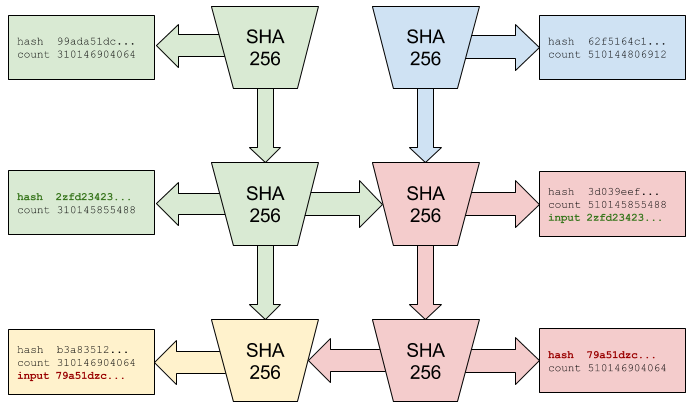
This figure appears in the 'Proof of History Sequence' section, which describes the operational details of PoH as a continuous stream: how entries are recorded, how multiple data items are batched at a single index, and how the sequence supports both checkpoint-based verification and light proofs. The section also addresses the question of horizontal scaling — whether multiple PoH generators can operate in parallel to increase throughput.
What This Figure Shows
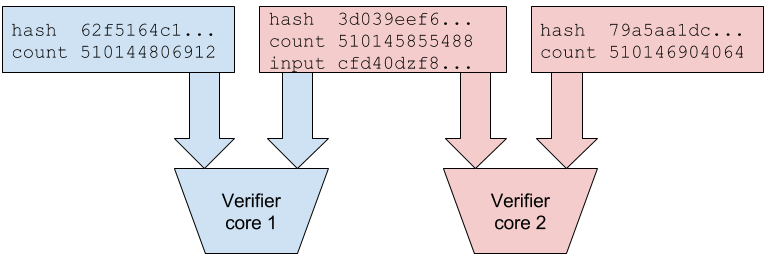
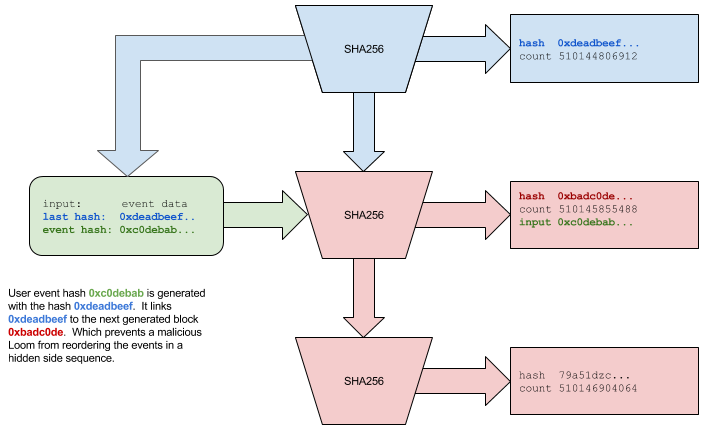
The diagram shows two independent PoH generators synchronizing by inserting each other's output state into their respective hash chains at regular intervals. Generator A periodically records a hash of Generator B's current state, and Generator B does the same for Generator A. These cross-insertions create verifiable proof that both generators were aware of each other's sequence at the time of insertion, establishing a causal ordering between the two independent timelines. An observer with both sequences can confirm that neither generator could have forged its cross-references after the fact, because doing so would require recomputing the entire subsequent hash chain from the point of forgery. This mutual back-referencing is the mechanism by which multiple PoH generators can scale horizontally while maintaining a consistent, unforgeable ordering.
Significance
Multi-generator PoH is Solana's path to horizontal throughput scaling beyond what a single CPU core can hash. By synchronizing independent generators through cross-references, the network can shard the transaction ordering workload across multiple leaders processing different transaction streams, while maintaining a globally consistent ordering guaranteed by the cross-reference proofs. This design anticipates the architectural direction for future Solana scaling beyond single-core hash rate limits.