
TRON-Whitepaper
مقدمة
1.1 الرؤية
TRON هو مشروع طموح مخصص لإنشاء شبكة إنترنت لامركزية حقًا وملحقاتها
البنية التحتية. بروتوكول TRON، أحد أكبر أنظمة التشغيل المعتمدة على blockchain في العالم
العالم، يقدم دعمًا عامًا blockchain للإنتاجية العالية وقابلية التوسع العالية والتوافر العالي لـ
جميع التطبيقات اللامركزية (DApps) في النظام البيئي TRON. الاستحواذ في يوليو 2018 على
عزز BitTorrent أيضًا قيادة TRON في متابعة النظام البيئي اللامركزي.
1.2 الخلفية
أحدث إدخال Bitcoin في عام 2009 ثورة في تصور المجتمع للأنظمة المالية التقليدية النظام في أعقاب الركود الكبير (2007-2008). مثل صناديق التحوط والبنوك المركزية انهارت من المضاربة في المشتقات المالية الغامضة، قدمت التكنولوجيا blockchain أ دفتر أستاذ عالمي شفاف يمكن لأي شخص أن يحصل منه على معلومات المعاملات. ال تم تأمين المعاملات بشكل مشفر باستخدام آلية إجماع إثبات العمل (PoW)، وبالتالي منع مشاكل الإنفاق المزدوج.
في أواخر عام 2013، اقترحت الورقة البيضاء Ethereum شبكة فيها smart contracts وa Turing-Complete Ethereum Virtual Machine (EVM) سيسمح للمطورين بالتفاعل مع الشبكة من خلال DApps. ومع ذلك، نظرًا لأن أحجام المعاملات في Bitcoin وEthereum بلغت ذروتها في عام 2017، كان واضحًا من خلال أوقات إنتاجية المعاملات المنخفضة وارتفاع رسوم المعاملات العملات المشفرة مثل Bitcoin وEthereum في حالتها الحالية لم تكن قابلة للتوسع على نطاق واسع التبني. وهكذا، تم تأسيس TRON وتصورها كحل مبتكر لهذه المشاكل الملحة تحديات قابلية التوسع.
1.3 التاريخ تم إنشاء TRON DAO في يوليو 2017 في سنغافورة. في ديسمبر 2017، TRON كان أطلقت بروتوكولها مفتوح المصدر. كانت كل من Testnet وBlockchain Explorer وWeb Wallet كلها تم إطلاقها بحلول مارس 2018. TRON تم إطلاق الشبكة الرئيسية بعد فترة وجيزة في مايو 2018، بمناسبة إصدار Odyssey 2.0 يمثل إنجازًا تقنيًا. في يونيو 2018، أعلنت TRON استقلالها مع إنشاء كتلة Genesis، إلى جانب الاستحواذ على BitTorrent في يوليو 2018. في في أكتوبر 2018، أطلقت TRON TRON Virtual Machine (TVM)، وهي مجموعة أدوات كاملة للمطورين، ونظام دعم 360. تتضمن خارطة الطريق TRON الجمع بين 100 مليون مستخدم لـ BitTorrent مع شبكة TRON عبر Project Atlas، بالإضافة إلى تعزيز مجتمع المطورين لإطلاقه تطبيقات DApps جديدة ومثيرة على شبكة TRON1. 1 V1.0 متاح في https://tron.network/static/doc/white_paper_v_1_0.pdf
1.4 المصطلحات
العنوان/المحفظة يتم إنشاء عنوان أو محفظة تتكون من بيانات اعتماد الحساب على شبكة TRON بواسطة زوج المفاتيح، والذي يتكون من مفتاح خاص ومفتاح عام، والأخير مشتق من الأول من خلال خوارزمية. يُستخدم المفتاح العام عادةً لتشفير مفتاح الجلسة والتوقيع التحقق وتشفير البيانات التي يمكن فك تشفيرها بواسطة مفتاح خاص مطابق.
أبي الواجهة الثنائية للتطبيق (ABI) هي واجهة بين وحدتين للبرنامج الثنائي؛ عادة إحدى هذه الوحدات عبارة عن مكتبة أو مرفق نظام تشغيل، والأخرى عبارة عن مستخدم برنامج.
واجهة برمجة التطبيقات تُستخدم واجهة برمجة التطبيقات (API) بشكل أساسي لتطوير عملاء المستخدمين. مع واجهة برمجة التطبيقات الدعم، token يمكن أيضًا تصميم منصات الإصدار بواسطة المطورين أنفسهم.
الأصول في مستندات TRON، الأصل هو نفسه token، والذي يُشار إليه أيضًا باسم TRC-10 token.
نقاط عرض النطاق الترددي (BP) للحفاظ على عمل الشبكة بسلاسة، تستخدم معاملات الشبكة TRON BP كوقود. كل حساب تحصل على 5000 نقطة قوة يومية مجانية ويمكن الحصول على المزيد عن طريق تجميد TRX مقابل BP. كل من TRX وTRC-10 token التحويلات عبارة عن معاملات عادية تكلف BP. نشر العقود الذكية وتنفيذها تستهلك المعاملات كلا من BP والطاقة.
كتلة تحتوي الكتل على السجلات الرقمية للمعاملات. كتلة كاملة تتكون من الرقم السحري، حجم الكتلة ورأس الكتلة وعداد المعاملات وبيانات المعاملة.
مكافأة الكتلة يتم إرسال مكافآت إنتاج الكتلة إلى حساب فرعي (العنوان/المحفظة). يمكن للممثلين السوبر احصل على مكافآتهم على Tronscan أو من خلال API مباشرة.
رأس الكتلة رأس الكتلة هو جزء من الكتلة. تحتوي رؤوس الكتلة TRON على hash للكتلة السابقة، جذر Merkle والطابع الزمني والإصدار وعنوان الشاهد.المحفظة الباردة المحفظة الباردة، المعروفة أيضًا باسم المحفظة غير المتصلة بالإنترنت، تحافظ على فصل المفتاح الخاص تمامًا عن أي شيء شبكة. عادةً ما يتم تثبيت المحافظ الباردة على الأجهزة "الباردة" (مثل أجهزة الكمبيوتر أو الهواتف المحمولة البقاء دون اتصال بالإنترنت) لضمان أمان مفتاح TRX الخاص.
التطبيق اللامركزي التطبيق اللامركزي هو تطبيق يعمل بدون طرف موثوق به مركزيًا. تطبيق التي تمكن التفاعل/الاتفاقيات/الاتصال المباشر بين المستخدمين النهائيين و/أو الموارد بدون وسيط.
جي آر بي سي gRPC (استدعاءات الإجراءات عن بعد gRPC) هو نظام مفتوح المصدر لاستدعاء الإجراءات عن بعد (RPC). 2 تم تطويره في البداية في Google. ويستخدم HTTP/2 للنقل، ومخازن البروتوكول المؤقتة كواجهة لغة الوصف، وتوفر ميزات مثل المصادقة والتدفق ثنائي الاتجاه والتدفق التحكم، أو الحظر أو عدم الحظر، والإلغاء والمهلات. إنه يولد روابط العميل والخادم عبر الأنظمة الأساسية للعديد من اللغات. سيناريوهات الاستخدام الأكثر شيوعًا تضمين خدمات الاتصال في بنية نمط الخدمات الصغيرة وتوصيل الأجهزة المحمولة، و عملاء المتصفح إلى الخدمات الخلفية.
المحفظة الساخنة تتيح المحفظة الساخنة، والمعروفة أيضًا باسم المحفظة عبر الإنترنت، استخدام المفتاح الخاص للمستخدم عبر الإنترنت، وهذا هو الحال عرضة لنقاط الضعف المحتملة أو الاعتراض من قبل الجهات الخبيثة.
JDK Java Development Kit هي Java SDK المستخدمة لتطبيقات Java. إنه جوهر جافا التطوير، الذي يشتمل على بيئة تطبيقات Java (JVM+مكتبة فئة Java) وJava أدوات.
خاوس دي بي يحتوي TRON على KhaosDB في ذاكرة العقدة الكاملة التي يمكنها تخزين جميع السلاسل المتشعبة حديثًا التي تم إنشاؤها خلال فترة زمنية معينة ويساعد الشهود على التحول من السلسلة النشطة الخاصة بهم بسرعة إلى سلسلة رئيسية جديدة. راجع 2.2.2 تخزين الحالة لمزيد من التفاصيل.
مستوىDB تم اعتماد LevelDB في البداية بهدف أساسي هو تلبية متطلبات R/W السريعة والسريعة تطوير. بعد إطلاق الشبكة الرئيسية، قام TRON بترقية قاعدة بياناته إلى قاعدة بيانات مخصصة بالكامل واحد يلبي احتياجاته الخاصة. راجع 2.2.1 تخزين Blockchain لمزيد من التفاصيل.
جذر ميركل جذر Merkle هو hash لجميع hashes لجميع المعاملات المضمنة كجزء من كتلة في blockchain شبكة. راجع 3.1 إثبات الحصة المفوضة (DPoS) لمزيد من التفاصيل. 2 https://en.wikipedia.org/wiki/GRPC
شبكة الاختبار العامة (شاستا) نسخة من الشبكة تعمل بتكوين عقدة واحدة. يمكن للمطورين الاتصال والاختبار الميزات دون القلق بشأن الخسارة الاقتصادية. ليس لـ Testnet tokens أي قيمة ويمكن لأي شخص أن يفعل ذلك اطلب المزيد من الصنبور العام.
RPC
3
في الحوسبة الموزعة، يتم استدعاء الإجراء عن بعد (RPC) عندما يتسبب برنامج كمبيوتر في حدوث خطأ
إجراء (إجراء فرعي) يتم تنفيذه في مساحة عنوان مختلفة (عادةً على كمبيوتر آخر
شبكة مشتركة)، والتي يتم ترميزها كما لو كانت استدعاء إجراء عادي (محلي)، بدون
يقوم المبرمج بترميز تفاصيل التفاعل عن بعد بشكل صريح.
قابلية التوسع تعد قابلية التوسع إحدى ميزات بروتوكول TRON. إنها قدرة النظام أو الشبكة أو العملية على القيام بذلك التعامل مع كمية متزايدة من العمل أو إمكانية توسيعها لاستيعاب هذا النمو.
شمس حلت SUN محل القطرة كأصغر وحدة من TRX. 1 TRX = 1,000,000 شمس.
الإنتاجية تعد الإنتاجية العالية إحدى ميزات TRON Mainnet. يتم قياسه بالمعاملات في الثانية (TPS)، وهي الحد الأقصى لسعة المعاملة في ثانية واحدة.
الطابع الزمني يتم تسجيل الوقت التقريبي لإنتاج الكتلة كطابع زمني لنظام Unix، وهو عدد مللي ثانية انقضت منذ 00:00:00 01 يناير 1970 بالتوقيت العالمي المنسق.
TKC تكوين الرمز المميز.
لجنة الحقيقة والمصالحة-10 معيار التشفير token على منصة TRON. يجب اتباع قواعد وواجهات معينة عند الاحتفاظ بعرض أولي للعملة على TRON blockchain.
تي آر إكس TRX تعني Tronix، وهي العملة المشفرة الرسمية لـ TRON.
3 https://en.wikipedia.org/wiki/Remote_procedure_call
Einführung
1.1 Vision
TRON ist ein ehrgeiziges Projekt, das sich der Einrichtung eines wirklich dezentralen Internets widmet
Infrastruktur. Das TRON-Protokoll, eines der größten blockchain-basierten Betriebssysteme in der Welt
Welt, bietet öffentliche blockchain Unterstützung für hohen Durchsatz, hohe Skalierbarkeit und hohe Verfügbarkeit für
alle dezentralen Anwendungen (DApps) im TRON-Ökosystem. Die Übernahme von. im Juli 2018
BitTorrent festigte die Führungsrolle von TRON bei der Verfolgung eines dezentralen Ökosystems weiter.
1.2 Hintergrund
Die Einführung von Bitcoin im Jahr 2009 revolutionierte die gesellschaftliche Wahrnehmung des traditionellen Finanzwesens System im Zuge der Großen Rezession (2007-2008). Als zentralisierte Hedgefonds und Banken brach aufgrund von Spekulationen mit undurchsichtigen Finanzderivaten zusammen, blockchain Technologie lieferte a transparentes Universalbuch, aus dem jeder Transaktionsinformationen abrufen kann. Die Transaktionen wurden mithilfe eines Proof of Work (PoW)-Konsensmechanismus kryptografisch gesichert, Dadurch werden Probleme mit doppelten Ausgaben verhindert.
Ende 2013 wurde im Whitepaper Ethereum ein Netzwerk vorgeschlagen, in dem smart contracts und a Turing-vollständige Ethereum Virtual Machine (EVM) würde es Entwicklern ermöglichen, mit der zu interagieren Netzwerk über DApps. Da jedoch die Transaktionsvolumina in Bitcoin und Ethereum im Jahr 2017 ihren Höhepunkt erreichten, Dies war an den geringen Transaktionsdurchlaufzeiten und hohen Transaktionsgebühren erkennbar Kryptowährungen wie Bitcoin und Ethereum waren in ihrem derzeitigen Zustand nicht für die weite Verbreitung skalierbar Adoption. Daher wurde TRON gegründet und als innovative Lösung für diese Pressungen konzipiert Skalierbarkeitsherausforderungen.
1.3 Geschichte Die TRON DAO wurde im Juli 2017 in Singapur gegründet. Im Dezember 2017 hatte TRON hat sein Open-Source-Protokoll eingeführt. Das waren Testnet, Blockchain Explorer und Web Wallet gestartet im März 2018. TRON Mainnet startete kurz darauf im Mai 2018 und markierte damit den Odyssey 2.0-Veröffentlichung als technischer Meilenstein. Im Juni 2018 erklärte TRON seine Unabhängigkeit mit der Schaffung des Genesis-Blocks, zusammen mit der Übernahme von BitTorrent im Juli 2018. In Im Oktober 2018 brachte TRON die TRON Virtual Machine (TVM) auf den Markt, ein komplettes Entwickler-Toolset. und 360-Support-System. Die TRON-Roadmap beinhaltet die Zusammenführung der 100 Millionen BitTorrent-Benutzer mit dem TRON-Netzwerk über Project Atlas sowie Förderung der Entwickler-Community beim Start aufregende neue DApps im Netzwerk TRON1. 1 V1.0 ist verfügbar unter https://tron.network/static/doc/white_paper_v_1_0.pdf
1.4 Terminologie
Adresse/Geldbörse Eine Adresse oder ein Wallet, bestehend aus Kontoanmeldeinformationen im Netzwerk TRON, wird von a generiert Schlüsselpaar, das aus einem privaten Schlüssel und einem öffentlichen Schlüssel besteht, wobei letzterer vom ersteren abgeleitet ist durch einen Algorithmus. Der öffentliche Schlüssel wird normalerweise für die Verschlüsselung des Sitzungsschlüssels und die Signatur verwendet Verifizierung und Verschlüsselung von Daten, die mit einem entsprechenden privaten Schlüssel entschlüsselt werden könnten.
ABI Eine Application Binary Interface (ABI) ist eine Schnittstelle zwischen zwei binären Programmmodulen; normalerweise Eines dieser Module ist eine Bibliothek oder eine Betriebssystemfunktion, das andere wird vom Benutzer ausgeführt Programm.
API Eine Anwendungsprogrammierschnittstelle (API) wird hauptsächlich für die Entwicklung von Benutzerclients verwendet. Mit API Unterstützung können token-Ausgabeplattformen auch von Entwicklern selbst entworfen werden.
Vermögenswert In den Dokumenten von TRON ist der Vermögenswert derselbe wie token, der auch als TRC-10 token bezeichnet wird.
Bandbreitenpunkte (BP) Um den reibungslosen Betrieb des Netzwerks zu gewährleisten, nutzen TRON Netzwerktransaktionen BP als Treibstoff. Jedes Konto erhält 5000 kostenlose tägliche BP und mehr können durch das Einfrieren von TRX für BP erhalten werden. Sowohl TRX als auch TRC-10 token Überweisungen sind normale Transaktionen, die BP kosten. Intelligente Vertragsbereitstellung und -ausführung Transaktionen verbrauchen sowohl BP als auch Energie.
Blockieren Blöcke enthalten die digitalen Aufzeichnungen von Transaktionen. Ein vollständiger Block besteht aus der magischen Zahl, Blockgröße, Blockheader, Transaktionszähler und Transaktionsdaten.
Belohnung blockieren Blockproduktionsprämien werden an ein Unterkonto (Adresse/Wallet) gesendet. Supervertreter können Fordern Sie ihre Prämien auf Tronscan oder direkt über die API an.
Block-Header Ein Blockheader ist Teil eines Blocks. TRON-Blockheader enthalten die hash des vorherigen Blocks Merkle-Wurzel, Zeitstempel, Version und Zeugenadresse.Kalte Geldbörse Cold Wallet, auch Offline-Wallet genannt, hält den privaten Schlüssel vollständig von anderen getrennt Netzwerk. Cold Wallets werden in der Regel auf „kalten“ Geräten (z. B. Computern oder Mobiltelefonen) installiert offline bleiben), um die Sicherheit des privaten TRX-Schlüssels zu gewährleisten.
DApp Eine dezentrale Anwendung ist eine App, die ohne eine zentral vertrauenswürdige Partei funktioniert. Eine Bewerbung Dies ermöglicht eine direkte Interaktion/Vereinbarung/Kommunikation zwischen Endbenutzern und/oder Ressourcen ohne Zwischenhändler.
gRPC gRPC (gRPC Remote Procedure Calls) ist ein Open-Source-RPC-System (Remote Procedure Call). 2 ursprünglich bei Google entwickelt. Es verwendet HTTP/2 für den Transport, Protokollpuffer als Schnittstelle Beschreibungssprache und bietet Funktionen wie Authentifizierung, bidirektionales Streaming und Fluss Kontrolle, blockierende oder nicht blockierende Bindungen sowie Abbruch und Zeitüberschreitungen. Es erzeugt plattformübergreifende Client- und Serverbindungen für viele Sprachen. Die häufigsten Nutzungsszenarien Dazu gehören die Verbindung von Diensten in einer Microservices-Architektur und die Verbindung mobiler Geräte Browser-Clients bis hin zu Backend-Diensten.
Heiße Geldbörse Hot Wallet, auch Online-Wallet genannt, ermöglicht die Online-Nutzung des privaten Schlüssels des Benutzers anfällig für potenzielle Schwachstellen oder das Abfangen durch böswillige Akteure.
JDK Java Development Kit ist das Java SDK, das für Java-Anwendungen verwendet wird. Es ist der Kern von Java Entwicklung, bestehend aus der Java-Anwendungsumgebung (JVM+Java-Klassenbibliothek) und Java Werkzeuge.
KhaosDB TRON verfügt über eine KhaosDB im Vollknotenspeicher, die alle generierten neu gegabelten Ketten speichern kann innerhalb eines bestimmten Zeitraums und unterstützt Zeugen beim schnellen Wechsel aus der eigenen aktiven Kette in eine neue Hauptkette. Weitere Einzelheiten finden Sie unter 2.2.2 Zustandsspeicherung.
LevelDB LevelDB wurde ursprünglich mit dem primären Ziel eingeführt, die Anforderungen an schnelles Lesen/Schreiben und schnelles Lesen zu erfüllen Entwicklung. Nach dem Start des Mainnets hat TRON seine Datenbank auf eine vollständig angepasste aktualisiert Man geht auf seine ganz eigenen Bedürfnisse ein. Weitere Einzelheiten finden Sie unter 2.2.1 Blockchain-Speicher.
Merkle-Wurzel Eine Merkle-Wurzel ist der hash aller hashes aller Transaktionen, die als Teil eines Blocks in einem blockchain enthalten sind. Netzwerk. Weitere Einzelheiten finden Sie unter 3.1 Delegierter Nachweis des Einsatzes (DPoS). 2 https://en.wikipedia.org/wiki/GRPC
Öffentliches Testnetz (Shasta) Eine Version des Netzwerks, die in einer Einzelknotenkonfiguration ausgeführt wird. Entwickler können sich verbinden und testen Funktionen, ohne sich Gedanken über den wirtschaftlichen Verlust machen zu müssen. Testnet tokens haben keinen Wert und jeder kann es tun Fordern Sie mehr über den öffentlichen Wasserhahn an.
RPC
3
Beim verteilten Rechnen liegt ein Remoteprozeduraufruf (RPC) vor, wenn ein Computerprogramm eine Aktion auslöst
Prozedur (Unterroutine), die in einem anderen Adressraum (üblicherweise auf einem anderen Computer) ausgeführt werden soll
ein gemeinsam genutztes Netzwerk), das so codiert ist, als wäre es ein normaler (lokaler) Prozeduraufruf, ohne das
Der Programmierer codiert explizit die Details für die Remote-Interaktion.
Skalierbarkeit Skalierbarkeit ist eine Funktion des TRON-Protokolls. Es ist die Fähigkeit eines Systems, Netzwerks oder Prozesses, dies zu tun ein wachsendes Arbeitsvolumen zu bewältigen oder sein Potenzial zu erweitern, um diesem Wachstum gerecht zu werden.
SONNE SUN ersetzte Drop als kleinste Einheit von TRX. 1 TRX = 1.000.000 SUN.
Durchsatz Hoher Durchsatz ist eine Funktion von TRON Mainnet. Es wird in Transaktionen pro Sekunde (TPS) gemessen. nämlich die maximale Transaktionskapazität in einer Sekunde.
Zeitstempel Der ungefähre Zeitpunkt der Blockproduktion wird als Unix-Zeitstempel aufgezeichnet, der die Anzahl angibt Millisekunden, die seit dem 1. Januar 1970, 00:00:00 UTC, vergangen sind.
TKC Token-Konfiguration.
TRC-10 Ein Krypto-Standard token auf der Plattform TRON. Bestimmte Regeln und Schnittstellen müssen beachtet werden bei einem Initial Coin Offering am TRON blockchain.
TRX TRX steht für Tronix, die offizielle Kryptowährung von TRON.
3 https://en.wikipedia.org/wiki/Remote_procedure_call
بنيان
TRON يعتمد بنية ثلاثية الطبقات مقسمة إلى طبقة التخزين، والطبقة الأساسية، وطبقة التطبيق. يلتزم بروتوكول TRON بـ Google Protobuf، الذي يدعم بشكل جوهري تعدد اللغات التمديد.
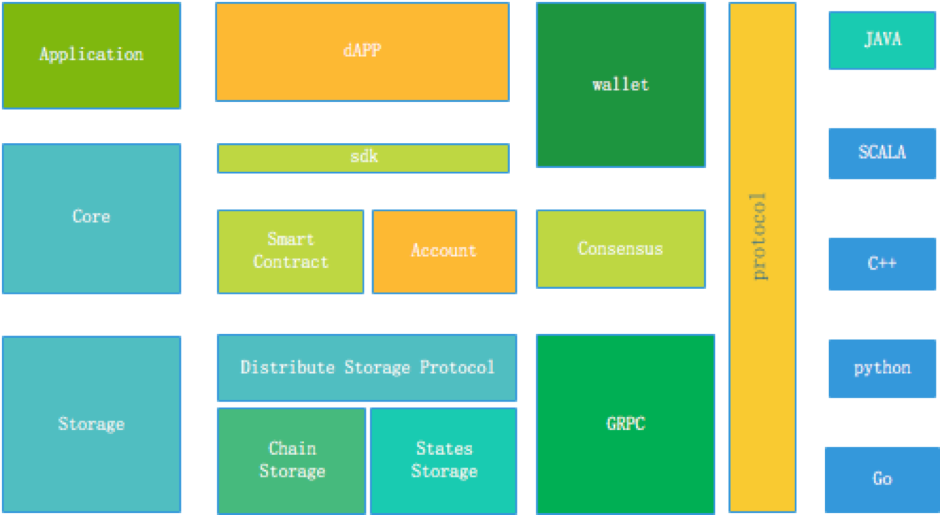
الشكل 1: TRON بنية ثلاثية الطبقات
2.1 الأساسية
هناك عدة وحدات في الطبقة الأساسية، بما في ذلك smart contracts، وإدارة الحساب، و الإجماع. يتم تنفيذ الجهاز الظاهري القائم على المكدس على TRON وتعليمات محسنة يتم استخدام مجموعة. من أجل تقديم دعم أفضل لمطوري التطبيقات اللامركزية، تم اختيار Solidity لتكون smart contract 4 اللغة، يليها الدعم المستقبلي للغات المتقدمة الأخرى. بالإضافة إلى ذلك، إجماع TRON تعتمد الآلية على إثبات الحصة المفوضة (DPoS) وتم إجراء العديد من الابتكارات في من أجل تلبية متطلباتها الفريدة. 2.2 التخزين
TRON صمم بروتوكول تخزين موزعًا فريدًا يتكون من كتلة التخزين والحالة التخزين. تم تقديم فكرة قاعدة بيانات الرسم البياني في تصميم طبقة التخزين تلبي بشكل أفضل الحاجة إلى تخزين البيانات المتنوعة في العالم الحقيقي. 2.2.1 تخزين سلسلة الكتل
TRON blockchain يختار التخزين استخدام LevelDB، الذي طورته Google وأثبت فعاليته ناجحة مع العديد من الشركات والمشاريع. يتميز بأداء عالٍ ويدعم البايت التعسفي المصفوفات كمفاتيح وقيم، الحصول على المفرد، ووضعها وحذفها، ووضعها وحذفها على دفعات، وثنائية الاتجاه التكرارات والضغط البسيط باستخدام خوارزمية Snappy السريعة جدًا. 2.2.2 تخزين الحالة
يحتوي TRON على KhaosDB في ذاكرة العقدة الكاملة التي يمكنها تخزين جميع السلاسل المتشعبة الجديدة التي تم إنشاؤها خلال فترة زمنية معينة ويساعد الشهود على التحول من السلسلة النشطة الخاصة بهم بسرعة إلى سلسلة رئيسية جديدة. يمكنه أيضًا حماية مساحة تخزين blockchain بجعلها أكثر استقرارًا إنهاء بشكل غير طبيعي في حالة متوسطة. 2.3 التطبيق
يمكن للمطورين إنشاء مجموعة متنوعة من التطبيقات اللامركزية والمحافظ المخصصة على TRON. منذ TRON تمكن من نشر وتنفيذ smart contracts، وفرص تطبيقات المرافق هي غير محدود. 4 وثائق الصلابة الرسمية: https://solidity.readthedocs.io/
2.4 البروتوكول
يلتزم بروتوكول TRON بمخازن بروتوكول Google المؤقتة، وهي محايدة للغة، ومحايدة للنظام الأساسي، 5 وطريقة موسعة لتسلسل البيانات المنظمة لاستخدامها في بروتوكولات الاتصالات، وتخزين البيانات، وأكثر. 2.4.1 مخازن البروتوكول المؤقتة
تعد مخازن البروتوكول المؤقتة (Protobuf) آلية مرنة وفعالة ومؤتمتة لإجراء تسلسل منظم البيانات، تشبه JSON أو XML، ولكنها أصغر بكثير وأسرع وأبسط.
يمكن استخدام تعريفات Protobuf (.proto) لإنشاء تعليمات برمجية لـ C++، وJava، وC#، وPython، وRuby، لغات Golang وObjective-C من خلال مولدات الأكواد الرسمية. مختلف طرف ثالث التطبيقات متاحة أيضًا للعديد من اللغات الأخرى. Protobuf يسهل تطوير العملاء من خلال توحيد تعريفات API وتحسين عمليات نقل البيانات أيضًا. يمكن للعملاء الحصول على API .proto من مستودع بروتوكول TRON ودمجه من خلال الكود الذي تم إنشاؤه تلقائيًا المكتبات.
وعلى سبيل المقارنة، فإن المخازن المؤقتة للبروتوكول أصغر من 3 إلى 10 مرات وأسرع من 20 إلى 100 مرة من XML، مع بناء جملة أقل غموضا. يقوم Protobuf بإنشاء فئات الوصول إلى البيانات التي تكون أسهل في الاستخدام برمجيا. 2.4.2 HTTP
يوفر البروتوكول TRON بديل RESTful HTTP API لواجهة Protobuf API. إنهم يتشاركون نفس الشيء واجهة ولكن يمكن استخدام HTTP API بسهولة في عملاء جافا سكريبت. 2.5 TRON الجهاز الظاهري (TVM)
جهاز TVM عبارة عن آلة افتراضية خفيفة الوزن ومتكاملة من طراز Turing تم تطويرها من أجل النظام البيئي لـ TRON. ال
يتصل TVM بسلاسة مع النظام البيئي التطويري الحالي لتوفير الملايين من الخدمات العالمية
المطورين باستخدام نظام blockchain مصمم خصيصًا يتسم بالكفاءة والراحة والثبات والأمان
قابلة للتطوير.
2.6 التبادل اللامركزي (DEX)
5 الوثائق الرسمية لمخازن بروتوكول Google المؤقتة: https://developers.google.com/protocol-buffers/تدعم شبكة TRON أصلاً وظائف التبادل اللامركزي. التبادل اللامركزي يتكون من أزواج تداول متعددة. زوج التداول (يُشار إليه بـ "البورصة") هو سوق تبادل بين TRC-10 tokens، أو بين TRC-10 token وTRX. يمكن لأي حساب إنشاء تداول اقتران بين أي tokens، حتى لو كان نفس الزوج موجودًا بالفعل على شبكة TRON. التداول و تتبع تقلبات أسعار أزواج التداول بروتوكول Bancor. تنص شبكة TRON على ذلك 6 أوزان الثنائي token في جميع أزواج التداول متساوية، وبالتالي فإن نسبة أرصدتهما هي السعر بينهما. على سبيل المثال، فكر في زوج تداول يحتوي على اثنين من tokens، ABC وDEF. ABC لديها رصيد 10 ملايين وDEF لديه رصيد 1 مليون. وبما أن الأوزان متساوية، 10 ABC = 1 دفاع. وهذا يعني أن نسبة ABC إلى DEF هي 10 ABC لكل DEF. 2.7 التنفيذ
تم تنفيذ الكود TRON blockchain في Java وكان في الأصل شوكة من EthereumJ.
6 الموقع الرسمي لبروتوكول بانكور: https://about.bancor.network/protocol/
Architektur
TRON verwendet eine dreischichtige Architektur, die in Speicherschicht, Kernschicht und Anwendungsschicht unterteilt ist. Das TRON-Protokoll folgt Google Protobuf, das von Natur aus Mehrsprachen unterstützt Erweiterung.
Abbildung 1: TRON 3-Schicht-Architektur
2.1 Kern
In der Kernschicht gibt es mehrere Module, darunter smart contracts, Kontoverwaltung und Konsens. Eine stapelbasierte virtuelle Maschine wird auf TRON und einer optimierten Anweisung implementiert Satz verwendet wird. Um DApp-Entwickler besser zu unterstützen, wurde Solidity als smart contract ausgewählt. 4 Sprache, gefolgt von der zukünftigen Unterstützung anderer fortgeschrittener Sprachen. Darüber hinaus der Konsens von TRON Der Mechanismus basiert auf dem Delegated Proof of Stake (DPoS) und viele Innovationen wurden vorgenommen um seinen individuellen Anforderungen gerecht zu werden. 2.2 Lagerung
TRON hat ein einzigartiges verteiltes Speicherprotokoll entwickelt, das aus Blockspeicher und Status besteht Lagerung. Der Begriff einer Graphdatenbank wurde in das Design der Speicherschicht eingeführt den Bedarf an diversifizierter Datenspeicherung in der realen Welt besser erfüllen. 2.2.1 Blockchain-Speicher
TRON blockchain Speicher entscheidet sich für die Verwendung von LevelDB, das von Google entwickelt und bewährt wurde erfolgreich bei vielen Unternehmen und Projekten. Es verfügt über eine hohe Leistung und unterstützt beliebige Bytes Arrays sowohl als Schlüssel als auch als Werte, singuläres Abrufen, Einfügen und Löschen, gestapeltes Einfügen und Löschen, bidirektional Iteratoren und einfache Komprimierung mit dem sehr schnellen Snappy-Algorithmus. 2.2.2 Zustandsspeicher
TRON verfügt über eine KhaosDB im Vollknotenspeicher, die alle neu generierten gegabelten Ketten speichern kann innerhalb eines bestimmten Zeitraums und unterstützt Zeugen beim schnellen Wechsel aus der eigenen aktiven Kette in eine neue Hauptkette. Es kann auch den Speicher blockchain schützen, indem es ihn stabiler macht endet abnormal in einem Zwischenzustand. 2.3 Anwendung
Entwickler können auf TRON eine Vielzahl von DApps und benutzerdefinierten Wallets erstellen. Seit TRON ermöglicht die Bereitstellung und Ausführung von smart contracts, die Möglichkeiten von Dienstprogrammanwendungen sind groß unbegrenzt. 4 Offizielle Solidity-Dokumentation: https://solidity.readthedocs.io/
2.4 Protokoll
Das TRON-Protokoll folgt Google Protocol Buffers, einem sprach- und plattformneutralen Protokoll. 5 und erweiterbare Möglichkeit zur Serialisierung strukturierter Daten zur Verwendung in Kommunikationsprotokollen, Datenspeicherung, und mehr. 2.4.1 Protokollpuffer
Protocol Buffers (Protobuf) ist ein flexibler, effizienter und automatisierter Mechanismus zur Serialisierung strukturierter Daten Daten, ähnlich wie JSON oder XML, aber viel kleiner, schneller und einfacher.
Protobuf-Definitionen (.proto) können zum Generieren von Code für C++, Java, C#, Python, Ruby, Golang- und Objective-C-Sprachen über die offiziellen Codegeneratoren. Diverse Drittanbieter Implementierungen sind auch für viele andere Sprachen verfügbar. Protobuf erleichtert die Entwicklung für Clients durch Vereinheitlichung der API-Definitionen und Optimierung der Datenübertragung. Kunden können die API nutzen .proto aus dem Protokoll-Repository von TRON herunterladen und über den automatisch generierten Code integrieren Bibliotheken.
Im Vergleich dazu ist Protocol Buffers 3 bis 10 Mal kleiner und 20 bis 100 Mal schneller als XML. mit weniger mehrdeutiger Syntax. Protobuf generiert Datenzugriffsklassen, die einfacher zu verwenden sind programmatisch. 2.4.2 HTTP
Das TRON-Protokoll bietet eine RESTful-HTTP-API-Alternative zur Protobuf-API. Sie teilen dasselbe Schnittstelle, aber die HTTP-API kann problemlos in Javascript-Clients verwendet werden. 2.5 TRON Virtuelle Maschine (TVM)
Der TVM ist eine leichte, vollständige virtuelle Turing-Maschine, die für das Ökosystem von TRON entwickelt wurde. Die
TVM verbindet sich nahtlos mit dem bestehenden Entwicklungsökosystem, um Millionen von Menschen auf der ganzen Welt bereitzustellen
Entwicklern ein maßgeschneidertes blockchain-System zur Verfügung, das effizient, bequem, stabil, sicher und effizient ist
skalierbar.
2.6 Dezentraler Austausch (DEX)
5 Offizielle Dokumentation zu Google Protocol Buffers: https://developers.google.com/protocol-buffers/Das Netzwerk TRON unterstützt nativ dezentrale Austauschfunktionen. Eine dezentrale Börse besteht aus mehreren Handelspaaren. Ein Handelspaar (Bezeichnung „Börse“) ist ein Börsenmarkt zwischen TRC-10 tokens oder zwischen einem TRC-10 token und TRX. Jedes Konto kann einen Handel erstellen Paar zwischen beliebigen tokens, auch wenn das gleiche Paar bereits im TRON-Netzwerk vorhanden ist. Handel und Preisschwankungen der Handelspaare folgen dem Bancor-Protokoll. Das Netzwerk TRON schreibt dies vor 6 Die Gewichte der beiden tokens in allen Handelspaaren sind gleich, daher ist das Verhältnis ihrer Salden der Preis zwischen ihnen. Betrachten Sie beispielsweise ein Handelspaar mit zwei tokens, ABC und DEF. ABC hat ein Saldo von 10 Millionen und DEF hat einen Saldo von 1 Million. Da ihre Gewichte gleich sind, ist 10 ABC = 1 DEF. Das bedeutet, dass das Verhältnis von ABC zu DEF 10 ABC pro DEF beträgt. 2.7 Umsetzung
Der Code TRON blockchain ist in Java implementiert und war ursprünglich ein Fork von EthereumJ.
6 Offizielle Website des Bancor-Protokolls: https://about.bancor.network/protocol/
إجماع
3.1 إثبات الحصة المفوضة (DPoS)
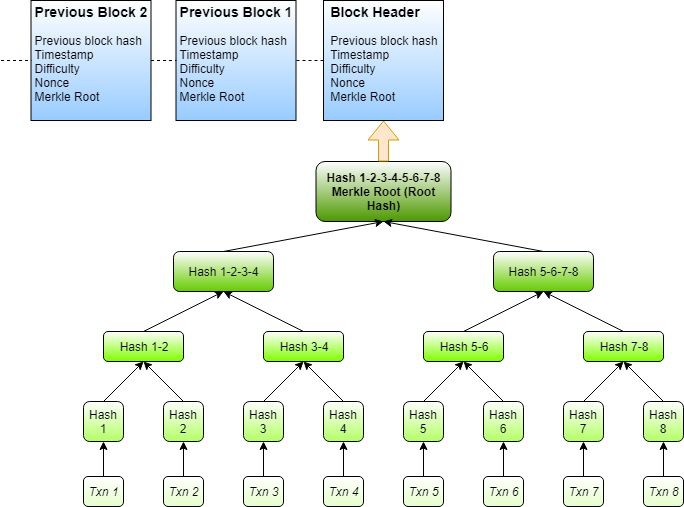
أقرب آلية إجماع هي آلية إجماع إثبات العمل (PoW). هذا يتم تنفيذ البروتوكول حاليًا في Bitcoin وEthereum. في أنظمة إثبات العمل، المعاملات 7 8 يتم تجميع البث عبر الشبكة معًا في كتل ناشئة لتأكيد عامل التعدين. ال تتضمن عملية التأكيد hashing المعاملات باستخدام خوارزميات التشفير hashing حتى تم الوصول إلى جذر Merkle، مما يؤدي إلى إنشاء شجرة Merkle:
الشكل 2: تم تحويل 8 معاملات TRX إلى hash في جذر Merkle. يتم بعد ذلك تضمين جذر Merkle هذا في رأس الكتلة، والذي يتم إرفاقه بالكتل المؤكدة مسبقًا لتكوين blockchain. وهذا يسمح بتتبع سهل وشفاف المعاملات والطوابع الزمنية والمعلومات الأخرى ذات الصلة.
7 Bitcoin المستند التقني: https://bitcoin.org/bitcoin.pdf 8 Ethereum المستند التقني: https://github.com/ethereum/wiki/wiki/White-Paper
تعد خوارزميات التشفير hashing مفيدة في منع هجمات الشبكة لأنها تمتلكها
عدة خصائص :
9
●
حجم طول الإدخال/الإخراج - يمكن للخوارزمية تمرير إدخال بأي طول في الحجم، و
يُخرج قيمة ذات طول ثابت hash.
●
الكفاءة - الخوارزمية سهلة نسبيًا وسريعة الحساب.
●
مقاومة الصورة المسبقة - بالنسبة لمخرج معين z، من المستحيل العثور على أي مدخل x من هذا القبيل
ح(س) = ض. بمعنى آخر، خوارزمية hashing h(x) هي دالة أحادية الاتجاه حيث يكون فقط
يمكن العثور على الإخراج، نظرا للمدخلات. والعكس غير ممكن.
●
مقاومة الاصطدام - من غير الممكن حسابيًا العثور على أي أزواج x1 ≠ x2 مثل h(x1)
= ح(س2). بمعنى آخر، احتمال العثور على مدخلين مختلفين hash لنفس الشيء
الإخراج منخفض للغاية. تتضمن هذه الخاصية أيضًا مقاومة الصورة الأولية الثانية.
●
المقاومة الأولية للصورة الثانية - بالنظر إلى x1، وبالتالي h(x1)، فمن غير الممكن حسابيًا
ابحث عن أي x2 بحيث h(x1) = h(x2). في حين أن هذه الخاصية تشبه مقاومة الاصطدام، فإن
تختلف الخاصية من حيث أنها تقول أن المهاجم الذي لديه x1 سيجدها حسابيًا
من غير الممكن العثور على أي x2 hashing لنفس الإخراج.
●
الحتمية - تقوم بتعيين كل إدخال إلى مخرج واحد فقط.
●
Avalanche التأثير - تغيير بسيط في المدخلات يؤدي إلى مخرجات مختلفة تمامًا.
تمنح هذه الخصائص شبكة العملات المشفرة قيمتها الجوهرية من خلال ضمان عدم حدوث هجمات تعريض الشبكة للخطر. عندما يؤكد القائمون بالتعدين على الكتلة، تتم مكافأتهم tokens كقطعة مدمجة حافز للمشاركة في الشبكة. ومع ذلك، فإن القيمة السوقية للعملات المشفرة العالمية ومع زيادة مطردة، أصبح عمال المناجم مركزيين وركزوا مواردهم الحاسوبية عليها اكتناز tokens كأصول، وليس لأغراض المشاركة في الشبكة. أعطى عمال المناجم وحدة المعالجة المركزية الطريق ل وحدات معالجة الرسومات، والتي بدورها أفسحت المجال لشرائح ASIC القوية. في إحدى الدراسات البارزة، القوة الإجمالية تم تقدير استهلاك Bitcoin للتعدين بما يصل إلى 3 جيجاوات ، مقارنة باستهلاك أيرلندا 10 استهلاك الطاقة. وتوقعت هذه الدراسة نفسها أن يصل إجمالي استهلاك الطاقة إلى 8 جيجاوات في القريب العاجل المستقبل.
لحل مشكلة هدر الطاقة، تم اقتراح آلية توافق الآراء لإثبات الحصة (PoS). العديد من الشبكات الجديدة. في شبكات إثبات الحصة (PoS)، يقوم أصحاب token بقفل أرصدة token الخاصة بهم لتصبح محظورة validators. يتناوب validators في الاقتراح والتصويت على الكتلة التالية. ومع ذلك، المشكلة مع PoS القياسي هو أن تأثير validator يرتبط مباشرة بكمية tokens المقفلة. ويؤدي هذا إلى قيام الأطراف بتخزين كميات كبيرة من العملة الأساسية للشبكة دون مبرر التأثير في النظام البيئي للشبكة.
تستخدم آلية الإجماع TRON نظامًا مبتكرًا لإثبات الحصة المفوضة حيث 27
يقوم الممثلون المتميزون (SRs) بإنتاج كتل للشبكة. كل 6 ساعات، لأصحاب حسابات TRX
ويمكن لمن يجمد حساباته التصويت لمجموعة مختارة من مرشحي SR، على أن يكون المرشحون الـ 27 الأوائل
يعتبر SRs. يمكن للناخبين اختيار ممثلين SR بناءً على معايير مثل المشاريع التي يرعاها ممثلو SR
9 PAAR, C., PELZL, J.، فهم التشفير: كتاب مدرسي للطلاب والممارسين، طبعة 2010.
سبرينغر-فيرلاغ برلين هايدلبرغ، 2010.
10 https://www.sciencedirect.com/science/article/pii/S2542435118301776زيادة اعتماد TRX وتوزيع المكافآت على الناخبين. وهذا يسمح لمزيد من الديمقراطية و
النظام البيئي اللامركزي. حسابات SR هي حسابات عادية، ولكن تراكم الأصوات
يسمح لهم بإنتاج الكتل. مع معدلات الإنتاجية المنخفضة Bitcoin وEthereum نظرًا لهما
آلية إجماع إثبات العمل (PoW) ومشكلات قابلية التوسع، يقدم نظام DPoS الخاص بـ DPoS حلاً مبتكرًا
الآلية الناتجة عن 2000 TPS مقارنة بـ Bitcoin 3 TPS و Ethereum 15 TPS.
تقوم شبكة البروتوكول TRON بإنشاء كتلة واحدة كل ثلاث ثوانٍ، مع منح كل كتلة 32 TRX إلى الممثلين المتميزين. سيتم منح إجمالي 336,384,000 TRX سنويًا إلى 27 ريالًا سعوديًا. في كل مرة ينتهي فيها SR من إنتاج الكتلة، يتم إرسال المكافآت إلى حساب فرعي في دفتر الأستاذ الفائق. يمكن لممثلي SR التحقق من TRX tokens هذه، ولكن لا يمكنهم الاستفادة منها بشكل مباشر. ويمكن إجراء الانسحاب من قبل كل منهما ريال مرة واحدة كل 24 ساعة، مع تحويل المكافآت من الحساب الفرعي إلى الريال المحدد حساب.
الأنواع الثلاثة للعقد على شبكة TRON هي عقدة الشاهد، والعقدة الكاملة، وعقدة الصلابة. يتم إعداد العقد الشاهدة بواسطة SRs وتكون مسؤولة بشكل أساسي عن إنتاج الكتل واقتراحها الخلق / التصويت. توفر العقد الكاملة واجهات برمجة التطبيقات ومعاملات البث والكتل. مزامنة العقد الصلبة كتل من العقد الكاملة الأخرى وتوفر أيضًا واجهات برمجة التطبيقات القابلة للفهرسة.
Konsens
3.1 Delegierter Nachweis des Einsatzes (DPoS)
Der früheste Konsensmechanismus ist der Proof of Work (PoW)-Konsensmechanismus. Dies Das Protokoll ist derzeit in Bitcoin und Ethereum implementiert. In PoW-Systemen Transaktionen 7 8 Über das Netzwerk gesendete Daten werden zur Bestätigung durch den Miner in neu entstehende Blöcke gruppiert. Die Der Bestätigungsprozess umfasst das hashing von Transaktionen mithilfe kryptografischer hashing-Algorithmen, bis a Die Merkle-Wurzel wurde erreicht, wodurch ein Merkle-Baum erstellt wurde:
Abbildung 2: 8 TRX-Transaktionen werden im Merkle-Root hashed. Diese Merkle-Wurzel wird dann in den Block-Header eingefügt, der wird an die zuvor bestätigten Blöcke angehängt, um einen blockchain zu bilden. Dies ermöglicht eine einfache und transparente Nachverfolgung Transaktionen, Zeitstempel und andere verwandte Informationen.
7 Bitcoin Whitepaper: https://bitcoin.org/bitcoin.pdf 8 Ethereum Whitepaper: https://github.com/ethereum/wiki/wiki/White-Paper
Kryptografische Algorithmen sind bei der Verhinderung von Netzwerkangriffen nützlich, da sie Folgendes besitzen
mehrere Eigenschaften:
9
●
Größe der Eingabe-/Ausgabelänge – Der Algorithmus kann eine Eingabe beliebiger Länge und Größe übergeben
gibt einen Wert mit fester Länge hash aus.
●
Effizienz: Der Algorithmus ist relativ einfach und schnell zu berechnen.
●
Urbildwiderstand – Für einen gegebenen Ausgang z ist es unmöglich, einen solchen Eingang x zu finden
h(x) = z. Mit anderen Worten, der hashing-Algorithmus h(x) ist eine Einwegfunktion, in der nur die
Ausgabe kann gefunden werden, wenn eine Eingabe gegeben ist. Das Umgekehrte ist nicht möglich.
●
Kollisionswiderstand – Es ist rechnerisch nicht möglich, Paare x1 ≠ x2 zu finden, so dass h(x1)
= h(x2). Mit anderen Worten, die Wahrscheinlichkeit, zwei unterschiedliche Eingaben zu finden, die auf denselben Wert verweisen
Die Leistung ist extrem gering. Diese Eigenschaft impliziert auch einen Widerstand gegen das zweite Urbild.
●
Zweiter Urbildwiderstand: Bei gegebenem x1 und damit h(x1) ist dies rechnerisch nicht möglich
Finden Sie ein beliebiges x2 mit h(x1) = h(x2). Während diese Eigenschaft der Kollisionsbeständigkeit ähnelt, ist die
Die Eigenschaft unterscheidet sich darin, dass sie besagt, dass ein Angreifer mit einem bestimmten x1 es rechnerisch finden wird
Es ist unmöglich, x2 hashzu finden, die zum gleichen Ausgang führen.
●
Deterministisch – ordnet jede Eingabe einer und nur einer Ausgabe zu.
●
Avalanche-Effekt – eine kleine Änderung der Eingabe führt zu einer völlig anderen Ausgabe.
Diese Eigenschaften verleihen dem Kryptowährungsnetzwerk seinen inneren Wert, indem sie dafür sorgen, dass es nicht zu Angriffen kommt das Netzwerk gefährden. Wenn Miner einen Block bestätigen, erhalten sie als integrierte Belohnung tokens Anreiz zur Netzwerkbeteiligung. Allerdings als die globale Marktkapitalisierung der Kryptowährung Die Zahl der Miner nahm stetig zu, die Miner wurden zentralisiert und konzentrierten ihre Rechenressourcen darauf Horten von tokens als Vermögenswerte und nicht für Zwecke der Netzwerkbeteiligung. CPU-Miner gaben nach GPUs, die wiederum leistungsstarken ASICs Platz machten. In einer bemerkenswerten Studie wurde die Gesamtleistung ermittelt Der Verbrauch von Bitcoin Bergbau wurde auf bis zu 3 GW geschätzt, vergleichbar mit Irland 10 Stromverbrauch. Dieselbe Studie geht davon aus, dass der Gesamtstromverbrauch in naher Zukunft 8 GW erreichen wird Zukunft.
Um das Problem der Energieverschwendung zu lösen, wurde der Proof of Stake (PoS)-Konsensmechanismus vorgeschlagen viele neue Netzwerke. In PoS-Netzwerken sperren token-Inhaber ihre token-Guthaben, um sie zu blockieren validators. Die validators schlagen abwechselnd den nächsten Block vor und stimmen darüber ab. Allerdings ist das Problem Beim Standard-PoS korreliert der Einfluss von validator direkt mit der Anzahl der gesperrten tokens. Dies führt dazu, dass die Parteien große Mengen der Basiswährung des Netzwerks horten und unrechtmäßig handeln Einfluss auf das Netzwerk-Ökosystem.
Der Konsensmechanismus TRON verwendet ein innovatives Delegated Proof of Stake-System, bei dem 27
Super Representatives (SRs) produzieren Blöcke für das Netzwerk. Alle 6 Stunden, TRX-Kontoinhaber
Wer sein Konto einfriert, kann für eine Auswahl von SR-Kandidaten stimmen, darunter die besten 27 Kandidaten
gelten als die SRs. Wähler können SRs auf der Grundlage von Kriterien auswählen, beispielsweise von Projekten, die von SRs gesponsert werden
9 PAAR, C., PELZL, J., Understanding Cryptography: A Textbook for Students and Practitioners, Ausgabe 2010.
Springer-Verlag Berlin Heidelberg, 2010.
10 https://www.sciencedirect.com/science/article/pii/S2542435118301776Erhöhen Sie die TRX-Akzeptanz und die Verteilung der Belohnungen an die Wähler. Dies ermöglicht eine stärkere Demokratisierung und
dezentrales Ökosystem. Die Konten der SRs sind normale Konten, aber ihre Ansammlung von Stimmen
ermöglicht es ihnen, Blöcke zu produzieren. Aufgrund der geringen Durchsatzraten von Bitcoin und Ethereum
PoW-Konsensmechanismus und Skalierbarkeitsprobleme: Das DPoS-System von TRON bietet eine Innovation
Mechanismus führt zu 2000 TPS im Vergleich zu 3 TPS von Bitcoin und 15 TPS von Ethereum.
Das Protokollnetzwerk TRON generiert alle drei Sekunden einen Block, wobei jeder Block 32 vergibt TRX an Supervertreter. Insgesamt werden jährlich 336.384.000 TRX an die 27 SRs vergeben. Jedes Mal, wenn ein SR die Blockproduktion abschließt, werden Belohnungen an ein Unterkonto im Super-Ledger gesendet. SRs können diese TRX tokens prüfen, aber nicht direkt nutzen. Ein Widerruf kann von jedem vorgenommen werden SR einmal alle 24 Stunden, wobei die Prämien vom Unterkonto auf den angegebenen SR übertragen werden Konto.
Die drei Knotentypen im Netzwerk TRON sind Witness Node, Full Node und Solidity Node. Zeugenknoten werden von SRs eingerichtet und sind hauptsächlich für die Blockproduktion und -vorschläge verantwortlich Erstellung/Abstimmung. Vollständige Knoten stellen APIs bereit und übertragen Transaktionen und Blöcke. Solidity-Knoten werden synchronisiert Blöcke von anderen Full Nodes und stellen auch indizierbare APIs bereit.
حساب
4.1 الأنواع
الأنواع الثلاثة للحسابات في شبكة TRON هي الحسابات العادية، وحسابات token، و حسابات العقود.
1.
يتم استخدام الحسابات العادية للمعاملات القياسية.
2.
تُستخدم حسابات الرمز المميز لتخزين TRC-10 tokens.
3.
حسابات العقود هي smart contract حسابات تم إنشاؤها بواسطة حسابات عادية ويمكن أن تكون
الناجمة عن الحسابات العادية كذلك.
4.2 الخلق
هناك ثلاث طرق لإنشاء حساب TRON:
1. إنشاء حساب جديد من خلال API 2. قم بنقل TRX إلى عنوان حساب جديد 3. قم بنقل أي TRC-10 token إلى عنوان حساب جديد
زوج مفاتيح غير متصل بالإنترنت يتكون من عنوان (مفتاح عام) ومفتاح خاص، ولا يتم تسجيله بواسطة يمكن أيضًا إنشاء شبكة TRON. تتكون خوارزمية إنشاء عنوان المستخدم من إنشاء زوج مفاتيح ثم استخراج المفتاح العام (صفيف بايت 64 بايت يمثل x، y الإحداثيات). قم بتجزئة المفتاح العام باستخدام وظيفة SHA3-256 (بروتوكول SHA3 المعتمد هو KECCAK-256) واستخرج آخر 20 بايت من النتيجة. أضف 41 إلى بداية صفيف البايت وتأكد من أن طول العنوان الأولي هو 21 بايت. قم بتجزئة العنوان مرتين باستخدام وظيفة SHA3-256 وأخذ أول 4 بايت كرمز التحقق. أضف رمز التحقق إلى نهاية الأولي العنوان واحصل على العنوان بتنسيق base58check من خلال تشفير base58. مشفرة يبدأ عنوان الشبكة الرئيسية بحرف T ويبلغ طوله 34 بايت. 4.3 الهيكل
أنواع الحسابات الثلاثة المختلفة هي عادي، وإصدار الأصول، والعقد. حساب يحتوي على 7 المعلمات:
1.
account_name: اسم هذا الحساب – على سبيل المثال. حساب الفواتير.
2.
النوع: ما هو نوع هذا الحساب – على سبيل المثال. 0 (يرمز إلى النوع "عادي").
3.
الرصيد: رصيد هذا الحساب – مثلاً. 4213312.
4.
التصويت: الأصوات المستلمة على هذا الحساب - على سبيل المثال. {("0x1b7w...9xj3"،323)،
("0x8djq…j12m"،88)،...،("0x82nd...mx6i"،10001)".
5.
الأصول: الأصول الأخرى المتوقعة TRX في هذا الحساب - على سبيل المثال. {<"WishToken"، 66666>، <"Dogie"،
233>}.
6.
last_operation_time: آخر وقت تشغيل لهذا الحساب.
Protobuf data structure:
message Account {
message Vote {
bytes vote_address = 1;
int64 vote_count = 2;
}
bytes accout_name = 1;
AccountType type = 2;
bytes address = 3;
int64 balance = 4;
repeated Vote votes = 5;
map<string, int64> asset = 6;
int64 latest_operation_time = 10;
}
enum AccountType {
Normal = 0;
AssetIssue = 1;
Contract = 2;
}
Konto
4.1 Typen
Die drei Arten von Konten im TRON-Netzwerk sind reguläre Konten, token-Konten und Vertragskonten.
1.
Für Standardtransaktionen werden reguläre Konten verwendet.
2.
Token-Konten werden zum Speichern von TRC-10 tokens verwendet.
3.
Vertragskonten sind smart contract Konten, die von regulären Konten erstellt wurden und können
wird auch durch reguläre Konten ausgelöst.
4.2 Schöpfung
Es gibt drei Möglichkeiten, ein TRON-Konto zu erstellen:
1. Erstellen Sie über die API ein neues Konto 2. Übertragen Sie TRX auf eine neue Kontoadresse 3. Übertragen Sie alle TRC-10 token in eine neue Kontoadresse
Ein Offline-Schlüsselpaar, das aus einer Adresse (öffentlicher Schlüssel) und einem privaten Schlüssel besteht und nicht von der Adresse aufgezeichnet wird TRON Netzwerk, kann ebenfalls generiert werden. Der Algorithmus zur Generierung der Benutzeradresse besteht aus Erzeugen eines Schlüsselpaars und anschließendes Extrahieren des öffentlichen Schlüssels (64-Byte-Byte-Array, das x, y darstellt). Koordinaten). Hashen Sie den öffentlichen Schlüssel mithilfe der SHA3-256-Funktion (das verwendete SHA3-Protokoll ist). KECCAK-256) und extrahieren Sie die letzten 20 Bytes des Ergebnisses. Fügen Sie 41 am Anfang des Byte-Arrays hinzu und stellen Sie sicher, dass die anfängliche Adresslänge 21 Byte beträgt. Hashen Sie die Adresse zweimal mit der SHA3-256-Funktion und nehmen Sie die ersten 4 Bytes als Bestätigungscode. Fügen Sie den Bestätigungscode am Ende der Initiale hinzu Adresse und erhalten Sie die Adresse im Base58-Check-Format durch Base58-Codierung. Eine verschlüsselte Die Mainnet-Adresse beginnt mit T und ist 34 Byte lang. 4.3 Struktur
Die drei verschiedenen Kontotypen sind Normal, AssetIssue und Contract. Ein Konto enthält 7 Parameter:
1.
Kontoname: der Name für dieses Konto – z.B. RechnungenKonto.
2.
Typ: Um welchen Typ handelt es sich bei diesem Konto – z.B. 0 (steht für Typ „Normal“).
3.
Saldo: Saldo dieses Kontos – z.B. 4213312.
Protobuf data structure:
message Account {
message Vote {
bytes vote_address = 1;
int64 vote_count = 2;
}
bytes accout_name = 1;
AccountType type = 2;
bytes address = 3;
int64 balance = 4;
repeated Vote votes = 5;
map<string, int64> asset = 6;
int64 latest_operation_time = 10;
}
enum AccountType {
Normal = 0;
AssetIssue = 1;
Contract = 2;
}
كتلة
تحتوي الكتلة عادةً على رأس كتلة والعديد من المعاملات.
Protobuf data structure:
message Block {
BlockHeader block_header = 1;
repeated Transaction transactions = 2;
}
5.1 رأس الكتلة
يحتوي رأس الكتلة على البيانات الخام، وتوقيع_الشاهد، ومعرف الكتلة.
Protobuf data structure:
message BlockHeader {
message raw {
int64 timestamp = 1;
bytes txTrieRoot = 2;
bytes parentHash = 3;
uint64 number = 4;
uint64 version = 5;
bytes witness_address = 6;
}
bytes witness_signature = 2;
bytes blockID = 3;
}
5.1.1 البيانات الأولية
يُشار إلى البيانات الأولية على أنها raw_data في Protobuf. أنه يحتوي على البيانات الأولية للرسالة، التي تحتوي على 6 المعلمات:
1. الطابع الزمني: الطابع الزمني لهذه الرسالة - على سبيل المثال. 1543884429000. 2. txTrieRoot: جذر شجرة Merkle - على سبيل المثال. 7داكسا…3ed. 3. parentHash: hash للكتلة الأخيرة - على سبيل المثال. 7داكسا…3ed. 4. الرقم: ارتفاع الكتلة - على سبيل المثال. 4638708. 5. النسخة: محجوزة - على سبيل المثال. 5.
6. عنوان الشاهد: عنوان الشاهد الموجود في هذه الكتلة – على سبيل المثال: 41928ج...4د21. 5.1.2 توقيع الشاهد
يُشار إلى توقيع الشاهد على أنه witness_signature في Protobuf، وهو التوقيع لهذا كتلة الرأس من عقدة الشاهد. 5.1.3 معرف الكتلة
يُشار إلى معرف الكتلة على أنه blockID في Protobuf. أنه يحتوي على التحديد الذري للكتلة. كتلة يحتوي المعرف على معلمتين: 1. hash: hash للكتلة. 2. الرقم: hash وارتفاع الكتلة. 5.2 المعاملة 5.2.1 التوقيع
تتبع عملية توقيع معاملة TRON خوارزمية تشفير ECDSA القياسية، مع
منحنى الاختيار SECP256K1. المفتاح الخاص هو رقم عشوائي، والمفتاح العام هو نقطة على الرقم
منحنى إهليلجي. تتكون عملية إنشاء المفتاح العام أولاً من إنشاء رقم عشوائي كـ
المفتاح الخاص، ثم ضرب النقطة الأساسية للمنحنى الإهليلجي بالمفتاح الخاص للحصول على المفتاح الخاص
المفتاح العام. عند حدوث معاملة، يتم أولاً تحويل البيانات الأولية للمعاملة إلى تنسيق بايت.
تخضع البيانات الأولية بعد ذلك إلى SHA-256 hashing. المفتاح الخاص المطابق للعقد
العنوان ثم يوقع نتيجة SHA256 hash. ثم تتم إضافة نتيجة التوقيع إلى
معاملة.
5.2.2 نموذج النطاق الترددي
تستهلك المعاملات العادية نقاط النطاق الترددي فقط، لكن عمليات smart contract تستهلك كليهما نقاط الطاقة وعرض النطاق الترددي. هناك نوعان من نقاط النطاق الترددي المتاحة. يمكن للمستخدمين الحصول على نقاط النطاق الترددي من تجميد TRX، في حين تتوفر أيضًا 5000 نقطة نطاق ترددي مجانية يوميًا.
عندما يتم بث معاملة TRX، يتم إرسالها وتخزينها في شكل مصفوفة بايت الشبكة. نقاط النطاق الترددي التي تستهلكها معاملة واحدة = عدد بايتات المعاملة مضروبًا في معدل نقاط النطاق الترددي. على سبيل المثال، إذا كان طول صفيف البايت للمعاملة هو 200، ثم تستهلك المعاملة 200 نقطة عرض النطاق الترددي. ومع ذلك، إذا نتج عن نقل TRX أو token الحساب المستهدف الذي يتم إنشاؤه، ثم يتم استهلاك نقاط النطاق الترددي فقط لإنشاء الحساب سيتم خصمها، ولن يتم خصم نقاط النطاق الترددي الإضافية. في إنشاء حساب السيناريو، ستستهلك الشبكة أولاً نقاط النطاق الترددي التي اكتسبها بادئ المعاملةمن تجميد TRX. إذا كان هذا المبلغ غير كاف، فستستهلك الشبكة المعاملة البادئ TRX.
في سيناريوهات نقل TRX القياسية من حساب TRX إلى آخر، تستهلك الشبكة أولاً نقاط النطاق الترددي التي اكتسبها بادئ المعاملة لتجميد TRX. إذا كان ذلك غير كاف، ثم يستهلك من 5000 نقطة عرض النطاق الترددي اليومية المجانية. إذا كان هذا لا يزال غير كاف، ثم الشبكة يستهلك TRX الخاص ببادئ المعاملة. يتم حساب المبلغ حسب عدد البايتات الموجودة فيه المعاملة مضروبة في 10 SUN. وبالتالي، بالنسبة لمعظم حاملي TRX الذين قد لا يتجمدون بالضرورة TRX الخاص بهم للمشاركة في تصويت SR، يتم تخطي الخطوة الأولى تلقائيًا (نظرًا لأن رصيد TRX مجمد = 0) ويعمل النطاق الترددي المجاني البالغ 5000 يوميًا على تشغيل المعاملة.
بالنسبة لعمليات نقل TRC-10 token، تتحقق الشبكة أولاً مما إذا كان إجمالي نقاط النطاق الترددي المجانية للشبكة أم لا. الأصل الصادر token كافٍ. إذا لم يكن الأمر كذلك، فإن نقاط النطاق الترددي التي تم الحصول عليها من تجميد TRX هي المستهلكة. إذا لم يكن هناك ما يكفي من نقاط النطاق الترددي، فإنه يستهلك TRX للمعاملة البادئ.
5.2.3 الرسوم
TRON لا تفرض شبكة TRON عمومًا رسومًا على معظم المعاملات، وذلك بسبب النظام تتطلب القيود والعدالة واستخدام النطاق الترددي والمعاملات رسومًا معينة.
تنقسم رسوم الرسوم إلى الفئات التالية: 1. المعاملات العادية تكلف نقاط النطاق الترددي. يمكن للمستخدمين استخدام نقاط النطاق الترددي اليومية المجانية (5000) أو قم بتجميد TRX للحصول على المزيد. عندما لا تكون نقاط النطاق الترددي كافية، سيكون TRX كذلك تستخدم مباشرة من حساب الإرسال. TRX المطلوب هو عدد البايتات * 10 SUN. 2. العقود الذكية تكلف الطاقة (القسم 6)، ولكنها ستحتاج أيضًا إلى نقاط النطاق الترددي لـ سيتم بث الصفقة وتأكيدها. تكلفة عرض النطاق الترددي هي نفسها المذكورة أعلاه. 3. جميع معاملات الاستعلام مجانية. لا يكلف طاقة أو عرض النطاق الترددي.
كما تحدد شبكة TRON مجموعة من الرسوم الثابتة للمعاملات التالية: 1. إنشاء عقدة شاهد: 9999 TRX 2. إصدار TRC-10 token: 1024 TRX 3. إنشاء حساب جديد: 0.1 TRX 4. إنشاء زوج تبادل: 1024 TRX 5.2.4 المعاملة كدليل على الحصة (TaPoS)
TRON يستخدم TaPoS للتأكد من أن جميع المعاملات تؤكد blockchain الرئيسي أثناء إجرائها
من الصعب تزوير سلاسل مزيفة. في TaPoS، تتطلب الشبكات أن تتضمن كل معاملة جزءًا منها
hash لرأس الكتلة الأخير. يمنع هذا المتطلب إعادة تشغيل المعاملات
الشوكات لا تتضمن الكتلة المشار إليها، كما تشير أيضًا إلى الشبكة التي يستخدمها مستخدم معين والحصة على شوكة محددة. آلية الإجماع هذه تحمي الشبكة من الحرمان
الخدمة، 51%، التعدين الأناني، وهجمات الإنفاق المزدوج.
5.2.5 تأكيد المعاملة
يتم تضمين المعاملة في كتلة مستقبلية بعد بثها على الشبكة. بعد 19 كتل تم تعدينها على TRON (بما في ذلك الكتلة الخاصة بها)، تم تأكيد المعاملة. يتم إنتاج كل كتلة بواسطة أحد أفضل 27 ممثلًا متميزًا بطريقة روبن المستديرة. تستغرق كل كتلة حوالي 3 ثوانٍ يتم التعدين على blockchain. قد يختلف الوقت قليلاً لكل ممثل متميز بسبب الشبكة الظروف وتكوينات الجهاز. بشكل عام، تعتبر المعاملة مؤكدة بالكامل بعد ذلك ~1 دقيقة. 5.2.6 الهيكل
Transaction APIs consist of the following functions: message Transaction { message Contract { enum ContractType { AccountCreateContract = 0; // Create account/wallet TransferContract = 1; // Transfer TRX TransferAssetContract = 2; // Transfer TRC10 token VoteWitnessContract = 4; // Vote for Super Representative (SR) WitnessCreateContract = 5; // Create a new SR account AssetIssueContract = 6; // Create a new TRC10 token WitnessUpdateContract = 8; // Update SR information ParticipateAssetIssueContract = 9; // Purchase TRC10 token AccountUpdateContract = 10; // Update account/wallet information FreezeBalanceContract = 11; // Freeze TRX for bandwidth or energy UnfreezeBalanceContract = 12; // Unfreeze TRX WithdrawBalanceContract = 13; // Withdraw SR rewards, once per day UnfreezeAssetContract = 14; // Unfreeze TRC10 token UpdateAssetContract = 15; // Update a TRC10 token’s information ProposalCreateContract = 16; // Create a new network proposal by any SR ProposalApproveContract = 17; // SR votes yes for a network proposal ProposalDeleteContract = 18; // Delete a network proposal by owner CreateSmartContract = 30; // Deploy a new smart contract TriggerSmartContract = 31; // Call a function on a smart contract GetContract = 32; // Get an existing smart contract UpdateSettingContract = 33; // Update a smart contract’s parameters ExchangeCreateContract = 41; // Create a token trading pair on DEX ExchangeInjectContract = 42; // Inject funding into a trading pair
ExchangeWithdrawContract = 43; // Withdraw funding from a trading pair ExchangeTransactionContract = 44; // Perform token trading UpdateEnergyLimitContract = 45; // Update origin_energy_limit on a smart contract } } }
Block
Ein Block enthält typischerweise einen Blockheader und mehrere Transaktionen.
Protobuf data structure:
message Block {
BlockHeader block_header = 1;
repeated Transaction transactions = 2;
}
5.1 Blockkopf
Ein Blockheader enthält raw_data, witness_signature und blockID.
Protobuf data structure:
message BlockHeader {
message raw {
int64 timestamp = 1;
bytes txTrieRoot = 2;
bytes parentHash = 3;
uint64 number = 4;
uint64 version = 5;
bytes witness_address = 6;
}
bytes witness_signature = 2;
bytes blockID = 3;
}
5.1.1 Rohdaten
Rohdaten werden in Protobuf als raw_data bezeichnet. Es enthält die Rohdaten einer Nachricht, bestehend aus 6 Parameter:
1. Zeitstempel: Zeitstempel dieser Nachricht – z.B. 1543884429000. 2. txTrieRoot: die Wurzel des Merkle-Baums – z.B. 7dacsa…3ed. 3. parentHash: der hash des letzten Blocks – z.B. 7dacsa…3ed. 4. Zahl: die Blockhöhe – z.B. 4638708. 5. Version: reserviert – z.B. 5.
6. Zeugenadresse: die Adresse des in diesem Block enthaltenen Zeugen – z.B. 41928c...4d21. 5.1.2 Unterschrift des Zeugen
Die Zeugensignatur wird in Protobuf als witness_signature bezeichnet, was die Signatur dafür ist Blockheader vom Zeugenknoten. 5.1.3 Block-ID
Die Block-ID wird in Protobuf als blockID bezeichnet. Es enthält die atomare Identifikation eines Blocks. Ein Block ID enthält 2 Parameter: 1. hash: der hash des Blocks. 2. Nummer: hash und Höhe des Blocks. 5.2 Transaktion 5.2.1 Unterzeichnung
Der Transaktionssignierungsprozess von TRON folgt einem standardmäßigen kryptografischen ECDSA-Algorithmus mit a
SECP256K1-Auswahlkurve. Ein privater Schlüssel ist eine Zufallszahl und der öffentliche Schlüssel ist ein Punkt auf dem
elliptische Kurve. Der Prozess der Generierung eines öffentlichen Schlüssels besteht darin, zunächst eine Zufallszahl als eine zu generieren
privaten Schlüssel und dann Multiplikation des Basispunkts der elliptischen Kurve mit dem privaten Schlüssel, um den zu erhalten
öffentlicher Schlüssel. Wenn eine Transaktion stattfindet, werden die Rohdaten der Transaktion zunächst in das Byte-Format konvertiert.
Anschließend werden die Rohdaten SHA-256 hashing unterzogen. Der dem Vertrag entsprechende private Schlüssel
Die Adresse signiert dann das Ergebnis des SHA256 hash. Das Signaturergebnis wird dann dem hinzugefügt
Transaktion.
5.2.2 Bandbreitenmodell
Gewöhnliche Transaktionen verbrauchen nur Bandbreitenpunkte, smart contract-Vorgänge verbrauchen jedoch beide Energie- und Bandbreitenpunkte. Es stehen zwei Arten von Bandbreitenpunkten zur Verfügung. Benutzer können gewinnen Bandbreitenpunkte durch das Einfrieren von TRX, während täglich auch 5000 kostenlose Bandbreitenpunkte verfügbar sind.
Wenn eine TRX-Transaktion gesendet wird, wird sie in Form eines Byte-Arrays übertragen und gespeichert das Netzwerk. Von einer Transaktion verbrauchte Bandbreitenpunkte = Anzahl der Transaktionsbytes multipliziert mit der Bandbreitenpunktrate. Wenn beispielsweise die Byte-Array-Länge einer Transaktion 200 beträgt, dann verbraucht die Transaktion 200 Bandbreitenpunkte. Wenn jedoch eine TRX- oder token-Übertragung erfolgt das Zielkonto, das erstellt wird, dann nur die Bandbreitenpunkte, die zum Erstellen des Kontos verbraucht wurden abgezogen, zusätzliche Bandbreitenpunkte werden nicht abgezogen. Bei einer Kontoerstellung In diesem Szenario verbraucht das Netzwerk zunächst die Bandbreitenpunkte, die der Transaktionsinitiator gewonnen hatvom Einfrieren von TRX. Reicht dieser Betrag nicht aus, verbraucht das Netzwerk die Transaktion TRX des Initiators.
In Standard-TRX-Übertragungsszenarien von einem TRX-Konto zu einem anderen verbraucht das Netzwerk zuerst die Bandbreitenpunkte, die der Transaktionsinitiator für das Einfrieren von TRX gewonnen hat. Wenn das nicht ausreicht, dann verbraucht von den kostenlosen 5000 täglichen Bandbreitenpunkten. Wenn das immer noch nicht reicht, dann das Netzwerk verbraucht den TRX des Transaktionsinitiators. Die Menge wird anhand der Anzahl der Bytes berechnet die Transaktion multipliziert mit 10 SUN. Daher ist für die meisten TRX-Inhaber dies nicht unbedingt der Fall Wenn ihr TRX an der SR-Abstimmung teilnehmen möchte, wird der erste Schritt automatisch übersprungen (da TRX-Guthaben eingefroren = 0) und die tägliche freie Bandbreite von 5000 treibt die Transaktion an.
Bei TRC-10 token-Übertragungen überprüft das Netzwerk zunächst, ob die gesamten freien Bandbreitenpunkte des ausgestelltes token-Vermögenswert sind ausreichend. Wenn nicht, sind es die Bandbreitenpunkte, die durch das Einfrieren von TRX erhalten werden verbraucht. Wenn immer noch nicht genügend Bandbreitenpunkte vorhanden sind, wird der TRX der Transaktion verbraucht Initiator.
5.2.3 Gebühr
Das Netzwerk TRON erhebt jedoch systembedingt grundsätzlich keine Gebühren für die meisten Transaktionen Einschränkungen und Fairness, Bandbreitennutzung und Transaktionen erfordern bestimmte Gebühren.
Die Gebühren werden in die folgenden Kategorien unterteilt: 1. Normale Transaktionen kosten Bandbreitenpunkte. Benutzer können die kostenlosen täglichen Bandbreitenpunkte nutzen (5000) oder TRX einfrieren, um mehr zu erhalten. Wenn Bandbreitenpunkte nicht ausreichen, wird TRX ausreichen direkt vom sendenden Konto verwendet werden. Der benötigte TRX ist die Anzahl der Bytes * 10 SUN. 2. Intelligente Verträge kosten Energie (Abschnitt 6), benötigen dafür aber auch Bandbreitenpunkte Die Transaktion muss übertragen und bestätigt werden. Die Bandbreitenkosten sind die gleichen wie oben. 3. Alle Abfragetransaktionen sind kostenlos. Es kostet weder Energie noch Bandbreite.
Das Netzwerk TRON definiert außerdem eine Reihe fester Gebühren für die folgenden Transaktionen: 1. Erstellen eines Zeugenknotens: 9999 TRX 2. Ausgabe eines TRC-10 token: 1024 TRX 3. Erstellen eines neuen Kontos: 0,1 TRX 4. Erstellen eines Austauschpaares: 1024 TRX 5.2.4 Transaktion als Proof of Stake (TaPoS)
TRON verwendet TaPoS, um sicherzustellen, dass alle Transaktionen den Haupt-blockchain bestätigen, während sie ausgeführt werden
Es ist schwierig, gefälschte Ketten zu fälschen. In TaPoS verlangen die Netzwerke, dass jede Transaktion einen Teil davon umfasst
der hash eines aktuellen Blockheaders. Diese Anforderung verhindert, dass Transaktionen wiederholt werden
Forks enthalten nicht den referenzierten Block und signalisieren dem Netzwerk auch, dass ein bestimmter Benutzer und seinDer Einsatz liegt auf einer bestimmten Gabel. Dieser Konsensmechanismus schützt das Netzwerk vor Denial of
Service, 51 %, egoistisches Mining und Double-Spend-Angriffe.
5.2.5 Transaktionsbestätigung
Eine Transaktion wird in einen zukünftigen Block aufgenommen, nachdem sie an das Netzwerk gesendet wurde. Nach 19 Blöcken sind abgebaut auf TRON (einschließlich seines eigenen Blocks), die Transaktion wird bestätigt. Jeder Block wird von erzeugt einer der 27 besten Super-Repräsentanten im Round-Robin-Verfahren. Jeder Block dauert ca. 3 Sekunden auf dem blockchain abgebaut werden. Aufgrund des Netzwerks kann die Zeit für jeden Super-Repräsentanten leicht variieren Bedingungen und Maschinenkonfigurationen. Im Allgemeinen gilt eine Transaktion danach als vollständig bestätigt ~1 Minute. 5.2.6 Struktur
Transaction APIs consist of the following functions: message Transaction { message Contract { enum ContractType { AccountCreateContract = 0; // Create account/wallet TransferContract = 1; // Transfer TRX TransferAssetContract = 2; // Transfer TRC10 token VoteWitnessContract = 4; // Vote for Super Representative (SR) WitnessCreateContract = 5; // Create a new SR account AssetIssueContract = 6; // Create a new TRC10 token WitnessUpdateContract = 8; // Update SR information ParticipateAssetIssueContract = 9; // Purchase TRC10 token AccountUpdateContract = 10; // Update account/wallet information FreezeBalanceContract = 11; // Freeze TRX for bandwidth or energy UnfreezeBalanceContract = 12; // Unfreeze TRX WithdrawBalanceContract = 13; // Withdraw SR rewards, once per day UnfreezeAssetContract = 14; // Unfreeze TRC10 token UpdateAssetContract = 15; // Update a TRC10 token’s information ProposalCreateContract = 16; // Create a new network proposal by any SR ProposalApproveContract = 17; // SR votes yes for a network proposal ProposalDeleteContract = 18; // Delete a network proposal by owner CreateSmartContract = 30; // Deploy a new smart contract TriggerSmartContract = 31; // Call a function on a smart contract GetContract = 32; // Get an existing smart contract UpdateSettingContract = 33; // Update a smart contract’s parameters ExchangeCreateContract = 41; // Create a token trading pair on DEX ExchangeInjectContract = 42; // Inject funding into a trading pair
ExchangeWithdrawContract = 43; // Withdraw funding from a trading pair ExchangeTransactionContract = 44; // Perform token trading UpdateEnergyLimitContract = 45; // Update origin_energy_limit on a smart contract } } }
TRON آلة افتراضية
6.1 مقدمة
TRON Virtual Machine (TVM) عبارة عن آلة افتراضية خفيفة الوزن ومتكاملة تم تطويرها من أجل النظام البيئي لـ TRON. هدفها هو توفير نظام blockchain مصمم خصيصًا وفعال، مريحة ومستقرة وآمنة وقابلة للتطوير.
تفرع TVM في البداية من EVM ويمكنه الاتصال بسلاسة مع الصلابة الموجودة smart contract 11 النظام البيئي للتنمية. وبناءً على ذلك، يدعم TVM أيضًا إجماع DPoS.
يستخدم TVM مفهوم الطاقة. تختلف عن آلية الغاز الموجودة في EVM، عمليات المعاملات وsmart contracts على TVM مجانية، ولا يتم استهلاك TRX. من الناحية الفنية، قابلة للتنفيذ سعة الحساب على TVM غير مقيدة بإجمالي مبلغ الاحتفاظ البالغ tokens. 6.2 سير العمل
يقوم المترجم أولاً بترجمة Solidity smart contract إلى رمز بايت قابل للقراءة والتنفيذ على TVM. يقوم TVM بعد ذلك بمعالجة البيانات من خلال كود التشغيل، وهو ما يعادل تشغيل المنطق من آلة الحالة المحدودة القائمة على المكدس. وأخيرًا، يصل TVM إلى بيانات blockchain ويستدعيها واجهة البيانات الخارجية من خلال طبقة التشغيل البيني. 11 EVM: Ethereum الجهاز الظاهري (https://github.com/ethereum/ethereumj)
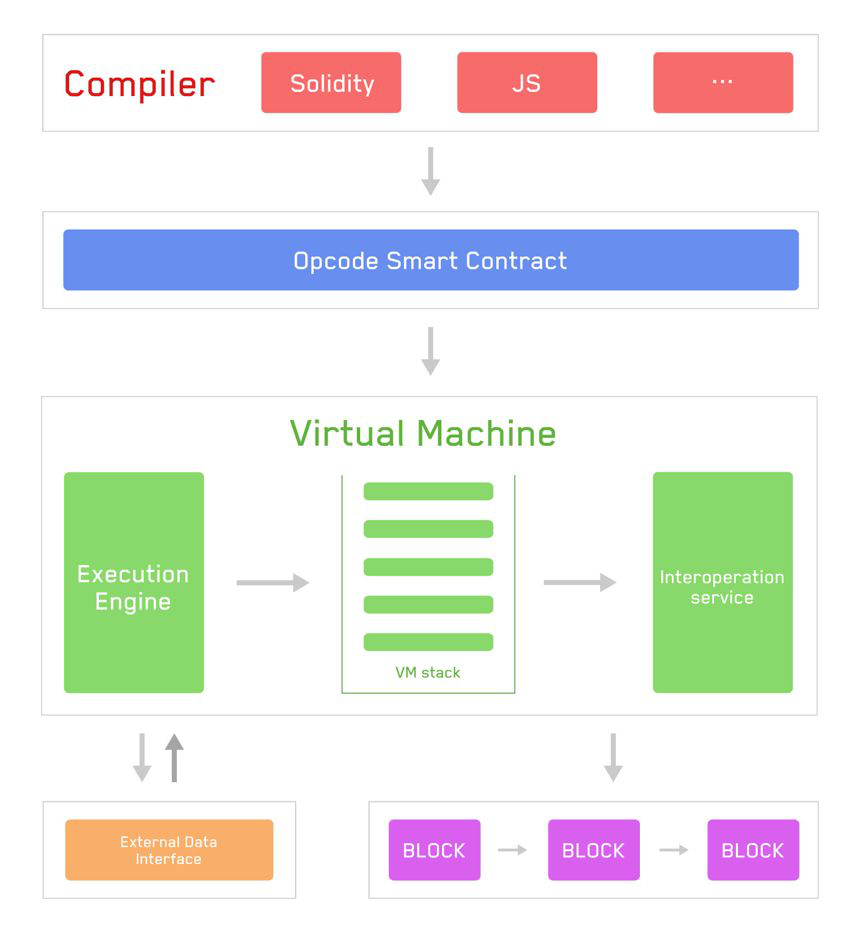
الشكل 3: سير عمل TVM
6.3 الأداء 6.3.1 بنية خفيفة الوزن
تتبنى TVM بنية خفيفة الوزن بهدف تقليل استهلاك الموارد لضمان ذلك أداء النظام. 6.3.2 قوية
تكلف عمليات نقل TRX وتنفيذ smart contract نقاط النطاق الترددي فقط، بدلاً من TRX، والتي يعفي TRON من التعرض للهجوم. استهلاك النطاق الترددي يمكن التنبؤ به وثابت منذ كل منهما تم إصلاح تكلفة الخطوة الحسابية. 6.3.3 التوافق العالي
TVM متوافق مع EVM وسيكون متوافقًا مع المزيد من الأجهزة الافتراضية السائدة في المستقبل. وبالتالي، فإن جميع smart contracts الموجودة على EVM قابلة للتنفيذ على TVM. 6.3.4 التكلفة المنخفضة
نظرًا لإعداد النطاق الترددي لـ TVM، يتم تقليل تكاليف التطوير ويمكن للمطورين التركيز على التطوير المنطقي لرمز العقد الخاص بهم. تقدم TVM أيضًا واجهات الكل في واحد للتعاقد النشر والتشغيل والعرض لتوفير الراحة للمطورين.
TRON Virtuelle Maschine
6.1 Einführung
TRON Virtual Machine (TVM) ist eine leichte, vollständige Turing-virtuelle Maschine, die für entwickelt wurde Das Ökosystem von TRON. Sein Ziel ist es, ein maßgeschneidertes blockchain-System bereitzustellen, das effizient ist, bequem, stabil, sicher und skalierbar.
TVM wurde ursprünglich von EVM abgezweigt und kann nahtlos mit der bestehenden Solidität smart contract verbunden werden. 11 Entwicklungsökosystem. Auf dieser Grundlage unterstützt TVM zusätzlich den Konsens DPoS.
TVM verwendet das Konzept der Energie. Anders als beim Gasmechanismus auf EVM, Operationen von Transaktionen und smart contracts auf TVM sind kostenlos, es wird kein TRX verbraucht. Technisch ausführbar Die Rechenkapazität auf TVM ist nicht durch den Gesamtbestand von tokens eingeschränkt. 6.2 Arbeitsablauf
Der Compiler übersetzt zunächst den Solidity smart contract in lesbaren und ausführbaren Bytecode der TVM. Das TVM verarbeitet die Daten dann über den Opcode, was dem Betrieb der Logik entspricht eines stapelbasierten Finite-State-Automaten. Schließlich greift der TVM auf blockchain-Daten zu und ruft sie auf Externe Datenschnittstelle über die Interoperation-Schicht. 11 EVM: Ethereum Virtuelle Maschine (https://github.com/ethereum/ethereumj)
Abbildung 3: TVM-Workflow
6.3 Leistung 6.3.1 Leichtbauarchitektur
TVM übernimmt eine leichtgewichtige Architektur mit dem Ziel, einen reduzierten Ressourcenverbrauch zu gewährleisten Systemleistung. 6.3.2 Robust
TRX-Übertragungen und smart contract-Ausführung kosten nur Bandbreitenpunkte, anstelle von TRX, was befreit TRON von Angriffen. Der Bandbreitenverbrauch ist vorhersehbar und statisch Die Kosten für den Rechenschritt sind festgelegt. 6.3.3 Hohe Kompatibilität
TVM ist mit EVM kompatibel und wird in Zukunft mit weiteren Mainstream-VMs kompatibel sein. Dadurch sind alle smart contracts auf EVM auf TVM ausführbar. 6.3.4 Niedrige Kosten
Aufgrund der Bandbreiteneinrichtung von TVM werden die Entwicklungskosten reduziert und Entwickler können sich auf das konzentrieren logische Entwicklung ihres Vertragscodes. TVM bietet auch All-in-One-Schnittstellen für Verträge an Bereitstellung, Auslösung und Anzeige, um Entwicklern Komfort zu bieten.
العقد الذكي
7.1 مقدمة
smart contract هو بروتوكول يتحقق رقميًا من التفاوض على العقد. يحددون القواعد و العقوبات المتعلقة بالاتفاق وكذلك تنفيذ تلك الالتزامات تلقائيًا. الذكية يعمل رمز العقد على تسهيل التفاوض أو تنفيذ اتفاقية ما أو تنفيذها والتحقق منها وإنفاذها معاملة. من منظور tokenالتحويل، تعمل smart contract أيضًا على تسهيل الأموال التلقائية يجب أن يتم استيفاء عمليات النقل بين الأطراف المشاركة بمعايير معينة.
TRON smart contracts مكتوبة بلغة Solidity. بمجرد كتابتها واختبارها، يمكن أن تكون كذلك تم تجميعها في رمز بايت، ثم نشرها على شبكة TRON للجهاز الظاهري TRON. مرة واحدة تم نشرها، ويمكن الاستعلام عن smart contracts عبر عناوين العقود الخاصة بهم. تطبيق العقد تُظهر الواجهة الثنائية (ABI) وظائف استدعاء العقد وتُستخدم للتفاعل مع شبكة. 7.2 نموذج الطاقة
الحد الأقصى للطاقة لنشر وتشغيل smart contract هو دالة متعددة المتغيرات:
● الطاقة الديناميكية من التجميد 1 TRX هي 50,000,000,000 (حد الطاقة الإجمالي) / (إجمالي الطاقة الوزن) ● حد الطاقة هو حد الطاقة اليومي للحساب من تجميد TRX ● يتم حساب الطاقة اليومية المتبقية في الحساب من تجميد TRX على أنها حد الطاقة - الطاقة مستعملة ● تم تعيين حد الرسوم في TRX في smart contract نشر/تشغيل المكالمة ● المتبقي من TRX القابل للاستخدام في الحساب ● الطاقة لكل TRX إذا تم شراؤها مباشرة (10 SUN = 1 طاقة) = 100,000، يمكن للSRs التصويت عليها التعديل
هناك سيناريوهان للاستهلاك لحساب الحد الأقصى للطاقة للنشر و
الزناد. يمكن التعبير عن المنطق على النحو التالي:
const R = Dynamic Energy Limit
const F = Daily account energy from freezing TRX
const E = Remaining daily account energy from freezing TRX
const L = Fee limit in TRX set in deploy/trigger call
const T = Remaining usable TRX in account
const C = Energy per TRX if purchased directly
// Calculate M, defined as maximum energy limit for deployment/trigger of smart contract if F > LR let M = min(E+TC, LR) else let M = E+TC 7.3 النشر
عندما يتم تجميع صلابة TRON smart contract، يقرأ الجهاز الظاهري TRON الملف المترجم bytecode. يتكون الرمز الثانوي من قسم لنشر التعليمات البرمجية، ورمز العقد، وAuxdata. Auxdata هي بصمة التشفير للكود المصدري، المستخدمة للتحقق. النشر يقوم bytecode بتشغيل وظيفة المُنشئ وإعداد متغيرات التخزين الأولية. النشر يقوم الكود أيضًا بحساب كود العقد وإعادته إلى TVM. ABI هو ملف JSON الذي يصف وظائف TRON smart contract. يحدد هذا الملف أسماء الوظائف، وسداد مستحقاتها، تقوم الدالة بإرجاع القيم وقابلية تغيير حالتها. 7.4 وظيفة الزناد
بمجرد نشر TRON smart contracts، يمكن تشغيل وظائفها بشكل فردي إما عبر TronStudio أو من خلال مكالمات API. تتطلب وظائف تغيير الحالة الطاقة بينما وظائف القراءة فقط تنفيذ بدون طاقة. 7.5 TRON الصلابة
TRON الصلابة هي شوكة من لغة الصلابة Ethereum. TRON يعدل المشروع الأصلي إلى دعم وحدات TRX وSUN (1 TRX = 1,000,000 SUN). بقية بناء جملة اللغة هو متوافق مع صلابة ^0.4.24. وبالتالي فإن جهاز Tron الظاهري (TVM) متوافق بنسبة 100% تقريبًا مع تعليمات EVM.
Intelligenter Vertrag
7.1 Einführung
Ein smart contract ist ein Protokoll, das Vertragsverhandlungen digital überprüft. Sie definieren die Regeln und Strafen im Zusammenhang mit einer Vereinbarung zu verhängen und diese Verpflichtungen auch automatisch durchzusetzen. Der Schlaue Der Vertragskodex erleichtert, überprüft und erzwingt die Aushandlung oder Erfüllung einer Vereinbarung oder Transaktion. Aus Sicht der tokenisierung ermöglichen smart contracts auch automatische Mittel Übertragungen zwischen teilnehmenden Parteien, sofern bestimmte Kriterien erfüllt sind.
TRON smart contracts sind in der Solidity-Sprache geschrieben. Sobald sie geschrieben und getestet sind, können sie es sein In Bytecode kompiliert und dann im Netzwerk TRON für die virtuelle Maschine TRON bereitgestellt. Einmal Im Einsatz können smart contracts über ihre Vertragsadressen abgefragt werden. Der Vertragsantrag Binary Interface (ABI) zeigt die Aufruffunktionen des Vertrags an und wird für die Interaktion mit dem verwendet Netzwerk. 7.2 Energiemodell
Die maximale Energiegrenze für die Auslösung und Auslösung eines smart contract hängt von mehreren Faktoren ab Variablen:
● Die dynamische Energie aus dem Einfrieren von 1 TRX beträgt 50.000.000.000 (Gesamtenergielimit) / (Gesamtenergie). Gewicht) ● Das Energielimit ist das tägliche Energielimit des Kontos durch das Einfrieren von TRX ● Die verbleibende tägliche Kontoenergie aus dem Einfrieren von TRX wird als Energielimit – Energie berechnet Gebraucht ● Das Gebührenlimit in TRX wird in smart contract Deploy/Trigger Call festgelegt ● Verbleibender nutzbarer TRX im Konto ● Energie pro TRX bei direktem Kauf (10 SUN = 1 Energie) = 100.000, SRs können darüber abstimmen Anpassung
Es gibt zwei Verbrauchsszenarien zur Berechnung der maximalen Energiegrenze für den Einsatz und
Auslöser. Die Logik kann wie folgt ausgedrückt werden:
const R = Dynamic Energy Limit
const F = Daily account energy from freezing TRX
const E = Remaining daily account energy from freezing TRX
const L = Fee limit in TRX set in deploy/trigger call
const T = Remaining usable TRX in account
const C = Energy per TRX if purchased directly
// Calculate M, defined as maximum energy limit for deployment/trigger of smart contract if F > LR let M = min(E+TC, LR) else let M = E+TC 7.3 Bereitstellung
Wenn eine Solidität TRON smart contract kompiliert wird, liest die virtuelle Maschine TRON die kompilierte Datei Bytecode. Der Bytecode besteht aus einem Abschnitt für die Codebereitstellung, dem Vertragscode und den Auxdata. Bei den Auxdata handelt es sich um den kryptografischen Fingerabdruck des Quellcodes, der zur Verifizierung verwendet wird. Der Einsatz Bytecode führt die Konstruktorfunktion aus und richtet die anfänglichen Speichervariablen ein. Der Einsatz code berechnet auch den Vertragscode und gibt ihn an den TVM zurück. Die ABI ist eine JSON-Datei beschreibt die Funktionen eines TRON smart contract. Diese Datei definiert die Funktionsnamen, ihre Bezahlbarkeit, die Funktionsrückgabewerte und ihre Zustandsveränderlichkeit. 7.4 Triggerfunktion
Sobald die TRON smart contracts bereitgestellt sind, können ihre Funktionen einzeln entweder über ausgelöst werden TronStudio oder über API-Aufrufe. Zustandsverändernde Funktionen erfordern Energie, während schreibgeschützte Funktionen vorhanden sind ohne Energie ausführen. 7,5 TRON Solidität
TRON Solidity ist eine Abzweigung aus der Solidity-Sprache von Ethereum. TRON ändert das ursprüngliche Projekt in unterstützen TRX- und SUN-Einheiten (1 TRX = 1.000.000 SUN). Der Rest der Sprachsyntax ist kompatibel mit Solidity ^0.4.24. Somit ist die Tron Virtual Machine (TVM) nahezu 100 % kompatibel mit EVM Anweisungen.
رمز مميز
8.1 رمز TRC-10
في شبكة TRON، يمكن لكل حساب إصدار tokens على حساب 1024 TRX. لإصدار tokens، يحتاج المُصدر إلى تحديد اسم token، وإجمالي الرسملة، وسعر الصرف إلى TRX، مدة التداول، الوصف، الموقع الإلكتروني، الحد الأقصى لاستهلاك النطاق الترددي لكل حساب، الإجمالي استهلاك عرض النطاق الترددي، ومبلغ token المجمدة. يمكن أيضًا تكوين كل إصدار token الحد الأقصى اليومي لكل حساب token نقل نقاط النطاق الترددي، الحد الأقصى اليومي للشبكة بالكامل token نقل نقاط النطاق الترددي، وإجمالي token العرض، ومدة القفل بالأيام، والمبلغ الإجمالي من tokens مقفل. 8.2 رمز TRC-20
TRC-20 هو معيار فني يستخدم في تنفيذ smart contracts tokens المدعومة من قبل TRON آلة افتراضية. وهو متوافق تمامًا مع ERC-20.
الواجهة هي كما يلي:
عقد واجهة TRC20 {
وظيفة totalSupply() العوائد العامة الثابتة (uint);
الوظيفة رصيد(العنوان tokenالمالك) العوائد العامة الثابتة (uint
التوازن)؛
الوظيفة بدل (العنوان tokenالمالك، عنوان المنفق) عام ثابت
المرتجعات (uint المتبقية) ؛
وظيفة النقل (العنوان إلى، uint tokens) الإرجاعات العامة (نجاح منطقي)؛
وظيفة الموافقة (عنوان المنفق، uint tokens) الإرجاعات العامة (منطقي)
النجاح)؛
الوظيفة نقل من(العنوان من، العنوان إلى، uint tokens) عام
عوائد (نجاح منطقي) ؛
الحدث نقل(العنوان المفهرس من، العنوان المفهرس إلى، uint tokens)؛
الحدث الموافقة(العنوان مفهرس tokenالمالك، عنوان المنفق المفهرس، uint
tokens)؛ }
من وجهة نظر المطور، هناك العديد من الاختلافات بين TRC-10 وTRC-20. بعض من الاختلافات الرئيسية هي أن TRC-10 tokens يمكن الوصول إليها عن طريق واجهات برمجة التطبيقات وsmart contracts بينما تسمح TRC-20 tokens بتخصيص الواجهة ولكن لا يمكن الوصول إليها إلا في smart contracts.
من منظور التكلفة، فإن TRC-10 tokens لديها رسوم معاملات أقل بـ 1000 مرة من
TRC-20، ولكنها تحمل تكاليف عرض النطاق الترددي لعمليات نقل API والودائع. التحويلات والودائع في الذكية
تكلف عقود TRC-10 tokens كلاً من عرض النطاق الترددي والطاقة.
8.3 أبعد
نظرًا لأن TRON يستخدم نفس إصدار Solidity مثل Ethereum، فيمكن توفير المزيد من معايير token بسهولة تم النقل إلى TRON.
Token
8.1 TRC-10-Token
Im TRON-Netzwerk kann jedes Konto tokens auf Kosten von 1024 TRX ausgeben. Um tokens auszugeben, Der Emittent muss einen token-Namen, die Gesamtkapitalisierung, den Wechselkurs zu TRX angeben. Verbreitungsdauer, Beschreibung, Website, maximaler Bandbreitenverbrauch pro Account, Gesamt Bandbreitenverbrauch und die Menge der eingefrorenen token. Jede token-Ausgabe kann auch konfiguriert werden die maximale tägliche token Übertragungsbandbreitenpunkte jedes Kontos, die maximale tägliche Bandbreite des gesamten Netzwerks token Übertragungsbandbreitenpunkte, Gesamtangebot token, Sperrdauer in Tagen und Gesamtbetrag von tokens gesperrt. 8.2 TRC-20-Token
TRC-20 ist ein technischer Standard, der für smart contracts verwendet wird, die von der unterstützte tokens implementieren TRON Virtuelle Maschine. Es ist vollständig kompatibel mit ERC-20.
Die Schnittstelle ist wie folgt:
Vertrag TRC20Interface {
Funktion totalSupply() public constant returns (uint);
Funktion balanceOf(Adresse tokenOwner) öffentliche Konstante gibt zurück (uint
Gleichgewicht);
Funktion Zulage(Adresse tokenEigentümer, Adressgeber) Öffentliche Konstante
gibt zurück (uint übrig);
Funktion Übertragung(Adresse an, uint tokens) öffentliche Rückgaben (Bool-Erfolg);
Funktion approve(address spender, uint tokens) public returns (bool
Erfolg);
Funktion transferFrom(Adresse von, Adresse an, uint tokens) public
return (bool success);
Ereignis Übertragung(Adresse indiziert von, Adresse indiziert nach, uint tokens);
Ereignis Genehmigung(Adresse indiziert tokenEigentümer, Adresse indizierter Spender, uint
tokens); }
Aus Entwicklersicht gibt es mehrere Unterschiede zwischen TRC-10 und TRC-20. Einige Einer der Hauptunterschiede besteht darin, dass TRC-10-tokens über APIs und smart contracts zugänglich sind TRC-20 tokens ermöglichen die Anpassung der Benutzeroberfläche, sind jedoch nur innerhalb von smart contracts zugänglich.
Aus Kostengründen haben TRC-10 tokens Transaktionsgebühren, die 1000-mal niedriger sind als
TRC-20, verursachen jedoch Bandbreitenkosten für API-Übertragungen und -Einzahlungen. Überweisungen und Einzahlungen in smart
Verträge für TRC-10 tokens kosten sowohl Bandbreite als auch Energie.
8.3 Darüber hinaus
Da TRON dieselbe Solidity-Version wie Ethereum verwendet, könnten problemlos weitere token-Standards implementiert werden portiert auf TRON.
الحكم
9.1 الممثل الفائق 9.1.1 عام
يمكن لكل حساب في شبكة TRON التقدم بطلب للحصول على فرصة أن يصبح عضوًا متميزًا ممثل (يشار إليه بـ SR). يمكن للجميع التصويت لمرشحي SR. أفضل 27 مرشحا مع سيصبح أكبر عدد من الأصوات ممثلين SR مع الحق والالتزام بإنشاء الكتل. الأصوات هي يتم حسابها كل 6 ساعات وسوف تتغير SR وفقًا لذلك.
لمنع الهجمات الضارة، هناك تكلفة لتصبح مرشحًا لـ SR. عند التقديم 9999 سيتم حرق TRX من حساب مقدم الطلب. بمجرد النجاح، يمكن لهذا الحساب الانضمام إلى SR الانتخابات. 9.1.2 الانتخابات
TRON القوة (المشار إليها بـ TP) مطلوبة للتصويت ويعتمد مقدار TP على صوت الناخب الأصول المجمدة (TRX).
يتم حساب TP بالطريقة التالية:
TP
تم تجميد 1 TRX للحصول على النطاق الترددي
1
=
يحق لكل حساب في شبكة TRON التصويت لممثليه الخاصين.
بعد الإصدار (إلغاء التجميد، متاح بعد 3 أيام)، لن يكون لدى المستخدمين أي أصول مجمدة وسيخسرون كل شيء TP وفقا لذلك. ونتيجة لذلك، تصبح جميع الأصوات غير صالحة لجولة التصويت الحالية والمستقبلية ما لم تم تجميد TRX مرة أخرى للتصويت.
لاحظ أن شبكة TRON تسجل فقط التصويت الأخير، مما يعني أن كل صوت جديد سوف يلغي جميع الأصوات السابقة. 9.1.3 المكافأة أ. مكافأة التصويت
تُعرف أيضًا باسم مكافأة المرشح، والتي يقوم أفضل 127 مرشحًا بتحديثها مرة واحدة في كل جولة (6
ساعات) ستشارك 115,200 TRX كما تم تعدينها. سيتم تقسيم المكافأة وفقًا لوزن التصويت
يحصل كل مرشح. في كل عام، سيكون إجمالي المكافأة للمرشحين 168,192,000 TRX.
إجمالي مكافأة التصويت لكل جولة
لماذا 115,200 TRX في كل جولة؟
15,00 تي آر إكس
إجمالي مكافأة التصويت لكل جولة (V R/جولة)
1
2
=
V R/جولة = 16 T RX/كتلة × 20 قطعة/دقيقة × 60 دقيقة/ساعة × 6 ساعات/جولة
ملاحظة: تم ضبط ذلك بواسطة WITNESS_STANDBY_ALLOWANCE = 115,200 TRX. انظر معلمات الشبكة الديناميكية.
إجمالي مكافأة التصويت في السنة
لماذا 168,192,000 TRX كل عام؟
168، 192، 000 T RX = إجمالي مكافأة التصويت سنويًا (V R / سنة)
V R/السنة = 115، 200 T RX/جولة × 4 جولات/يوم × 365 يومًا/سنة
ب. مكافأة الكتلة
تُعرف أيضًا باسم مكافأة الممثل المتميز، والتي يتم انتخاب أفضل 27 مرشحًا (SRs).
ستشارك كل جولة (6 ساعات) ما يقرب من 230,400 TRX كما تم تعدينها. سيتم تقسيم المكافأة بالتساوي
بين 27 SR (مطروحًا منها إجمالي كتل المكافآت المفقودة بسبب خطأ في الشبكة). ما مجموعه
سيتم منح 336,384,000 TRX سنويًا إلى 27 ريال سعودي.
إجمالي مكافأة الكتلة لكل جولة
لماذا 230,400 TRX في كل جولة؟
230، 400 T RX = إجمالي مكافأة الكتلة لكل جولة (BR/جولة)
BR/جولة = 32 طن RX/كتلة × 20 قطعة/دقيقة × 60 دقيقة/ساعة × 6 ساعات/جولة
ملاحظة: يتم تعيين مكافأة كتلة الوحدة بواسطة WITNESS_PAY_PER_BLOCK = 32 TRX. انظر الشبكة الديناميكية
المعلمات.
إجمالي مكافأة الكتلة سنويًا
لماذا 336,384,000 TRX كل عام؟
336، 384، 000 T RX = إجمالي مكافأة الكتلة سنويًا (BR / سنة)
BR/السنة = 230، 400 طن RX/جولة × 4 جولات/يوم × 365 يومًا/سنة
1 يناير 2021
لن يكون هناك تضخم في شبكة TRON قبل 1 يناير 2021، وسوف يكون TRON DAO
منح جميع مكافآت المجموعات ومكافآت المرشحين قبل ذلك التاريخ.
ج. حساب المكافأة
حساب مكافأة ريال سعودي
مكافأة إجمالية
مكافأة التصويت (V R)
مكافأة الكتلة (BR)
ر
=
+
ر
إجمالي VR
V
=
×
مجموع الأصوات
الأصوات التي حصل عليها مرشح SR
ر
غاب كتلة
2
ب
=
27
إجمالي BR -
× 3
ملحوظة: المكافأة تحتسب بالريال لكل جولة (6 ساعات)
المرتبة 28 إلى المرتبة 127 ريال حساب مكافأة المرشح مكافأة إجمالية مكافأة التصويت (V R) ر =
ر
إجمالي VR
V
=
×
مجموع الأصوات
الأصوات التي حصل عليها مرشح SR
ملاحظة: يتم احتساب المكافأة لكل مرشح SR في كل جولة (6 ساعات)
9.2 اللجنة
9.2.1 عام
يتم استخدام اللجنة لتعديل معلمات الشبكة الديناميكية TRON، مثل إنشاء الكتلة
المكافآت ورسوم المعاملات وما إلى ذلك. تتكون اللجنة من 27 ريالًا في الجولة الحالية. كل ريال
وله الحق في اقتراح المقترحات والتصويت عليها. عندما يحصل الاقتراح على 19 صوتًا أو أكثر، يتم ذلك
تمت الموافقة عليها وسيتم تطبيق معلمات الشبكة الجديدة في فترة الصيانة القادمة (3 أيام).
9.2.2 معلمات الشبكة الديناميكية
0.
MAINTENANCE_TIME_INTERVAL
أ.
الوصف
تعديل وقت الفاصل الزمني للصيانة بالمللي ثانية. المعروف باسم الفاصل الزمني للتصويت SR لكل
جولة.
ب.
مثال
[636001000] مللي ثانية - أي 6 ساعات.
ج.
النطاق
[3 * 27 * 1000، 24 * 3600 * 1000] مللي ثانية
1.
ACCOUNT_UPGRADE_COST
أ.
الوصف
تعديل تكلفة التقديم على حساب SR.
ب.
مثال
[9,999,000,000] الشمس - وهي 9,999 TRX.
ج.
النطاق
[0,100 000 000 000 000 000] الأحد
2.
CREATE_ACCOUNT_FEE
أ.
الوصف
تعديل رسوم إنشاء الحساب.ب.
مثال
[100.000] شمس - وهي 1 TRX.
ج.
النطاق
[0,100 000 000 000 000 000] الأحد
3.
رسوم المعاملة
أ.
الوصف
قم بتعديل مبلغ الرسوم المستخدمة للحصول على نطاق ترددي إضافي.
ب.
مثال
[10] شمس/بايت.
ج.
النطاق
[0,100 000 000 000 000 000] شمس/بايت
4.
ASSET_ISSUE_FEE
أ.
الوصف
تعديل رسوم إصدار الأصول.
ب.
مثال
[1024,000,000] صن - وهو 1024 TRX.
ج.
النطاق
[0,100 000 000 000 000 000] الأحد
5.
WITNESS_PAY_PER_BLOCK
أ.
الوصف
تعديل مكافأة إنشاء كتلة SR. المعروفة باسم مكافأة كتلة الوحدة.
ب.
مثال
[32,000,000] شمس - وهي 32 TRX.
ج.
النطاق
[0,100 000 000 000 000 000] الأحد
6.
WITNESS_STANDBY_ALLOWANCE
أ.
الوصف
تعديل المكافآت الممنوحة لأفضل 127 مرشحاً ريالاً. المعروفة باسم مكافأة التصويت الإجمالي
لكل جولة.
ب.
مثال
[115,200,000,000] شمس - وهي 115,200 TRX.
ج.
النطاق
[0,100 000 000 000 000 000] الأحد
7.
CREATE_NEW_ACCOUNT_FEE_IN_SYSTEM_CONTRACT
أ.
الوصف
تعديل تكلفة إنشاء الحساب. قم بدمج معلمات الشبكة الديناميكية رقم 8 للحصول عليها
إجمالي تكلفة إنشاء الحساب:
REATE_NEW_ACCOUNT_FEE_IN_SY STEM_CONTRACT
REATE_NEW_ACCOUNT_BANDWIDTH_RATE
ج
× ج
ب. مثال [0] الشمس. ج. النطاق [0,100 000 000 000 000 000] الأحد 8. CREATE_NEW_ACCOUNT_BANDWIDTH_RATE
أ.
الوصف
تعديل تكلفة إنشاء الحساب. قم بدمج معلمات الشبكة الديناميكية رقم 7 للحصول عليها
إجمالي تكلفة إنشاء الحساب:
REATE_NEW_ACCOUNT_FEE_IN_SY STEM_CONTRACT
REATE_NEW_ACCOUNT_BANDWIDTH_RATE
ج
× ج
ب. مثال [1]. ج. النطاق [0,100,000,000,000,000,000] 9. ALLOW_CREATION_OF_CONTRACTS أ. الوصف لتشغيل جهاز Tron الظاهري (TVM). ب. مثال صحيح - تم ضبطه على التنشيط والتأثير منذ 10/10/2018 الساعة 23:47 بالتوقيت العالمي المنسق. ج. النطاق صحيح / خطأ 10. REMOVE_THE_POWER_OF_THE_GR أ. الوصف قم بإزالة أصوات نشأة GR الأولية ب. مثال صحيح - تم تفعيله في 11/4/2018 الساعة 08:46 بالتوقيت العالمي المنسق. ج. النطاق صحيح/خطأ - ملاحظة: لا يمكن الرجوع إلى خطأ من صحيح. 11. رسوم الطاقة أ. الوصف تعديل رسوم 1 طاقة. ب. مثال 20 شمس. ج. النطاق [0,100 000 000 000 000 000] الأحد 12. تبادل_إنشاء_رسوم أ. الوصف تعديل تكلفة إنشاء زوج التداول. المعروفة باسم تكلفة إنشاء أمر تجاري. ب. مثال [1,024,000,000] SUN - وهي 1024 TRX. ج. النطاق [0,100 000 000 000 000 000] الأحد 13. MAX_CPU_TIME_OF_ONE_TX أ. الوصف تعديل الحد الأقصى لوقت التنفيذ لمعاملة واحدة. المعروف باسم الحد الزمني ل معاملة واحدة. ب. مثال 50 مللي ثانية. ج. النطاق
[0، 1000] مللي ثانية
14. ALLOW_UPDATE_ACCOUNT_NAME
أ.
الوصف
قم بتعديل الخيار للسماح للحساب بتحديث اسم حسابه.
ب.
مثال
خطأ - وهو متاح للاقتراح من java-tron Odyssey v3.2.
ج.
النطاق
صحيح/خطأ - ملاحظة: لا يمكن الرجوع إلى خطأ من صحيح.
15. ALLOW_SAME_TOKEN_NAME
أ.
الوصف
قم بتعديل التحقق من السماح لـ token المختلفة بأن يكون لها اسم مكرر.
ب.
مثال
خطأ - وهو متاح للاقتراح من java-tron Odyssey v3.2.
ج.
النطاق
صحيح/خطأ - ملاحظة: لا يمكن الرجوع إلى خطأ من صحيح.
16. ALLOW_DELEGATE_RESOURCE
أ.
الوصف
قم بتعديل التحقق من السماح بإصدار token باسم مكرر، وبالتالي فإن
tokenID لـ token، في نوع بيانات عدد صحيح طويل، سيكون العنصر الذري الوحيد
تحديد token.
ب.
مثال
خطأ - وهو متاح للاقتراح من java-tron Odyssey v3.2.
ج.
النطاق
صحيح/خطأ - ملاحظة: لا يمكن الرجوع إلى خطأ من صحيح.
17. TOTAL_ENERGY_LIMIT
أ.
الوصف
تعديل حد الطاقة الإجمالي للشبكة بالكامل.
ب.
مثال
[50,000,000,000,000,000] SUN - وهي 50,000,000,000 TRX.
ج.
النطاق
[0,100,000,000,000,000,000] الشمس
18. ALLOW_TVM_TRANSFER_TRC10
أ.
الوصف
السماح بنقل TRC-10 token خلال smart contracts.
ALLOW_UPDATE_ACCOUNT_NAME، ALLOW_SAME_TOKEN_NAME،
يجب الموافقة على جميع المقترحات ALLOW_DELEGATE_RESOURCE قبل تقديم الاقتراح
تغيير هذه المعلمة.
ب.
مثال
خطأ - وهو متاح للاقتراح من java-tron Odyssey v3.2.
ج.
النطاق
صحيح/خطأ - ملاحظة: لا يمكن الرجوع إلى خطأ من صحيح.9.2.3 إنشاء الاقتراح
تتمتع حسابات SR فقط بالحق في اقتراح تغيير في معلمات الشبكة الديناميكية. 9.2.4 اقتراح التصويت
يمكن فقط لأعضاء اللجنة (SRs) التصويت لصالح الاقتراح والعضو الذي لا يصوت في الوقت المناسب سيتم اعتباره غير موافق. يكون الاقتراح نشطًا لمدة 3 أيام بعد إنشائه. يمكن التصويت يمكن تغييرها أو استرجاعها خلال نافذة التصويت لمدة 3 أيام. بمجرد انتهاء الفترة، سيتم الاقتراح إما أن تنجح (+19 صوتًا) أو تفشل (وتنتهي). 9.2.5 إلغاء الاقتراح
ويمكن لمقدم الطلب إلغاء الاقتراح قبل أن يصبح نافذا. 9.3 الهيكل
SRs هم شهود الكتل التي تم إنشاؤها حديثًا. يحتوي الشاهد على 8 معلمات:
1.
العنوان: عنوان هذا الشاهد – مثلاً. 0xu82h…7237.
2.
عدد الأصوات: عدد الأصوات المستلمة على هذا الشاهد - على سبيل المثال. 234234.
3.
pubKey: المفتاح العام لهذا الشاهد - على سبيل المثال. 0xu82h…7237.
4.
عنوان url: عنوان url لهذا الشاهد - على سبيل المثال. https://www.noonetrust.com.
5.
الإجمالي المُنتج: عدد الكتل التي أنتجها هذا الشاهد - على سبيل المثال. 2434.
6.
TotalMissed: عدد الكتل التي غاب عنها هذا الشاهد - على سبيل المثال. 7.
7.
lastBlockNum: أحدث ارتفاع للكتلة - على سبيل المثال. 4522.
8.
isjobs: علامة منطقية.
بنية بيانات البروتوبوف:
الرسالة الشاهد{
عنوان البايتات = 1؛
int64 عدد الأصوات = 2;
بايت pubKey = 3;
سلسلة رابط = 4؛
int64 TotalProduced = 5;
int64 TotalMissed = 6;
int64 lastBlockNum = 7;
bool isJobs = 8;
}
- تطوير التطبيقات اللامركزية 10.1 واجهات برمجة التطبيقات
توفر شبكة TRON مجموعة واسعة من أكثر من 60 بوابة HTTP API للتفاعل مع الشبكة عبر العقد الكاملة والصلبة. بالإضافة إلى ذلك، TronWeb هي مكتبة جافا سكريبت شاملة تحتوي على وظائف واجهة برمجة التطبيقات (API) التي تمكن المطورين من نشر smart contracts، وتغيير blockchain الحالة والاستعلام عن blockchain ومعلومات العقد والتداول في DEX وغير ذلك الكثير. هذه API يمكن توجيه البوابات نحو شبكة خاصة محلية، أو شبكة اختبار Shasta، أو TRON الشبكة الرئيسية.
10.2 الشبكات
TRON يحتوي على شبكة اختبار Shasta بالإضافة إلى الشبكة الرئيسية. يمكن للمطورين الاتصال بالشبكات عن طريق
نشر العقد أو التفاعل عبر TronStudio أو استخدام واجهات برمجة التطبيقات عبر خدمة TronGrid. ترونغريد
تتكون الخدمة من مجموعات عقدة متوازنة التحميل مستضافة على خوادم AWS في جميع أنحاء العالم. مثل التطبيق اللامركزي
مع زيادة حجم التطوير وزيادة حجم استدعاءات واجهة برمجة التطبيقات، نجحت TronGrid في تحقيق الزيادة في
حركة مرور واجهة برمجة التطبيقات.
10.3 الأدوات
يقدم TRON مجموعة من أدوات التطوير لتمكين المطورين من إنشاء تطبيقات لامركزية مبتكرة.
TronBox هو إطار عمل يسمح للمطورين باختبار ونشر smart contracts عبر TronWeb
واجهة برمجة التطبيقات. TronGrid عبارة عن خدمة API متوازنة ومستضافة تسمح للمطورين بالوصول إلى
TRON الشبكة دون الحاجة إلى تشغيل عقدة خاصة بها. يوفر TronGrid إمكانية الوصول إلى كل من Shasta
testnet بالإضافة إلى TRON Mainnet. TronStudio هو تطوير متكامل وشامل
البيئة (IDE) التي تمكن المطورين من تجميع ونشر وتصحيح برنامج Solidity الخاص بهم بطريقة ذكية
العقود. يحتوي TronStudio على عقدة داخلية كاملة تنشئ بيئة محلية خاصة لـ
smart contract الاختبار قبل النشر. تعمل مكتبة TronWeb API على توصيل المطورين بالشبكة
الشبكة عبر مجموعة واسعة من مكالمات HTTP API المغلفة في JavaScript.
10.4 الموارد
يعد مركز المطورين TRON موقعًا شاملاً لتوثيق واجهة برمجة التطبيقات (API) مصمم خصيصًا لـ 12 المطورين الراغبين في البناء على شبكة TRON. يوفر مركز المطور مستوى عال الفهم المفاهيمي لـ TRON ويرشد المستخدمين إلى تفاصيل التفاعل مع 12 مركز المطورين: https://developers.tron.network/
شبكة. ترشد الأدلة المطورين خلال عملية إعداد العقدة ونشرها والتفاعل معها
العقود، وتفاعل واجهة برمجة التطبيقات (API) وتنفيذها، وبناء نماذج من التطبيقات اللامركزية (DApps)، واستخدام كل منها
أدوات المطور. بالإضافة إلى ذلك، تتوفر قنوات مجتمع المطورين من خلال Discord.
13
13 الخلاف: https://discordapp.com/invite/GsRgsTD
- الاستنتاج
TRON هو حل blockchain قابل للتطوير يستخدم أساليب مبتكرة لمعالجة التحديات التي تواجهها شبكات blockchain القديمة. بعد أن وصل إلى أكثر من 2 مليون معاملة يوميًا، مع أكثر من 700 ألف حساب TRX، وتجاوز 2000 TPS، TRON مكن المجتمع من إنشاء شبكة لامركزية وديمقراطية.
Regierungsführung
9.1 Supervertreter 9.1.1 Allgemeines
Jeder Account im TRON-Netzwerk kann sich bewerben und hat die Möglichkeit, ein Super zu werden Vertreter (bezeichnet als SR). Jeder kann für SR-Kandidaten stimmen. Die 27 besten Kandidaten mit Die meisten Stimmen erhalten SRs mit dem Recht und der Pflicht, Blöcke zu generieren. Die Stimmen sind alle 6 Stunden gezählt und die SRs ändern sich entsprechend.
Um böswillige Angriffe zu verhindern, ist es mit Kosten verbunden, ein SR-Kandidat zu werden. Bei der Bewerbung 9999 TRX wird vom Konto des Antragstellers gelöscht. Bei Erfolg kann ein solches Konto dem SR beitreten Wahl. 9.1.2 Wahl
TRON Macht (bezeichnet als TP) ist zum Wählen erforderlich und die Höhe der TP hängt von der des Wählers ab eingefrorene Vermögenswerte (TRX).
TP wird auf folgende Weise berechnet:
TP
1 TRX eingefroren, um Bandbreite zu erhalten
1
=
Jedes Konto im Netzwerk TRON hat das Recht, für seine eigenen SRs zu stimmen.
Nach der Veröffentlichung (Entsperrung, verfügbar nach 3 Tagen) haben Benutzer keine eingefrorenen Assets mehr und verlieren alle TP entsprechend. Dadurch werden alle Stimmen für die laufende und zukünftige Abstimmungsrunde ungültig, es sei denn TRX ist erneut für die Abstimmung eingefroren.
Beachten Sie, dass das Netzwerk TRON nur die letzte Abstimmung aufzeichnet, also jede neue Abstimmung wird alle vorherigen Abstimmungen negieren. 9.1.3 Belohnung a. Abstimmungsbelohnung
Auch als Kandidatenbelohnung bekannt, die die 127 besten Kandidaten einmal pro Runde aktualisieren (6
Stunden) werden 115.200 TRX wie abgebauten teilen. Die Belohnung wird entsprechend der Stimmengewichtung aufgeteilt
Jeder Kandidat erhält. Jedes Jahr beträgt die Gesamtprämie für Kandidaten 168.192.000 TRX.
Gesamtstimmenbelohnung pro Runde
Warum 115.200 TRX jede Runde?
15.00 TRX
Gesamtstimmenbelohnung pro Runde (V R/Runde)
1
2
=
V R/Runde = 16 T RX/Block × 20 Blöcke/Minute × 60 Minuten/Std. × 6 Stunden/Runde
Hinweis: Dies wird durch WITNESS_STANDBY_ALLOWANCE = 115.200 TRX festgelegt. Siehe dynamische Netzwerkparameter.
Gesamtstimmenbelohnung pro Jahr
Warum 168.192.000 TRX jedes Jahr?
168.192.000 T RX = Gesamtstimmenbelohnung pro Jahr (V R/Jahr)
V R/Jahr = 115, 200 T RX/Runde × 4 Runden/Tag × 365 Tage/Jahr
b. Belohnung blockieren
Auch bekannt als Super Representative Reward, der den 27 besten Kandidaten (SRs) verliehen wird, die gewählt werden
In jeder Runde (6 Stunden) werden etwa 230.400 TRX abgebaut. Die Belohnung wird gleichmäßig aufgeteilt
zwischen den 27 SRs (abzüglich der gesamten aufgrund eines Netzwerkfehlers verpassten Belohnungsblöcke). Insgesamt
336.384.000 TRX werden jährlich an die 27 SRs vergeben.
Gesamtblockbelohnung pro Runde
Warum 230.400 TRX jede Runde?
230, 400 T RX = Gesamtblockbelohnung pro Runde (BR/Runde)
BR/Runde = 32 T RX/Block × 20 Blöcke/Minute × 60 Minuten/Std. × 6 Stunden/Runde
Hinweis: Die Einheitsblockbelohnung wird durch WITNESS_PAY_PER_BLOCK = 32 TRX festgelegt. Siehe dynamisches Netzwerk
Parameter.
Gesamtblockbelohnung pro Jahr
Warum jedes Jahr 336.384.000 TRX?
336.384.000 T RX = Gesamtblockbelohnung pro Jahr (BR/Jahr)
BR/Jahr = 230, 400 T RX/Runde × 4 Runden/Tag × 365 Tage/Jahr
1. Januar 2021
Vor dem 1. Januar 2021 wird es im Netzwerk TRON keine Inflation geben, im Netzwerk TRON DAO jedoch
Vergeben Sie alle Blockprämien und Kandidatenprämien vor diesem Datum.
C. Belohnungsberechnung
Berechnung der SR-Belohnung
totale Belohnung
Abstimmungsbelohnung (V R)
Blockbelohnung (BR)
t
=
+
R
Gesamt-V R
V
=
×
Gesamtstimmen
Stimmen, die der SR-Kandidat erhalten hat
R
Block verpasst
2
B
=
27
Gesamt-BR −
× 3
Hinweis: Die Belohnung wird pro SR pro Runde (6 Stunden) berechnet.
Berechnung der Belohnung für SR-Kandidaten von Rang 28 bis Rang 127 totale Belohnung Abstimmungsbelohnung (V R) t =
R
Gesamt-V R
V
=
×
Gesamtstimmen
Stimmen, die der SR-Kandidat erhalten hat
Hinweis: Die Belohnung wird pro SR-Kandidat und Runde (6 Stunden) berechnet.
9.2 Ausschuss
9.2.1 Allgemeines
Das Komitee wird zum Ändern dynamischer Netzwerkparameter TRON verwendet, beispielsweise zur Blockgenerierung
Belohnungen, Transaktionsgebühren usw. Das Komitee besteht aus den 27 SRs der aktuellen Runde. Jeder SR
hat das Recht, Vorschläge vorzulegen und darüber abzustimmen. Wenn ein Vorschlag 19 oder mehr Stimmen erhält, ist dies der Fall
genehmigt und die neuen Netzwerkparameter werden in der nächsten Wartungsperiode (3 Tage) angewendet.
9.2.2 Dynamische Netzwerkparameter
0.
MAINTENANCE_TIME_INTERVAL
a.
Beschreibung
Ändern Sie die Wartungsintervallzeit in ms. Bekannt als SR-Abstimmungsintervallzeit pro
rund.
B.
Beispiel
[6 * 3600 * 1000] ms – das sind 6 Stunden.
C.
Reichweite
[3 * 27* 1000, 24 * 3600 * 1000] ms
1.
ACCOUNT_UPGRADE_COST
a.
Beschreibung
Ändern Sie die Kosten für die Beantragung eines SR-Kontos.
B.
Beispiel
[9.999.000.000] SUN – das sind 9.999 TRX.
C.
Reichweite
[0,100 000 000 000 000 000] SONNE
2.
CREATE_ACCOUNT_FEE
a.
Beschreibung
Ändern Sie die Gebühr für die Kontoerstellung.B.
Beispiel
[100.000] SUN – das ist 1 TRX.
C.
Reichweite
[0,100 000 000 000 000 000] SONNE
3.
TRANSACTION_FEE
a.
Beschreibung
Ändern Sie die Höhe der Gebühr, um zusätzliche Bandbreite zu gewinnen.
B.
Beispiel
[10] SUN/Byte.
C.
Reichweite
[0,100 000 000 000 000 000] SUN/Byte
4.
ASSET_ISSUE_FEE
a.
Beschreibung
Ändern Sie die Gebühr für die Ausgabe von Vermögenswerten.
B.
Beispiel
[1024.000.000] SUN – das sind 1024 TRX.
C.
Reichweite
[0,100 000 000 000 000 000] SONNE
5.
WITNESS_PAY_PER_BLOCK
a.
Beschreibung
Ändern Sie die Belohnung für die SR-Blockgenerierung. Wird als Unit-Block-Belohnung bezeichnet.
B.
Beispiel
[32.000.000] SUN – das sind 32 TRX.
C.
Reichweite
[0,100 000 000 000 000 000] SONNE
6.
WITNESS_STANDBY_ALLOWANCE
a.
Beschreibung
Ändern Sie die Belohnungen für die 127 besten SR-Kandidaten. Wird als Gesamtstimmenbelohnung bezeichnet
pro Runde.
B.
Beispiel
[115.200.000.000] SUN – das sind 115.200 TRX.
C.
Reichweite
[0,100 000 000 000 000 000] SONNE
7.
CREATE_NEW_ACCOUNT_FEE_IN_SYSTEM_CONTRACT
a.
Beschreibung
Ändern Sie die Kosten für die Kontoerstellung. Kombinieren Sie die dynamischen Netzwerkparameter Nr. 8, um zu erhalten
Gesamtkosten für die Kontoerstellung:
REATE_NEW_ACCOUNT_FEE_IN_SY STEM_CONTRACT
REATE_NEW_ACCOUNT_BANDWIDTH_RATE
C
× C
b. Beispiel [0] SONNE. C. Reichweite [0,100 000 000 000 000 000] SONNE 8. CREATE_NEW_ACCOUNT_BANDWIDTH_RATE
a.
Beschreibung
Ändern Sie die Kosten für die Kontoerstellung. Kombinieren Sie die dynamischen Netzwerkparameter Nr. 7, um zu erhalten
Gesamtkosten für die Kontoerstellung:
REATE_NEW_ACCOUNT_FEE_IN_SY STEM_CONTRACT
REATE_NEW_ACCOUNT_BANDWIDTH_RATE
C
× C
b. Beispiel [1]. C. Reichweite [0.100.000.000.000.000.000] 9. ALLOW_CREATION_OF_CONTRACTS a. Beschreibung So aktivieren Sie Tron Virtual Machine (TVM). B. Beispiel True – aktiviert und wirksam seit dem 10.10.2018 23:47 UTC. C. Reichweite Richtig/Falsch 10. REMOVE_THE_POWER_OF_THE_GR a. Beschreibung Entfernen Sie die anfänglichen GR-Genesis-Stimmen b. Beispiel Stimmt – gültig am 04.11.2018 08:46 UTC. C. Reichweite Wahr/Falsch – Hinweis: Von „Wahr“ kann nicht auf „Falsch“ zurückgesetzt werden. 11. ENERGIEGEBÜHR a. Beschreibung Ändern Sie die Gebühr von 1 Energie. B. Beispiel 20 SO. C. Reichweite [0,100 000 000 000 000 000] SONNE 12. EXCHANGE_CREATE_FEE a. Beschreibung Ändern Sie die Kosten für die Erstellung von Handelspaaren. Bekannt als die Kosten für die Erstellung eines Handelsauftrags. B. Beispiel [1.024.000.000] SUN – das sind 1024 TRX. C. Reichweite [0,100 000 000 000 000 000] SONNE 13. MAX_CPU_TIME_OF_ONE_TX a. Beschreibung Ändern Sie die maximale Ausführungszeit einer Transaktion. Bekannt als das Timeout-Limit von eine Transaktion. B. Beispiel 50 ms. C. Reichweite
[0, 1000] ms
14. ALLOW_UPDATE_ACCOUNT_NAME
a.
Beschreibung
Ändern Sie die Option, damit ein Konto seinen Kontonamen aktualisieren kann.
B.
Beispiel
Falsch – was ab Java-Tron Odyssey v3.2 vorgeschlagen werden kann.
C.
Reichweite
Wahr/Falsch – Hinweis: Von „Wahr“ kann nicht auf „Falsch“ zurückgesetzt werden.
15. ALLOW_SAME_TOKEN_NAME
a.
Beschreibung
Ändern Sie die Validierung, um zuzulassen, dass verschiedene token einen doppelten Namen haben.
B.
Beispiel
Falsch – was ab Java-Tron Odyssey v3.2 vorgeschlagen werden kann.
C.
Reichweite
Wahr/Falsch – Hinweis: Von „Wahr“ kann nicht auf „Falsch“ zurückgesetzt werden.
16. ALLOW_DELEGATE_RESOURCE
a.
Beschreibung
Ändern Sie die Validierung, sodass token mit einem doppelten Namen ausgegeben werden darf
tokenID des token im Datentyp „Long Integer“ wäre die einzige atomare Variable
Identifizierung eines token.
B.
Beispiel
Falsch – was ab Java-Tron Odyssey v3.2 vorgeschlagen werden kann.
C.
Reichweite
Wahr/Falsch – Hinweis: Von „Wahr“ kann nicht auf „Falsch“ zurückgesetzt werden.
17. TOTAL_ENERGY_LIMIT
a.
Beschreibung
Ändern Sie den Gesamtenergiegrenzwert des gesamten Netzwerks.
B.
Beispiel
[50.000.000.000.000.000] SUN – das sind 50.000.000.000 TRX.
C.
Reichweite
[0.100.000.000.000.000.000] SONNE
18. ALLOW_TVM_TRANSFER_TRC10
a.
Beschreibung
TRC-10 token-Übertragung innerhalb von smart contracts zulassen.
ALLOW_UPDATE_ACCOUNT_NAME, ALLOW_SAME_TOKEN_NAME,
ALLOW_DELEGATE_RESOURCE-Vorschläge müssen alle genehmigt werden, bevor sie vorgeschlagen werden
diese Parameteränderung.
B.
Beispiel
Falsch – was ab Java-Tron Odyssey v3.2 vorgeschlagen werden kann.
C.
Reichweite
Wahr/Falsch – Hinweis: Von „Wahr“ kann nicht auf „Falsch“ zurückgesetzt werden.9.2.3 Angebot erstellen
Nur die SR-Konten haben das Recht, eine Änderung der dynamischen Netzwerkparameter vorzuschlagen. 9.2.4 Abstimmungsvorschlag
Nur Ausschussmitglieder (SRs) können für einen Vorschlag stimmen und das Mitglied, das nicht rechtzeitig abstimmt wird als Nichtübereinstimmung gewertet. Das Angebot ist nach seiner Erstellung drei Tage lang aktiv. Die Abstimmung kann können während des dreitägigen Abstimmungsfensters geändert oder abgerufen werden. Sobald die Frist abgelaufen ist, wird der Vorschlag eingereicht entweder erfolgreich (19+ Stimmen) oder scheitern (und enden). 9.2.5 Angebot stornieren
Der Antragsteller kann den Vorschlag vor Inkrafttreten stornieren. 9.3 Struktur
SRs sind die Zeugen neu generierter Blöcke. Ein Zeuge enthält 8 Parameter:
1.
Adresse: die Adresse dieses Zeugen – z.B. 0xu82h…7237.
2.
voteCount: Anzahl der erhaltenen Stimmen zu diesem Zeugen – z.B. 234234.
3.
pubKey: der öffentliche Schlüssel für diesen Zeugen – z.B. 0xu82h…7237.
4.
URL: die URL für diesen Zeugen – z.B. https://www.noonetrust.com.
5.
totalProduced: Die Anzahl der Blöcke, die dieser Zeuge erzeugt hat – z. B. 2434.
6.
totalMissed: Die Anzahl der Blöcke, die dieser Zeuge verpasst hat – z.B. 7.
7.
LatestBlockNum: die neueste Blockhöhe – z.B. 4522.
8.
isjobs: eine boolesche Flagge.
Protobuf-Datenstruktur:
Nachricht Zeuge{
Bytes Adresse = 1;
int64 voteCount = 2;
Bytes pubKey = 3;
string url = 4;
int64 totalProduced = 5;
int64 totalMissed = 6;
int64 LatestBlockNum = 7;
bool isJobs = 8;
}
- DApp-Entwicklung 10.1 APIs
Das TRON-Netzwerk bietet eine große Auswahl von über 60 HTTP-API-Gateways für die Interaktion mit dem Netzwerk über Full und Solidity Nodes. Darüber hinaus ist TronWeb eine umfassende JavaScript-Bibliothek Enthält API-Funktionen, die es Entwicklern ermöglichen, smart contracts bereitzustellen. Ändern Sie die blockchain Status, Abfrage von blockchain- und Vertragsinformationen, Handel am DEX und vieles mehr. Diese API Gateways können auf ein lokales Privatenet, das Shasta-Testnet oder das TRON Mainnet gerichtet sein.
10.2 Netzwerke
TRON verfügt sowohl über ein Shasta-Testnetz als auch über ein Mainnet. Entwickler können eine Verbindung zu den Netzwerken herstellen
Bereitstellung von Knoten, Interaktion über TronStudio oder Verwendung von APIs über den TronGrid-Dienst. Das TronGrid
Der Dienst besteht aus Knotenclustern mit Lastausgleich, die auf AWS-Servern weltweit gehostet werden. Als DApp
Die Entwicklung nimmt zu und das API-Aufrufvolumen nimmt zu. TronGrid bewältigt den Anstieg erfolgreich
API-Verkehr.
10.3 Werkzeuge
TRON bietet eine Reihe von Entwicklungstools, mit denen Entwickler innovative DApps erstellen können.
TronBox ist ein Framework, das es Entwicklern ermöglicht, smart contracts über TronWeb zu testen und bereitzustellen
API. TronGrid ist ein lastenausgleichender und gehosteter API-Dienst, der Entwicklern den Zugriff ermöglicht
TRON Netzwerk, ohne einen eigenen Knoten betreiben zu müssen. TronGrid bietet Zugriff auf beide Shasta
testnet sowie das TRON Mainnet. TronStudio ist eine umfassende integrierte Entwicklung
Umgebung (IDE), die es Entwicklern ermöglicht, ihre Solidity Smart zu kompilieren, bereitzustellen und zu debuggen
Verträge. TronStudio enthält einen internen Vollknoten, der eine private lokale Umgebung für erstellt
smart contract Tests vor der Bereitstellung. Die TronWeb API-Bibliothek verbindet Entwickler mit dem
Netzwerk über eine große Auswahl an in JavaScript verpackten HTTP-API-Aufrufen.
10.4 Ressourcen
Der TRON Developer Hub ist eine umfassende API-Dokumentationsseite, die darauf zugeschnitten ist 12 Entwickler, die auf dem Netzwerk TRON aufbauen möchten. Der Developer Hub bietet ein High-Level konzeptionelles Verständnis von TRON und führt Benutzer durch die Details der Interaktion mit dem 12 Entwickler-Hub: https://developers.tron.network/
Netzwerk. Die Leitfäden führen Entwickler durch die Knoteneinrichtung, Bereitstellung und Interaktion mit smart
Verträge, API-Interaktion und -Implementierung, Erstellen von Beispiel-DApps und Verwenden jeder dieser
Entwicklertools. Darüber hinaus sind Entwickler-Community-Kanäle über Discord verfügbar.
13
13 Discord: https://discordapp.com/invite/GsRgsTD
- Fazit
TRON ist eine skalierbare blockchain Lösung, die innovative Methoden zur Bewältigung eingesetzt hat Herausforderungen, mit denen alte blockchain-Netzwerke konfrontiert sind. Mit über 2 Millionen Transaktionen pro Tag, Mit über 700.000 TRX-Konten und mehr als 2.000 TPS hat TRON der Community geholfen Schaffung eines dezentralen und demokratisierten Netzwerks.