
Solana: Uma nova arquitetura para uma blockchain de alto desempenho
Abstract
यह पेपर एक उच्च-प्रदर्शन ब्लॉकचेन के लिए एक नई वास्तुकला प्रस्तुत करता है। Solana एक नवीन समय-रखरखाव तंत्र को लागू करता है जिसे Proof of History (PoH) कहा जाता है — घटनाओं के बीच क्रम और समय के बीतने को सत्यापित करने का एक प्रमाण। PoH का उपयोग विश्वासहीन समय के बीतने को एक लेजर में एन्कोड करने के लिए किया जाता है, जो एक ऐतिहासिक रिकॉर्ड बनाता है जो यह साबित करता है कि एक घटना एक विशिष्ट समय पर हुई थी।
मुख्य नवाचार यह है कि PoH नेटवर्क में नोड्स को एक-दूसरे के साथ संवाद किए बिना घटनाओं का कालानुक्रमिक क्रम स्थापित करने की अनुमति देता है। एक अनुक्रमिक हैश चेन के रूप में कार्यान्वित एक सत्यापन योग्य विलंब फ़ंक्शन का उपयोग करके, सिस्टम एक क्रिप्टोग्राफ़िक घड़ी उत्पन्न करता है जो घटनाओं के बीच समय के बीतने को सत्यापित करने का एक तरीका प्रदान करता है। यह नेटवर्क को विकेंद्रीकरण और सुरक्षा बनाए रखते हुए प्रति सेकंड हजारों लेनदेन संसाधित करने में सक्षम बनाता है।
PoH को Proof of Stake (PoS) सहमति तंत्र के साथ एकीकृत किया गया है। यह संयोजन एक अत्यधिक अनुकूलित ब्लॉकचेन वास्तुकला को सक्षम बनाता है जहां सत्यापनकर्ता समानांतर में लेनदेन सत्यापित कर सकते हैं और कुशलतापूर्वक सहमति प्राप्त कर सकते हैं। सिस्टम को मूर के नियम के साथ स्केल करने के लिए डिज़ाइन किया गया है, जो विकेंद्रीकृत नेटवर्क की सुरक्षा गारंटी को त्यागे बिना थ्रूपुट में सुधार के लिए हार्डवेयर प्रदर्शन में वृद्धि का लाभ उठाता है।
Abstract
Este artigo apresenta uma nova arquitetura para uma blockchain de alto desempenho. Solana implementa um mecanismo inovador de cronometragem chamado Proof of History (PoH) -- uma prova para verificar a ordem e a passagem do tempo entre eventos. PoH e utilizado para codificar a passagem do tempo de forma trustless em um ledger, criando um registro historico que prova que um evento ocorreu em um momento especifico no tempo.
A inovacao principal e que PoH permite que os nos da rede estabelecam uma ordem temporal de eventos sem a necessidade de se comunicarem entre si. Ao utilizar uma funcao de atraso verificavel implementada como uma cadeia sequencial de hashes, o sistema gera um relogio criptografico que fornece uma maneira de verificar a passagem do tempo entre eventos. Isso permite que a rede processe milhares de transacoes por segundo mantendo a descentralizacao e a seguranca.
PoH esta integrado com um mecanismo de consenso Proof of Stake (PoS). A combinacao permite uma arquitetura blockchain altamente otimizada onde os validadores podem verificar transacoes em paralelo e alcancar consenso de forma eficiente. O sistema foi projetado para escalar com a Lei de Moore, aproveitando os aumentos no desempenho do hardware para melhorar o throughput sem sacrificar as garantias de seguranca de uma rede descentralizada.
Introduction
ब्लॉकचेन सिस्टम में मौलिक चुनौती विकेंद्रीकरण और सुरक्षा बनाए रखते हुए उच्च लेनदेन थ्रूपुट प्राप्त करना है। वर्तमान ब्लॉकचेन कार्यान्वयन अपने सहमति तंत्रों द्वारा सीमित हैं, जिनके लिए नोड्स के बीच समय और घटनाओं के क्रम पर सहमत होने के लिए व्यापक संचार की आवश्यकता होती है। यह समन्वय ओवरहेड एक अड़चन पैदा करता है जो मौजूदा ब्लॉकचेन को वैश्विक-स्तर के अनुप्रयोगों की मांगों को पूरा करने के लिए स्केल करने से रोकता है।
मूल समस्या समय है। वितरित सिस्टम में, नोड्स बाहरी घड़ियों पर भरोसा नहीं कर सकते क्योंकि वे विश्वास नहीं कर सकते कि अन्य नोड्स के टाइमस्टैम्प सटीक हैं। पारंपरिक ब्लॉकचेन सहमति प्रोटोकॉल इसे नोड्स के वर्तमान स्थिति और लेनदेन के क्रम पर सहमत होने के लिए व्यापक रूप से संवाद करके हल करते हैं। यह संचार ओवरहेड मौलिक रूप से थ्रूपुट को सीमित करता है, क्योंकि नेटवर्क केवल उतनी तेजी से लेनदेन संसाधित कर सकता है जितनी तेजी से नोड्स उनके क्रम पर सहमति प्राप्त कर सकते हैं।
Solana इस समय समस्या के समाधान के रूप में Proof of History पेश करता है। PoH संभावित दुर्भावनापूर्ण अभिकर्ताओं से टाइमस्टैम्प पर निर्भर किए बिना यह साबित करने का एक क्रिप्टोग्राफ़िक तरीका प्रदान करता है कि घटनाओं के बीच एक निश्चित मात्रा में समय बीत चुका है। एक सत्यापन योग्य ऐतिहासिक रिकॉर्ड बनाकर, PoH नोड्स को स्वतंत्र रूप से लेनदेन संसाधित करने में सक्षम बनाता है जबकि वे अभी भी उस क्रम को साबित कर सकते हैं जिसमें घटनाएं हुईं। यह सफलता नेटवर्क को लेनदेन प्रसंस्करण को समानांतर करने और थ्रूपुट को नाटकीय रूप से बढ़ाने की अनुमति देती है।
मुख्य अंतर्दृष्टि यह है कि यदि हम एक विश्वासहीन समय स्रोत बना सकते हैं, तो हम सहमति से समन्वय की अड़चन को हटा सकते हैं। PoH एक क्रिप्टोग्राफ़िक घड़ी प्रदान करने के साथ, सत्यापनकर्ता समानांतर में लेनदेन संसाधित कर सकते हैं और केवल विहित क्रम को अंतिम रूप देने के लिए संवाद करने की आवश्यकता है। यह वास्तुशिल्प परिवर्तन Solana को प्रदर्शन स्तर प्राप्त करने में सक्षम बनाता है जो पहले एक विकेंद्रीकृत ब्लॉकचेन में असंभव माने जाते थे।
Introduction
O desafio fundamental nos sistemas blockchain e alcançar alto rendimento de transacoes mantendo a descentralizacao e a segurança. As implementacoes atuais de blockchain sao limitadas por seus mecanismos de consenso, que exigem comunicacao extensiva entre nos para concordar sobre tempo e a ordenacao de eventos. Essa sobrecarga de coordenacao cria um gargalo que impede as blockchains existentes de escalar para atender as demandas de aplicacoes em escala global.
O problema central e o tempo. Em sistemas distribuidos, os nos nao podem depender de relogios externos porque nao podem confiar que os timestamps de outros nos sao precisos. Os protocolos de consenso blockchain tradicionais resolvem isso fazendo com que os nos se comuniquem extensivamente para concordar sobre o estado atual e a ordem das transacoes. Essa sobrecarga de comunicacao limita fundamentalmente o rendimento, pois a rede so pode processar transacoes tao rapido quanto os nos conseguem alcançar consenso sobre sua ordenacao.
Solana introduz Proof of History como solucao para esse problema de sincronizacao. PoH fornece uma forma criptografica de provar que uma certa quantidade de tempo passou entre eventos sem depender de timestamps de atores potencialmente maliciosos. Ao criar um registro historico verificavel, PoH permite que os nos processem transacoes de forma independente enquanto ainda conseguem provar a ordem em que os eventos ocorreram. Esse avanço permite que a rede paralelize o processamento de transacoes e aumente drasticamente o rendimento.
A percepcao chave e que se pudermos criar uma fonte de tempo sem confiança, podemos remover o gargalo de coordenacao do consenso. Com PoH fornecendo um relogio criptografico, os validadores podem processar transacoes em paralelo e so precisam se comunicar para finalizar a ordenacao canonica. Essa mudança arquitetonica permite que Solana alcance niveis de desempenho que antes eram considerados impossiveis em uma blockchain descentralizada.
Outline
यह पेपर Solana की तकनीकी वास्तुकला का वर्णन करता है, इस पर ध्यान केंद्रित करते हुए कि Proof of History कैसे उच्च-प्रदर्शन ब्लॉकचेन संचालन को सक्षम बनाता है। दस्तावेज़ पहले PoH तंत्र को स्वयं समझाता है — कैसे एक अनुक्रमिक हैश चेन घटनाओं का सत्यापन योग्य कालानुक्रमिक क्रम बनाती है। हम उन क्रिप्टोग्राफ़िक गुणों का विवरण देते हैं जो PoH को सुरक्षित बनाते हैं और दिखाते हैं कि सत्यापनकर्ता PoH अनुक्रम को कुशलतापूर्वक कैसे सत्यापित कर सकते हैं।
फिर पेपर यह खोजता है कि PoH Proof of Stake सहमति के साथ कैसे एकीकृत होता है। हम Tower BFT का वर्णन करते हैं, एक PoS एल्गोरिथ्म जो विशेष रूप से PoH के कालिक गुणों का लाभ उठाने के लिए डिज़ाइन किया गया है। एकीकरण सत्यापनकर्ताओं को विशिष्ट PoH टाइमस्टैम्प पर लेजर की स्थिति पर वोट करने की अनुमति देता है, एक ऐसा सहमति तंत्र बनाता है जो तेज और सुरक्षित दोनों है। हम उन स्लैशिंग शर्तों को भी समझाते हैं जो दुर्भावनापूर्ण व्यवहार को रोकती हैं।
इसके बाद, हम Solana के नेटवर्क डिज़ाइन और डेटा प्रसार प्रोटोकॉल प्रस्तुत करते हैं। Gulf Stream प्रोटोकॉल मेमपूल की आवश्यकता के बिना लेनदेन अग्रेषण को सक्षम बनाता है, जिससे क्लाइंट आगामी लीडर्स को सीधे लेनदेन भेज सकते हैं। हम वर्णन करते हैं कि लीडर रोटेशन कैसे काम करता है और नेतृत्व बदलने पर भी नेटवर्क उच्च थ्रूपुट कैसे बनाए रखता है।
अंत में, हम Transaction Processing Unit (TPU), Sealevel समानांतर रनटाइम, और डेटा स्टोरेज सत्यापन के लिए Proof of Replication सहित सिस्टम वास्तुकला पर चर्चा करते हैं। प्रदर्शन अनुमान दर्शाते हैं कि Solana एक मानक गीगाबिट नेटवर्क पर प्रति सेकंड 700,000 से अधिक लेनदेन संसाधित कर सकता है, और हार्डवेयर में सुधार के साथ थ्रूपुट स्केल होता है।
Outline
Este documento descreve a arquitetura tecnica de Solana, focando em como Proof of History permite a operacao blockchain de alto desempenho. O documento primeiro explica o mecanismo PoH em si — como uma cadeia de hash sequencial cria uma ordenacao temporal verificavel de eventos. Detalhamos as propriedades criptograficas que tornam PoH seguro e demonstramos como os validadores podem verificar eficientemente a sequencia PoH.
Em seguida, o documento explora como PoH se integra com o consenso Proof of Stake. Descrevemos Tower BFT, um algoritmo PoS projetado especificamente para aproveitar as propriedades temporais de PoH. A integracao permite que os validadores votem sobre o estado do livro-razao em timestamps PoH especificos, criando um mecanismo de consenso que e rapido e seguro. Tambem explicamos as condicoes de penalizacao que previnem comportamento malicioso.
A seguir, apresentamos o design de rede de Solana e os protocolos de propagacao de dados. O protocolo Gulf Stream permite o encaminhamento de transacoes sem a necessidade de um mempool, permitindo que os clientes enviem transacoes diretamente para os proximos lideres. Descrevemos como a rotacao de lideres funciona e como a rede mantem alto rendimento mesmo quando a liderança muda.
Finalmente, discutimos a arquitetura do sistema incluindo a Transaction Processing Unit (TPU), o runtime paralelo Sealevel e Proof of Replication para verificacao de armazenamento de dados. As projecoes de desempenho demonstram que Solana pode processar mais de 700.000 transacoes por segundo em uma rede gigabit padrao, com rendimento escalando conforme o hardware melhora.
Network Design
Solana का नेटवर्क डिज़ाइन एक घूर्णन लीडर सिस्टम के इर्द-गिर्द केंद्रित है जहां सत्यापनकर्ता बारी-बारी से ब्लॉक उत्पन्न करते हैं। लीडर आने वाले लेनदेन को PoH स्ट्रीम में अनुक्रमित करने और परिणामी ब्लॉक को नेटवर्क पर प्रकाशित करने के लिए जिम्मेदार है। लीडर्स को स्टेक-भारित एल्गोरिथ्म के माध्यम से चुना जाता है, और रोटेशन शेड्यूल पहले से ज्ञात होता है, जिससे नेटवर्क लेनदेन अग्रेषण को अनुकूलित कर सकता है।
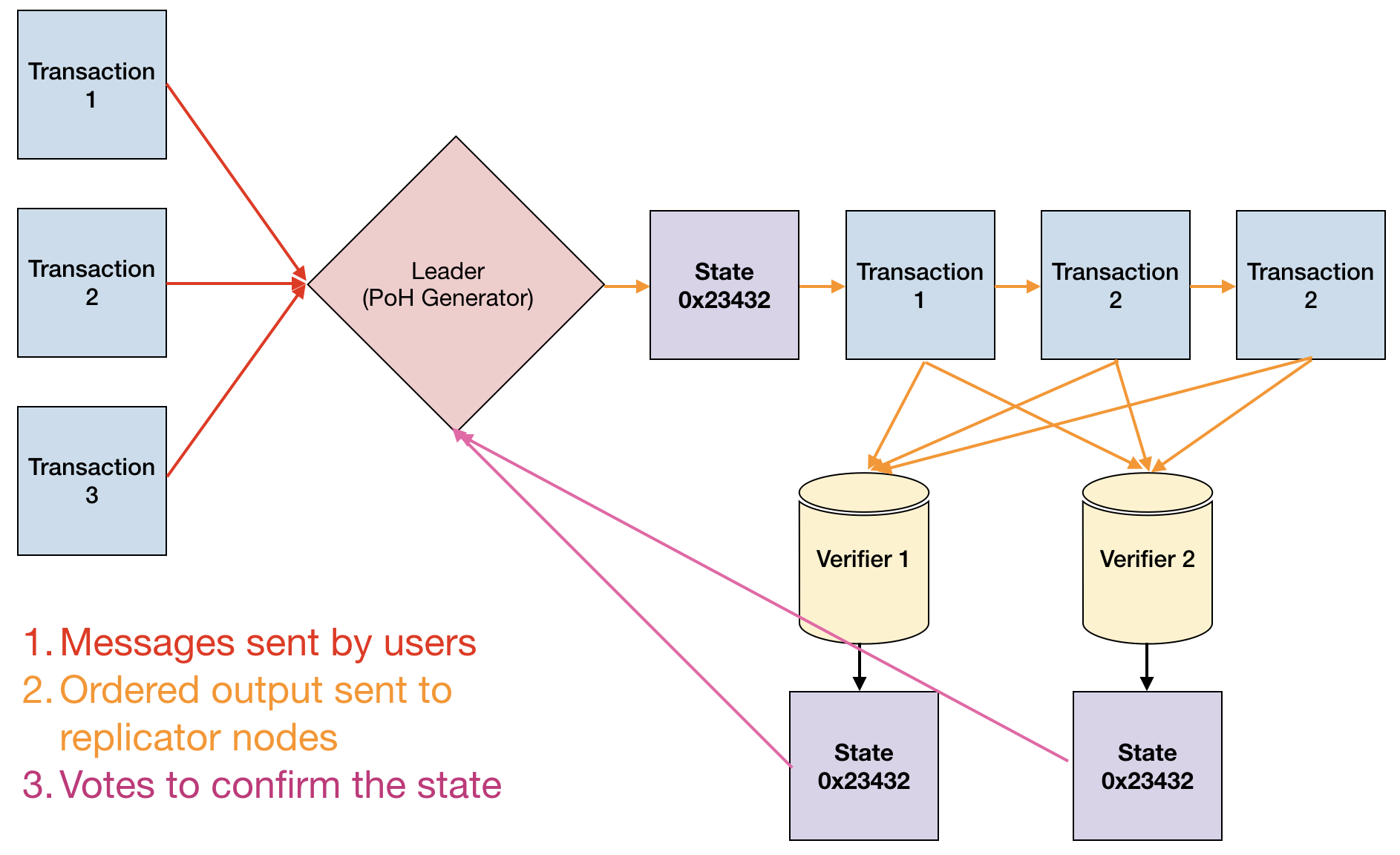
Gulf Stream प्रोटोकॉल क्लाइंट्स को आगामी लीडर्स को सीधे लेनदेन अग्रेषित करने में सक्षम बनाकर पारंपरिक मेमपूल की आवश्यकता को समाप्त करता है। जब कोई क्लाइंट लेनदेन सबमिट करता है, तो इसे रोटेशन शेड्यूल के आधार पर अपेक्षित लीडर को अग्रेषित किया जाता है। यदि वर्तमान लीडर लेनदेन को संसाधित नहीं कर सकता, तो इसे अगले अपेक्षित लीडर को अग्रेषित किया जाता है। यह डिज़ाइन पुष्टि विलंबता को कम करता है और सत्यापनकर्ताओं को समय से पहले लेनदेन निष्पादित करने की अनुमति देता है, जो थ्रूपुट को और अनुकूलित करता है।
लेनदेन प्रसार एक बहु-परत दृष्टिकोण का उपयोग करता है। क्लाइंट सत्यापनकर्ताओं को लेनदेन भेजते हैं, जो उन्हें वर्तमान या आगामी लीडर को अग्रेषित करते हैं। लीडर लेनदेन को PoH स्ट्रीम में अनुक्रमित करता है, एक कुल क्रम बनाता है। अनुक्रमण के बाद, लीडर PoH स्ट्रीम और लेनदेन डेटा को सत्यापनकर्ताओं को प्रेषित करता है, जो PoH अनुक्रम को सत्यापित करते हैं और समानांतर में लेनदेन निष्पादित करते हैं।
नेटवर्क डिज़ाइन में एक Turbine ब्लॉक प्रसार प्रोटोकॉल भी शामिल है जो ब्लॉक को छोटे पैकेट में विभाजित करता है और उन्हें एक ट्री संरचना में नेटवर्क में वितरित करता है। यह दृष्टिकोण तेज ब्लॉक प्रसार सुनिश्चित करते हुए व्यक्तिगत सत्यापनकर्ताओं के लिए बैंडविड्थ आवश्यकताओं को कम करता है। PoH की लेनदेन क्रम सत्यापित करने की क्षमता के साथ मिलकर, यह वास्तुकला Solana को विकेंद्रीकरण का त्याग किए बिना उच्च थ्रूपुट प्राप्त करने में सक्षम बनाती है।
Network Design
O design de rede de Solana centra-se em um sistema de lideres rotativos onde os validadores se revezam produzindo blocos. O lider e responsavel por sequenciar as transacoes recebidas no fluxo PoH e publicar os blocos resultantes na rede. Os lideres sao selecionados por um algoritmo ponderado por participacao, e o cronograma de rotacao e conhecido antecipadamente, permitindo que a rede otimize o encaminhamento de transacoes.
O protocolo Gulf Stream elimina a necessidade de um mempool tradicional ao permitir que os clientes encaminhem transacoes diretamente para os proximos lideres. Quando um cliente envia uma transacao, ela e encaminhada para o lider esperado com base no cronograma de rotacao. Se o lider atual nao puder processar a transacao, ela e encaminhada para o proximo lider esperado. Este design reduz a latencia de confirmacao e permite que os validadores executem transacoes antecipadamente, otimizando ainda mais o rendimento.
A propagacao de transacoes usa uma abordagem multicamada. Os clientes enviam transacoes para os validadores, que as encaminham para o lider atual ou proximo. O lider sequencia as transacoes no fluxo PoH, criando uma ordenacao total. Uma vez sequenciadas, o lider transmite o fluxo PoH e os dados de transacao para os validadores, que verificam a sequencia PoH e executam as transacoes em paralelo.
O design de rede tambem inclui um protocolo de propagacao de blocos Turbine que divide os blocos em pacotes menores e os distribui pela rede em uma estrutura de arvore. Essa abordagem minimiza os requisitos de largura de banda para validadores individuais enquanto garante uma rapida propagacao de blocos. Combinado com a capacidade de PoH de verificar a ordenacao de transacoes, essa arquitetura permite que Solana alcance alto rendimento sem sacrificar a descentralizacao.
Proof of History
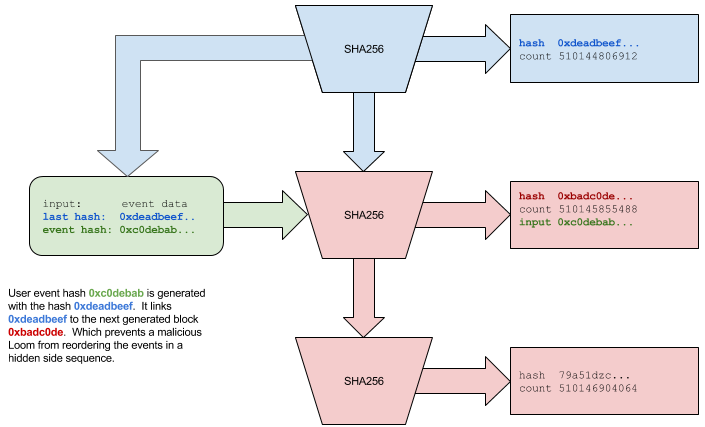
Proof of History SHA-256 का उपयोग करके एक अनुक्रमिक हैश चेन के रूप में कार्यान्वित एक सत्यापन योग्य विलंब फ़ंक्शन है। PoH जनरेटर लगातार SHA-256 हैश की गणना करता है, प्रत्येक आउटपुट को अगले हैश के लिए इनपुट के रूप में उपयोग करता है। यह एक अनुक्रमिक चेन बनाता है जहां प्रत्येक हैश केवल पिछले वाले के बाद ही गणना किया जा सकता है, एक सत्यापन योग्य कालानुक्रमिक क्रम स्थापित करता है। प्रत्येक हैश उत्पन्न करने की गणनात्मक आवश्यकता घटनाओं के बीच न्यूनतम समय विलंब लागू करती है।
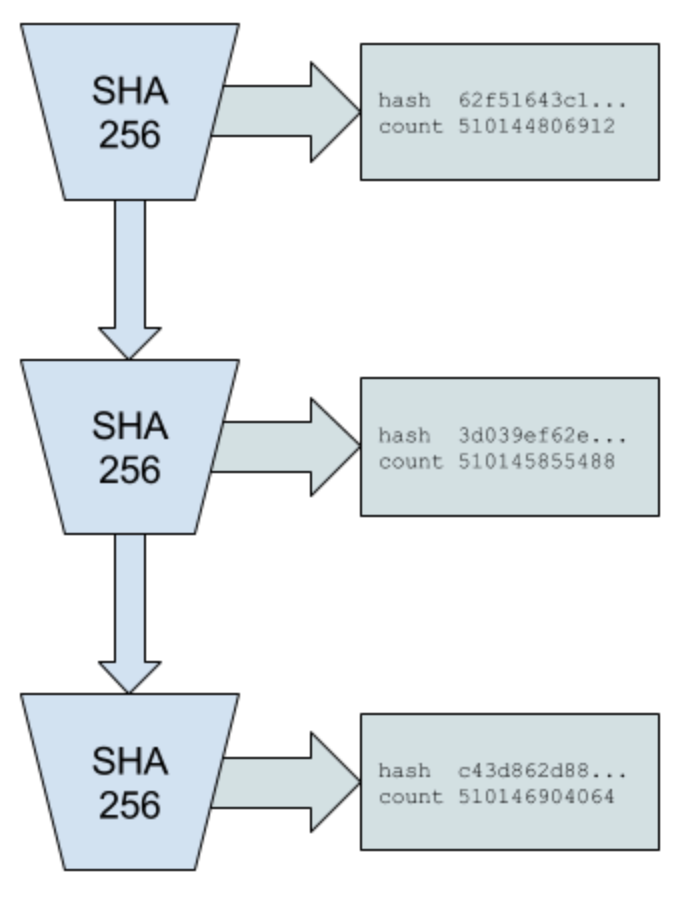
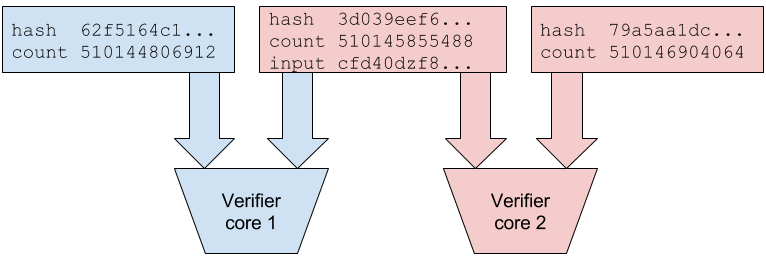
PoH की मुख्य संपत्ति यह है कि इसे सत्यापित करना सस्ता है लेकिन उत्पन्न करना महंगा है। एक सत्यापनकर्ता पूरे हैश अनुक्रम को खंडों में विभाजित करके और प्रत्येक खंड को स्वतंत्र रूप से समानांतर में जांचकर, फिर यह सत्यापित करके कि खंड ठीक से जुड़ते हैं, जांच सकता है। हालांकि, उत्पादन अनुक्रमिक होना चाहिए — वास्तव में हर मध्यवर्ती चरण की गणना किए बिना हैश चेन के आउटपुट की भविष्यवाणी करने का कोई तरीका नहीं है। उत्पादन और सत्यापन के बीच यह विषमता PoH को व्यावहारिक बनाती है।
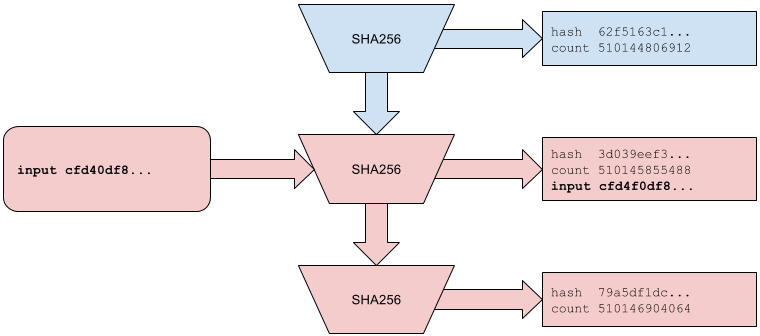
बाहरी घटनाओं और लेनदेन डेटा को हैश चेन में मिलाकर PoH अनुक्रम में डाला जाता है। जब कोई लेनदेन आता है, तो उसका हैश वर्तमान PoH स्थिति के साथ जोड़ दिया जाता है, एक रिकॉर्ड बनाता है जो साबित करता है कि लेनदेन अनुक्रम के उस बिंदु पर मौजूद था। PoH जनरेटर समय-समय पर चेकपॉइंट रिकॉर्ड करता है, अंतिम चेकपॉइंट के बाद से गणना किए गए हैश की संख्या के साथ वर्तमान हैश मान प्रकाशित करता है। ये चेकपॉइंट सत्यापनकर्ताओं को प्रत्येक हैश की पुनर्गणना किए बिना PoH अनुक्रम को कुशलतापूर्वक सत्यापित करने की अनुमति देते हैं।
PoH अनुक्रम पूरे नेटवर्क के लिए एक क्रिप्टोग्राफ़िक घड़ी के रूप में कार्य करता है। क्योंकि हैश चेन अनुक्रमिक और सत्यापन योग्य है, कोई भी नोड बस उस अंतराल के दौरान गणना किए गए हैश दिखाकर साबित कर सकता है कि दो घटनाओं के बीच एक निश्चित मात्रा में समय बीत चुका है। यह नोड्स के लिए बाहरी टाइमस्टैम्प पर भरोसा करने या कालानुक्रमिक क्रम स्थापित करने के लिए एक-दूसरे के साथ समन्वय करने की आवश्यकता को समाप्त करता है, पारंपरिक ब्लॉकचेन सहमति में एक मौलिक अड़चन को हटाता है।
Proof of History
Proof of History e uma funcao de atraso verificavel implementada como uma cadeia de hash sequencial usando SHA-256. O gerador PoH calcula continuamente hashes SHA-256, usando cada saida como entrada para o proximo hash. Isso cria uma cadeia sequencial onde cada hash so pode ser calculado apos o anterior, estabelecendo uma ordenacao temporal verificavel. O requisito computacional para gerar cada hash impoe um atraso de tempo minimo entre eventos.
A propriedade chave de PoH e que e barato verificar mas caro produzir. Um verificador pode checar toda a sequencia de hash em paralelo dividindo-a em segmentos e verificando cada segmento independentemente, depois verificando que os segmentos se conectam corretamente. No entanto, a geracao deve ser sequencial — nao ha como prever a saida da cadeia de hash sem realmente calcular cada passo intermediario. Essa assimetria entre geracao e verificacao e o que torna PoH pratico.
Eventos externos e dados de transacao sao inseridos na sequencia PoH misturando-os na cadeia de hash. Quando uma transacao chega, seu hash e combinado com o estado PoH atual, criando um registro que prova que a transacao existia naquele ponto da sequencia. O gerador PoH registra periodicamente pontos de verificacao, publicando o valor hash atual junto com a contagem de hashes calculados desde o ultimo ponto de verificacao. Esses pontos de verificacao permitem que os validadores verifiquem eficientemente a sequencia PoH sem recalcular cada hash.
A sequencia PoH serve como um relogio criptografico para toda a rede. Como a cadeia de hash e sequencial e verificavel, qualquer no pode provar que uma certa quantidade de tempo passou entre dois eventos simplesmente mostrando os hashes que foram calculados durante esse intervalo. Isso elimina a necessidade de os nos confiarem em timestamps externos ou se coordenarem entre si para estabelecer a ordenacao temporal, removendo um gargalo fundamental no consenso blockchain tradicional.
Proof of History Sequence
Proof of History अनुक्रम SHA-256 हैश की एक निरंतर चेन है जहां प्रत्येक हैश पिछले आउटपुट पर निर्भर करता है। अनुक्रम एक प्रारंभिक बीज मान से शुरू होता है, जिसे पहला आउटपुट उत्पन्न करने के लिए हैश किया जाता है। यह आउटपुट अगले हैश के लिए इनपुट बन जाता है, और प्रक्रिया अनिश्चित काल तक दोहराई जाती है। जनरेटर एक काउंटर भी बनाए रखता है जो गणना किए गए हैश की कुल संख्या को ट्रैक करता है, जो लेजर में घटनाओं के लिए PoH "टाइमस्टैम्प" के रूप में कार्य करता है।
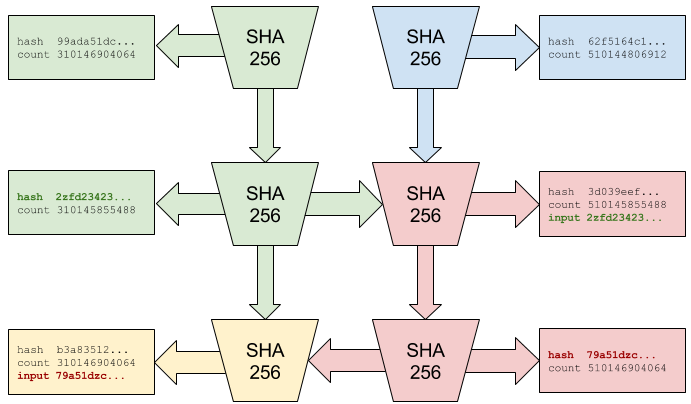
जब डेटा को अनुक्रम में डालने की आवश्यकता होती है (जैसे लेनदेन हैश या सत्यापनकर्ता हस्ताक्षर), तो इसे एक नियतात्मक मिश्रण फ़ंक्शन का उपयोग करके वर्तमान हैश स्थिति के साथ जोड़ा जाता है। उदाहरण के लिए, यदि वर्तमान हैश स्थिति hash_n है और हम डेटा D डालना चाहते हैं, तो हम hash_{n+1} = SHA256(hash_n || D) की गणना करते हैं, जहां || संयोजन को दर्शाता है। सम्मिलन बिंदु काउंटर मान के साथ रिकॉर्ड किया जाता है, यह साबित करता है कि डेटा D अनुक्रम के उस विशिष्ट बिंदु पर मौजूद था।
PoH अनुक्रम का सत्यापन चेन को खंडों में विभाजित करके समानांतर किया जा सकता है। उदाहरण के लिए, एक सत्यापनकर्ता हर 10,000 हैश पर PoH चेकपॉइंट प्राप्त कर सकता है। चेकपॉइंट के बीच अनुक्रम को सत्यापित करने के लिए, सत्यापनकर्ता 10,000 हैश को प्रत्येक 100 हैश के 100 खंडों में विभाजित कर सकता है, प्रत्येक खंड को समानांतर में स्वतंत्र रूप से सत्यापित कर सकता है, और फिर यह सत्यापित कर सकता है कि खंड ठीक से जुड़ते हैं। यह सत्यापन को उपलब्ध CPU कोर की संख्या के साथ क्षैतिज रूप से स्केल करने की अनुमति देता है।
अनुक्रम यह भी समर्थन करता है कि दो घटनाएं एक विशिष्ट क्रम में हुईं इसका कुशल प्रमाण। काउंटर मान n और m पर दो डेटा सम्मिलन दिए गए हैं जहां n m, कोई भी उन बिंदुओं के बीच हैश चेन की जांच करके सत्यापित कर सकता है कि n पर घटना m पर घटना से पहले हुई। यह गुण Solana को नोड्स के लगातार ऑनलाइन होने या बाहरी समय स्रोतों पर भरोसा किए बिना नेटवर्क में सभी घटनाओं का सत्यापन योग्य ऐतिहासिक रिकॉर्ड बनाने में सक्षम बनाता है।
Proof of History Sequence
A sequencia de Proof of History e uma cadeia continua de hashes SHA-256 onde cada hash depende da saida anterior. A sequencia começa com um valor semente inicial, que e hasheado para produzir a primeira saida. Essa saida se torna a entrada para o proximo hash, e o processo se repete indefinidamente. O gerador tambem mantem um contador que rastreia o numero total de hashes calculados, que serve como o "timestamp" PoH para eventos no livro-razao.
Quando dados precisam ser inseridos na sequencia (como hashes de transacoes ou assinaturas de validadores), eles sao combinados com o estado hash atual usando uma funcao de mistura deterministica. Por exemplo, se o estado hash atual e hash_n e queremos inserir dados D, calculamos hash_{n+1} = SHA256(hash_n || D), onde || denota concatenacao. O ponto de insercao e registrado junto com o valor do contador, provando que os dados D existiam naquele ponto especifico da sequencia.
A verificacao da sequencia PoH pode ser paralelizada dividindo a cadeia em segmentos. Por exemplo, um validador pode receber pontos de verificacao PoH a cada 10.000 hashes. Para verificar a sequencia entre pontos de verificacao, o validador pode dividir os 10.000 hashes em 100 segmentos de 100 hashes cada, verificar cada segmento independentemente em paralelo, e entao verificar que os segmentos se conectam corretamente. Isso permite que a verificacao escale horizontalmente com o numero de nucleos de CPU disponiveis.
A sequencia tambem suporta provas eficientes de que dois eventos ocorreram em uma ordem especifica. Dadas duas insercoes de dados nos valores de contador n e m onde n m, qualquer um pode verificar que o evento em n aconteceu antes do evento em m verificando a cadeia de hash entre esses pontos. Essa propriedade permite que Solana crie um registro historico verificavel de todos os eventos na rede sem exigir que os nos estejam online continuamente ou confiem em fontes de tempo externas.
Timestamp
Proof of History एक विकेंद्रीकृत घड़ी के रूप में कार्य करता है जो दीवार-घड़ी समय पर निर्भर किए बिना घटनाओं को टाइमस्टैम्प प्रदान करता है। प्रत्येक PoH हैश क्रिप्टोग्राफ़िक घड़ी का एक असतत "टिक" दर्शाता है, और काउंटर मान टाइमस्टैम्प के रूप में कार्य करता है। क्योंकि हैश चेन अनुक्रमिक और सत्यापन योग्य है, ये टाइमस्टैम्प विश्वासहीन हैं — कोई भी पर्यवेक्षक हैश चेन की जांच करके सत्यापित कर सकता है कि टाइमस्टैम्प वैध है।
Solana में, प्रत्येक सत्यापनकर्ता लीडर के रूप में कार्य करते समय अपना स्वयं का PoH अनुक्रम उत्पन्न कर सकता है। जब सत्यापनकर्ता नेतृत्व का रोटेशन करते हैं, तो वे पिछले लीडर के अंतिम पुष्टि किए गए चेकपॉइंट का उपयोग करके अपने PoH अनुक्रमों को सिंक्रनाइज़ करते हैं। यह सुनिश्चित करता है कि विभिन्न सत्यापनकर्ताओं द्वारा बारी-बारी से ब्लॉक उत्पन्न करने पर भी कालिक रिकॉर्ड की निरंतरता बनी रहे। नेटवर्क यह सहमति प्राप्त करके एक विहित समयरेखा स्थापित करता है कि कौन से PoH अनुक्रमों को आधिकारिक लेजर के भाग के रूप में स्वीकार किया जाए।
सिस्टम लीडर रोटेशन और सहमति के संयोजन के माध्यम से क्लॉक ड्रिफ्ट और हार्डवेयर प्रदर्शन में भिन्नता को संभालता है। यदि कोई दुर्भावनापूर्ण या दोषपूर्ण लीडर गलत दर (बहुत तेज या बहुत धीमी) पर PoH टाइमस्टैम्प उत्पन्न करने का प्रयास करता है, तो सत्यापनकर्ता अपने स्वयं के स्थानीय PoH जनरेटर के साथ PoH टिक दर की तुलना करके इसका पता लगा सकते हैं। अपेक्षित दर से महत्वपूर्ण विचलन एक समस्या का संकेत देते हैं, और सत्यापनकर्ता उन लीडर्स के ब्लॉक को अस्वीकार कर सकते हैं जिनके PoH अनुक्रम नेटवर्क माध्यिका से बहुत दूर विचलित होते हैं।
यह टाइमस्टैम्पिंग तंत्र वितरित सिस्टम में मौलिक समस्याओं में से एक को हल करता है: एक विश्वसनीय केंद्रीय प्राधिकरण के बिना समय की एक सामान्य धारणा स्थापित करना। PoH को एक विकेंद्रीकृत घड़ी के रूप में उपयोग करके, Solana सत्यापनकर्ताओं को वैश्विक रूप से सुसंगत क्रम बनाए रखते हुए समानांतर में लेनदेन संसाधित करने में सक्षम बनाता है। टाइमस्टैम्प लेनदेन समाप्ति, अनुसूचित संचालन और प्रदर्शन मापन जैसी समय-आधारित सुविधाओं के लिए भी एक आधार प्रदान करते हैं।
Timestamp
Proof of History funciona como um relogio descentralizado que atribui timestamps a eventos sem depender do tempo de relogio de parede. Cada hash PoH representa um "tick" discreto do relogio criptografico, e o valor do contador serve como o timestamp. Como a cadeia de hash e sequencial e verificavel, esses timestamps sao sem confiança — qualquer observador pode verificar que um timestamp e legitimo verificando a cadeia de hash.
Em Solana, cada validador pode gerar sua propria sequencia PoH quando atua como lider. Quando os validadores rotacionam a liderança, eles sincronizam suas sequencias PoH usando o ultimo ponto de verificacao confirmado do lider anterior. Isso garante a continuidade do registro temporal mesmo quando diferentes validadores se revezam produzindo blocos. A rede estabelece uma linha temporal canonica ao alcançar consenso sobre quais sequencias PoH aceitar como parte do livro-razao oficial.
O sistema lida com desvio de relogio e variacao no desempenho de hardware atraves de uma combinacao de rotacao de lideres e consenso. Se um lider malicioso ou defeituoso tentar gerar timestamps PoH a uma taxa incorreta (muito rapida ou muito lenta), os validadores podem detectar isso comparando a taxa de ticks PoH com seus proprios geradores PoH locais. Desvios significativos da taxa esperada indicam um problema, e os validadores podem rejeitar blocos de lideres cujas sequencias PoH divergem muito da mediana da rede.
Esse mecanismo de timestamping resolve um dos problemas fundamentais em sistemas distribuidos: estabelecer uma nocao comum de tempo sem uma autoridade central confiavel. Ao usar PoH como um relogio descentralizado, Solana permite que os validadores processem transacoes em paralelo enquanto mantem uma ordenacao globalmente consistente. Os timestamps tambem fornecem uma base para recursos baseados em tempo como expiracao de transacoes, operacoes agendadas e medicao de desempenho.
Proof of Stake Consensus
Solana का सहमति तंत्र, जिसे Tower BFT कहा जाता है, एक Proof of Stake एल्गोरिथ्म है जो विशेष रूप से Proof of History के कालिक गुणों का लाभ उठाने के लिए डिज़ाइन किया गया है। सत्यापनकर्ता सहमति में भाग लेने के लिए SOL टोकन स्टेक करते हैं और ब्लॉक को सही ढंग से सत्यापित करने के लिए पुरस्कार अर्जित करते हैं। स्टेक-भारित मतदान प्रणाली सुनिश्चित करती है कि नेटवर्क में अधिक आर्थिक हित रखने वाले सत्यापनकर्ताओं का सहमति निर्णयों पर आनुपातिक रूप से अधिक प्रभाव हो।
Tower BFT में मुख्य नवाचार लॉकआउट अवधि का उपयोग है जो प्रत्येक लगातार वोट के साथ तेजी से बढ़ती है। जब कोई सत्यापनकर्ता PoH हैश पर वोट करता है, तो वह एक निश्चित संख्या में PoH टिक के लिए लेजर के उस फोर्क के प्रति प्रतिबद्ध होता है। यदि वे उस फोर्क के अगले ब्लॉक पर वोट करते हैं, तो लॉकआउट अवधि दोगुनी हो जाती है। यह सत्यापनकर्ताओं के लिए एक ही फोर्क पर वोट करते रहने का एक मजबूत आर्थिक प्रोत्साहन बनाता है, क्योंकि फोर्क बदलने के लिए पहले के लॉकआउट की समाप्ति का इंतजार करना आवश्यक होगा।
विशेष रूप से, यदि कोई सत्यापनकर्ता PoH टाइमस्टैम्प t पर किसी ब्लॉक पर वोट करता है, तो वे 2^n टिक बीतने तक किसी विरोधी फोर्क पर वोट नहीं कर सकते, जहां n वर्तमान फोर्क पर किए गए लगातार वोटों की संख्या है। यह घातांकीय लॉकआउट तंत्र सिस्टम को तेज अंतिमता की अनुमति देते हुए दीर्घकालिक हमलों के खिलाफ सुरक्षित बनाता है। एक बार पर्याप्त गहराई के साथ स्टेक के अत्यधिक बहुमत ने किसी ब्लॉक पर वोट कर दिया, तो वह ब्लॉक प्रभावी रूप से अंतिम हो जाता है।
स्लैशिंग शर्तें ईमानदार व्यवहार लागू करती हैं। यदि कोई सत्यापनकर्ता उस अवधि के दौरान दो विरोधी फोर्क पर वोट करता है जब उन्हें लॉक आउट होना चाहिए, तो उन्हें स्लैश किया जाता है — उनके स्टेक किए गए टोकन आंशिक रूप से नष्ट हो जाते हैं और उन्हें सत्यापनकर्ता सेट से हटा दिया जाता है। यह दोहरे मतदान या अन्य बीजान्टिन व्यवहार का प्रयास करना आर्थिक रूप से अतार्किक बनाता है। PoH के सत्यापन योग्य टाइमस्टैम्प और Tower BFT के घातांकीय लॉकआउट का संयोजन एक ऐसा सहमति तंत्र बनाता है जो तेज और सुरक्षित दोनों है, पारंपरिक BFT सिस्टम की सुरक्षा गारंटी बनाए रखते हुए सेकंडों में अंतिमता प्राप्त करता है।
Proof of Stake Consensus
O mecanismo de consenso de Solana, chamado Tower BFT, e um algoritmo Proof of Stake projetado especificamente para aproveitar as propriedades temporais de Proof of History. Os validadores fazem staking de tokens SOL para participar do consenso e ganhar recompensas por validar corretamente os blocos. O sistema de votacao ponderado por participacao garante que validadores com mais interesse economico na rede tenham proporcionalmente mais influencia sobre as decisoes de consenso.
A inovacao central no Tower BFT e o uso de periodos de bloqueio que aumentam exponencialmente com cada voto consecutivo. Quando um validador vota em um hash PoH, ele se compromete com aquele fork do livro-razao por um certo numero de ticks PoH. Se votar no proximo bloco daquele fork, o periodo de bloqueio dobra. Isso cria um forte incentivo economico para os validadores continuarem votando no mesmo fork, pois trocar de fork exigiria esperar que os bloqueios anteriores expirassem.
Especificamente, se um validador vota em um bloco no timestamp PoH t, ele nao pode votar em um fork conflitante ate que 2^n ticks tenham passado, onde n e o numero de votos consecutivos que fez no fork atual. Esse mecanismo de bloqueio exponencial torna o sistema seguro contra ataques de longo alcance enquanto permite finalidade rapida. Uma vez que uma supermaioria de stake tenha votado em um bloco com profundidade suficiente, esse bloco esta efetivamente finalizado.
As condicoes de penalizacao impoem comportamento honesto. Se um validador votar em dois forks conflitantes durante um periodo em que deveria estar bloqueado, ele e penalizado — seus tokens em staking sao parcialmente destruidos e ele e removido do conjunto de validadores. Isso torna economicamente irracional tentar equivocacao ou outro comportamento bizantino. A combinacao dos timestamps verificaveis de PoH e dos bloqueios exponenciais de Tower BFT cria um mecanismo de consenso que e rapido e seguro, alcançando finalidade em segundos enquanto mantem as garantias de segurança dos sistemas BFT tradicionais.
Streaming Proof of Replication
Proof of Replication (PoRep) एक ऐसा तंत्र है जो सत्यापनकर्ताओं को डेटा स्वयं प्रकट किए बिना या गहन गणना की आवश्यकता के बिना यह साबित करने की अनुमति देता है कि वे लेजर डेटा संग्रहीत कर रहे हैं। Solana PoRep का एक स्ट्रीमिंग संस्करण लागू करता है जहां सत्यापनकर्ता लगातार प्रदर्शित करते हैं कि वे ब्लॉकचेन स्थिति की प्रतिलिपि बना रहे हैं। यह नेटवर्क सुरक्षा के लिए आवश्यक है, क्योंकि यह सुनिश्चित करता है कि लेजर डेटा सत्यापनकर्ताओं के बीच उचित रूप से वितरित है और कुछ स्थानों पर केंद्रित नहीं है।
PoRep तंत्र सत्यापनकर्ताओं द्वारा उनकी पहचान से प्राप्त सत्यापनकर्ता-विशिष्ट कुंजी का उपयोग करके CBC (Cipher Block Chaining) मोड एन्क्रिप्शन के साथ लेजर के खंडों को एन्क्रिप्ट करके काम करता है। एन्क्रिप्शन प्रक्रिया ऐसी है कि प्रत्येक एन्क्रिप्टेड ब्लॉक पिछले ब्लॉक पर निर्भर करता है, प्रत्येक सत्यापनकर्ता के लिए अद्वितीय एक चेन बनाता है। यह सत्यापनकर्ताओं को एक-दूसरे से एन्क्रिप्टेड डेटा कॉपी करने से रोकता है — प्रत्येक सत्यापनकर्ता को अपना अद्वितीय एन्क्रिप्टेड संस्करण उत्पन्न करने के लिए मूल लेजर डेटा संग्रहीत और संसाधित करना होगा।
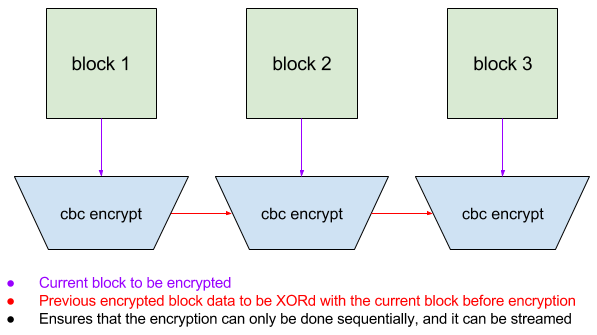
समय-समय पर, नेटवर्क सत्यापनकर्ताओं को विशिष्ट एन्क्रिप्टेड ब्लॉक प्रदान करने के लिए चुनौतियां जारी करता है। क्योंकि एन्क्रिप्शन चेन किया गया है, सत्यापनकर्ता को सही प्रतिक्रिया उत्पन्न करने के लिए सभी पूर्ववर्ती ब्लॉक संग्रहीत होने चाहिए। सत्यापनकर्ता अपने एन्क्रिप्टेड ब्लॉक को अपने एन्क्रिप्टेड लेजर में इसकी स्थिति दिखाने वाले Merkle प्रमाण के साथ जमा करता है। नेटवर्क डेटा को डिक्रिप्ट या पुनः एन्क्रिप्ट किए बिना इस प्रमाण को तुरंत सत्यापित कर सकता है।
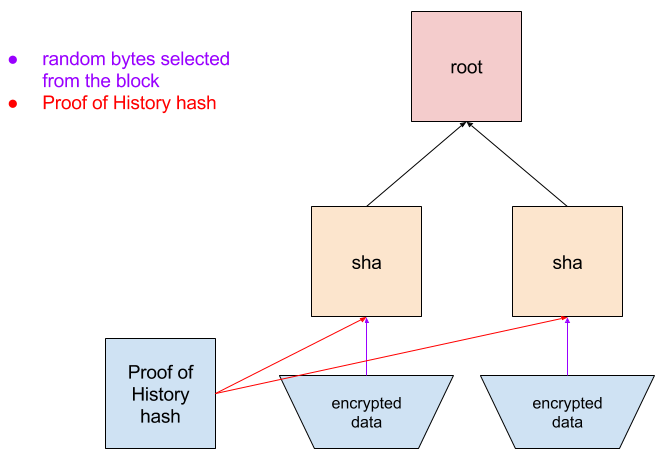
PoRep के लिए यह स्ट्रीमिंग दृष्टिकोण पारंपरिक proof-of-storage सिस्टम की तुलना में कम ओवरहेड रखता है। सत्यापनकर्ता डेटा आने पर एन्क्रिप्ट कर सकते हैं और न्यूनतम विलंबता के साथ चुनौतियों का जवाब दे सकते हैं। सिस्टम डेटा हानि के मामले में पुनर्प्राप्ति को भी सक्षम बनाता है — यदि कोई सत्यापनकर्ता लेजर का कुछ भाग खो देता है, तो वे इसे अन्य सत्यापनकर्ताओं से पुनः डाउनलोड कर सकते हैं और पुनः एन्क्रिप्ट कर सकते हैं। PoRep और PoH टाइमस्टैम्प का संयोजन एक पूर्ण जवाबदेही प्रणाली बनाता है जहां नेटवर्क यह सत्यापित कर सकता है कि डेटा कब बनाया गया था और यह सत्यापनकर्ता नेटवर्क में उचित रूप से संग्रहीत है।
Streaming Proof of Replication
Proof of Replication (PoRep) e um mecanismo que permite aos validadores provar que estao armazenando os dados do livro-razao sem revelar os dados em si ou exigir computacao intensiva. Solana implementa uma versao de streaming de PoRep onde os validadores demonstram continuamente que estao replicando o estado da blockchain. Isso e essencial para a segurança da rede, pois garante que os dados do livro-razao estejam adequadamente distribuidos entre os validadores e nao concentrados em poucos locais.
O mecanismo PoRep funciona fazendo com que os validadores criptografem segmentos do livro-razao usando encriptacao em modo CBC (Cipher Block Chaining) com uma chave especifica do validador derivada de sua identidade. O processo de encriptacao e tal que cada bloco criptografado depende do bloco anterior, criando uma cadeia unica para cada validador. Isso impede que os validadores simplesmente copiem dados criptografados uns dos outros — cada validador deve armazenar e processar os dados originais do livro-razao para gerar sua versao criptografada unica.
Periodicamente, a rede emite desafios aos validadores solicitando que forneçam blocos criptografados especificos. Como a encriptacao e encadeada, o validador deve ter armazenado todos os blocos anteriores para gerar a resposta correta. O validador envia seu bloco criptografado junto com uma prova de Merkle mostrando sua posicao em seu livro-razao criptografado. A rede pode verificar essa prova rapidamente sem precisar descriptografar ou re-criptografar os dados.
Essa abordagem de streaming para PoRep tem baixa sobrecarga comparada com sistemas tradicionais de prova de armazenamento. Os validadores podem criptografar dados conforme chegam e responder a desafios com latencia minima. O sistema tambem permite recuperacao em caso de perda de dados — se um validador perder parte do livro-razao, pode re-baixa-lo de outros validadores e re-criptografa-lo. A combinacao de PoRep com timestamps PoH cria um sistema de responsabilidade completo onde a rede pode verificar tanto quando os dados foram criados quanto que estao adequadamente armazenados em toda a rede de validadores.
System Architecture
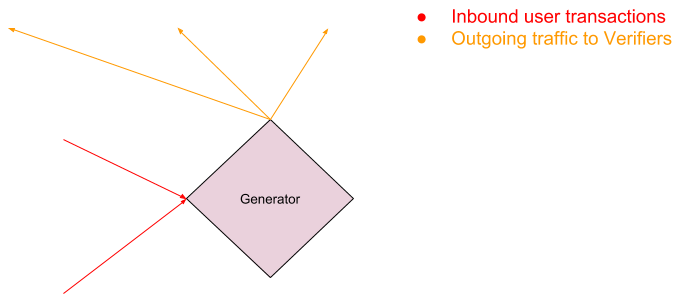
Solana की सिस्टम वास्तुकला एक पाइपलाइन के रूप में डिज़ाइन की गई है जहां लेनदेन प्रसंस्करण के विभिन्न चरण समानांतर में होते हैं। Transaction Processing Unit (TPU) आने वाले लेनदेन को संभालने के लिए जिम्मेदार मुख्य घटक है। TPU में कई चरण शामिल हैं: fetch (लेनदेन का संग्रह), हस्ताक्षर सत्यापन, banking (लेनदेन निष्पादन), और write (स्टोरेज में लिखना)। प्रत्येक चरण विभिन्न लेनदेन पर समानांतर में संचालित होता है, CPU पाइपलाइनिंग के समान।
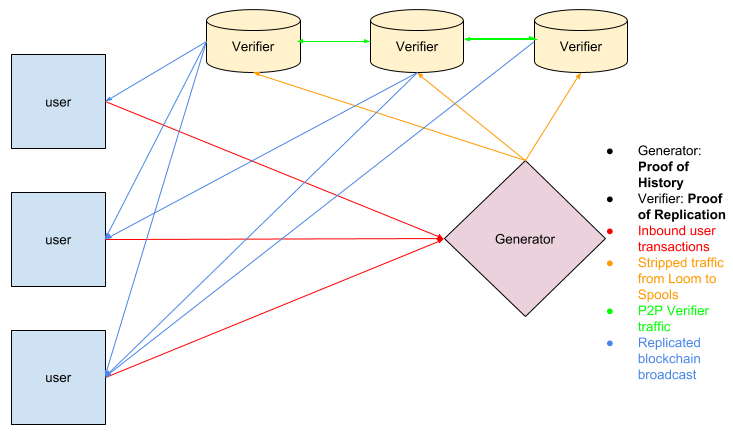
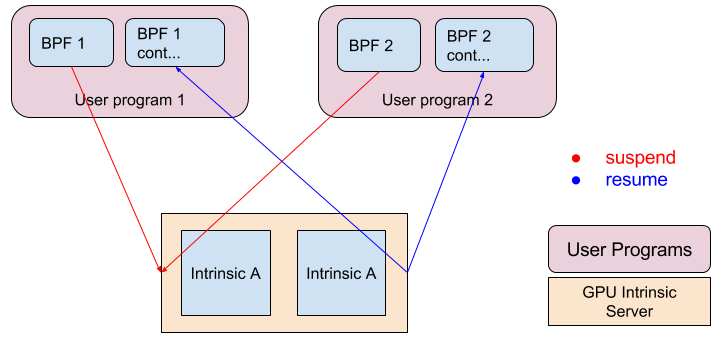
हस्ताक्षर सत्यापन GPU का उपयोग करके त्वरित किया जाता है, जो लेनदेन हस्ताक्षरों को सत्यापित करने के लिए आवश्यक अण्डाकार वक्र क्रिप्टोग्राफी संचालन में अत्यधिक कुशल हैं। इस गणनात्मक रूप से गहन कार्य को GPU पर ऑफलोड करके, Solana कमोडिटी हार्डवेयर पर प्रति सेकंड 900,000 से अधिक की दर पर हस्ताक्षर सत्यापित कर सकता है। यह समानांतर हस्ताक्षर सत्यापन बहुत उच्च लेनदेन दरों पर भी क्रिप्टोग्राफ़िक सत्यापन को अड़चन बनने से रोकता है।
Sealevel रनटाइम Solana का समानांतर स्मार्ट कॉन्ट्रैक्ट निष्पादन इंजन है। पारंपरिक ब्लॉकचेन जो लेनदेन को क्रमिक रूप से निष्पादित करते हैं, उसके विपरीत, Sealevel लेनदेन का विश्लेषण करता है कि वे कौन से खातों तक पहुंचते हैं और गैर-विरोधी लेनदेन को कई CPU कोर पर समानांतर में निष्पादित करता है। समान खातों तक पहुंचने वाले लेनदेन सुसंगतता बनाए रखने के लिए क्रमिक रूप से निष्पादित किए जाते हैं, लेकिन विभिन्न खातों तक पहुंचने वाले लेनदेन एक साथ चल सकते हैं। यह समानांतरता संभव है क्योंकि PoH एक वैश्विक क्रम स्थापित करता है — सत्यापनकर्ता किसी भी क्रम में लेनदेन निष्पादित कर सकते हैं जब तक वे PoH-निर्दिष्ट अनुक्रम में उन्हें स्थिति पर लागू करते हैं।
वास्तुकला में ब्लॉक प्रसार और स्टोरेज के लिए अनुकूलित घटक भी शामिल हैं। Turbine ब्लॉक प्रसार प्रोटोकॉल इरेजर कोडिंग का उपयोग करके ब्लॉक को छोटे पैकेट में विभाजित करता है जो ट्री संरचना में नेटवर्क में वितरित किए जाते हैं, बैंडविड्थ आवश्यकताओं को न्यूनतम करता है। Archivers नेटवर्क PoRep का उपयोग करके डेटा उपलब्धता सुनिश्चित करते हुए ऐतिहासिक लेजर डेटा के लिए विकेंद्रीकृत स्टोरेज प्रदान करता है। ये घटक मिलकर एक ऐसा सिस्टम बनाते हैं जो ब्लॉकचेन के विकेंद्रीकरण और सुरक्षा गुणों को बनाए रखते हुए प्रति सेकंड सैकड़ों हजारों लेनदेन संसाधित कर सकता है।
System Architecture
A arquitetura de sistema de Solana e projetada como um pipeline onde diferentes estagios do processamento de transacoes acontecem em paralelo. A Transaction Processing Unit (TPU) e o componente central responsavel por lidar com transacoes recebidas. A TPU consiste em varios estagios: fetch (coleta de transacoes), verificacao de assinaturas, banking (execucao de transacoes) e write (gravacao em armazenamento). Cada estagio opera em paralelo em diferentes transacoes, semelhante ao pipeline de uma CPU.
A verificacao de assinaturas e acelerada usando GPUs, que sao altamente eficientes nas operacoes de criptografia de curva eliptica necessarias para verificar assinaturas de transacoes. Ao descarregar essa tarefa computacionalmente intensiva para GPUs, Solana pode verificar assinaturas a taxas superiores a 900.000 por segundo em hardware comercial. Essa verificacao de assinaturas em paralelo impede que a validacao criptografica se torne um gargalo mesmo em taxas de transacao muito altas.
O runtime Sealevel e o motor de execucao de contratos inteligentes em paralelo de Solana. Diferente das blockchains tradicionais que executam transacoes sequencialmente, Sealevel analisa as transacoes para identificar quais contas elas acessam e executa transacoes nao conflitantes em paralelo em multiplos nucleos de CPU. Transacoes que acessam as mesmas contas sao executadas sequencialmente para manter a consistencia, mas transacoes que acessam contas diferentes podem ser executadas simultaneamente. Esse paralelismo e possivel porque PoH estabelece uma ordenacao global — validadores podem executar transacoes em qualquer ordem desde que as apliquem ao estado na sequencia especificada por PoH.
A arquitetura tambem inclui componentes otimizados para propagacao e armazenamento de blocos. O protocolo de propagacao de blocos Turbine usa codificacao de apagamento para dividir blocos em pacotes menores que sao distribuidos pela rede em uma estrutura de arvore, minimizando os requisitos de largura de banda. A rede de Archivers fornece armazenamento descentralizado para dados historicos do livro-razao, usando PoRep para garantir a disponibilidade de dados. Juntos, esses componentes criam um sistema que pode processar centenas de milhares de transacoes por segundo enquanto mantem as propriedades de descentralizacao e segurança de uma blockchain.
Performance
Solana की वास्तुकला मूर के नियम का पालन करते हुए हार्डवेयर सुधारों के साथ स्केल करने वाले प्रदर्शन स्तर प्राप्त करने के लिए डिज़ाइन की गई है। एक मानक 1 गीगाबिट नेटवर्क कनेक्शन पर, सैद्धांतिक अधिकतम थ्रूपुट प्रति लेनदेन 176 बाइट (हस्ताक्षर और मेटाडेटा सहित) मानते हुए प्रति सेकंड लगभग 710,000 लेनदेन है। यह गणना प्राथमिक अड़चन के रूप में नेटवर्क बैंडविड्थ पर आधारित है, जिसमें गणनात्मक अड़चनों को समानांतरीकरण के माध्यम से हटा दिया गया है।
हस्ताक्षर सत्यापन, जो अक्सर ब्लॉकचेन प्रदर्शन में एक सीमित कारक होता है, GPU समानांतरीकरण का उपयोग करके त्वरित किया जाता है। एक एकल GPU प्रति सेकंड 900,000 से अधिक ed25519 हस्ताक्षर सत्यापित कर सकता है, जो नेटवर्क थ्रूपुट सीमा से अधिक है। इसका मतलब है कि हस्ताक्षर सत्यापन सिस्टम के प्रदर्शन को बाधित नहीं करता — अड़चन नेटवर्क बैंडविड्थ और लेनदेन निष्पादन में स्थानांतरित हो जाती है। जटिल स्मार्ट कॉन्ट्रैक्ट लॉजिक के बिना केवल मूल्य हस्तांतरित करने वाले सरल लेनदेन के लिए, banking चरण नेटवर्क इनपुट दर से मेल खाने वाली दर पर लेनदेन संसाधित कर सकता है।
PoH जनरेटर एक समर्पित CPU कोर पर चलता है, 4GHz प्रोसेसर पर प्रति मिलीसेकंड लगभग 4,000 हैश उत्पन्न करता है। इस दर पर, PoH अनुक्रम 0.25 माइक्रोसेकंड ग्रैन्युलैरिटी वाले टाइमस्टैम्प प्रदान करता है, जो प्रति सेकंड लाखों लेनदेन के क्रम के लिए पर्याप्त है। PoH उत्पादन की अनुक्रमिक प्रकृति का अर्थ है कि इस घटक को समानांतर नहीं किया जा सकता, लेकिन थ्रूपुट इतना अधिक है कि यह समग्र सिस्टम प्रदर्शन को सीमित नहीं करता।
जैसे-जैसे हार्डवेयर में सुधार होता है, Solana का थ्रूपुट तदनुसार स्केल होता है। तेज नेटवर्क, अधिक शक्तिशाली GPU, और बेहतर CPU सभी उच्च लेनदेन दरों में योगदान करते हैं। सिस्टम को प्रोटोकॉल परिवर्तनों की आवश्यकता के बिना इन सुधारों का लाभ उठाने के लिए डिज़ाइन किया गया है। यह स्केलेबिलिटी दृष्टिकोण उन ब्लॉकचेन से विपरीत है जो अनुक्रमिक सहमति तंत्रों द्वारा मौलिक रूप से सीमित हैं, जो Solana को सुरक्षा और विकेंद्रीकरण गारंटी बनाए रखते हुए विकेंद्रीकृत सिस्टम में पहले असंभव माने जाने वाले प्रदर्शन स्तर प्राप्त करने की अनुमति देता है।
Performance
A arquitetura de Solana e projetada para alcançar niveis de desempenho que escalam com melhorias de hardware, seguindo a Lei de Moore. Em uma conexao de rede padrao de 1 gigabit, o rendimento maximo teorico e aproximadamente 710.000 transacoes por segundo, assumindo 176 bytes por transacao (incluindo assinaturas e metadados). Esse calculo e baseado na largura de banda de rede como o principal gargalo, com gargalos computacionais eliminados atraves da paralelizacao.
A verificacao de assinaturas, frequentemente um fator limitante no desempenho de blockchain, e acelerada usando paralelizacao GPU. Uma unica GPU pode verificar mais de 900.000 assinaturas ed25519 por segundo, o que excede o limite de rendimento da rede. Isso significa que a verificacao de assinaturas nao restringe o desempenho do sistema — o gargalo se desloca para a largura de banda de rede e a execucao de transacoes. Para transacoes simples que apenas transferem valor sem logica complexa de contratos inteligentes, o estagio de banking pode processar transacoes a taxas que correspondem a taxa de entrada da rede.
O gerador PoH funciona em um nucleo de CPU dedicado, produzindo aproximadamente 4.000 hashes por milissegundo em um processador de 4GHz. Nessa taxa, a sequencia PoH fornece timestamps com granularidade de 0,25 microssegundos, o que e suficiente para ordenar milhoes de transacoes por segundo. A natureza sequencial da geracao PoH significa que esse componente nao pode ser paralelizado, mas o rendimento e alto o suficiente para nao limitar o desempenho geral do sistema.
Conforme o hardware melhora, o rendimento de Solana escala proporcionalmente. Redes mais rapidas, GPUs mais poderosas e CPUs melhoradas contribuem para taxas de transacao mais altas. O sistema e projetado para aproveitar essas melhorias sem exigir mudanças de protocolo. Essa abordagem de escalabilidade contrasta com blockchains que sao fundamentalmente limitadas por mecanismos de consenso sequenciais, permitindo que Solana alcance niveis de desempenho anteriormente considerados impossiveis em um sistema descentralizado enquanto mantem garantias de segurança e descentralizacao.
Conclusion
Proof of History वितरित लेजर की स्केलेबिलिटी को सीमित करने वाली समय समस्या को हल करके ब्लॉकचेन वास्तुकला में एक मौलिक सफलता का प्रतिनिधित्व करता है। एक सत्यापन योग्य क्रिप्टोग्राफ़िक घड़ी बनाकर, PoH सत्यापनकर्ताओं को पारंपरिक सहमति तंत्रों द्वारा आवश्यक व्यापक संचार ओवरहेड के बिना घटनाओं का कालानुक्रमिक क्रम स्थापित करने में सक्षम बनाता है। यह नवाचार एक महत्वपूर्ण अड़चन को दूर करता है और लेनदेन प्रसंस्करण को नेटवर्क में समानांतर करने की अनुमति देता है।
PoH का अनुकूलित सिस्टम घटकों के साथ एकीकरण — GPU-त्वरित हस्ताक्षर सत्यापन, Sealevel के माध्यम से समानांतर लेनदेन निष्पादन, और कुशल ब्लॉक प्रसार प्रोटोकॉल — कमोडिटी हार्डवेयर पर प्रति सेकंड सैकड़ों हजारों लेनदेन संसाधित करने में सक्षम एक ब्लॉकचेन बनाता है। इससे भी महत्वपूर्ण बात यह है कि वास्तुकला हार्डवेयर सुधारों के साथ स्केल करने के लिए डिज़ाइन की गई है, जिसका अर्थ है कि प्रोसेसर तेज होने और नेटवर्क अधिक सक्षम होने पर प्रदर्शन बढ़ता रहेगा।
Solana का डिज़ाइन दर्शाता है कि उच्च प्रदर्शन और विकेंद्रीकरण परस्पर अनन्य नहीं हैं। PoH को सहमति और सिस्टम समन्वय के लिए आधार के रूप में लाभ उठाकर, नेटवर्क विकेंद्रीकृत ब्लॉकचेन की सुरक्षा और सेंसरशिप-प्रतिरोध गुणों को बनाए रखते हुए केंद्रीकृत डेटाबेस के समान थ्रूपुट स्तर प्राप्त करता है। स्टेक-भारित Tower BFT सहमति तंत्र सुनिश्चित करता है कि तेज अंतिमता प्राप्त करते हुए नेटवर्क बीजान्टिन अभिकर्ताओं के खिलाफ सुरक्षित रहे।
इस वास्तुकला का कार्यान्वयन ब्लॉकचेन प्रौद्योगिकी के वैश्विक अपनाने तक स्केल करने के लिए एक व्यावहारिक मार्ग प्रदान करता है। उच्च लेनदेन थ्रूपुट की आवश्यकता वाले अनुप्रयोग — जैसे विकेंद्रीकृत एक्सचेंज, गेमिंग प्लेटफॉर्म, और वित्तीय प्रणालियां — अब प्रदर्शन से समझौता किए बिना वास्तव में विकेंद्रीकृत बुनियादी ढांचे पर बनाए जा सकते हैं। Proof of History ब्लॉकचेन अनुप्रयोगों की एक नई पीढ़ी का द्वार खोलता है जो पहले स्केलेबिलिटी बाधाओं के कारण अव्यावहारिक थे।
Conclusion
Proof of History representa um avanço fundamental na arquitetura blockchain ao resolver o problema de sincronizacao que limitou a escalabilidade dos livros-razao distribuidos. Ao criar um relogio criptografico verificavel, PoH permite que os validadores estabeleçam uma ordenacao temporal de eventos sem a extensa sobrecarga de comunicacao exigida pelos mecanismos de consenso tradicionais. Essa inovacao remove um gargalo critico e permite que o processamento de transacoes seja paralelizado em toda a rede.
A integracao de PoH com componentes de sistema otimizados — verificacao de assinaturas acelerada por GPU, execucao de transacoes em paralelo atraves de Sealevel e protocolos eficientes de propagacao de blocos — cria uma blockchain capaz de processar centenas de milhares de transacoes por segundo em hardware comercial. Mais importante, a arquitetura e projetada para escalar com melhorias de hardware, significando que o desempenho continuara aumentando conforme os processadores se tornam mais rapidos e as redes mais capazes.
O design de Solana demonstra que alto desempenho e descentralizacao nao sao mutuamente exclusivos. Ao aproveitar PoH como base para consenso e coordenacao do sistema, a rede alcança niveis de rendimento comparaveis a bancos de dados centralizados enquanto mantem as propriedades de segurança e resistencia a censura de uma blockchain descentralizada. O mecanismo de consenso Tower BFT ponderado por participacao garante que a rede permaneca segura contra atores bizantinos enquanto alcança finalidade rapida.
A implementacao dessa arquitetura fornece um caminho pratico para a tecnologia blockchain escalar para adocao global. Aplicacoes que requerem alto rendimento de transacoes — como exchanges descentralizadas, plataformas de jogos e sistemas financeiros — agora podem ser construidas em uma infraestrutura verdadeiramente descentralizada sem comprometer o desempenho. Proof of History abre a porta para uma nova geracao de aplicacoes blockchain que anteriormente eram inviaveis devido a restricoes de escalabilidade.