
บิตคอยน์: ระบบเงินสดอิเล็กทรอนิกส์แบบเพียร์ทูเพียร์
Abstract
Tamamen eşler arası (peer-to-peer) bir elektronik nakit sistemi, çevrimiçi ödemelerin bir finansal kurum aracılığına gerek kalmadan doğrudan bir taraftan diğerine gönderilmesine olanak tanıyacaktır. Dijital imzalar çözümün bir kısmını sağlar, ancak çifte harcamayı (double-spending) önlemek için güvenilir bir üçüncü tarafa hâlâ ihtiyaç duyuluyorsa temel faydalar kaybolur. Çifte harcama sorununa eşler arası bir ağ kullanarak bir çözüm öneriyoruz. Ağ, işlemleri hash tabanlı proof-of-work'ün devam eden bir zincirine hash'leyerek zaman damgası ekler ve proof-of-work yeniden yapılmadan değiştirilemeyen bir kayıt oluşturur. En uzun zincir yalnızca tanıklık edilen olayların sırasının kanıtı olarak değil, aynı zamanda en büyük CPU gücü havuzundan geldiğinin kanıtı olarak da hizmet eder. CPU gücünün çoğunluğu, ağa saldırmak için işbirliği yapmayan düğümler tarafından kontrol edildiği sürece, en uzun zinciri üretecek ve saldırganları geride bırakacaklardır. Ağın kendisi minimum düzeyde yapı gerektirir. Mesajlar en iyi çaba esasına göre yayınlanır ve düğümler ağdan istedikleri zaman ayrılıp yeniden katılabilir; yokluklarında olanların kanıtı olarak en uzun proof-of-work zincirini kabul ederler.
Abstract
ระบบเงินสดอิเล็กทรอนิกส์แบบ peer-to-peer อย่างแท้จริงจะช่วยให้การชำระเงินออนไลน์สามารถส่งตรงจากฝ่ายหนึ่งไปยังอีกฝ่ายหนึ่งโดยไม่ต้องผ่านสถาบันการเงิน ลายเซ็นดิจิทัลเป็นส่วนหนึ่งของคำตอบ แต่ประโยชน์หลักจะสูญเสียไปหากยังคงต้องการบุคคลที่สามที่เชื่อถือได้เพื่อป้องกัน double-spending เราเสนอวิธีแก้ปัญหา double-spending โดยใช้เครือข่าย peer-to-peer เครือข่ายประทับเวลาธุรกรรมโดยการ hash เข้าไปในห่วงโซ่ proof-of-work แบบต่อเนื่องที่ใช้ hash เป็นพื้นฐาน สร้างเป็นบันทึกที่ไม่สามารถเปลี่ยนแปลงได้โดยไม่ทำ proof-of-work ใหม่ ห่วงโซ่ที่ยาวที่สุดไม่เพียงทำหน้าที่เป็นหลักฐานของลำดับเหตุการณ์ที่ได้เห็น แต่ยังเป็นหลักฐานว่ามันมาจากกลุ่มพลังงาน CPU ที่ใหญ่ที่สุด ตราบใดที่พลังงาน CPU ส่วนใหญ่ถูกควบคุมโดย node ที่ไม่ร่วมมือกันโจมตีเครือข่าย พวกเขาจะสร้างห่วงโซ่ที่ยาวที่สุดและแซงหน้าผู้โจมตีได้ ตัวเครือข่ายเองต้องการโครงสร้างน้อยที่สุด ข้อความถูกประกาศแบบพยายามอย่างดีที่สุด และ node สามารถออกจากและกลับเข้าร่วมเครือข่ายได้ตามต้องการ โดยยอมรับห่วงโซ่ proof-of-work ที่ยาวที่สุดเป็นหลักฐานของสิ่งที่เกิดขึ้นขณะที่พวกเขาไม่อยู่
Introduction
İnternet üzerindeki ticaret, elektronik ödemeleri işlemek için güvenilir üçüncü taraflar olarak hizmet veren finansal kurumlara neredeyse tamamen bağımlı hale gelmiştir. Sistem çoğu işlem için yeterince iyi çalışsa da, güvene dayalı modelin doğasında var olan zayıflıklardan hâlâ muzdariptir. Finansal kurumlar uyuşmazlıklarda arabuluculuk yapmaktan kaçınamadığından, tamamen geri dönüşü olmayan işlemler gerçekten mümkün değildir. Arabuluculuk maliyeti, işlem maliyetlerini artırır, minimum pratik işlem boyutunu sınırlar ve küçük gündelik işlemler olasılığını ortadan kaldırır; geri dönüşü olmayan hizmetler için geri dönüşü olmayan ödemeler yapma yeteneğinin kaybedilmesinde daha geniş bir maliyet de vardır. Geri dönüş olasılığı ile güven ihtiyacı yayılır. Tüccarlar müşterilerine karşı temkinli olmak zorundadır ve normalde ihtiyaç duyacaklarından daha fazla bilgi talep ederek onları rahatsız eder. Belirli bir yüzde dolandırıcılık kaçınılmaz olarak kabul edilir. Bu maliyetler ve ödeme belirsizlikleri, fiziksel para birimi kullanılarak yüz yüze ortadan kaldırılabilir, ancak güvenilir bir taraf olmadan bir iletişim kanalı üzerinden ödeme yapmak için hiçbir mekanizma mevcut değildir.
İhtiyaç duyulan şey, güven yerine kriptografik kanıta dayalı, istekli iki tarafın güvenilir bir üçüncü tarafa ihtiyaç duymadan doğrudan birbirleriyle işlem yapmasına olanak tanıyan bir elektronik ödeme sistemidir. Hesaplama açısından geri döndürülmesi pratik olmayan işlemler satıcıları dolandırıcılığa karşı koruyacak ve rutin emanet (escrow) mekanizmaları alıcıları korumak için kolayca uygulanabilecektir. Bu makalede, işlemlerin kronolojik sırasının hesaplamalı kanıtını oluşturmak için eşler arası dağıtık bir zaman damgası sunucusu kullanan çifte harcama sorununa bir çözüm öneriyoruz. Sistem, dürüst düğümler toplu olarak herhangi bir işbirliği yapan saldırgan düğüm grubundan daha fazla CPU gücünü kontrol ettiği sürece güvenlidir.
Introduction
การพาณิชย์บนอินเทอร์เน็ตได้พึ่งพาสถาบันการเงินที่ทำหน้าที่เป็นบุคคลที่สามที่เชื่อถือได้ในการประมวลผลการชำระเงินอิเล็กทรอนิกส์เกือบทั้งหมด แม้ว่าระบบจะทำงานได้ดีเพียงพอสำหรับธุรกรรมส่วนใหญ่ แต่ก็ยังคงประสบปัญหาจากจุดอ่อนโดยธรรมชาติของโมเดลที่อิงความไว้วางใจ ธุรกรรมที่ไม่สามารถย้อนกลับได้อย่างสมบูรณ์นั้นไม่สามารถเป็นไปได้จริง เนื่องจากสถาบันการเงินไม่สามารถหลีกเลี่ยงการไกล่เกลี่ยข้อพิพาทได้ ต้นทุนของการไกล่เกลี่ยเพิ่มต้นทุนธุรกรรม จำกัดขนาดธุรกรรมขั้นต่ำที่ใช้งานได้จริงและตัดความเป็นไปได้ของธุรกรรมเล็กน้อยทั่วไป และยังมีต้นทุนที่กว้างขึ้นในการสูญเสียความสามารถในการชำระเงินที่ไม่สามารถย้อนกลับได้สำหรับบริการที่ไม่สามารถย้อนกลับได้ ด้วยความเป็นไปได้ของการย้อนกลับ ความต้องการความไว้วางใจจึงแพร่กระจาย ผู้ค้าต้องระวังลูกค้าของตน รบกวนพวกเขาเพื่อขอข้อมูลมากกว่าที่พวกเขาต้องการ เปอร์เซ็นต์หนึ่งของการฉ้อโกงถูกยอมรับว่าหลีกเลี่ยงไม่ได้ ต้นทุนเหล่านี้และความไม่แน่นอนของการชำระเงินสามารถหลีกเลี่ยงได้เมื่อทำธุรกรรมด้วยตนเองโดยใช้สกุลเงินจริง แต่ไม่มีกลไกใดที่จะทำการชำระเงินผ่านช่องทางการสื่อสารโดยไม่มีฝ่ายที่เชื่อถือได้
สิ่งที่จำเป็นคือระบบการชำระเงินอิเล็กทรอนิกส์ที่อิงหลักฐานการเข้ารหัสแทนความไว้วางใจ ซึ่งอนุญาตให้สองฝ่ายที่เต็มใจทำธุรกรรมโดยตรงกับกันโดยไม่ต้องการบุคคลที่สามที่เชื่อถือได้ ธุรกรรมที่ไม่สามารถย้อนกลับได้ในทางคอมพิวเตอร์จะปกป้องผู้ขายจากการฉ้อโกง และกลไก escrow ตามปกติสามารถนำมาใช้ได้อย่างง่ายดายเพื่อปกป้องผู้ซื้อ ในบทความนี้ เราเสนอวิธีแก้ปัญหา double-spending โดยใช้เซิร์ฟเวอร์ประทับเวลาแบบกระจาย peer-to-peer เพื่อสร้างหลักฐานทางการคำนวณของลำดับเวลาของธุรกรรม ระบบจะปลอดภัยตราบใดที่ node ที่ซื่อสัตย์ร่วมกันควบคุมพลังงาน CPU มากกว่ากลุ่ม node ผู้โจมตีใดๆ ที่ร่วมมือกัน
Transactions
Elektronik bir parayı dijital imzalar zinciri olarak tanımlıyoruz. Her sahip, bir önceki işlemin hash'ini ve bir sonraki sahibin açık anahtarını (public key) dijital olarak imzalayarak ve bunları paranın sonuna ekleyerek parayı bir sonraki sahibine aktarır. Alacaklı, sahiplik zincirini doğrulamak için imzaları doğrulayabilir.
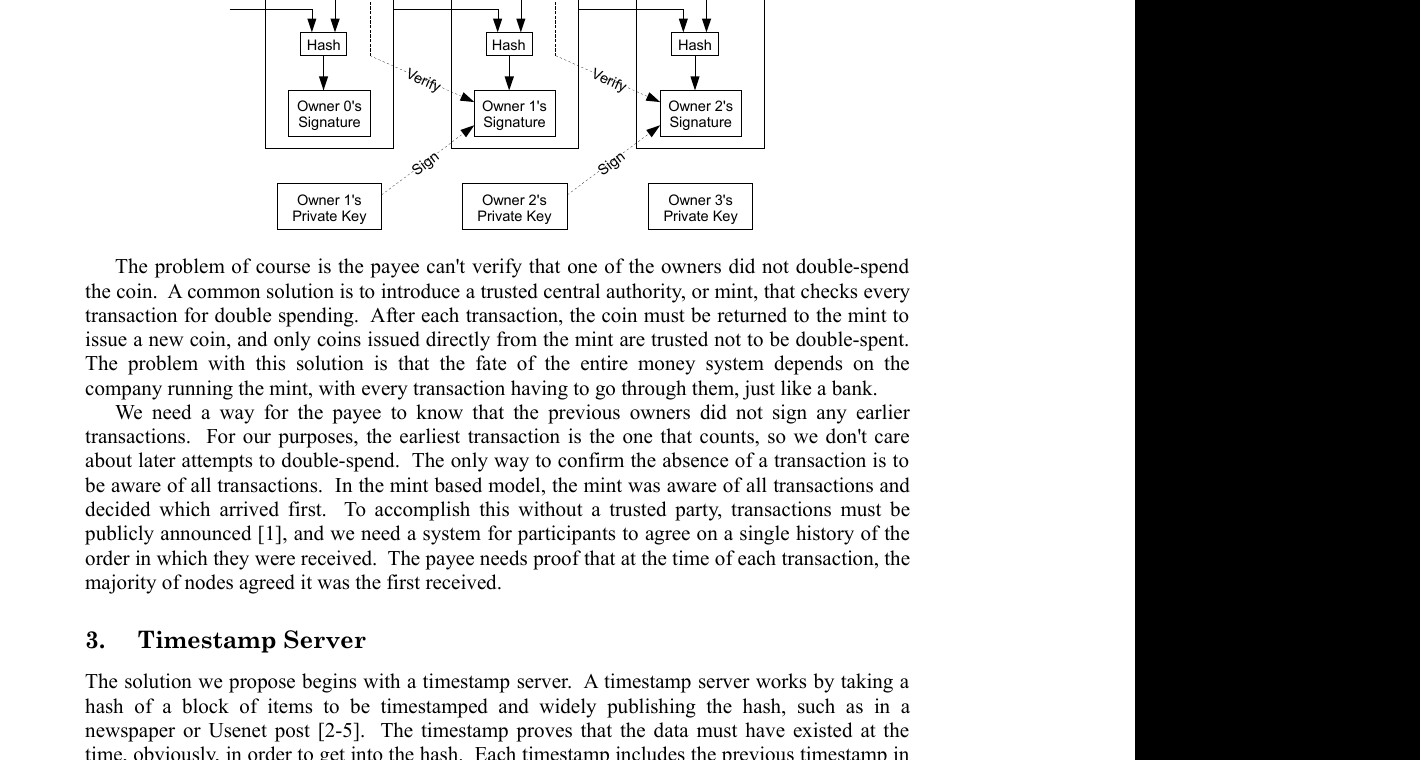
Sorun elbette alacaklının, sahiplerden birinin parayı çifte harcamadığını doğrulayamamasıdır. Yaygın bir çözüm, her işlemi çifte harcama açısından kontrol eden güvenilir bir merkezi otorite veya darphane tanıtmaktır. Her işlemden sonra, para yeni bir para basmak için darphaneye iade edilmelidir ve yalnızca doğrudan darphaneden basılan paralara çifte harcanmamış olarak güvenilir. Bu çözümün sorunu, tüm para sisteminin kaderinin darphaneyi işleten şirkete bağlı olması ve her işlemin tıpkı bir banka gibi onlardan geçmek zorunda olmasıdır.
Alacaklının, önceki sahiplerin daha erken işlemleri imzalamadığını bilmesi için bir yola ihtiyacımız var. Bizim amacımız için en erken işlem geçerli sayılandır, bu yüzden sonraki çifte harcama girişimlerini umursamıyoruz. Bir işlemin yokluğunu doğrulamanın tek yolu tüm işlemlerden haberdar olmaktır. Darphane tabanlı modelde, darphane tüm işlemlerden haberdardı ve hangisinin önce geldiğine karar veriyordu. Bunu güvenilir bir taraf olmadan başarmak için işlemler kamuya duyurulmalıdır [^1] ve katılımcıların alındıkları sıranın tek bir geçmişi üzerinde anlaşmaları için bir sisteme ihtiyacımız var. Alacaklı, her işlem anında düğümlerin çoğunluğunun ilk alınan olarak kabul ettiğine dair kanıta ihtiyaç duyar.
Transactions
เรานิยามเหรียญอิเล็กทรอนิกส์เป็นห่วงโซ่ของลายเซ็นดิจิทัล เจ้าของแต่ละคนโอนเหรียญไปยังเจ้าของคนถัดไปโดยการเซ็นดิจิทัลบน hash ของธุรกรรมก่อนหน้าและ public key ของเจ้าของคนถัดไป แล้วเพิ่มสิ่งเหล่านี้ต่อท้ายเหรียญ ผู้รับเงินสามารถตรวจสอบลายเซ็นเพื่อยืนยันห่วงโซ่ความเป็นเจ้าของได้
ปัญหาแน่นอนคือผู้รับเงินไม่สามารถยืนยันได้ว่าเจ้าของคนใดคนหนึ่งไม่ได้ใช้จ่ายเหรียญซ้ำ (double-spend) วิธีแก้ปัญหาทั่วไปคือการแนะนำหน่วยงานกลางที่เชื่อถือได้ หรือโรงกษาปณ์ ที่ตรวจสอบทุกธุรกรรมสำหรับการใช้จ่ายซ้ำ หลังจากแต่ละธุรกรรม เหรียญจะต้องถูกส่งคืนโรงกษาปณ์เพื่อออกเหรียญใหม่ และเฉพาะเหรียญที่ออกโดยตรงจากโรงกษาปณ์เท่านั้นที่ถูกเชื่อถือว่าไม่ได้ถูกใช้จ่ายซ้ำ ปัญหาของวิธีแก้ปัญหานี้คือชะตากรรมของระบบการเงินทั้งหมดขึ้นอยู่กับบริษัทที่ดำเนินการโรงกษาปณ์ โดยทุกธุรกรรมต้องผ่านพวกเขา เช่นเดียวกับธนาคาร
เราต้องการวิธีให้ผู้รับเงินรู้ว่าเจ้าของก่อนหน้าไม่ได้ลงนามในธุรกรรมใดๆ ก่อนหน้านี้ สำหรับวัตถุประสงค์ของเรา ธุรกรรมที่เร็วที่สุดคือธุรกรรมที่นับ ดังนั้นเราจึงไม่สนใจความพยายามในการใช้จ่ายซ้ำในภายหลัง วิธีเดียวที่จะยืนยันการไม่มีอยู่ของธุรกรรมคือการรับรู้ธุรกรรมทั้งหมด ในโมเดลที่ใช้โรงกษาปณ์ โรงกษาปณ์รับรู้ธุรกรรมทั้งหมดและตัดสินว่าธุรกรรมใดมาถึงก่อน เพื่อทำสิ่งนี้โดยไม่ต้องมีบุคคลที่สามที่เชื่อถือได้ ธุรกรรมต้องถูกประกาศต่อสาธารณะ [^1] และเราต้องการระบบสำหรับผู้เข้าร่วมเพื่อตกลงกันในประวัติเดียวของลำดับที่ได้รับ ผู้รับเงินต้องการหลักฐานว่าในเวลาของแต่ละธุรกรรม node ส่วนใหญ่เห็นด้วยว่ามันเป็นธุรกรรมที่ได้รับเป็นอันดับแรก
Timestamp Server
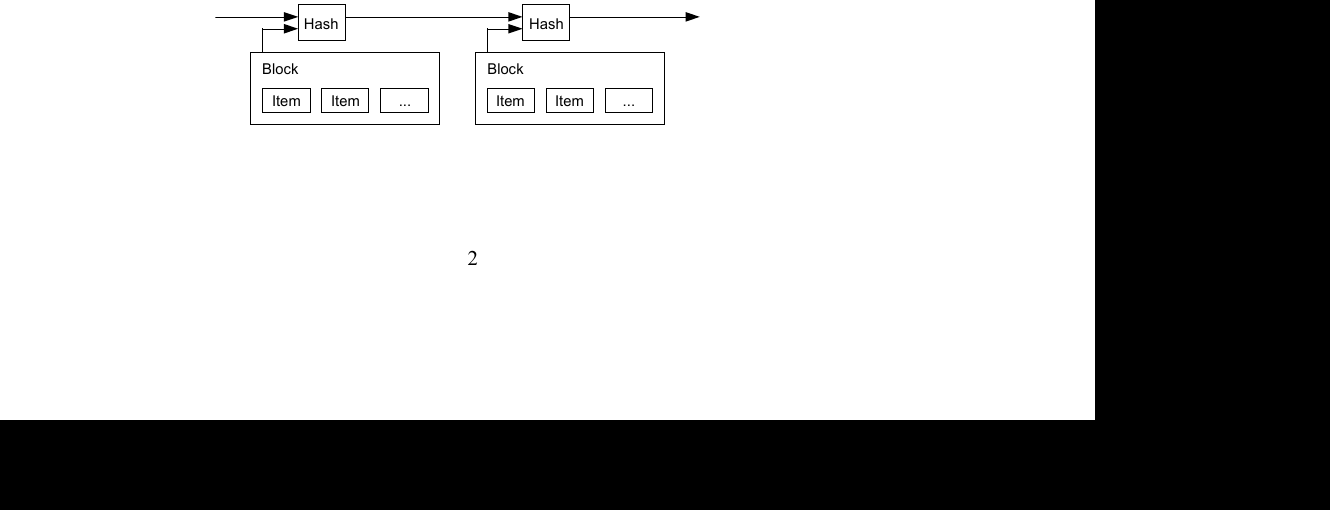
Önerdiğimiz çözüm bir zaman damgası sunucusu ile başlar. Zaman damgası sunucusu, zaman damgası uygulanacak bir öğeler bloğunun hash'ini alarak ve bu hash'i bir gazete veya Usenet gönderisi gibi geniş çapta yayınlayarak çalışır [^2] [^3] [^4] [^5]. Zaman damgası, hash'e dahil olabilmesi için verinin o anda var olmuş olması gerektiğini kanıtlar. Her zaman damgası, hash'inde bir önceki zaman damgasını içerir ve bir zincir oluşturur; her ek zaman damgası kendisinden önceki damgaları güçlendirir.
Timestamp Server
วิธีแก้ปัญหาที่เราเสนอเริ่มต้นด้วยเซิร์ฟเวอร์ประทับเวลา เซิร์ฟเวอร์ประทับเวลาทำงานโดยการนำ hash ของบล็อกรายการที่จะถูกประทับเวลาและเผยแพร่ hash อย่างกว้างขวาง เช่น ในหนังสือพิมพ์หรือโพสต์ Usenet [^2] [^3] [^4] [^5] การประทับเวลาพิสูจน์ว่าข้อมูลต้องมีอยู่ในเวลานั้น อย่างเห็นได้ชัด เพื่อที่จะเข้าไปใน hash ได้ แต่ละการประทับเวลารวมการประทับเวลาก่อนหน้าไว้ใน hash ของมัน สร้างเป็นห่วงโซ่ โดยแต่ละการประทับเวลาเพิ่มเติมจะเสริมความแข็งแกร่งให้กับการประทับเวลาก่อนหน้า
Proof-of-Work
Eşler arası bir temelde dağıtık bir zaman damgası sunucusu uygulamak için, gazete veya Usenet gönderileri yerine Adam Back'in Hashcash'ine [^6] benzer bir proof-of-work sistemi kullanmamız gerekecektir. Proof-of-work, hash'lendiğinde (örneğin SHA-256 ile) hash'in belirli sayıda sıfır bit ile başladığı bir değer taramayı içerir. Gereken ortalama iş, gereken sıfır bit sayısında üstel olarak artar ve tek bir hash çalıştırılarak doğrulanabilir.
Zaman damgası ağımız için, bloktaki bir nonce'u artırarak proof-of-work'ü uyguluyoruz; ta ki bloğun hash'ine gereken sıfır bitleri veren bir değer bulunana kadar. CPU çabası proof-of-work'ü karşılamak için harcanıldıktan sonra, blok işi yeniden yapmadan değiştirilemez. Sonraki bloklar onun ardına zincirlendiğinde, bloğu değiştirmek için gereken iş, ondan sonraki tüm blokları yeniden yapmayı da içerecektir.
Proof-of-work aynı zamanda çoğunluk karar alma sürecinde temsil belirleme sorununu da çözer. Çoğunluk bir-IP-adresi-bir-oy temelinde olsaydı, çok sayıda IP tahsis edebilen herkes tarafından alt edilebilirdi. Proof-of-work esasen bir-CPU-bir-oy'dur. Çoğunluk kararı, en büyük proof-of-work çabasının yatırıldığı en uzun zincir tarafından temsil edilir. CPU gücünün çoğunluğu dürüst düğümler tarafından kontrol ediliyorsa, dürüst zincir en hızlı şekilde büyüyecek ve rakip zincirleri geride bırakacaktır. Geçmişteki bir bloğu değiştirmek için, bir saldırganın o bloğun ve sonrasındaki tüm blokların proof-of-work'ünü yeniden yapması ve ardından dürüst düğümlerin çalışmasını yakalayıp geçmesi gerekecektir. Daha yavaş bir saldırganın yetişme olasılığının sonraki bloklar eklendikçe üstel olarak azaldığını daha sonra göstereceğiz.
Artan donanım hızını ve zaman içinde düğüm çalıştırmaya olan değişen ilgiyi telafi etmek için, proof-of-work zorluğu saat başına ortalama blok sayısını hedefleyen hareketli bir ortalama ile belirlenir. Çok hızlı üretiliyorlarsa, zorluk artar.
Proof-of-Work
ในการนำเซิร์ฟเวอร์ประทับเวลาแบบกระจายมาใช้บนพื้นฐาน peer-to-peer เราจะต้องใช้ระบบ proof-of-work ที่คล้ายกับ Hashcash ของ Adam Back [^6] แทนที่จะใช้หนังสือพิมพ์หรือโพสต์ Usenet proof-of-work เกี่ยวข้องกับการสแกนหาค่าที่เมื่อถูก hash เช่น ด้วย SHA-256 แล้ว hash จะเริ่มต้นด้วยจำนวนบิตศูนย์ที่กำหนด งานเฉลี่ยที่ต้องการจะเพิ่มขึ้นแบบเลขยกกำลังตามจำนวนบิตศูนย์ที่ต้องการ และสามารถตรวจสอบได้โดยการรัน hash เพียงครั้งเดียว
สำหรับเครือข่ายประทับเวลาของเรา เรานำ proof-of-work มาใช้โดยการเพิ่ม nonce ในบล็อกจนกว่าจะพบค่าที่ให้ hash ของบล็อกมีจำนวนบิตศูนย์ที่ต้องการ เมื่อใช้ความพยายามของ CPU ไปเพื่อให้ตรงตาม proof-of-work แล้ว บล็อกจะไม่สามารถเปลี่ยนแปลงได้โดยไม่ทำงานใหม่ เมื่อบล็อกถัดไปถูกเชื่อมต่อหลังจากมัน งานในการเปลี่ยนแปลงบล็อกจะรวมถึงการทำใหม่ทั้งหมดของบล็อกหลังจากมัน
Proof-of-work ยังแก้ปัญหาการกำหนดตัวแทนในการตัดสินใจแบบเสียงข้างมากด้วย หากเสียงข้างมากใช้พื้นฐานหนึ่ง-IP-หนึ่ง-เสียง มันสามารถถูกบ่อนทำลายโดยใครก็ตามที่สามารถจัดสรร IP จำนวนมากได้ Proof-of-work โดยพื้นฐานคือหนึ่ง-CPU-หนึ่ง-เสียง การตัดสินใจของเสียงข้างมากถูกแทนด้วยห่วงโซ่ที่ยาวที่สุด ซึ่งมีความพยายาม proof-of-work มากที่สุดที่ลงทุนไว้ หากพลังงาน CPU ส่วนใหญ่ถูกควบคุมโดย node ที่ซื่อสัตย์ ห่วงโซ่ที่ซื่อสัตย์จะเติบโตเร็วที่สุดและแซงหน้าห่วงโซ่คู่แข่งใดๆ ในการแก้ไขบล็อกในอดีต ผู้โจมตีจะต้องทำ proof-of-work ของบล็อกนั้นและบล็อกทั้งหมดหลังจากมันใหม่ แล้วจึงไล่ตามและแซงหน้างานของ node ที่ซื่อสัตย์ เราจะแสดงในภายหลังว่าความน่าจะเป็นที่ผู้โจมตีที่ช้ากว่าจะไล่ทันจะลดลงแบบเลขยกกำลังเมื่อบล็อกถัดไปถูกเพิ่มเข้ามา
เพื่อชดเชยความเร็วฮาร์ดแวร์ที่เพิ่มขึ้นและความสนใจที่เปลี่ยนแปลงในการรัน node ตามเวลา ความยากของ proof-of-work ถูกกำหนดโดยค่าเฉลี่ยเคลื่อนที่ที่กำหนดเป้าหมายจำนวนบล็อกเฉลี่ยต่อชั่วโมง หากสร้างเร็วเกินไป ความยากจะเพิ่มขึ้น
Network
Ağı çalıştırma adımları şunlardır:
- Yeni işlemler tüm düğümlere yayınlanır.
- Her düğüm yeni işlemleri bir blokta toplar.
- Her düğüm, bloğu için zor bir proof-of-work bulmak üzere çalışır.
- Bir düğüm proof-of-work bulduğunda, bloğu tüm düğümlere yayınlar.
- Düğümler, bloğu yalnızca içindeki tüm işlemler geçerli ve henüz harcanmamışsa kabul eder.
- Düğümler, kabul edilen bloğun hash'ini önceki hash olarak kullanarak zincirdeki bir sonraki bloğu oluşturmak üzere çalışarak bloğu kabul ettiklerini ifade ederler.
Düğümler her zaman en uzun zinciri doğru olan olarak kabul eder ve onu uzatmak için çalışmaya devam eder. İki düğüm aynı anda bir sonraki bloğun farklı sürümlerini yayınlarsa, bazı düğümler birini veya diğerini önce alabilir. Bu durumda, ilk aldıklarında çalışırlar, ancak uzaması ihtimaline karşı diğer dalı saklarlar. Bir sonraki proof-of-work bulunduğunda ve bir dal uzadığında berabere durum bozulacaktır; diğer dalda çalışan düğümler daha uzun olana geçecektir.
Yeni işlem yayınlarının mutlaka tüm düğümlere ulaşması gerekmez. Birçok düğüme ulaştıkları sürece, kısa sürede bir bloğa gireceklerdir. Blok yayınları da düşen mesajlara karşı toleranslıdır. Bir düğüm bir bloğu almadıysa, sonraki bloğu aldığında ve birini kaçırdığını fark ettiğinde onu talep edecektir.
Network
ขั้นตอนในการดำเนินเครือข่ายมีดังนี้:
- ธุรกรรมใหม่ถูกประกาศไปยัง node ทั้งหมด
- แต่ละ node รวบรวมธุรกรรมใหม่เข้าไปในบล็อก
- แต่ละ node ทำงานเพื่อหา proof-of-work ที่ยากสำหรับบล็อกของตน
- เมื่อ node หนึ่งพบ proof-of-work มันจะประกาศบล็อกไปยัง node ทั้งหมด
- Node ยอมรับบล็อกเฉพาะเมื่อธุรกรรมทั้งหมดในนั้นถูกต้องและยังไม่ถูกใช้จ่าย
- Node แสดงการยอมรับบล็อกโดยการทำงานสร้างบล็อกถัดไปในห่วงโซ่ โดยใช้ hash ของบล็อกที่ยอมรับเป็น hash ก่อนหน้า
Node จะถือว่าห่วงโซ่ที่ยาวที่สุดเป็นห่วงโซ่ที่ถูกต้องเสมอ และจะทำงานต่อไปเพื่อขยายมัน หากสอง node ประกาศเวอร์ชันที่แตกต่างกันของบล็อกถัดไปพร้อมกัน node บางตัวอาจได้รับเวอร์ชันหนึ่งหรืออีกเวอร์ชันก่อน ในกรณีนั้น พวกเขาทำงานบนเวอร์ชันที่ได้รับก่อน แต่บันทึกสาขาอื่นไว้ในกรณีที่มันยาวกว่า สถานการณ์เสมอกันจะถูกทำลายเมื่อ proof-of-work ถัดไปถูกพบและสาขาหนึ่งยาวกว่า node ที่ทำงานบนสาขาอื่นจะเปลี่ยนไปยังสาขาที่ยาวกว่า
การประกาศธุรกรรมใหม่ไม่จำเป็นต้องไปถึง node ทั้งหมด ตราบใดที่มันไปถึง node จำนวนมาก มันจะเข้าไปในบล็อกในไม่ช้า การประกาศบล็อกก็ทนต่อข้อความที่สูญหายเช่นกัน หาก node ไม่ได้รับบล็อก มันจะร้องขอเมื่อได้รับบล็อกถัดไปและตระหนักว่าพลาดบล็อกหนึ่งไป
Incentive
Geleneksel olarak, bir bloktaki ilk işlem, bloğun yaratıcısına ait yeni bir para başlatan özel bir işlemdir. Bu, düğümlerin ağı desteklemesi için bir teşvik ekler ve onları basacak merkezi bir otorite olmadığından, paraların dolaşıma başlangıçta dağıtılması için bir yol sağlar. Sabit miktarda yeni paranın düzenli olarak eklenmesi, altın madencilerinin altını dolaşıma katmak için kaynak harcamasına benzerdir. Bizim durumumuzda, harcanan CPU zamanı ve elektrik enerjisidir.
Teşvik, işlem ücretleriyle de finanse edilebilir. Bir işlemin çıktı değeri girdi değerinden az ise, aradaki fark, işlemi içeren bloğun teşvik değerine eklenen bir işlem ücretidir. Önceden belirlenmiş sayıda para dolaşıma girdiğinde, teşvik tamamen işlem ücretlerine geçebilir ve tamamen enflasyondan bağımsız olabilir.
Teşvik, düğümlerin dürüst kalmasını teşvik etmeye yardımcı olabilir. Açgözlü bir saldırgan tüm dürüst düğümlerden daha fazla CPU gücü toplamayı başarırsa, bunu ödemelerini geri çalarak insanları dolandırmak için mi yoksa yeni paralar üretmek için mi kullanacağı arasında seçim yapmak zorunda kalacaktır. Kuralları bozmaktansa, kendisine herkesten daha fazla yeni para veren kurallarla oynamanın daha kârlı olduğunu bulması gerekir; böylece sistemi ve kendi servetinin geçerliliğini baltalamamış olur.
Incentive
ตามธรรมเนียม ธุรกรรมแรกในบล็อกเป็นธุรกรรมพิเศษที่เริ่มต้นเหรียญใหม่ที่เป็นของผู้สร้างบล็อก สิ่งนี้เพิ่มแรงจูงใจให้ node สนับสนุนเครือข่าย และเป็นวิธีในการแจกจ่ายเหรียญเข้าสู่การหมุนเวียนในเบื้องต้น เนื่องจากไม่มีหน่วยงานกลางที่จะออกเหรียญ การเพิ่มจำนวนเหรียญใหม่คงที่อย่างสม่ำเสมอนั้นคล้ายคลึงกับนักขุดทองที่ใช้ทรัพยากรเพื่อเพิ่มทองเข้าสู่การหมุนเวียน ในกรณีของเรา คือเวลา CPU และไฟฟ้าที่ถูกใช้ไป
แรงจูงใจยังสามารถได้รับการสนับสนุนจากค่าธรรมเนียมธุรกรรม หากมูลค่าเอาต์พุตของธุรกรรมน้อยกว่ามูลค่าอินพุต ส่วนต่างคือค่าธรรมเนียมธุรกรรมที่ถูกเพิ่มเข้าไปในมูลค่าแรงจูงใจของบล็อกที่มีธุรกรรมนั้น เมื่อจำนวนเหรียญที่กำหนดไว้ล่วงหน้าเข้าสู่การหมุนเวียนแล้ว แรงจูงใจสามารถเปลี่ยนไปเป็นค่าธรรมเนียมธุรกรรมทั้งหมดและปราศจากเงินเฟ้อโดยสมบูรณ์
แรงจูงใจอาจช่วยส่งเสริมให้ node รักษาความซื่อสัตย์ หากผู้โจมตีที่โลภสามารถรวบรวมพลังงาน CPU ได้มากกว่า node ที่ซื่อสัตย์ทั้งหมด เขาจะต้องเลือกระหว่างการใช้มันเพื่อหลอกลวงผู้คนโดยการขโมยเงินที่จ่ายไปคืน หรือใช้มันเพื่อสร้างเหรียญใหม่ เขาควรพบว่าการเล่นตามกติกาจะมีกำไรมากกว่า กติกาที่ให้เขาได้รับเหรียญใหม่มากกว่าคนอื่นทั้งหมดรวมกัน แทนที่จะบ่อนทำลายระบบและความถูกต้องของทรัพย์สินของตนเอง
Reclaiming Disk Space
Bir paradaki en son işlem yeterli sayıda bloğun altına gömüldüğünde, önceki harcanmış işlemler disk alanı kazanmak için atılabilir. Bloğun hash'ini bozmadan bunu kolaylaştırmak için, işlemler bir Merkle Ağacında [^7] [^2] [^5] hash'lenir ve blok hash'ine yalnızca kök dahil edilir. Eski bloklar, ağacın dalları budanarak sıkıştırılabilir. İç hash'lerin saklanması gerekmez.
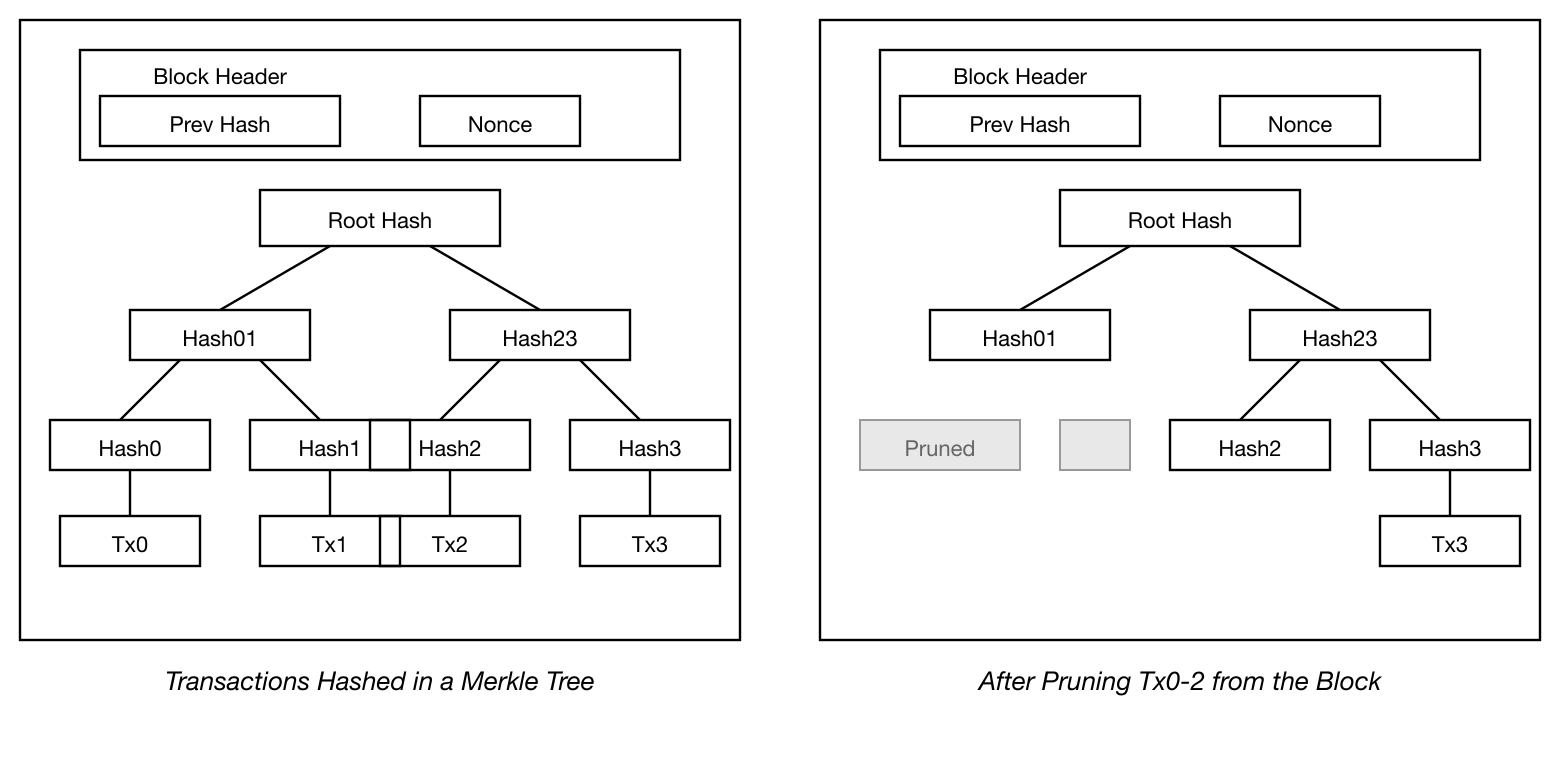
İşlem içermeyen bir blok başlığı yaklaşık 80 byte olacaktır. Blokların her 10 dakikada bir üretildiğini varsayarsak, 80 byte * 6 * 24 * 365 = yılda 4,2MB. 2008 itibarıyla bilgisayar sistemlerinin genellikle 2GB RAM ile satıldığını ve Moore Yasasının yıllık 1,2GB büyüme öngördüğünü göz önüne alırsak, blok başlıklarının bellekte tutulması gerekse bile depolama bir sorun olmamalıdır.
Reclaiming Disk Space
เมื่อธุรกรรมล่าสุดในเหรียญถูกฝังอยู่ใต้บล็อกจำนวนมากเพียงพอ ธุรกรรมที่ถูกใช้จ่ายก่อนหน้านั้นสามารถถูกทิ้งเพื่อประหยัดพื้นที่ดิสก์ เพื่ออำนวยความสะดวกในเรื่องนี้โดยไม่ทำลาย hash ของบล็อก ธุรกรรมถูก hash ใน Merkle Tree [^7] [^2] [^5] โดยมีเฉพาะ root เท่านั้นที่ถูกรวมไว้ใน hash ของบล็อก บล็อกเก่าสามารถถูกบีบอัดโดยการตัดกิ่งของต้นไม้ออก hash ภายในไม่จำเป็นต้องถูกจัดเก็บ
ส่วนหัวบล็อกที่ไม่มีธุรกรรมจะมีขนาดประมาณ 80 ไบต์ หากเราสมมติว่าบล็อกถูกสร้างทุก 10 นาที 80 ไบต์ * 6 * 24 * 365 = 4.2MB ต่อปี ด้วยระบบคอมพิวเตอร์ที่มักจะขายพร้อม RAM 2GB ณ ปี 2008 และกฎของมัวร์ที่คาดการณ์การเติบโตปัจจุบันที่ 1.2GB ต่อปี การจัดเก็บไม่ควรเป็นปัญหาแม้ว่าส่วนหัวบล็อกจะต้องถูกเก็บไว้ในหน่วยความจำ
Simplified Payment Verification
Tam bir ağ düğümü çalıştırmadan ödemeleri doğrulamak mümkündür. Bir kullanıcının yalnızca en uzun proof-of-work zincirinin blok başlıklarının bir kopyasını tutması yeterlidir; ağ düğümlerini en uzun zincire sahip olduğuna ikna olana kadar sorgulayarak ve işlemi zaman damgası uygulandığı bloğa bağlayan Merkle dalını elde ederek bunu yapabilir. İşlemi kendisi kontrol edemez, ancak zincirdeki bir yere bağlayarak bir ağ düğümünün onu kabul ettiğini görebilir ve sonrasında eklenen bloklar ağın onu kabul ettiğini daha da doğrular.
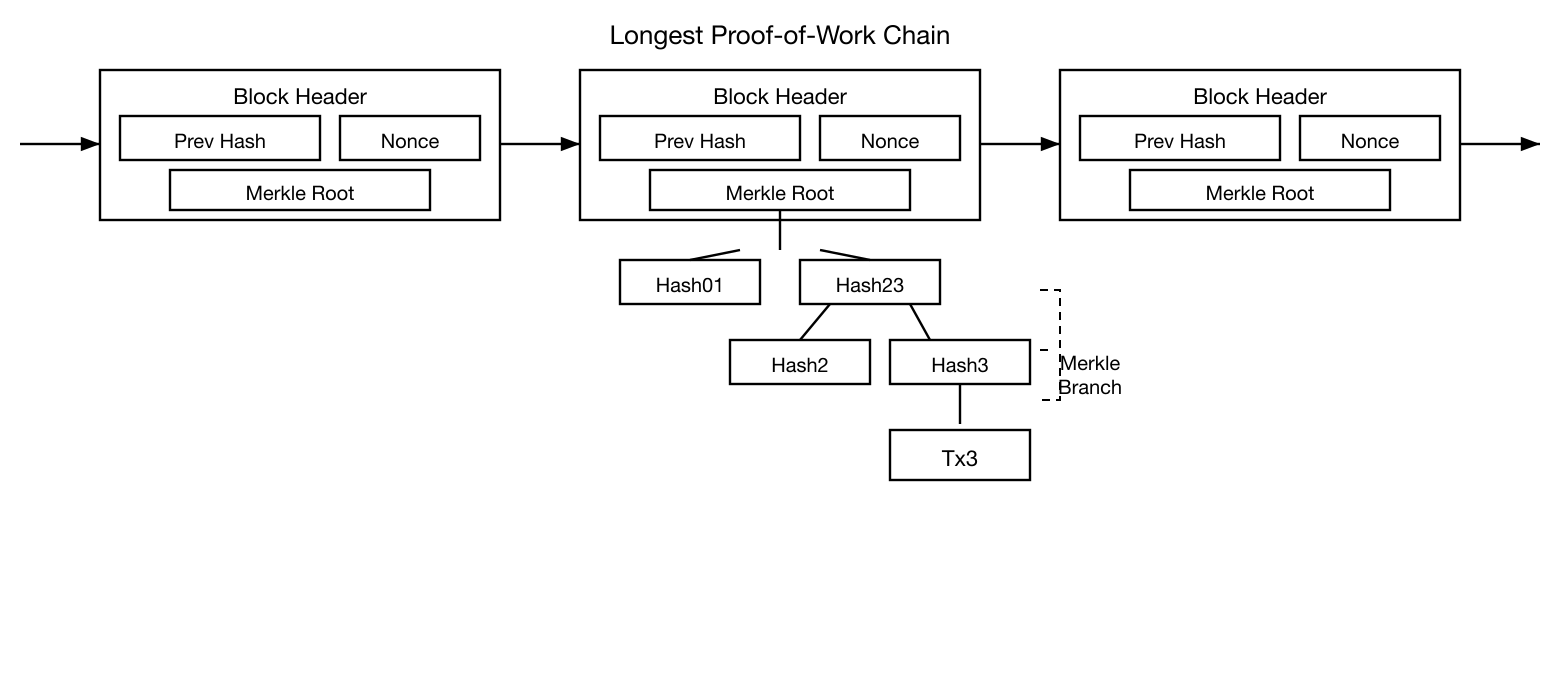
Bu nedenle, doğrulama dürüst düğümler ağı kontrol ettiği sürece güvenilirdir, ancak ağ bir saldırgan tarafından ele geçirilirse daha savunmasızdır. Ağ düğümleri işlemleri kendileri doğrulayabilirken, basitleştirilmiş yöntem saldırganın ağı ele geçirmeye devam edebildiği sürece saldırganın uydurma işlemleriyle kandırılabilir. Buna karşı korunmak için bir strateji, ağ düğümlerinden geçersiz bir blok tespit ettiklerinde uyarılar almak ve kullanıcının yazılımını tutarsızlığı doğrulamak üzere tam bloğu ve uyarılan işlemleri indirmeye yönlendirmek olabilir. Sık ödeme alan işletmeler muhtemelen daha bağımsız güvenlik ve daha hızlı doğrulama için kendi düğümlerini çalıştırmak isteyeceklerdir.
Simplified Payment Verification
เป็นไปได้ที่จะตรวจสอบการชำระเงินโดยไม่ต้องรัน node เครือข่ายเต็มรูปแบบ ผู้ใช้เพียงแค่ต้องเก็บสำเนาส่วนหัวบล็อกของห่วงโซ่ proof-of-work ที่ยาวที่สุด ซึ่งสามารถได้รับโดยการสอบถาม node เครือข่ายจนกว่าจะมั่นใจว่ามีห่วงโซ่ที่ยาวที่สุด และได้รับสาขา Merkle ที่เชื่อมต่อธุรกรรมกับบล็อกที่มันถูกประทับเวลา ผู้ใช้ไม่สามารถตรวจสอบธุรกรรมด้วยตนเองได้ แต่โดยการเชื่อมต่อมันกับตำแหน่งในห่วงโซ่ เขาจะเห็นว่า node เครือข่ายได้ยอมรับมัน และบล็อกที่เพิ่มหลังจากนั้นยืนยันเพิ่มเติมว่าเครือข่ายได้ยอมรับมัน
ดังนั้น การตรวจสอบจึงเชื่อถือได้ตราบใดที่ node ที่ซื่อสัตย์ควบคุมเครือข่าย แต่จะเปราะบางมากขึ้นหากเครือข่ายถูกครอบงำโดยผู้โจมตี ในขณะที่ node เครือข่ายสามารถตรวจสอบธุรกรรมด้วยตนเอง วิธีการที่ง่ายขึ้นสามารถถูกหลอกโดยธุรกรรมปลอมของผู้โจมตีตราบใดที่ผู้โจมตีสามารถครอบงำเครือข่ายต่อไปได้ กลยุทธ์หนึ่งในการป้องกันสิ่งนี้คือการรับการแจ้งเตือนจาก node เครือข่ายเมื่อพวกเขาตรวจพบบล็อกที่ไม่ถูกต้อง กระตุ้นให้ซอฟต์แวร์ของผู้ใช้ดาวน์โหลดบล็อกเต็มและธุรกรรมที่ถูกแจ้งเตือนเพื่อยืนยันความไม่สอดคล้องกัน ธุรกิจที่รับการชำระเงินบ่อยครั้งอาจยังคงต้องการรัน node ของตนเองเพื่อความปลอดภัยที่เป็นอิสระมากขึ้นและการตรวจสอบที่รวดเร็วขึ้น
Combining and Splitting Value
Paraları tek tek işlemek mümkün olsa da, bir transferdeki her kuruş için ayrı bir işlem yapmak kullanışsız olurdu. Değerin bölünüp birleştirilebilmesi için işlemler birden fazla girdi ve çıktı içerir. Normal olarak, daha büyük bir önceki işlemden tek bir girdi veya daha küçük miktarları birleştiren birden fazla girdi ve en fazla iki çıktı olacaktır: biri ödeme için, diğeri varsa üstü göndericiye iade etmek için.
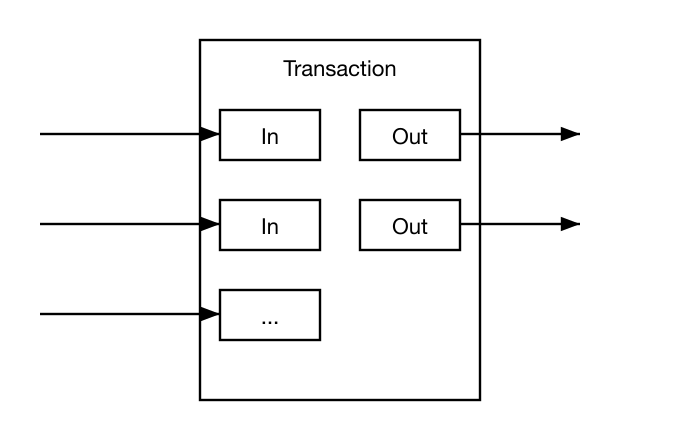
Bir işlemin birçok işleme bağlı olduğu ve bu işlemlerin çok daha fazlasına bağlı olduğu yayılma (fan-out) durumunun burada bir sorun olmadığı belirtilmelidir. Bir işlemin geçmişinin tam bir bağımsız kopyasını çıkarmaya asla gerek yoktur.
Combining and Splitting Value
แม้ว่าจะเป็นไปได้ที่จะจัดการเหรียญแต่ละเหรียญ แต่การทำธุรกรรมแยกต่างหากสำหรับทุกเซ็นต์ในการโอนจะยุ่งยาก เพื่อให้มูลค่าสามารถแบ่งและรวมได้ ธุรกรรมประกอบด้วยอินพุตและเอาต์พุตหลายรายการ โดยปกติจะมีอินพุตเดียวจากธุรกรรมก่อนหน้าที่มีมูลค่ามากกว่า หรืออินพุตหลายรายการที่รวมจำนวนเงินที่น้อยกว่า และเอาต์พุตไม่เกินสองรายการ: หนึ่งสำหรับการชำระเงิน และหนึ่งสำหรับคืนเงินทอน ถ้ามี กลับไปยังผู้ส่ง
ควรสังเกตว่า fan-out ที่ธุรกรรมขึ้นอยู่กับหลายธุรกรรม และธุรกรรมเหล่านั้นขึ้นอยู่กับอีกมากมาย ไม่ใช่ปัญหาที่นี่ ไม่จำเป็นต้องแยกสำเนาประวัติธุรกรรมที่สมบูรณ์แบบแยกต่างหาก
Privacy
Geleneksel bankacılık modeli, bilgiye erişimi ilgili taraflar ve güvenilir üçüncü tarafla sınırlayarak belirli bir gizlilik düzeyi sağlar. Tüm işlemlerin kamuya duyurulması gerekliliği bu yöntemi engeller, ancak bilgi akışını başka bir noktada keserek gizlilik yine de korunabilir: açık anahtarları anonim tutarak. Halk, birisinin bir başkasına bir miktar gönderdiğini görebilir, ancak işlemi herhangi biriyle ilişkilendiren bilgi olmadan. Bu, borsaların yayınladığı bilgi düzeyine benzer; bireysel işlemlerin zamanı ve boyutu, yani "bant," kamuya açıklanır, ancak tarafların kim olduğu söylenmez.
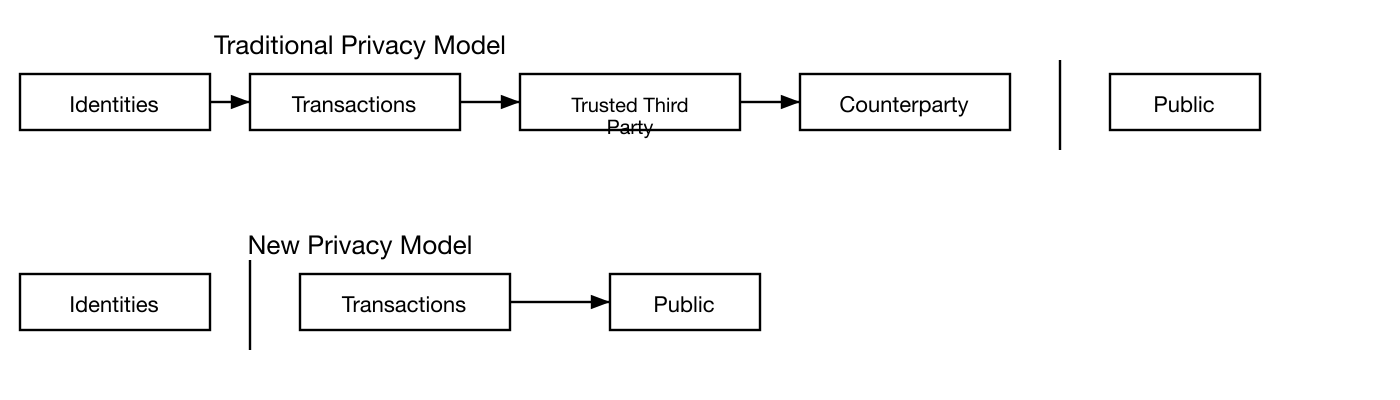
Ek bir güvenlik duvarı olarak, her işlem için yeni bir anahtar çifti kullanılmalıdır; böylece ortak bir sahiple ilişkilendirilmeleri önlenir. Çoklu girdili işlemlerde hâlâ kaçınılmaz bazı bağlantılar vardır; bu işlemler girdilerinin aynı sahibe ait olduğunu zorunlu olarak ortaya koyar. Risk, bir anahtarın sahibi ortaya çıkarsa, bağlantının aynı sahibe ait diğer işlemleri ifşa edebilmesidir.
Privacy
โมเดลธนาคารแบบดั้งเดิมบรรลุระดับความเป็นส่วนตัวโดยการจำกัดการเข้าถึงข้อมูลเฉพาะฝ่ายที่เกี่ยวข้องและบุคคลที่สามที่เชื่อถือได้ ความจำเป็นในการประกาศธุรกรรมทั้งหมดต่อสาธารณะทำให้วิธีนี้ไม่สามารถใช้ได้ แต่ความเป็นส่วนตัวยังคงสามารถรักษาได้โดยการตัดกระแสข้อมูลในจุดอื่น: โดยการรักษา public key ให้เป็นนิรนาม สาธารณชนสามารถเห็นว่าใครบางคนกำลังส่งจำนวนเงินให้คนอื่น แต่ไม่มีข้อมูลที่เชื่อมโยงธุรกรรมกับใครก็ตาม สิ่งนี้คล้ายกับระดับข้อมูลที่เปิดเผยโดยตลาดหลักทรัพย์ ที่ซึ่งเวลาและขนาดของการซื้อขายแต่ละรายการ หรือ "เทป" ถูกเปิดเผยต่อสาธารณะ แต่ไม่บอกว่าฝ่ายต่างๆ เป็นใคร
เป็นไฟร์วอลล์เพิ่มเติม ควรใช้คู่กุญแจใหม่สำหรับแต่ละธุรกรรมเพื่อป้องกันไม่ให้ถูกเชื่อมโยงกับเจ้าของร่วมกัน การเชื่อมโยงบางส่วนยังคงหลีกเลี่ยงไม่ได้กับธุรกรรมที่มีหลายอินพุต ซึ่งจำเป็นต้องเปิดเผยว่าอินพุตของพวกเขาเป็นของเจ้าของคนเดียวกัน ความเสี่ยงคือหากเจ้าของกุญแจถูกเปิดเผย การเชื่อมโยงอาจเปิดเผยธุรกรรมอื่นที่เป็นของเจ้าของคนเดียวกัน
Calculations
Bir saldırganın dürüst zincirden daha hızlı alternatif bir zincir üretmeye çalıştığı senaryoyu düşünüyoruz. Bu başarılsa bile, sistemi havadan değer yaratma veya saldırgana hiç ait olmayan parayı alma gibi keyfi değişikliklere açmaz. Düğümler geçersiz bir işlemi ödeme olarak kabul etmeyecek ve dürüst düğümler bunları içeren bir bloğu asla kabul etmeyecektir. Bir saldırgan yalnızca yakın zamanda harcadığı parayı geri almak için kendi işlemlerinden birini değiştirmeye çalışabilir.
Dürüst zincir ile saldırgan zinciri arasındaki yarış bir Binom Rastgele Yürüyüş olarak karakterize edilebilir. Başarı olayı, dürüst zincirin bir blok uzatılarak liderliğini +1 artırmasıdır ve başarısızlık olayı, saldırganın zincirinin bir blok uzatılarak farkı -1 azaltmasıdır.
Bir saldırganın belirli bir açıktan yetişme olasılığı, Kumarcının İflası problemine benzer. Sınırsız krediye sahip bir kumarcının açıkta başladığını ve başa baş noktasına ulaşmak için potansiyel olarak sonsuz sayıda deneme yaptığını varsayalım. Başa baş noktasına ulaşma olasılığını veya bir saldırganın dürüst zincire yetişme olasılığını aşağıdaki gibi hesaplayabiliriz [^8]:
p = dürüst bir düğümün bir sonraki bloğu bulma olasılığı
q = saldırganın bir sonraki bloğu bulma olasılığı
q = saldırganın z blok geriden yetişme olasılığı
``````

\[
qz =
\begin{cases}
1 & \text{if } p \leq q \\
\left(\frac{q}{p}\right) z & \text{if } p > q
\end{cases}
\]

p  q olduğu varsayımımız göz önüne alındığında, saldırganın yetişmesi gereken blok sayısı arttıkça olasılık üstel olarak düşer. Oran aleyhine olduğunda, erken dönemde şanslı bir hamle yapmadıysa, geride kaldıkça şansı giderek küçülür.

Şimdi yeni bir işlemin alıcısının, göndericinin işlemi değiştiremeyeceğinden yeterince emin olmadan önce ne kadar beklemesi gerektiğini düşünüyoruz. Göndericinin, alıcıya bir süre ödeme yaptığına inandırmak isteyen bir saldırgan olduğunu ve ardından bir süre geçtikten sonra ödemeyi kendisine geri çevirmek istediğini varsayıyoruz. Alıcı bu olduğunda uyarılacaktır, ancak gönderici bunun çok geç olacağını umar.

Alıcı yeni bir anahtar çifti üretir ve imzalamadan kısa süre önce açık anahtarı göndericiye verir. Bu, göndericinin şanslı olup yeterince ilerleyene kadar sürekli çalışarak önceden bir blok zinciri hazırlamasını ve ardından o anda işlemi gerçekleştirmesini önler. İşlem gönderildikten sonra, dürüst olmayan gönderici işleminin alternatif bir sürümünü içeren paralel bir zincir üzerinde gizlice çalışmaya başlar.

Alıcı, işlem bir bloğa eklenene ve z blok ondan sonra bağlanana kadar bekler. Saldırganın ne kadar ilerleme kaydettiğini tam olarak bilmez, ancak dürüst blokların blok başına beklenen ortalama süreyi aldığını varsayarsak, saldırganın potansiyel ilerlemesi beklenen değeri olan bir Poisson dağılımı olacaktır:

\[
\lambda = z\frac{q}{p}
\]

Saldırganın hâlâ yetişebilme olasılığını elde etmek için, yapmış olabileceği her ilerleme miktarı için Poisson yoğunluğunu o noktadan yetişebilme olasılığıyla çarpıyoruz:

\[
\sum_{k=0}^{\infty} \frac{\lambda^k e^{-\lambda}}{k!} \cdot \left\{
\begin{array}{cl}
\left(\frac{q}{p}\right)^{(z-k)} & \text{if } k \leq z \\
1 & \text{if } k > z
\end{array}
\right.
\]

Dağılımın sonsuz kuyruğunu toplamaktan kaçınmak için yeniden düzenliyoruz...

\[
1 - \sum_{k=0}^{z} \frac{\lambda^k e^{-\lambda}}{k!} \left(1-\left(\frac{q}{p}\right)^{(z-k)}\right)
\]

C koduna dönüştürüyoruz...

```c
#include math.h

double AttackerSuccessProbability(double q, int z)
{
    double p = 1.0 - q;
    double lambda = z * (q / p);
    double sum = 1.0;
    int i, k;
    for (k = 0; k = z; k++)
    {
        double poisson = exp(-lambda);
        for (i = 1; i = k; i++)
            poisson *= lambda / i;
        sum -= poisson * (1 - pow(q / p, z - k));
    }
    return sum;
}
Bazı sonuçları çalıştırdığımızda, olasılığın z ile üstel olarak düştüğünü görebiliriz.
q=0.1
z=0 P=1.0000000
z=1 P=0.2045873
z=2 P=0.0509779
z=3 P=0.0131722
z=4 P=0.0034552
z=5 P=0.0009137
z=6 P=0.0002428
z=7 P=0.0000647
z=8 P=0.0000173
z=9 P=0.0000046
z=10 P=0.0000012

q=0.3
z=0 P=1.0000000
z=5 P=0.1773523
z=10 P=0.0416605
z=15 P=0.0101008
z=20 P=0.0024804
z=25 P=0.0006132
z=30 P=0.0001522
z=35 P=0.0000379
z=40 P=0.0000095
z=45 P=0.0000024
z=50 P=0.0000006
P'nin %0,1'den küçük olması için çözüyoruz...
P  0.001
q=0.10 z=5
q=0.15 z=8
q=0.20 z=11
q=0.25 z=15
q=0.30 z=24
q=0.35 z=41
q=0.40 z=89
q=0.45 z=340
Calculations
เราพิจารณาสถานการณ์ที่ผู้โจมตีพยายามสร้างห่วงโซ่ทางเลือกเร็วกว่าห่วงโซ่ที่ซื่อสัตย์ แม้ว่าจะสำเร็จ มันก็ไม่ได้เปิดระบบให้มีการเปลี่ยนแปลงตามอำเภอใจ เช่น การสร้างมูลค่าจากอากาศ หรือการนำเงินที่ไม่เคยเป็นของผู้โจมตี Node จะไม่ยอมรับธุรกรรมที่ไม่ถูกต้องเป็นการชำระเงิน และ node ที่ซื่อสัตย์จะไม่มีวันยอมรับบล็อกที่มีธุรกรรมเหล่านั้น ผู้โจมตีสามารถพยายามเปลี่ยนแปลงธุรกรรมของตนเองเพียงรายการเดียวเพื่อนำเงินที่เพิ่งใช้จ่ายไปกลับคืนมาเท่านั้น
การแข่งขันระหว่างห่วงโซ่ที่ซื่อสัตย์และห่วงโซ่ของผู้โจมตีสามารถอธิบายได้เป็น Binomial Random Walk เหตุการณ์ที่ประสบความสำเร็จคือห่วงโซ่ที่ซื่อสัตย์ถูกขยายออกหนึ่งบล็อก เพิ่มระยะนำขึ้น +1 และเหตุการณ์ที่ล้มเหลวคือห่วงโซ่ของผู้โจมตีถูกขยายออกหนึ่งบล็อก ลดช่องว่างลง -1
ความน่าจะเป็นที่ผู้โจมตีจะไล่ทันจากส่วนต่างที่กำหนดนั้นคล้ายกับปัญหาการล้มละลายของนักพนัน สมมติว่านักพนันที่มีเครดิตไม่จำกัดเริ่มต้นที่ส่วนต่างและเล่นจำนวนรอบที่อาจเป็นอนันต์เพื่อพยายามไปถึงจุดคุ้มทุน เราสามารถคำนวณความน่าจะเป็นที่เขาจะไปถึงจุดคุ้มทุน หรือที่ผู้โจมตีจะไล่ทันห่วงโซ่ที่ซื่อสัตย์ ได้ดังนี้ [^8]:
p = ความน่าจะเป็นที่ node ที่ซื่อสัตย์จะพบบล็อกถัดไป
q = ความน่าจะเป็นที่ผู้โจมตีจะพบบล็อกถัดไป
q = ความน่าจะเป็นที่ผู้โจมตีจะไล่ทันจาก z บล็อกที่ตามหลัง
``````

\[
qz =
\begin{cases}
1 & \text{if } p \leq q \\
\left(\frac{q}{p}\right) z & \text{if } p > q
\end{cases}
\]

เมื่อให้สมมติฐานของเราว่า p  q ความน่าจะเป็นจะลดลงแบบเลขยกกำลังเมื่อจำนวนบล็อกที่ผู้โจมตีต้องไล่ทันเพิ่มขึ้น เมื่ออัตราต่อต้านเขา หากเขาไม่สามารถก้าวกระโดดไปข้างหน้าอย่างโชคดีตั้งแต่เนิ่นๆ โอกาสของเขาจะเล็กลงจนแทบไม่มีเมื่อเขาตามหลังมากขึ้น

ตอนนี้เราพิจารณาว่าผู้รับธุรกรรมใหม่ต้องรอนานเท่าไหร่ก่อนที่จะมั่นใจเพียงพอว่าผู้ส่งไม่สามารถเปลี่ยนแปลงธุรกรรมได้ เราสมมติว่าผู้ส่งเป็นผู้โจมตีที่ต้องการทำให้ผู้รับเชื่อว่าเขาได้จ่ายเงินให้เขาสักพักหนึ่ง แล้วเปลี่ยนไปจ่ายกลับให้ตัวเองหลังจากเวลาผ่านไป ผู้รับจะได้รับการแจ้งเตือนเมื่อเกิดเหตุการณ์นั้น แต่ผู้ส่งหวังว่ามันจะสายเกินไป

ผู้รับสร้างคู่กุญแจใหม่และให้ public key แก่ผู้ส่งไม่นานก่อนการลงนาม สิ่งนี้ป้องกันผู้ส่งจากการเตรียมห่วงโซ่ของบล็อกล่วงหน้าโดยทำงานอย่างต่อเนื่องจนกว่าจะโชคดีพอที่จะนำหน้าไปไกลพอ แล้วจึงดำเนินการธุรกรรมในขณะนั้น เมื่อธุรกรรมถูกส่งแล้ว ผู้ส่งที่ไม่ซื่อสัตย์เริ่มทำงานอย่างลับๆ บนห่วงโซ่คู่ขนานที่มีเวอร์ชันทางเลือกของธุรกรรมของเขา

ผู้รับรอจนกว่าธุรกรรมจะถูกเพิ่มลงในบล็อกและ z บล็อกถูกเชื่อมต่อหลังจากมัน เขาไม่รู้จำนวนที่แน่นอนของความก้าวหน้าที่ผู้โจมตีทำได้ แต่สมมติว่าบล็อกที่ซื่อสัตย์ใช้เวลาเฉลี่ยที่คาดหวังต่อบล็อก ความก้าวหน้าที่เป็นไปได้ของผู้โจมตีจะเป็นการแจกแจงปัวซงที่มีค่าที่คาดหวัง:

\[
\lambda = z\frac{q}{p}
\]

เพื่อหาความน่าจะเป็นที่ผู้โจมตียังสามารถไล่ทันได้ในตอนนี้ เราคูณความหนาแน่นปัวซงสำหรับแต่ละจำนวนความก้าวหน้าที่เขาอาจทำได้ด้วยความน่าจะเป็นที่เขาสามารถไล่ทันจากจุดนั้น:

\[
\sum_{k=0}^{\infty} \frac{\lambda^k e^{-\lambda}}{k!} \cdot \left\{
\begin{array}{cl}
\left(\frac{q}{p}\right)^{(z-k)} & \text{if } k \leq z \\
1 & \text{if } k > z
\end{array}
\right.
\]

จัดเรียงใหม่เพื่อหลีกเลี่ยงการรวมหางอนันต์ของการแจกแจง...

\[
1 - \sum_{k=0}^{z} \frac{\lambda^k e^{-\lambda}}{k!} \left(1-\left(\frac{q}{p}\right)^{(z-k)}\right)
\]

แปลงเป็นโค้ด C...

```c
#include math.h

double AttackerSuccessProbability(double q, int z)
{
    double p = 1.0 - q;
    double lambda = z * (q / p);
    double sum = 1.0;
    int i, k;
    for (k = 0; k = z; k++)
    {
        double poisson = exp(-lambda);
        for (i = 1; i = k; i++)
            poisson *= lambda / i;
        sum -= poisson * (1 - pow(q / p, z - k));
    }
    return sum;
}
เมื่อรันผลลัพธ์บางส่วน เราจะเห็นว่าความน่าจะเป็นลดลงแบบเลขยกกำลังตาม z
q=0.1
z=0 P=1.0000000
z=1 P=0.2045873
z=2 P=0.0509779
z=3 P=0.0131722
z=4 P=0.0034552
z=5 P=0.0009137
z=6 P=0.0002428
z=7 P=0.0000647
z=8 P=0.0000173
z=9 P=0.0000046
z=10 P=0.0000012

q=0.3
z=0 P=1.0000000
z=5 P=0.1773523
z=10 P=0.0416605
z=15 P=0.0101008
z=20 P=0.0024804
z=25 P=0.0006132
z=30 P=0.0001522
z=35 P=0.0000379
z=40 P=0.0000095
z=45 P=0.0000024
z=50 P=0.0000006
แก้สมการสำหรับ P น้อยกว่า 0.1%...
P  0.001
q=0.10 z=5
q=0.15 z=8
q=0.20 z=11
q=0.25 z=15
q=0.30 z=24
q=0.35 z=41
q=0.40 z=89
q=0.45 z=340
Conclusion
Güvene dayanmadan elektronik işlemler için bir sistem önerdik. Dijital imzalardan yapılmış paraların olağan çerçevesiyle başladık; bu, sahiplik üzerinde güçlü kontrol sağlar ancak çifte harcamayı önlemenin bir yolu olmadan eksik kalır. Bunu çözmek için, dürüst düğümler CPU gücünün çoğunluğunu kontrol ettiğinde bir saldırganın değiştirmesinin hesaplama açısından hızla pratik olmaktan çıkan işlemlerin kamuya açık geçmişini kaydetmek için proof-of-work kullanan eşler arası bir ağ önerdik. Ağ, yapılandırılmamış basitliğinde sağlamdır. Düğümler çok az koordinasyonla hep birlikte çalışır. Mesajlar herhangi belirli bir yere yönlendirilmediğinden ve yalnızca en iyi çaba temelinde iletilmesi gerektiğinden, tanımlanmaları gerekmez. Düğümler, yokluklarında olanların kanıtı olarak proof-of-work zincirini kabul ederek ağdan istedikleri zaman ayrılıp yeniden katılabilirler. Geçerli blokları uzatarak çalışarak kabullerini ifade eder ve geçersiz blokları üzerlerinde çalışmayı reddederek reddederler. Gerekli tüm kurallar ve teşvikler bu konsensüs mekanizması ile uygulanabilir.
Conclusion
เราได้เสนอระบบสำหรับธุรกรรมอิเล็กทรอนิกส์โดยไม่ต้องพึ่งพาความไว้วางใจ เราเริ่มต้นด้วยกรอบการทำงานปกติของเหรียญที่สร้างจากลายเซ็นดิจิทัล ซึ่งให้การควบคุมความเป็นเจ้าของที่แข็งแกร่ง แต่ไม่สมบูรณ์หากไม่มีวิธีป้องกัน double-spending เพื่อแก้ปัญหานี้ เราเสนอเครือข่าย peer-to-peer ที่ใช้ proof-of-work เพื่อบันทึกประวัติสาธารณะของธุรกรรม ซึ่งกลายเป็นสิ่งที่ไม่สามารถทำได้ในทางคำนวณสำหรับผู้โจมตีที่จะเปลี่ยนแปลงอย่างรวดเร็ว หาก node ที่ซื่อสัตย์ควบคุมพลังงาน CPU ส่วนใหญ่ เครือข่ายมีความแข็งแกร่งในความเรียบง่ายที่ไม่มีโครงสร้าง Node ทำงานพร้อมกันทั้งหมดโดยมีการประสานงานเพียงเล็กน้อย พวกเขาไม่จำเป็นต้องถูกระบุตัวตน เนื่องจากข้อความไม่ได้ถูกส่งไปยังสถานที่ใดสถานที่หนึ่งโดยเฉพาะ และเพียงแค่ต้องถูกส่งมอบบนพื้นฐานความพยายามอย่างดีที่สุด Node สามารถออกจากและกลับเข้าร่วมเครือข่ายได้ตามต้องการ โดยยอมรับห่วงโซ่ proof-of-work เป็นหลักฐานของสิ่งที่เกิดขึ้นขณะที่พวกเขาไม่อยู่ พวกเขาลงคะแนนด้วยพลังงาน CPU ของพวกเขา แสดงการยอมรับบล็อกที่ถูกต้องโดยการทำงานขยายมัน และปฏิเสธบล็อกที่ไม่ถูกต้องโดยปฏิเสธที่จะทำงานบนมัน กฎและแรงจูงใจที่จำเป็นใดๆ สามารถบังคับใช้ด้วยกลไกฉันทามตินี้
References
-
H. Massias, X.S. Avila, and J.-J. Quisquater, "Design of a secure timestamping service with minimal trust requirements," In 20th Symposium on Information Theory in the Benelux, May 1999.
-
S. Haber, W.S. Stornetta, "How to time-stamp a digital document," In Journal of Cryptology, vol 3, no 2, pages 99-111, 1991.
-
D. Bayer, S. Haber, W.S. Stornetta, "Improving the efficiency and reliability of digital time-stamping," In Sequences II: Methods in Communication, Security and Computer Science, pages 329-334, 1993.
-
S. Haber, W.S. Stornetta, "Secure names for bit-strings," In Proceedings of the 4th ACM Conference on Computer and Communications Security, pages 28-35, April 1997.
-
A. Back, "Hashcash - a denial of service counter-measure," http://www.hashcash.org/papers/hashcash.pdf, 2002.
-
R.C. Merkle, "Protocols for public key cryptosystems," In Proc. 1980 Symposium on Security and Privacy, IEEE Computer Society, pages 122-133, April 1980.
-
W. Feller, "An introduction to probability theory and its applications," 1957.
References
-
H. Massias, X.S. Avila, and J.-J. Quisquater, "Design of a secure timestamping service with minimal trust requirements," In 20th Symposium on Information Theory in the Benelux, May 1999.
-
S. Haber, W.S. Stornetta, "How to time-stamp a digital document," In Journal of Cryptology, vol 3, no 2, pages 99-111, 1991.
-
D. Bayer, S. Haber, W.S. Stornetta, "Improving the efficiency and reliability of digital time-stamping," In Sequences II: Methods in Communication, Security and Computer Science, pages 329-334, 1993.
-
S. Haber, W.S. Stornetta, "Secure names for bit-strings," In Proceedings of the 4th ACM Conference on Computer and Communications Security, pages 28-35, April 1997.
-
A. Back, "Hashcash - a denial of service counter-measure," http://www.hashcash.org/papers/hashcash.pdf, 2002.
-
R.C. Merkle, "Protocols for public key cryptosystems," In Proc. 1980 Symposium on Security and Privacy, IEEE Computer Society, pages 122-133, April 1980.
-
W. Feller, "An introduction to probability theory and its applications," 1957.